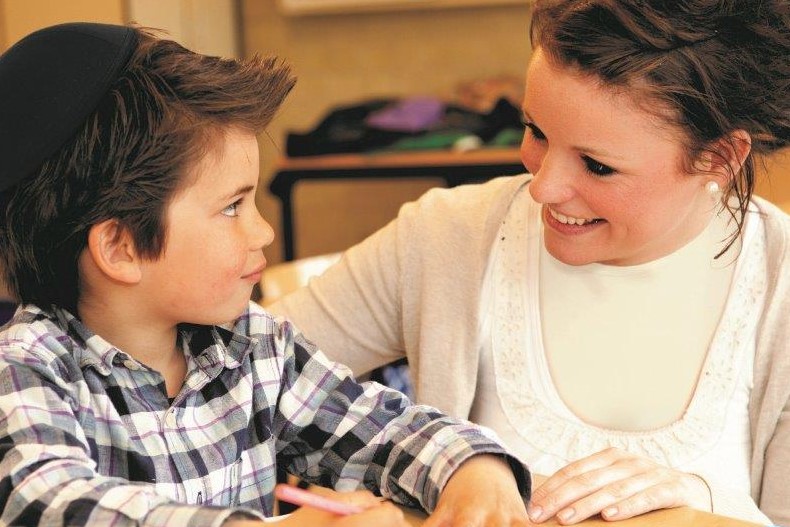
Learning virtually is a struggle for many students, but for students with learning difficulties, the pandemic presents even further challenges. In Jewish day schools, one local agency is stepping up to help every child get the education they deserve.
Resources for Educational Achievement Collaboration and Health (REACH), a division of Associated Talmud Torahs, was founded in 2011 to serve children with diverse learning needs. Its services include providing consultation to administrators and teachers, coaching and training teachers, and delivering interventions to students based on each child’s personal learning profile.
Rather than a one-size-fits-all approach, the REACH program works with each school to fit its needs. In the times of COVID-19, when some schools are opening, others are exclusively virtual, and some are using a blended model, REACH staff are working with teachers and administrators to figure out how to provide for students in need.
“It’s a time of a lot of unknowns,” said Ruth “Rusi” Sukenik, REACH’s Director of Student Services. “We’re doing our best right now to work with the schools and devise plans that meet the needs of their students’ learning challenges, but it’s looking so different and stretching everybody’s flexibility muscles because things are changing daily.”
For Sukenik and other REACH professionals, this means extensive planning and collaboration in addition to attending online trainings to hone their skills for the unprecedented year ahead. Some sessions focus on how to help children with specific learning disabilities succeed in a virtual learning space, and others offer technological assistance and educate about how to use new software in the classroom. This knowledge can then be disseminated among day schools once they’ve made choices about how to progress.
“Preparing on all fronts” helps REACH serve each of the different day schools and their students, Sukenik said. With many schools preparing to open in different ways, it’s important to consider many alternatives. For example, if a school is planning to use a pod model to have students in the same groups all the time, how can there be pullout classes with students from different pods? For schools that plan to teach wholly virtually, how can parents develop a home environment conducive to learning, and what is the best software for teachers to keep students engaged?
“Part of [the process] is exciting-it’s going to push us to increase communication and coordination-but at the same time, it’s a little scary because it makes things challenging and less flexible,” Sukenik said.
REACH is empowering people to face these challenges-expanding its scope to educate teachers about virtual learning, help students at home stay motivated with private and integrated instruction, and work with families to meet students’ emotional and academic needs. By offering consultation, professional development, and direct services during the crisis as well as during normal times, REACH is an invaluable resource for many day school students.
“We’re committed to helping every child where they’re at,” Sukenik said. “And everyone is doing their best to make sure it’s happening.”
REACH is a partner with JUF in serving our community.
Other stories
-
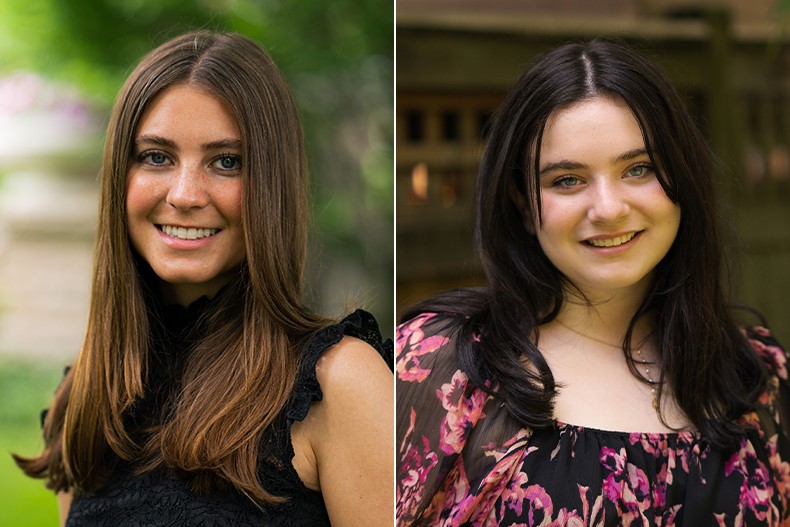
Two local teens win national recognition
Recipients of the annual Diller Teen Tikkun Olam Awards
Read more -

Celebrating six young award winners cultivating the community
Introducing young adult award winners
Read more -

The adage “vote early and often” is woven into the literary lore of Chicago. As the 2020 General Election approaches, and Illinois’ COVID-19 positivity rate stubbornly refuses to turn the curve, voters are being encouraged to vote early (by mail or in-person). The good news is that there is plenty of time to take advantage.
The Illinois General Assembly’s Special Legislative Session, notable for passage of a roughly flat state budget and COVID-19 relief measures in four long days, also passed important enhancements to the Illinois Election Code. The measures help to ensure voters avoid coronavirus exposure and safely vote early or on Nov. 3. State Sen. Julie Morrison, a chief architect and sponsor of PA 101-642, spent hours fielding questions in the Senate Chamber. Morrison deftly explained the need and rationale behind the bill’s enhancements with particular attention to the robust vote-by-mail plan.
Every person who voted in any of the last three Illinois elections-2018, 2019, or the March 2020 election-should have been sent a vote-by-mail application by now. In Chicago, for example, voters can complete and sign the application and mail it back. Additionally, all registered voters can go directly to the Chicago Board of Election’s website and complete a mail-in-ballot application online. Voters can also call the Chicago Board of Elections directly and ask that an application be sent to their address. Similar practices apply to the Cook County and Lake County election boards. Across the state, vote-by-mail ballots will be mailed out beginning Sept. 24.
Once received by the voter, there are expanded options for returning your signed and completed ballot. The recommended options are to drop it in a mailbox or deposit it into a secure ballot drop box. The law provides that all mailed applications post-marked no later than Nov. 3 will be counted, as long as received within 14 days. Certainly, with national concerns about post office capacity, early mail-in voting will help ensure your vote is counted. Additionally, in the event the vote-by-mail ballot is rejected, voting early will leave ample time for corrections.
Beyond the robust vote-by-mail plan, there are numerous additional voting improvements, including but not limited to:
- Election Day is established as a state holiday. This will open up schools, universities, and government offices to serve as polling places;
- Election judges can be as young as 16;
- Optional in-person curb-side voting during early voting or on Election Day at discretion of the election authority;
- New voter registrants can complete a request for a mail-in-ballot when completing online voter registration;
- Early voting at Election Clerks’ main offices will begin Sept. 24;
- Election authorities must provide public notice of services and equipment available to assist elderly voters and voters with disabilities.
The many additional enhancements come with an approximate $17 billion price tag, which should be significantly off-set by federal CARES Act funds and are a likely reason why the legislation sunsets after the 2020 General Election.
Many voters cherish the ritual of in-person voting at their regular polling precinct, proudly displaying their voter bracelet receipt and eagerly awaiting election night returns. In the age of COVID-19, both the act of voting and the announcement of election results will look different this year.
Neither CJE SeniorLife’s Lieberman Center nor Gidwitz Place will be polling places this November. However, voting tradition will not deter resident Helen Kamm. “I’m thankful to be able to vote from Gidwitz with the mail-in option, because every vote counts.”
Amy Zimmerman is Assistant Vice President, State Government Affairs for the Jewish United Fund/Jewish Federation of Chicago.
For decades JUF’s Public Affairs Department has encouraged higher Jewish turnout through its “Voter Registration” campaign. While 75% of American Jews regularly vote (in contrast to about 50% of all Americans), the long-term trend is troubling: that 75% used to be 90%. Forebodingly, a high percentage of Jewish young adults have been bypassing the polls.
To apply online to vote-by-mail…
Cook County: cookcountyclerk.com/agency/vote-mail;
City of Chicago: chicagoelections.gov/en/vote-by-mail.html;
The rest of Illinois: elections.il.gov/electionoperations/VotingByMail.aspx.
To sign up to be an election judge…
Cook County: cookcountyclerk.com/agency/election-judges;
City of Chicago: chicagoelections.gov/en/serving-as-a-judge-of-election.html.
Other stories
-
Two local teens win national recognition
Recipients of the annual Diller Teen Tikkun Olam Awards
Read more -
Celebrating six young award winners cultivating the community
Introducing young adult award winners
Read more -

When the pandemic hit, one local agency’s head described the situation as “standing in the middle of a hurricane without an umbrella.” Unprepared and stressed, Shana Erenberg, Executive Director of Libenu, began looking for resources to help her agency keep its kosher residential facilities for adults with disabilities afloat.
She – and the leaders of 97 other local Jewish agencies and synagogues – turned to the Technical Assistance Collaborative, a new project designed to support these organizations through unprecedented tough times. The program, created by JUF in partnership with local foundations, is the only one of its kind in the country.
“This collaborative gave us the opportunity to do more than just put band-aids on large scale problems-it is empowering organizations to work with professionals to help them make the most well-informed, thoughtful decisions for their organizations,” said Jordan Goodman, Chair of CFP’s Jewish Giving Committee. “We are excited to continue to support this program so it can grow and support even more organizations.”
As a jumping off point, the program sent out a series of surveys. The survey responses revealed that in addition to financial support, organizations like Libenu were looking for resources like scenario planning, executive coaching, technological integration, and more. Through a partnership with Boardified, an organization designed to empower Jewish nonprofits, the Technical Assistance Collaborative provides a variety of no-cost services to meet a wide range of needs.
The services – which include personalized support for individual organizations as well as cohort programs – help to “improve the long-term performance of the agencies while meeting the short-term needs” during the pandemic, said JUF Board Chairman Andy Hochberg. “New challenges required new answers, and the program provided a new and effective way to help the agencies cope with the crisis.”
A series of webinars have helped wide ranging organizations-97 to date-whose facilities remained open during the quarantine, to pivot their programs; keep their clients healthy; obtain necessary supplies like food, toilet paper, and PPE; and help their staffs navigate complex issues and extensive changes.
By describing the “step-by-step process of reacting and moving into more of a mitigating role and recovery,” Erenberg said, the webinars offered practical steps to keep organizations moving even at a time when panic ran rampant. And beyond spring, the Technical Assistance Collaborative has helped organizations find ways to move forward in both the short- and long-term.
Many organizations have sought help with scenario planning to figure out how to pivot their usual activities during the pandemic and save money to reopen afterwards. Nineteen organizations, including summer camps dealing with cancellations, have each received up to 10 hours of financial modeling. Meanwhile, cohort sessions have dealt with issues like employment law for workforce reductions and wellness screenings; navigating the Federal CARES Act; and tracking the disaster cycle through the Chicago Jewish community with advice at every step.
“The work that the Collaborative is doing in Chicago to address fundamental capacity needs of Jewish organizations is as important, if not at times more important, than access to additional financial resources,” said Boardified’s founder, Alicia Oberman. “The close collaboration, trust, and partnership between local funders and JUF is essential to recognizing needs and providing access to meaningful interventions as soon as possible.”
The program continues to offer “very useful tools at a very critical time,” Erenberg said. Sessions in late summer and early fall include a series on leadership communication and fundraising from Northwestern University’s Kellogg School of Management; virtual education planning for local youth movements from M², The Institute for Experiential Jewish Education; advice for dealing with prospective Israel travelers from crisis communication consultants; and health and safety information relating to reopening synagogues.
Other stories
-
Two local teens win national recognition
Recipients of the annual Diller Teen Tikkun Olam Awards
Read more -
Celebrating six young award winners cultivating the community
Introducing young adult award winners
Read more -
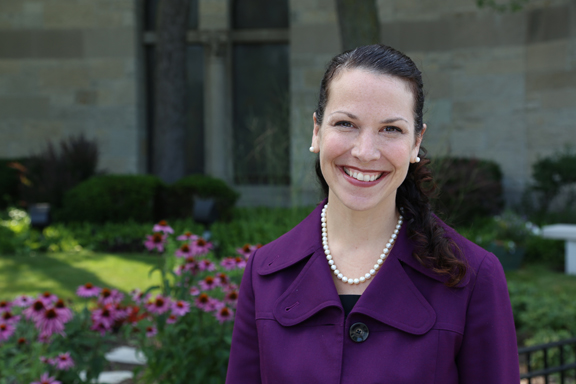
Rabbi Shoshanah Conover takes the helm of Temple Sholom
LESLIE HILL HIRSCHFELD
After taking the helm at Temple Sholom of Chicago in July, Rabbi Shoshanah Conover became the synagogue’s first female senior rabbi. In fact, she is the first woman ever to hold that title in Chicago proper.
While Conover recognizes the significance of her position, she credits those who came before her for paving the way for female Jewish leaders like herself. “I owe a debt of gratitude to all women in every movement of Judaism who have been dedicated to learning and teaching Jewish text and taking on leadership in synagogue life,” she said. “They have opened doorways that could lead to a moment like this.”
Conover’s appointment at Temple Sholom is a testament to her innovative leadership, extensive knowledge of Judaism, and commitment to the community. Conover previously held the role of assistant rabbi at the congregation for 13 years, and she said she found a great female role model there, as well. “Our Cantor Emerita, Aviva Katzman, was the first female cantor in the city of Chicago,” Conover said. “Her spiritual leadership has been an inspiration to me.”
The rabbi’s love of the Jewish people and Jewish texts, combined with a strong interest in social justice, led her to rabbinical school after earning her B.A. in English Literature and Creative Writing from the University of Wisconsin-Madison. “At a certain point, I thought ‘I want to have keys that would access the wisdom of our people in really deep ways,’ and I knew that rabbinical school would help me to do that,” she said.
As a rabbinic student, Conover’s strong character and conscience made a lasting impression, and those qualities continue to make her a beloved Jewish leader. “She stood out as a woman of outstanding potential, gifted academically and pastorally, that unique combination of heart, mind, and soul that all rabbis ought to personify, but that Rabbi Conover really does,” said Rabbi Lawrence Hoffman of Hebrew Union College – Jewish Institute of Religion.
Moving forward, Conover will bring that same passion and wisdom to her role as Temple Sholom’s senior rabbi. She remains involved with teaching, learning, and justice, areas of focus during her tenure as assistant rabbi, while she undertakes the larger responsibility of leading the congregation. “I want to make sure that Temple Sholom as an entire temple is continuing to be involved in the work of justice and that we continue to be a really strong, intimate community,” she said.
“Rabbi Conover brings a wealth of experience as a tireless advocate for social justice,” said Rabbi Jonah Pesner, who serves as the Director of the Religious Action Center of Reform Judaism where Conover was a founding rabbinic leader. “She has been an essential founding rabbinic leader of RAC-IL, a key voice for racial justice and criminal justice reform, and advocate for the most vulnerable in society.”
In the year ahead, Conover will draw creative inspiration from Temple Sholom’s theme, “a time to embrace,” to bring the community together despite the challenging circumstances of the pandemic. “In this time of refraining from embracing, we are trying to make sure that people still feel the embrace of Temple Sholom, even when we are not physically together in the same building that we’re used to,” she said. Conover champions Temple Sholom’s variety of new and established programs, including discussion and meditation groups, community service, and advocacy work.
Conover says she is grateful to work in and raise her two sons in the Temple Sholom community. She loves the synagogue’s diverse and close-knit congregation, which adds vibrancy to the community.
“We have such a special Jewish community where we work so closely together,” she said. “We make sure people are seen for how they want to be seen in this world and really make people feel like they are welcome and that they are appreciated and celebrated in the totality of who they are.”
Leslie Hill Hirschfeld is a freelance writer living in the northern suburbs of Chicago.
Other stories
-
Two local teens win national recognition
Recipients of the annual Diller Teen Tikkun Olam Awards
Read more -
Celebrating six young award winners cultivating the community
Introducing young adult award winners
Read more -

As a Midwestern Jew, to me, autumn has always represented new beginnings. A new school year, the changing leaves-crisp, and a little musky smelling-followed soon thereafter by the spiritual renewal of Rosh Hashanah and Yom Kippur. The invitation to open to a new page, both on the calendar, and within oneself.
This year, autumn’s arrival feels different. The universal sense of anticipation that typically accompanies the change in the air is diminished, if not absent. In many neighborhoods, there are no kiddos on their way to school toting new backpacks; few commuters hustling to catch the train clutching “this might be wine” coffee thermoses. They remain, like many of us, at home, transforming corners of their living rooms into classrooms and offices. Because of this, the words and numbers on our calendars seem to reflect a different passage of time than what we have psychologically experienced, making it hard to believe that the High Holidays are once again upon us.
I was lamenting to my friend-okay, my therapist-that the last several months felt like a waste in terms of personal growth. She had the good grace to affectionately laugh in my face so heartily that the audio on Skype buzzed, and pointed out that no time spent getting to know ourselves is ever wasted. “Why, look at some of the hobbies you picked up in quarantine,” she prompted.
I glanced around the room-at the guitar I had just begun learning to play; down at the tie-dye t-shirt I was wearing that I made at a social-distance crafting party with my new neighbors; and at the loaf of bread cooling on the kitchen counter made with herbs from my new windowsill herb garden-and I realized she was right. The last several months had heralded loss, but they heralded gain as well-new friendships and practices and hobbies to carry with me into 5781.
Inspired, I asked some of the folks in my local Jewish network to share practices that they built in quarantine and likewise want to carry into the new Hebrew calendar year and into a post COVID-19 world. The replies I received were diverse and full of surprises, such as starting a virtual anti-racist book club, learning to play the ukulele and having outdoor concerts for friends and neighbors, joining a virtual morning minyan , daily lake swims and virtual fencing lessons, learning to build furniture and bake challah, establishing a regular Havdalah practice and phone-free Shabbats.
With these examples in mind, I encourage you to reflect on the ways large and small that your own life has changed for the better this year. I hope that, as we enter into this new year of possibility and unknowns, these practices bring you strength and happiness. May you find more such sources in the year to come.
Shanah Tovah !
Jenna Cohen is a development professional and freelance writer living in Chicago.
Other stories
-
Two local teens win national recognition
Recipients of the annual Diller Teen Tikkun Olam Awards
Read more -
Celebrating six young award winners cultivating the community
Introducing young adult award winners
Read more -
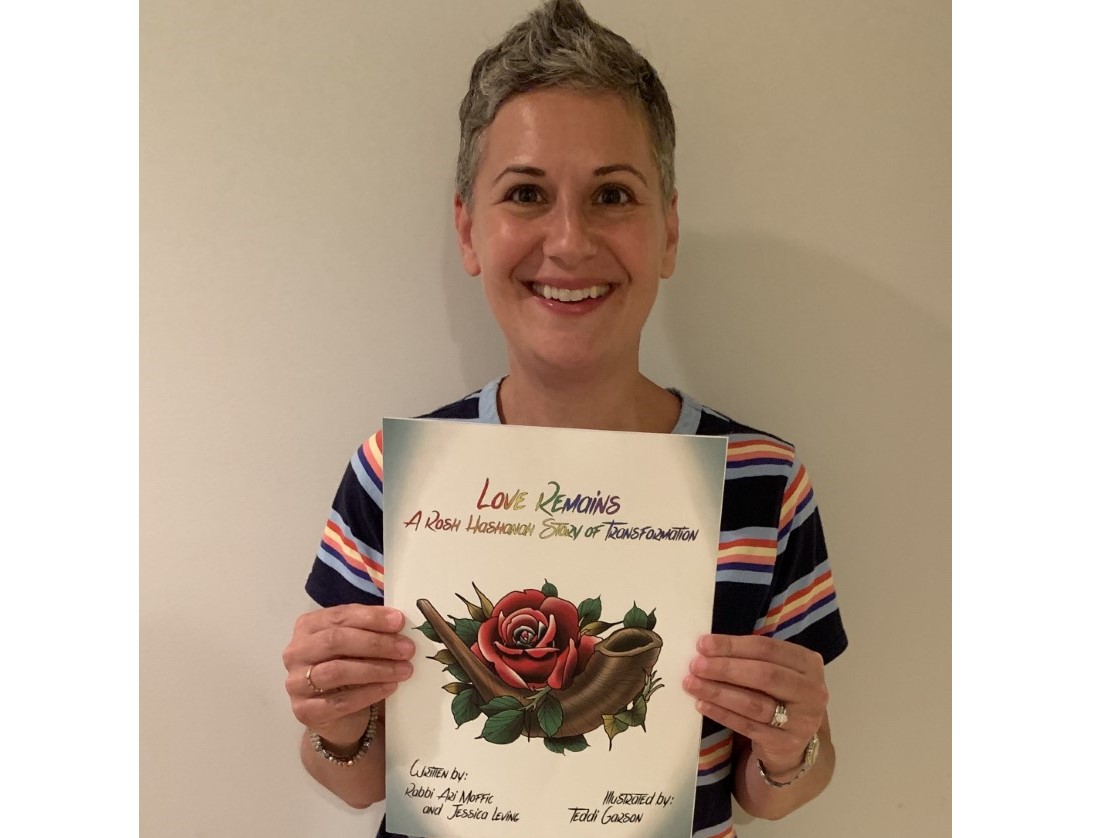
“Write what you know” is standard advice for authors, and Rabbi Ari Moffic knows about Rosh Hashanah and her kids. In her new children’s book, Love Remains: A Rosh Hashanah Story of Transformation , she writes about a family and the changes they experience year by year.
At each Rosh Hashanah dinner, family members recount highlights from their previous year. Also, at each dinner, one child’s clothing and hair change-and, as a teen, their name changes, too- from Danielle to Dan. This transition was based on that of one of Moffic’s own children.
The author set the book at the time of the Jewish new year because, she said, “At Rosh Hashanah, everything starts fresh, and we decide who we want to be in the coming year.”
Moffic is the new director of congregational learning at Temple Beth-El in Northbrook. She also founded CoHere Chicago, a service that curates Jewish experiences for families to fit their needs.
“I have wanted to tell this story for a long time, working on it for years,” she said. “I hope that this book will help children see themselves represented, and accepted for who they are, and that it will be the starting point for conversations in families of all kinds.”
Moffic co-wrote the book with Jessica Leving, a Chicago Jewish author. Last year, Leving published another children’s book, this one based on her own family’s experience, called Billy’s Sister: Life When Your Sibling has a Disability .
“This book is for all Jewish families,” said Leving, Executive Director of the Center for Siblings of People with Disabilities. “Kids of different ages will take different things from it. The beauty of Ari’s idea is that this character’s transition is one change among many- change is natural.”
Teddi Garson, a genderqueer Jewish tattoo artist from Chicago, illustrated Love Remains . “Having dealt with the pressures of gender roles growing up, I felt this book was an important thing to be part of,” Garson said. “I hope this book will help families start having conversations…that it’s okay to be yourself.”
“Being transgender can come with discrimination, fear, stress, sadness and frustration,” Moffic said, “as well as joy, happiness, confidence, fluidity, and bravery.”
Funding for the book was provided in part by The Open Dor Project. The book is recommended for children ages 3 and up. Love Remains is available on Amazon.com.
Other stories
-
Two local teens win national recognition
Recipients of the annual Diller Teen Tikkun Olam Awards
Read more -
Celebrating six young award winners cultivating the community
Introducing young adult award winners
Read more -
Born into a philanthropic family active within the Jewish community, Carl Levine carried on his family’s strong legacy of giving back. Throughout his life, he forged strong connections with JUF and other community organizations for the betterment of Jewish Chicago. Levine died on June 28 at the age of 84.
Growing up in the South Side, Levine attended O’Keefe Grammar School and was a frequent sight on the playground playing seasonal sports. He was a member of a fraternity at Hyde Park High School as well as at the University of Illinois. His friends from his youth “formed the nucleus of his life going forward, many of which became acquainted with JUF through his leadership,” said longtime friend and JUF Associate Vice President Barb Gold. Following college, he joined his father-a preeminent jeweler-in business. His father, William Levine, was the namesake of the Levine Hillel Center at UIC and a JUF Campaign Chair, and Levine followed in his footsteps professionally and philanthropically.
Levine brought his expertise in the jewelry business to JUF in his role as chairman of JUF’s Jewelry Division and was further involved with JUF by serving on fundraising committees and leading JUF Missions to Israel, Turkey, and Cuba. He served on the JUF Board from 1990-1995 and served as the 1994 JUF General Campaign Chair. He was also a Golden Giver to the JUF Annual Campaign.
As his professional career grew, Levine became the president of William Levine, Inc., his father’s wholesale diamond business. “There was hardly a person on the South Side who got an engagement ring who didn’t get it from him,” Gold recalled. In addition to being a prolific ring salesman on the South Side, Carl was also a member of the Chicago Jewelers Association.
Although he and his wife Roberta moved to Highland Park to raise their family, Levine stayed in touch with his childhood friends and helped connect them to JUF and the Jewish community.
He is remembered by his friends and colleagues as a kind, humorous, and enthusiastic person who never hesitated to offer a helping hand or give back to his family, friends, and community.
Levine was the beloved husband of the late Roberta (“Bobbie”). He was the devoted father of David (Julie Argow), Beth (Steven Drizin) and Julie (Michael Wolf). The cherished grandfather of Annie (Garrett Rothe), Laura (Jesse Slobodin), and Michael Levine, Benjamin (fiancée Rachel Wolfson), Jeremy (Valentina Perez Botero), Gabriel, and Hannah Levine-Drizin, and Madeline, Emma, and Charlie Levine-Wolf, he also was the adoring great-grandfather of Summer and William Rothe. He was the treasured brother of Jess Levine. He was the beloved fiancé of Adrienne Garland. Memorial donations to JCFS Chicago at www.jcfs.org .
Other stories
-
Two local teens win national recognition
Recipients of the annual Diller Teen Tikkun Olam Awards
Read more -
Celebrating six young award winners cultivating the community
Introducing young adult award winners
Read more -
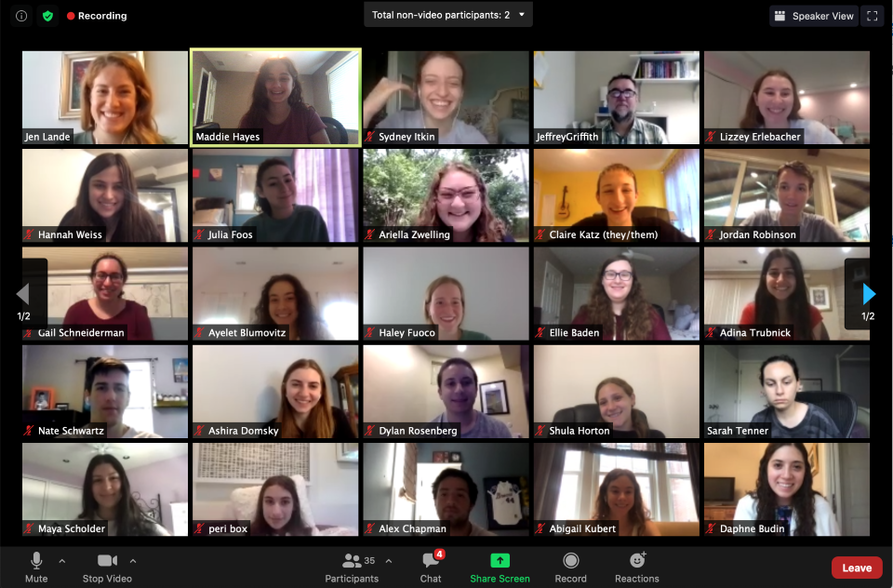
Even a pandemic couldn't stop the Lewis Summer Interns
MADISON HAYES, Lewis Summer Intern
2020 has been an unforgettable year to say the least. When the clock struck midnight on New Year’s Eve, no one expected this year to take quite the turn it did. Despite all the challenges that we all have faced due to the coronavirus, JUF has continued to uphold its promise to make the world a better place.
Thanks to an incredible group of supervisors, even the coronavirus couldn’t stop the Lewis Summer Internship Program, an eight-week work/study professional development program aimed at furthering professional and leadership skills through fieldwork and weekly seminars. Through these seminars, interns had the opportunity to grow as professionals, learn about the Chicago Jewish community, and understand how their Jewish identity fits into their professional work.
The program obviously looked drastically different than in past years. Interns worked mostly virtually, utilizing tools like Zoom to connect with their coworkers. Although it wasn’t the in-person experience that we were expecting, the leaders of this program worked tirelessly to ensure that we still had a productive and educational summer filled with experiences to help us grow.
This summer, there were a total of 68 interns – 37 in the placement program and 31 in the certificate program. Placement interns worked for a JUF department or partner organization four days a week and attended a weekly seminar every Friday.
The certificate internship program was a new addition this year, due to extraordinary circumstances pertaining to the pandemic. Due to cancellations of summer opportunities, interns were given the opportunity to participate in the certificate program, which consisted of attending weekly seminars to further their professional development while working with their Jewish peers.
I got to see firsthand and play a small part in furthering the impact that JUF makes. I was placed in the JUF Communications department, where I gained valuable experiences, met new people, and furthered my professional development as a journalism major. One of the primary projects I enjoyed working on was the annual 36 Under 36 list, which showcases young Jewish Chicagoans changing the community for good. I got to see firsthand- and play a small part in- furthering the impact that JUF makes.
At the close of the program, I asked my fellow interns the best advice they received on the job this summer. Here’s what a few of them said:
Gail Schneiderman, JUF Communications: “Don’t settle-you should always push yourself beyond what is familiar to you. Take risks and try new things because that is how you will grow as a designer (in my case) and a person.”
Elana Charlson, Northwestern Hillel: “Be confident in your work and trust that your contributions are valuable, no matter what position you serve, even if you’re an intern or have an entry-level job.”
Brooke Slavik, Jewish Professionals Network: “Be open minded to every opportunity because you never know what it could turn into. As a communications major who is unsure of what career I want to hold in the future, it was great to hear advice from others who have been in the same position as me. They have all said that to find what you really want to do and what you are truly passionate about, you have to be open to trying everything. This was definitely something I will carry with me.”
Madison Hayes is a senior at the University of Illinois at Urbana-Champaign.
Other stories
-
Two local teens win national recognition
Recipients of the annual Diller Teen Tikkun Olam Awards
Read more -
Celebrating six young award winners cultivating the community
Introducing young adult award winners
Read more -
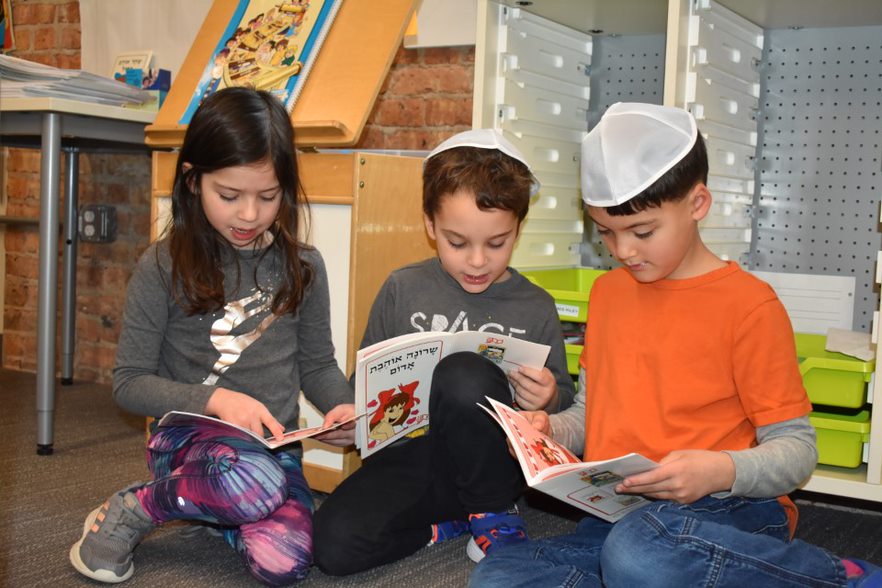
Chicago Jewish Day School (CJDS) has been selected by the Leading in Hebrew national initiative as the second model school for Hebrew teaching and learning.
The Leading in Hebrew initiative, a selective three-year plus program, was designed by Hebrew at the Center (HATC) to create model schools of Hebrew excellence in regions throughout the country. HATC expects to develop exemplary Hebrew programs, with cohorts of master teacher leaders, that become national demonstration schools.
This effort will be led on the ground by Judy Finkelstein-Taff, Head of School; Tamar Cytryn, Director of Jewish Studies and Campus Life; and Penina Berdugo, Director of Hebrew Curriculum; with the HATC leadership of Tal Gale, Chief Program Officer; and Liat Kadosh, Director of Embedded Expertise. Rosov Consulting will lead the effort to document and assess this initiative.
“We could not be more pleased to see this bold initiative come to Chicago, building upon the strong engagement with Hebrew education that has always been a hallmark of our community,” said JUF President Lonnie Nasatir. “This is a terrific opportunity to leverage both the expertise of Hebrew at the Center and CJDS’s wonderful faculty, leadership and families, and advancing our shared belief in Hebrew’s power to deepen Jewish identity and connection.”
For more information, visit hebrewatthecenter.org.
Other stories
-
Two local teens win national recognition
Recipients of the annual Diller Teen Tikkun Olam Awards
Read more -
Celebrating six young award winners cultivating the community
Introducing young adult award winners
Read more -
Create a Jewish Legacy is getting a reboot!
In January, the JUF Create a Jewish Legacy (CJL) program will launch a new service to help organizations with legacy giving through individual consultations.
Since its inception in 2014, Create a Jewish Legacy has helped 39 local synagogues, day schools, and other Jewish organizations raise nearly $58 million in legacy commitments. Through CJL’s structured program, participants learn new strategies and tactics to secure and formalize endowment gifts. In return, organizations are awarded incentive grants upon completing specific goals.
Generously supported by the Crown Family, JUF’s local program is part of a national program created by the Harold Grinspoon Foundation to preserve vibrant Jewish life for future generations.
Through the new model, staff will provide guidance and training for local Jewish organizations to bolster their endowment. The free service will ask interested organizations to complete a needs assessment that will be used by staff to create an individualized program for appropriate institutions. CJL staff will educate organizational staff on various giving vehicles available to donors, and guide them on marketing, prospecting, donor engagement strategies, and stewardship techniques.
“We’re so grateful for the guidance we received from Create a Jewish Legacy,” said Janice Hadesman, Executive Director of Temple Beth-El in Northbrook. “We are no longer afraid to ‘ask’ and strive to change the culture so that ‘the ask’ will get easier and easier.”
With the current pandemic facing the world today, learning how to prioritize building a robust savings account for emergencies is more important than ever. Similar to the current model, CJL’s new structure will provide organizations with the skills and know-how to integrate legacy giving into their culture.
As CJL evolves to its new model, the two remaining cohorts will stay the course toward achieving their goals.
In light of COVID-19, CJL has extended its deadline to the end of October. Organizations that reach their goals prior to the extended deadline have received additional incentives. So far, CJL has granted $135,000 in incentive grants to this year’s participants.
“The programming and incentive grants helped our development staff focus on legacy fundraising in order to strengthen our organization now and in the future,” said Linda Hoffenberg, Director of Institutional Advancement for Camp Ramah in Wisconsin. “Thank you for teaching these fishermen how to fish.”
To learn how you can work with JUF’s Create a Jewish Legacy, email Rachel Sherman at [email protected] .
Other stories
-
Two local teens win national recognition
Recipients of the annual Diller Teen Tikkun Olam Awards
Read more -
Celebrating six young award winners cultivating the community
Introducing young adult award winners
Read more -