
Wrigley Field just celebrated its 100th anniversary, but Orthodox Jewish vendors who sell food and drinks in the stands are becoming part of its past.
Twenty years ago, it wasn’t unusual to have some 25 Orthodox vendors working the stands; a prayer minyan used to take place in the stands before or after games. Even the late Rabbi Moshe Kushner vended in his youth.
Vending was seen as an ideal summer job for observant teens. The ballpark is a short ride from Orthodox neighborhoods, joining the union was easy, and you could make a decent amount of money in just four hours’ work. Vendors could choose their hours- perfect both for Sabbath observers and teens uninterested in a regular job. Plus, there was the baseball.
“I went to high school at Ida Crown, and it was just like a rite of passage there,” said Jon Blumberg, 41, an investment fund manager who vended for five or six summers beginning in 1989. “Once you were… no longer were going to camp or didn’t want to be a counselor, it was just what guys did.”
“I’m a huge Cubs fan. I love baseball. I love Wrigley Field,” David Porush, 40, a lawyer who vended starting at 16, said. “If you were a very big fan like me, I’d make $30 or $40 and then sit down to watch the game.”
Danny Altschul, now a partner at the accounting firm McGladrey, credits his five years of vending with helping pay for college, his wedding and the down payment on his house; he could make up to $300 on a good day. Now, the number of Orthodox vendors has shrunk to just four or five, plus about an equal number of older full-timers, according to Joe Bulgatz, an Orthodox Jew in his 50s who has been vending at Wrigley since 2004.
Seniors at the two Orthodox high schools that served as the main feeders – Ida Crown and Skokie Yeshiva – told JTA through an administrator that students aren’t becoming vendors anymore. It isn’t as lucrative as it once was, the rising number of night games makes the job less suitable for teens and the setting isn’t that compelling to young people. “Between the Cubs’ performance and the economy… it’s not worth it,'” he said.
Orthodox Jews can’t work on Shabbat or Jewish holidays, which cuts out about a quarter of the games. Many won’t sell hot dogs for fear of unwittingly selling non-kosher meat to a Jew. And on Passover, they cannot handle beer – often the most lucrative product – because it’s chametz (leavened).
“I’d like to think we’re getting our reward in the next world,” Porush said. “I’ve seen lots of heartache as a Cubs fan, and I think it is parallel to being a God-fearing Jew. We live through difficult times and all we can say is, ‘Next year in Jerusalem.’ A Cubs fan is always saying, ‘Wait till next year.'”
Other stories
-
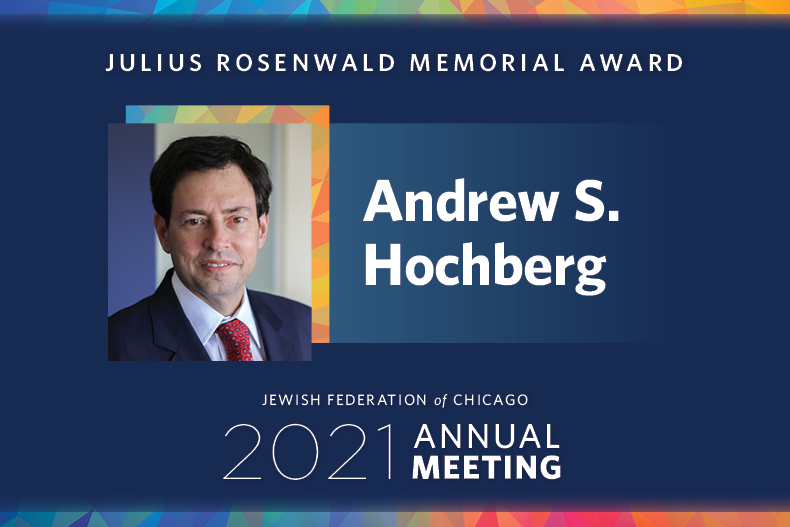
Meet Andrew S. Hochberg, 2021 Julius Rosenwald Memorial Award recipient
Celebrate Andy Hochberg at the virtual Annual Meeting on Sept. 14
Read more -
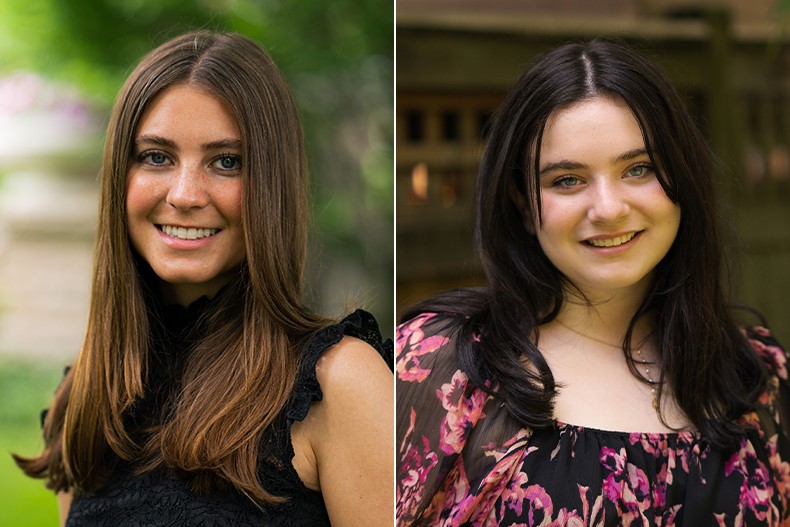
Two local teens win national recognition
Recipients of the annual Diller Teen Tikkun Olam Awards
Read more -

Celebrating six young award winners cultivating the community
Introducing young adult award winners
Read more
Audrey Dann, who recently passed away at 85, had been the wife of the late Charles Dann for 62 years.
“Anything that we can do to help the Jewish people, we’ll do,” was their motto. In 1953, Charles attended his first JUF event; that night, he an Audrey made their first gift-and a vow that, each year, they would increase their gift. In time, the Danns became Golden Givers to JUF, a honor given to those with 50 or more consecutive years of donations to the JUF Annual Campaign.
They also founded of the Charles and Audrey Dann Charitable Foundation, a supporting foundation of Chicago’s Jewish Federation. Audrey explained it was to “fulfill our Jewish obligation of tzedakah and as a means of passing on to our children and grandchildren a sense of charity. We always tried to imbue our children with an understanding of tzedakah from a young age, hoping that, by exposing them to something that we felt strongly about, it would become contagious.” Through their foundation, the Danns also made a generous gift to JUF Centennial Campaign.
Audrey “always emphasized and lived her life based on caring about others and giving back,” her daughter and JUF-JF Board member Julie Dann Schneider recalled. “When they were first married, my parents lived in a one-bedroom apartment where the bed came out of the wall, but they still always managed to donate to charity and support worthwhile causes, of which the Federation was the most important. My mom always believed in the importance of helping others in need, and she encouraged my dad to be active in the JUF Annual Campaign. Both of my parents loved and participated in the day schools that our kids attended-Solomon Schechter and Chicagoland Jewish High School-and they supported these institutions and the Jewish Day School Guarantee Trust. My mom also spent much of her adult life volunteering at Mothers Aid Gift Shop in Glencoe, which benefited a hospital. This work was very meaningful to her, and she took great pride in the endless hours she spent over many years in support of this organization.”
In 1970, the Danns made their first of many trips to Israel and became ardent Zionists. Charles took his children and grandchildren there on a JUF mission as well.
In addition to their work with the JUF in Chicago, the Danns volunteered for Friends of Refugees of Eastern Europe (FREE) in the 1980s. And, from their second home in Florida, they delivered food packages to hundreds of indigent Jews twice a month.
Audrey Dann (nee Harris) leaves behind her children, Debra Dann Kay (Michael Kay), Dr. Robert Dann (Erica Regunberg), and Julie Dann Schneider (The Honorable Brad Schneider); grandchildren, Dr. Jason Rotstein (Brooke), the late Brandon Rotstein, Zachary Dann (fiancée Laura Sweitzer), Jessie Regunberg (Garrett King), Aaron Regunberg, Kevin Dann, Adam Schneider, and Daniel Schneider; and great-grandchildren, Brady and Mia Rotstein. She was the sister of the late Shirlee (Larry) Gilbert and sister-in-law of Donald (Jackie) Dann and Armand Dann.
The funeral was held at The Chapel, with interment at Memorial Park Cemetery, Skokie. Arrangements were made by The Goldman Funeral Group. In lieu of flowers, donations may be made to The Brandon Dann Rotstein Memorial Foundation, 889 Country Club Lane, Northbrook, Il 60062, or to JUF.
Other stories
-
Meet Andrew S. Hochberg, 2021 Julius Rosenwald Memorial Award recipient
Celebrate Andy Hochberg at the virtual Annual Meeting on Sept. 14
Read more -
Two local teens win national recognition
Recipients of the annual Diller Teen Tikkun Olam Awards
Read more -
Celebrating six young award winners cultivating the community
Introducing young adult award winners
Read more
After Cook County sheriff and judge Richard J. Elrod was paralyzed, doctors thought he might never leave the hospital.
But Elrod “excelled” at everything he did, according to longtime friend and fellow Chicago Jewish colleague, former State Sen. Howard W. Carroll, and Elrod’s accident was no exception. “All the time he was in office, he would never know that he was really disabled,” Carroll said. “He had a way of making sunshine from darkness.”
Elrod, 80, died on April 19 in his Lincolnwood home from complications of liver cancer. He served four terms as Cook County sheriff and more than 25 years as a Circuit Court judge.
The son of a West Side Democratic committeeman, Elrod was born in 1934 in Chicago. He graduated from Riverside Military Academy in Gainesville, Ga. He earned both his undergraduate and law degree from Northwestern University, where he also played guard on the football team. While at Northwestern, he met his future wife, Marilyn Mann, who he was married to for 58 years.
While working as a chief city prosecutor in 1969, Elrod’s life changed forever when he broke his neck and was paralyzed during an altercation with a protester during Chicago’s “Days of Rage” demonstrations, organized by the radical Weatherman faction. At first, he was unable to move any body part below his neck, but over time became a quadriparetic instead of a quadriplegic, regaining limited feeling in his limbs.
Only two months after his accident, Cook County Democrats, under Mayor Richard J. Daley’s tenure, selected him to run for sheriff, until 1986. Then, he took a job as senior assistant attorney general, until the Illinois Supreme Court appointed Elrod to serve as a Cook County Circuit judge in 1988, a job he held for 25 years.
Elrod had the best record in the county for settling cases, according to Carroll, and “had a reputation for trying to help people solve their problems and work things out.”
Elrod also cared about the Chicago Jewish community, and was a longtime giver to the Jewish United Fund. “For two decades, Dick Elrod was the Jewish community’s highest profile State of Illinois government elected leader,” said Dr. Steven B. Nasatir, JUF/JF President. “The 1969 accident would have stopped most from achieving all they can, but not Dick Elrod. I never heard him complain; I never saw him inappropriately use his power. He understood Jewish political issues backward and forward…He was committed to public service, the State of Israel, and the Jewish people.”
In his private life, he was a family man. One of his proudest moments, according to Carroll, was taking the stage last spring at his grandson’s Northwestern law school graduation, alongside his son and grandson, three generations of Northwestern law school grads.
Elrod is survived by his wife of 58 years, Marilyn; a son, Steven Elrod; daughter, Audrey Lakin; and four grandchildren. A packed memorial service took place at Am Shalom in Glencoe. He was a Golden Giver member of the Jewish United Fund.
Other stories
-
Meet Andrew S. Hochberg, 2021 Julius Rosenwald Memorial Award recipient
Celebrate Andy Hochberg at the virtual Annual Meeting on Sept. 14
Read more -
Two local teens win national recognition
Recipients of the annual Diller Teen Tikkun Olam Awards
Read more -
Celebrating six young award winners cultivating the community
Introducing young adult award winners
Read more
Against the backdrop of studies revealing rising anti-Semitism both in France and across all of Europe, as well as one particularly brutal attack in Paris in March, French Jews are flocking to Israel.
On March 30, the Jewish Agency for Israel (one of JUF’s overseas agencies) released figures showing that aliyah (immigration to Israel) from France increased dramatically over the first two months of 2014. In January and February alone, 854 French olim (immigrants) arrived in Israel, compared to 274 over the same period last year, representing a 312-percent increase.
Shay Felber-the Jewish Agency’s deputy director-general for community services and resident expert on France, who made aliyah from France with his parents in the 1970s-cites three main reasons for the current trend. Two are anti-Semitism and the difficult economic situation in France. But from a more positive perspective, the high level of Jewish education and Zionistic identity prevalent in the French Jewish community is also leading to an upswing in immigration to Israel, Felber tells JNS.org.
In Paris during March, a 59-year-old Jewish teacher was subjected to anti-Semitic slurs and then severely beaten by a group of young men identified as being “Maghreb.” The men proceeded to draw a swastika on the chest of their victim with a marker, and vowed they would return to finish the job. No arrests have been made yet for that attack.
Felber believes that the current rise in anti-Semitic incidents and attacks in France is a direct result of the situation on “the street,” with many of the episodes being perpetrated by local Arabs and Muslims. Yet Felber stresses that the anti-Jewish sentiment is not French government policy, but that the government “is trying very hard to combat” anti-Semitism.
One recent study that reveals the worrisome realities for French Jewry is the 2013 report on anti-Semitism in France compiled by SPCJ, the security unit of France’s Jewish communities. According to the report, 423 anti-Semitic acts were recorded in the country in 2013 alone. The research also indicates that last year, 40 percent of all racist violence perpetrated in France targeted Jews. The report amplifies the ramifications of that statistic by explaining the trend from a proportionality perspective.
“Since Jews represent less than one percent of the French population, what this shows is that less than one percent of French citizens were the target of 40 percent of racist attacks perpetrated in the country,” says the report.
The document also states, “Since the year 2000-and for 14 consecutive years-the number of anti-Semitic acts in France has been very high, about seven times higher than numbers recorded in the 1990s. During this period, six people were murdered because they were Jewish, including three young children.”
The report concludes that anti-Semitism in France “cannot be considered anymore as a temporary situation associated with the situation in the Middle-East; it is a structural problem that has not been fought as such and has not been halted yet.”
While many French Jews are moving to Israel to escape their situation at home, Israeli tourists are known to travel frequently throughout Europe-often ignoring the situation on the ground in hopes of having an enjoyable vacation.
Gideon Behar, director of the Israeli Ministry of Foreign Affairs’ Department for Combating Anti-Semitism, tells JNS.org that while he is “concerned about the rising anti-Semitism in Europe, and it is something we are following very closely,” his office has not issued any travel advisories or warnings for France or any other European Union countries leading up to the current robust Passover holiday travel season.
Mark Feldman-CEO of Zion Tours, a leading Jerusalem-based travel company-concurs that there is “no direct guidance for traveling to France” at this time. He says his company sends many Israeli travelers on vacation to places like Morocco, and that to “avoid speaking Hebrew, don’t be overly loud, [and] walk in numbers are what we would advise clients traveling to many cities throughout the world [to do], and not just [in] France.”
Regarding aliyah-not only from France, but from Europe in general-being a result of rising anti-Semitism, Behar cites the European Union Agency for Fundamental Rights (FRA) November 2013 study. That study was based on a survey given to 5,847 Jews from EU member states, asking them about their own experiences and perceptions of discrimination, hate crime, and anti-Semitism.
Two-thirds of FRA respondents (66 percent) consider anti-Semitism to be a problem across the EU member states surveyed, while three-quarters of the respondents (76 percent) indicate that anti-Semitism has worsened over the past five years in the country where they live. Almost half (46 percent) of the respondents worry about becoming the victim of an anti-Semitic verbal insult or harassment in the next 12 months, while one-third (33 percent) fear a physical attack in the same period.
In the 12 months before the survey, 26 percent of all respondents reported experiencing an incident or multiple incidents involving verbal insult or harassment because they were Jewish, and 4 percent experienced physical violence or threats of violence. Seventy-five percent of respondents consider online anti-Semitism to be a problem in their country of residence, and almost three-quarters (73 percent) said that online anti-Semitism has increased over the last five years.
The Jewish Agency, meanwhile, recently unveiled a new government plan to encourage aliyah from France. Along with the Israeli Ministry of Aliyah and Immigrant Absorption, the initiative is boosting the number of Jewish Agency shlichim (emissaries) in France, increasing marketing efforts, developing new immigrant absorption programs, and establishing a special committee headed by the director-general of the Prime Minister’s Office to remove obstacles to French aliyah.
The proposal also sets clear benchmarks for increasing the number of olim, seeking to double their numbers in the coming years. The plan was developed in consultation and cooperation with French Jewish organizations, both in France and in Israel. Other partners include the World Zionist Organization, the Israeli Ministry of Jerusalem and Diaspora Affairs, and Keren Hayesod-United Israel Appeal, who are all are working together for the first time in order to strengthen French aliyah.
The Jewish Agency’s Felber says the plan is two-fold, “to promote aliyah in France through aliyah fairs, Hebrew-language courses, and sessions which assist in potential olim to find jobs in Israel, while the second part is kilitah (absorption) in Israel.” Felber says the Jewish Agency is in the process of constructing two new absorption centers, and at the same time is working with local municipalities in order to help French olim secure employment while also integrating into society.
Felber says he is confident that based on the large aliyah figures for French Jews-he estimates that there have been 100,000-120,000 total olim from France to date-these new immigrants will also succeed in building their new lives in the Jewish state.
Other stories
-
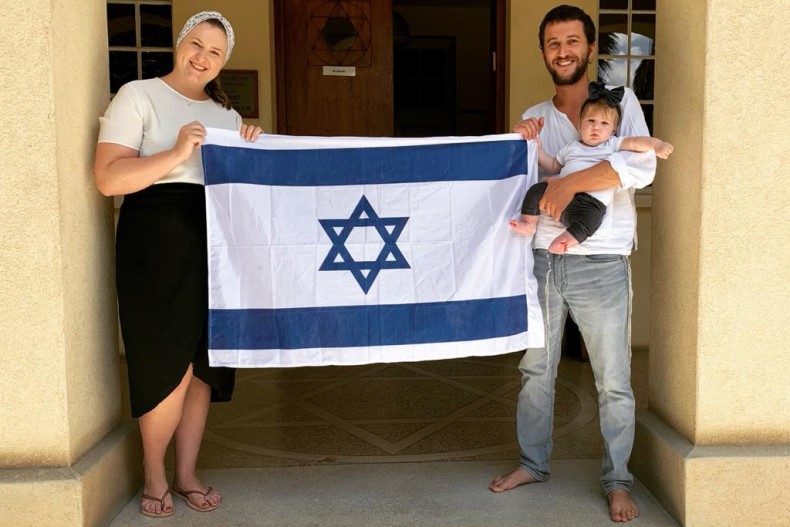
Chicago to Israel to Kenya
A family’s story of living Jewishly on three continents Michelle Cohen World May 28, 2021 Avital, Tzofia, and Netanel Kaszovitz outside their home in Nairobi on Yom HaAtzmaut. When Avital Kaszovitz prepared to be a Modern Orthodox shlicha (emissary) to the Jewish community in Ke
Read more -
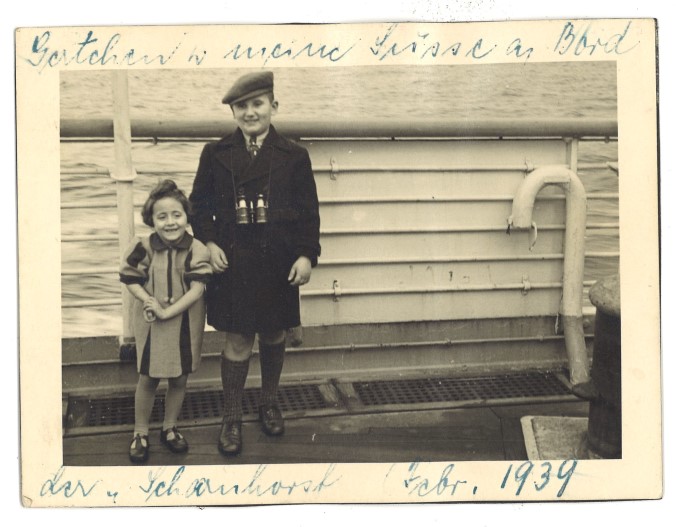
New exhibit spotlights the experience of ‘Shanghai Jews’
Explore a new Illinois Holocaust Museum and Education Center exhibit
Read more -
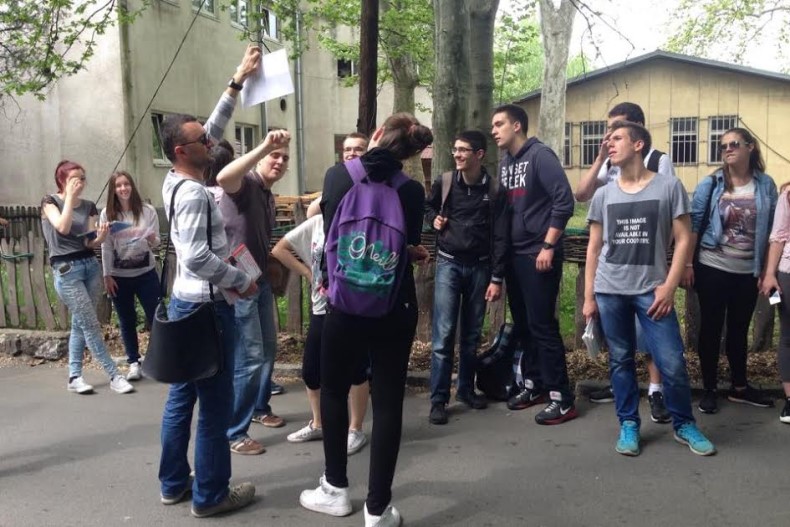
Europe’s brave new teachers of the Holocaust
Teaching the Holocaust in the modern era has its difficulties and rewards.
Read more
Israeli teens visit Chicago, meet American peers through Diller Fellowship Program
JESSICA LEVING
For many young American Jews, a trip to Israel-whether via youth group, study abroad, or Taglit-Birthright Israel-has become nearly as much a rite of passage as a bar/bat mitzvah.
But as 19 Israeli high school students learned in April during a two-week visit to Chicago through the Jewish United Fund/Jewish Federation of Metropolitan Chicago’s Diller Teen Fellows program, cultural exchange doesn’t just go in one direction.
“America is so different than Israel in so many ways,” said Nur Lev, 15, who, like all of the teens on the trip, hails from Chicago’s Partnership 2Gether region in Israel, including Kiryat Gat, Lachish, and Shafir. “Being here, and hearing new opinions… it opens your mind.”
The students are the Israeli counterparts to a cohort of 17 Chicago-area Jewish teens. Their Chicago visit was just one component of the 15-month JUF-supported Diller program, which will send the American teens to Israel for an additional joint seminar this summer.
Since the program began last fall, both groups have been participating in monthly seminars and weekend retreats in their respective countries, focusing on leadership, tikkun olam (social action and community service), Jewish identity, Israel, and Jewish peoplehood. Last month’s trip, however, marked the first in-person meeting of the two groups.
“It was amazing to see how quickly the teens were able to form one group out of two,” said Program Coordinator Jessica Fisher. “We work all year to facilitate relationships across the ocean, but the connection that happens face-to-face is so much deeper and stronger than anything that we could accomplish over Skype.”
The trip kicked off with a weekend of team-building and bonding at Camp Chi in Wisconsin Dells. From there, the rest of the time was spent exploring the Chicago-area Jewish community, and learning about Jewish life in America through panel discussions, lectures, and a day shadowing their peers at their respective high schools. The teens also spent some time volunteering, and taught a class at a Jewish day school.
While in Chicago, the teens were hosted by the families of their American peers, giving them a chance to forge even deeper connections and get an authentic taste of American life.
For Ittai Harkabi, 17, of Lachish, one of the biggest “aha!” moments came from hearing a panel of Chicago rabbis speak about the nuances of their different religious denominations-which are not common in Israeli society.
“In Israel there’s a lot of separation because there is no middle-there’s only religious or not religious, Jewish or Arab, right or left,” he said. “When nothing is in the middle, people go to the extreme, and you can never get people to unite. It was lovely to see how all these American rabbis got along. I think if we could have this in Israel, we would have peace.”
The international Diller program began in 1997, and has grown to include 10 North American/Israeli partnerships. The program was created to inspire and train future generations of Jewish leaders worldwide who will be committed to the Jewish community, Israel and community service.
According to Leah Umanskiy, 15, a sophomore at the University of Chicago Laboratory High School and participant in this year’s inaugural Chicago cohort-so far, it’s working.
“My involvement in the Diller program is probably one of the best things that’s happened to me,” said Umanskiy. “I’ve learned a lot about myself as a leader, as a follower, and even as a friend.”
In addition to developing valuable leadership skills, Umanskiy said she has forged incredible friendships with both her American and Israeli peers. “Over the past eight months, the members of our Chicago cohort have become like one family, and now we have extended our family with the Israeli cohort. Words truly cannot describe the connections we have made over the past 10 days,” she said.
The Diller Teen Fellows program is funded by the Helen Diller Family Foundation, a supporting foundation of the San Francisco Federation’s Jewish Community Endowment Fund. The local Chicago program is a collaboration of the Helen Diller Family Foundation, the International Diller Teen Fellows office, JUF/Federation, and its Partnership 2Gether region in Israel. It is open to Chicago area Jewish high school sophomores and juniors, and is now accepting applications for the 2014-2015 cohort.
For more information, visit www.juf.org/teens/diller.aspx or email Jessica Fisher at [email protected].
Other stories
-
Meet Andrew S. Hochberg, 2021 Julius Rosenwald Memorial Award recipient
Celebrate Andy Hochberg at the virtual Annual Meeting on Sept. 14
Read more -
Two local teens win national recognition
Recipients of the annual Diller Teen Tikkun Olam Awards
Read more -
Celebrating six young award winners cultivating the community
Introducing young adult award winners
Read more
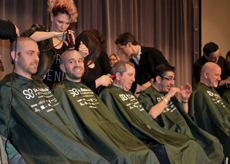
“Suicide: Responding and Creating Hope” is the theme of the Naomi Ruth Cohen Institute (NRCI) for Mental Health Education at The Chicago School of Professional Psychology’s (TCSPP) 13th Annual Community Conference on Sunday, June 1, (10 a.m. to 3:30 p.m.) at Beth Emet The Free Synagogue located at 1224 Dempster Street in Evanston. This program is sponsored by the Jewish Federation and a number of other mental health organizations. This conference is designed to make a difference in the lives of those at risk and in the lives of survivors. Experts will speak and present the latest knowledge and developments on suicide prevention and stigma.
According to the Centers of Disease Control and Prevention, as of 2013 more people die from suicide than in car accidents, and recent evidence suggests that there have been substantial increase in suicide rates among middle-aged adults in the United States. In 2013, 38,364 suicides occurred in the U.S. and 800,000 people died of suicide worldwide.
Nationally recognized suicide prevention advocate and author Heidi Bryan will be one of the panelists. Bryan serves as a member of the National Suicide Prevention Lifeline Consumer Survivor Subcommittee and the National Action Alliance for Suicide Prevention Suicide Attempt Survivor Task Force. Bryan has battled depression and is a suicide attempt survivor. She founded the Feeling Blue Suicide Prevention Council after losing her brother to suicide.
Two experts in their field, David Clark, Ph.D., Assistant Dean for Clinical Research and Professor of Psychiatry at the Medical College of Wisconsin, and Cheryl King, Ph.D., Professor in the Department of Psychiatry and Psychology at the University of Michigan, will join Bryan as panelists.
Father Charles T. Rubey, Founder of Catholic Charities Loving Outreach to Survivors of Suicide, (LOSS) program, will begin with words of inspiration.
The Conference will be moderated by Michael Horowitz, Ph.D., President and CEO of The Chicago School Education System. Dr. Horowitz leads a network of nonprofit professional colleges.
Following a period of question and answers, discussion groups will be led by highly skilled experts in their field. The discussion titles include: Assessment and Treatment for a Person at Risk; Suicide and Veterans; Adjustment to Loss of Suicide, Family Members and Friends; Alcohol and Other Drugs and Suicide; How Spirituality Can Help Us Find Value in Life.
Naomi Ruth Cohen was a gifted artist and a skilled geriatrics counselor. At the age of 30 she was diagnosed with bipolar disorder and in the following two years the disease made steady inroads on her life, robbing her of her career and much of the joy that had long defined her nature.
In May 2000, Naomi took her life. The Naomi Ruth Cohen Charitable Foundation and Institute were founded by Larry and Marilyn Cohen shortly after the death of their daughter. The Institute’s goal is to overcome the stigma of mental illness. Institute income is used to promote educational programs and to support organizations engaged in mental illness research, education, self-help
and anti-discrimination.
The cost of the Conference is $40 ($45 after May 15). Full scholarships are available. For further information, please call (312) 367-2552 or visit www.naomicoheninstitute.org.
The Conference is sponsored by the Jewish United Fund/Jewish Federation of Metropolitan Chicago and its Affiliates, CJE Senior Life, Jewish Child and Family Services, Jewish Community Centers of Chicago, Jewish Healing Network, Response Center, The Ark, Ezra, and other mental health organizations.
Other stories
-
Meet Andrew S. Hochberg, 2021 Julius Rosenwald Memorial Award recipient
Celebrate Andy Hochberg at the virtual Annual Meeting on Sept. 14
Read more -
Two local teens win national recognition
Recipients of the annual Diller Teen Tikkun Olam Awards
Read more -
Celebrating six young award winners cultivating the community
Introducing young adult award winners
Read more
Naomi Ruth Cohen Institute for Mental Health Education to hold conference on suicide awareness
“Suicide: Responding and Creating Hope” is the theme of the Naomi Ruth Cohen Institute (NRCI) for Mental Health Education at The Chicago School of Professional Psychology’s (TCSPP) 13th Annual Community Conference on Sunday, June 1, (10 a.m. to 3:30 p.m.) at Beth Emet The Free Synagogue located at 1224 Dempster Street in Evanston. This program is sponsored by the Jewish Federation and a number of other mental health organizations. This conference is designed to make a difference in the lives of those at risk and in the lives of survivors. Experts will speak and present the latest knowledge and developments on suicide prevention and stigma.
According to the Centers of Disease Control and Prevention, as of 2013 more people die from suicide than in car accidents, and recent evidence suggests that there have been substantial increase in suicide rates among middle-aged adults in the United States. In 2013, 38,364 suicides occurred in the U.S. and 800,000 people died of suicide worldwide.
Nationally recognized suicide prevention advocate and author Heidi Bryan will be one of the panelists. Bryan serves as a member of the National Suicide Prevention Lifeline Consumer Survivor Subcommittee and the National Action Alliance for Suicide Prevention Suicide Attempt Survivor Task Force. Bryan has battled depression and is a suicide attempt survivor. She founded the Feeling Blue Suicide Prevention Council after losing her brother to suicide.
Two experts in their field, David Clark, Ph.D., Assistant Dean for Clinical Research and Professor of Psychiatry at the Medical College of Wisconsin, and Cheryl King, Ph.D., Professor in the Department of Psychiatry and Psychology at the University of Michigan, will join Bryan as panelists.
Father Charles T. Rubey, Founder of Catholic Charities Loving Outreach to Survivors of Suicide, (LOSS) program, will begin with words of inspiration.
The Conference will be moderated by Michael Horowitz, Ph.D., President and CEO of The Chicago School Education System. Dr. Horowitz leads a network of nonprofit professional colleges.
Following a period of question and answers, discussion groups will be led by highly skilled experts in their field. The discussion titles include: Assessment and Treatment for a Person at Risk; Suicide and Veterans; Adjustment to Loss of Suicide, Family Members and Friends; Alcohol and Other Drugs and Suicide; How Spirituality Can Help Us Find Value in Life.
Naomi Ruth Cohen was a gifted artist and a skilled geriatrics counselor. At the age of 30 she was diagnosed with bipolar disorder and in the following two years the disease made steady inroads on her life, robbing her of her career and much of the joy that had long defined her nature.
In May 2000, Naomi took her life. The Naomi Ruth Cohen Charitable Foundation and Institute were founded by Larry and Marilyn Cohen shortly after the death of their daughter. The Institute’s goal is to overcome the stigma of mental illness. Institute income is used to promote educational programs and to support organizations engaged in mental illness research, education, self-help
and anti-discrimination.
The cost of the Conference is $40 ($45 after May 15). Full scholarships are available. For further information, please call (312) 367-2552 or visit www.naomicoheninstitute.org.
The Conference is sponsored by the Jewish United Fund/Jewish Federation of Metropolitan Chicago and its Affiliates, CJE Senior Life, Jewish Child and Family Services, Jewish Community Centers of Chicago, Jewish Healing Network, Response Center, The Ark, Ezra, and other mental health organizations.
Other stories
-
Meet Andrew S. Hochberg, 2021 Julius Rosenwald Memorial Award recipient
Celebrate Andy Hochberg at the virtual Annual Meeting on Sept. 14
Read more -
Two local teens win national recognition
Recipients of the annual Diller Teen Tikkun Olam Awards
Read more -
Celebrating six young award winners cultivating the community
Introducing young adult award winners
Read more
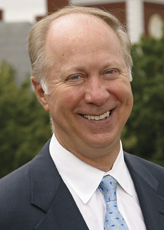
David Gergen, a senior political analyst for CNN, and a Professor of Public Service and Director of the Center for Public Leadership at the Harvard Kennedy School, will speak at the JUF Medical Professionals & Educators Divisions dinner on Monday, May 19.
Gergen served as an advisor to four U.S. presidents of both parties: Richard Nixon, Gerald Ford, Ronald Reagan, and Bill Clinton. He wrote about his experiences in his New York Times bestseller, “Eyewitness to Power: The Essence of Leadership. Nixon to Clinton.” He has been active on numerous non-profit boards, including the boards of Yale and Duke Universities. Among his current boards are Teach for America, City Year, Schwab Foundation, the Aspen Institute and the advisory board for the Harvard Graduate School of Education. He also chairs the advisory board for the new School of Law at Elon University and co-chairs the advisory board for Duke Engage.
A native of North Carolina, Gergen is a member of the D.C. Bar, a veteran of the U.S. Navy, a member of the Council on Foreign Relations and a member of the U.S. executive committee for the Trilateral Commission.
He is an honors graduate of Yale and the Harvard Law School. He has been awarded 24 honorary degrees.
He is currently at work on a new book about renewing America’s political culture.
In a 2009 interview, Stefanie Bregman, a staff writer for JUF News, spoke to Gergen. Here’s an excerpt from their discussion.
JUF News: Of all you’ve accomplished as a political and presidential advisor, educator, journalist, author and public servant, what have you found
most rewarding?
David Gergen: It’s an enormous privilege for any citizen to serve a president in the White House and so I’ve been wonderfully blessed in life by serving under four different presidents. But some of my most rewarding moments go back to an earlier time in my life, back into the 1960s. I grew up in North Carolina and I became a college intern with Governor Terry Sanford, a very progressive, Kennedy-like figure in North Carolina and they assigned me to work with David Coltrane, a fellow who had been a long time segregationist and had changed his views and become very strong pro-civil rights. I worked for him for three summers traveling the state trying to keep racial peace but also trying to promote integration and jobs and educational opportunities for African Americans. I look back upon that time as one of the most satisfying in my public life.
How does your experience as a public servant play into your role as a journalist?
There used to be a barrier between public service and journalism or working in government and journalism and that barrier has come down. I don’t consider myself a journalist so much as I am a commentator. I do have biases and I’m not there to just report the news-I’m trying to interpret and understand the flow of events.
What drew you to politics-did you always know you wanted to work in public service?
I was drawn early on to be at the scene as a participant of the big events of my generation-I’ve always wanted to have a ringside seat and possibly be on the field for the big things that were going shape our generation. Wanting to be there, wanting to make a difference if I could, wanting to be a voice, trying to help shape how things turn out. I’ve been very fortunate in life and people have been enormously kind to me along the way.
Other stories
-
Meet Andrew S. Hochberg, 2021 Julius Rosenwald Memorial Award recipient
Celebrate Andy Hochberg at the virtual Annual Meeting on Sept. 14
Read more -
Two local teens win national recognition
Recipients of the annual Diller Teen Tikkun Olam Awards
Read more -
Celebrating six young award winners cultivating the community
Introducing young adult award winners
Read more
Downtown Chicago was decked in blue and white today as a large, enthusiastic all-ages crowd gathered to celebrate Yom Ha’atzmaut, Israel’s Independence Day.
Sights, sounds and tastes of Israel filled Daley Plaza in honor of Israel’s 66th anniversary: the Israeli flag was raised to the singing of the nation’s national anthem“HaTikvah,” Milt’s BBQ for the Perplexed and Naf Naf Grill offered lunch, and performances from Israeli singer/songwriter Mika Karni and Jaman drummer circle created a festive atmosphere. Celebrants, students from Chicago Jewish Day School and Hillel Torah North Suburban Day School, sang and danced.
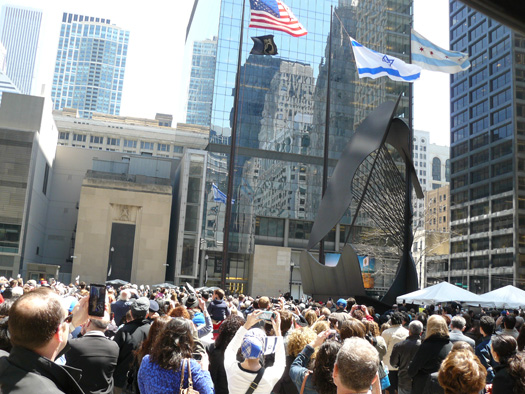
The event kicked off JUF’s Israfest, a month-long celebration of Israel benefitting Israel Children’s Zone.
Skip Schrayer, chairman of JUF’s Jewish Community Relations Council, welcomed everyone to Daley Plaza and shared words from Mayor Rahm Emanuel, who was unable to attend the festivities.
“Israel’s Independence Day is a time to celebrate and recognize the culture, traditions, and achievements of Israel as well as the contributions that people of Israeli descent have added to our city,” Schrayer read on the mayor’s behalf. He then introduced Roey Gilad, Consul General of Israel to the Midwest.
“I think, especially on such a day like today, we have to remember the Jewish people are peace-loving people, and Israel is a peace-loving country,” Gilad said. “So within all the clouds that are above us, we know there is sunshine, and we know one day – I don’t know if it will be me – but one consul general will stand here and tell you the day of peace has arrived.”
Israfest continues tonight with YLD’s Blue & White Bar Night as well as the opening of the Israeli Jazz and World Music Festival.
Other stories
-
Meet Andrew S. Hochberg, 2021 Julius Rosenwald Memorial Award recipient
Celebrate Andy Hochberg at the virtual Annual Meeting on Sept. 14
Read more -
Two local teens win national recognition
Recipients of the annual Diller Teen Tikkun Olam Awards
Read more -
Celebrating six young award winners cultivating the community
Introducing young adult award winners
Read more
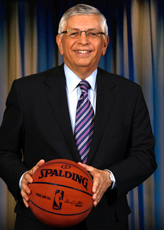
For the last 30 years, the NBA has known only one commissioner-David Stern. That changed in February, when on the 30th anniversary of his first day as commissioner, Stern stepped down.
As the NBA continues to grow in Stern’s absence, however, his legacy will continue to grow with it. Stern helped turn American basketball into a highly profitable sport with tremendous national and global appeal.
Stern will speak at JUF’s Lawyers & Government Officials; Foods & Hospitality and Wholesalers, Retailers & Manufacturers Divisions Dinner on Monday, June 2.
JUF News: How have the last couple months been? Has it been an easy or challenging transition?
David Stern: It’s been a very easy transition. I’ve been mixing things up a bit. I’m getting ready to travel for the NBA Europe. I’m beginning my speaking engagements and I’m taking some vacation time. I’m talking to a variety of firms about exactly how my talents might fit with some of their needs, so I’m engaged in very active discussions, but I’m not in a hurry to commit to anything full time now that I have my calendar back.
It sounds like you are interested in continuing to play a part in the ongoing globalization of basketball.
That’s the place where I told Adam (Silver) I’d be happy to be the most helpful. I’ll do anything he’d like me to help out with, but particularly the globalization of the NBA. In May I’ll be going to Italy, Spain and London all on NBA matters.
What of your many accomplishments as commissioner were among the most challenging or rewarding for the work you put into it?
I think we figured out that we can have enormous influence on important issues. That was brought to bear when Magic Johnson announced that he was HIV-positive. We participated in changing the debate in this country and around the world on HIV. In some ways, people look at the economic success over the 30 years going from $78 million in revenues to $5.5 billion, but I think the unspoken, to me, is the fact that we started the journey with a sport that was viewed as having “too many black players” and not being accessible to America, and as of now, our NBA players are at the top of the celebrity pyramid and most of them are African-American. That means that we had something to teach America as a sport about focusing on talent rather than race and that’s a very important thing … We put the sport very much at the center of an understanding that social responsibility is an obligation, not just of sports leagues, but all enterprises.
What lessons did you learn in your time as commissioner that can be applied to anyone’s work?
To me it’s about the narrative. You can have a narrative that’s better than the one you inherited through focusing on it, directing it, and getting people to join in it. You become a singular organization that’s focused on bringing the narrative to pass with a serious focus both on the business and the execution and detail of all aspects of it and the opportunity to do something more than just make money for your stakeholders. Our narrative became we had the best athletes in the world and rather than apologizing because they happened to be black, we had something to teach the world about talent. We had a great game and it televises well and television became cable, which became satellite, which became digital and it’s really not television anymore but all forms of media.
What might people not know about how Michael Jordan and the Bulls teams of the ’90s shaped the NBA and the direction of the sport?
At a time when we were moving to NBC, the Bulls took off and our ratings soared. NBC spent enormous amounts on promotion and so the sport took off with Michael Jordan and his teammates and our global aspirations began to be fulfilled. The Bulls were ruling the world, not just the American market. So the Bulls were a very important part of the growth of the NBA and the globalization of the NBA.
What do you think of the Bulls now?
Management ultimately makes teams successful on the court and off the court and the Bulls are a very well-managed team and always have been.
What do you see as Adam Silver’s biggest challenge going forward?
I’m hoping that Adam will have very smooth sailing. There’s continued growth of the NBA on a global basis, continued growth on network television, there’s a new TV contract that has to be negotiated. We’ve only two years to go after this season so this is normally the time when we negotiate and I expect there will be a large increase. Digital is a friend of the NBA because we are very relevant through social media and our images travel well around the world with the streaming of NBA games. And franchises are in high demand and short supply.
What will you miss most about being commissioner?
The thing that I enjoyed the most was going out and being amongst fans and seeing games. That was fun and the fans were always uniformly good-natured and I suspect I haven’t been to my last game. I’ll always enjoy watching the success of the NBA and participating in it if I can be helpful.
Other stories
-
Meet Andrew S. Hochberg, 2021 Julius Rosenwald Memorial Award recipient
Celebrate Andy Hochberg at the virtual Annual Meeting on Sept. 14
Read more -
Two local teens win national recognition
Recipients of the annual Diller Teen Tikkun Olam Awards
Read more -
Celebrating six young award winners cultivating the community
Introducing young adult award winners
Read more