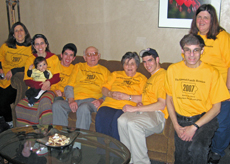
Seven years ago, my wife was invited to Iowa City for an interview. She had little desire to accept the position; however, we eagerly traveled west. Iowa City is a fabled piece of our family fabric. My maternal grandparents were born there, educated there, married there, and eventually left there-but only physically. Even after moving away to Detroit in 1950, my grandparents continued to dwell in Iowa City. So much of what they spoke about concerned Iowa City: the people, way of life, reverence for the Hawkeyes and hatred for the Buckeyes. From our earliest years, my grandparents inculcated my cousins and me with an unwavering allegiance to a land none of us had ever seen; yet, whether we were in Illinois or Michigan, around our tables our family sang, “We’re from Iowa, Iowa. State of all the land, joy on every hand. We’re from Iowa, Iowa. That’s where the tall corn grows.”
The interview was called for the end of January. We were ecstatic to go; it was the perfect time to get away. My wife and I were living with our newborn daughter in a rancid apartment on Chicago’s North Side. Days earlier, the ceiling above our shower collapsed, flooding the bathroom with plaster, water, and a virtual window to the unit upstairs. On a subsequent evening, we noticed the ceiling fan buzzing on the “off” setting. I unscrewed the device to determine why, and discovered thousands of beetles flowing out from the fixture. Suffice to say, we were ready to go.
My grandparents had just turned 80. Traveling was no longer easy for them, but we asked if they would like to join us. Surprisingly, they agreed. In the six decades since they had left Iowa City, rarely had they returned.
When word spread that my grandparents were going back to Iowa City, my family got nutty. My parents took off work, my brother flew in from New York, my aunt came in from Detroit. Suddenly, our sedan was no longer sufficient. We rented a 12 seater van and headed west on Route 80, all clad in matching t-shirts my father had ordered denoting this quasi-family reunion.
The weather in Iowa was projected to be cold. Chicago, Detroit, and New York had all suffered brutal temperatures, but nothing had prepared us for Iowa. Four hours after leaving Chicago, we pulled into a gas station in Iowa City. As we exited the van, a burst of freezing wind slammed our bodies. My grandmother stood there, beaming beside the vehicle, and declared, “I’m home.”
Over the next several days, we traveled around like tourists in a land we already knew.
We saw Agudas Achim, the synagogue where in 1940 my grandfather was bar mitzvahed. My grandmother recounted going to shul, and how the Kol Nidre (Yom Kippur service) appeal consisted of a community member banging on the bima (stage) and saying, “Oof halten de shul.” We traveled to the University of Iowa Hillel, and my grandmother explained that this was where she learned Havdalah (the Saturday evening service marking the separation of Shabbat and weekdays). After the first time she heard it, she asked her father why they never did the Havdalah service at home. He told her that in America, every day was a workday for him. There was no Sabbath day of rest.
We saw the hospitals where my grandparents were born, high school they attended, home where they were married. We visited the site of the junkyard, where as a nine-year-old boy, my towering grandfather protected his much smaller father from a drunk, anti-Semitic man. We saw it all, a lifetime of memories, while dressed alike, driving around in a 12 seater van.
Seven years have passed since that trip and much has changed. My dad is gone, my grandmother no longer remembers being there, my grandfather (a scrap man, like his father) is constantly worried about China, trade, and the economy. When I recently asked him about Iowa City, he said, “There’s no industry there,” and he paused, “It’s a good place to be from, not a good place to be at.”
I don’t know. I think back on our time there, and there’s nowhere else I’d rather be.
Adam Reinherz is an Instructor at the Osher Lifelong Learning Institute, University of Pittsburgh.
Other stories
-
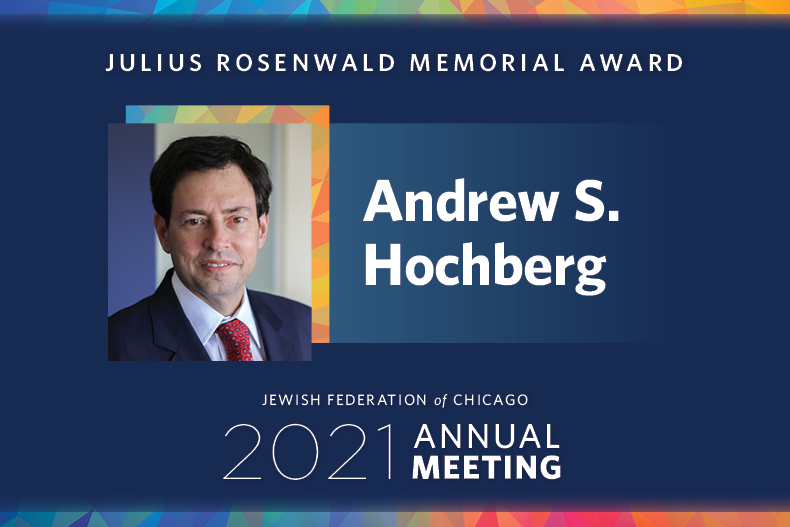
Meet Andrew S. Hochberg, 2021 Julius Rosenwald Memorial Award recipient
Celebrate Andy Hochberg at the virtual Annual Meeting on Sept. 14
Read more -
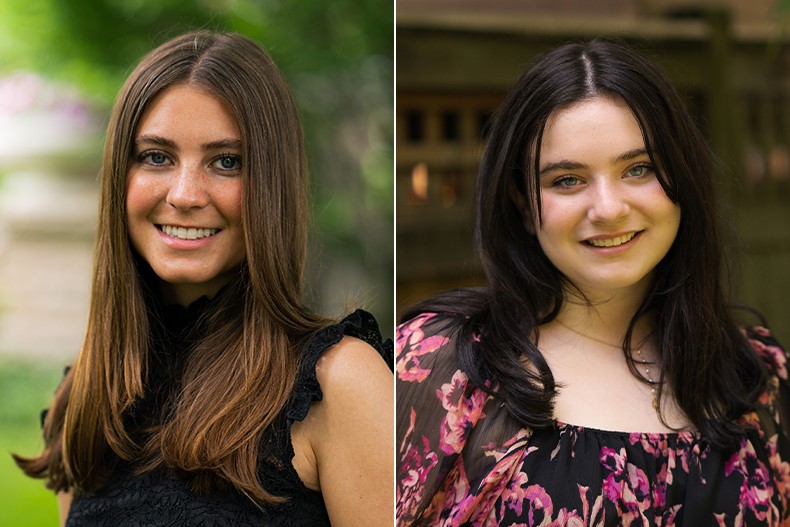
Two local teens win national recognition
Recipients of the annual Diller Teen Tikkun Olam Awards
Read more -

Celebrating six young award winners cultivating the community
Introducing young adult award winners
Read more

Other stories
-
Meet Andrew S. Hochberg, 2021 Julius Rosenwald Memorial Award recipient
Celebrate Andy Hochberg at the virtual Annual Meeting on Sept. 14
Read more -
Two local teens win national recognition
Recipients of the annual Diller Teen Tikkun Olam Awards
Read more -
Celebrating six young award winners cultivating the community
Introducing young adult award winners
Read more

There’s no doubt that becoming a parent is exhilarating. But ask any new mom or dad, and they’re sure to tell you — it’s also exhausting. Having a baby can be overwhelming, leaving parents in search of resources and support.
Starting next month, jBaby Chicago will be here to help. The program, which launches in April as a project of the Jewish United Fund/Jewish Federation of Metropolitan Chicago, aims to be a resource for parents raising Jewish children from birth to 24 months old, creating a fun, social, supportive community to help navigate those critical first two years.
“It’s really important to have other parent friends who have kids the same age as yours and go through it together. It honestly can make or break your experience,” said Lindsay Lee Meltzer, a new mom in Chicago who will assist with outreach for the program. “These parents are out there. They’re just not finding each other.”
Program offerings will include playgroups and classes presented by community partners such as Mishkan Chicago, JCC Chicago, Anshe Emet Synagogue, Bernard Zell Anshe Emet Day School, Sinai Preschool, Gan Shalom Preschool, and more. Topics and themes range from child development to adult yoga to music to baby sign language and massage, as well as purely social activities for parents to schmooze while kids play.
“Parents will have the chance to connect with Jewish peers at a critical time in development of their family,” said Rebecca Richards, jBaby Chicago Chair, adding that she hopes the program will allow new parents to “forge deep friendships and create lasting support networks.”
jBaby Chicago also will offer free ‘swag bags’ filled with goodies like books, toys, and coupons for local boutiques and play spaces. The bags will be personally delivered to new moms and dads by jBaby Chicago Connectors, new parents like Meltzer who help match individual families with opportunities in their neighborhoods.
“The impetus for jBaby Chicago really grew out of the success of Chicago’s PJ Library program, which now sends Jewish books and music monthly to 6,200 families in the Chicago metropolitan area,” said Debbi Cooper, JUF’s Assistant Vice President of Young Family Engagement. “We kept hearing from families how great it was to connect with other families raising young children through PJ Library programs and how much they wished they had these connections when they first had children.”
Classes and playgroups will begin in April in the City North area, which includes Lincoln Park, Lakeview, River North, Gold Coast, Bucktown and Wicker Park. jBaby Chicago will expand to surrounding areas in the second half of 2014 and 2015.
Parents of Jewish infants in Chicago are invited to sign up online to learn more and receive jBaby Chicago swag.
For more information, visit www.juf.org/jbabychicago.
jBaby Chicago Community Partners and Class Offerings
City North Area
April 2014 – December 2014
Mishkan
Grow @ Mishkan – Home-based Jewish experiences for families with children under two years old.
JCC Chicago
jNew Moms Group – New moms group for moms of Jewish children birth to 6 months old.
JCC Chicago
jMemory Workshop – Workshop for creating baby’s first memories book.
Anshe Emet
Connecting the Expecting – Dinner series for expectant parents focusing on everything a new parent needs to know in those first few months.
Bernard Zell Anshe Emet Day School
Music class with Bucktown School of Music – Music class incorporating Jewish and secular music for parents and babies.
Sinai Preschool
New Moms Connect – New moms group for moms of Jewish children birth to 6 months old.
Gan Shalom Preschool
Daddy and Me – A Sunday morning class for dads and children 12-24 months.
jBaby Chicago
Newborn Class with Bubbles Academy-A six-week class focused designed to help parents navigate baby’s first few months.
Playgroups-Playgroups for children 18 months and younger meeting in Chicago’s hottest play spots
Other stories
-
Meet Andrew S. Hochberg, 2021 Julius Rosenwald Memorial Award recipient
Celebrate Andy Hochberg at the virtual Annual Meeting on Sept. 14
Read more -
Two local teens win national recognition
Recipients of the annual Diller Teen Tikkun Olam Awards
Read more -
Celebrating six young award winners cultivating the community
Introducing young adult award winners
Read more

A new mikvah (Jewish ritual bath) is being built in the heart of Buffalo Grove designed to accommodate Jewish women of all backgrounds.
“Mikvah observance is really for any Jewish woman regardless of affiliation or background,” said Elisa Zehnwirth, who along with her husband, Rabbi Shimon Zehnwirth, is spearheading the project.
The Zehnwirths moved into the Buffalo Grove community a few years ago and started Torah Academy-a day school offering a Hebrew and Sunday school, adult education and one-on-one learning opportunities and community events-where Rabbi Zehnwirth serves as the founding head of school and Elisa as the early childhood director and preschool teacher. The obvious next step, they said, was to establish a mikvah for the community. Women in the Northwest suburbs currently have to travel up to 45 minutes to the nearest mikvah that will accommodate their needs.
“According to the priorities of Jewish family life, those are all important institutions but the mikvah really should be priority,” Elisa Zehnwirth said. “So my husband, having started a day school, said okay now we really need to build a mikvah around here and make this a place for Jewish families to really grow and flourish and be connected to their Judaism in all aspects of Jewish life.”
So the Mikvah Association of Buffalo Grove was born and with the support of New York-based organization Mikvah USA, which helps outlying communities establish their own mikvah, construction is currently underway for the facility which Zehnwirth says will be very beautiful and spa-like.
“We want it to be a luxurious type of experience for women,” she said.
The Buffalo Grove Mikvah is expected to be completed sometime this spring.
For more information about the Buffalo Grove Mikvah or mikvah observance, email [email protected].
Other stories
-
Meet Andrew S. Hochberg, 2021 Julius Rosenwald Memorial Award recipient
Celebrate Andy Hochberg at the virtual Annual Meeting on Sept. 14
Read more -
Two local teens win national recognition
Recipients of the annual Diller Teen Tikkun Olam Awards
Read more -
Celebrating six young award winners cultivating the community
Introducing young adult award winners
Read more
Chicago area women will discuss these critical topics during the Jewish Women’s Foundation Power Lunch Program, set for Thursday, March 6, from 11:30 a.m. to 2:30 p.m., at the Jewish United Fund/Jewish Federation of Metropolitan Chicago, Lillian and Larry Goodman Conference Center, Sixth floor, 30 S. Wells, Chicago.
Tickets are $40 per person, which includes lunch. Dietary laws will be observed. No funds will be solicited. The Joseph L. and Emily K. Gidwitz Memorial Foundation provides support for this biennial event.
“The Power Lunch provides a unique and exciting opportunity for our trustees and guests to learn from experts about issues that impact women and girls in our community and around the world. Our presenters’ perspectives will not only inform, but also empower the audience to take steps to be part of the solution,” said Dana Hirt, JWF Chair.
“JWF’s mission is to expand and improve opportunities and choices in all aspects of Jewish women’s and girls’ lives through strategic and effective grant-making, targeting systemic change. Educational events like our semi-annual Power Lunch ensure that we stay current on relevant issues and remain thoughtful in our approach to address them,” she added.
Attendees may choose from two of the following four breakout sessions:
Gender Index: Tracking the Status of Women and Girls in Israel. In 2012, the Van Leer Jerusalem Institute launched an unprecedented effort to study and track rates of gender inequality in Israel. By examining a myriad of issues including women’s economic security, political representation, health outcomes and rates of interpersonal violence, this new resource provides a snapshot of the status of women and girls throughout the country. This session will present some of the report’s key findings and recommendations for legislative, policy, and programmatic reform. Facilitator Naomi Chazan, former Deputy Speaker of the Knesset, was one of the founders of the Israel Women’s Network, and is a professor emerita of Political Science and African Studies at the Hebrew University of Jerusalem, and Dean of the School of Government and Society at the Academic College of Tel-Aviv-Yaffo.
Empowering Our Teens. In today’s 24/7 plugged-in culture, teen girls struggle with many complex issues. This session will provide an update on universal coming-of-age issues such as body image, friendships, sexuality and stress, and identify ways a concerned community can help Jewish teens navigate their world. Facilitator Deborah Meyers is founder and Executive Director of Moving Traditions, a Jewish education organization dedicated to advocating for a more expansive view of gender in Jewish learning and practice.
Every Day is Election Day: Women, Leadership and Influence. Studies show that women’s leadership is vital to advancing the status of women and girls and transforming institutions, policies and communities. This session will present practical tips for any woman interested in achieving a leadership position, and provide inspiration for advancing the issues about which she cares. Facilitator Rebecca Sive, University of Chicago Harris School of Public Policy faculty member, women’s political advocate and author of Every Day is Election Day, presents strategies for transforming institutions, politics and philanthropy through women’s leadership.
Myths and Truths about Women and Money. What messages do we hear about women and money and what is the reality? This session will expand participants’ understanding of financial literacy, explore the real impact of continuing gender discrimination and identify ways they can change the dialogue. Facilitator Helaine Olen, author of Pound Foolish: Exposing the Dark Side of the Personal Finance Industry, is a New York based journalist and regular contributor to The Great Debate and Equals blogs at Reuters. Business Insider recently named Olen as one of “50 Women Who Are Changing the World.”
For information and registration, call (312) 444-2846 or visit www.juf.org/powerlunch. Early reservations are encouraged. There are a limited number of tickets for the event, which is expected to sell out.
IF YOU GO…
WHAT: Jewish Women’s Foundation of Metropolitan Chicago 2014 Power Lunch
WHEN: Thursday, March 6 – 11:30 a.m. to 2:30 p.m.
WHERE: Lillian and Larry Goodman Conference Center – Sixth Floor
Jewish United Fund/Jewish Federation of Metropolitan Chicago, 30 S. Wells, Chicago
COST: $40 includes lunch; Dietary laws observed
Parking passes available for $14.75
SPONSOR: Joseph L. and Emily K. Gidwitz Memorial Foundation
REGISTRATION/INFO: (312) 444-2846 or www.juf.org/powerlunch
Sara Kalish is the Program Officer for the Jewish Women’s Foundation of Metropolitan Chicago.
Other stories
-
Meet Andrew S. Hochberg, 2021 Julius Rosenwald Memorial Award recipient
Celebrate Andy Hochberg at the virtual Annual Meeting on Sept. 14
Read more -
Two local teens win national recognition
Recipients of the annual Diller Teen Tikkun Olam Awards
Read more -
Celebrating six young award winners cultivating the community
Introducing young adult award winners
Read more
Representatives Quigley and Roskam speak to JUF’s Government Affairs Committee
MARA S. RUFF
The Jewish United Fund/Jewish Federation of Metropolitan Chicago welcomed U.S. congressmen Rep. Mike Quigley and Rep. Peter Roskam as guest speakers at Monday’s Government Affairs Committee meeting.
Considered among colleagues a more junior congressman, Quigley is quickly making his mark in Washington D.C. He was tapped to serve on the Democratic leadership team as assistant whip after only four years in the House. Now that a budget has passed and the debt ceiling issue is resolved, Quigley is eager to get back to regular order and “get onto the other issues as to why we were elected.”
Last year, Quigley joined the appropriations committee and said this committee has opportunities to make real change, but it is “the perfect place to help you at the worst possible time.” Quigley spoke to the committee on the importance of fiscal responsibility, his long-standing commitment to Israel, and the urgency for bi-partisanship efforts in Congress.
“We want to pass legislation and need more than one reason to pass legislation other than a vote against the other party,” he said. Quigley believes that the immigration reform debate will truly push both sides of the aisle to work together to change and ultimately pass the bill.
Although new to Washington, Quigley is no newcomer to the Chicago political landscape. Prior to taking office in 2009, Quigley served as Cook County Commissioner for 11 years in the very same district he currently represents.
Roskam, current chief deputy whip serving in his fourth term in the House, opened by reminding committee members that “we are a nation of 300 million people, with over 400 representatives trying to find common ground.” He suggested Congress adapt Thomas Jefferson’s approach to working in government by articulating a large vision and recognizing incremental change as moving forward. Roskam expressed that we have become an instant gratification culture, and need to accept small steps as progress.
“We cannot tolerate avoidance behavior, as it presents fewer choices to government,” Roskam said. He illustrated the pension crisis in Illinois as a way not to do business in Washington and noted that entitlement programs, such as the public pension systems in Illinois, are at risk. “To put off a problem, such as this, is to be involved in generational theft,” he said.
Although the government is currently operating on a $3 trillion budget, two-thirds of that budget is entitlement programs. Medicare, for example, is expected to become insolvent in 13 years.
“The challenge is that we all grew up in an economy that assumes if you work hard and make good choices, you will be successful,” Roskam said. “Now, with increased debt and capital harder to form, this is no longer the case.”
Roskam suggested that everyone needs to work together to solve this crisis and we need to get over the all-or-nothing attitude. “We need to start focusing on incremental change, and over time, we will all be in a better place.”
Other stories
-
Meet Andrew S. Hochberg, 2021 Julius Rosenwald Memorial Award recipient
Celebrate Andy Hochberg at the virtual Annual Meeting on Sept. 14
Read more -
Two local teens win national recognition
Recipients of the annual Diller Teen Tikkun Olam Awards
Read more -
Celebrating six young award winners cultivating the community
Introducing young adult award winners
Read more
In March, Chicago-area audiences can view a rare work-in-progress screening of Rumbula’s Echo, a documentary detailing the largely unknown World War II massacre of 25,000 Latvian and German Jews. Rumbula’s Echo is the first film focused on two days of firing squad executions that took place in 1941 at Rumbula Forest in Riga, Latvia.
On March 23 (11 a.m., Chicago Cultural Center’s Claudia Cassidy Theater), local audiences can view a work-in-progress screening of a documentary detailing the largely unknown World War II massacre of 25,000 Latvian and German Jews.
Rumbula’s Echo is the first film focused on two days of firing squad executions that took place in 1941 at Rumbula Forest in Riga, Latvia, according to director Mitchell Lieber.
Lieber, a Chicago businessman and documentarian, learned about the incident 15 years ago while researching his family’s genealogy. He was saddened to discover that at least three of his relatives were among those killed at Rumbula Forest.
“Few people know that an estimated 1.5 million people, the majority of whom were Jews, were executed by S.S. firing squads during World War II. This took place largely before the death camps and gassings, and mostly in Soviet territory,” he says.
Lieber, who has a broadcasting background, gathered a team of TV and documentary veterans, and five Holocaust historians to create the documentary. The result is a historical piece, combining rare escapee and survivor interviews with archival footage and photos gathered from around the world.
“Amid the terror and death are seven uplifting stories of survival, rescue and reunion,” he says. Three survivors living in the Chicago area were interviewed for the project, including Sia Hertsberg of Glenview, a key character in the film, who narrowly escaped death at Rumbula. She and three other Holocaust survivors will be honored March 20 by the Illinois Holocaust Museum and Education Center.
“Four survivors have passed away since we began this project, and we feel compelled to make their stories known as quickly as possible,” adds Lieber.
The screening will be followed by a question and answer session with Lieber and Hertsberg. The event is free and open to the public, but seating is limited. Tickets are required and can be ordered online at http://tinyurl.com/jwckurx.
Chicago Filmmakers/Luminescence Media Group is a recipient of the first round of Breakthrough Fund mini-grants from the Jewish United Fund/Jewish Federation of Metropolitan Chicago for supplementary filming of the Chicago-based Holocaust documentary, “Rumbula’s Echo.”
For more information, visit www.RumbulasEcho.org.
Other stories
-
Meet Andrew S. Hochberg, 2021 Julius Rosenwald Memorial Award recipient
Celebrate Andy Hochberg at the virtual Annual Meeting on Sept. 14
Read more -
Two local teens win national recognition
Recipients of the annual Diller Teen Tikkun Olam Awards
Read more -
Celebrating six young award winners cultivating the community
Introducing young adult award winners
Read more
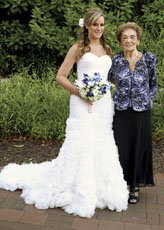
Editor’s note: Jamie Polakoff Lasko was planning a wedding, teaching preschool, and looking for a house while juggling tutoring, teaching dance, and babysitting when the unimaginable happened. The day after her 29th birthday-just three months before her wedding-she was diagnosed with breast cancer.
In the beginning, radiation was flying by and I couldn’t have been happier to see it end. But about halfway through, my feelings about things winding down changed. That’s because counting down the days until it was over also meant we were getting closer to losing my Bubby.
On Christmas Eve, she arrived home from a three-day hospital stay with an around-the-clock hospice nurse. We were told her kidneys were failing and she would only be with us for another week, maybe two or three. As much as we knew this day wasn’t too far into the future, it still came as an absolute shock. Yes, she was 95 years young. Yes, she had been saying for the last few years that she was ready to go. But at almost 96 years old, she was still living alone in her Skokie home of 53 years. She was bored and lonely because she outlived everyone and had stopped driving a few years ago, but still she was otherwise independent. So how could someone go from taking care of her home and getting out and about to suddenly being unable to eat or drink or walk and only having a few weeks to live?
Well, as sudden as it was, if you have to leave this earth – and we all do at some point – this was absolutely the way to do it. Bubby refused to move out of her home over the last few years and said she would die in that house and she did just that. She was able to come home with dignity and grace. She had a hospital bed in the family room and visitors came in and out to say their goodbyes. What is more amazing, however, is that she was completely aware of what was happening. For 95 years old, her body might have been failing her, but her mind was still SO sharp. She always said she didn’t feel her age, and didn’t think her age. We all thought she didn’t look her age either. Again – all reasons this came as such a shock.
Her doctor told her she was dying and she accepted that. It was her time and she couldn’t be more ready. She’s been saying for years that she lived a good life and that was a statement she repeated over and over again these past few weeks. She never wanted to be a burden on anyone nor did she want to slowly turn into someone other than herself. She got her wish. The first two weeks at home, she would tell stories and crack jokes and it was the Bubby we all knew and loved shining through. Honestly, we had missed that personality of hers and we wanted to soak up every minute – even if she did repeat things. It was incredible how she could answer any question you asked, memories of an entire lifetime still fully intact. It is amazing how the repetition that frustrated us over the past year suddenly made us happy just to be hearing her voice.
Ever since my husband and I got engaged, Bubby would constantly say, “I just need to make it to July 20 (our wedding) and then I can go.” Of course, that’s not something you want to hear, and you tell her she’s crazy, she will be around forever, and she will see great grandbabies. But in the back of my mind, I began to worry she might not make it to that day. Well she more than made it – she tore up the dance floor.
After the wedding, she continued to say she was ready to go and we’d continue to give her things to look forward to. She even found herself a new countdown – the end of my treatments.
You see, while I don’t carry the gene, my Bubby had breast cancer too. We were always told it was something she would die with and not from. When you live as long as she did, cancer just happens, but it generally grows too slowly to kill you. Regardless, while she didn’t want any surgery or chemo or any drastic measures taken for any aspect of her health, she still knew what it felt like to have breast cancer. Sure, she might have had a skewed understanding of how cancer works; when I told her my news, she’d say over and over that she wondered how I got mine because of course, she got hers in her car accident when her breast hit the steering wheel.
Regardless, Bubby would ask how many treatments I had left every time we spoke. Even in her last few weeks at home, I would come in and she’d say, “Jame, how many more?” I would tell her and hold up my fingers in case she didn’t hear. She would hold up her fingers back to make sure she got it right and I would nod. She would nod and say “good, then I can go. When I know you’re okay, I can go.” And you know what? She did just that.
The last few days of my treatment, I hated telling her the number. She couldn’t ask it anymore but I could see by the look on her face that she wanted to know, so I would tell her and she would smile and nod. When I got to her house at my last treatment, I took her hand and I said very loudly that I was all done. She gave a nod, which, while so tiny, was clearly done with all the energy she could muster as she squeezed my hand. Over the next few hours, her breathing became shallower and more labored. As hard as it was to watch, I sat by her side and held her hand. Perhaps her eyes were only watering, but once I could no longer fight back my tears, I smiled through them as I held her hand. She appeared to be crying too. Her eyes were open and she just kept nodding. Maybe it was her restlessness, but I choose to believe that she knew what was coming and was telling everyone it was okay, she was ready.
That entire week, we went home by 9 or 10 p.m., but there was something about last night that made us all unable to leave that house. We had made the decision to spend the night when it was after midnight and we are so glad that we stayed. She stopped breathing at around 1 a.m. We had been anticipating this for weeks, but no matter how prepared we were, in those last few hours it was over in a snap. But she did the two things she said she wanted to do: she died in her home, on her terms, and she waited until she knew I would be okay.
I never used to think I was anything like my bubby. She was so tough and strong and stubborn as hell. I was the softy of the family. But I think these past few weeks made me realize that I get my strength from her. She went through a lot in her lifetime and she always came out stronger on the other side. While I know that everyone in my life has helped me stay J-Strong, I think it is her blood running through my veins that turned me into the strong woman that I never knew I could be. I only hope I live as long as she did and never let go of who I am.
Now it is my turn to repeat what I said at least a hundred times in the past few weeks. I love you, Bubby. And even though she isn’t here to say it, I can hear her voice saying, “I love you more.”
JFor more on Jamie Polakoff Lasko’s journey, visit jstrong720.wordpress.com.
Other stories
-
Meet Andrew S. Hochberg, 2021 Julius Rosenwald Memorial Award recipient
Celebrate Andy Hochberg at the virtual Annual Meeting on Sept. 14
Read more -
Two local teens win national recognition
Recipients of the annual Diller Teen Tikkun Olam Awards
Read more -
Celebrating six young award winners cultivating the community
Introducing young adult award winners
Read more
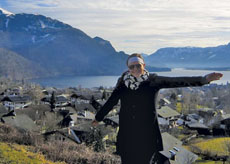
‘Certainly, travel is more than the seeing of sights; it is a change that goes on, deep and permanent, in the ideas of living.’-Miriam Beard
In January, I boarded a transatlantic flight ready to spend eight days with one of my college roommate visiting four major European cities: Vienna, Bratislava, Salzburg, and Munich, in addition the Bavarian and Austrian countryside. The trip was filled with tons of laughter, wandering, delicious food-and of course, beer-and opportunities to learn about different cultures, history, and myself.
I left for this trip on the three-year anniversary of my departure to Barcelona, Spain, where I studied abroad. Prior to that trip, with the exception of Israel, most of my vacations were spent lying on the beach somewhere. My experience abroad propelled me to change how I thought about travel; I understood Beard’s quote: traveling leads to a change in your thoughts, knowledge, and view of the world. Three years and 11 countries later, my wanderlust is still in full force, growing stronger with each trip.
Nevertheless, I was met with skepticism before I left. Many people asked me why I was going. I am sure part of this was because I was going to Germany, somewhere that many Jews feel strongly about not visiting, which is something I had felt it the past. Even with that being a factor, most people’s confusion seemed to be because they wondered why I was flying across the world for “no reason.”
To be honest, I did have a reason. My friend was in Prague for a conference and wanted to travel after, but even if that wasn’t the circumstance, did that mean I had no reason to go? Of course not. Yet, with each person who inquired about my trip, I felt the need to legitimize my travel plans with a detailed explanation of how this trip came to be.
I’ve heard for years that it’s psychologically proven that people are happier when they spend money on experiences other than material goods and that “travel is the only thing that you can buy that makes you richer.” I couldn’t agree more and still, I often feel the need to defend myself for choosing to use my money to travel. I often feel that people think it’s more socially acceptable to spend money on material goods over experiences.
As cliché as it is, I am at the point in my life where it is ideal to travel. I am quite jealous of my friends who grew up outside of the United States because their cultures often embrace travel more than we do, which makes it easier to do so. It isn’t uncommon to start seeing the world after finishing high school, university, or service in their country’s military. How many Israelis do you know who have spent a few months in South America, just because? How many Europeans do you know who worked at summer camp and stayed afterward to travel or work temporarily outside of their homeland? I could make a long list at this point. However, when I thought about doing something similar after college graduation, it panicked me because that wasn’t the socially acceptable plan of transitioning to the working world without taking a moment to do as much as blink. Although I did spend three months working at camp, it somehow felt easier to justify than going to intern in Israel for six months or teaching abroad.
A year and half later, I regret feeling guilty about wanting to prioritize travel. It felt great to use my days off to experience where The Sound of Music was filmed, drink at one of the most famous beer halls in the world, hike a fortress, and see the gorgeous place that inspired Disney’s Castle. As I sit at my desk under the florescent lights, I daydream about the places on my bucket list. I want to get myself in the habit of being spontaneous; I’m never getting rid of my “travel bug.” People spend their time and money on what is important to them and as I look out at snow covered Chicago, I know I want to make it a point to see the world.
Lauren Schmidt, who lives in Chicago, works at the Simon Wiesenthal Center’s Midwest office in Chicago and is a contributor to Oy! Chicago.
Other stories
-
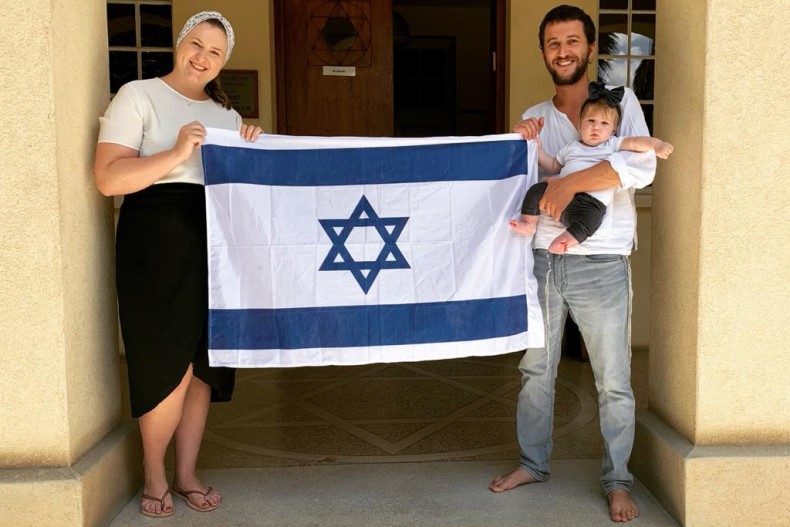
Chicago to Israel to Kenya
A family’s story of living Jewishly on three continents Michelle Cohen World May 28, 2021 Avital, Tzofia, and Netanel Kaszovitz outside their home in Nairobi on Yom HaAtzmaut. When Avital Kaszovitz prepared to be a Modern Orthodox shlicha (emissary) to the Jewish community in Ke
Read more -
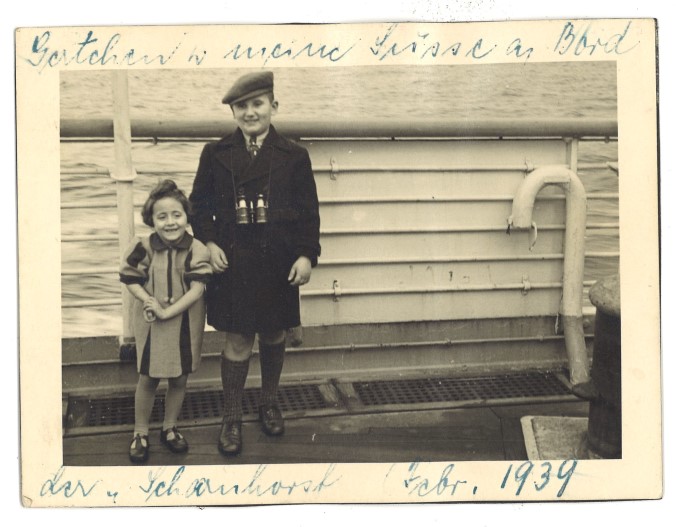
New exhibit spotlights the experience of ‘Shanghai Jews’
Explore a new Illinois Holocaust Museum and Education Center exhibit
Read more -
Europe’s brave new teachers of the Holocaust
Teaching the Holocaust in the modern era has its difficulties and rewards.
Read more

“It’s hovering around zero,” my Chicago friend tells me. I don’t dare inform him that where I’m sitting, it’s 76 degrees… expected to rise to 81 by lunchtime. “Come on down,” I yell in the telephone, thinking, “You’ll be in good company in Florida.”
Wherever I go in this winter in the Sunshine State, restaurants are crowded. Traffic increased more than usual. Shows are packed. I’m sure the polar vortex gripping most of the nation must have something to do with it.
Most visitors head here for the weather, and this vacationland happily provides just that: sandy beaches, a beckoning blue ocean and gulf, palm trees… all accessed by smooth, flat, and ice-free highway system. There are also “time-warped” hotels, steeped in Art Deco kitsch, interspersed between sleek, modern, multimillion-dollar high rises. Land at any major airport here and walk outside- the warmth immediately seeps through to your bones.
A perfect introduction to the state is a drive along Florida’s A1A, one of its most scenic roads. For diversion, this writer often takes a drive up A1A from Boca Raton to Manalapan in Palm Beach County.
Vacationers should never get bored in Florida. For openers, they could try Miami Beach and Miami itself, Orlando, Key West and the other Florida Keys, and the Everglades. Millions also flock to Disney World, with its 25,000 acres encompassing over 20 resorts, four theme parks, and water parks. And more cruise ships sail out of Florida than any place in the world, according to Jay Shapiro of Las Vegas’ Five Star Travel, who deals with luxury cruises and has an office in Ft. Lauderdale.
Seeking a Jewish neighborhood? Florida has the third largest concentration of Jews in the U.S. after New York and California. Palm Beach County, especially Boynton Beach, ranks high as having the largest gathering of Jews outside of Jerusalem. And Jewish tourists head to Boca, Delray Beach and Ft. Lauderdale for sun and sand. Most movements of Judaism are represented here, including several hundred Orthodox synagogues and 157 Chabad centers. Israeli cafes, such as Aroma Espresso Bars, located in Sunny Isles, Miami Beach, Miami Gardens, and the city of Miami, draw many. I counted more than 50 strictly kosher establishments in South Florida, including Sunrise Pita & Grill (Sunrise); Golda’s (Boynton Beach), Shalom Haifa (Miami Beach) and Frill Time (North Miami). There are also the Jewish Museum of Florida, 301 Washington Ave, Miami Beach and the Holocaust Museum, 1933 Meridian Ave., Miami.
Of course South Beach (Miami Beach)- besides its Art Deco offerings- remains on the cutting edge of Miami’s cultural and nightlife scene. And then of course there is that international city Miami, which boasts one of the world’s most beautiful cityscapes. If you are a sports fan and love basketball, even if you cheer on the Chicago Bulls, you can take in a game with the Windy City’s prime opponent, the Miami Heat, at the American Airlines Arena.
Before leaving the East Coast of Florida, head to Route 1 to Key West at least for a few days for a sunset cruise, followed by a romantic dinner on the water. There, you can also visit President Harry Truman’s Little White House and Hemingway House. Conventional wisdom has it that residents from the Midwest settle on Florida’s west coast via I-75, while metro New Yorkers and New Englanders move into retirement on the state’s east coast. That may be changing, according to Jack Ross, executive director of the Tampa Jewish Community Center.
Tampa and Clearwater contain about 25,000 Jews each. Clearwater remains a popular winter resort, with its world class beach, amazing marine life, and festivals like the annual fall Jazz Holiday, featuring four days and nights of live music. Back in Tampa, one popular attraction is its Ybor City area. This is only two square miles, but it’s got everything for a night on the town: restaurants, cafes, bars, cigar stores… even tattoo parlors. Here, you’ll find Florida’s oldest eatery, the Columbia Restaurant, the largest Spanish restaurant in the US.
Further south in Venice, between Sarasota and Naples, retiree Sy Waldman finds the Gulf Coast of Florida, “easier living than the east coast. We have opera and theater in Sarasota- only 20 minutes away- and the local Venice JCC sponsors many programs for seniors.”
So, as the Floridians say, “Come on down!” The temp is right.
Ben G. Frank, travel writer, journalist, is the author of the just-published “Klara’s Journey, A Novel,” (Marion Street Press,); “The Scattered Tribe: Traveling the Diaspora from Cuba to India to Tahiti & Beyond,” (Globe Pequot Press).
Other stories
-
Meet Andrew S. Hochberg, 2021 Julius Rosenwald Memorial Award recipient
Celebrate Andy Hochberg at the virtual Annual Meeting on Sept. 14
Read more -
Two local teens win national recognition
Recipients of the annual Diller Teen Tikkun Olam Awards
Read more -
Celebrating six young award winners cultivating the community
Introducing young adult award winners
Read more