Respect for the dignity and importance of work is well documented in the Talmud. The quote most often attributed to Freud, ” Love and work are the cornerstones of our humanness, “speaks to the essential nature of work in our lives.
The inability to work often creates heightened stress for anyone, but for members of the Jewish community their concerns about being able to provide for one’s self and family, along with the ability to fulfill acts of charity, or tzedakah, can be profound. Not being able to work and be productive, and the subsequent sense of loss of purpose, can deeply affect us.
The current restrictions on work, the extensive loss of jobs, and the uncertainty of future employment due to COVID-19 has produced a substantial shift in our sense of living in prosperous times and how work is performed. We are faced with a lack of clarity about what job sectors will suffer, which may grow, and what skills and experience will be needed to successfully transition into a post-pandemic workplace.
Recent articles by the Brookings Institution, Glassdoor, and other followers of workforce and employment issues point to general trends and forecasts regarding the future landscape of work in our country. One of the repercussions of COVID-19 is that more people are working remotely from home.
Our workforce which previously had approximately 3.6% of workers at home, at half-time or more, will most likely grow to 25-30% of the workforce working at home multiple days of the week by the end of 2021. People will need to boost their technological skills to keep up with the changing ways we are working.
Companies providing online and streaming content-like Netflix, Apple, and Zoom-are growing. Individuals with skillsets focused on providing remote content and delivery like web designers or data analysts are in greater demand. So are healthcare workers, product delivery personnel, such as truck drivers, and product delivery planners, such as logisticians. These are all areas to consider for future employment.
So how does this affect you if you are unemployed due to COVID-19? If you’re planning on re-entering the workforce, you ought to prepare for your job search now.
First, create or revise existing marketing tools such as a resumé and online career profile and refresh your interview skills. The key to moving forward-either transitioning into another field or staying in your current field-requires evaluating existing skills, experience, and education. Then, determine whether your skillset matches the requirements of the employer and job.
During this time, focus on expanding your network through LinkedIn and other social media platforms. And, if possible, consider opportunities to augment your skills through online courses, training, education, or certificate programs. Making yourself more versatile in a crowded post-COVID-19 job market will help you stand out from the competition.
We at JVS Career & Employment-part of the JCFS family of services-can help you in your job search. Through our online services, we offer job-readiness workshops, resumé writing and LinkedIn profile building, motivation and accountability groups, and one-on-one career guidance, all to help you find your next job.
JCFS Chicago is a partner with the Jewish United Fund in serving our community.
To learn more about JVS Career & Employment, visit jcfs.org/jvs.
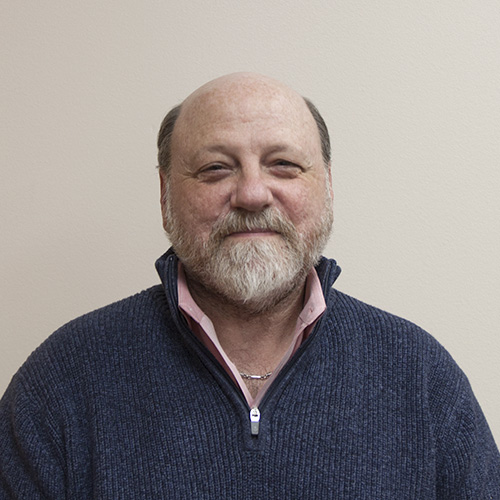
Jeffrey Blumenfeld, M.Ed, M.A., LPC, is the Director of Career Services for JVS Career & Employment.
Other stories
-

Mother’s Day, Father’s Day, and the Jewish way
Let us pause and consider what it means for us to truly honor our parents
Read more -
Each time we study Torah, we experience the revelation
The mystical tradition of Judaism that lifts up the number 600,000 from the Exodus
Read more -
I first learned about mikvah, a Jewish ritual bath, when I was a junior in college studying in Jerusalem.
I wish I could remember the name of the teacher who taught a group of young women, many of us in Israel for the first time. I remember her face and the scarf she wore to cover her hair. I remember her confidence in the life she was living, and her earnest desire to help us explore our own Jewish practice. At the time, I did not harbor any associations with mikvah, positive or negative, just a curiosity for all things Jewish.
She explained the need for mikvah in a beautiful way. She taught us the words tameh and tahor. I don’t think she ever used the words “impure” and “pure.” These were common translations I learned later. She employed these Hebrew words to describe spiritual states of being. She taught that when a person is tameh, or in a state of tum’ah, this means that the person (temporarily) possesses a more intense awareness of life’s fragility. It is not necessarily bad, as the term “impure” implies. It is simply part of life.
Tum’ah is the way you see the world on a day that you attend a funeral. Time slows, your actions are deliberate and purposeful, your perspective shifts, and life comes into focus. There is grief and gratitude, fear and courage, loneliness and connection.
We become tameh if we enter a home or other building where a dead body lies. We become tameh after childbirth because childbirth is terrifying and glorious, and the beginning of life is extremely fragile. Sadly, illness brings a similar awareness as does healing. Our teacher explained that women enter a spiritual state of tum’ah during our period because with it comes the loss of potential life. It would be very difficult to live in a state of such intense awareness all the time.
And so, we immerse in the mikvah. Surrounded by its warm waters, we transition back to a state of tahara, a spiritual state more focused on productivity and joy.
Ever since the coronavirus has drastically changed our lives, it feels like the whole world is in a state of tum’ah , a state of intense awareness of life’s value and fragility. It is an awareness that is exhausting in long stretches. Not that this experience is the same for all of us; it is not, but by now, we are aware of how vulnerable we are.
There is grief and gratitude, fear and courage, loneliness and connection. When we move forward, and eventually we will, perhaps we will create a new ritual to help us transition back to a state more focused on productivity and joy. We will need it.
Rabbi Reni Dickman is Executive Vice President of the Chicago Board of Rabbis and the Senior Educator of JUF.
Other stories
-
Mother’s Day, Father’s Day, and the Jewish way
Let us pause and consider what it means for us to truly honor our parents
Read more -
Each time we study Torah, we experience the revelation
The mystical tradition of Judaism that lifts up the number 600,000 from the Exodus
Read more -
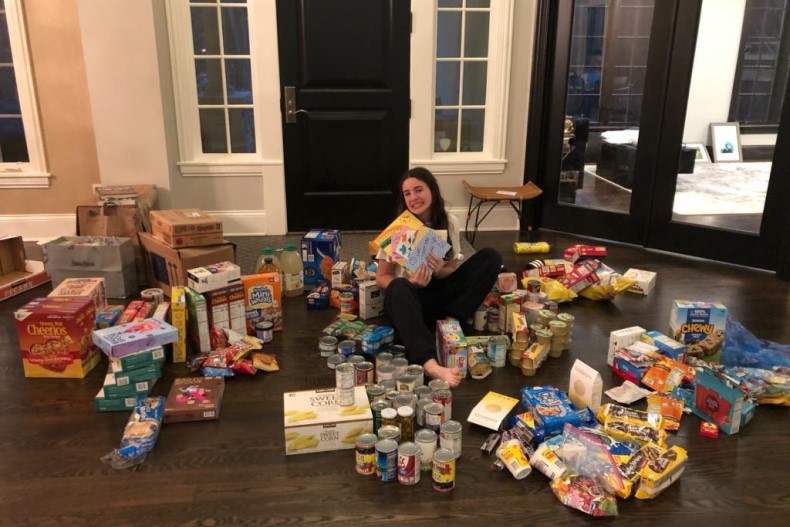
Chloe Colwyn’s bat mitzvah date was set for April 4. But when the COVID-19 crisis forced her to postpone her plans, she found the inspiration and maturity to help others on what was supposed to be her special day.
“She decided instead of being sad and focusing on her disappointment that she would help those in need,” said Kim Colwyn, Chloe’s mother.
The Deerfield family put out feelers to determine where their help could be most useful, and decided to create bags for the West Deerfield Township Food Pantry. Chloe reached out to family and friends to get donations of food and money and went to the grocery store to collect the necessary items for each bag. Chloe and her dad, Bill Colwyn, then delivered the bags to the pantry, where they were distributed to families and individuals in need.
“We are proudly helping over 40 families and individuals who need to be helped,” Chloe said. “It made me feel so good to give to other people.”
In addition to the food pantry project, Chloe learned from her rabbi, Karyn Kedar, Senior Rabbi of Congregation B’nai Jehoshua Beth Elohim, about Sedgebrook Senior Living Community, where residents were placed in lockdown due to the virus. Chloe and her friends assembled 20 snack bags for residents and made handmade cards to brighten the residents’ days, which she and her mother delivered.
“ We’ve been really proud about the way she has handled [the change of plans]. It’s a good lesson,” Kim said. “Anytime you go through something difficult in your life, if you can’t come out of it becoming a better person or learning more, you’ve missed a great opportunity.”
“The thing that mattered to me the most is that the littlest things can make the biggest impact,” Chloe added. “Even if someone donated something small, it could impact someone’s whole life. A tiny bit of kindness can go a long way.”
Other stories
-
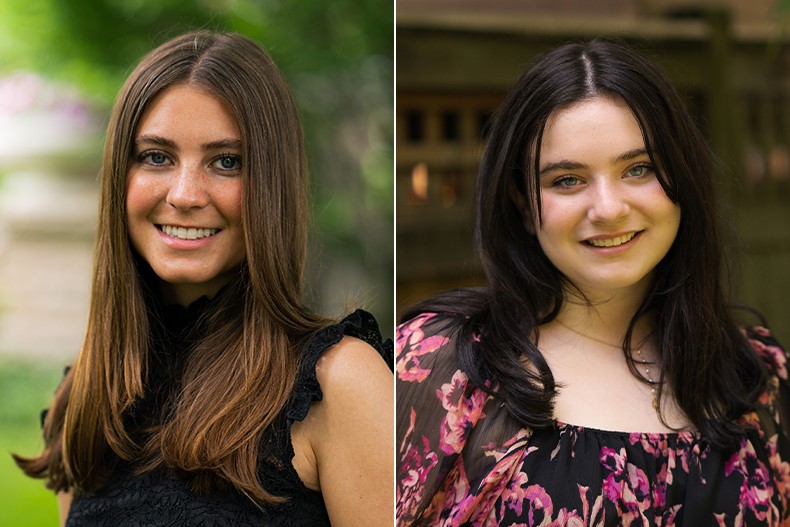
Two local teens win national recognition
Recipients of the annual Diller Teen Tikkun Olam Awards
Read more -

Celebrating six young award winners cultivating the community
Introducing young adult award winners
Read more -
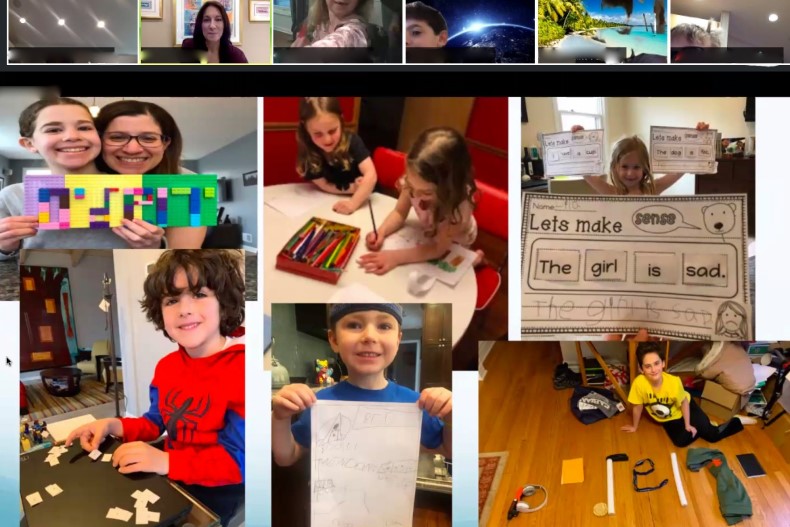
Turn a class with 20 kids in one room into a class in 20 kids’ rooms. Everything a Jewish school does-put that online. And do it in under a week.
That was the task faced-and met-by Chicago metropolitan Jewish schools responding to the coronavirus pandemic.
“Gov. Pritzker closed the schools on Friday, March 20,” recalled Rabbi Leonard Matanky, dean of Ida Crown Jewish Academy (ICJA). “On Monday, the students came to school to get supplies, while the teachers trained in distance learning. Tuesday morning, we were operational…The devotion, adaptability, and wisdom of our teachers, students, staff, and lay leadership is overwhelming.”
The students are adapting to distance learning, despite its challenges. “After playing around with Zoom, I began to feel comfortable with this style of learning,” said Yakira Robinson, an ICJA senior. “But it’s difficult to communicate when you can’t physically be with your fellow students.”
Twins Leona and Byron Himebaugh-Feuer-Chicago Jewish Day School (CJDS) fourth graders-likewise lamented the lack of real-life interaction. “In school, the teacher reads to us,” Leona sighed. “Now, we read alone.”
However, both Robinson and the Himebaugh-Feuers say they enjoy the convenience. “You wake up and stay in your room in your comfortable clothes, while getting the same education,” Robinson said. “What could be better?”
Or, as Byron put it, “You don’t have to leave your house!” He attends class at his kitchen table. “And we still have cooking, P.E., and tefillah (prayers).”
His twin goes to school in her room. About her classwork, Leona mused, “It’s all the same stuff-just in a different way.”
The schools are striving for normalcy in an abnormal situation. “AP courses are on track. Those with learning differences are served. Student clubs are still meeting,” Matanky said. “We finished the quarter and issued report cards. Attendance was taken, and we’re all still there.”
Beyond the virtual classroom, schools are being resourceful in creating supplementary programming. They’re not letting the pandemic stop the students from participating in extra-curriculars like coding, band, cooking, dance, and theater.
After all, the show must go on-at least some day. That’s why Solomon Schechter Day School of Metropolitan Chicago’s (SSDS) production of The Lion King continues to rehearse on Zoom. “We may have very little time for rehearsals prior to opening, so we want to keep the students primed to perform.” said Dr. Andy Rosenson, the school’s musical director. “We want them to feel as much a part of the school community as when they are in the physical building.”
Some Jewish schools, too, offer distance pre-Shabbat programming. SSDS hosted an online pre-Friday night event recently, with 300 students and their families participating, while CJDS presented a similar service featuring popular Jewish musician Craig Taubman.
Schools are working to infuse meaning and boost the emotional well-being of their students in a difficult moment. CJDS issued its students “fun, but meaningful challenges, like making window signs thanking medical workers,” said Jen Minkus, Marketing and Communications Associate at CJDS.
Before distance learning began, Schechter held a webinar to help parents navigate the psychological challenges they would face. They were advised to practice self-care and to model it for their children. “We keep track of the kids’ emotional needs,” Tami Warshawsky, the school’s director of advancement said. “This time will pass academically, but we need to ensure it will not harm them emotionally.”
Perhaps most of all, this unique time is helping students evolve their resilience. As Robinson put it: “Distance learning has taught me the importance of making things work.”
Other stories
-
Two local teens win national recognition
Recipients of the annual Diller Teen Tikkun Olam Awards
Read more -
Celebrating six young award winners cultivating the community
Introducing young adult award winners
Read more -
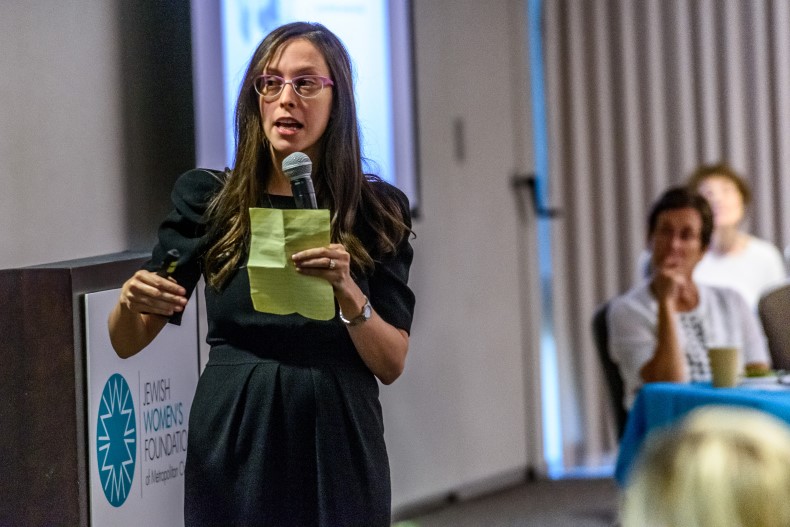
This spring, representatives from four local synagogues completed a course that will help to prevent abuse and harassment in their institutions.
The process began two years ago when 100 women gathered for the Jewish Women’s Foundation of Metropolitan Chicago’s (JWF) Frame the Future Pop-Up Giving Circle, the culmination of their 20th anniversary celebration. Inspired by the #MeToo movement, the 100 women in the room chose to fund Sacred Spaces-a program to help prevent sexual and other types of abuse in Jewish spaces.
The JWF grant allowed Sacred Spaces to team up with Chicago organizations like JCFS Chicago, SHALVA, and the Chicago Board of Rabbis to learn what was already being done to prevent abuse and harassment in the Chicago community, and then to educate local synagogues about abuse prevention in new ways.
“Sacred Spaces didn’t come in to fix the community; rather, they’ve worked to leverage what’s already being done and learned how to best provide unique expertise and collaborate,” said Amy Saltzman, Program Officer at the Jewish Women’s Foundation.
In the end, the four synagogues representing different denominations of Judaism-Emanuel Congregation, Mishkan Chicago, Congregation Beth Shalom of Naperville, and Anshe Sholom Bnai Israel-committed to the program dubbed “Sacred Synagogues, Sacred Spaces.”
“This will make our community better, safer, and more comfortable for everyone,” said Chris Igo, who spearheaded the effort at Beth Shalom. She and others at the synagogue are currently working towards modifications of physical space, including planning for installation of windows in doors without windows, and ensuring lines of sight in all hallways. “We haven’t had any issues,” she said, “but it opened our eyes to the fact that we should have a proactive stance. We feel very committed to taking the information and education we received and trying to implement it in our community.”
The work began with the Safer Synagogues program from JCFS Chicago, which is one part of its broader Safer Community initiative to keep people of all ages safe from a variety of types of abuse. “[Once] the synagogues have the knowledge, we help them figure out the programmatic implications, as well as policies and procedures, to implement things we’ve talked about in our training,” said Ann Lubin, JCFS Chicago’s Senior Director of Jewish Community Services.
JWF and other local organizations partnered with Sacred Spaces to identify interested synagogues and to provide support during and after the intensive workshops. The subjects covered at the workshops included hiring and screening potential employees, safety in the physical space of a synagogue, organizational response to incidents of abuse, and policy development and implementation.
“We were seriously impressed with the dedication of the synagogues that participated,” said Sacred Spaces President and CEO Shira Berkovits, who is also a behavioral psychologist and attorney. “We could just see how invested each synagogue was in the remarkable work that they were doing, and it was inspiring to hear from them how warmly the work was being received by their communities. Chicago was a great city for us to pilot the Sacred Synagogues program since we were able to build on the work that JCFS has done.”
The project is particularly important, says Berkovits, because the synagogue is central to Jewish life. “A synagogue is a place of trust and welcome,” she said. “Unlike other places where only certain people are allowed in, the entire community comes together, and we feel like a family. When we create a sacred space, we need to make sure it’s not just about the prayers-we need to have systems in place to protect the people who enter our doors.”
The Jewish Women’s Foundation is an independent project of the Jewish United Fund .
Other stories
-
Two local teens win national recognition
Recipients of the annual Diller Teen Tikkun Olam Awards
Read more -
Celebrating six young award winners cultivating the community
Introducing young adult award winners
Read more -
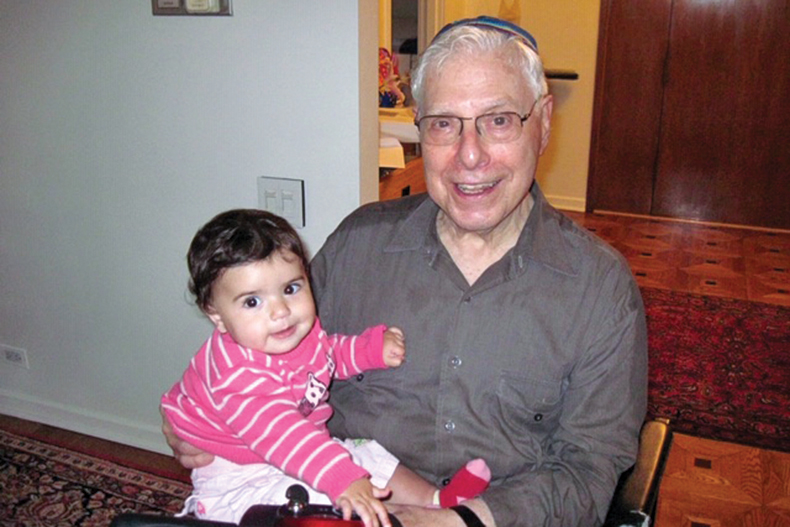
In a word, “everything” fascinated Howard Gilbert. That’s how his wife, Jacqueline Gilbert, describes her late husband.
“He was interesting and interested in things,” she said. “He was not a narrow person in any sense of the word, from being a bird watcher and nature lover to a problem solver of all kinds.”
Gilbert–a Jewish communal leader, a devoted family patriarch, an attorney, and a helper–died on March 27. He was 91.
He was an active corporate attorney or 70 years, a managing partner at Holleb & Coff. He also dedicated much of his law career to pro bono work.
Howard and Jacqueline first met at their synagogue in the 1950s. Married for 63 years–all of which they spent in Skokie and Chicago–they had four children, 12 grandchildren, and 12 great-grandchildren.
Jacqueline’s father, Morris Glasser, active in the forerunner to JUF and a past president of Mount Sinai Hospital, took Gilbert under his wing and modeled for him Jewish involvement and activism.
Picking up the baton from his father-in-law, Gilbert was the first co-recipient of JUF’s Davis, Gidwitz and Glasser Young Leadership Award in 1964, which was endowed by Glasser. Gilbert went on to serve on the JUF Board of Directors from 1977-1983. He also held leadership positions with Mount Sinai Hospital, SHALVA, and the Illinois Hospital Association.
“Howard N. Gilbert was a brilliant lawyer and a very committed Jewish leader who lived a full life of meaning with a keen understanding for the needs of others,” said JUF Executive Vice Chairman Steven B. Nasatir.
An observant Jew, Gilbert attended a yeshiva on Chicago’s West Side as an adolescent. Later, he opened Or Torah Synagogue, an Orthodox congregation in Skokie, with his friend Rabbi Eliezer Berkovits.
His Jewish observance informed his career as well as his passion for helping people. “It was just innate to his Judaism,” said Jacqueline, to use his career to help people through his pro bono work on civil rights cases.
As a young lawyer, Gilbert joined the American Civil Liberties Union. His pro bono work focused on helping conscientious objectors, young people arrested for marijuana possession, end-of-life issues, and Modern Orthodox religious issues. He also mentored many rising young lawyers throughout the course of his life.
In the diverse areas of his life, from his legal career to the Jewish community to his family, there was one common thread that ran through it all-helping people. “He was a nurturer,” Jacqueline said. “He believed in everybody and brought out the best in everybody.”
Son of the late Norman and the late Fanny Gilbert; he leaves behind his wife 63 years, Jacqueline Glasser Gilbert; children Ncoom and Chaia Gilbar, Harlan and Judit Gilbert, Joel and Heidi Gilbert, Sharon Gilbert, 12 grandchildren; 12 great grandchildren; brother Raymond (Sylvia) Gilbert; many, many dear nieces and nephews; and caregiver Geraro Lansang.
Private graveside services were held. Chicago Jewish Funerals. In lieu of flowers, donations may be made to the charity of your choice.
Other stories
-
Two local teens win national recognition
Recipients of the annual Diller Teen Tikkun Olam Awards
Read more -
Celebrating six young award winners cultivating the community
Introducing young adult award winners
Read more -
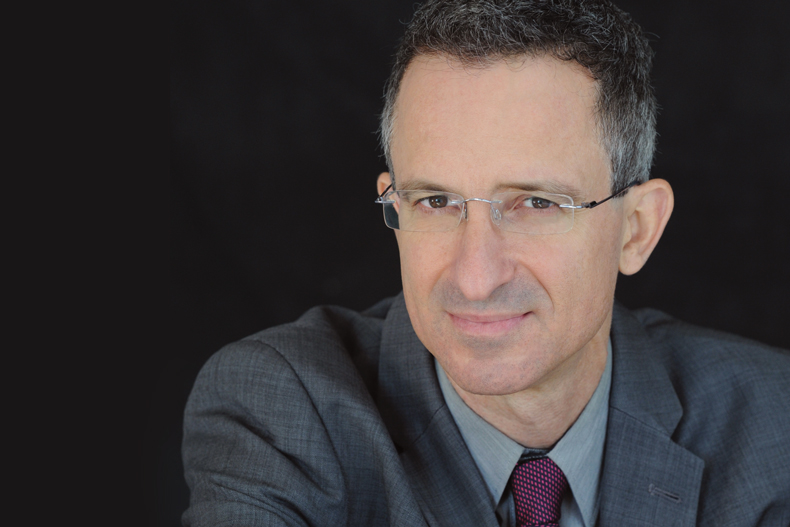
We’re all filled with a lot of emotions at this moment of crisis–sadness, loneliness, anxiety, and fear. With the world a hard place to navigate right now, what can we each do to boost our happiness? For guidance, we turned to Dr. Tal Ben-Shahar, a Jewish author, professor, and one of the leading experts on positive psychology-the science of what makes people feel good.
The co-founder of the Happiness Studies Academy, Ben-Shahar taught a course at Harvard University on positive psychology, considered the most popular class in the school’s history. A native Israeli, Ben-Shahar now lives in New Jersey with his family. In April, JUF News
conducted an interview-via email-with the professor.
A. Why should we care about the science of happiness right now?
Q. The science of happiness matters now, as it always does, regardless of external circumstances. It matters in good times because it can help us increase our levels of well-being when things are going well. It matters even more these days because it makes us more resilient, helping us through tough times. There are numerous evidence-based interventions that, beyond strengthening our psychological immune system, will also bolster our physical immune system.
What is the top indicator of happiness?
Relationships are potentially the number one predictor of both physical and mental health. Francis Bacon, the British philosopher, pointed out 400 years ago that “friendship doubles joys and cuts griefs in half.” Spending quality time with people you care about and who care about you is always important; it is especially important now. If actual get-togethers are not possible, then virtual get-togethers will do.
Is our degree of happiness innate–or can it grow as we grow?
While there is some genetic component to our happiness-some people are born with a happy disposition while others are not-our genes define a range, not a set point. We all can become significantly happier, though some people have it “easier” than others. And most people fall far short of their happiness potential.
Excluding people who are directly affected by the virus, is there a certain profile of a person who can cope best with a crisis like the one we’re in?
Yes, a person who is generally more grateful, who, be it in good times or tough times, is able to appreciate the good things in life.
How much can external factors, like the coronavirus, affect our overall happiness?
In general, external circumstances do not impact our happiness levels that much. Except for when it comes to extreme circumstances. And we’re living through extreme circumstances today. Being locked up in our homes is extreme and difficult for most people to deal with. Economic uncertainty is extreme, and it naturally impacts our happiness.
How do you think Judaism promotes a happy approach to life?
Judaism talks about being realistic. For example, in Pirkei Avot (Ethics of the Fathers), we’re asked: Who is rich? The answer is: One who is content with what they have. The same applies to happiness. This is about appreciating what we have and being humble about our needs. It’s also about lowering expectations, or at least changing our expectations, which is not a bad thing to do-especially these days.
How realistic is it for us to expect to be happy most of the time?
Expecting to be happy all/most of the time is unrealistic and outright harmful. In fact, the key to happiness is to give ourselves the permission to be human , to embrace whatever emotion comes up no matter how unpleasant, rather than suppressing them. How do we do that? We can journal; we can also open up and talk to people we trust; and [we] can cry, rather than holding back the tears. The paradox is that to fulfill our potential for happiness, we must allow in unhappiness.
What are the biggest lessons you’ve learned during this pandemic?
Cooking and cleaning!
Appreciate life rather than taking things for granted, cultivate quality experiences rather than quantities of goods, respect Mother Earth and your co-inhabitants, slow down and simplify, and show kindness and compassion.
Ben-Shahar’s tips for boosting happiness now:
*Be human.
Give yourself permission to be human, appreciating and being grateful for what you have.
*Talk to your people.
Spend time with your loved ones (albeit virtually).
*Get moving.
Exercise does not just make us physically tougher; it significantly contributes to our psychological toughness.
*Seek out distractions.
Constantly thinking about the virus is unhealthy and unhelpful. Watch your favorite TV series, listen to music, spend time on your hobby, or play games with your family and friends-these can all constitute a healthy form of distraction.
Dr. Tal Ben-Shahar is offering a yearlong online certificate program in Happiness Studies. For details, check out happinessstudiesacademy.lpages.co.
Other stories
-
Two local teens win national recognition
Recipients of the annual Diller Teen Tikkun Olam Awards
Read more -
Celebrating six young award winners cultivating the community
Introducing young adult award winners
Read more -
Legislators get frontline update from agencies aiding Chicago’s most vulnerable
More than 50 elected officials and staff from Illinois’ congressional delegation, the Jewish Caucus of the Illinois General Assembly and the Chicago City Council, and key volunteer leaders met via JUF-hosted video conference April 13 to get frontline updates on how the COVID-19 pandemic is impacting Chicago’s Jewish human services agencies.
Executives from The ARK, Associated Talmud Torahs, CJE SeniorLife, JCC Chicago, JCFS Chicago, the Jewish Federation and Sinai Health System laid out how they are confronting the crisis and the challenges it has brought.
The elected leaders and staff from all three levels of government – federal, state and local – heard how dedicated and caring workers are overcoming health risks, fears and technical roadblocks to continue serving the community’s most vulnerable populations.
“It was powerful to hear how nurses, doctors, assistants, janitors and so many others are keeping these organizations open and active during this very dark period for our community and our country,” said Lee Miller, JUF board member and chair of JUF’s Government Affairs Committee. “The agency executives provided a stark view of the reality they are facing, and the legislators and their aides made it clear they are here to help however possible.”
Whether that’s working to add additional support for nonprofits in the next aid package coming out of Washington, getting unpaid bills sitting in Springfield processed and paid, or connecting the agencies to local personal protective equipment providers, the elected officials said they were ready and eager to help.
JUF will continue to act as a connecting point between elected leaders and the agencies working to overcome the challenges of the COVID-19 crisis.
Other stories
-
Two local teens win national recognition
Recipients of the annual Diller Teen Tikkun Olam Awards
Read more -
Celebrating six young award winners cultivating the community
Introducing young adult award winners
Read more -

With most gyms closed, and many of us isolating ourselves at home, it’s time to get creative with your fitness routine. If you have weights or bands at home, that’s great, but you don’t need much to burn calories and stay fit. I’m going to write this article assuming all you have are the canned and frozen food you stocked up on.
Let’s combine the heart rate-rising exercises with strength work, so in 30 minutes you get a complete workout. The first thing to grab is two cans-it doesn’t matter what you grab from the pantry as long as both options weigh about the same-and of course you haven’t opened them up.
If any movement hurts, avoid it. Since I’m assuming you are using light weights, like canned corn, we are going to be doing high repetitions. Each exercise you will do 20 times before moving on to the next movement. If you have trouble with form, google the exercise.
Plank:
Start off on your hands (or on your forearms) and legs; hold the position for 30-45 seconds.
Rows:
With weights in your hand, bend at the waist, with your hands straight, against your legs; bring them up towards your back, keeping them close to your side.
Jumping jacks:
Do them for 20-30 seconds; skip the jump part if it bothers you.
Shoulder raises:
With your weights, lift your arms straight up towards your chin; stop when the weights are even with your jaw; bring them up and down slowly.
Squats:
Sit in a chair, holding your weights however it’s comfortable; stand back up; repeat.
Run/jog:
In place for 20-30 seconds.
Canned curls (bicep curls):
With your arms at your side, keeping your elbows close to your body, bring the weights up toward your shoulders; lower slowly and repeat.
Canned kickbacks (triceps kickbacks):
Bend slightly at the waist, elbows close to your sides and bent; bring your arms straight out behind you with your weights and then back in.
Throw punches:
For 20-30 seconds (without your weights).
Stand on one leg:
For 20-30 seconds, and then repeat on your other leg.
Repeat these moves 2-5 times and you can do this every other day. I also recommend using YouTube for workouts. Simple things like marching in place or walking around an empty block are great ways to keep your fitness up. I’ll post easy workouts you can do at home on my Instagram page: fitwithkrit is my handle.
As always, you should check with your doctor if you are injured or starting a new exercise routine.
Ron Krit is senior director of the Legacies and Endowments department of the Jewish United Fund and a Wellness Consultant.
Other stories
-
Two local teens win national recognition
Recipients of the annual Diller Teen Tikkun Olam Awards
Read more -
Celebrating six young award winners cultivating the community
Introducing young adult award winners
Read more -

What does social distancing look like if you live alone? What if you are in a “high risk” category, and encouraged not to have in-person contact with others? Even if you live with someone else, our new Covid-19 reality has a lot of potential for people to feel lonely.
Loneliness describes the negative feelings that can occur when your needs for social connection aren’t met. It is an emotional experience, not a physical one. Therefore, we need to lean on what we know impacts emotion. The following actions can help you maintain a good enough attitude, which will help you tolerate the uncertainty and fear of our current circumstances.
Self-compassion: Being aware of our feelings and knowing that others feel the same thing. Talking to ourselves the way we would talk to other people. Many people, whether they live with other people or not, are also feeling alone.
Service: How can you be of help to someone else? Can you reach out by phone, Skype, or FaceTime? If you are going to the grocery store, offer to pick up items for someone else who can’t get out. Do you know someone who is overwhelmed right now? Think of something that might be helpful to them and offer to do it (when you ask someone who is overwhelmed what they need they often can’t tell you, but they do know what they don’t need). Being of service is a guaranteed mood-booster.
Gratitude: Brené Brown, Ph.D., strongly suggests establishing a gratitude practice. Make it a daily practice to write down what you are grateful for or to share it with someone else. Writing a gratitude list makes it easier to go back to read it when you are feeling down; sharing it with another person makes it easier to stick with the practice.
Routine: We like to know what to expect. Without the external schedules created by work, school, or appointments, we need to create our own routines. Write out a schedule for when you will do what each day. Include what time you will get up, eat meals, and get exercise. Schedule in time to reach out to other people. If possible, get outside once a day–a change of scenery is important!
Clear is kind: People always need help and support from others-now more than ever. When you know you need something, emotional or physical, it is important to tell the appropriate person* what you need. Be direct, ask, don’t demand. If the first person can’t help, ask someone else. Our culture idealizes individualism, but our brains are wired for connection. This tells us that we absolutely need each other. Asking for what we need may feel uncomfortable, but it helps us get what we need, and provides the other person the opportunity to do a mitzvah.
Stay Connected: At this strange time in our world, social media can connect us. Classes, services, even coffee breaks can be moved online-through free media including Facebook, FaceTime, Skype, and Meetup. If you are technologically savvy enough, set up an online meeting and invite some friends. If you can just manage the basics, invite someone to have a virtual meal with you–online or by phone.
As Jews, we have always understood the value of connection. If the COVID-19 crisis is creating disconnection for you, please make an effort to reach out and virtually touch someone.
Tracey Lipsig Kite, a licensed clinical social worker, is a trainer and educator for JCFS Chicago.
*An appropriate person is someone who is physically and emotionally able to do what is being asked of them.
Other stories
-
Two local teens win national recognition
Recipients of the annual Diller Teen Tikkun Olam Awards
Read more -
Celebrating six young award winners cultivating the community
Introducing young adult award winners
Read more -