
Growing up, Mitch Glasser would play baseball with his grandfather in their backyard in Highland Park. Back then, he probably never dreamed he’d someday be playing ball with an Israeli team in Bulgaria, which is where he found himself earlier this summer.
There, he played at a park in the lush green mountains of Blagoevgrad, an hour’s drive south of Sofia, Bulgaria’s capital. “There is a beautiful ball field tucked in a small valley with trees surrounding the field…with beautiful views in all directions,” he said. “The Bulgarian team did a fantastic job keeping it playable even after a monsoon-like downpour in the mountains.”
Glasser traveled to Bulgaria with Team Israel, the country’s national team. On the road to the 2020 Summer Olympics in Tokyo, Team Israel played the European Championship B-Pool in Blagoevgrad.
The team swept the series, undefeated. They trounced Greece (14-7, including a homer by Glasser), and Serbia (11-1, including a grand slam by Glasser). They also took on Croatia and the Bulgarian home team.
Their hardest win came against Russia; the tie score of 8-8 pushed the game to extra innings. Russia scored 4 runs in the top of the 10th inning. But in the bottom, Israel rallied with 5. Glasser doubled-in runs, then made the walk-off run that put the game in Team Israel’s win column, capping the game at 13-12.
Growing up on the diamond
As a boy, Glasser attended grade school at what is now Bernard Zell Anshe Emet Day School, played in the Windy City Wildcats little league, and then played high school baseball for the Latin School of Chicago. He spent summers playing for Top Tier Baseball. He went on to play college ball at Macalester College in St. Paul, Minn.
Post-college, he was drafted by the Chicago White Sox, as an infielder for spring training and rookie ball, before being released a short time later. He moved into the minor league system, spending a summer in North Carolina working behind the scenes for the White Sox Class A affiliate.
“I was working with many of the coaches and players I had played with the previous season, learning what it takes to develop professional baseball players. But my manager, Pete Rose, Jr., encouraged me to return to playing, saying: ‘Why are you wearing khakis and a polo every day [on the sidelines], when you should be wearing a uniform?'”
Playing for Team Israel
Nowadays he’s back on the field. Glasser first played for Team Israel two years ago, when they finished sixth in the 2017 World Baseball Classic, as chronicled in the documentary Heading Home .
This time around, Glasser has been on loan to Team Israel from the first-place Sioux Falls (SD) Canaries, of the American Association of Independent Professional Baseball (AAIPB). He plays infield and is their hitting instructor. He previous played for several other AAIPB teams across the US.
Approximately half of Team Israel’s members live in Israel and half are from various places across the U.S., according to Glasser. Some of his teammates played on the World Baseball Classic team; Blake Gailen is on the Dodgers Triple-A team as an outfielder, while Corey Baker pitched on the Cardinals Triple-A team.
“Shlomo Lipetz and Dan Rothem are two of the most veteran Israeli-born players.” Glasser said. “They have represented Israel in national competitions for over 20 years. Lots of Hebrew encouragement is yelled from the dugout and field, a lot of ‘Yallah!’ [‘let’s go!’] and ‘Ach Sheli!’ [‘my brother!’].”
By winning this European tournament, Team Israel moves one step closer to the Olympics. Next comes a three-game series against Lithuania later in the summer. After that, the action moves to Parma, Italy in late September for the Olympic-qualification round.
When Team Israel defied the odds at the World Baseball Classic, they were compared to the Jamaican Bobsled Team, Cinderella, and David defeating Goliath. Who knows what metaphors will be employed as they advance toward the Olympics next summer.
Other stories
-
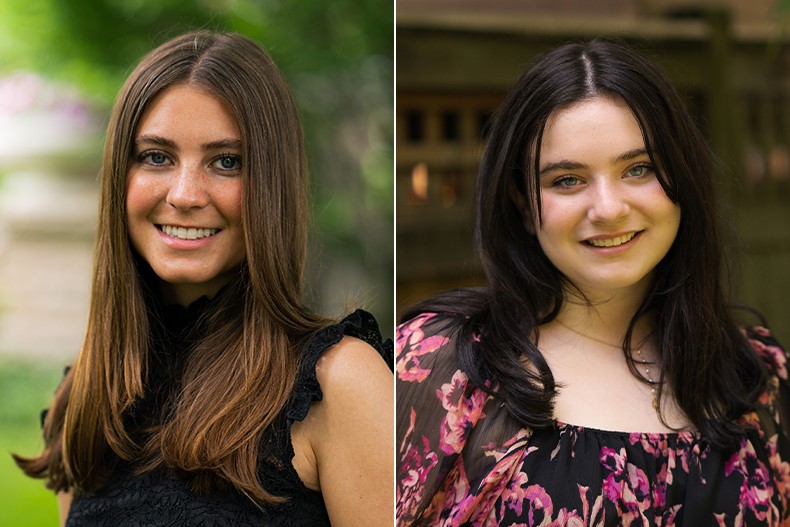
Two local teens win national recognition
Recipients of the annual Diller Teen Tikkun Olam Awards
Read more -

Celebrating six young award winners cultivating the community
Introducing young adult award winners
Read more -
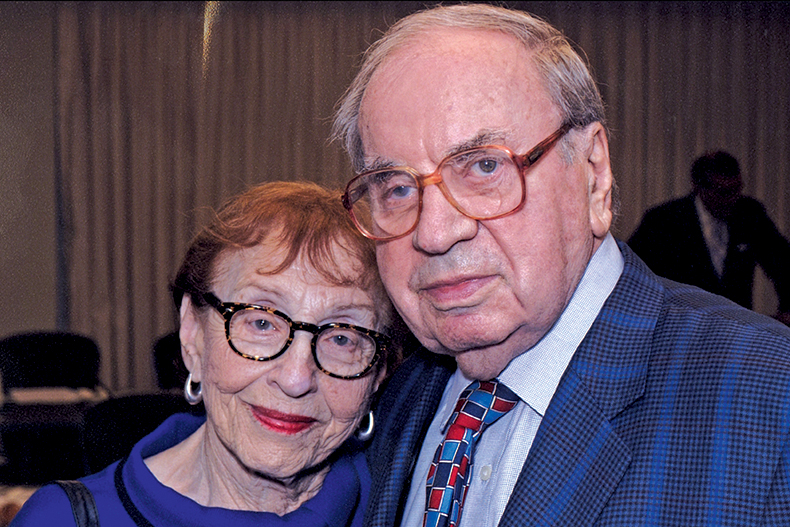
U.S. war hero and entrepreneur rose to helm of the Federation that saved him
Linda S. Haase
Manny Steinfeld’s story simultaneously personified the American Dream and embodied the Jewish experience of the 20th Century. A refugee from Nazi Germany, he persevered and prospered in America; became a U.S. war hero, a titan of business, and a major philanthropist.
Steinfeld, 95, died June 30.
In 1938, at age 14, Steinfeld arrived in Chicago with $10 stitched in his pants pocket. HIAS Chicago, a JUF/Federation-funded agency, paid for his transportation from Germany to Chicago. Then Jewish Charities of Chicago, the forerunner of the Jewish Federation of Chicago, provided a $25 monthly stipend to assist with Steinfeld’s care until he was 18.
Steinfeld always credited the Jewish Federation with saving his life-and 50 years later, he rose up to become that Jewish Federation’s chairman of the board.
“Manny was one of the last of the greatest generation; even within that generation, he was great and utterly unique,” said Dr. Steven B. Nasatir, JUF Executive Vice Chairman. “He was a true original and there simply will not be another like him, ever. He was the best of the best.”
Less than a year after graduating from Hyde Park High School, Steinfeld went into the U.S. Army. He participated in five campaigns with the renowned 82nd Airborne Division, for which he received a host of medals, including the Purple Heart and Bronze Star. He was among the first American G.I.s to liberate concentration camps, helping to free inmates from Woebbelin. Steinfeld also played a distinctive role at the end of World War II, assisting in the translation of the unconditional surrender document when the German 21st Army Group surrendered to the 82nd Airborne Division at Ludwigslust, Germany.
Steinfeld’s joy at the end of the war was tempered by personal loss. His father had died when he was 5; after the war, he learned that his mother and sister both lost their lives in the Stutthof concentration camp, while his younger brother was killed by British troops in Palestine.
He was heartbroken but not broken. Steinfeld returned to Chicago and attended Roosevelt University after his military service, graduating in 1948 with a Bachelor of Science in Business Administration. One year later, he Fern (Goldman), with whom he had three children, Michael, Paul, and Jill. He was recalled to active duty at the onset of the Korean War and served for two years as a military intelligence officer at Fort Meade, Md.
After the Korean War, Steinfeld and a business associate purchased the bankrupt Great Northern Chair Company in Chicago for $10,000 and changed the name to Shelby Williams Industries. The company quickly skyrocketed to success, and Steinfeld made his first gift to the JUF Annual Campaign in 1959.
Perhaps because he felt the need to contribute on behalf of those who did not survive, Steinfeld’s philanthropy quickly snowballed. He became a member of the Prime Ministers Associates, and delighted in giving to the JUF Annual Campaign for 60 years, in addition to contributing generously to special campaigns.
“Instead of asking ‘Why me?’ Manny asked, ‘What’s my mitzvah? What can I do next?'” Nasatir said. “Since he was the one who survived, he was determined to live in a way that honored the members of his family who did not.
“And partnering with Fern, the love of his life, he did that with a whole heart.”
The couple established the Naftali Steinfeld Scholarship Fund for Summer Experiences in Israel, which has provided free trips to Israel for many young Chicago adults, and a special fund that underwrites speakers for JUF fundraising events. They helped launch JUF’s Snowbird program, which was Steinfeld’s brainchild. And they endowed a multi-million dollar gift to The Centennial Campaign.
“Manny always credited JUF/Federation with saving his life, and actually kept the receipts of the $1,200 our agencies invested in him from 1938 to 1942,” Nasatir said. “He liked to say that he felt it was proper to pay the community back-but with a little interest. Then he’d get that twinkle in his eye and calculate how much that interest totaled to date. Manny was a mathematical genius whose mind was as accurate as a computer.
“At last count, he had paid the Chicago Jewish community back thousands and thousands of times over,” Nasatir said.
In addition, Steinfeld invested his time in JUF/Federation, serving on committees and its board, chairing events, serving as JUF Campaign Chair-twice-in 1987 and again in 1997, and as Chairman of the Board from 1998-2000.
He received the Federation’s highest honor, the Julius Rosenwald Memorial Award, in 2000.
“JUF was perhaps my dad’s fifth child,” said his daughter, Jill Cunniff. “First his kids, then Shelby Williams Industries, and then the Jewish United Fund.”
In addition, a plethora of cultural, educational, social service, and medical institutions at the local, national, and international levels benefited from Steinfeld’s leadership, business acumen, and generosity.
“My dad believed in the concept of giving back and he measured people not by their wealth but by what they can contribute to society,” Cunniff said. “I asked him once, many years ago, what kept him up at night, and he told me: ‘Making sure all my employees have food on the table for their families.'”
He was a life trustee of the Art Institute of Chicago, where he endowed the 20th Century Decorative American Arts Gallery and provided support for the Bentwood Furniture Exhibition, featuring furniture from his collection. He made major contributions to the refurbishing of the Lyric Opera of Chicago and Symphony Center, and established the Fifth Floor Gallery at Orchestra Hall.
And he established and endowed the Manfred Steinfeld School of Hospitality Management at his alma mater, Roosevelt University, where he was a life member of the board of directors. The university awarded him an honorary doctorate in 1997.
Having attended college with the help of the G.I. Bill, which he credited with jump-starting his success, Steinfeld delighted in creating college scholarship funds, which he did at Brandeis University and Illinois Institute of Technology. At the University of Tennessee in Knoxville, Tennessee-where Shelby Williams was headquartered-he not only established the Fern and Manfred Steinfeld Chair in Judaic Studies, but launched a scholarship fund that over the last four decades has provided more than 500 college scholarships.
“I get letters of gratitude monthly from his grant recipients-kids from small towns of Tennessee who would never have had the opportunity to complete their studies without help from his scholarships,” Cunniff said.
In Israel, he established a Professorial Chair at the Weizmann Institute of Science and, in memory of his grandson, established the Danny Cunniff Leukemia Research Laboratory at Hadassah Hospital and the Danny Cunniff Woodlands at the Jewish National Fund Forest. He also made major gifts to cancer research and established playgrounds in Danny’s memory.
Most recently, he provided a major gift for the establishment of the Fern F. Steinfeld Transcatheter Aortic Valve Replacement Center at Boca Raton Regional Hospital in Florida.
“Manny told me many times, ‘Being charitable never depleted anyone’s assets,'” Nasatir said. “‘Ask any philanthropist and he’ll tell you, the more you give away, the more that seems to come back to you. The only money we’re going to take with us is what we’ve given away, for that is what we’ll be remembered by.'”
Among Steinfeld’s almost countless honors: the Horatio Alger Award for Distinguished Americans; American Jewish Committee Humanitarian Award of the Year; Holocaust Foundation of Illinois Humanitarian Award; Volunteer of the Year Award from the University of Tennessee, Knoxville; the first-ever Lifetime Achievement Award, now called “the Manny,” from Hospitality Design Magazine ; the ADL Guardian of Freedom Award; American Friends of Hebrew University Mount Scopus Award; and Hadassah Hospital Guardian of Tomorrow Award.
In 2014, the Steinfelds received the National Leadership Award from the U.S. Holocaust Memorial Museum, of which they were founders.
Steinfeld’s remarkable life and contributions have been documented in print, television, and film, most recently in Bruce Henderson’s Fathers and Soldiers , about Jews who escaped the Nazis and fought with the U.S. Army against Hitler.
He is survived by his wife, Fern (nee Goldman); children Michael (Rosibel) and Paul (Sara) Steinfeld and Jill Cunniff (Timothy); along with grandchildren Adam, Joshua, Tara, Ryan, Bradley, and Jason Steinfeld, and Courtney, Chase, Caroline, Kevin, and the late Daniel Cunniff.
“He used to smile and say to me, ‘I think I did okay for a refugee,'” Cunniff said. “‘Dad,’ I’d say, ‘You did better than okay.'”
Memorial contributions may be made to JUF or the Danny Cunniff Leukemia Research Laboratory at Hadassah Hospital in Jerusalem.
Other stories
-
Two local teens win national recognition
Recipients of the annual Diller Teen Tikkun Olam Awards
Read more -
Celebrating six young award winners cultivating the community
Introducing young adult award winners
Read more -

Nearly 1,000 people-and counting-have attended Chicago Loves Israel, a series of events spanning the summer and fall at three locations across the Chicagoland area, presented in partnership by JUF and JCC Chicago.
The festivities began on June 2 at Bernard Weinger JCC in Northbrook with a community-wide celebration of Chicago’s connection to Israel with a day of events for adults, teens, and young families. The day started with a JCC Chicago Jewish Film Festival screening of Good Morning Son , playing before a packed audience. The morning also included Cycle Israel rides in the spin studio at the Marvin Lustbader Health Club, powered by Midtown and a first look opening of the photography exhibition, Humans of Tel Aviv , by Israeli artist, Erez Kaganovitz.
The day continued with events just for teens including a DJ dance party, Krav Maga, a photobooth, graffiti wall, silk screening of specially-designed event T-shirts, and more. The Young Family Festival closed out the day with a colorful and vibrant Israeli Shuk, filled with tastes and treats representing Israel, an archeological dig, candle making, drum making, and a live, outdoor concert with Rick Recht and other local musicians.
Later in the month, on June 23 at Bernard Horwich JCC in West Rogers Park, more members of the community came together for another day of community, culture, and connection. This Chicago Loves Israel event featured interactive activities for children and families, presented by community partners including Keshet, Apachi Day Camp, and the Walder Science Center. The day concluded with a live concert, featuring Israeli singing star Ohad Moskowitz, who traveled from Israel to perform at the event.
“There truly is nothing like seeing our community come together as one to celebrate the culture and essence of Israel,” said Ilene Uhlmann, Director of Arts and Ideas at JCC Chicago. “Our team loved working with our JUF colleagues, to create multi-faceted events with something for everyone.”
Stay tuned for information about the third Chicago Loves Israel event, happening this fall in the South Suburbs. That event will include several Israel experiences including a middle eastern-inspired Shabbat dinner and service with a scholar-in-residence, a musical performance, and a family-friendly celebration.
Elizabeth Abrams is the Director of Program Marketing and Communications for JCC Chicago.
Other stories
-
Two local teens win national recognition
Recipients of the annual Diller Teen Tikkun Olam Awards
Read more -
Celebrating six young award winners cultivating the community
Introducing young adult award winners
Read more -
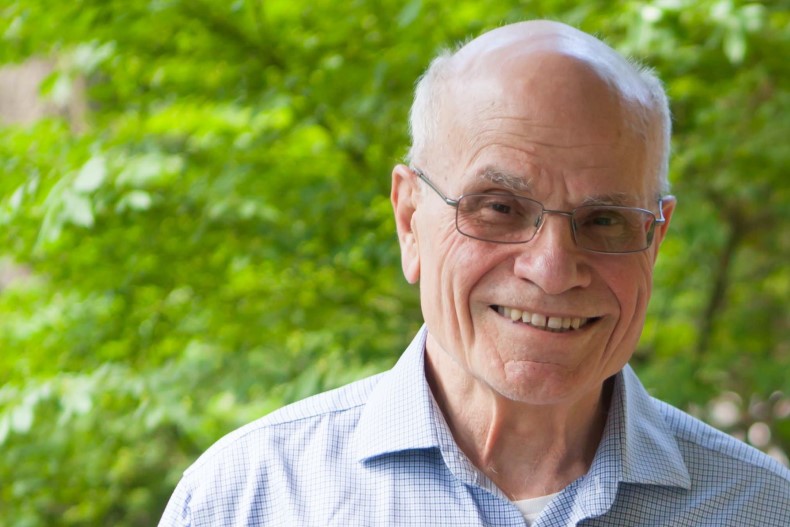
Peter B. Friedman was often greeted by his grandchildren with, “Lift me up!” recalled his daughter Margalit Segal. But their grandfather’s life’s work had always been lifting others up–out of poverty, danger, and ignorance. Friedman passed away on June 30; he was 76.
For 47 years, Friedman worked at the Jewish United Fund/Jewish Federation of Chicago, rising from associate director to executive vice president in the department of Planning and Allocations. This department manages the allocation of resources to address identified community needs through a system of local, national and overseas agencies.
“He would have loved this” gathering of his friends and colleagues, Segal said at Friedman’s funeral, “but he never would have wanted it to be about himself.”
Younger daughter Shoshana Friedman was grateful that her father had been able to attend her wedding, just two weeks prior to his death; she thanked her parents for modeling a successful marriage.
“He was vital, loving, and authentic,” she said of her father. “It is a privilege to be around such love.” Shoshana had followed her father’s footsteps, interning at JUF in the summer of 2002, and serving as a Program Associate for the TOV Volunteer Network for nearly two years in the mid-2000s.
A native of Philadelphia, Friedman was a Cum Laude graduate of Williams College in Political Science. He earned his M.A. and Ph.D.– on “Jewish Philanthropic Leadership and Policy”– at the University of Chicago.
Among Friedman’s many academic achievements, he was a member of Phi Beta Kappa, a Fulbright Scholar at the Free University of Berlin, a Woodrow Wilson Fellow, and a winner of the Fuerstenberg Award. Later, he lectured at Northeastern Illinois University and was adjunct faculty at Spertus Institute for Jewish Studies. But he never stopped learning; he attended many classes in Jewish subjects throughout his life.
Just before his passing, he completed a Hebrew ulpan (immersion course) in Israel. Passionate about the language, he had already helped establish Hebrew education in many Chicago-area public schools.
Friedman was a devoted family man; his wife Andrea called him “the kindest man in the world.” But the family knew he had another true love– “Feddy,” as the Friedman family nicknamed Peter’s beloved Federation.
The affection was mutual. Dr. Steven B. Nasatir, JUF Executive Vice Chairman, mourned his colleague of 47 years, and a “dear, loyal, and true friend.” He praised Friedman as “a walking storehouse of knowledge” who also “brought out the best in people.”
Friedman came to the institution in 1972, and was involved in community planning for Federation for over 40 years. For the last seven, he was Senior Planning Advisor. He even met his wife through his work; Andrea, whom he married in 1976, worked at the Jewish Vocational Service, a JUF-supported agency.
Amongst national Federations, he was the Dean of Planning Directors and his contribution to the Jewish people was extraordinarily significant, Nasatir said.
Locally, Friedman led four comprehensive Jewish population studies of the Chicago Jewish community over four decades. By overseeing the launch of J-HELP, he helped steer the community through the recession of the late 2000s.
Friedman championed the idea of collaboration. He enhanced Federation’s partnerships with synagogues and with other religious communities’ philanthropies, the United Way, and the YMCA/YWCA. His relationships with professionals and volunteers alike made their projects possible. “Peter’s ideas and his energy for projects, large and small, were always about the collective ideal,” said Nasatir.
Friedman’s work had international impact as well. He was directly involved in the resettlement of 30,000 Jews from the former Soviet Union by Chicago’s Jewish community, made possible by Operation Exodus. He developed partnerships with Federation’s counterparts in Israel, strengthening human services and education in Israel–and relationships between Israelis and Chicagoans.
Appreciating the benefits of his own education, Friedman grew scholarship programs for college, graduate school, and Israel programs. And he helped expand funding for Jewish day schools.
Personally hiring and mentoring hundreds of professionals in Jewish communal work, Friedman was a pioneer in the field of Jewish communal service. In 2011, he received the Mandelkorn Award for Distinguished Service from the Jewish Communal Service Association/AJCOP.
“He was absolutely committed to making sure that the next generations of staff feel excited to be part of Federation and spent time with younger staff to share his knowledge and provide mentorship,” said Nasatir.
“It was Peter’s view that one should get involved, be a member of the community, and keep the Jewish people strong,” Nasatir said. “The Jewish Federation of Chicago is stronger today because of Peter Friedman, and we will miss him dearly.”
Friedman is survived by his wife Andrea (nee Levin), his daughters Margalit (Nathaniel) Segal and Shoshana (Avner Warner), and his grandchildren, Asher, Avital, and Gideon Segal. He is also survived by his siblings, Ellen and Steven (Marcie) Friedman of Philadelphia and his mother-in-law Jan (the late Frank) Levin.
Memorial contributions may be made to the Paul S. Friedman Fund at JUF.
Other stories
-
Two local teens win national recognition
Recipients of the annual Diller Teen Tikkun Olam Awards
Read more -
Celebrating six young award winners cultivating the community
Introducing young adult award winners
Read more -
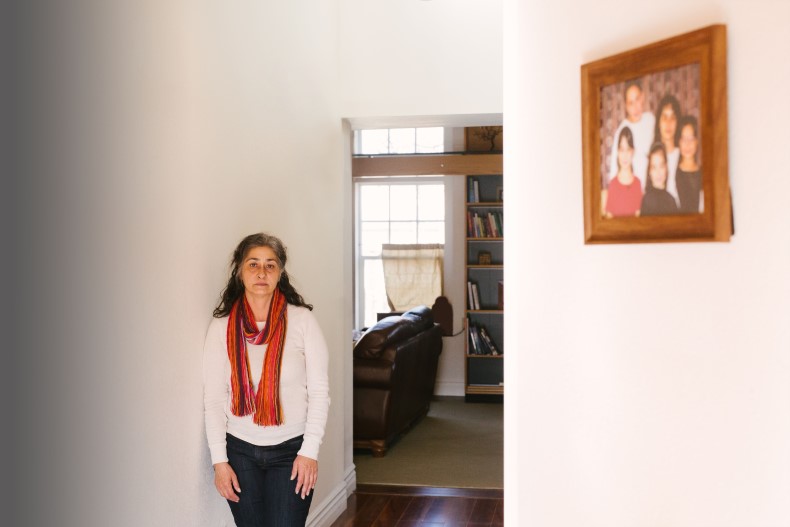
One in four women has been or will be in an abusive relationship at some point in their lives. This startling statistic from the National Domestic Violence Hotline served as a call to action in June, as a record-breaking crowd of 420 people gathered to attend SHALVA’s annual luncheon.
Held at The Standard Club, the event gathered individuals dedicated to SHALVA’s mission, making a difference in the lives of Chicago Jewish women who have, are, or will experience domestic abuse in their lifetime. SHALVA provides clients with counseling, supportive services, and does extensive community education.
The Torah teaches that justice is an eternal religious obligation in Judaism, and this year’s luncheon focused, fittingly, on the pursuit of justice.
“Our clients all face the injustice of not feeling safe in their homes,” said SHALVA Luncheon Co-Chair Carolyn Winick. “We want to see them receive justice in the form of a safe, healthy, happy home life.”
The event featured the moving documentary Home Truth (distributed by Women Make Movies) about the landmark case of domestic abuse survivor Jessica Gonzales. She experienced every parent’s worst nightmare in 1999 when her three young daughters were killed after being abducted by their father in violation of a restraining order. Filmed over a nine-year period, Home Truth chronicles her journey all the way to the U.S. Supreme Court and an international human rights tribunal, seeking to strengthen legal rights for victims of domestic violence.
Keynote speaker Caroline Bettinger-Lopez, who served as lead counsel on Gonzales’ case, as well as a White House Advisor on Violence Against Women, conveyed the complex legal issues and devastating consequences that domestic abuse survivors like Gonzales often face.
“The freedom from domestic violence is a fundamental human right,” said Bettinger-Lopez, who is currently a Professor of Clinical Legal Education and Director of the Human Rights Clinic at the University of Miami School of Law.
Former Illinois Attorney General Lisa Madigan served as moderator at the event. During her tenure as Attorney General, Madigan was instrumental in signing more than 150 bills into law, including laws to strengthen the rights of sexual assault and domestic abuse survivors.
As she helped guide the audience through Gonzales’ journey for justice, Bettinger-Lopez encouraged SHALVA supporters to take action against domestic violence at the local, state, and federal levels. “I think it’s so critically important to engage with police departments and through the attorney general’s office,” said Bettinger-Lopez.
SHALVA is already working with Chicago-area police departments through community outreach and education efforts. The organization also provides a legal liaison program to help clients find justice in the court system.
Bettinger-Lopez described her advocacy work to help bring about change for domestic abuse survivors like Gonzales. She explained that she supports “a human rights approach to survivor-led advocacy calling for equality, dignity, and accountability.” Bettinger-Lopez conveyed that Gonzales’ story represents that of many women, including those in Chicago’s Jewish community.
“Many of the challenges [Gonzales] faced during and after her marriage are the same as what our clients face,” said Carol Ruderman, SHALVA’s Executive Director. “Sadly, she took many of the right steps, but the horrific still happened. It is the same fear our clients face.”
Bettinger-Lopez encouraged attendees to work towards justice in every way that they can, including legal, educational, and financial efforts. “It’s so important that we not only look at the criminal justice system or even the civil legal system but go beyond that to helping survivors become economically empowered,” she said.
“As a lawyer myself, [Caroline’s] unwavering advocacy and support of Jessica’s cause was motivating to me,” said SHALVA Luncheon Co-Chair Rebecca Melzer. “I believe taking action can empower women to create change.”
For more information about Home Truth, visit hometruthfilm.com.
SHALVA is a partner in serving our community with-and a special grant recipient of-the Jewish United Fund of Metropolitan Chicago.
Leslie Hill Hirschfeld is a freelance writer living in the northern suburbs of Chicago.
Other stories
-
Two local teens win national recognition
Recipients of the annual Diller Teen Tikkun Olam Awards
Read more -
Celebrating six young award winners cultivating the community
Introducing young adult award winners
Read more -
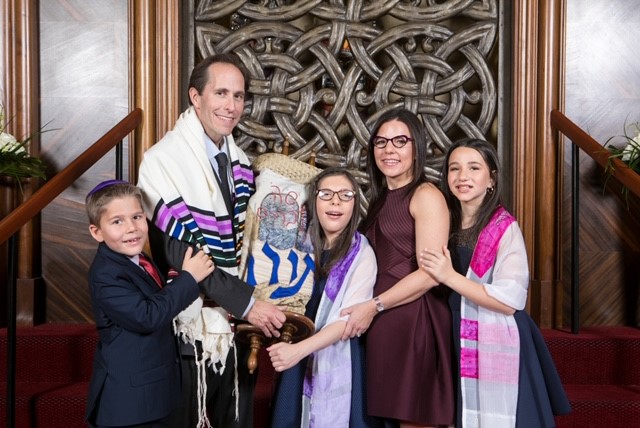
Emma Lookatch’s recent bat mitzvah was a cause for celebration for more than one reason: Lookatch, who has cerebral palsy, got to celebrate her special day in a way that was meaningful to her, her family, and the congregation.
Beginning in kindergarten, where she had an extra madricha (teaching assistant) in her weekly Hebrew school, Lookatch was supported throughout her Jewish journey by clergy and staff at Temple Sholom of Chicago. “They didn’t have a program [for students with disabilities], but we carved a way for Emma to do everything to the best of her ability in Hebrew school,” said Lookatch’s mother, Pam. “For the bat mitzvah, they really worked with us the whole way through to get her to be able to be as successful as she was.”
These accommodations began in fifth grade, when Lookatch started studying for her bat mitzvah, and learned prayers before the rest of the class. In sixth grade, she was able to reinforce her knowledge in the general class. Lookatch studied her Torah portion, Haftarah , and prayers like V’ahavta and Ashrei by listening to music, for which she has a great memory. She also had a study buddy thanks to sharing her bat mitzvah with her younger sister, Samara.
“She did the same three aliyahs as her typical peers,” Pam said. “The cantor was great about letting her do as much or as little as she wanted to, but challenged her to do what typical kids do.”
As for the shared service, “Samara was my best friend” as she prepared, Emma said, and for Samara, she had the opportunity to understand the magnitude of studying through her eyes as well as her sister’s.
“It’s really special that they got to share it together; they have a newfound relationship and closeness that they didn’t have before,” Pam said.
As the big day got closer, Lookatch and her family did a series of rehearsals in the synagogue’s sanctuary. During these rehearsals, they ran through the service many times and figured out how different elements of the service would work. Certain physical parts of the service, like carrying the Torah and ascending to the higher bimah (pulpit), needed to be reconsidered in how to help Lookatch do the best she could.
One of the highlights of the day was Emma’s d’var Torah (bat mitzvah speech), which she wrote with the rabbi like her typical peers. Her Torah portion included Jacob’s dream, and she equated his dream to some of the challenges in her life.
“When [Emma] called me at the last meeting to hear it, the rabbi said they have to discuss who reads it for her and [Emma] said, ‘I’m going to read it,'” Pam recounted. During the service, her father, Bryan Lookatch, helped her balance and turned the pages as she delivered her message.
In the past, a story like Lookatch’s might have been unique, but nowadays, organizations like JUF, JUF-supported JCFS Chicago, and more are determined to ensure that kids like Lookatch can fully participate in Jewish life.
“JUF has invested in work to make our synagogues and congregations more inclusive of people with all types of disabilities,” said Jodi Newmark, director of JUF’s Encompass, which forges partners with service provides to provide support to adults with disabilities.
The Chicago Synagogue Inclusion Project, which was funded by a JUF Breakthrough Fund grant, is designed to help the one in five people in the United States diagnosed with a disability to fit in in their synagogues and religious life. The project began with a report based on “listening tours,” focus groups, and surveys sent around the community to identify current strengths and weaknesses in synagogues’ approaches to helping congregants with disabilities feel welcome, eventually concluding that all synagogues value inclusion, but many don’t know how to begin to be more inclusive.
Since the report’s release, JCFS Chicago professionals have provided training to eight local congregations and JUF and Encompass provided mini grants to 14 congregations for a variety of inclusion projects.
“With this work,” Newmark said, “today it is becoming a realistic expectation that [stories like Emma’s] can and should be the rule and not the exception for students of all abilities.”
Other stories
-
Two local teens win national recognition
Recipients of the annual Diller Teen Tikkun Olam Awards
Read more -
Celebrating six young award winners cultivating the community
Introducing young adult award winners
Read more -
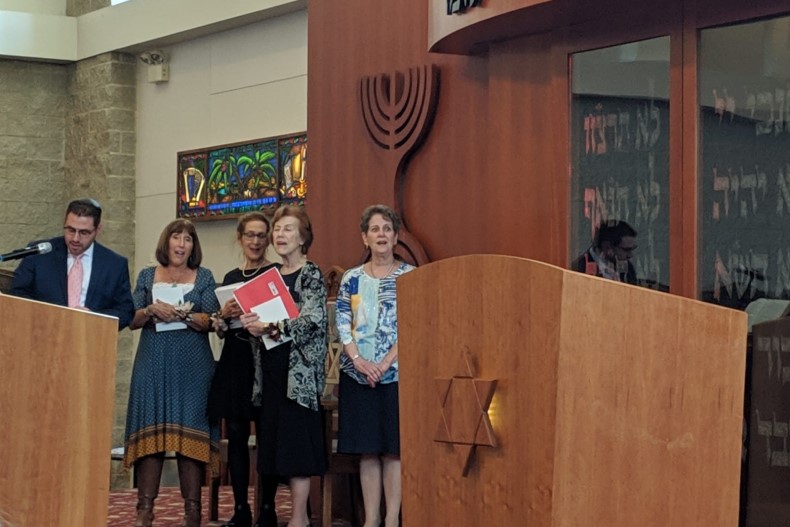
“Bubbe, aren’t you a little old for a bat mitzvah? Why didn’t you do this when you were younger?” Noreen Orbach’s granddaughter asked when she learned about the upcoming ceremony.
“I didn’t do it then and that’s why I’m doing it now,” said Orbach, who, along with two other grandmothers, recently participated in a siyum -a celebration of learning-to share what they’d learned in years of study and to pass on traditions to future generations.
Barbara Felt, Noreen Orbach, and Carol Salinger did not have bat mitzvah ceremonies when they were younger, but all three studied with Shoshana Axler, a bar/bat mitzvah tutor, to learn more about Judaism and the Hebrew language. Their journey of study began with reviewing the Hebrew alphabet and culminated with a day of capstone for years of study.
“It was a fantastic idea to get these lovely women to learn and to appreciate learning in an environment they may have been unable to access before,” said Rabbi Aaron Braun of Northbrook Community Synagogue, who facilitated practical aspects like the service booklet and order of speaking for the ceremony in May.
“It was a very supportive and warm and loving morning, surrounded by family and friends, and it was a beautiful event,” Axler said of the women who she formed “warm friendships” with over the years.
During the ceremony, each woman ascended to the bimah (pulpit), recited a text she selected as having special meaning in her life, and shared this meaning in a bat mitzvah speech.
“It was a chance of a lifetime,” said Felt, a grandmother of four who became inspired to learn Ecclesiastes 3:1-8 (“To everything there is a season”) after hearing it recited at her cousin’s funeral. “I realized that for me, that was some of the guidance I was looking for.” She saw the passage as a way to grapple with the permanence of death after her parents’ deaths shortly before she began studying with Axler.
Salinger, a grandmother of nine and great-grandmother of five, first met Axler as her grandchildren’s Hebrew teacher, and became inspired to learn prayers that she heard while at synagogue with her son. “I wanted to know what they’re doing-everybody was davening and I was reading the English. I figured I learned Yiddish a little bit, and I wanted to learn Hebrew.”
For her part in the siyum , Salinger started with the prayer for the Israeli Defense Forces, thinking of several family members of hers who live in Israel. She later discovered “Gott Frum Avraham,” a prayer in Yiddish that is traditionally said by women during Havdalah to encourage a good week ahead. “I’ve been taking Yiddish at the senior center in Northfield for the last couple of years and can read and write Yiddish, and that fit in so well with what I was doing,” she said.
For Orbach, a grandmother of three who began formal Hebrew study as a child, her presentation was a way to celebrate her bat mitzvah after her father’s death prevented her from having one when she was younger. “I did the chanting of the Haftarah in memory of my parents and in honor of my grandchildren, and when I concluded both the chanting the Haftarah and doing my sermon, I did the blessing that you do over your children on Shabbat and other times,” she said.
After over a year of learning the Hebrew pronunciation, studying the trope to sing the Haftarah , and listening to audiotapes with her eagerly listening dogs, Orbach is excited to continue her studies. “The siyum added to and enhanced my learning experience and created a new foundation, and now I want to build on that foundation. I’m thinking about the next study project or the next thing I want to do, with regards to advancing my Jewish and Hebrew learning.”
“Hopefully I’ll go on and learn more Hebrew. I want to learn, it keeps my mind well and lets me be independent,” Salinger added.
Just as the women are determined to keep studying, they also hope to inspire others to follow in their footsteps. “Maybe there are other people who didn’t get a chance to learn to read Hebrew or to study and we could tell them it’s possible, we did it,” Felt said. “If this encourages just one to take the leap we’ve been talking about, our studying would have a double mitzvah on it.”
As for Braun, “I’d love to do it more often with adults who want that experience…These women are a great example of adults who took the initiative to learn these texts and show the community that it can be nice to learn at any age, and I hope it will motivate more people to have this public learning experience and reflect on something meaningful in their lives.”
Other stories
-
Two local teens win national recognition
Recipients of the annual Diller Teen Tikkun Olam Awards
Read more -
Celebrating six young award winners cultivating the community
Introducing young adult award winners
Read more -
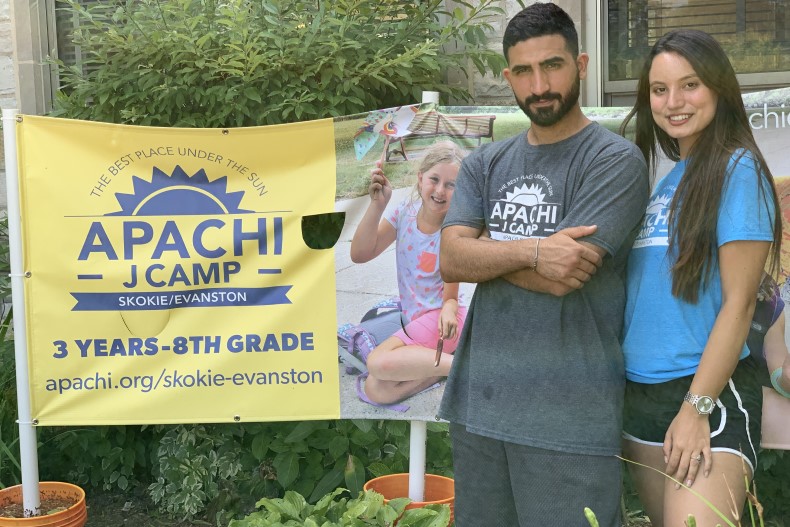
Israeli counselors from JUF Partnership region bring immersive Hebrew experience to Apachi Skokie-Evanston
Campers in the Apachi Ivrit program enjoy playing outside, making craft projects, and other traditional camp activities. But these 60 kids also do one major thing differently: they don’t speak a word of English.
Apachi Ivrit, hosted by JCC Chicago at Apachi Skokie/Evanston, features a full-immersion environment where kids learn Hebrew in a fun and practical way, using their new vocabulary to introduce themselves, ask for freeze pops, play games with oral responses, sing camp songs, and much more. With 20% of the Apachi Skokie/Evanston campers enrolled in Apachi Ivrit–the highest enrollment in a Hebrew immersion camp program in the United States–many kids in the Chicago area are building both friendships and foreign language proficiency.
“Proficiency in modern Hebrew affirms individual Jewish identity and a collective sense of Jewish peoplehood; opens the door to Jewish life and culture, the study of Jewish texts, and appreciation for the breadth of Jewish learning; and deepens connections with Israel,” said Abby Ashkenazi, who runs the immersion program based on the proficiency approach to second language acquisition.
Connections with Israel are possible thanks to the counselors who travel to Chicago from Israel. Two of this year’s counselors are from Kiryat Gat, part of JUF’s Partnership Together region in Israel.
Brit Tzadik has been to the United States twice before for other JUF programs–she worked with Bernard Zell Anshe Emet Day School students at 13 and three years later, joined JCC’s Staff in Training at JCC Camp Chi.
“It only felt natural to come here one more time before I start my ‘grown-up’ life after my army service,” said Tzadik, who served in an intelligence unit in the Israel Defense Forces and hopes to one day join Israel’s diplomatic corps. “I like the city and the community around here. It almost feels like home to me.”
“Being a counselor is such a huge responsibility, but at the end of the day, it feels amazing,” she added. When she returns to her host family, her job is not done: she is also tasked with representing Israel to local families and helping the Chicago Jewish community engage with the country.
Reem Samila, who served as an officer in the IDF Border Patrol and hopes to study filmmaking, is having a “great experience” in Chicago as well. “It’s not easy to keep an eye on 14 kids running around; you have to really work and show who you are and how much fun and interesting you can be,” he said. “I’m having so much fun every day.”
Thanks to Samila and Tzadik’s enthusiasm, as well as the fun activities at Apachi Skokie/Evanston, many campers come home speaking Hebrew, and some even ask if they can go on the weekends. By “learning Hebrew naturally, doing the things the kids love at camp,” they form an attachment to the language and Jewish culture, Ashkenazi said.
Other stories
-
Two local teens win national recognition
Recipients of the annual Diller Teen Tikkun Olam Awards
Read more -
Celebrating six young award winners cultivating the community
Introducing young adult award winners
Read more -
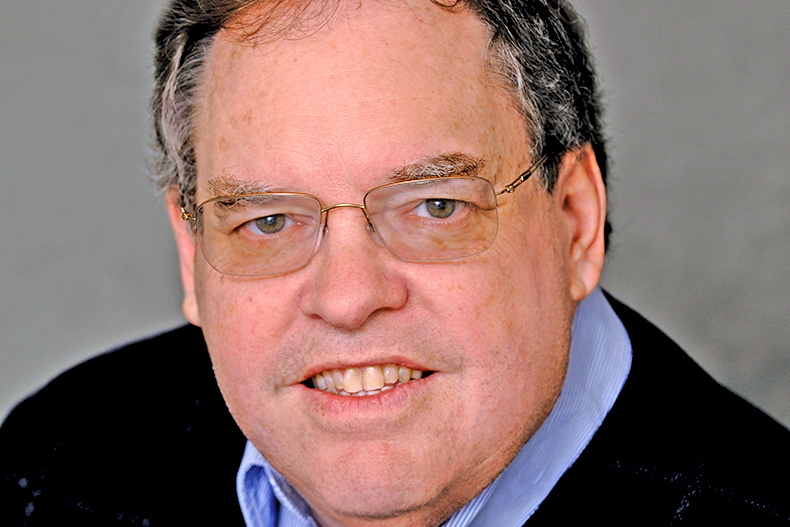
Rabbi of rabbis, teacher of teachers Rabbi Michael Balinsky retires
PAUL WIEDER
In his long career, he mentored undergrads, professionals, teachers, and his fellow rabbis. Even in his retirement, Rabbi Michael Balinsky plans to enact his advice to others: “Never stop teaching or learning.”
He stepped down in July as Executive Vice President of Chicago Board of Rabbis, which represents two hundred rabbis of all denominations.
But he remains a member of the Jewish Catholic Scholars Dialogue in Chicago, on the board of the Parliament of the World Religions, and a lifetime board member of Hillel at Northwestern University (NU). He will also remain active in several Jewish, Christian, and Muslim interfaith initiatives.
Born in Montreal, Balinsky moved to the U.S. to attend Yeshiva University, where he received his ordination in 1970. At 25, he became the associate Hillel director at the University of Michigan.
In 1981, he became director of NU’s Louis and Saerree Fiedler Hillel Center, a position he held for nearly two decades. One of his crowning achievements there was the construction of a new Hillel building for the NU campus, which now holds a staff of 10. For most of his tenure, NU’s Hillel house had literally been someone’s old house, with offices in what had been bedrooms.
In the earliest days, Balinsky was the sole staff member. “I was responsible for everything,” he recalled. But he soon learned that, “It was my job to get out of the way, so the students could flourish.”
The legacy he left is “diverse programs run by empowered students.” For instance, NU’s student-run Jewish Theater Ensemble was founded during his tenure and is still active today.
Another major milestone of his time at NU was his 1983 marriage to his wife Deborah Perkal, whom he met while she was a NU grad student. They had two daughters, Ruthie and Miriam. She succumbed to cancer in 1992. Michael married Dr. Myra Rapoport in 1994 and they had a third daughter, Leora. They are also the proud grandparents of two grandsons.
Ruthie grew up to follow her father into the family business, becoming a maharat , an ordained Orthodox spiritual leader. She is the first maharat to be hired by an American Orthodox congregation. In 2016, they became the first parent-child pair to be named among The Forward ‘s Most Inspiring Rabbis.
In 1986, while still at NU, he began teaching at the Florence Melton School of Adult Jewish Learning. From 2000-2008, Balinsky served as the director of Melton faculty development- teaching the teachers. “My role was not about instruction, but guidance,” he said. “I had to think about what it means to teach adults, how to build on their knowledge and life experiences.” He worked with teachers, lay leaders, experts, and academics as well as adult students.
“Michael is a rabbi’s rabbi and a teacher’s teacher,” said Rabbi Lisa Greene of Glencoe’s North Shore Congregation Israel. “He showed up for sacred moments, over a cup of coffee, as he has led our community with an incredible sense of respect for all.”
“I have been learning from Rabbi Balinsky for more than 25 years,” said Dan Cedarbaum, executive director of The Mordecai M. Kaplan Center for Jewish Peoplehood. “No one better exemplifies the meaning ‘rabbi’-master teacher. And no one has demonstrated a more profound commitment to Jewish pluralism.”
For many years, Balinsky had been part of Chicago Board of Rabbis as a member. Again, while still with NU-from 1997 to 1999-he served as president, crossing over to the professional side in 2008. While he was now leading leaders, the role had something in common with his earlier positions-“I always worked in pluralistic settings,” he said. He felt it was his challenge to help his fellow rabbis “feel part of the greater Chicago rabbinate, along with others outside their denominations.”
To this end, Balinsky sought to engender “an atmosphere of different passions and beliefs sharing the world with each other,” he said, “focusing on issues common to the rabbinate” across denominations, including professional development. A perpetual student himself, he did insist that “rabbis should always be studying Torah.”
Rabbi Carl Wolkin of Northbrook’s Congregation Beth Shalom said that Balinsky succeeded at being “both a rabbi’s rabbi and a rabbis’ rabbi-someone to whom rabbis could take our cares and concerns as individuals, and the rabbi to all of us collectively, representing us to the community thoughtfully and passionately.”
One issue of personal importance to Balinsky was offering a Jewish approach to healing. He was an active partner at the Jewish Healing Network of Chicago, administered by JCFS Chicago-a JUF-supported agency-in collaboration with CJE SeniorLife, the Chicago Board of Rabbis, and JUF. Balinsky also worked to expand Jewish chaplaincy in the Chicago area, and has been a chaplain himself at Evanston Hospital, while at NU.
“His support for Jewish chaplaincy in the Chicago area has immensely strengthened the field,” said Rabbi Joseph Ozarowski, a rabbinical counselor and chaplain with JCFS Chicago.
In his role at the Chicago Board of Rabbis, “Michael’s contribution to the Federation-rabbinate relationship has been huge and ever-present,” said JUF Executive Vice Chairman Dr. Steven B. Nasatir.
“He has endeared himself to all of us at the Federation and stood for the welfare of his colleagues. He has been a valued counselor to me, and my friend.”
While Balinsky takes pride in the many long relationships he has formed with his students, he is philosophical about his ultimate role in their development: “You’re just a small part of their life, opening doors that were closed.”
Spoken like a true mentor.
Other stories
-
Two local teens win national recognition
Recipients of the annual Diller Teen Tikkun Olam Awards
Read more -
Celebrating six young award winners cultivating the community
Introducing young adult award winners
Read more -
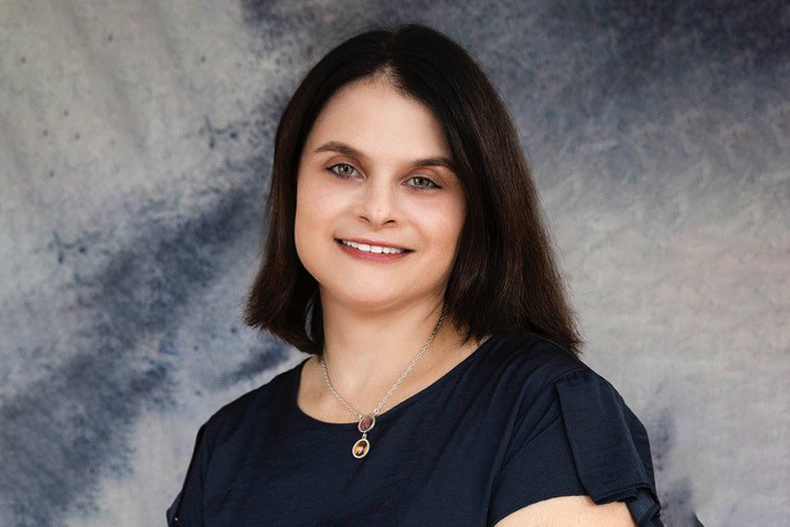
Rabbi Reni Dickman takes on new dual role at Chicago Board of Rabbis and JUF
After giving birth to her first child, Rabbi Reni Dickman’s pediatrician imparted three words to her: “Sleep begets sleep.” That means that if your child sleeps better, he’ll sleep more.
Dickman has translated that successful formula into her career as a rabbi, too. “If people are having positive Jewish experiences, they’ll want more of them,” she said. “I see it as a ‘yes and…’ If someone has an ‘aha’ moment that Judaism has something to say to them, they’ll seek out more of those moments. Positive Jewish experiences beget more Jewish experiences.”
An Evanston resident, Dickman has lived by the “yes and…” philosophy (borrowed from improv comedy) throughout her career and now brings that wisdom to her new dual role as the Executive Vice President of the Chicago Board of Rabbis and the Senior Educator of JUF, which she started July 1.
“Rabbi Dickman is bright, articulate, thoughtful, visionary, and an extremely talented teacher,” said Rabbi Sidney M. Helbraun, the new president of Chicago Board of Rabbis and spiritual leader of Temple Beth-El in Northbrook. “She will do a great job of reaching out to our community of rabbis and help us move forward in a changing Jewish world and a changing rabbinic world. Given the fact that the nature of the position has shifted, we believe that she will be an outstanding educator at JUF as well. I’m looking forward to working with her and carrying on the legacy that Rabbi Balinsky nurtured.”
Dickman is the first woman ever to serve in this position. She acknowledges that while it’s challenging these days to navigate how much gender is supposed to matter, she feels honored to have been selected for this role. “It’s exciting to me that women are now welcome to have a position like this and that the search committee saw in me someone who could bring new ideas,” she said. “This is bigger than me–I don’t feel like I need to prove that women can do this, but I do feel I can represent women in the rabbinate and women in Jewish life.”
In the newly designed professional role, Dickman will split her time between directing the Chicago Board of Rabbis (a position previously held by Rabbi Michael Balinsky) and serving on the JUF Education staff, heading up the new Jewish and Israel education initiative.
Dickman is excited to help her colleagues “grow in various ways-personally, professionally, and Jewishly” and she hopes to help make “Judaism accessible, compelling, and relevant” to them.
As for the Chicago Board of Rabbis–which brings together almost 200 rabbis representing the Conservative, Orthodox, Reconstructionist, and Reform streams of Jewish life–she believes her comfort in multi-denominational Jewish spaces will be an asset to her new role. Dickman–a Reform-ordained rabbi–has studied at an Orthodox yeshiva for women, belonged to a Conservative congregation, headed a Reform congregation, and she and her husband sent their children to a Reconstructionist preschool and now to an intentionally pluralistic Jewish day school. Most recently, she was the director of InterfaithFamily Chicago, which empowers people in interfaith relationships to engage in Jewish life.
“I’m honored to serve the rabbis of Chicago, to support them, and to create opportunities for them to continue learning,” she said. “I would love for the Chicago Board of Rabbis to be a think tank for rabbis to discuss best practices and explore new ideas.”
She added that all Jewish communal professionals–including rabbis–must meet people where they are along their Jewish journeys. “The Jewish community is changing and we have to be responsive to that as rabbis,” she said. “To be part of those conversations is exciting.”
Growing up, the Chicago native says that besides her parents, two of her greatest Jewish influences which inspired her career in the rabbinate were Jewish camp (OSRUI)–particularly the friendships and community it fostered for her–and her mentor, Rabbi Mark Shapiro, her cousin who at the time presided over her childhood synagogue, Congregation B’nai Jehoshua Beth Elohim. “He spoke to life’s most important questions,” she said. “He made Judaism seem essential-if you want to be wise, you should pursue this life.”
And so she did.
She was one of those unique kids who loved Hebrew school, “a testament to the teachers who were enthusiastic and made it fun.” That love for Hebrew and for teaching carried into her adult life, where she taught Judaic Studies at both Chicago Jewish Day School and what is now Rochelle Zell Jewish High School.
While juggling her teaching career, she would also commute from Chicago to her part-time pulpit at a congregation in Michigan City, Ind., near where her parents had a second home. She hopes to bring that sense of an intimate Jewish community to the larger Chicago Jewish community in her new role.
“How can we create that small Jewish community feel here?” she said. “It’s like Cheers , where everybody knows your name. People want that and I have faith that from that comfort zone, people will seek out more.”
The Chicago Board of Rabbis is a partner in serving our community, supported by the Jewish United Fund.
Other stories
-
Two local teens win national recognition
Recipients of the annual Diller Teen Tikkun Olam Awards
Read more -
Celebrating six young award winners cultivating the community
Introducing young adult award winners
Read more -