Let’s remember August 12. The Jewish experience in the blessedly, former Soviet Union can be described as life on a roller coaster with ups and downs. With the Bolshevik Revolution in October 1917, most Jews were filled with optimism. The antisemitic Czarist regime was overthrown. Initially the 1920s was a time of optimism. Jews urbanized in significant numbers and were able to enter positions in government and the professions. Then came a frightening time in the 1930s, with Stalin shuttering Jewish institutions and life.
During World War II, Stalin needed to mobilize Western support to defeat Germany. He established the Jewish Anti-Fascist Committee composed of some of Soviet Jewry’s most distinguished figures-scholars, actors, poets, and party officials. Its chairman was Shlomo Mikhoels, a world renowned Soviet Jewish actor and artistic director of the Moscow State Jewish Theatre.
To gain support for the war effort, Mikhoels and Yiddish poet Itzik Feffer went abroad in 1943 as official representatives of Soviet Jewry. They toured the United States, Mexico, Canada, and Britain for seven months in order to gain support for the Lend-Lease Program which brought significant aid to the Soviet war effort. When the war ended, Soviet Jewry was optimistic. Jewish soldiers fought and died in the Red Army. There was a sense that having given so much for Mother Russia, the Jews would now be fully accepted.
It was not too long before that optimism turned into pessimism and, from there, to deep dread. This was signaled with the murder in 1948 of Mikhoels, on Stalin’s order. Mikhoels had achieved near-legendary status for having mobilized the Jewish people to demonstrate solidarity with the Soviet Union and to present a united front of the entire Jewish people against the threat of total annihilation by the Germans.
By 1948, Jewish support, which had been so important in the Soviet effort in the war against the Germans, was not only not needed; it was not desirable. In Stalin’s Communist vision, national identities would wither away as all became members of the proletariat, the working class. Stalin set out to erase all traces of Jewish identity and culture.
Thus, the dark and black years of Soviet Jewry began-signaled with the murder of Mikhoels. The Jewish community in the Soviet Union quickly realized that this was no death by accident, as the official report said. Then, the assimilated traitorous Jew, Ilya Ehrenburg, signaled the new campaign against his own people by warning in Pravda that Soviet Jews should not identify with Jews in other countries. This would be disloyal.
Stalin’s determination to erase Jewish national identity was further sharpened. On October 4, 1948, he was stunned. Golda Meir arrived in Moscow as Israel’s first Ambassador to the Union of Soviet Socialist Republics. Like all Israeli diplomats posted in foreign countries, she went to shul on the first day of Rosh Hashanah, to the Choral Synagogue on Arkhipova Street, but a 15-minute walk from Red Square. It was made clear to the Jews of Moscow that they should not make contact with the Israeli diplomatic delegation.
Indeed, Ehrenburg, wrote in Pravda , that the State of Israel has nothing to do with the Jews of the Soviet Union, where there is no Jewish problem, and therefore no need for Israel.
In her memoirs, Golda wrote of that day, “Instead of the two thousand odd Jews who usually come to synagogue on the holidays, a crowd of close to fifty thousand was waiting for us. They had come, those good brave Jews, in order to demonstrate their sense of kinship and to celebrate the establishment of the State of Israel.” Stalin saw in this outpouring of Jewish solidarity with Israel the threat of Jewish nationalism.
In the winter of 1948-49, the Soviet Union arrested hundreds upon hundreds of Jewish personalities and officials. Amongst them, party members, government bureaucrats, artists, writers, musicians, poets, all sorts of prominent Jewish figures. The exact numbers are not known. According to one account 431 prominent Soviet Jewish artists and leaders were arrested. Most of them died in Soviet labor camps.
This antisemitic activity culminated on August 12, 1952, called “The Night of the Murdered Poets.” On this night 13-plus leading Jewish poets, intellectuals, and public figures were executed in Lubyanka Prison in Moscow, in the headquarters of what was soon to become the KGB. Those murdered were:
Peretz Markish
David Hofstein
Itzik Feffer
Leib Kvitko
David Bergelson
Solomon Lozovsky
Boris Shimeliovich
Benjamin Zuskin
Joseph Yuzefovich
Leon Talmy
Ilya Vatenberg
Chaika Vatenburg-Ostrovskaya
Emilia Teumin
In addition, another 11 Jews were shot that night. Among them were Solomon Lazovsky, Binyamin Zuskin, Eliyahu Steiback, and Linda Shtern.
The great Yiddish poet, Chaim Grade, who knew many of those murdered that night composed an elegy for the Soviet Yiddish writers. It opens with the following lines:
I weep for you with all the letters of the Hebrew alphabet that made your hopeful songs .
With these words Chaim Grade and Soviet Jewry and the rest of the Jewish world entered into a period of deep, dark dread about the fate of the three million Jews in the Soviet Union. This dread-pall was lifted only after the death of Stalin a year and a half later.
Rabbi Yehiel E. Poupko is Rabbinic Scholar of the Jewish United Fund.
Other stories
-
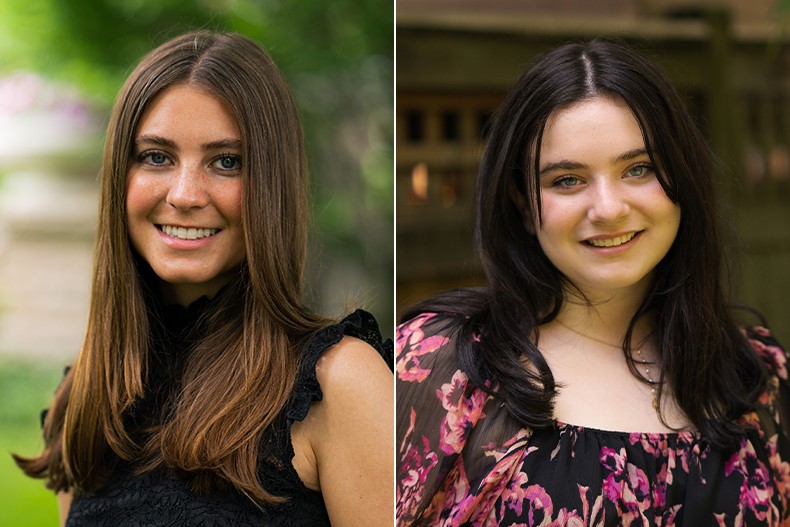
Two local teens win national recognition
Recipients of the annual Diller Teen Tikkun Olam Awards
Read more -
Celebrating six young award winners cultivating the community
Introducing young adult award winners
Read more -
Father Michael Pfleger recently hosted Minister Louis Farrakhan at St. Sabina Church. It was but one of many publicity stunts in the priest’s long, very public career.
It is rare when a religious leader from a mainstream faith like Catholicism provides a platform to a notorious bigot, one who regularly goes after Catholics and even the Pope, among others.
Pfleger is an experienced media commentator and moralist. He surely knew hosting Farrakhan would be controversial. But the appeal of a major media event was just too enticing. Pfleger also knew hosting one of America’s foremost bigots was indefensible. He therefore had no alternative but to contrive disingenuous defenses for his decision.
How else but “disingenuous” can the following four Pfleger statements be characterized:
1) “How dare FB BAN Louis Farrakhan while daily I come across Racist, Violent and Hateful comments and postings…I STAND WITH MY BROTHER….”
Pfleger knows that Facebook didn’t ban only Farrakhan, but several white supremacists too. Surely, he knows of Farrakhan’s appalling statements: Jews are termites and Satanic; were behind the 9-11 attacks; are sending America to hell; Judaism is a gutter religion; and, does [the Pope] really represent Christ…or that originator… of organized crime on this earth?
Pflager doesn’t even plead ignorance of Farrakhan’s hate. So, if ignorance isn’t a defense, then indulging it is the only-indefensible-explanation
2) “People who label Farrakhan a hater have [sic] spent the past week spewing Hate ar [sic] me and at St. Sabina….but I will continue to love, fight for justice and stand with my Brother.”
Irony, Exhibit A: Indulging Farrakhan’s bigotry against others while refusing to turn the other cheek when criticism comes your way.
Irony, Exhibit B: Rather than condemn Farrakhan for calling Jews “Satanic” at his church, Pfleger played the victim card: “…we are in a dangerous time when we can no longer have dialogue without demonizing one another.” And, “I have been cursed at, received…hate calls, emails, hateful Facebook postings…It is interesting to me that those who accuse him of hate have been so hateful this past week. Oh, the hypocrisy.”
Oh, the hypocrisy indeed. Pfleger endured several days of reactions from people who, from his very pulpit, were called Satanic. Farrakhan’s been threatening the Lord’s wrath on Jews, Catholics (for those counting, that’s Irony, Exhibit C), other Christians, and LGBTQ persons for decades.
3) In defending Farrakhan, Pfleger cloaked himself in the 1st Amendment: “Too many people struggled and died for the right of free speech and I will continue to struggle to preserve it…This is a free-speech issue….”
But America’s guarantee of free speech applies to government actions, not private entities. Facebook is no more bound to host Farrakhan than Pfleger is to host me at his church. Forcing either private entity-Facebook or the church-to do so would be the constitutional violation.
In his new-found devotion to free speech Pfleger somehow forgot to advocate (also mistakenly) for David Duke’s 1st Amendment right to a Facebook account.
The ACLU called: They’re revoking Pfleger’s two-week trial membership.
4) Pfleger quoted Farrakhan’s speech this way: “He [Farrakhan] said there were good Jews and there are bad Jews, true.”
No Jew is perfect, and there are a number of us who indeed might fairly be called “bad.”
But Farrakhan didn’t say we are bad; he said we are “Satanic.” Not the same thing. Not by a long shot.
How can so public a religious figure as Pfleger so blatantly misrepresent what was said from his own pulpit and caught on tape?
Irony, Exhibit D: Farrakhan refers to Jews as the “Arch Deceivers.”
Adding hypocrisy to demonization, Pfleger incredulously claims that he’s “try[ing] to…bring people together.”
It would take a sorcerer to both “bring people together” and host Farrakhan’s bigotry. Instead, Pfleger’s facilitation, broadcast, and endorsement of Farrakhan’s hatred was Chicago’s most divisive interfaith moment in years.
The closest analogies would be if, in the 1930s, a synagogue had hosted the viciously anti-Catholic KKK, or if Pfleger’s predecessors had invited Father Charles Coughlin’s pro-fascist, antisemitic weekly radio show to broadcast to its 30 million listeners from St. Sabina.
As our community and others targeted by Farrakhan appreciate, we must simultaneously never turn a blind eye to bigotry and also never allow the Farrakhans and Pflegers in our city to derail us from our ever-deepening relationships with our African American, Muslim, and Catholic partners.
Accordingly, the last word on this topic should not be from Pfleger or Farrakhan, but from His Eminence, Cardinal Blase Joseph Cupich. Upon learning what was trumpeted at one of his Archdiocesan churches, he responded swiftly and unequivocally: “I apologize to my Jewish brothers and sisters, whose friendship I treasure, from whom I learn so much, and whose covenant with God remains eternal.”
To that, may we all say “Amen.”
Jay Tcath is JUF’s executive vice president.
Editor’s Note: An earlier version of this piece appeared in the Chicago Sun-Times . Subsequently, both Pfleger (on TV) and Farrakhan’s Nation of Islam newspaper The Final Call criticized Tcath’s op-ed. He takes such criticism as a badge of honor.
Other stories
-

Mother’s Day, Father’s Day, and the Jewish way
Let us pause and consider what it means for us to truly honor our parents
Read more -
Each time we study Torah, we experience the revelation
The mystical tradition of Judaism that lifts up the number 600,000 from the Exodus
Read more -
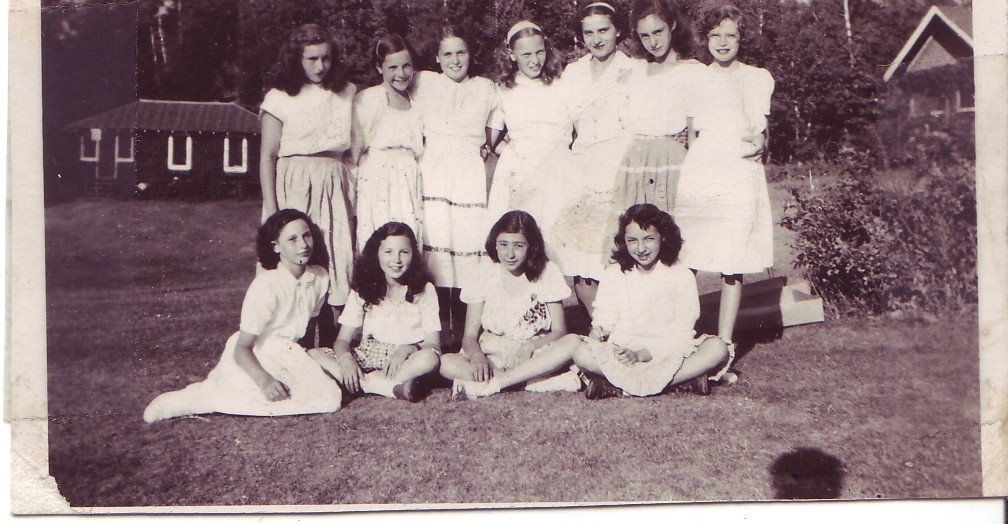
Spending Shabbat under the stars. Incorporating Jewish prayer and ritual into everyday life. Sitting around the campfire for Havdalah. Learning about Israel. And thriving in a Jewish community. These are the hallmarks of Jewish overnight camp that have been etched into the hearts of Jewish children and teens for generations.
Research from the Foundation for Jewish Camp, with its motto “Jewish summers, Jewish future,” shows that Jewish kids who attend Jewish camp were more likely to marry other Jews, have a Jewish circle of friends, and participate in the Jewish community as adults.
JUF partners with camps and community organizations
The Jewish United Fund has been instrumental in helping families send children to Jewish summer camps throughout the Midwest. “JUF offers two grants for first-time campers,” said Hallie Shapiro, JUF Senior Associate Vice President of Family and Teen Engagement. “The One Happy Camper grants and Camp Coupons are geared toward different populations; kids in public school and those attending Orthodox day schools. These grants are not need-based, but rather an incentive to send children to Jewish overnight camp for the first time for a minimum of 19 days.”
Every year, JUF also works with 11 Midwest Jewish overnight camps to help families with financial need-based scholarships. Applications can be made only through one of the eligible camps. “Scholarships are based on financial need and may be given year after year,” said Jody Slate, JUF director of Israel Experience. “Each year, we understand how our scholarships make a difference. So many families are faced with unemployment, divorce, debt, health issues, and more. For many campers, camp is a place to escape the hardships of home and is even considered their home away from home. We’re glad to help families better afford such an important part of their children’s’ Jewish identity.”
“We see firsthand that scholarship dollars make an impact on the families,” said Debbie Berman, chair of the JUF Scholarship Committee. “Camp is expensive and also a vital piece for so many children’s Jewish journeys. We never want parents to have to make the choice between Jewish camp and other obligations. Applicant families span from the unaffiliated to more observant and are spread out geographically, so we get a real sense of the needs across our community.”
Stefan Teodosic, co-chair of Midwest Jewish Camp Directors (MJCD) as well as Beber Camp Executive Director, explained that MJCD’s goal is a collaborative effort to get every Jewish kid to Jewish summer camp. “Going to Jewish summer camp is the most transformational vehicle for driving Jewish identity,” he said. “It builds life skills as well as develops future generations of Jewish leaders. Our goal is to help families work with JUF to make the right fit.”
Jewish camp makes an enduring impact
Attending the first summer of Camp Ramah in 1947, Chaviva Jacobson felt its influence throughout her life. “You go to camp 350 miles away from Chicago and you meet the most wonderful girls your age. The boys are handsome, intelligent, can lead a Shabbat service, read from the Torah, and they both become your lifelong friends.” Jacobson, author/lecturer on artist Marc Chagall, added that Ramah’s art and music programs generated her lifelong passion for art.
Involved with Olin-Sang-Ruby Union Institute (OSRUI) for many years, Terry Hendin felt that camp played a large part in enhancing her Jewish identity, knowledge, and interest in Israel. “It provided personal growth, independence, self-confidence, and forging lifelong friendships, many continuing 55 years later. Clearly, camp influenced my life’s direction, visiting, studying, and moving to Israel in 1975 and spending my professional life as a Jewish communal professional.”
For Hilary Most, summers at Camp Chi left a lasting impression and showed her Judaism in a new light. “I went to secular camp first, but Camp Chi made the difference. We didn’t know they were instilling Jewish values in us, but they did it every day, making it fun, yet meaningful. Because of Camp Chi, I will only send my children to Jewish summer camp.”
Check out onehappycamper.org in the fall to apply for the summer of 2020. For more information, email[email protected], or call (312) 444-2895.
Overnight camps eligible for JUF Scholarships: Agudah Midwest/B’nos Ma’arava, B’nai Brith Beber Camp, Camp Chi, Habonim Camp Tavor, Camp Moshava Wildrose, Olin-Sang-Ruby Union Institute (OSRUI), Camp Ramah Wisconsin, Yeshivas HaKayitz, Camp Nageela Midwest, Camp Young Judaea Midwest, and Chavayah. For more information, email [email protected] , or call (312) 444-2895.
Other stories
-
Two local teens win national recognition
Recipients of the annual Diller Teen Tikkun Olam Awards
Read more -
Celebrating six young award winners cultivating the community
Introducing young adult award winners
Read more -

Chicago’s young Jewish athletes take the field at JCC Maccabi Games
Paul Wieder with Jack Koltin
The Summer Olympics will not return until 2020, but local teens can seize a bit of athletic glory themselves this summer at the JCC Maccabi Games.
Since 1982, the JCC Maccabi Games have gathered Jewish teen athletes annually, in cities across the U.S., for competition — and camaraderie — through sports. The 2019 JCC Maccabi Games will run from late July to early August.
“I will never forget being called up to the podium, and seeing my teammates and the Chicago delegation cheering me on,” recalled Valerie Budra, a 16-year-old swimmer attending Rochelle Zell Jewish High School, about medaling at one of the JCC Maccabi games.
Rolling Meadows High School basketball player Chloe Newland has her own thrilling memories: “We won Gold in last year’s Games, when one player came in, in the clutch, with game-winning free throws.”
One of the host cities, Atlanta, will host more than 1,600 athletes, ages 12 to 16, who will participate in 13 sports. These events include Olympic-style opening and closing ceremonies and a community service day. This year, JCC Chicago is sending 22 players to Atlanta to compete in soccer, baseball, bowling, and track and field.
An even larger contingent of nearly 70 Chicago-area students is being sent to the Maccabi Games in Detroit to compete in hockey, soccer, swimming, baseball, and basketball. This year, there is an accompanying ArtsFest in that city, and a Chicago student will perform in its musical. Other young artists will paint, cook, and play in a rock band.
“The most exciting parts of the Maccabi games for me,” said Jodi Marver, the women’s basketball coach, “is the opportunity to coach at a high level, and interact and meet other Jewish coaches and athletes.”
As to her goals, she said, “My expectations are very high for this year’s Maccabi team. I hope to see a well-balanced combination of trying to win the gold medal, while making sure that the girls enjoy themselves. Ultimately, as long as the girls have fun, that is what makes me happy.”
For Ben Rothmann, a soccer player who attends Barrington High School, “success at the Maccabi games isn’t about winning. It’s about the connections you make when you meet someone new.”
Burda also enjoyed “making many new friends, competing as hard as I can in my sport while having fun, and representing the Chicago delegation at the highest level. When I was walking out at the opening ceremony representing the city of Chicago, I was incredibly excited, proud, and honored to be there,” she said. “My adrenaline was sky-high!”
For more details on the upcoming JCC Maccabi Games, visit jccmaccabigames.org.
Other stories
-
Two local teens win national recognition
Recipients of the annual Diller Teen Tikkun Olam Awards
Read more -
Celebrating six young award winners cultivating the community
Introducing young adult award winners
Read more -
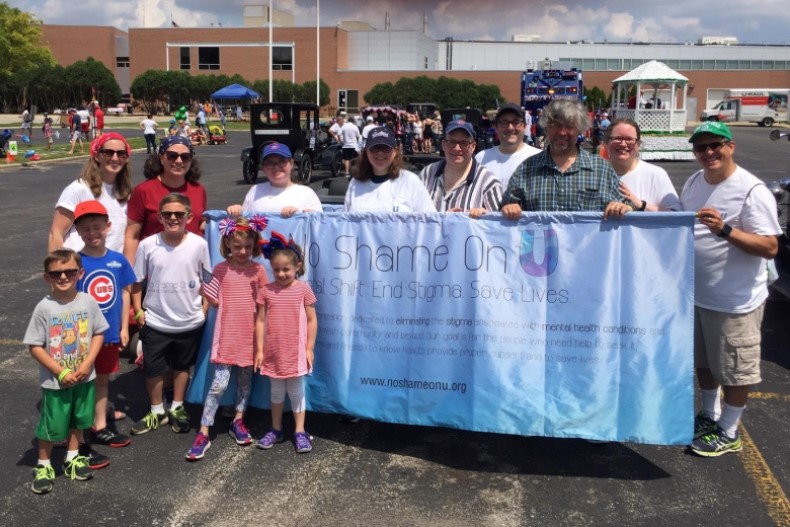
The sentiment of Kol yisrael arevim zeh lazeh –all of Israel are responsible for one another–inspires people to care for those living with a mental health condition, even in a world where stigma causes many people to shy away. These entrepreneurs of kindness hope to care for the Jewish community as a whole, including its most vulnerable members, with programming, resources, and more.
JCFS Chicago, a JUF partner, is one organization helping many people in the Chicago area experiencing mental health challenges. JCFS Chicago offers counseling, psychological testing, community education, and individualized support services to help empower children, teens, adults, and families to cope with mental health challenges. Through JCFS, people are connected to professional, peer, social, and community supports.
To learn more, visit jcfs.org
Sharing stories to smash stigma
While hospitalized for depression, Miriam Ament received a phone call from a close friend who said she only wanted to talk to her when she was happy–and never spoke to her again. “I kept my depression a secret for a long time” after that, Ament said.
An opportunity to eat lunch–and share her story–with actress Glenn Close changed everything. This encounter planted the seed for No Shame On U. A local Jewish mental health organization and JUF Breakthrough Fund grant recipient, it is dedicated to raising awareness of mental health conditions, and reducing the stigma of mental illness through community outreach programs, workshops, resources, and the power of stories.
One of these stories belongs to Ellie, a young adult diagnosed with Obsessive Compulsive Disorder. On a mission to “fight stigma on the front lines,” she publishes weekly stories of her everyday experiences on No Shame On U’s blog. Ellie explains, “Learning the facts about brain chemistry and acknowledging that mental illness exists are definitely important steps, but expressing this knowledge through compassion really changes things.”
Learn more about No Shame On U at noshameonu.org or on Facebook.
Helping after the unthinkable
Six days after Stewart Dolin, a happily married father and senior partner at a law firm, was prescribed a medication for anxiety, he took his own life. For his widow, Wendy, this was incomprehensible.
“Nothing made sense,” she says of the aftermath of her 57-year-old husband’s sudden death. In her time of need, she approached several Jewish nonprofits, only to find a lack of resources for people whose family members died by suicide. Although she found meaningful programming at Catholic Charities, she “would have liked a Jewish perspective.”
Wendy reached out to JUF’s then-president Steven B. Nasatir, who suggested meeting with Miriam Ament from No Shame On U. The two presented their first joint event, “Shine A Light On Suicide,” to Chicago in December.
To further her work, Dolin applied for and received a JUF Breakthrough Fund grant for her organization, Medication Induced Suicide Prevention and Education Foundation in Memory of Stewart Dolin (MISSD). She began with the goal of educating people about akathisia–a condition that contributed to Stewart Dolin’s death, in which someone starting, stopping, or changing a medication experiences extreme inner restlessness and suicidal thoughts–and has grown from there to educate about other causes of suicide like mental illness, difficult life circumstances, and trauma.
Dolin stresses the importance of knowing you are not alone. Jews are “not immune to issues in the general world, and you shouldn’t be ashamed.”
For more information about MISSD, visit missd.co .
Bringing community to the marginalized
Some people living with a serious mental health condition feel isolated in their communities. The ARK, a partner of JUF, seeks to remedy this problem with its Intensive Day Program (IDP), led by clinical psychologist Na’ama Wasserman.
In addition to The ARK’s counseling services, case management, referrals, and more, led by clinical director Vicki Hass, the IDP offers a day program that provides activities, support groups, classes, and therapy, all with a Jewish twist.
“There are so many people who have lost touch with their families and are isolated,” said Hass, who is proud of the “sense of family and belonging that people have when they join the IDP program.”
“For many members, Jewish identity is an important part of who they are,” explained Wasserman. When participants celebrate Jewish holidays together, they receive social support from peers and counselors, which can make a huge difference.
“There’s a tendency in the Jewish community to believe you have to pick yourself up from your bootstraps and as we move farther from our immigrant experience, everyone is well-off,” Hass said. “It’s uncomfortable and shaming for people to believe they haven’t ‘made it,’ and they don’t want their neighbors to know. But you have a right to come to the community for help and the community in turn has an obligation to perform acts of chesed (lovingkindness) and assist people in times of adversity.”
Find more details about The ARK and the IDP program at arkchicago.org .
Saving lives with mental health first aid
Thanks to the widespread availability of CPR classes, many Americans can recognize signs of a heart attack. But what about signs of a mental health crisis?
Professionals like addiction specialist Nina Henry are teaching classes in Chicago called “mental health first aid,” which began in Australia in the early 2000s and are now taught around the world. Like CPR classes, mental health first aid classes begin with the signs and symptoms of a mental health crisis. The next steps in the eight-hour program involve learning language and skills along with experiential exercises to help people intervene in these situations and potentially save a life. With tailored versions for adults, teenagers, older adults, people in the criminal justice system, and first responders, “people feel emboldened and confident that they have the tools to help.”
Henry also developed her own program, Tikkun HaNefesh, which traces the history of Jewish perspectives on mental health from Biblical times onward. She also speaks of the phenomenon of residual trauma in descendants of Holocaust survivors, mapping the “fierce determination and resilience of the Jewish people who continue to flourish through trauma.”
Sign up for a mental health first aid class at mentalhealthfirstaid.org .
Other stories
-
Two local teens win national recognition
Recipients of the annual Diller Teen Tikkun Olam Awards
Read more -
Celebrating six young award winners cultivating the community
Introducing young adult award winners
Read more -
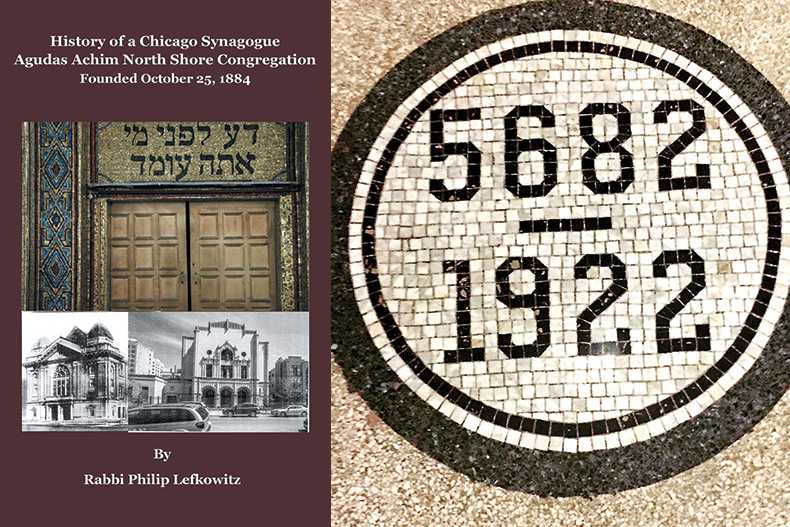
Agudas Achim North Shore Congregation’s story began over a century ago. With the recent sale of the synagogue’s 1920s cathedral-style building, a new book –History of a Chicago Synagogue: Agudas Achim North Shore Congregation ( Page Publishing, Inc.)–brings the story to life through photographs, newspaper articles, biographies, and retold memories.
“As the synagogue now faces an unsure future, I believe it is my sacred duty, as its rabbi for more than a decade and a half, to preserve the heritage of our great synagogue in a formal manner,” explained the book’s author, Rabbi Philip Lefkowitz.
His retelling of the synagogue’s story begins with two separate congregations. The First Hungarian Congregation Agudath Achim was founded in 1884 by 10 recent Hungarian immigrants and grew greatly over the following years. North Shore Congregation Sons of Israel began when Jews from Lawndale began moving to the Edgewater district and needed a synagogue in the new area. When the First Hungarian Congregation Agudath Achim’s members began to move there as well, negotiations opened to merge the two congregations into one.
When they joined to form Agudas Achim North Shore Congregation on March 10, 1923, plans were already underway for a new building constructed by Chicago architect Henry Dubin. From “Romanesque entryway arches, baroque windows, and an art deco parapet” to the marble staircases, stained-glass windows, and half-roundels, the building on Kenmore Avenue was described as “a unique piece of architecture in Chicago” by Vincent Michael, John H. Bryan Chair in Historic Preservation at the School of the Art Institute of Chicago.
Once the building was dedicated in 1925, it became the home for the merged congregation for services, holiday celebrations, and more. The congregation flourished for many until declining membership, physical neglect, and internal legal battles led to the sale of the building.
“I am exceedingly proud that proceeds from the synagogue’s sale will be utilized to provide an expanded facility for Northwestern University’s Chabad House, thereby tangibly continuing our synagogue’s over 130-year service to the Chicago Jewish community,” Lefkowitz wrote.
Complete with a biography of each of the Reform, Conservative, Orthodox, and Chasidic rabbis who served the congregation over the years, as well as a photo gallery and reproductions of historical documents, the new book is a valuable resource for those looking to learn more about the history of Chicago’s Jewish community.
Other stories
-
Two local teens win national recognition
Recipients of the annual Diller Teen Tikkun Olam Awards
Read more -
Celebrating six young award winners cultivating the community
Introducing young adult award winners
Read more -
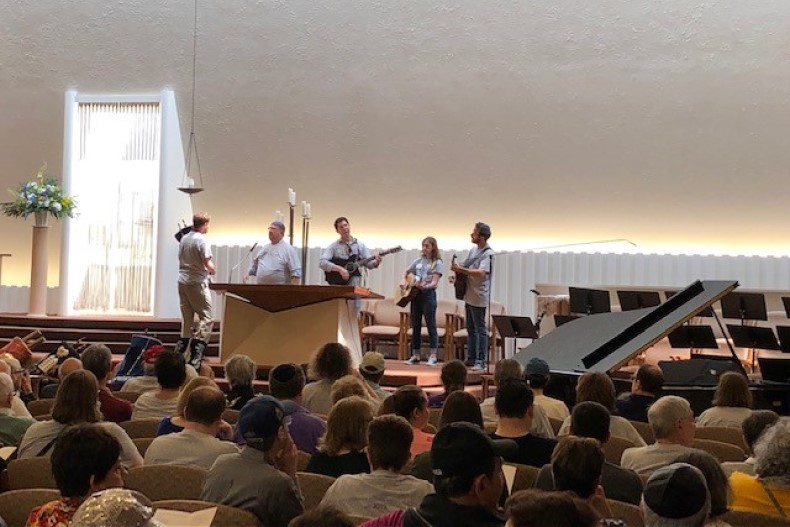
Congregation Solel and Lakeside Congregation for Reform Judaism joined together to form one congregation, Makom Solel Lakeside, in early June.
The new congregation, whose name combines elements of the previous synagogues and a goal to create a spiritual home–a makom –for its members, is led by Rabbi Evan Moffic from Solel and Rabbi Isaac Serotta from Lakeside.
“Our congregations have similar strengths but also complement each other,” said Moffic. “We wanted to explore how we could better serve the community. We both are strong and stable enough that we would make an even stronger whole.”
The two Reform synagogues, each about 60 years old, voted “overwhelmingly” last year to join together and create a single, strong synagogue. “The merger reflects our vision of how to best serve the Jewish community in the North Shore for the next 50 years,” Moffic said. “This decision reflects our strengths, our potential, and a path-finding, bold idea.”
The big day, June 2, began with a mitzvah project and a prayer service. Afterwards, members of both synagogues joined together to bring the Torahs from the Lakeside Congregation to Solel’s building, which was deemed to be more suitable to house the merged congregation thanks to its size and capacity to hold the Torahs and other religious objects from both congregations.
Witha, according to Moffic, at least half a dozen people in their 90s and at least a dozen under age 5, the procession brought together a vibrant community of multiple generations, including new and founding members alike. As the crowd of hundreds passed through the streets, it was a “tremendous day for the Jewish community and the city of Highland Park,” Moffic said.
“The coming together of our two congregations is a wonderful time in this community,” added Serotta. “We have opportunities as a team to do things that we couldn’t do when we were stuck in our own silos.”
To learn more about the new synagogue, visit mymakom.org .
Other stories
-
Two local teens win national recognition
Recipients of the annual Diller Teen Tikkun Olam Awards
Read more -
Celebrating six young award winners cultivating the community
Introducing young adult award winners
Read more -
The Jewish United Fund’s Breakthrough Fund, a six-year initiative to spark innovation and smart growth in leading-edge efforts that meet local human needs, engage Chicagoans Jewishly, and strengthen Israeli society, has announced more than $1 million in grants in its latest round.
The awards will support or kickstart efforts ranging from a women’s mentorship initiative, STEM training for Orthodox women and Jewish summer camp experiences for young adults to programs addressing suicide prevention, end-of-life discussions, and sexual abuse. One will create intergenerational virtual reality tours of Israel for senior citizens and college students, while another will take viewers of all ages on virtual tours of three concentration camps, with Holocaust survivors as guides.
The grants-ranging from $15,000 to $100,000-will include $860,320 for 13 new initiatives, and $154,000 for three projects in the final year of multi-year grants.
Through its six grant cycles, JUF’s Breakthrough Fund has awarded nearly $6.5 million via 80 grants to 54 organizations in the United States and Israel.
“This latest round of Breakthrough Fund grants continues our commitment to spur innovative, sustainable ways of invigorating Jewish life and community for years to come,” committee Chair David Golder said. “Going forward, we will be working closely with local synagogues, schools, and agencies to further advance new models that will evolve with our community’s needs, and to broaden the resources available to support them.”
New Grants
Anshe Emet Synagogue will partner with Emanuel Congregation and Anshe Sholom Bnai Israel to launch Tikkun Chicago, a multi-denominational education program tailored to teens’ interests and learning styles.
CJE SeniorLife will offer virtual reality tours of Israel-led by young adult “tour guides” who have visited Israel-to decrease social isolation, increase opportunities for intergenerational programming, and test the feasibility of using VR technology in other efforts to improve older adults’ health and quality of life.
Hebrew Theological College will receive a second year of funding to support Women in Technology, which provides computer science courses in two Orthodox girls’ high schools, as well as an adult education computer coding class for women in
the community.
Honeymoon Israel will adapt the immersive Jewish learning that takes place on its Israel trips to local contexts, providing opportunities for couples who aren’t selected for a trip to meet peers and explore their Jewish life together.
The Illinois Holocaust Museum and Education Center will produce virtual reality tours of three concentration camps, as well as a new gallery for this immersive program. Viewers, guided by survivors who were imprisoned there, will experience railway cars, barracks, and slave labor factories.
The Israel Trauma Coalition is developing toolkits and training for front-line social workers and other professionals who work with children and youth in select northern Israeli communities, for use in the event of wartime evacuations.
JCFS Chicago will launch a suicide prevention and emotional support program designed to initiate dialogue, enhance understanding of suicide, reduce stigma, and ensure appropriate and compassionate responses in the Jewish community. JCFS is partnering with No Shame on U and MISSD (The Medication-Induced Suicide Prevention and Education Foundation in Memory of Stewart Dolin).
Jewish Women International’s Young Women’s Leadership Network of Chicago offers monthly leadership development, education, and mentoring opportunities to Jewish women in their 20s and 30s so they can learn from accomplished Jewish professional women role models.
Midwest Jewish Camps Group is partnering with JUF and Hillels of Illinois’ Lewis Summer Intern Program to launch the Lewis Summer Camp Intern Program, creating professional internship opportunities in Jewish overnight summer camp settings.
NOAM will address sexual abuse in Israel’s ultra-Orthodox community, publishing a short book for rabbis to learn about the issue, its prevalence, and the consequences of inaction or insufficient action; establishing a rabbinic roundtable and advisory committee; and launching telephone support for victims, rabbis, professionals, and others.
Reboot will pilot Death Over Dinner – Jewish Edition in Chicago. The program brings important end-of-life issues, including grief and mourning, advance directives, demystifying shiva and other Jewish customs, and other often-overlooked topics to young adults’ dinner discussions.
SHALVA will create interactive videos to teach Jews in Chicago and potentially beyond how to appropriately and effectively communicate and intervene when they suspect someone is experiencing abuse. The videos will teach viewers when to demonstrate their concern, what to say, and what not to say; and provide opportunities to role-play the conversation.
Trybal Gatherings recreates the Jewish summer camp experience for young adults through weekend retreats. Trybal will scale up enrollment at Chicago-area retreats and offer year-round programming in collaboration with other local organizations.
In addition to the new awards, three continuing grants were awarded in June 2018 to Hazon, the Jewish Agency for Israel, and Associated Talmud Torahs.
For more information about the Breakthrough Fund, contact Sarah Follmer, Assistant Vice President, Community Program Development, at (312) 357-4547, email[email protected]or visit www.juf.org/grants/breakthrough.aspx .
Other stories
-
Two local teens win national recognition
Recipients of the annual Diller Teen Tikkun Olam Awards
Read more -
Celebrating six young award winners cultivating the community
Introducing young adult award winners
Read more -
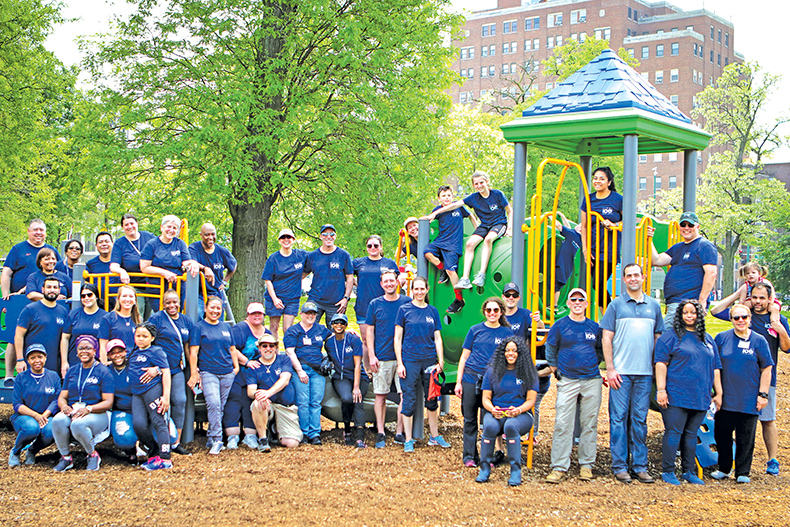
This year, Mount Sinai Hospital celebrates a century on Chicago’s West Side, and 100 years of redefining medical care and what it means to be part of the life of a community.
In the late 1800s and early 1900s, German and Eastern European Jews immigrated to Chicago by the thousands to escape religious persecution. By and large, the German Jews settled on the city’s South Side and the Eastern European Jews on the West Side. At the time, this geographic divide within the Chicago Jewish community reflected an equally tangible difference in language and religious customs, disparities which often prevented a consensus when it came to the intersection of Jewish law and medicine.
In 1881, Michael Reese Hospital opened its doors on the near South Side to cater to the local German Jewish community. Eastern European Jews on the West Side were welcome at the hospital, but many chose not to seek care there because the hospital did not keep kosher. As a result, large segments of the Chicago Jewish immigrant population struggled to find health care.
In 1912, the Maimonides Kosher Hospital of Chicago was founded in Lawndale to fill this service gap. Due to a funding shortfall, Maimonides closed its doors four years later, but Maimonides board member Morris Kurtzon-determined to keep alive the dream of a West Side hospital-bought the Maimonides building and established Mount Sinai, which opened as a teaching hospital in 1919.
“The establishment of Mount Sinai Hospital gave this once disenfranchised community an opportunity to receive the care they deserved and live healthy lives,” explains Karen Teitelbaum, president and CEO of Sinai Health System. “It also gave Jewish doctors and nurses a place to practice medicine, free from discrimination that confronted them elsewhere at the time.
“In the decades since, Sinai has remained committed to helping everyone who comes through our doors, consistently delivering health care-and hope-to those who need it most,” she said.
More than 45 years before the establishment of Medicare and Medicaid, and a decade before the standardization of health insurance, Mount Sinai made quality health care affordable and available for those in need. Embodying the Jewish values of tikkun olam (repairing the world) and hachnasat orchim (welcoming and caring for the stranger), the hospital’s open access policy ensured that anyone in need of medical attention received care regardless of ability to pay.
It was because of the “support of the Jewish community, particularly the Jewish United Fund,” explained Steven Koch, Kurtzon’s grandson and former Chairman of the Board of Sinai Health System, that Sinai was able to absorb the costs for patients who could not pay.
In the latter half of the 1900s, the demographics of the West Side began to change. After much of the Jewish community moved away from North Lawndale, Mount Sinai stayed resolutely in place, continuing its commitment to serve residents of the West Side-now largely African-American and Latino families.
In the decades that followed, Mount Sinai led the medical community in cutting-edge clinical and non-clinical practices. Key among them:
• Sinai established what is now the oldest home health care program in the State of Illinois in 1953.
• The first in-vitro fertilization clinic in the Midwest opened at Sinai in 1983.
• The Midwest’s first rehabilitation hospital, Schwab Rehabilitation Hospital, became a part of Sinai in 1984, and continues to rank among the nation’s top 14 resident programs for Physical Medicine and Rehabilitation.
• In 1990, Sinai was designated as a Level 1 Trauma Center-one of only five in Chicagoland-a distinction it holds to this day.
• To provide the West Side with accessible, convenient mental/behavioral health care, in 2012, Sinai merged with Holy Cross Hospital.
The mergers with Schwab and Holy Cross led to the foundation of Sinai Health system, comprised of Sinai Children’s Hospital, Sinai Community Institute, Sinai Medical Group, and Sinai Urban Health Institute, and serves over 150,000
patients annually.
For 100 years, Sinai has led the Midwest in a variety of medical disciplines, but what makes Sinai unique is the hospital’s enduring commitment to advocacy and the holistic health of its community.
“Chicago is the birthplace of community organizing, where impassioned and engaged citizens work together to improve communities from the ground up,” said Teitelbaum. “Sinai has used this same principle to redefine the role of a hospital in urban areas-piloting and promoting programs beyond health care, essentially working with the community to deliver for the community.
“Ours is also a city of immigrants; at Sinai, serving the health needs of immigrants is more than a program, it is part of our DNA,” Teitelbaum said.
In so many ways, Sinai’s story is; the story of Jewish Chicago. Founded by immigrants, for immigrants, Sinai catered to the health needs of a marginalized community with the utmost respect for the religious and ethnic diversity of that population. As new faces joined the Sinai community, the hospital remained a passionate source of welcome and care, operating according to the principles of equal opportunity and tikkun olam .
In the century to come, Sinai will remain a place of healing and a sonorous voice for the people of Chicago.
In celebration of their centennial, Sinai is hosting a year-long volunteer effort called “100 Steps Forward,” the purpose of which is to find meaningful ways to give back to the greater Health System community. There will be a centennial celebration on Oct. 10 at Mount Sinai Hospital.
To learn more about Sinai’s centennial and to experience firsthand accounts of the Health System’s impact, visit www.sinai100.org .
Sinai Health System is a partner with the Jewish United Fund in serving our community.
Jenna Cohen is a freelance writer and non-profit professional living in Chicago.
Other stories
-
Two local teens win national recognition
Recipients of the annual Diller Teen Tikkun Olam Awards
Read more -
Celebrating six young award winners cultivating the community
Introducing young adult award winners
Read more -
Deborah Wineman has been a yogi for a long time. A certified yoga instructor, she began practicing the discipline in her 20s. But it wasn’t until two decades later that Wineman, who was raised in a less observant Jewish background, discovered how she could infuse Judaism into her yoga practice. It was then that a mutual friend introduced her to fellow yoga lovers Rebecca Minkus-Lieberman and Jane Shapiro.
Minkus-Lieberman and Shapiro are two of the co-founders of Orot: Center for New Jewish Learning, founded in 2014, offering a variety of Jewish experiences integrating study and wisdom. The programs, yoga and meditation among them, offered through Orot — a past JUF Breakthrough Fund grant recipient — are designed to engage heads, hearts, bodies, and spirits in immersive ways that make Jewish wisdom accessible to all.
“We use different modalities for people to find their way in — through music, art, reflective creative writing, and embodied practice. Yoga is just another natural avenue in for people,” said Minkus-Lieberman, a longtime educator in the Jewish community.
When Wineman took her first Orot class, she was hooked. “The class was about Shabbat as a practice of mindfulness,” she said. “I was like, ‘Oh my God. This is it.'”
She hit it off right away with Minkus-Lieberman when they realized they shared a passion for tapping into the wisdom of yoga. Soon after, the two co-taught their first class, a Rosh Chodesh yoga class, in Wineman’s basement, figuring Wineman’s already-established Jewish yoga clientele might be interested in trying out a Jewishly-infused meditative experience for the first time. As they predicted, the class was a hit.
So how does one connect the Hindu practice of yoga with Jewish wisdom? Wineman and Minkus-Lieberman say the two disciplines naturally align. “When I was studying yoga, I learned that there are 10 living principles–right away, I thought about the Ten Commandments. These feel very similar,” said Wineman. “The 10 principles, the Yamas and Niyamas , create wholeness and are things you do in the world. It reminded me of the mitzvot , the ones you do personally and then the ones with God or with the outside world.”
Wineman stresses that yoga is not a religion. “The last principle,” she said, “is to ‘surrender to a higher power’…Yoga is not a religion–it’s not telling you to bow to a Hindu deity. It’s really [up to you] who your higher power is. Yoga just provides the tools for ethical living.”
For the past three years, Wineman and Minkus-Lieberman have been teaming up through Orot to forge ways to create the embodied experience of Jewish teachings and rituals for the Jewish community. They teach special yoga events around the Chicago area themed around the holidays, Jewish philosophy, and soul traits, inspired by the Mussar practice. Through their classes, they introduce a Jewish theme and integrate it into the meditation through body, breath, and movement. It’s not just about thinking about the Jewish text, they say, but about feeling it in your body.
“There are many instances in our tradition where we’re asked to put ourselves back in a certain reality,” Minkus-Lieberman said. “We’re trying to give people opportunities to really experience what it feels like and put themselves into the narrative of the Jewish people. Yoga is a wonderful avenue that allows us to do that.”
For instance, in preparation for Passover this past spring, they taught a yoga and meditation class intended to embody the felt sense of liberation through posture and movement. “You’re supposed to imagine as if you yourself went out of Egypt. You can think about that intellectually-you can think about liberation and slavery,” Minkus-Lieberman said. “But in this class, we really wanted people to personally experience the arc of Passover, of moving from an enslaved experience to a liberated experience.”
The instructors use yoga as a tool to explore Jewish contemplative questions throughout the entire Jewish calendar. For Purim, they ask students to reflect on what joy feels like in their body. For the High Holidays, they match postures and movements to illustrate showing up more fully in the year ahead. On Chanukah, they explore what it means to embody light in times of darkness.
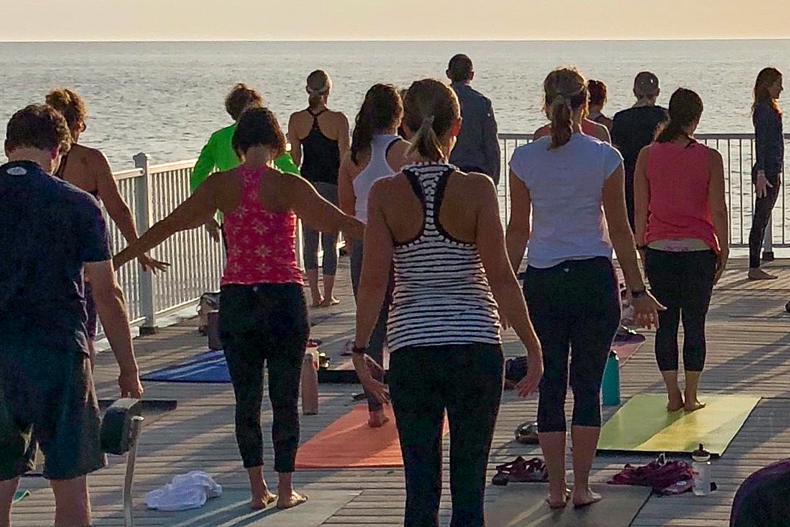
In the summertime, they hold a beach yoga class–this year on the morning of July 8 at Glencoe Beach-where they ask their students to attune themselves to, and give gratitude for, the natural world around them, the gifts of the sunrise, the sand, and the waves.
Wineman and Minkus-Lieberman also offer Shabbat retreats, incorporating movement and meditation, into an immersive two-day experience.
All the programming shares the goal of carving out a space of refuge amidst the chaos of daily living, explained Minkus-Lieberman. “Life is just crazy,” she said. “There’s noise and information overload all the time, and people are craving opportunities for quiet, rest, refuge, and meaning.”
To register for the “Moving with the Waves” yoga experience on July 8, visit bit.ly/MovingWithWaves.
Other stories
-
Two local teens win national recognition
Recipients of the annual Diller Teen Tikkun Olam Awards
Read more -
Celebrating six young award winners cultivating the community
Introducing young adult award winners
Read more -