“In what ways do you see healthy relationships being promoted on TV or in the media?” That’s one question Ellie Molise from Response-a program of JUF’s Jewish Child and Family Services (JCFS)-uses to hook her teenage audience during healthy relationships presentations at high schools that have recently included Vernon Hills and Lake Forest. Then she puts up slides of images from popular TV shows.
Among the images were Nancy and Jonathan from Netflix’s Stranger Things , and Ian Gallagher and his former flame, an escaped convict named Mickey, from Showtime’s Shameless .
“Are they healthy? Are they abusive?” asks Molise, who is Response’s outreach prevention specialist. Whether she’s speaking to 30 or 800 students, these questions spark discussion. Students are challenged to not only examine relationships in pop culture but, also, their own relationships with family, friends, and even social media.
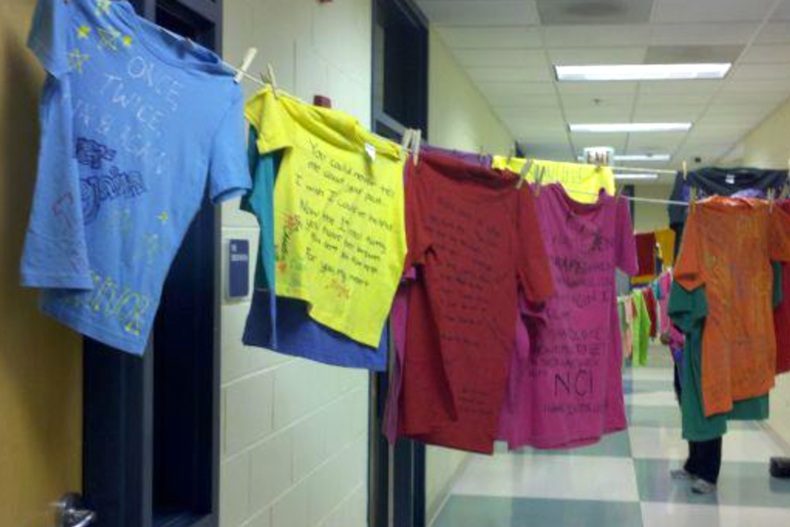
Finally, students get a guided tour of The Clothesline Project, a display of t-shirts made by survivors of violence. The colored shirts-green, yellow, white, red, blue, orange, and purple-reflect a range of stories about abuse and violence, including those targeted because of sexual orientation and political activism.
After this year’s tour, one student reached out for help, recalled Sara Manewith , director of Response. “She told us how helpful it was that she saw herself in a story that someone else wrote on one of the T-shirts. She said, ‘I’m a victim, too,’ and is now receiving counseling.”
Hoping to prevent another young woman from being another violence statistic, Samantha Spolter has dedicated herself to community outreach for the past two years. “One in four women (in the U.S.) has been in some kind of abusive relationship,” said Spolter, coordinator of the SHALVA’s Under 40 Outreach and Education. “That number really shocks people.”
She begins an outreach event by explaining that the JUF-funded SHALVA’s mission is to support Jewish women experiencing and healing from domestic abuse, and that work is done through community education programs, counseling, housing, and legal services.
In the fall of 2016, Spolter partnered with other Jewish organizations for a yoga event, and then other programs followed. They included cake decorating with a kosher baker and a self-defense class taught by sixth-degree black belt Sunny Levy, owner of a martial arts studio
in Lincolnwood.
“Knowledge is power,” declares Spolter. “We are providing tools to recognize the warning signs of abuse much earlier and get out of the relationship,” she said. “Even if a woman [in the audience] is not affected, chances are she has a sister, a cousin, or a friend who is,” she said.
Through leadership activities, counseling, education, and school outreach, Response empowers teens to make healthy choices. Each year, the program serves over 13,000 teens and their families.
Snowball, one of Response’s popular programs, has changed lives.
In any given year, anywhere from 80 to 100 teens from the Chicago area attend this weekend retreat, where there’s zero tolerance for bullying and abusing substances. The entire weekend is designed to empower healthy choices. Interactive workshops help teens develop leadership skills and learn about current issues like diversity and social justice.
For Eli Wright, a Highland Park High School junior and Snowball teen leader, what’s most memorable is the opportunity to build connections with teens from diverse backgrounds. “My sophomore year, everyone in my small group got very close,” he recalled. “We still keep in touch to this day.” This year, he hopes to create that same experience at the healthy relationships workshop he’ll be leading.
It’s never too late to improve our family relationships, said Elizabeth Ellis, a JCFS social worker. Just a few days ago, she spoke with one confused grandmother whose 16-year-old grandchild is coming out as transgender. “She called and said, ‘I really need someone in the Jewish community to help me deal with and understand what’s going on with my grandkid.'”
The grandmother has come to the right place for help. On Tuesday nights, Ellis facilitates “You’re Not the Worst,” a drop-in support group for busy parents and caregivers of teens.
“Teenagers are like creatures from another planet sometimes. What motivates them is mysterious to older generations,” Ellis joked. “But fostering communication-that’s a big part of what I do.”
Jennifer Brody is a freelance writer living in Chicago.
Other stories
-
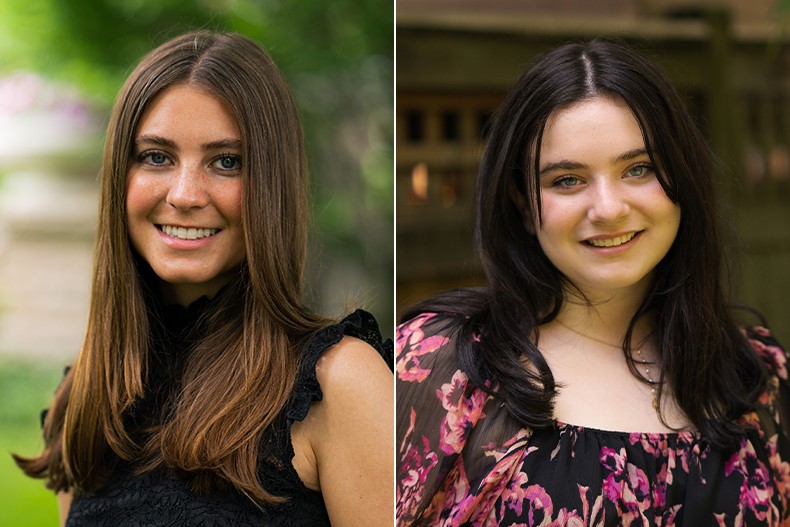
Two local teens win national recognition
Recipients of the annual Diller Teen Tikkun Olam Awards
Read more -
Celebrating six young award winners cultivating the community
Introducing young adult award winners
Read more -
Looking back, Carla, a Jewish mom from Chicago’s North Shore, knew something wasn’t quite right with her elder son, Evan.
First came the less than stellar grades. Then when he went off to college, she noticed personality swings and that he was going through money like water.
But it wasn’t until that fateful moment over winter break when her younger son woke her in a panic at 1 am to tell her that he had seen his brother snorting a white substance that she finally had a name for what had taken hold of her son like a dybbuk-Addiction.
“It has been said that, ‘The eyes only see what the mind already knows.’ If you don’t think something is even possible, you won’t see it even when it walks right in front of you,” said Beth Fishman Ph.D., manager of the Jewish Center for Addiction in Chicago.
But it’s time for the Jewish community to see what is right in front of us: Addiction is a Jewish problem.
“The old school thinking that this can’t happen to us isn’t true. The Jewish community needs to understand that addiction affects all levels of all people of all cultures and all religions,” said Carla.
According to the National Survey on Drug Use and Health, 21.5 million American adults (aged 12 and older) battled a substance use disorder in 2014.
And as the opioid epidemic reaches crisis proportions, disproportionately affecting white young adults in the suburbs, the time is ripe for the Jewish community to open its eyes to not only addiction as a Jewish problem but specifically to the addiction happening in our suburban Jewish communities.
For the past four years, the Jewish Center for Addiction, a program of Jewish Child and Family Services (JCFS), has worked to educate the community, raise awareness about addiction as a Jewish issue, and support families through sharing information and referrals, according to Fishman.
“One of the most important things we do is to help a family know where to start. The vast majority of the calls we get are from parents seeking help for their adolescent or adult son or daughter. They are so terrified. They don’t know what to do. We give them resources for their child, but we always ask about them, as well: What do you need in order to survive this?” she said.
For Carla, the day Evan finally admitted that he had lost his power to drug use was 11 years ago.
Thanks to years of treatment and the support of his family and community, today Evan is not only sober, he received a master’s in social work, and now works as a licensed drug and alcohol counselor.
“Our son went from the lowest of the low to contributing to the world and to the people around him. It’s amazing,” said Carla.
But while theirs is a “story of hope,” that isn’t to say the story is over.
“Evan’s father and I are always cautiously optimistic about him,” said Carla. “We understand addiction. People can be 10 years sober and they can still relapse at any time. We feel gratitude for where he is today, but the future is unknown.”
As Carla’s account shows, addiction is not just one person’s story.
“Family members of those with substance use and other addictive disorders are profoundly impacted. Even recovery is a bumpy road, relapse is part of recovery, and everyone is along for the ride,” said Fishman.
Fortunately, there are many treatment and support programs not just for the addicted person, but also for those who love them.
Another obstacle facing families with addiction is stigma.
“Often when somebody dies from overdose, the real cause is not listed in the obituary. Very few families are understandably willing to face the potential negative consequences of sharing the truth openly,” said Fishman.
That shame brings isolation.
“You look at the those around you and you wonder, why is this happening to us? You don’t feel like you can share what you’re going through with a lot of people,” admitted Carla.
But that is starting to change.
“Recently, more Jewish families have been willing to say, ‘This is our situation,’ and many other families are taking comfort from that courage. By willing to speak out they are raising awareness and bringing this discussion out of the shadows into the forefront,” said Fishman.
For those outside the family, there are things you can do to help.
“Being heard without stigma or shame is such a gift,” said Fishman. “It is common for families to be afraid to talk about addiction in their family out of concern that people will think they have failed as a parent because their child is misusing alcohol or other drugs.”
Listening with an open heart means not denying a person’s experience by saying something like, “but your child looks fine.”
“Instead, be open to your friend’s story. Ask them to tell you what has been going on and continue to be open and to walk this journey of recovery with them,” said Fishman.
You can also offer help in the form of childcare, meals, or in any of the ways you would care for a friend dealing with a chronic illness.
“We need to build compassion and care and awareness education into every part of our community so we can save the lives of everybody in our community who is struggling,” said Fishman.
To reach the Jewish Center for Addiction, visit www.jcfs.org/jewish-addiction.
For toll-free access to all programs and services at Chicago’s Jewish Child & Family Services, call (855) 275-5237.
Other stories
-
Two local teens win national recognition
Recipients of the annual Diller Teen Tikkun Olam Awards
Read more -
Celebrating six young award winners cultivating the community
Introducing young adult award winners
Read more -
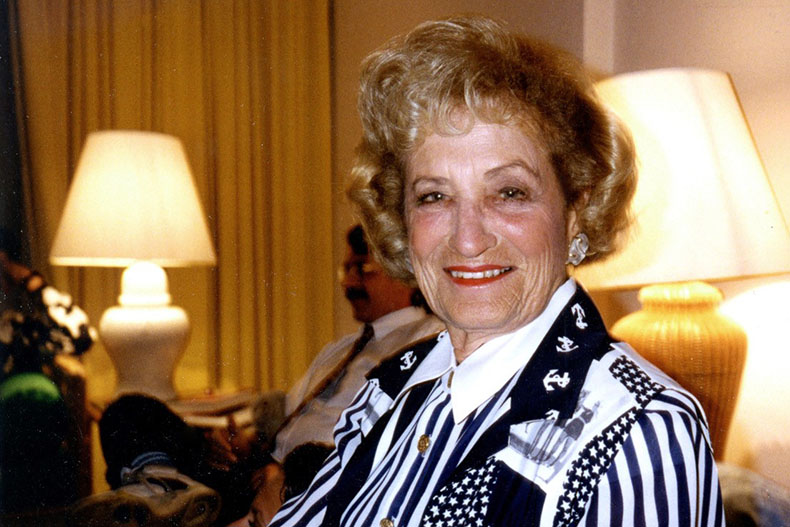
Elaine Frank, renowned philanthropist, community leader, and trailblazer for women in business and community service, passed away in late December at age 100. She was the first female president of JCC Chicago — or any Federation-supported agency in the Chicago area.
As a communal leader, Frank spearheaded efforts to secure the Jewish future through pathways that ranged from summer camps and community centers to endowments. As a business professional, she ran an empire that sold everything from cars to candy. She broke gender barriers in the non-profit world and country-club world, in classrooms, and in boardrooms.
“Elaine was a singular leader who inherited, and then extended, a most extraordinary legacy,” said JUF President Dr. Steven B. Nasatir. “She and her family have lent their vision, their dedication, and their generosity to the Jewish community, and particularly JCC, for nearly 70 years.
“Nothing the Jewish community asked of Elaine was ever too small or too big, too hard or too much for her,” Nasatir said. “Her answer was always, ‘Yes.'”
Elaine was passionate about JUF and also about creating first-class summer camps for Jewish children, full of meaningful, memorable, and fun experiences. She named the flagship “Z” Frank Apachi Day Camp after her beloved husband Zollie. Twenty years later, her family surprised her by naming another facility the Elaine Frank Apachi Day Camp. Under her devoted leadership, JCC’s residential Camp Chi became co-ed, and its teen camp was established; the camp’s lodge was dedicated in her honor.
The results impacted the entire community, and its future. “Elaine ensured that Jewish camping experiences would be part of every child’s life,” Nasatir said.
“We often speak about JCC Chicago being over 100 years old. For over three quarters of this time, Elaine Frank was integrally involved, powering the agency to who we are today,” said Alan Sataloff, president and CEO of JCC Chicago. “Elaine was a visionary and lifelong philanthropist whose commitment to our community touched multiple generations.”
Before becoming president of JCC Chicago in 1948, Frank was president of its Women’s Auxiliary. As JCC president, she spearheaded the development of the Bernard Horwich and Mayer Kaplan JCCs.
It was Frank’s JCC presidency that spurred Chicago’s The Standard Club to change its rules –and allow women to join. But, as Frank’s son Chuck said, “I don’t think that Mom ever did what she did just to be a trailblazer. She didn’t think, ‘Oh, I’m a woman and I’m doing this.’ She just did it as a matter of course.”
The Frank family has been active in JCC since before it was even called that. A young Elaine watched her mother, Irene Hofheimer Spiesberger, teach first-aid and English-as-a-second-language classes at the Jewish People’s Institute, the forerunner of JCC.
Irene served on the JCC Women’s Auxiliary and, after Frank herself married, brought her onto it, too. After four years, Frank became the Auxiliary’s president. Four years after that, Frank became JCC president.
Frank, in turn, passed down this heritage to her own daughter, Laurie F. Lieberman — who also served on the JCC Women’s Auxiliary, then on the JCC Board, on to becoming JCC Chicago’s second woman president. “As we grew up, what was important to her became important to me,” Lieberman said.
Frank also remembers her own mother being “very pleased with the birth of Israel, very proud.” When some of her bridge-playing friends disagreed, “My mother got so incensed at her friends that she had a heart attack that night.”
Frank vividly recalls Israel’s declaring its independence. “I remember Truman, when he declared our support of it… a marvelous moment,” she said. “I’ve just been very proud of what they’ve done…giving wonderful things to the world.”
Frank was intensely patriotic, and grateful to America. “If our forefathers hadn’t come to this country — my background is German — we’d have been in the Holocaust,” Frank acknowledged.
Frank’s husband, Zollie, fully supported her work at the JCC. He brought both colleagues and clients to her installation as JCC president. “He loved what I did,” she said. “He always backed me up.”
Frank and Zollie were married for 53 years. One of her fondest memories was Zollie’s proposal, which he made at Chicago’s old Riverview Amusement Park. “We went up to a shooting gallery,” she retold. “Zollie handed me a gun. I said, ‘I’ve never had a gun in my hands’ and he said, ‘Oh, try it.” There were five ducks. I hit them all, and he said, “OK, I’ll marry you.'”
Frank was one of only three women — in a class of 1,000 students — who graduated from University of Chicago Business school. “I never even thought of it as a ‘woman’ and a ‘man’ thing,” she said. “I loved business — I still do — and that was it.”
Professionally, Frank served as president and chairwoman of Frank Enterprises: Z Frank Chevrolet; National Car Rental; Leaf Candy; Wheels, Inc.; and Business Travel Int’l.
Frank’s visionary leadership extended to the Chicago Federation itself. She served as Federation Vice President from 1975-1981. Serving on its inaugural Legacies & Endowments Committee, she played a pivotal role in launching Federation’s endowment program. Renowned for her hospitality, Frank also generously hosted JUF events in her Winnetka and Palm Springs homes.
Her father, Sam Spiesberger, was a close friend of Jewish philanthropist Julius Rosenwald, who helped inspire the family’s philanthropy. This made it especially fitting when Frank received the Julius Rosenwald Memorial Award, JUF’s highest honor, in 1992.
She learned diligence, too, from her father, who spent any spare hours he had working arduously to raise money for needy Jews; his work helped shape the Jewish Federation. “He was a fabulous fundraiser,” she remembered. “He would go to anybody. He was very valuable.”
On the national stage, Frank served on the board of directors of both the Girl Scouts of America and the Infant Welfare League. As a delegate to the 1970 White House Conference on Children, she spent three years researching legislation to protect children’s rights.
Even with all of Frank’s Jewish communal and professional accomplishments, it was her job as mother to her four children that mattered most. “She was the most incredible mother,” said Lieberman. “She allowed all of us to be the people we are today. She encouraged us to be the best that we can be.”
Frank, née Spiesberger, was pre-deceased by her husband, Zollie. She is survived by her children, Laurie (late Paul) Lieberman, Jim (Karen) Frank, Nancy (Marty) Schechtman, Chuck (Debbie) Frank, and Sanford Elias. She was grandmother of Lisa Lieberman (Morris) Barzilai, L. Frank (Alicia) Lieberman, Tricia (John Ferreira) Scobey, Penny (Tim) Jack, Jennifer (Richard) Rofé, Daniel Frank, Jordan (Laura) Frank, Keri (Hugh) Norley, Kenny (Stacy) Kaplan, Nicole (Adam) Friedman, Jana, Zach, and Melanie Frank. The great-grandmother of 20, she was the sister of the late Rita (late Armund) Schoen and a caring aunt of many. The family would like to thank her caregivers, especially Helina Slowikowska. Funeral services were held at North Shore Congregation Israel in Glencoe, followed by a private interment. Memorial contributions may be made to JCC Chicago.
Other stories
-
Two local teens win national recognition
Recipients of the annual Diller Teen Tikkun Olam Awards
Read more -
Celebrating six young award winners cultivating the community
Introducing young adult award winners
Read more -
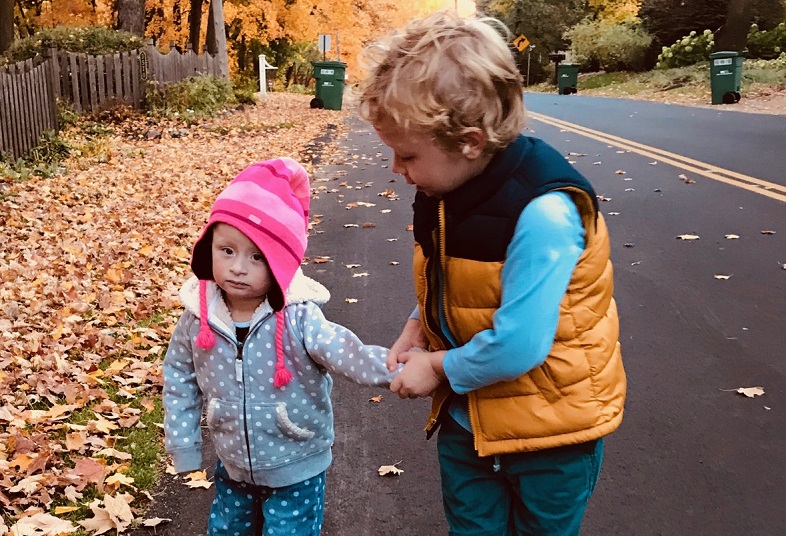
Waterproof mascara does not work. Trust me on this, because I am someone who should know. I’ve cried at hundreds of medical appointments, during so many holidays spent at the hospital that we were on a first-name basis with the ER nurses.
“Happy Fourth of July! Wait, didn’t we see you here on Mother’s Day?”, a medical assistant once said to me while fastening an ID bracelet around E.’s ankle.
She could have died, but she didn’t. She’s as tough as anything, my daughter.
Sometimes, she’ll be throwing up-choking, even, a little bit, her eyes brimming with fat tears. And then one minute later she’s shaking it to a Beyonce song, grinning. She dances mostly by bopping her head back and forth like an unburdened teenager; it’s easier for her that way.
When she was just an infant, we learned about my daughter’s diagnosis, a rare partial chromosome deletion which occurred at conception. The genetic counselor flatly explained that she anticipated severe impairment. The extent of it was unknown, but it likely would affect her motor skills, speech and overall cognition. When asked if our child would ever eat typically or carry on a conversation, she stated crisply, “I can’t predict the future.”
I still remember how the room was arranged, how it smelled like rubbing alcohol. And those hard plastic chairs.
“It’s a lot of missing DNA,” she continued, shaking her head vigorously. The counselor, who I never saw again, handed my husband and I a thick packet of research studies detailing the handful of other children who have been documented with this specific genetic deletion.
Right away, when we got home, I hunched over the kitchen counter to go through the material. One study featured a girl who was learning to tie her shoes at age 12. After that, I stuffed all of the crisp papers into a bright red folder. I still haven’t read the rest.
I had to grieve, and I did. It wasn’t the grief of a physical death, it was something more invisible. It was the grief of having a vision of what our lives would be, and then having that upended.
I don’t know why I thought I was owed anything, especially perfection. It’s a tough world we live in, filled with all kinds of injustice. Most of us have at least something to grapple with, something heavy.
I had done all of the precursory genetic testing during the pregnancy. I also followed all of the standard advice. I took my vitamins, ate nutrient rich foods, and avoided too much coffee and mercury-laden tuna. I wanted healthy children, and based on the results of the prenatal screening, I expected to have them.
Truthfully, I had hoped for near-perfect children, but I didn’t even know it at the time. Ones who were born healthy and had a tendency towards nice manners, with an innate concern for other people’s feelings. Quiet(ish) ones who would write me love notes filled with drawings of hearts and rainbows on clean sheets of construction paper, just like I did for my parents.
My raucous, unexpected pair of humans are certainly beautiful. But not in the ways that I had anticipated.
My 5-year-old son A. has more energy than anyone I’ve ever met. Now in Pre-K, he has what is likely a photographic memory-he can map out South America and Africa, identifying where most of the countries are located within each continent by memory. He’s been reading for years now. When he was a toddler, he asked me a lot of questions about God.
A. bucks against many daily, mundane tasks, like taking a bath or putting on his socks. Most days, I can out-fox him with exuberance and slapstick humor and good old fashioned limits. The harder days are full of deep breathing and splashes of prayer (whatever I can remember from Hebrew school) and actually, more complaining than I’d like to admit.
He’s my typical child.
And then there’s my youngest, E., who has the genetic difference. She’s now almost two-and-a-half. She is just starting to walk with the help of ankle braces. Her words are few, although the list is growing by the day. She cannot tolerate food-so she lives off a slow drip feeding tube which pumps formula directly into her stomach. It runs nearly 24/7. She often throws up multiple times a day, which sometimes involves retching and gagging and, even bile.
My brave-hearted husband and I have learned all kinds of skills in order to care for our children. We make extremely loving, slightly disorganized nurses. We measure out syringes of medication, we administer therapies, we do a whole lot of laundry. When one of the kids starts yelling or nearing a meltdown, we put on a great album, like the newest by Sylvan Esso or sometimes classic Miles Davis. It usually turns the whole thing into a dance party, but not always.
True, little E. may not fit most American beauty standards, but she is gorgeous in her own way. When she smiles, her whole face is how June feels here in Minnesota: sunny, bright and full of potential. In those moments, which are many, everything is possible. With E. lighting up our kitchen, I feel as if even American politics might somehow work out okay. And of course, that’s saying a whole lot.
Because I’m a mother, I am surrounded by people who have children and/or who are expecting more. When I talk with these women about their pregnancies, they often say, with remarkable predictability, “All I want is a healthy baby.”
This hits me straight in the gut. Of course, there was a time, not that long ago, when I would have answered that question in the exact same way.
But I don’t see it that way anymore. Why is a healthy person the gold standard, the best type of person? Are there just two types of people- healthy and unhealthy? It’s an insinuation, in a way-the good type of people and then the not so good ones.
I just want to meet someone, anyone, who can say this and mean it, “I want whoever is there. I want what I have.” And then keep on meaning it while the child grows into an adult.
Because more and more, I want my son exactly how he is, with his wild brilliance, his hyperactive joy. On most days, want my daughter as she is too, feeding tube, special education plan, sunny smiles, and all. I want this life, not any other, even though sometimes it is terrifying.
Witnessing my daughter’s scrappy resilience every single day, how she keeps bopping, grinning, blowing kisses to people in the grocery store-no matter what happened the day or hour or minute before-it’s like living with an inspirational speaker. Except she doesn’t talk much.
And she doesn’t even have to.
Emma Nadler is a psychotherapist and writer who lives in Minnesota. Her work has been published in Kveller, among others. She also keeps a blog called Itty Bitty Yiddies ( http:www//ittybittyyiddies.net ) about her wild, sweet, unexpected family.
Other stories
-
Two local teens win national recognition
Recipients of the annual Diller Teen Tikkun Olam Awards
Read more -
Celebrating six young award winners cultivating the community
Introducing young adult award winners
Read more -
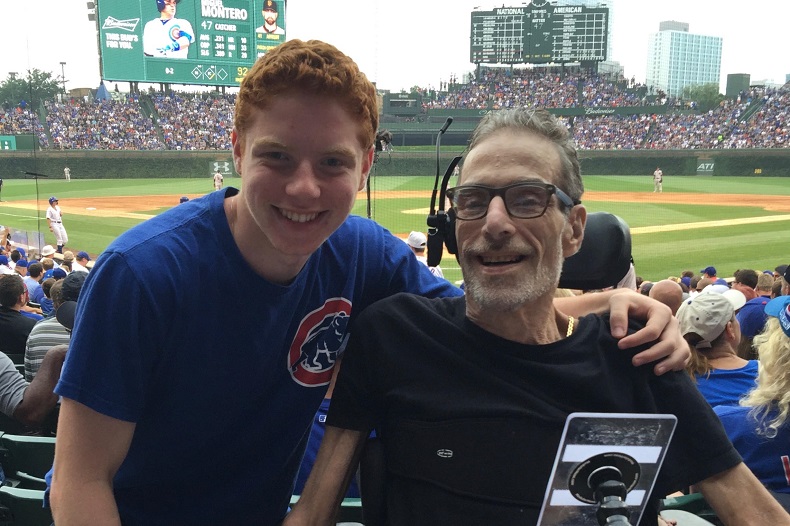
One man’s bond with his late father inspires a mission to raise awareness about people with disabilities
Griffen Saul
One brother with a mature mind, one sister with a sincere heart, one mother with a loving spirit, and one father with a disability. As a child, for a long time, this is how I perceived my family.
My father was diagnosed with advanced Multiple sclerosis even before I was born. While this disease stripped away everything from him, for many years all I could recognize was what it had stripped away from me: the ability to play sports with my father, the ability to sit in the non-handicapped section at a Cubs game, or the ability to eat at any restaurant of our choosing without having to worry if it was accessible or not. I was never angry at my father but, rather, the disability which had seemingly monopolized his life. All of these micro aggressions continued to build up as I attempted to cope with my father having a disability. This ultimately engendered me to harbor all of my emotions into creating my organization, We Are Able. Little did I know, this organization would lead me on a journey that would guide the course of my future endeavors.
My father and I had an incredibly special relationship built on the principles of empathy; I was always there for him, and I knew that he was always there for me. He taught me many things: The importance of tikkun olam (repairing the world), for standing up for what I believe in, and that any obstacle or circumstance should never define who you are or what you are able to accomplish. That is why, when he passed away two years ago, I understood that despite my grief, I had to use my pain as a catalyst for change, thus driving me to found We Are Able.
We Are Able is a nonprofit with a mission to raise awareness for people with disabilities through educating people on proper disability etiquette and the importance of creating a society where everyone has an equal opportunity to succeed and become leaders within their communities. We Are Able seeks to promote more dignified interactions by educating others on proper disability etiquette, emphasizing the importance of empathizing with others, and warning against the dangers of complacency in the wake of injustice.
For my bar mitzvah speech in 2012, my Torah portion was Shemot and I chose to focus on why God chose Moses to be a leader. I spoke about the fact that one of Moses’ great qualities was that he was able to look beyond the surface of things (i.e that the bush was on fire but not burning.) Moses’ willingness to be open to things was one of the qualities that made him a good leader. Having a dad in a wheelchair enabled me to see the world in a different way, and be open to things even if they are different. We Are Able strives to help people look beyond the surface of things and understand that we are all equal.
We Are Able curriculum is available for schools and corporations. To learn more, visit www.weable.org/about-us/ .
Griffen Saul, a Chicago native and a freshman at Tufts University, is the founder and CEO of We Are Able.
Other stories
-
Two local teens win national recognition
Recipients of the annual Diller Teen Tikkun Olam Awards
Read more -
Celebrating six young award winners cultivating the community
Introducing young adult award winners
Read more -
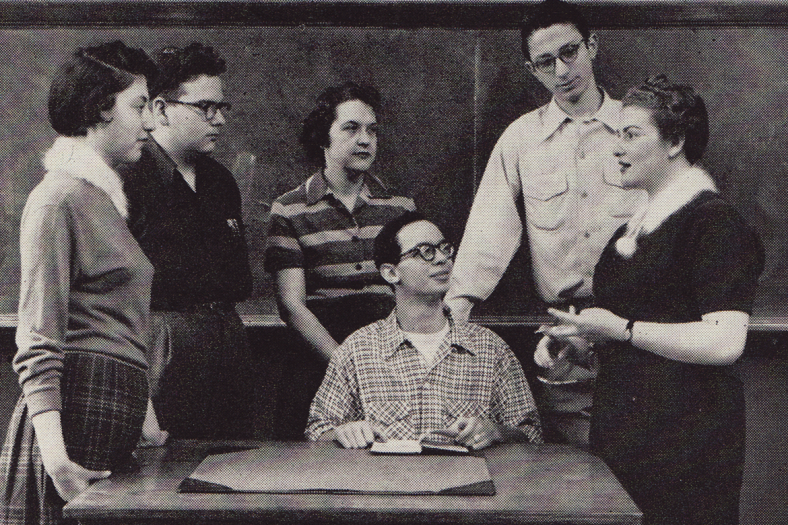
In 1942, leaders from Associated Talmud Torahs and Hebrew Theological College came together to create the first Jewish day school outside of New York: Ida Crown Jewish Academy (ICJA). Its founders were determined to provide a rigorous curriculum dedicated to intensive Jewish study, in addition to secular subjects.
Seventy-five years later, the school continues to stay true to its founders’ mission while offering a cutting-edge 21st century education. In addition to studying Torah and Talmud, students can enroll in a full range of Advanced Placement (AP) courses, as well as utilize the Maker’s Lab, a space equipped with modern STEM technology, such as a 3D printer.
“The mission of our founders was to create a school where students could be both educated in the full curriculum of Jewish studies and general studies, so they could be members of the Jewish community and American society to the fullest,” said Rabbi Leonard Matanky, ICJA’s dean. “We have stayed true to our mission if you look at the products of Ida Crown. They are the leadership of youth movements in our city, and they volunteer in organizations that provide community services.”
More than 4,000 students have graduated from ICJA, and nearly half live in Israel. Following graduation, more than 80 percent of graduates spend a gap year at a yeshiva or seminary studying Judaic studies, and many go on to top colleges in America and Israel. Matanky considers ICJA’s alumni the school’s “greatest accomplishment.”
“We have created three generations of outstanding alumni,” Matanky said. “What Ida Crown has done is fulfill the dreams of our founders 75 years ago. We have that sense of history, tradition, and community.”
Matanky, an ICJA alumnus and former head of the Orthodox Union’s Rabbinical Council of America, and his wife Margaret will be honored at a gala on March 18 celebrating ICJA’s 75th anniversary.
“If there’s one person that would represent the long history of leadership and success that 75 years represents, it’s Rabbi Matanky,” said Jacques Gliksberg, a member of ICJA’s Board of Directors. “Rabbi Matanky, besides being the current dean, is an alum of the school and has been a teacher at the school. He represents the history of the school.”
According to Gliksberg, Matanky’s leadership was crucial as the school transition to its new Skokie campus two years ago.
“The new campus has brought the school to a whole new level in terms of physical facilities and the curriculum that it enjoys today,” Glicksberg said. “Rabbi Matanky has been instrumental in making the school what it is today.”
Other stories
-
Two local teens win national recognition
Recipients of the annual Diller Teen Tikkun Olam Awards
Read more -
Celebrating six young award winners cultivating the community
Introducing young adult award winners
Read more -
Donna Weichselbaum’s personal experiences empower her philanthropic perspective
Lion of Judah Endowment (LOJE) Chair Donna Weichselbaum’s philanthropic passion was born out of her own experience of tough times. “It’s an interesting story,” she said. “At one time, I was experiencing difficult circumstances. I was a single parent of very young children, and we needed help. I went to Jewish Child and Family Services (JCFS), and they provided me with extraordinary support and advice.
“They helped me navigate through this difficult time and I remain so appreciative. It was my first connection with JUF, and it led me to my own unique perspective on the work of Jewish United Fund/Jewish Federation of Metropolitan Chicago.”
Fortunately, her circumstances eventually changed, and she wanted to give back. “I thought, What better place to do that than through JUF? ”
“It’s the most worthy thing I could do,” she said. “The thing I’ve come to realize is that your actions and your behaviors are so important. Your kids follow them. Your community sees what you do. It’s not just words – it’s modeling TIkkun Olam .”
Donna made the decision to endow her Lion of Judah annual gift and become a LOJE. This commitment ensures that her annual gift continues in perpetuity to the JUF Women’s Division Annual Campaign. Lion of Judah Endowment (LOJE) funds secures that a woman’s gift continues in her own name, preparing JUF and the community for future needs, both anticipated and unexpected.
Donna recently began her two-year term as the LOJE Chair. “Being a LOJE Chair allows me to reach out to my peers and hopefully help them make the same decision I did. I’m proud to be a part of this group of 167 women,” she said.
She is currently a member of the JUF Women’s Board and Women’s City Council, and previously served on the JUF/Federation Health & Human Services Commission. Donna has served on numerous other JUF committees and enjoys working side by side with staff and other community leaders.
In addition to her involvement with JUF, Donna volunteers as a docent at the Illinois Holocaust Museum and Education Center.
“It’s such important work. I take kids through the museum, and believe it or not, a lot of those kids have never met a Jew before. In fact, a lot of them don’t know anything about the Holocaust. “I want to make sure everyone knows the history,” she said. “When I learned about the Holocaust as a child, I knew it was something I would study for the rest of my life. The Holocaust helped me find my Jewish identity.”
Learning first-hand through her own experiences, she remains mindful that her circumstances changed with help from JUF and the Jewish community.
“We need to have compassion. You get back what you give – so you give. You give back with your thoughts, actions, energy and pocketbook. It’s so fundamental to being an upright citizen.
“That is the legacy I want to leave my children and grandchildren,” she said.
Other stories
-
Two local teens win national recognition
Recipients of the annual Diller Teen Tikkun Olam Awards
Read more -
Celebrating six young award winners cultivating the community
Introducing young adult award winners
Read more -
Last fall, multiple natural disasters left entire communities across the Americas in disarray and disrepair. Although the immediate emergencies have passed, the needs in Puerto Rico, Houston, Mexico and Florida remain urgent — and Chicago’s Jewish community and the Jewish Federation continue to respond to those needs.
Chicagoans have come together to raise and distribute more than $1 million toward relief and rebuilding efforts in these areas over the last six months through the Jewish Federation Disaster Relief Fund.
Initial funds were funneled to Houston to provide Hurricane Harvey victims with food and emergency cash assistance; trauma support and housing for those displaced; and infrastructure repair for Jewish institutions. JUF’s TOV Volunteer Network also coordinated volunteer missions to the area to help rebuild homes.
The fund then immediately expanded to respond to the damage from Hurricanes Irma and Maria; allocations were made to Florida, Puerto Rico and the wider Caribbean to assist with initial cleanup efforts; deliver food, water and toiletries for disaster victims; and provide psychological support for children.
Most recently, $100,000 went to the Jewish Federation’s partners on the ground in Puerto Rico, and several hundred thousand dollars more are expected to be distributed in the coming weeks to Puerto Rico and Houston.
This distribution included funds to support humanitarian NGO IsraAID’s clean water project, which is working to provide long-term safe water solutions for tens of thousands of Puerto Ricans whose water infrastructure was severely damaged by Hurricane Maria. The distribution also includes financial assistance to Puerto Rico’s Jewish institutions in support of their relief efforts in the general community.
Contributions to the Jewish Federation Disaster Relief Fund can still be made at www.juf.org/DisasterRelief and may be designated to help with relief efforts in a particular location.
As always, the Federation continues to absorb all administrative costs, so that 100 percent of funds collected will provide relief for the thousands impacted by these disasters.
All funds raised support the efforts of Federation partners who have boots on the ground in these locations — the Jewish Federations of North America, NECHAMA: Jewish Response to Disaster, IsraAID, the American Jewish Joint Distribution Committee and the local Jewish Federations — as well as food drives and volunteer missions. As members of the Jewish Coalition for Disaster Relief, the Jewish Federation of Metropolitan Chicago is continuously updated and informed about areas of greatest need.
Other stories
-
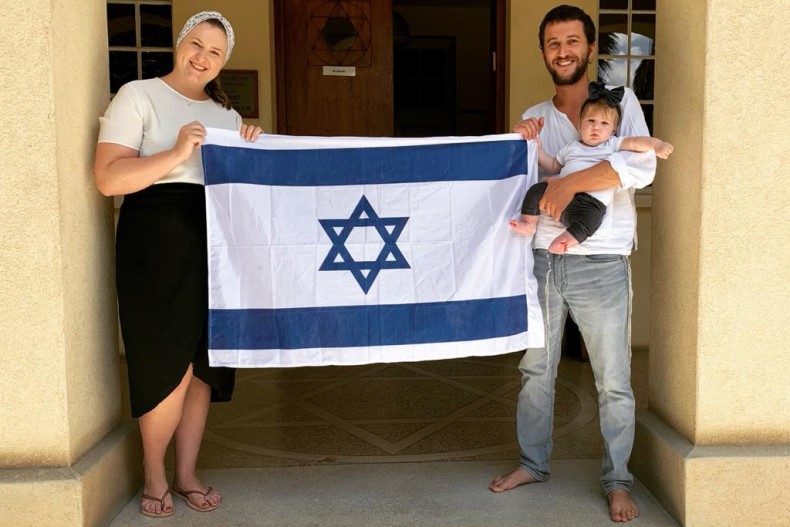
Chicago to Israel to Kenya
A family’s story of living Jewishly on three continents Michelle Cohen World May 28, 2021 Avital, Tzofia, and Netanel Kaszovitz outside their home in Nairobi on Yom HaAtzmaut. When Avital Kaszovitz prepared to be a Modern Orthodox shlicha (emissary) to the Jewish community in Ke
Read more -
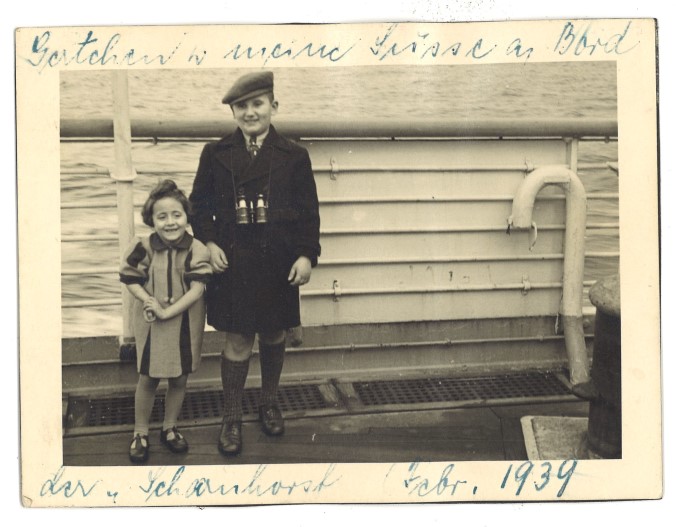
New exhibit spotlights the experience of ‘Shanghai Jews’
Explore a new Illinois Holocaust Museum and Education Center exhibit
Read more -
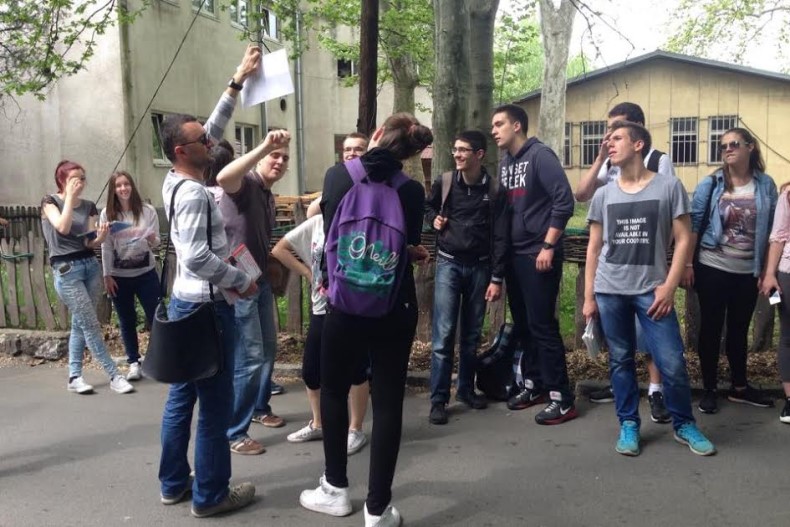
Europe’s brave new teachers of the Holocaust
Teaching the Holocaust in the modern era has its difficulties and rewards.
Read more
Citing strong demand, parents, students, and interested community members have urged public school administrators in Deerfield and Evanston to offer Hebrew as a world language in the 2018-19 academic year. Those efforts have yielded results in Deerfield District 109, where Hebrew will be offered for the first time to seventh- and eighth-grade students at Caruso and Shepherd middle schools in the fall.
The school board approved the administration’s recommendation at its January 22 meeting.
Adding Hebrew in the middle schools will align their world language offerings with Deerfield High School and the objectives of the District’s 2017 Strategic Plan, wrote District Superintendent Michael Lubelfeld in a letter to staff, parents, grandparents and community members.
The Hebrew program at Deerfield High School is booming, with enrollment jumping from 60 students four years ago to more than 100 students in the current academic year.
Meanwhile, Evanston Township High School (District 202) will not be offering Hebrew to incoming freshman, despite a clamor of support from community members who pressed the administration to address what they say is strong prospective demand for the language.
Current students of Hebrew at ETHS will be able to sign up for the language next academic year, although the school has not yet indicated whether the course will be taught online or in the classroom.
ETHS administrators determined to terminate the program last October, citing a decline in enrollment to 34 students from a high of more than 90 students. That decline is linked, in part, to difficulties in recruiting a qualified replacement following the retirement of a 17-year veteran Hebrew teacher two years ago. Evanston parents say there’s every reason to believe growth similar to that in Deerfield would occur, were the school district to recommit to offering the language.
Evanston community members who wanted the district to commit to Hebrew launched a petition drive in December, garnering more than 2,200 signatories. The petition implored District 202 administration “to leave no stone unturned to maintain and grow Hebrew language instruction at ETHS,” asking school officials to work with the community to ensure that the school continues to offer a Hebrew program “that reflects Evanston’s values of diversity and inclusivity.”
Advocates of Hebrew testified at two public school board meetings; in a private meeting with administrators, they provided the resumes of several qualified teachers and offered help in finding creative solutions to the teacher-pipeline problem.
Demand for Hebrew in Chicago-area public schools has been uniquely strong, with as many as eight Hebrew programs in operation since the early 1970s. That demand is largely fed by Jewish families and students, who grasp the global–and personal–importance of the language
According to various sources, Hebrew is the mother tongue of at least five million people, and is spoken with some proficiency by as many as nine million people worldwide. As the primary language of modern Israel, Hebrew (as well as Arabic) is spoken by Jews, Muslims, Christians, and Druze; as such, it fuels one of the world’s most diverse and dynamic literary, musical, commercial, and political cultures.
In that vein, the JUF-supported SAFA Foundation for Promotion of Hebrew Language and Israel Culture in Public Schools, along with the iCenter, have helped Deerfield and Evanston community members to assess the demand for Hebrew and identify qualified Hebrew teachers.
Other stories
-
Two local teens win national recognition
Recipients of the annual Diller Teen Tikkun Olam Awards
Read more -
Celebrating six young award winners cultivating the community
Introducing young adult award winners
Read more -
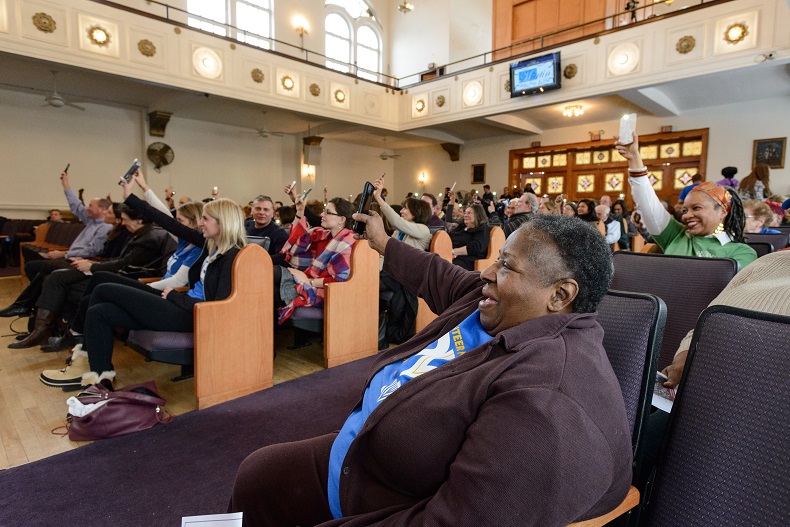
Standing, lit-up phones in hand, more than 200 members of Chicago’s Jewish and African-American communities recommitted to speaking out on each other’s behalf at the fifth annual Dr. Martin Luther King Jr. Day commemoration program in January. The event was orchestrated by JUF’s Jewish Community Relations Council (JCRC), Stone Temple Baptist Church, the North Lawndale Historical and Cultural Society, Sinai Health System, and the Firehouse Community Arts Center.
“Speaking Truth to Power: Standing in Solidarity,” held at the historic Stone Temple included reflections on King’s legacy and on the relationship between the Jewish and African-American communities.
“If the house is burning, we have the responsibility to become firefighters,” said Bishop Derrick Fitzpatrick, who leads the Stone Temple community. “We have to put out the fire of racism, discrimination, and injustice.”
The commemoration was particularly poignant after a challenging year that was marked by a rise in the prominence of white supremacist and neo-Nazi ideologies showcased at last August’s march in Charlottesville, Va. JCRC Chair Bill Silverstein referenced JUF’s unequivocal response to that disturbing development in his remarks.
“Such hate flies in the face of our American and Jewish values, and has no place in our country,” he said.
To confront it, all must follow the example of King and Rabbi Abraham Joshua Heschel and “pray with our feet to do the work necessary of standing up for each other,” Silverstein urged.
Rabbi Max Weiss, of Oak Park Temple, drew parallels between the event’s theme and that week’s Parashat Bo , the Torah portion that includes the final three plagues and God’s invocation to Moses to speak truth to power.
“We live in a city where we are immersed in a culture where brutality is a way of life. Over 50 shootings in our city so far this year, and it’s the middle of January. The economic brutality, the lack of equitable access to quality education, to health care, to clean streets, to good food, and affordable homes. That is pharaoh just as much as the man sitting on top of the pyramid,” he said. “May we use our power to speak truth to power.”
In his keynote address, Rev. Dr. B. Herbert Martin, senior pastor of Progressive Community Church in Bronzeville, invoked the need for new prophets, who would energize the movement for peace and justice.
“If ever there was a time to speak truth to power, now is that time,” he said. “If ever there was a time for our diverse communities to stand in solidarity, now is that time.”
Students from the community also offered reflections. Prior to the event, volunteers from JUF’s TOV Volunteer Network joined Stone Temple members for a special service project, preparing and serving a hot breakfast to the North Lawndale community.
As the sounds of “We Shall Overcome” faded, Fitzpatrick echoed King and urged attendees to speak up because “silence can be deafening.”
Jane Charney is director of Domestic Affairs for JUF’s Jewish Community Relations Council.
Other stories
-
Two local teens win national recognition
Recipients of the annual Diller Teen Tikkun Olam Awards
Read more -
Celebrating six young award winners cultivating the community
Introducing young adult award winners
Read more -