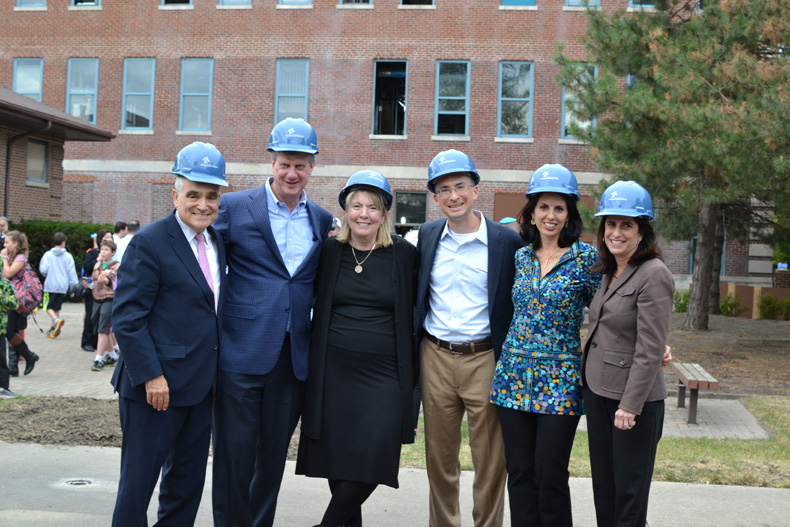
Chicago Jewish Day School’s (CJDS) New Campus Construction Celebration took place on Thursday, Sept. 7 with more than 200 friends, teachers, students, clergy and neighbors in attendance.
CJDS opened its doors with seven students in 2003. Fifteen years and several locations later — and with nearly 225 students now enrolled — the multidenominational, progressive Jewish day school is ready for a home of its own. CJDS has begun construction on a new campus in Chicago’s Irving Park neighborhood, with expected opening in Spring 2018.
CJDS’s New Campus is a 2.6-acre property that will include multiple buildings with state-of-the-art classrooms, central worship and learning space, a gymnasium, and outdoor athletic and recreational facilities — all designed to enhance the school’s commitment to academic excellence. With an environmentally friendly project in mind, CJDS consciously chose to repurpose an existing property. The project includes renovating three buildings, adding a new entrance, and reimagining the outdoor space. The New Campus Project is chaired by Adam Levine.
CJDS Head of School Judy Finkelstein-Taff said, “Theodor Herzl, visionary of the modern State of Israel once famously said, ‘ Im tirzu ain zo agada — if you will it, it does not have to be a dream.’ This quotation perfectly reflects Chicago Jewish Day School’s journey to a permanent home.
“Thanks to the Crown Family and the Jewish United Fund/Jewish Federation of Metropolitan Chicago for sharing our vision, as well as the CJDS family and extended family of supporters, for helping us ‘will’ our dream into a reality.”
Anat Geva, president of CJDS’s Board of Directors, said,”The new CJDS campus is a wonderful and innovative space which will continue to provide a transformative Jewish and secular education to all of our students. We are so excited that the Jewish United Fund/Jewish Federation of Metropolitan Chicago, along with our many long-time supporters, continue to support our mission and work with us as we raise the school’s profile and realize our vision of a state-of-the-art multidenominational Jewish day school.”
Lead gifts for the project were provided by the Crown Family, Betsy Gidwitz and two anonymous donors through the Jewish United Fund/Jewish Federation of Metropolitan Chicago’s Centennial Campaign, which facilitated the project. The Centennial Campaign is intended to ensure a vibrant Jewish community for the next 100 years. All commitments to the Chicago Jewish Day School New Campus Project are recognized as gifts to JUF/Federation’s Centennial Campaign.
“Our campaign goals are significant but this is a significant project — we are adding to Chicago’s Jewish skyline and helping to insure a vibrant future for our community,” said Wendy Platt Newberger, Capital Campaign chair and founding Board president of CJDS. “We are currently at 76 percent of our $30-million goal thanks to the vision and support of our early donors. Their commitment and belief in CJDS’s importance for the Chicago community have insured that CJDS can create a home to match the sophisticated education inherent in CJDS’s multi-denominational program.”
“Investing in Jewish education has always been a cornerstone of our commitment to ensuring a strong Jewish future,” said JUF/Federation President Steven B. Nasatir. “We are proud to partner with CJDS in this and other community efforts — including allocations and contributions from JUF’s Annual Campaign, Centennial Campaign, and Day School Guaranty Trust Fund — to make sure every Jewish child has access to a high-quality Jewish education.”
“This new campus is just one shining example of the many ways our generous donors are helping to build our community and support Jewish life in Chicago, Israel, and around the world,” he said.
Also in attendance were State Rep. Jamie Andrade and Ald. Deborah Mell, who shared her enthusiasm for the school’s move to the 33rd Ward.
For more information please contact Naomi Shapiro at [email protected] or (773) 271-2700.
Other stories
-
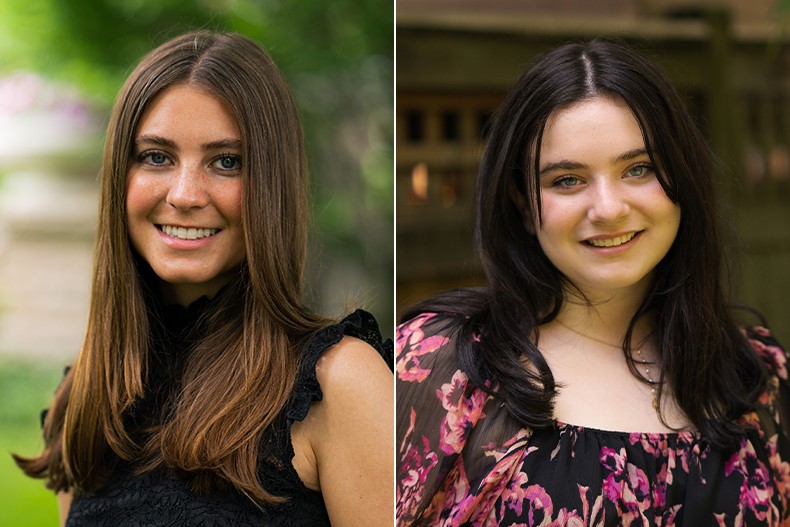
Two local teens win national recognition
Recipients of the annual Diller Teen Tikkun Olam Awards
Read more -

Celebrating six young award winners cultivating the community
Introducing young adult award winners
Read more -

One grieving and grateful sister thanks her JUF family for ‘not standing idly by’
Ali Boorstein
I started working at the Jewish United Fund on August 31 , 2015. The day my director called to say I got the job I told her I felt like I won the lottery. I was ecstatic to be working for an organization I was so passionate about. I walked into the office my first day with big dreams and high hopes of what my future would hold. I remember telling my mom that I felt like it was the first day of the rest of my life.
As I reached the lobby on my office floor for the first time, I saw a big quote on the wall that read “Do not stand idly by the suffering of your neighbor.” I remember pausing for a moment, thinking that quote conveyed so much of what I already knew and loved about JUF. It was an organization focused on helping those less fortunate than us and making the world a better place. I did not know that quote would come to define so much of my life as I now know it.
On September 2, 2016, my world was shattered. My 21-year-old brother, Scott, suddenly and shockingly lost his life. Heart broken and paralyzed, my family began the journey of rebuilding our life-a life after Scott. The days subsequent to the loss of my brother can only be described as a nightmare. I don’t particularly think I could’ve ever been prepared for a situation like this. I received an overwhelming amount of calls, messages, visits and letters from my coworkers at JUF. Dinner was sent to my family on three separate occasions by people in the office.
When I returned to work, I was immediately greeted by my colleagues with flowers, candy, cards, and countless emails. Not a day went by that I wasn’t acknowledged by innumerable people, whether it was a touch on my shoulder or a lunch plan where they selflessly used their time to support me. One colleague continuously brought me a Starbucks cookie and large coffee in the morning. She said it was only a small gesture she could think of to brighten my day, if only for a moment.
These are the type of people that work at JUF. This is the culture the organization embodies. It takes a special kind of person to dedicate their life to the service of others. I did not realize just how special these people were until I became the person in need. I remembered the quote. “Do not stand idly by the suffering of your neighbor”. My colleagues have gone above and beyond to demonstrate the definition of these beautiful words. So many people have treated me with kindness beyond belief. Instead of focusing on ways I am broken, they have helped me focus on what’s being rebuilt. They have helped turn my heartbreak into hope and my tragedy into possibility.
That is what’s helped my family begin our “Selfless for Scott” movement: Scott quickly became remembered as the most selfless and genuine individual. Each year around the holidays and Scott’s birthday, he would not ask for presents. Instead, he asked for people to make donations to a charity. Around his birthday this year, his friends created an event on Facebook describing this story. They mentioned how, this year, Scott is not with us to urge us to donate or participate in a great cause, so it’s on us to take the initiative. They asked everyone to help spread some of Scott’s goodness by performing a random act of kindness and then post about the experience on Scott’s wall using the hashtag #selflessforscott.
I put together a volunteer event on his actual birthday for anyone to attend. Around 200 people came out and packed 400 meals for those in need at The Night Ministry and Inspiration Corporation. My family continues putting on events honoring Scott. This summer, we partnered with Greenstar Movement-an organization that connects youth to their schools and neighborhoods, and people to each other, while revitalizing under-served communities. And we worked at the Metra underpass in Woodlawn to design a mosaic mural, helping to beautify the area.
I miss Scott every second of every day and I think about the lessons he’s instilled in me in his 21 short years of life. No opportunity is ever too far out of reach. Simplicity is never enough. No amount of kindness can ever be too much.
I turned around one day to realize that the plans I had in my head for the rest of my life were, simply, plans. I guess the funny thing about life is that everything can change in the blink of an eye. I feel an enormous sense of pride coming into JUF every day and dedicating my life to the service of others. It has taken me a year to write this but I continuously questioned ways to thank my colleagues for the incredible amount of strength and life they’ve helped breathe back into me this past year.
Today, every day as I walk onto my office floor, I see that quote I marveled at on my first day of work. I think about the person I was when I first read it, the person I’ve become in the last year, and the person that JUF has so inspiringly shaped me into.
Ali Boorstein is a program associate for JUF’s Tikun Olam Volunteer (TOV) Network.
Other stories
-
Two local teens win national recognition
Recipients of the annual Diller Teen Tikkun Olam Awards
Read more -
Celebrating six young award winners cultivating the community
Introducing young adult award winners
Read more -
A diverse array of Jewish organizations rallied in support of Dreamers earlier this week after the White House announced plans to end the Deferred Action for Childhood Arrivals program.
Since its establishment in 2012, DACA has granted temporary, renewable legal status to over 800,000 young people who were brought to the United States illegally by their parents as children. With this action, the onus is now on Congress to provide a legislative fix within six months.
The bipartisan Dream Act of 2017, co-sponsored by Illinois Sen. Dirk Durbin and South Carolina Sen. Lindsey Graham, offers one such legislative solution by allowing current DACA recipients and others who may be DACA-eligible to remain in the country while also providing a pathway to citizenship.
“We urge our elected officials from both sides of the aisle to act quickly to make permanent the protections included under DACA,” said David T. Brown, chairman of the Jewish Community Relations Council. “As Jews, we are deeply attuned to those who have come to these shores as ‘strangers’ as we ourselves have done. It is our moral obligation to ensure America continues be the welcoming beacon for both refugees fleeing persecution and immigrants in search of a better life.”
Other stories
-
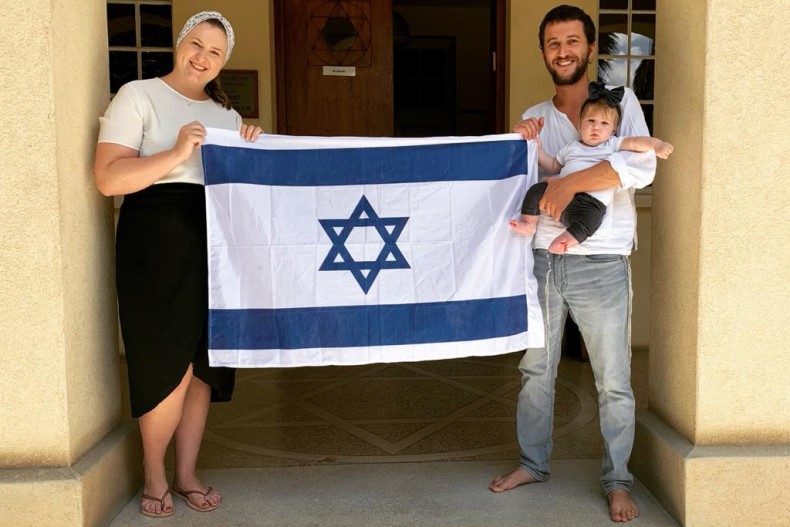
Chicago to Israel to Kenya
A family’s story of living Jewishly on three continents Michelle Cohen World May 28, 2021 Avital, Tzofia, and Netanel Kaszovitz outside their home in Nairobi on Yom HaAtzmaut. When Avital Kaszovitz prepared to be a Modern Orthodox shlicha (emissary) to the Jewish community in Ke
Read more -
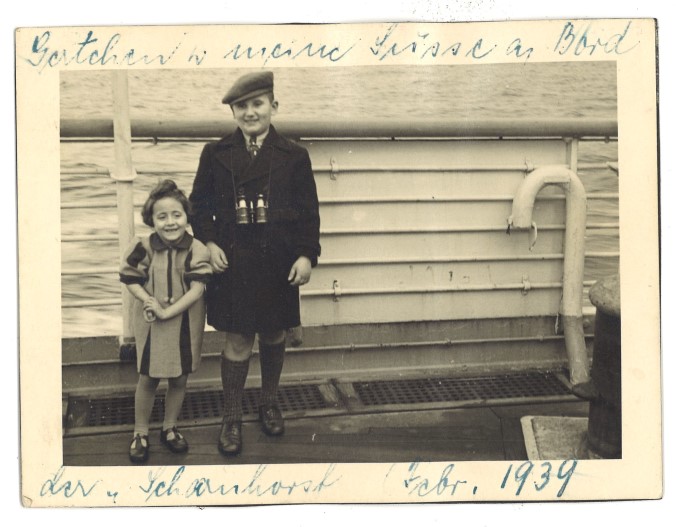
New exhibit spotlights the experience of ‘Shanghai Jews’
Explore a new Illinois Holocaust Museum and Education Center exhibit
Read more -
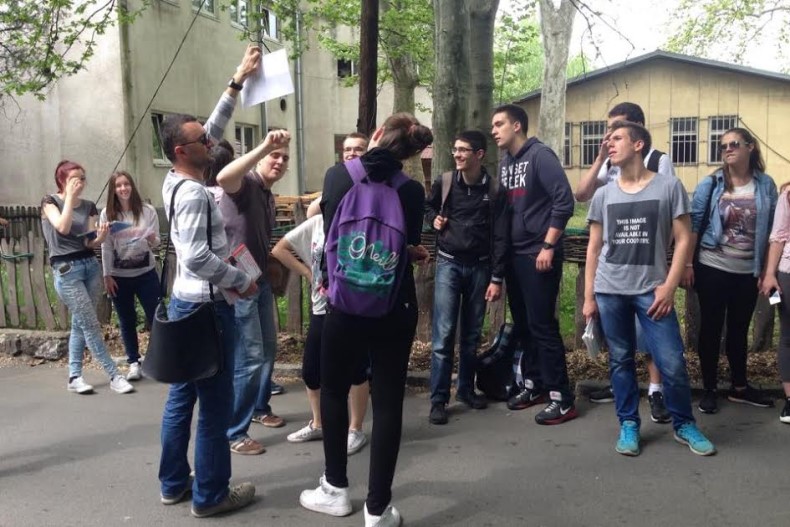
Europe’s brave new teachers of the Holocaust
Teaching the Holocaust in the modern era has its difficulties and rewards.
Read more
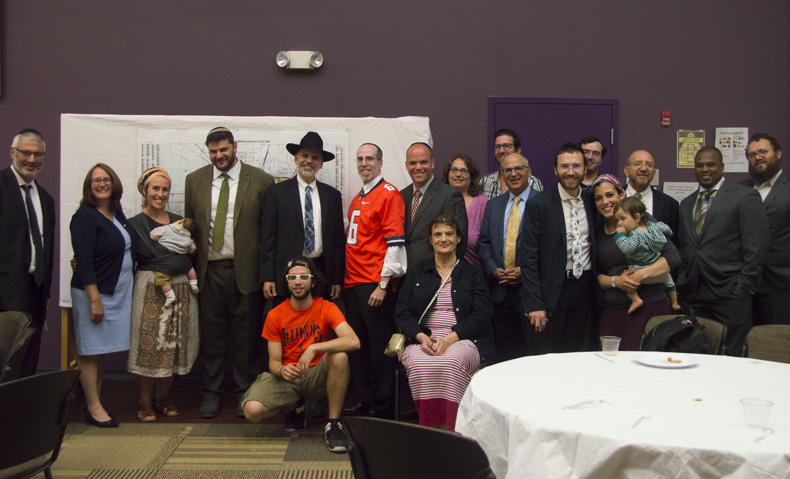
Illini Hillel/Cohen Center for Jewish Life at the University of Illinois at Urbana-Champaign and Illini Orthodox Union Jewish Learning Initiative on Campus inaugurated the Champaign-Urbana Eruv on Aug. 28.
An Eruv is a visual boundary encompassing an area and establishing it as shared space according to Jewish law. This marking of private and shared space is important in Jewish ritual because it allows Orthodox Jews to carry things on Shabbat, which they would otherwise not be able to do.
Chicago’s Av Beit Din, Rabbi Yona Reiss came to Champaign for the dedication.
The Champaign-Urbana Eruv will be the only eruv in the state of Illinois outside of the Chicago area. It is a cooperative effort between Illini Hillel, the Orthodox Union, Illini Chabad, Sinai Temple, Ameren Illinois, the University of Illinois, the City of Urbana, the City of Champaign and the village of Savoy. Funding was provided by U of I alumni Stanley and Lenore Weinstein.
The Champaign-Urbana Eruv is one of eight built by OU-JLIC on college campuses nationally. It will be overseen by OU Halachic Rabbi Howard Jachter, who helped build the eruv around Wrigley Field. Locally, it will be overseen by Hillel’s Rabbi Shlomo Schacter at OU-JLIC and Chabad Rabbi Dovid Teichtel.
The Eruv is part of a concentrated effort by Hillel at the University of Illinois and OU-JLIC to build the infrastructure for observant Jewish students. As of Sept. 1, Champaign-Urbana contains an eruv, a mikveh and two OU-certified kosher restaurants.
Additionally, Hillel continues to expand its availability of kosher meals for students on campus through Café Sababa.
Other stories
-
Two local teens win national recognition
Recipients of the annual Diller Teen Tikkun Olam Awards
Read more -
Celebrating six young award winners cultivating the community
Introducing young adult award winners
Read more -

The devastation already experienced and still expected from Hurricane Irma, the second massive tropical storm to strike in less than two weeks, has prompted the Jewish Federation of Metropolitan Chicago to expand the Relief Fund it created in response to Hurricane Harvey.
The renamed Jewish Federation 2017 Hurricane Relief Fund now will support relief efforts in Florida and other areas — in or outside the United States — expected to be hit by Irma, as well as in Texas, where Harvey caused massive damage.
So far, more than 1,375 donors have contributed over $311,000 to the original Hurricane Harvey Relief Fund, which has been featured on “Where to Give” lists in USA Today and hundreds of other media outlets nationally. Those funds, which were specifically designated for Hurricane Harvey relief, will continue to support efforts in that region.
As always, the Federation will absorb all administrative costs, so that 100 percent of funds collected will provide relief for the thousands impacted by the disasters.
Contributions to the Jewish Federation 2017 Hurricane Relief Fund can be made online at www.juf.org/HurricaneRelief.
Donations also can be made via hotline, (312) 444-2869, or by sending a check payable to the Jewish Federation 2017 Hurricane Relief Fund to 30 S. Wells Street, #3015, Chicago, IL 60606.
The Chicago Federation is working closely with the Jewish Federations of North America, NECHAMA: Jewish Response to Disaster, and local Jewish communities impacted by or in the storms’ path to quickly gauge and address specific needs of the Jewish and general communities.
In addition to the financial support Chicago’s Jewish community is providing through Federation, JUF’s TOV Volunteer Network is coordinating the first of several missions of volunteers that will head to Texas in September or October to provide hands-on help with the cleanup and rebuilding.
And 11 clinicians from Jewish Child & Family Services and Jewish Community Emergency Resiliency Team are staffing the Houston Jewish Family Service’s “warmline” from Chicago. The phone line provides counseling and support to residents dealing with the emotional impact of the crisis.
Update on Houston hurricane relief efforts
The Houston Jewish community is resilient, but has endured three major floods in three years.
There are an estimated 76,000 Jews in Houston, and some 71 percent — including nearly 12,000 elderly members — live in areas that have seen massive flooding.
Reports indicate that 2,300 families have been impacted and 1,800 homes flooded by Hurricane Harvey.
Six major communal facilities in Houston have experienced major damage, including the JCC, Seven Acres nursing home, Beth Jeshurun day school, and three synagogues. In several cases, the damage is massive — the Orthodox synagogue has to be leveled.
The congregations and JCC annex located in West Houston are still under water and inaccessible.
The assistance pouring in from the Jewish Federation of Metropolitan Chicago and sister federations across the country is providing invaluable. These funds are providing relief on the ground to the Houston Jewish community, including:
- Emergency cash assistance to flood victims;
- Grants to rabbis to assist congregant families in need; and
- Loans for impacted businesses.
The next steps focus on homes: removing water, mud, and furniture; ripping out drywall; and pulling out floorboards. The actual rebuilding and renovating comes in the months that follow.
In the coming weeks and months, support also will be needed to:
- Repair major communal facilities that have experience major damage;
- Offer mental health support and trauma counseling to families that have now been flooded two or three times in less than three years;
- Assist victims who have been displaced and require temporary housing, transportation, legal services, etc.; and
- Help relieve communal workers (day school faculty, human services agency personnel, clergy, etc.) who were themselves impacted by flooding and must balance their work and personal crises.
Other stories
-
Chicago to Israel to Kenya
A family’s story of living Jewishly on three continents Michelle Cohen World May 28, 2021 Avital, Tzofia, and Netanel Kaszovitz outside their home in Nairobi on Yom HaAtzmaut. When Avital Kaszovitz prepared to be a Modern Orthodox shlicha (emissary) to the Jewish community in Ke
Read more -
New exhibit spotlights the experience of ‘Shanghai Jews’
Explore a new Illinois Holocaust Museum and Education Center exhibit
Read more -
Europe’s brave new teachers of the Holocaust
Teaching the Holocaust in the modern era has its difficulties and rewards.
Read more
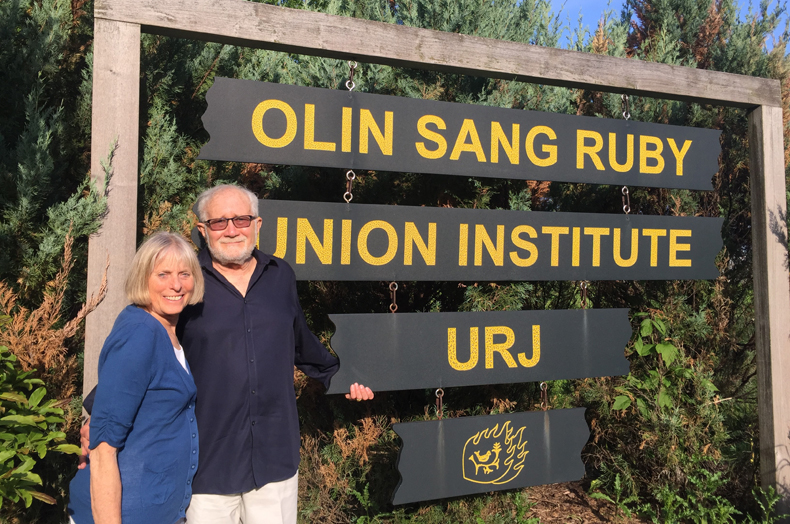
After 48 years of vision and service to OSRUI, Jerry Kaye hands over the camp reins
ABIGAIL PICKUS
Back in 1969, Jerry Kaye was working as a synagogue youth director when a casual conversation with Rabbi Robert Marx, then the regional director for the Reform movement, changed the trajectory of his life for the next half century.
“I asked Bob how his new camp director was doing and he said, ‘What new camp director? By the way, are you interested?'” recalled Kaye with a chuckle.
So Kaye put on his one suit and went to the URJ Olin-Sang-Ruby Union Institute (OSRUI) office downtown to interview with the committee. He got the job.
“I came home and said to my wife, ‘I think they want me to do this so we will do this for two or three years and see what happens.’ That two or three years turned into 48,” said Kaye.
And now the beloved Director of OSRUI, who has been a pillar of leadership and Jewish education for generations of campers at the Reform movement’s Oconomowoc, Wisc., camp-famous for his good humor, warmth, storytelling, and dedication-as decided the time has come to pass on the mantle.
In December 2018, Kaye will officially retire and Solomon Kane will assume the role as new director. (See below.)
“Jerry came when the camp was only 18 years old. Its mission was set but what was unknown was how to grow that mission to reach more people,” said Michael Lorge, former OSRUI camper, counselor, and board chair, who at age 17 as President of Chicago Federation of Temple Youth (CFTY) was on the committee that originally hired Kaye. “The fact is, he is so multi-faceted. He’s a visionary. He’s a builder of the facilities, builder of the programs, and a builder of relationships.”
Kaye’s first summer on board was in 1970 when he was 25 years old.
“I went up to the camp to discover there were virtually no trees. It was also a much smaller facility than it is today, so I started to bring people in on staff and then started to expand the camp generally,” Kaye recalled.
While attendance then was around 500, today OSRUI has over a thousand campers. There are also 65,000 trees that have been planted over the years, according to Kaye.
While much has changed, Kaye’s original goals have remained steady: to build and grow the camp program and to create and expand the year-round program, where synagogues hold weekend retreats and events for campers.
One thing that hasn’t changed, however, are the campers.
“Lots of people say to me how different are kids today? But kids are not terribly different today from when I began. Yes, they have all kinds of electronic devices, but really, the biggest change is parents,” he said.
Because when he started, virtually no parent had personally experienced summer camp.
“They sent their kids because somebody said it’s a good idea or the rabbi said it’s terrific or friends said we sent our child and it was a good experience,” said Kaye. “Today, virtually every parent has been to camp somewhere, and they come with a different set of expectations of what they want for their child.”
Kaye sees his role as not only directing OSRUI, but also serving as a conduit between the camp and “his families,” to guide and make sure everyone’s needs are met.
He grew up in Lawn Manor on Chicago’s Southwest side as an only child reared in a traditional Jewish community. After graduating from Harper High School, he went on to DePaul University for his undergraduate degree followed by Roosevelt University for a master’s and then to Chicago Medical School where he was trained as a medical psychotherapist.
He and his wife, Paula, a nurse, have two daughters, Michelle, an occupational therapist, and Leora, a rabbi and director of programming for Reform Judaism.org, and four grandchildren.
Over the years, Kaye has earned many awards and recognitions and he has represented OSRUI on a host of communal bodies such as being asked by the Jewish Agency for Israel to serve as one of only 30 people on an international task force on Jewish Peoplehood.
As a Jewish educator, Kaye has written extensively about everything from Jewish education to self-esteem and has been a longtime teacher in the Florence Melton Adult Mini-School program.
But many are familiar with Kaye as an Emmy-nominated host of “Sanctuary,” a joint production of the Jewish United Fund of Metropolitan Chicago and the Chicago Board of Rabbis, in cooperation with ABC7-Channel 7.
Throughout it all Kaye remains a staunch advocate of the power of the Jewish summer camp experience. “If you had a child who went to public school who came home and said, ‘I love math,’ the next day you would go to the principal to get your child in the gifted math class, but if a child goes to synagogue school and says, ‘I love this stuff about Jewish life and learning’ and you went to the Director of Education and said, ‘I want to get my kid into a gifted track in Jewish education,’ they would say to you: ‘We are terribly sorry. There is no gifted track in Jewish education for non-day school students,’ to which I say camp is the gifted camp for Jewish education! At camp, we spend a lot of time engaging kids in Jewish learning. They have close contact with cantors, rabbis and educators, and they spend a lot of time with other kids just learning that there are all different kinds of Jews out there and lots of ways to be Jewish,” he said.
For Kaye, Jewish camp means “24 hours a day Jewish and 24 hours a day recreation.”
“The most important place in camp is a tree with a youngster and a counselor or a rabbi sitting and talking to each other and nothing else going on,” he said.
He will take those memories and that passion with him for the next part of his journey. “I hope to be doing storytelling on the circuit through the communities, to teach wherever I can and to resume my interest in photography,” he said.
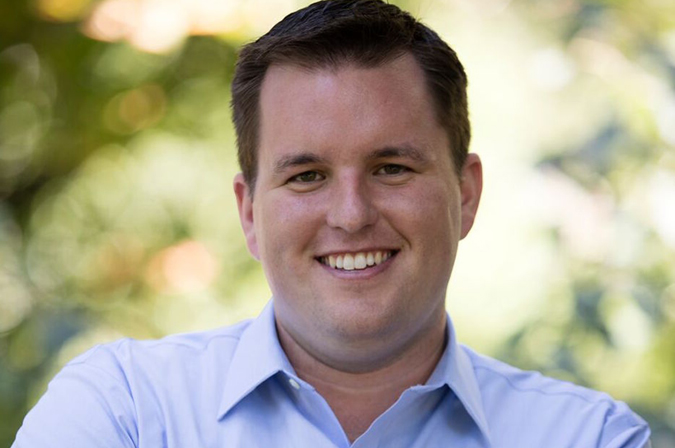
Solomon Kane appointed new director of OSRUI
Solomon (Solly) Kane, 28, has been appointed the 10th director of Olin-Sang-Ruby Union Institute (OSRUI). He will be first former OSRUI camper to serve in this position.
Kane, who grew up in Saint Louis Park, Minn., has worked extensively for the Union for Reform Judaism (URJ) and most recently as a management consultant focused on digital transformation and customer experience for leading brands.
His URJ positions including serving as director of North American Events, assistant director of the Biennial, assistant director of OSRUI, and as an Eisendrath Legislative Assistant at the Religious Action Center in Washington D.C.
“[Solly’s] experience across all parts of the URJ, his dedication to Judaism, the Jewish people, and Israel, and his strong business acumen makes him the perfect person to lead the next chapter of our oldest URJ camp,” said URJ President Rabbi Rick Jacobs.
Kane holds an MBA from the New York University Stern School of Business, a BA with honors from the University of Wisconsin-Madison, and has spent time at the Hebrew University of Jerusalem and Hong Kong University of Science and Technology.
Other stories
-
Two local teens win national recognition
Recipients of the annual Diller Teen Tikkun Olam Awards
Read more -
Celebrating six young award winners cultivating the community
Introducing young adult award winners
Read more -
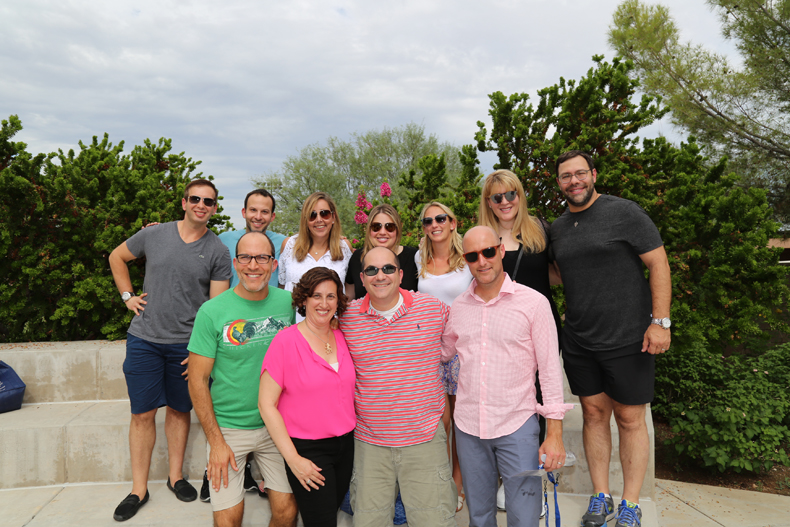
Bringing it home: Reflecting on National Young Leadership Cabinet 2017
Courtney Joy Anixter
A few weeks before my cabinet retreat, I griped to my mother, “Why do I always have to be the one to organize and plan everything?” She simply replied, “Courtney, there are leaders and followers. You are a leader.”
I hung up the phone and tucked her sage wisdom away while I binged on reality TV. Cabinet was fast approaching and the early jitters settled in.
I landed in the sauna that was Scottsdale. I retired to my room to change and unpack. I shot one last glance in the mirror and placed my trusty name tag over my head. I sauntered into the first-year dinner with zero expectations. I said, “Courtney, just be friendly and open.”
The cabinet leaders began with a statement I carried with me the entire week, “You are not normal. You pick up and leave for a week to the middle of nowhere, leave your family, your jobs, and your entire life behind to simply be part of something bigger than yourself. WE ARE NOT NORMAL!” Guess what, normal is boring. I’ve never aspired to be ordinary. Different is cool. In fact, it’s a hidden superpower.
Over the course of the next several days, I found many people shared similar values, ambitions, and passions for the Jewish community in their respective cities. An added bonus some were pop culture fanatics as well. This was an esteemed collection of accomplished individuals, and I considered myself lucky to be in their company. Being surrounded by nearly 200 of these exceptional cabinet members, albeit at times if I’m being perfectly honest was majorly overwhelming, I soaked it all in because it made me incredibly hopeful for our future.
Overall, this entire experience reminded me of summer camp and pledging a sorority in college. I was meeting new people, playing Jewish geography, and, most importantly, forging friendships I have a sneaking suspicion will last a lifetime.
We engaged in icebreakers, local volunteer work, channeled our inner emotional intelligence, and heard interesting panel speakers discuss the importance and relevance of JUF.
Ironically, what occurred in the world outside our retreat added fuel to our fire. The atrocity and desecration in Charlottesville — which erupted the weekend of the cabinet retreat — only heightened our mission to spread messages of love and encourage the Jewish people in their communities to take a stand. We take care of our own and that’s not only remarkable, but also extremely powerful. As Jews, it’s in our DNA to protect and defend. We rise. We fall. We fight. We rebuild. And, ultimately, we triumph.
The theme of the week was to “Bring It Home” to your own city. Here’s what I brought home (along with four extra pounds in my already overweight luggage the skycap refused to budge on, but that’s neither here nor there):
1. You can always make new friends and it’s even more fun later in life when you’re not as nervous about kickball teams and monkey bar lines.
2. Be bold and dare to step outside of your comfort zone for it will mark the beginning of many grand adventures on your journey.
3. My mother is always right. I am a leader.
Scratch that. WE are leaders. And — THIS IS CABINET!
National Young Leadership (NYL) Cabinet is the premier leadership philanthropic program of the Jewish Federations of North America (JFNA). The program is designed for dedicated men and women, ages 30 to 45, from across the U.S. and Canada who are deeply committed to building a strong, vibrant future for the Jewish people. There are 26 Cabinet members here in Chicago. Below, one member sheds light on her Cabinet experience.To learn more about National Young Leadership Cabinet, email [email protected].
Courtney Joy Anixter is a writer and runs her own company, Consult Courtney. She was on the YLD Board for four years, serving as an Executive Board member for two. She joined JFNA’s National Young Leadership Cabinet this year.
Other stories
-
Two local teens win national recognition
Recipients of the annual Diller Teen Tikkun Olam Awards
Read more -
Celebrating six young award winners cultivating the community
Introducing young adult award winners
Read more -
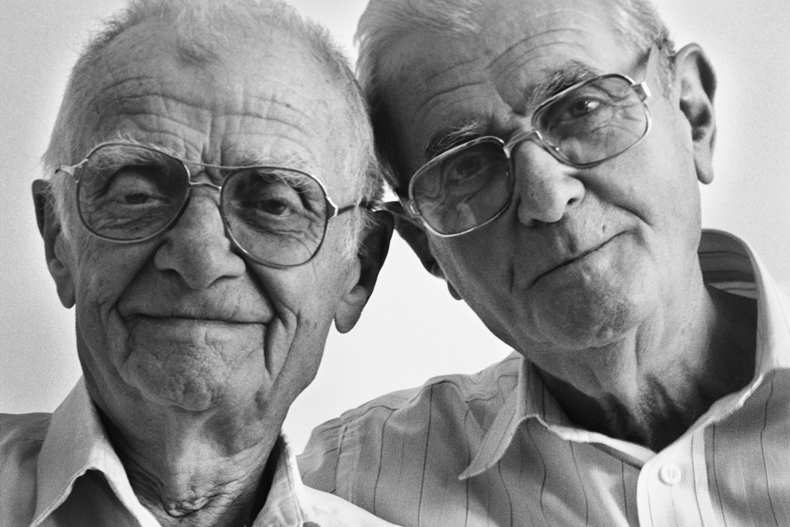
Photo exhibit highlights courage of Muslim Albanians during World War II
Robert Nagler Miller
Many know of Denmark’s heroic rescue of its 7,000 or so Jews from Nazi hands during World War II, along with Bulgaria’s open defiance of orders to deport its 40,000 to 50,000 Jewish citizens to concentration and death camps.
But fewer are aware of Albania’s role in saving 2,000 Jewish lives. That’s because the proud history of the southeastern, mostly Muslim nation of 3 million on the Adriatic was kept under wraps for more than 40 years-until 1992-by a totalitarian regime with strong allegiances to the former Soviet Union.
Since then, however, the many courageous acts of Albanians have come to light, and Yad Vashem-Israel’s Holocaust museum and memorial-has honored scores of them as part of its Righteous Among the Nations, recognition accorded to those who put their own lives at risk to help Jews during the Holocaust.
Some of those so honored also received due recognition when American Jewish photographer Norman Gershman, now 85, published a book of his images and first-person accounts of Albanian rescuers and their descendants, whom he interviewed over five years in Tirana, Albania’s capital, and in smaller cities and villages.
The book, Besa: Muslims Who Saved Jews in World War II (Syracuse University Press), was made into a film some four years later and also spawned a series of photo exhibits based on Gershman’s book and travels through Albania. The Illinois Holocaust Museum and Education Center, 9603 Woods Drive in Skokie, is now exhibiting approximately a dozen of his images and accompanying text in “Besa: A Code of Honor,” which runs now through March 4, 2018, in the museum’s South Gallery. The exhibit is a production of Yad Vashem’s Museums Division.
“Besa,” explained Illinois Holocaust Museum’s Chief Curator of Collections and Exhibitions Arielle Weininger, means “code of honor.” For the Albanians who actively hid their Jewish neighbors from Nazi apprehension, along with Jewish refugees who had fled to Albania from Germany, Austria, Yugoslavia, and Greece, saving Jewish lives was not an act they considered extraordinarily brave. They saw it as a moral obligation or the fulfillment of a promise one makes to a dear friend.
“There are no foreigners in Albania-only guests” was the overriding philosophy that led many to engage in active resistance against the Fascists, Weininger said. And, unlike in Denmark and Bulgaria, where government officials and the royals led the charges against Nazi edicts, in Albania-which became primarily Muslim with the spread of the Ottoman Empire in the 15th century-it was the groundswell of support from the people themselves that catalyzed common citizens to protect Jews from oppression and probable death sentences.
“My father said that the Germans would have to kill his family before he would let them kill our Jewish guests,” said Merushe Kadiu, whose portrait and narrative are included in the exhibition.
“Our parents were devout Muslims and believed, as we do, that ‘every knock on the door is a blessing from God,'” said brothers Hamid and Xhemal Veseli, also featured in the show, in recounting their family’s sheltering of Jews during World War II. “We never took any money from our Jewish guests. All persons are from God. Besa exists in every Albanian soul.”
Those interviewed by photographer Gershman recalled how their families dressed up Jews as local Muslim villagers and farmers, secreted them in underground bunkers, created escape hatches in their homes, covertly transported Jews to and from forests, and refused to buckle under extreme pressure from the occupying forces.
“Four times they put a gun to his head,” said Ali Sheqer Pashkaj, in recalling his father’s valor in the face of the Nazis. “They came back and threatened to burn down the village if my father didn’t confess. My father held out, and finally they left.”
“My father sheltered four Jewish families,” said Nuro Hoxha, another Gershman subject. “I remember my father’s words to those he took in: ‘Now we are one family. You won’t suffer any evil. My sons and I will defend you against peril at the cost of our lives.'”
Before the outbreak of World War II, the Jewish population of Albania was minuscule: about 200. After the war, it stood at approximately 2,000-still tiny, to be sure, but with the distinction of being one of the few European nations with more Jews in the aftermath of the Shoah (Holocaust) than before.
Some Muslim rescuers lost contact over the years with the Jews they had saved, many of whom resettled in Israel, only re-establishing ties decades later with the fall of Communism and the end of Albania’s political and cultural isolation. Other Albanians, however, remained in touch with Jewish friends throughout their lifetimes.
“I have so many wonderful letters and pictures from Israel,” said Kadiu. “In 1992, I was invited there to receive the Righteous Among the Nations award on behalf of my family, and for a time I was the head of the Albanian-Israeli Friendship Association. Those years were fearful, but friendship overcame all fear.”
The exhibition “Besa: A Code of Honor” runs through March 4, 2018, in the South Gallery of the Illinois Holocaust Museum and Education Center in Skokie.
Other stories
-
Chicago to Israel to Kenya
A family’s story of living Jewishly on three continents Michelle Cohen World May 28, 2021 Avital, Tzofia, and Netanel Kaszovitz outside their home in Nairobi on Yom HaAtzmaut. When Avital Kaszovitz prepared to be a Modern Orthodox shlicha (emissary) to the Jewish community in Ke
Read more -
New exhibit spotlights the experience of ‘Shanghai Jews’
Explore a new Illinois Holocaust Museum and Education Center exhibit
Read more -
Europe’s brave new teachers of the Holocaust
Teaching the Holocaust in the modern era has its difficulties and rewards.
Read more
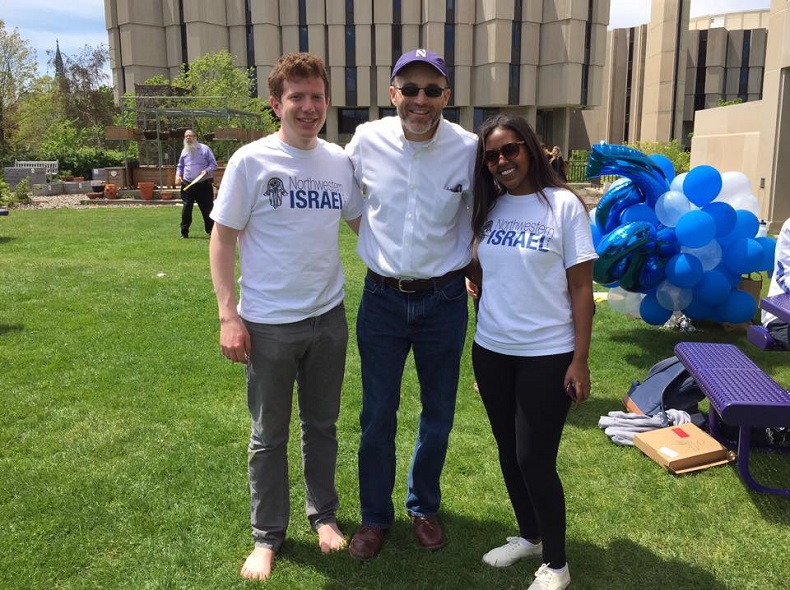
Jewish Agency Israel Fellows engage Illinois students with Israeli history, culture
Abby Seitz
There is no such thing as a typical day for Simcha Masala. At any given moment, Masala can be found brainstorming programming ideas with Hillel leaders, recruiting students for Birthright trips, leading a discussion on Israeli politics, or engaging an uninvolved student over coffee.
Masala is Northwestern University’s Jewish Agency Israel Fellow. The program, a partnership between the Jewish Agency for Israel and Hillel International, places over 75 Israelis on North American campuses to engage the campus community with Israel.
“The best way to get to know a country is through her people so Israel Fellows are an incredible asset,” said Emily Briskman, executive director of JUF’s Israel Education Center. “Their energy, expertise, and engaging personalities put a personal face on Israel. Israel Fellows are able to engage with hundreds of Jewish and non-Jewish students on campus every year and in many cases, they dispel misconceptions about Israelis and inspire students to learn more.”
Masala is entering her third year as Northwestern’s Israel Fellow. During the fellowship, she has worked with professors to develop an extracurricular Israel Studies curriculum for students, created a series of programs examining diversity in Israel, and empowered student leaders to plan a week of Israel-related festivities to coincide with Yom Ha’atzmaut each spring.
“The work I do with the students, staff, Hillel, and the Israel Education Center is valuable and has a tangible impact,” Masala said. “The impact we have is growing each year. For me, working in a job that isn’t 9-to-5 and doing something that has a direct impact on people makes this job worthwhile.”
Three other Hillels of Illinois campuses are hosting first year Israel Fellows during the 2017-2018 academic year: Mika Mashiach at the University of Chicago; Waga Brok at the University of Illinois at Urbana-Champaign; and Yoni Shapira at Metro Chicago Hillel.
“I was 16 when I first heard about the Jewish Agency Israel Fellows program and it’s always interested me,” Shapira said. “I want to learn more about American Jewry, campuses, and culture, and I want to help students learn more about Israel. It will benefit people to know more about Israel because it’s not a one-dimensional story.”
The opportunity to facilitate important conversations about Israeli history and culture attracted Shapira to the job.
“I want them to understand there’s a different Israel than what people talk about on a day-to-day basis,” Shapira said. “It’s not just about war. It’s not just about anti-Semitism. There are so many more layers and depth there and sides that aren’t normally shown. I think a lot of people have this idea that Israel is an entirely Eastern European Jewish land and it’s far from it.”
Each Israel Fellow has the opportunity to incorporate their own unique background and interests into programming and conversations they have with students. While Mashiach said she will let students take the lead on programming ideas at University of Chicago, she hopes to connect students to a passion of hers: Israel’s diverse pop culture.
“I learned English through listening to music,” Mashiach said. “I want to connect students to Israeli music-we have great singers and bands. It’s a great way to learn Hebrew and connect emotionally to the language and Israel. Israel also has great television, and I want to connect them to that. The Jewish Agency Israel Fellows program offers me the once-in-a-lifetime chance to show Israel-my home-to the rest of the world.”
The Jewish Agency Israel Fellow/Hillel Israel Fellows in Illinois are funded by JUF’s Israel Education Center.
Other stories
-
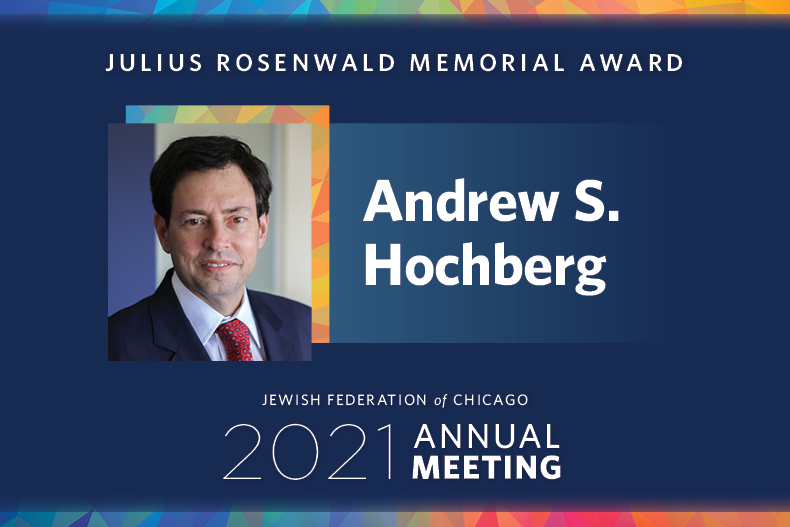
Meet Andrew S. Hochberg, 2021 Julius Rosenwald Memorial Award recipient
Celebrate Andy Hochberg at the virtual Annual Meeting on Sept. 14
Read more -
Two local teens win national recognition
Recipients of the annual Diller Teen Tikkun Olam Awards
Read more -
Celebrating six young award winners cultivating the community
Introducing young adult award winners
Read more
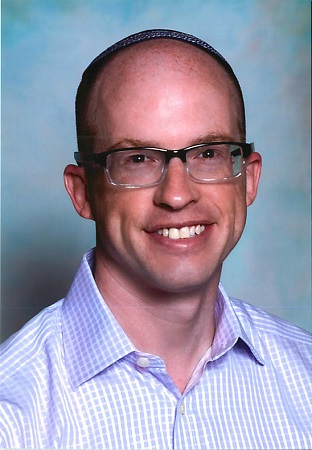
New Hillel Executive Director looks to build ‘the future of Jewish Chicago’
Abby Seitz
Instead of creating a Jewish “home away from home” for students, Charles Cohen, Metro Chicago Hillel’s new Executive Director, wants to empower Jewish students to create a new sense of home here in Chicago by becoming active members of the Chicago Jewish community through Hillel.
“[Metro Chicago Hillel] students aren’t coming here for four years or six years and then going back to where they came from, or moving on to New York or Boston or L.A.,” Cohen said. “Most of these students are sticking around. They’re Chicagoans. They’re going to stay and raise their families here. This is an opportunity to work with students in a setting that really helps build the future of Jewish Chicago.”
Cohen began his new position in August. Cohen comes to Chicago from Florida, where he worked as the executive director of the Friedman Commission for Jewish Education. Previously, Cohen held positions at Boston’s Partnership for Excellence in Jewish Education and at the Jewish Federation of Greater Pittsburgh.
While Cohen was raised in Milwaukee, he is no stranger to Chicago – Cohen is an alumnus of Ida Crown Jewish Academy in West Rogers Park.
Cohen completed his undergraduate degree at Yeshiva University in New York. Though the Modern Orthodox-affiliated university doesn’t have a Hillel on campus, Cohen often found himself eating and hanging out at Hillel when visiting friends at New York University and Columbia University. When Cohen entered Boston University’s law school, Hillel became a more central part of his life.
“My first day of law school was the first time I was in a classroom with non-Jewish people,” Cohen said. “The experience of having a Hillel, having a place to go where it was familiar and comfortable, that was a relief, especially in law school, where things are crazy and stressful. It was just students hanging out and having community together.”
Charles’ combination of experiences, intelligence, genuine warmth, and quick wit prompted the search committee to unanimously endorse him as the new executive director, concluding that he is the ideal candidate to serve the Metro Chicago Hillel community, according to a statement released by the organization.
“Because Metro Chicago Hillel serves 10 campuses, we prioritized management, leadership, fundraising, and board experience over prior Hillel employment,” said John Lowenstein, JUF’s Vice President of Campus Affairs. “Charles has an extensive background working for Jewish communal organizations and joins a very experienced and competent staff of Hillel professionals. The future possibilities of Metro Chicago Hillel are only restrained by our own creativity and resources as we continue to expand our reach and depth on campuses.”
This coming year, Cohen hopes to build personal relationships with students and empower them to build strong campus Jewish communities through volunteering, learning, and leadership opportunities. Metro Chicago Hillel will have 15 student interns working on everything from engagement to Israel advocacy.
“We want students to feel like this is something they can build together,” Cohen said. “We want to make sure we are bringing more people in the door and getting them involved on a more regular basis. I’m hopeful we will be able to see the impact of our work for years to come, as students go on and become volunteers, as they become part of the community ecosystem. It starts here.”
Metro Chicago Hillel unites over 1,000 Jewish students from 10 colleges and universities across the Chicago area and is supported by JUF’s Hillels of Illinois.
Other stories
-
Two local teens win national recognition
Recipients of the annual Diller Teen Tikkun Olam Awards
Read more -
Celebrating six young award winners cultivating the community
Introducing young adult award winners
Read more -