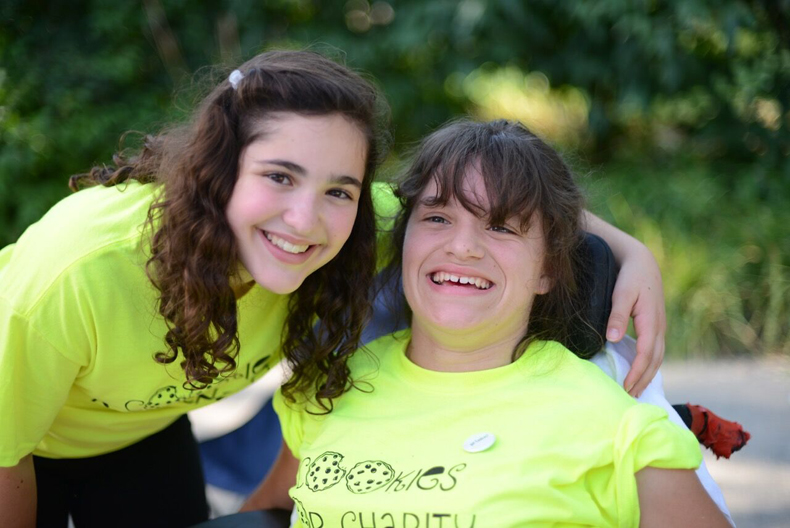
Gabriella Cooperman, 16, of Highland Park, has been named a recipient of the Helen Diller Family Foundation’s annual Diller Teen Tikkun Olam Awards.
Now in its 11th year, the national awards recognize young entrepreneurs who are committed to establishing methods for social change that address the most urgent and pressing challenges in the communities around them. This year’s awards recipients are working across the globe to address issues from health advocacy for those with disabilities and health education in developing countries, to de-stigmatizing illnesses such as diabetes and providing therapeutic resources for children and families with special needs.
When Cooperman saw how therapeutic horse-riding was for her sister who has special needs, she came up with the idea that sparked Cookies for Charity , a large-scale lemonade and cookie stand. All of the profits from Cookies for Charity go to a local non-profit therapeutic horseback riding center in Lake Forest called the Equestrian Connection. In 11 years, over $130,000 has been raised, with sponsorship from 21 organizations.
Cookies for Charity carves out a pathway for those who want to help repair the world but have no idea where to start, while aiding in de-stigmatizing children with special needs. Cooperman plans to continue to grow Cookies for Charity and further her mission to make an impact on the world.
Cooperman and the other 14 awardees will receive $36,000 in support of their philanthropic vision or to further their education. Full descriptions of all 15 recipients and their projects can be found at: www.dillerteenawards.org .
Other stories
-
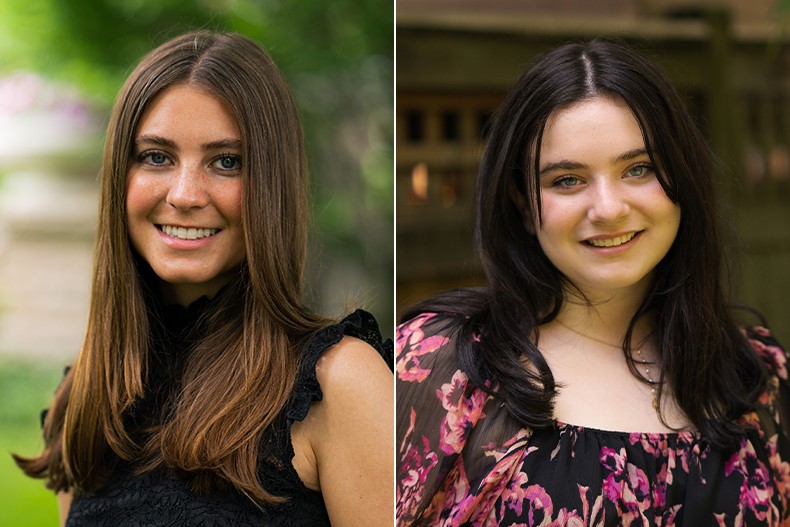
Two local teens win national recognition
Recipients of the annual Diller Teen Tikkun Olam Awards
Read more -
Celebrating six young award winners cultivating the community
Introducing young adult award winners
Read more -
Federation mini-grants to support nine varied programs in South Suburban Chicago
A rich and varied sampler of Jewish life and thought will once again be offered in the South Suburbs, thanks to support from the Jewish Federation of Metropolitan Chicago.
As it has for several years, the Federation’s South Suburban Mini-Grant Program will energize a wide array of Jewish cultural programming in the Southland over the coming year. Nine distinct cultural, religious and educational events will share nearly $13,000 in small grants.
Programs will include the exuberance of a teen sports gala, a dramatic look at the remarkable life and music of a concentration camp survivor, one immigrant’s amazing tale to understanding forgiveness, connecting Shabbat to the rest of the week, sacred aging, the afterlife and, of course, Jewish and Israeli films.
All were selected from proposals submitted by area Jewish organizations and reviewed by a group of local residents – the South Suburban Mini-Grant Kehillah – which awarded the grants.
The full list of programs includes:
- BBYO Region Wide Maccabia – presented by BBYO Great Midwest Region, Chaverim BBG and Barney Ross AZA
Teens from across Chicagoland and Northwest Indiana will be brought to Chicago for a day of sports and entertainment on Sunday, Jan. 8, 2018.
- Connecting Shabbat to the Rest of the Week – presented by B’nai Yehuda Beth Sholom, Homewood
Jane Shapiro will show how Shabbat can be practiced all week long as a way to bring more nourishment and refuge into our lives and to deepen our actual Shabbat experiences in a personal way. March 11, 2018
- Learning How to Forgive: A Daughter of a Holocaust Survivor Comes to Terms with Her Father’s Memory – presented by B’nai Yehuda Beth Sholom, Homewood
The program will help the community better understand the struggles of the children of Holocaust survivors to grapple with what their parents endured. Oct. 22, 2017
- Edith’s Immigration Journey: A Story of Prejudice and Empathy – presented by B’nai Yehuda Beth Sholom, Homewood
Learn about Edith’s forced emigration from Nazi Germany at the age of 12. Nov. 5, 2017
- Chicago Jewish Film Festival – presented by JCC Chicago
JCC Chicago will select and screen three films at a local synagogue during the spring and summer of 2018. A speaker will facilitate a thoughtful discussion following each presentation.
- Chicago Festival of Israeli Cinema – presented by JCC Chicago
JCC Chicago will present two acclaimed Israeli films with facilitated discussion at a local synagogue.
- Music & Hope: The Life of Alice Herz-Sommer – presented by National Council of Jewish Women South Cook Section
Judith Winnick will portray Alice Herz-Sommer, a concert pianist who survived the Theresienstadt concentration camp during WWII and lived to be 110 years old. April 18, 2018
- Jewish Views of the Afterlife – presented by Temple Anshe Sholom, Olympia Fields
Learn about the little-known Jewish teachings on the afterlife journey of the soul and how we can respond in healthy and functional ways to the various dimensions of end-of-life issues. Nov. 10-11, 2017
- Sacred Aging – presented by Temple Anshe Sholom, Olympia Fields
Discuss Jewish texts and traditions of caregiving, end-of-life decision making, the creation of new rituals for new life stages, health and wellness, and how the tradition approaches health care payment. March 3-4, 2018
Mini-grant proposals were reviewed and selected for the South Suburban Mini-Grant Kehillah by Dr. David Gottlieb and Bob Zitter (co-chairs), Laura Eisenwasser, Dan Greenberg, David Lebowitz and Bonnie Ribbet.
For more information, contact Alene Rutzky, Jewish Federation South Suburban Office coordinator, at (708) 798-1884 or [email protected] .
Other stories
-
Two local teens win national recognition
Recipients of the annual Diller Teen Tikkun Olam Awards
Read more -
Celebrating six young award winners cultivating the community
Introducing young adult award winners
Read more -
Outspoken BDS activist Roger Waters comes to Chicago this week and, along with the music of Pink Floyd, he also brings a jarring message of hate.
In addition to repeatedly espousing anti-Israel rhetoric that often crosses the line from legitimate criticism of Israeli policies into anti-Semitism , he regularly calls upon fellow artists to boycott Israel, and condemns those — most recently Radiohead — that refuse.
Radiohead’s frontman Thom Yorke, former R.E.M. frontman Michael Stipe and Arab Israeli musician Nasreen Qadri all have spoken out recently against such tactics. Qadri, who performed alongside Radiohead in Tel Aviv on Wednesday, says BDS is “counter-productive and only hurting those who wish to promote peace and tolerance.”
“Waters says he is ‘anti-war, anti-apartheid, anti-racist, pro human rights, pro peace and pro self-determination for all peoples,'” said David T. Brown, chair of JUF’s Jewish Community Relations Council. “Yet he has performed in nations with horrendous records on human rights, such as Turkey and Russia, and singles out Israel — by far the only democratic oasis in the Middle East, and certainly the most socially progressive — for his attacks, to the exclusion of all others.”
Waters declares that he is neither anti-Israel nor anti-Semitic. Yet his concerts have featured his signature floating pig bearing a Star of David, juxtaposed with classical (and contradictory) anti-Semitic symbols-the dollar sign representing capitalist exploitation, and the hammer and sickle representing communist repression, and has repeatedly alluded to anti-Semitic tropes about Jewish power and the “Jewish lobby” in interviews. This week, during a live Facebook interview with BDS founder Omar Barghouti, Waters compared Israel to Nazi Germany, claiming he wasn’t sure if “there are any much harsher regimes in the world” than Israel. (Barghouti has made the BDS position clear: that the Jews are not a people, and that Palestinians have a right to “resistance by any means, including armed resistance.”)
“Waters advocates not for a peaceful resolution of the conflict between Israel and the Palestinians, but rather for the end of Israel as the sovereign nation state of the Jewish people,” said JCRC Executive Director Emily Sweet.
“As with any sovereign nation, fair criticism of Israeli government policies is legitimate. But when the criticism, like that leveled by Waters, includes delegitimization of Israel’s right to exist, unapologetic use of Holocaust comparisons, and anti-Semitic symbols and tropes, it crosses the line into hate speech,” Brown said. “As leaders of Chicago’s Jewish community, we say, ‘Enough.'”
Stay updated on anti-Israel and anti-Semitic activity in Chicago and beyond by subscribing to JUF Link, a new bi-weekly newsletter highlighting the impact of JUF and its partners in confronting and defeating the delegitimization and demonization of Israel. Subscribe here
Other stories
-
Two local teens win national recognition
Recipients of the annual Diller Teen Tikkun Olam Awards
Read more -
Celebrating six young award winners cultivating the community
Introducing young adult award winners
Read more -
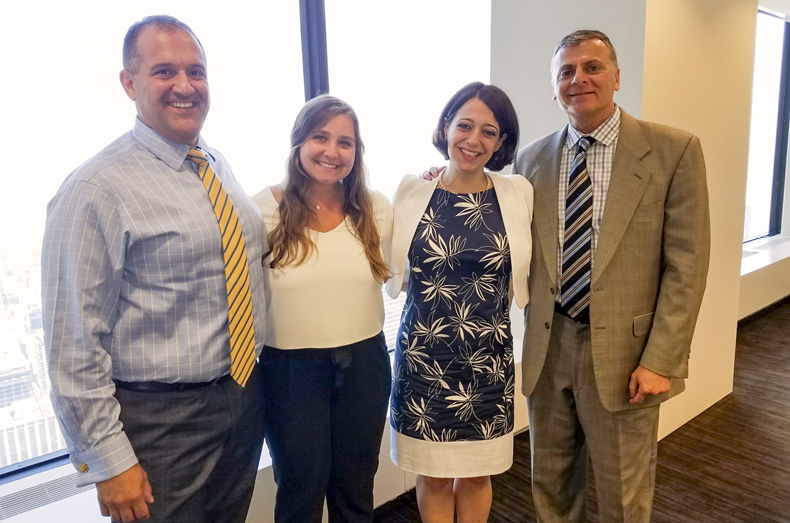
JCRC joins local Near East religious groups for update on Cyprus occupation
Meredith Leon
Representatives of JUF’s Jewish Community Relations Council joined the Armenian, Assyrian and Hellenic communities for a July 17 briefing on the most recent attempts to end the 43-year Turkish occupation of Cyprus. The Hellenic American Leadership Council held the meeting, which was hosted by HALC Executive Director Endy Zemenides and Andrea Petrányi, the political counselor of the Embassy of Cyprus.
The Republic of Cyprus is an island nation in the Eastern Mediterranean, 293 miles off the Eastern coast of Israel. Cyprus was under Ottoman rule from 1571-1914, until the British colonized the island. A majority of its population consisted of people of Greek descent with an 18 percent minority population of Turks.
In 1974, Turkish forces invaded Cyprus and took over the northern third of the island. Today, 40,000 Turkish troops occupy northern Cyprus, and despite many international diplomatic negotiations under the United Nations, no attempts to reunify the country have been successful.
Both Cyprus and Greece have become strong partners of Israel, particularly in security cooperation. Economically, Cyprus and Israel are working together on gas exploration in the Eastern Mediterranean. These proven reserves, along with those of Egypt, could substantially improve the economies of Egypt, Cyprus and Lebanon along with Israel and Jordan. The continued failure to reach an agreement with Turkey to reunify Cyprus has been an impediment to the region’s economic advancement.
Meredith Leon is JUF’s Lewis Summer Intern in Public Affairs.
Other stories
-
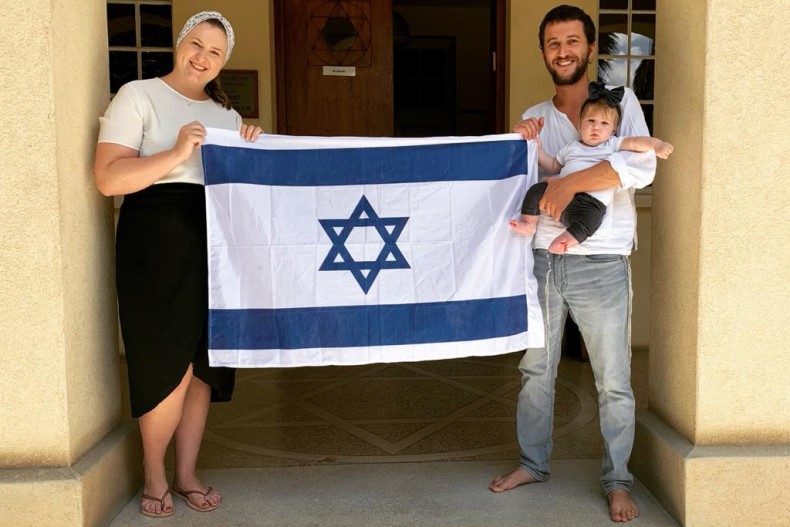
Chicago to Israel to Kenya
A family’s story of living Jewishly on three continents Michelle Cohen World May 28, 2021 Avital, Tzofia, and Netanel Kaszovitz outside their home in Nairobi on Yom HaAtzmaut. When Avital Kaszovitz prepared to be a Modern Orthodox shlicha (emissary) to the Jewish community in Ke
Read more -
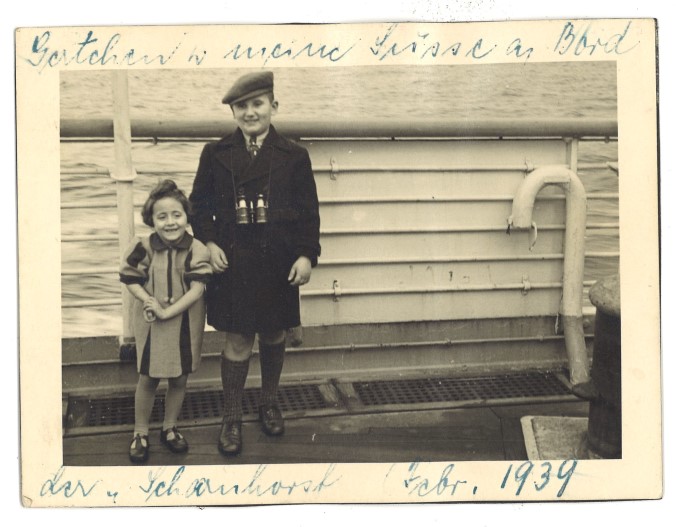
New exhibit spotlights the experience of ‘Shanghai Jews’
Explore a new Illinois Holocaust Museum and Education Center exhibit
Read more -
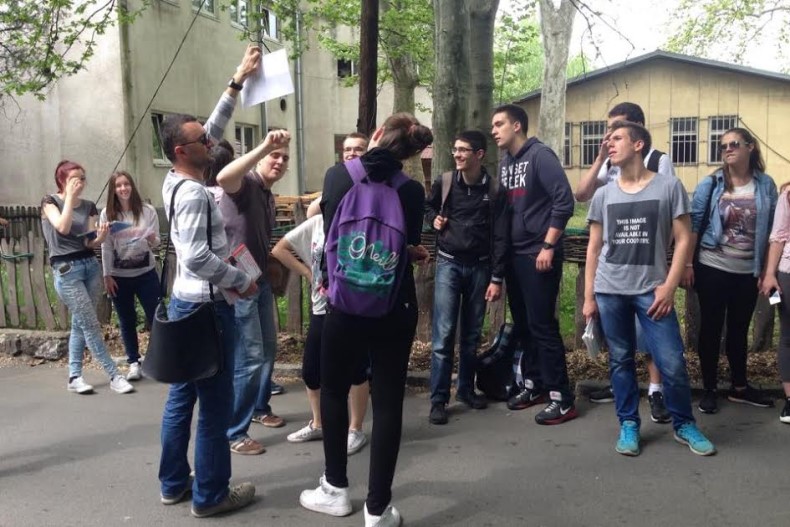
Europe’s brave new teachers of the Holocaust
Teaching the Holocaust in the modern era has its difficulties and rewards.
Read more

The Jewish United Fund of Metropolitan Chicago has announced the sixth annual “Double Chai in the Chi: 36 Under 36” list of young Jewish movers and shakers in Chicago.
(The letters of the Hebrew word “Chai,” which means “life,” also represent the number 18.)
Check out the list and full bios online at: www.oychicago.com/36under36
Presented by JUF’s Young Leadership Division (YLD) and Oy!Chicago – an outreach website for Chicago 20- and 30-somethings – the list shines a spotlight on the faces of Chicago’s Jewish future and recognizes the amazing contributions of this generation. The young professionals featured are noted for making a difference through their work, giving back in their free time, and earning distinction in the Jewish community and beyond.
“This year’s list does not disappoint – I can guarantee you that the future of our Jewish community is in good hands with these young leaders at the helm,” said Stefanie Pervos Bregman, co-founding editor of Oy!Chicago. “This marks our sixth year of this initiative and I’m always amazed at the innovative, philanthropic work that is happening right here in Chicago.”
This year’s list is replete with entrepreneurs, activists, fundraisers, and more, running the gamut from writers to rabbis, attorneys to social workers… and, well, the list goes on.
“This is our future, and these young people are our future leaders,” said Lisa Tarshis, incoming YLD Board President and former award winner. “I love all the creativity and passion that always comes through, and the impact that is being made across a variety of sectors-both today and for the years ahead.”
Donations to JUF of up to $36 in recognition of a 36 under 36 honoree will be matched in full, doubling the impact and benefit to those in need in the community. Learn more and donate at https://donate.juf.org/36Under36.
Full profiles of each honoree are available on the Oy!Chicago website.
The 36 winners will be honored at YLD’s “WYLD” party at 7 p.m. on Wednesday, August 10 at Old Crow Smokehouse in River North, at 149 W Kinzie. The party is open to the public. Tickets are available for $20 in advance or $30 at the door. $5 of each ticket will be donated to JUF’s 2017 Annual Campaign to provide services for those in need. To register, visit http://bit.ly/WYLD2017 or e-mail [email protected] . Register early – last year’s party completely sold out!
Other stories
-
Two local teens win national recognition
Recipients of the annual Diller Teen Tikkun Olam Awards
Read more -
Celebrating six young award winners cultivating the community
Introducing young adult award winners
Read more -
Jewish Federation affiliate agencies welcome state budget, raise concerns
Suzanne Strassberger
Passing a balanced budget with bipartisan support has been at the top of the Jewish Federation of Metropolitan Chicago’s advocacy agenda in Springfield for the past two years.
Without a budget, JUF-affiliated agencies waited months to be paid. Reimbursement rates stagnated at levels set many years ago because without sufficient revenues, no state agency could increase rates. Consequently, agencies throughout the state exited other human service programs. In the Jewish community, two historic programs that had proven to make an impact closed: Group homes for abused, neglected children and adolescents at Jewish Child and Family Services (JCFS) and the Community Care Program at CJE SeniorLife.
On July 6, the General Assembly, with bipartisan support, overrode Gov. Rauner’s veto in order to pass a budget that appropriates funding to cover all areas except K-12 education.
What does this mean for JUF affiliates?
“Simply ending the budget impasse does not erase the damage of two years without a budget nor the continuing struggle to provide services with inadequate reimbursement rates,” CJE SeniorLife CEO Mark Weiner said.
In April, due to the budget impasse and to flat reimbursement rates failing to keep pace with the costs of providing service, CJE SeniorLife made the decision to close the Managed Community Care program. For more than 20 years, the program helped many poor and frail older adults live safely in their homes.
For Sinai Health System, one of the main concerns has been Medicaid funding, which will not be cut with the new budget.
“We are relieved that the state budget does not include cuts to Medicaid or an increase in the hospital assessment,” said Sinai Health System CEO Karen Teitelbaum, “but know that there are serious risks ahead for the Medicaid program, particularly because of the debate over health care in Washington.”
JCFS is also both relieved and concerned going forward.
“The budget passage coming with additional revenues provides sorely needed relief as we work to plan for the sustainability of crucial human services,” said JCFS CEO Howard Sitron. “However, its passage neglects the issue of the chronic under-funding of services for adults with developmental disabilities, where Illinois ranks 47th among the states. The failure to provide a living wage is driving caring, qualified workers out of the industry and creating staffing shortage nightmares for agencies.”
Other stories
-
Two local teens win national recognition
Recipients of the annual Diller Teen Tikkun Olam Awards
Read more -
Celebrating six young award winners cultivating the community
Introducing young adult award winners
Read more -
Jewish Federation takes aim at urban violence: Awards $425,000 in grants from the Shure Charitable Trust
Christine Sierocki Lupella and Linda Haase
In a move to help reduce the cycle of violence gripping the city of Chicago, the Jewish Federation of Metropolitan Chicago has awarded the United Way of Metropolitan Chicago $425,000 in grants to support several community organizations offering multi-faceted approaches to violence prevention.
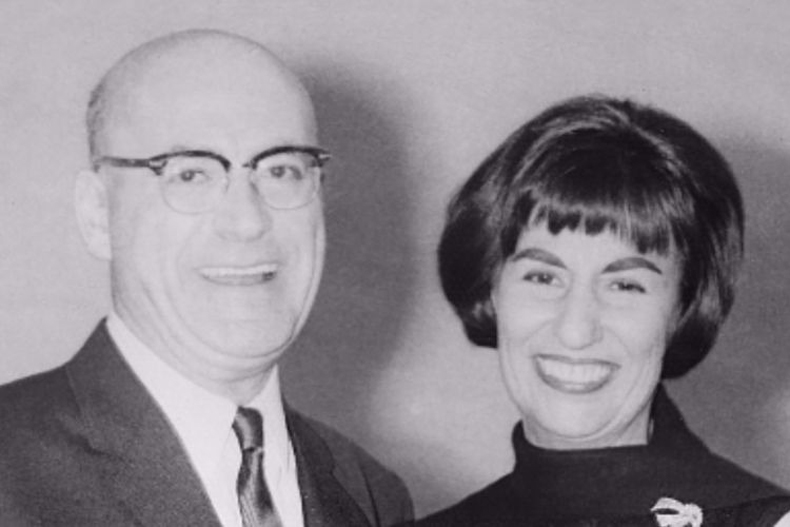
Funded through the Shure Charitable Trust, a supporting organization of the Jewish Federation established in memory of Sidney and Rose Shure, the grants will support the work of Sinai Health System ($175,000), the Institute for Nonviolence Chicago ($150,000) and the United Way Neighborhood Network Initiative ($100,000), with United Way serving as administrator of the funding.
“The Jewish Federation is proud to support these community organizations that are providing a multi-faceted approach to violence prevention,” said Dr. Steven B. Nasatir, President of the Jewish Federation of Metropolitan Chicago. “We serve over 500,000 Chicagoans of all faiths, and we are devoted to making life better for our greater Chicago community.
“Violence is a critical issue impacting our local community today, and we will not stand idly by while our neighbors bleed,” Nasatir said.
Funding will support neighborhood-specific initiatives in each of the organizations, including the Sinai Health System’s work to build a comprehensive behavioral health system for children and youth in Southwest Chicago and their citywide Chicago Gun Violence Research Collaborative; The Institute for Nonviolence Chicago’s programs that bring Dr. Martin Luther King, Jr.’s principles, practices and teachings of nonviolence to the Austin and Back of the Yards neighborhoods; and United Way’s work training community leaders and institutions to provide trauma-informed care in Auburn Gresham, Cicero, Little Village and South Chicago.
Sinai Health System
Sinai is collaborating with a wide range of partner organizations to establish a community-responsive, patient-focused and sustainable behavioral health System of Care for youth ages 0-18 in Southwest Chicago. Over the next two years, this coordinated network of health services seeks to assist 1,000 children and their families with trauma-informed behavioral health and medical services, and to enable providers across the region to provide accessible, coordinated, cost-effective and high quality care.
“Mental health is a critical factor in child and youth development,” said Kathe Dellacecca, Vice President of Behavioral Health at Sinai Health System. “When left unaddressed, early traumas or mental health challenges can significantly increase a young person’s likelihood of experiencing violence or engaging in violent behaviors later in life. Mental and behavioral healthcare are vital for violence prevention.”
The Chicago Gun Violence Research Collaborative is a first-of-its-kind partnership of Sinai Urban Health Institute and the Illinois Public Health Institute, bringing together the city’s top academic and health researchers with community stakeholders to address the issue of violence in the community.
The Collaborative is developing a comprehensive website to serve as an accessible repository of scholarly and field work best practices, and in the spring will convene four mini-conferences to foster collaboration and the sharing of knowledge and best practices, exploring solutions to Chicago’s violence epidemic in each of four Chicago neighborhoods experiencing high violence rates. Together, civic leaders, Chicago researchers across disciplines, and community stakeholders will create neighborhood-specific research agendas and collaborative opportunities to reduce violence.
“Morbidity and mortality from gun violence are two dramatic examples of health care disparities disproportionately impacting communities of color,” said Karen Teitelbaum, President and CEO of Sinai Health System. “To address this public health crisis, our law enforcement system, social service agencies, community organizations and schools need evidence-based solutions that reflect the needs of Chicago’s communities.”
Institute for Nonviolence Chicago
With the mission of using the nonviolence principles, practices and teachings of Dr. Martin Luther King, Jr., to replace the cycle of violence, The Institute for Nonviolence Chicago is a new local effort to reduce violence in the city’s most violent neighborhoods.
The Institute uses a holistic approach that combines individualized service provision and wraparound support with a collaborative street outreach strategy, bringing together outreach workers, case managers, victim advocates, nonviolence trainers and a community organizer, to carry the message of nonviolence to street corners, classrooms and prison cells. Working with “in-risk” individuals ages 14-24, the Institute mediates conflicts, supports victims and helps families deal with shattered lives while organizing the community to better support each other.
“Violence is learned,” said Teny Gross, Executive Director of the Institute for Nonviolence Chicago. “Violence is cyclical — victims become perpetrators; perpetrators become victims. Entire communities are negatively impacted by the actions of a few.
“Communities can end violence and build a safe and just place to live, learn, work and play — what we call Dr. King’s ‘Beloved Community,'” Gross said. “The Institute for Nonviolence Chicago strives to make the Beloved Community a reality.”
United Way of Metropolitan Chicago
People who have experienced trauma often struggle with added health challenges, including struggles with mental health and depression, behavior control and disease. This is particularly true for youth who have experienced trauma. That’s why United Way of Metropolitan Chicago seeks to address and reverse the devastating effects of trauma and violence in local neighborhoods.
Through its Neighborhood Network Initiative, United Way works with community coalitions in 10 neighborhoods to address neighborhood issues. United Way will train leaders and institutions to provide trauma-informed care in the neighborhoods of Auburn Gresham, Cicero, Little Village and South Chicago.
“Having the tools to understand and address trauma is critical for parents, teachers and doctors alike,” said Alex Murphy, Senior Manager, Community Investment-Health at United Way of Metropolitan Chicago. “This will enable these community leaders to modify their approach with people who have experienced trauma, especially children, which has been shown to build resiliency, avoid re-traumatization and strengthen bonds between youth and adults.”
“In Jewish tradition, every life is held as precious, and it is often said that to save one life is to save an entire world,” Nasatir said. “It is our hope that this funding will help save many precious lives in our city.”
The Jewish United Fund/Jewish Federation of Metropolitan Chicago is one of the largest nonprofit social welfare institutions in Illinois. It supports a vital network of agencies that act upon core Jewish values, including caring for those in need and sustaining the Jewish community.
Other stories
-
Two local teens win national recognition
Recipients of the annual Diller Teen Tikkun Olam Awards
Read more -
Celebrating six young award winners cultivating the community
Introducing young adult award winners
Read more -
Both houses of the Illinois General Assembly passed H.B. 4011 on Wednesday, a bill that would establish a $25 million Emergency Security Grant Program at the Illinois Emergency Management Agency for non-profit organizations that are increasingly targeted by terrorism.
The Jewish Federation worked hard to pass the bill during an advocacy mission to Springfield in May.
Assistant Majority Leader Rep. Lou Lang and Majority Caucus Whip Sen. Ira Silverstein led the charge, along with co-sponsors Reps. Ann M. Williams (Lakeview) and Stephanie A. Kifowit (Aurora) and Sens. Daniel Biss (Evanston) and Napoleon Harris III (Harvey).
Although the General Assembly approved the creation of the security grant program, its counterpart bill, H.B. 4012 , must also past in order to appropriate the $25 million to fill the program. If funded, the $25 million would be made available to at-risk agencies for improved security measures, such as beefing up on-staff security guards and re-designing capitol building structures.
In the spring, JUF launched its own security grant program to meet the needs of the community and their first round of grants were made earlier this month, totaling more than $422,000. A one-year grant of up to $50,000 per facility toward site-specific projects is applied by JUF.
H.B. 4011 now goes to the governor, who will need to sign it within the next 60 days.
For more information, contact JUF Associate Vice President of Government and Community Partnerships Suzanne Strassberger at [email protected] .
Other stories
-
Two local teens win national recognition
Recipients of the annual Diller Teen Tikkun Olam Awards
Read more -
Celebrating six young award winners cultivating the community
Introducing young adult award winners
Read more -
JPRO Chicago launches new association for professionals working for Jewish organizations
Deborah L. Shub
Two hundred professionals from approximately 100 different Jewish organizations came together June 15 to support the launch of JPRO Chicago , an association for professionals working at and with Jewish organizations in the Chicago area.
JUF President Dr. Steven B. Nasatir and Chairman of the Board Michael H. Zaransky welcomed participants and emphasized the importance of bringing colleagues together to network, collaborate, discuss the unique challenges of our work, and collectively celebrate our successes.
The mission of JPRO Chicago is to support individual career growth and the collective growth of the Chicago Jewish community by serving as a central resource for professional development. JPRO Chicago will connect Chicago’s Jewish communal professionals to each other, provide training and leadership development opportunities, inspire and strengthen individuals and their organizations, and empower professionals to make a difference in our community.
JPRO Chicago will serve as a local chapter affiliated with the national organization, JPRO Network. JPRO Network supports the Jewish non-profit sector in North America by connecting professionals, advancing careers, providing learning opportunities and professional development, and building the knowledge base of the field.
One of the major goals of the association will be to serve as a central hub or one-stop-shop to help professionals access resources and information to help them excel personally and professionally. JPRO Chicago wants to provide professionals working at Jewish organizations the tools and access to obtain information about what’s happening in the community.
For JPRO Chicago’s inaugural year, membership will be free for participants. To join, please visit the JPRO Chicago website . Starting July 1, 2018, the organization will be rolling out different membership levels and benefits.
If your organizations have professional development, training opportunities, or resources our colleagues should know about, please share them with [email protected] .
JPRO Chicago wants to hear from colleagues in the community as it begins to plan and pilot new initiatives to serve its membership. Please help them understand how they can play a role in your career development, strengthen our organizations, and build our community by taking this survey . Those who complete the survey and leave their contact information at the end will be entered to win 1 of 4 $25 Amazon gift cards.
Learn more about JPRO Chicago by visiting the website and liking the JPRO Chicago Facebook page . For those interested in getting involved with JPRO Chicago in a leadership capacity, please contact Deborah Shub, JUF’s Assistant Director of Leadership Development, at (312) 444-2844 or [email protected] .
JPRO Chicago is supported in part by the Jewish United Fund/Jewish Federation of Metropolitan Chicago.
Other stories
-
Two local teens win national recognition
Recipients of the annual Diller Teen Tikkun Olam Awards
Read more -
Celebrating six young award winners cultivating the community
Introducing young adult award winners
Read more -
Jean Therapy: Getting the word out about a disease all too common in the Jewish community
CARLY GERBER
With her infectious energy, you would never know Emily Kramer-Golinkoff is battling Cystic fibrosis.
Kramer-Golinkoff will speak this fall at JUF’s Norton & Elaine Sarnoff Center for Jewish Genetics’ “Jean Therapy” event in Chicago. The event raises awareness about genetic disorders that disproportionately affect Jewish and interfaith families.
Cystic fibrosis, or CF, causes life-threatening infections, lung damage, and, overtime, respiratory failure, according to the Cystic Fibrosis Foundation. For the 70,000 people like Kramer-Golinkoff battling CF worldwide, mucus builds up in their lungs, pancreas, and other organs, clogging their airways and trapping dangerous bacteria, as well as preventing the release of digestive enzymes that enable their bodies to break down food and absorb essential nutrients.
“There are no days off and no breaks and no vacations,” Kramer-Golinkoff said in regards to her treatment that takes three to four hours to do each day-when she’s healthy. Her treatment consists of various inhaled breathing therapies of antibiotics, bronchodilators, and mucociliary clearance, and strapping on a vest that inflates and forcefully shakes her chest to dislodge mucus that builds up in her lungs and airways. On top of that, she takes 30 pills each day and pokes herself with four to five insulin injections to treat her CF-related diabetes, which, according to Kramer-Golinkoff, affects nearly half of the CF population over the age of 18.
At just 6 weeks old, Kramer-Golinkoff was diagnosed with CF. Today, at age 32, she has about 35 percent lung function and advanced-stage CF. The next stage is end-stage. At that point, her only treatment option is a lung transplant. “Our desperation and urgency is to try and save Emily and others like her,” said Liza Kramer, Kramer-Golinkoff’s mother.
There are over 1,700 known mutations of CF, but Kramer-Golinkoff has what’s called a nonsense mutation, a rare and untreatable mutation of CF. Her mutation, specifically, is known as the Ashkenazi (Jewish) mutation, which affects only some 2 percent of the CF community.
While recent medical advances have helped people with CF live past their average life expectancy of 41, there were no organizations focused on finding treatments and cures for people with Kramer-Golinkoff’s nonsense mutations. So back in 2011, she and her family and friends launched Emily’s Entourage. The non-profit organization has raised over $2.5 million to fast-track research and drug development for nonsense mutations of CF with a focus on the Ashkenazi mutation. And, this summer, the organization is giving out approximately $500,000 in research grants to a group of researchers all around the world.
Finding a breakthrough for CF won’t only help Kramer-Golinkoff and people like her, according to Kramer, but could potentially help 12 percent of people with genetic diseases caused by nonsense mutations, which adds up to about 30 million people.
Kramer-Golinkoff remains optimistic. “We are laser-focused on accelerating breakthroughs that can reach patients in the next five years,” she said. “Our sincere hope is that those breakthroughs will allow us to sustain people, so that they can live longer and better than ever before.”
But she wants to get the word out to the Jewish community. “It’s imperative for the Jewish community to know that there are these game-changing breakthroughs that are happening in the treatment of Cystic Fibrosis, but our Ashkenazi mutation of CF is being left behind. It’s really up to us to light the fire to change that.”
With one in 25 to 27 Ashkenazi Jews being carriers of the Ashkenazi mutation of CF and CF being the most common fatal Jewish genetic disease, Kramer-Golinkoff hopes that Jewish people comes to realize that “this is our shared disease and the time to act is now.”
The Norton & Elaine Sarnoff Center for Jewish Genetics is working with Emily and her Entourage to spread the word about Jewish genetic health at their Jean Therapy event, taking place on Nov. 1 at the Chicago Athletic Association in downtown Chicago. The Center is a community resource for education, access to expertise, and a comprehensive carrier screening program.
For more information about the Jean Therapy event on Nov. 1, contact Sarah Goldberg at [email protected] or (312) 357-4718. For more information about Emily’s Entourage, visit EmilysEntourage.org.
The Norton & Elaine Sarnoff Center for Jewish Genetics is a supporting foundation of the Jewish United Fund of Metropolitan Chicago, and is supported in part by the Michael Reese Health Trust.
Carly Gerber is a freelance writer living in Chicago.
Other stories
-
Two local teens win national recognition
Recipients of the annual Diller Teen Tikkun Olam Awards
Read more -
Celebrating six young award winners cultivating the community
Introducing young adult award winners
Read more -