Local interfaith program highlights humanitarian crisis in Syria
Abigail Pickus
For Syrians — both refugees and those remaining — the past five and a half years have been a living nightmare with no end in sight. Those trapped in Aleppo — the world’s oldest continuously populated city and former capital of Sephardic Jewry — are under siege, starving, and under constant rocket attack by Syrian forces and their Russian and Iranian allies.
With over 400,000 casualties and over 12 million Syrians forced to flee their homes, 5 million of whom are refugees in neighboring countries or abroad, the situation is being called the worst humanitarian crisis since World War II.
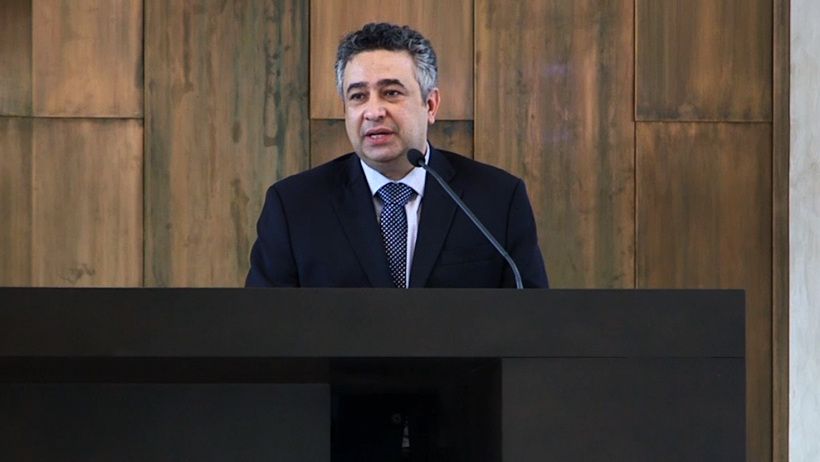
To shed light on the current situation and Israel’s inspiring role in responding, JUF’s Jewish Community Relations Council, the Syrian Community Network, and The Syrian American Medical Society sponsored a panel discussion titled, “Humanitarian Crisis in Syria: Realities and Responses,” in late September at Chicago’s Fourth Presbyterian Church. (Watch a video of the full discussion below).
“With ceasefires continually failing, we continue to see targeted attacks on civilians and hospitals, which constitute war crimes under international law,” said Steven Dishler, JUF’s Assistant Vice President of International & Public Affairs. “This is why we are gathered here today as Jews, Christians, and Muslims to show that as communities of faith, we cannot be silent to the suffering of the Syrian people.”
Dr. Georgette Bennett, founder and president of the Tanenbaum Center for Interreligious Understanding and the Multifaith Alliance for Syrian Refugees, opened by stating that as the child of Holocaust survivors, she feels she owes a “great debt for my life. This is one of the ways that I pay it.”
She reported that among the nearly 5 million refugees, Bennett estimates that hundreds of thousands if not millions of others are not registered and therefore have no access to services. 80 percent of these unregistered refugees are women and children who live outside of the camps and who are not permitted to work and have to survive below the radar.
Just as vulnerable are the millions of asylum seekers crossing borders at grave risk, often in the hands of criminal smugglers. Compounding this are the refugees who do finally make it to the other side, only to wallow indefinitely inside camps.
“Education is one of the great losses of this war,” said Bennett who estimates that 200,000 Syrian children in Lebanon alone have not gone to school for the past five years.
Shadi Martini, Senior Syria Advisor to the Multifaith Alliance for Syrian Refugees, shared his story from businessman to activist and then refugee. As a hospital executive in Aleppo, he watched events unfolding elsewhere in the Middle East from a distance, until 2011, when the war came to his country and his family. Eventually, Martini began to secretly help victims of the bombings. He soon found out something surprising: one of the major supporters of humanitarian aid came from Israel. “That was a shock for us,” Martini said.
Speaking before members of Congress earlier this year he relayed how this encounter with Israelis changed his thinking. “You know, there’s no love lost between Syrians and Israelis. I can tell you that. But all of a sudden, we looked at each other and I said, ‘why are you doing this?’ And the simple [answer] was, ‘because you need our help.’ Somehow we managed to bypass all our political differences, all our anger, and work together with other groups, through faith lines, and it just didn’t matter.”
“It was a real eye opener for me and my friends,” he said.
“At that moment I understood not to look at people because of faith or nationality but to look at them as human beings who come to aid other human beings who are suffering and needed their help. This is what brought me to the interfaith world.
If I can work with my [former] ‘biggest enemy’ to save lives, I think anyone anywhere in the world can work together,” Martini continued.
Dr. Zaher Sahloul, founder of the American Relief Coalition for Syria and past president of the Syrian American Medical Society, spoke about the dire conditions medical personnel are working in, and urged Americans to implore President Obama and Congress to protect the citizens of Syria with a no-fly zone.
Lina Sergei Attar, co-founder and CEO of Karam Foundation, spoke about the work her foundation is doing to help Syrian refugee children. “When are we as collective humanity going to decide to finally disrupt fear and hate?” she said. “It is unacceptable for us to watch people starving, being drowned, dying. It is the failure of the world, the failure of humanitarian models, the failure of our promise of ‘never again.’ We need to end the conflict.”
Closing the program, David T. Brown, JCRC Chairman, spoke about JUF’s global humanitarian efforts: “Through the generosity of Chicago’s Jewish community, the Jewish United Fund not only provides human services to 300,000 Chicagoans of all faiths, but also lends humanitarian assistance to millions of people in Israel and 70 countries around the world, rushing aid to communities in crisis across the globe.”
Abigail Pickus is a Chicago-based writer and editor.
JCRC staff contributed to this article.
Other stories
-
Chicago to Israel to Kenya
A family’s story of living Jewishly on three continents Michelle Cohen World May 28, 2021 Avital, Tzofia, and Netanel Kaszovitz outside their home in Nairobi on Yom HaAtzmaut. When Avital Kaszovitz prepared to be a Modern Orthodox shlicha (emissary) to the Jewish community in Ke
Read more -
New exhibit spotlights the experience of ‘Shanghai Jews’
Explore a new Illinois Holocaust Museum and Education Center exhibit
Read more -
Europe’s brave new teachers of the Holocaust
Teaching the Holocaust in the modern era has its difficulties and rewards.
Read more
David T. Brown, chairman, and Emily Sweet, executive director of the Jewish Community Relations Council of the Jewish United Fund of Metropolitan Chicago, and Michael H. Zaransky, chairman, and Steven B. Nasatir, president, of the Jewish United Fund/Jewish Federation of Metropolitan Chicago, have issued the following statement in response to the passage by UNESCO of a draft resolutions purging Jewish historical connection to the Temple Mount in Jerusalem.
The Executive Committee of the United Nations Educational, Scientific, and Cultural Organization (UNESCO) this week issued another in a series of repugnant resolution, which rewrites 3,000 years of the history of the Jewish people and of Western civilization.
By denying the indisputable and inseparable connection between Judaism and the Temple Mount, including the Western Wall, as well as other ancient Jewish holy sites, the resolution is an outrageous ploy to rewrite history for political ends. Indeed, this is a double erasure, for it is only through the Temple of Judaism and the Jewish people that Jesus and the Apostles come to the stage of history in Jerusalem. To deny the Jewish connection to the Temple Mount is to deny critical events in the foundation of Christianity.
Spearheaded by the Boycott, Divestment and Sanctions movement, the resolution is an affront not only to Jews, but also to Christians and Muslims who value the sacred place of historical reality in maintaining civilization. In its twisted intent, the resolution seeks to do in spirit what groups such as the Taliban and ISIS do with dynamite when they routinely and systematically destroy the holy sites of other faiths.
The resolution, which condemns Israeli actions on the Temple Mount, in East Jerusalem, the West Bank and Gaza while ignoring violence and attacks committed by Palestinians against Israeli citizens, only serves to escalate conflict.
We applaud the six countries that voted against the resolution (United States, the United Kingdom, Lithuania, The Netherlands, Estonia, and Germany). And we call on UNESCO Director-General Irina Bokova to have this resolution revoked, as a step toward restoring trust in this world body.
UNESCO’s gross distortion and rewriting of history must be confronted at every level. We call on donor nations to withhold funding from the organization unless and until it recommits to its purpose, which is to combat ignorance, prejudice, suspicion, inequality and mistrust between peoples, and to advance the dignity, equality, mutual respect, and intellectual and moral solidarity of mankind.
We urge all people of conscience to contact their elected representatives and appropriate public officials to seek immediate reversal of UNESCO’s action, and to call upon them to end funding of UNESCO should its hateful and destructive distortion of reality continue.
Other stories
-
Chicago to Israel to Kenya
A family’s story of living Jewishly on three continents Michelle Cohen World May 28, 2021 Avital, Tzofia, and Netanel Kaszovitz outside their home in Nairobi on Yom HaAtzmaut. When Avital Kaszovitz prepared to be a Modern Orthodox shlicha (emissary) to the Jewish community in Ke
Read more -
New exhibit spotlights the experience of ‘Shanghai Jews’
Explore a new Illinois Holocaust Museum and Education Center exhibit
Read more -
Europe’s brave new teachers of the Holocaust
Teaching the Holocaust in the modern era has its difficulties and rewards.
Read more
Illinois Rep. Peter Roskam and co-chairs of the Bipartisan Taskforce for Combating Anti-Semitism introduced legislation last week aimed at highlighting the growing problem of anti-Semitism in Europe.
The Combating European Anti-Semitism Act of 2016 ( H.R. 6208 ) calls for continued and enhanced reporting on anti-Semitic incidents in Europe, the safety and security of European Jewish communities, and the efforts of the U.S. to partner with European entities to combat anti-Semitism.
The other taskforce co-chairs behind the bill are Reps. Nita Lowey, Eliot Engel and Steve Israel of New York; Chris Smith of New Jersey; Kay Granger of Texas; and Ted Deutch and Ileana Ros-Lehtinen of Florida.
The legislation builds on a resolution regarding the safety and security of Jewish communities in Europe ( H.Res.354 ) that overwhelmingly passed the House 418-0 last November.
Other stories
-
Chicago to Israel to Kenya
A family’s story of living Jewishly on three continents Michelle Cohen World May 28, 2021 Avital, Tzofia, and Netanel Kaszovitz outside their home in Nairobi on Yom HaAtzmaut. When Avital Kaszovitz prepared to be a Modern Orthodox shlicha (emissary) to the Jewish community in Ke
Read more -
New exhibit spotlights the experience of ‘Shanghai Jews’
Explore a new Illinois Holocaust Museum and Education Center exhibit
Read more -
Europe’s brave new teachers of the Holocaust
Teaching the Holocaust in the modern era has its difficulties and rewards.
Read more
Kristallnacht. The Night of Broken Glass. The night the Holocaust began.
On Nov. 9, 1938, a massive pogrom erupted throughout Nazi Germany, Austria and Sudetenland. As police and officials looked on, more than 1,000 synagogues were burned; 7,000 Jewish businesses were damaged or destroyed; homes, hospitals and schools were ransacked; 30,000 Jews were arrested and sent to concentration camps; and dozens – more likely, hundreds – were killed.
On the 78th anniversary of that night of terror, a community commemoration will be held at 7 p.m. Wednesday, Nov. 9, at Beth Hillel Congregation B’nai Emunah, 3220 Big Tree Lane, Wilmette.
The program will feature Dr. Robert Watson, author of “The Nazi Titanic;” Clifton Daniel, grandson of President Harry S Truman; Regine Schlesinger of WBBM Radio; JUF President Steven B. Nasatir; and Rabbi Capers C. Funnye, Beth Shalom B’nai Zaken Ethiopian Congregation and Chief Rabbi, International Hebrew Israelites; as well as musical selections by renowned Cantors Benjamin Warschawski and Pavel Roytman, and Cantorial Soloist Laurie Akers.
There is no charge for tickets, which are available by calling 312-725-8028. The program also will be webcast live at http://RentcomWebcast.com/Kristallnacht .
Also to mark the anniversary, WTTW-Channel 11 will broadcast highlights of last year’s commemoration event, which was held at the North Shore Center for the Performing Arts in Skokie. The program will air at 1 p.m. Sunday, Nov. 6.
Other stories
-
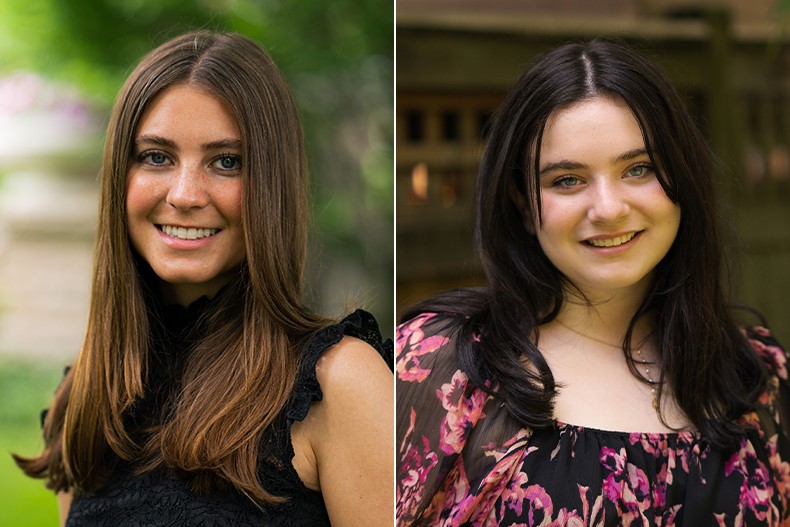
Two local teens win national recognition
Recipients of the annual Diller Teen Tikkun Olam Awards
Read more -

Celebrating six young award winners cultivating the community
Introducing young adult award winners
Read more -

As Hurricane Matthew cuts a path of destruction across the Caribbean and the Atlantic Coast of the United States, the Jewish Federation of Metropolitan Chicago has opened a fund to rush humanitarian aid to the survivors.
As always, the Jewish Federation will absorb all administrative costs, so that 100 percent of funds collected will go to meeting needs on the ground.
In the United States, we are working with the Red Cross, Jewish Federations of North America, NECHAMA: Jewish Response to Disaster, and local Jewish communities in the storm’s path to gauge the scope of the damage as it unfolds, and to quickly address specific needs of the Jewish and general communities.
Our overseas partner, the American Jewish Joint Distribution Committee, the “911” of the Jewish world, is working closely with overseas authorities to ensure survivors’ most urgent needs are met.
We’re proud of our Jewish community’s compassion, and honored to serve as the conduit for your generosity.

Other stories
-
Chicago to Israel to Kenya
A family’s story of living Jewishly on three continents Michelle Cohen World May 28, 2021 Avital, Tzofia, and Netanel Kaszovitz outside their home in Nairobi on Yom HaAtzmaut. When Avital Kaszovitz prepared to be a Modern Orthodox shlicha (emissary) to the Jewish community in Ke
Read more -
New exhibit spotlights the experience of ‘Shanghai Jews’
Explore a new Illinois Holocaust Museum and Education Center exhibit
Read more -
Europe’s brave new teachers of the Holocaust
Teaching the Holocaust in the modern era has its difficulties and rewards.
Read more
A new beginning — and a new name — for Chicago’s Center for Jewish Genetics
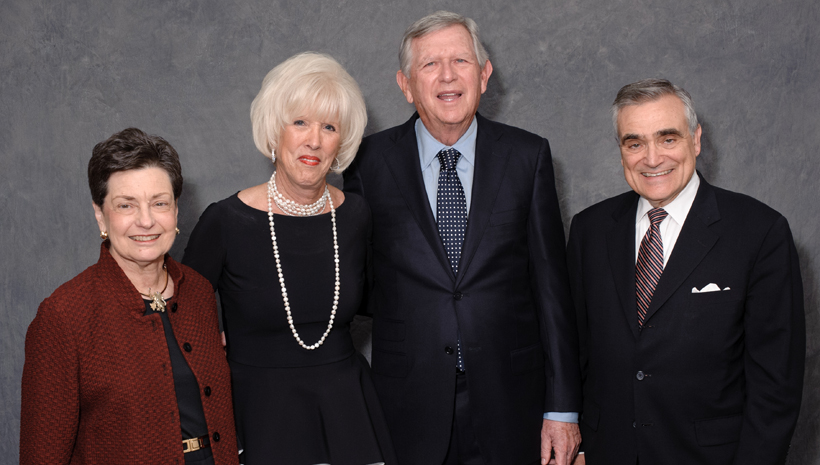
Just days after members of Chicago’s Jewish community celebrated Rosh Hashanah, the beginning of a new year on the Jewish calendar, the Center for Jewish Genetics marked a new beginning — and a new name: The Norton & Elaine Sarnoff Center for Jewish Genetics.
A generous endowment gift to JUF’s Centennial Campaign from Norton and Elaine Sarnoff will provide the Center the resources to further its dedication to educating and empowering the Chicago Jewish community on all matters related to Jewish genetics and hereditary cancers. This includes its own subsidized genetic counseling and screening program, helping Jewish families plan for a healthy future.
“This gift is so important to the Center,” Rabbi Aaron Melman, a member of the Center’s board of directors said at a dedication ceremony Oct. 6. “It provides a stable and sustainable source of funding for our work, and also presents opportunities for us to expand through increased staffing, stronger marketing and more community education.”
Norton and Elaine Sarnoff, who have a long history of contributing to Chicago’s Jewish community and JUF’s Annual Campaign, took a special interest in the Center.
“For Norton and Elaine, it has always been about family,” said JUF President Steven B. Nasatir. “We all worry about our children. And because of programs like this one, and because of Norton and Elaine’s generosity, our children and grandchildren will have one less thing to worry about as they start their own families.”
Genetic testing and screening programs have nearly eliminated Tay-Sachs disease in the Jewish community. But at least 18 other serious disorders are linked to Ashkenazi Jews. Sephardic Jews may also be at risk for disorders common to their country of origin.
“I believe this program is at the forefront of medicine,” Norton Sarnoff said, “one that is filled with hope and new beginning.”
The Norton & Elaine Sarnoff Center for Jewish Genetics is a supporting foundation of the Jewish United Fund of Metropolitan Chicago, and is supported in part by the Michael Reese Health Trust.
For more information on the Sarnoff Center for Jewish Genetics, visit www.JUF.org/CJG.
Other stories
-
Two local teens win national recognition
Recipients of the annual Diller Teen Tikkun Olam Awards
Read more -
Celebrating six young award winners cultivating the community
Introducing young adult award winners
Read more -
More than 70 leaders and delegates from Federation agencies engaged with a wide spectrum of topics at the joint meeting of JUF’s Jewish Community Relations Council and Government Affairs Committee last week. From analyzing the first presidential debate to welcoming the newest Israeli diplomat in Chicago to honoring the memory of those slain at Babi Yar 75 years ago, the meeting touched on issues that affect Jews in Chicago, the U.S. and globally.
Led by JCRC Chair David T. Brown and Government Affairs Chair David Golder, the community welcomed Israeli Consul General Aviv Ezra.
“Maintaining a close working relationship with Israel’s representatives in the Midwest is a very important face of the work of our JCRC,” Brown said. “Supporting a strong, vibrant Israel is one of the cornerstones of this community’s efforts locally and globally.”
Ezra, whose territory covers nine Midwest states, previously served as Counselor for Congressional Affairs at the Embassy of Israel in Washington, D.C. and as a policy advisor to the Director General of the Ministry of Affairs in Jerusalem. He also has represented Israel in Egypt and in Atlanta, Georgia.
“I am proud to represent Israel in Chicago,” he said. “I know how important an involved community is to our work in promoting Israel. We [at the Israeli Consulate] do not take for granted the special relationship with the Chicago Jewish community and the neshama [soul] it has.”
Ezra hopes to not only promote Israel in the Midwest, but also to promote Midwest in Israel because Chicago and other cities in the Midwest remain unknown to many Israelis, he said.
Even as the community celebrated the vibrancy of the global Jewish community and the strong connection with the modern State of Israel, attendees took a moment to remember the victims of the massacre of Jews at the Babi Yar ravine in Kiev, Ukraine, 75 years ago.
Michael Bauer of the Illinois Holocaust and Genocide Commission, who is a member of the Government Affairs Committee, recalled the events of Sept. 29-30, 1941, and read a moving poem by the Russian writer Yevgeni Yevtushenko. Bauer informed attendees that members of Chicago’s Jewish community, including JUF Judaic Scholar Rabbi Yehiel Poupko, would be traveling to Kiev to mark the anniversary at the memorial there .
From honoring the past the meeting progressed to looking toward the future. Held on National Voter Registration Day and exactly six weeks prior to Election Day, the meeting’s main presentation focused on the race for the White House. Chicago Sun-Times Washington, D.C., Bureau Chief Lynn Sweet detailed some of the top issues in the upcoming presidential election.
“We have to remember that in politics, many things can be true at the same time,” she said. “A debate win may not change the trajectory of the election.”
Sweet said that supporters of either candidate may believe that their choice had the upper hand at the debate. She also fielded a variety of questions from attendees, including on voter turnout, the potential effects of the election of either Clinton or Trump on Illinois as well as the outlook for some of the most contested elections in the state, particularly for the Senate seat between Sen. Mark Kirk and Rep. Tammy Duckworth as well as for the 10th District House seat between Rep. Bob Dold and Brad Schneider.
“JCRC and Government Affairs are non-partisan, but we cannot deny that the Jewish community’s strong sense of civic engagement and keen interest in politics plays out every national election cycle,” Golder said. “Surveys indicate that more than 90 percent of Jews who are registered to vote make it to the polls, compared to 74 percent of all Americans. It’s highly likely that history is going to repeat itself in terms of our community showing up at the polls during this election cycle.”
Other stories
-
Two local teens win national recognition
Recipients of the annual Diller Teen Tikkun Olam Awards
Read more -
Celebrating six young award winners cultivating the community
Introducing young adult award winners
Read more -
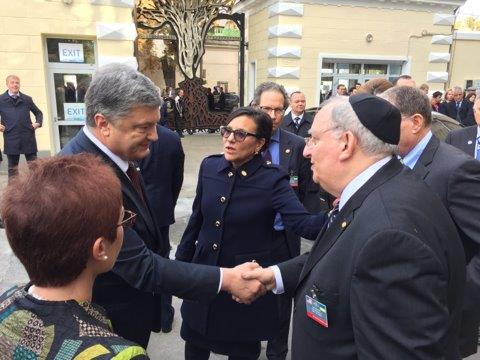
(Left to right) Ukrainian President Petro Poroshenko greets Chicagoans U.S. Secretary of Commerce Penny Pritzker and JUF Rabbinic Scholar Rabbi Yehiel Poupko the day of the Babi Yar commemoration.
On June 22, 1941, the Germans invaded the Soviet Union. Two days later, the mobile killing units, the Einsatzgruppen, followed the Wehrmacht in a line running from the Baltic sea in the north to the Black Sea in the south. Their purpose was to murder the Jewish people of Estonia, Latvia, Lithuania, Belarus, Ukraine, and Western Russia. They murdered 1.7 million Jews in the summer and early fall of 1941.
In this phase of the destruction of European Jewry, the murderers came to the murdered, and murdered them where they lived, in the sight of — and with the collaboration of — their friends and neighbors. The largest such urban mass-murder site was at the ravine called Babi Yar, in Kyiv (formerly spelled “Kiev”).
On September 19, 1941, Kyiv was captured by the German Army. The Jewish population was 160,000. Of these, 100,000 managed to flee before the Germans took the city. As they fled, the NKVD — the Soviet Secret Police — sabotaged a large numbers of buildings in the center of the city; many Germans were killed in the explosions.
On September 26, the Germans decided to retaliate by killing all the Jews of Kyiv. On September 28, notices were posted for Jews to appear the following morning at the corner of Melnick and Dekhtyraev streets for resettlement to new locations. As in so many other cases throughout Europe, many Jews thought this was good news — they would be sent away from the conflict area.
The next day, September 29, 1941, masses of Jews arrived at the appointed corner. They were directed to the existing Jewish cemetery, part of which was a natural ravine named Babi Yar. Jews were forced to hand over their possessions, to take off their clothing, and to move to the edge of the ravine in groups of 10, where they were shot, and fell into the ravine.
According to the reports of the Einsatzgruppen, 33,771 were murdered that day and the following day — Erev Yom Kippur. Thus, Kyiv became home to the largest urban mass murder site in all of Europe.
This led to the infamous conference at Gross-am-Wansee, on January 20, 1942. Babi Yar was deemed too messy; too much evidence was left behind, soldiers could not be expected to shoot large numbers of civilians without negative consequence for their morale. This led to the decision to implement the “Final Solution,” by bringing the Jews to be murdered in German death camps hidden away in Polish forests.
On September 29, 2016, Ukraine commemorated the 75th yahrtzeit, or anniversary, of the massacre at Babi Yar. Present at the commemoration were: Ukranian President Petro Poroshenko, German President Joachim Gauck and president of the European Council of the EU, Donald Tusk.
President Obama sent a presidential delegation to represent him and the U.S. led by Secretary of Commerce and Chicagoan The Honorable Penny Pritzker, and included the U.S. Ambassador to Ukraine, a member of the National Security Council, the chair of the U.S. Holocaust Memorial Council, and JUF Rabbinic Scholar Rabbi Yehiel Poupko.
Secretary Pritzker’s great-grandfather, Nicholas Pritzker, fled Kyiv at 10 years old along with his family in 1882, in the wake of a wave of Russian pogroms. Four generations later, in what is surely an “only in America” story, his great-granddaughter, representing the President of the United States, stood at Babi Yar and memorialized the 33,771 Jews murdered there 75 years ago. She gave voice to the silent. To murder is to erase, to allow the murdered to slip into silence is to erase them a second time.
Secretary Pritzker invoked the immortal summons of the Torah, when God said to Cain, “The voice of your brother’s blood cries out to Me from the earth.” Noting that this massacre took place on Erev Yom Kippur, a day devoted to the Jewish capacity for renewal, she inspired all in attendance to ever seek that renewal that is an affirmation of human dignity.
( Read Pritzker’s full remarks from the commemoration. )
Other stories
-
Chicago to Israel to Kenya
A family’s story of living Jewishly on three continents Michelle Cohen World May 28, 2021 Avital, Tzofia, and Netanel Kaszovitz outside their home in Nairobi on Yom HaAtzmaut. When Avital Kaszovitz prepared to be a Modern Orthodox shlicha (emissary) to the Jewish community in Ke
Read more -
New exhibit spotlights the experience of ‘Shanghai Jews’
Explore a new Illinois Holocaust Museum and Education Center exhibit
Read more -
Europe’s brave new teachers of the Holocaust
Teaching the Holocaust in the modern era has its difficulties and rewards.
Read more
Pro-Israel college students from across the Midwest prepare for the year ahead
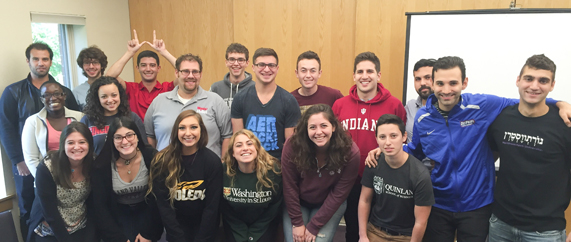
JUF’s Israel Education Center held its Fall Israel Intern Training this past weekend for its largest student cohort to date — IEC’s services have expanded across the Midwest thanks to a partnership with Hillel International and the Israel Action Network.
Sixteen student interns were joined by their on-campus supervisors from universities including the University of Wisconsin, Indiana University, Washington University in St. Louis, University of Minnesota, University of Toledo, University of Cincinnati, Grand Valley State University, University of Illinois at Urbana-Champaign, University of Illinois-Chicago, Northwestern University, Bradley University, University of Chicago, DePaul University and Loyola University.
Students practiced networking and relationship-building, strengthened their knowledge base of Israeli history, examined the challenges and realities of multiple narratives, discussed the importance of dialogue across ethnic lines and reviewed safety procedures for anti-Israel activity.
The training also addressed student concerns regarding Israel activism including marginalization, anti-Semitic backlash, protests of Israel-related events, and campus apathy. Students and their supervisors shared insights into their unique campus dynamics and exchanged tips and strategies for combatting the Boycott, Divestment and Sanctions movement and the delegitimization of Israel while promoting positive Israel engagement.
“I applied to this internship not only to become more involved in Israel education, but also to do some learning myself,” said Noah Mikell, IEC’s student intern from the University of Minnesota. “The intern training experience was the perfect combination of learning from experienced professionals, sharing ideas with other students, and of course, making lasting connections with similarly minded students from all over the country.”
Other stories
-
Two local teens win national recognition
Recipients of the annual Diller Teen Tikkun Olam Awards
Read more -
Celebrating six young award winners cultivating the community
Introducing young adult award winners
Read more -
VIDEO: Albanian President Bujar Nishani speaks at JUF on September 27, 2016.
Chicago Jews and Albanian-Americans gathered to greet Albanian President Bujar Nishani at JUF on Tuesday, Sept. 27.
The president emphasized Albanians’ affinity for the principles of respect, coexistence and shared common values despite a nearly half-century dictatorial regime that sought to vilify the United States, Israel and the Western world. Ultimately, the regime was toppled in 1991.
“There’s a special relationship between Albanians and the Jewish community,” Nishani said. “Our communities can work together to protect, preserve and promote our common values.”
Albania stands out in history as the only European country whose Jewish population was larger at the end of World War II than at its beginning. The majority Muslim population of Albania protected the native Jewish population of 200 and the nearly 2,000 Jews from elsewhere who saw Albania as a safe haven.
Located to the south of Serbia and Montenegro and to the east of Macedonia and Greece, Albania remains a “mystery to most people, even speaking about the Balkans as a whole,” Nishani said. During his remarks, he highlighted Albania’s tourism industry, close partnership with other NATO members, and economic opportunities in the energy and water sectors.
The meeting was a joint effort between JUF’s Jewish Community Relations Council and the America-Israel Chamber of Commerce. JUF Assistant Vice President for International Affairs Steven Dishler gave the president a copy of the Centennial Book, which commemorates the first 100 years since the founding of the Jewish Federation of Metropolitan Chicago; Michael Schmidt from the Israel Chamber of Commerce presented him with a pair of cufflinks featuring an eagle and a Star of David.
In return, Nishani gifted the community a book celebrating Albania’s ancient history through photos of archaeological discoveries as well as a pair of cufflinks featuring the national symbol of Albania, a two-headed eagle.
Other stories
-
Chicago to Israel to Kenya
A family’s story of living Jewishly on three continents Michelle Cohen World May 28, 2021 Avital, Tzofia, and Netanel Kaszovitz outside their home in Nairobi on Yom HaAtzmaut. When Avital Kaszovitz prepared to be a Modern Orthodox shlicha (emissary) to the Jewish community in Ke
Read more -
New exhibit spotlights the experience of ‘Shanghai Jews’
Explore a new Illinois Holocaust Museum and Education Center exhibit
Read more -
Europe’s brave new teachers of the Holocaust
Teaching the Holocaust in the modern era has its difficulties and rewards.
Read more