
A teenager in miniskirts when the Iranian Revolution broke out in 1979, Jacqueline Saper remembers the chaos and the overwhelming surge of anti-Semitism.
“Jews felt threatened. Anyone who could were desperate to leave,” said Saper, now a faculty member at Oakton Community College. She spoke at a commemoration Dec. 14 to honor the 850,000 Jewish refugees displaced from Arab countries and Iran in the 20th century.
“Judaism was legal, Zionism was a crime,” she said. Eight years later, she was finally able to leave Iran with her husband and two small children. Only able to bring two suitcases, the family were forced to leave everything else behind.
Hundreds of Sephardic and Mizrachi Jews-Jews descended from Middle Eastern Jewish communities-attended the commemoration at Anshe Emet Synagogue in Chicago, which was sponsored by the Israeli Consulate to the Midwest.
“We’re here to make amends for two historical mistakes,” said Roey Gilad, Israeli Consul General to the Midwest. It took Israel more than 60 years to acknowledge the difficult plight of Mizrachi Jews when they first came to Israel-a source of frustration to the community.
And the second mistake, Gilad said, was that their flight from Arab countries and Iran has never been acknowledged by the world.
In 1948, nearly a million Jews lived in Arab countries and Iran, which is ethnically Persian, not Arab. After the State of Israel was declared in 1948, a wave of anti-Zionism crested through Arab states, leading to the oppression of the Jews residents and the destruction of multi-thousand year Jewish communities. Although it differs from country to country, Jews were massacred, arrested, and stigmatized. Their possessions were expropriated and stolen. Most fled or were expelled.
They were never compensated for the property that was stolen from them or what they were forced to leave behind, Gilad said. There has never been any sort of apology for the violent riots and murders. In the United Nations, there have been scores of resolutions about the Palestinian refugees who fled Israel, but not a single resolution regarding Jews who fled Arab and Iranian lands.
They too were refugees who lost everything, Gilad said, although the world does not recognize it.
In June, Israel’s Knesset designated Nov. 30 as the national day of commemoration for the Jewish refugees from Arab countries and Iran. In the resolution, the Knesset, Israel’s parliament, specifically said that their history must be taught in Israeli schools.
Today, Arab countries and Iran claim that the Jews left voluntarily, that they were not refugees, said Isaac Cohen, whose family fled Egypt.
“An injustice was done,” said a retired professor at Northwestern University. “But this day, [Israel’s] light is shining brighter than ever.”
In 1929, Cohen’s grandfather, the chief Sephardic rabbi of Hebron, was assassinated in the Hebron massacre. The family fled to Egypt, where they were expelled in the late 1950s. The Egyptian authorities knew they had family in Israel, which was enough for his father to be blacklisted and arrested as a traitor. Today, there are only a handful of Jews in Egypt. The community, which dates back more than 1,000 years, is practically extinct, he said. The best way to commemorate its rich history-as well as the fate-is to teach it to young people, he said.
Cohen led the crowd in reciting the Shehechiyanu (Hebrew prayer to commemorate a special occasion) for letting them see this day.
During the program, Guy Sagy, a student at the Skokie Yeshiva and the descendent of a long line of Sephardic rabbis, sang Shabechi Yerushalayim, a Sephardic song based on Psalm 147. Israelis Hadar Noiberg and Amos Hoffman accompanied him. The program also included a screening of the film documentary “The Forgotten Refugees,” a message from Chicago Mayor Rahm Emanuel, and an address by Rabbi Yona Reiss, the head of the Beth Din (rabbinical court) of the Chicago Rabbinical Council.
Lisa Pevtzow is a freelance writer living in the Chicago area.
Other stories
-
Chicago to Israel to Kenya
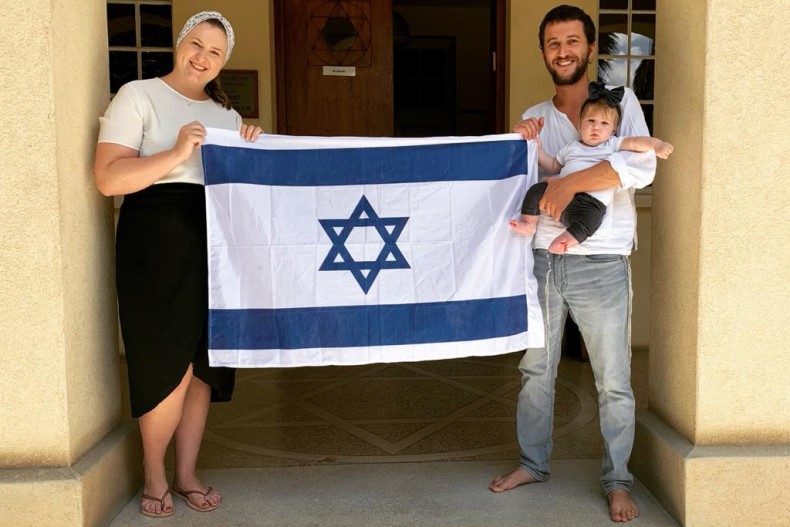
A family’s story of living Jewishly on three continents Michelle Cohen World May 28, 2021 Avital, Tzofia, and Netanel Kaszovitz outside their home in Nairobi on Yom HaAtzmaut. When Avital Kaszovitz prepared to be a Modern Orthodox shlicha (emissary) to the Jewish community in Ke
Read more -
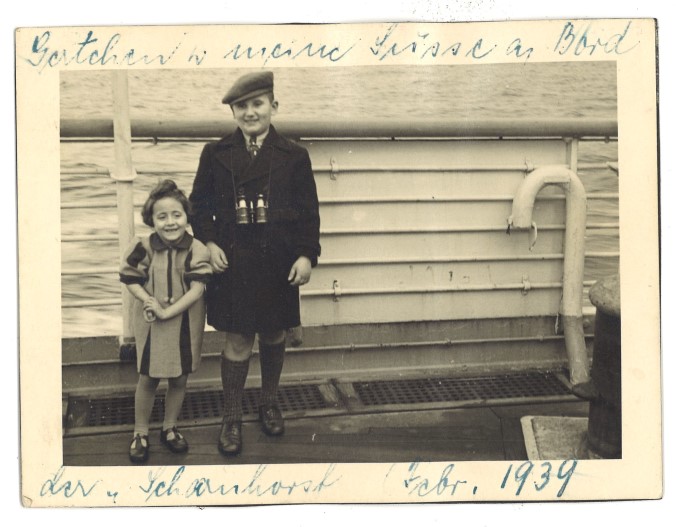
New exhibit spotlights the experience of ‘Shanghai Jews’
Explore a new Illinois Holocaust Museum and Education Center exhibit
Read more -

Europe’s brave new teachers of the Holocaust
Teaching the Holocaust in the modern era has its difficulties and rewards.
Read more