Bulgaria: A bright spot during World War II
ROBERT NAGLER MILLER
During World War II, millions of Jews in Europe scrambled to find refuge from Hitler and his murderous Fascist forces. For most, it was too late. The tragic story of the Jews of Germany, Poland, Hungary, Romania, and other countries overrun by the Nazis has been told by historians, novelists, documentarians, and many survivors. Likewise, the complicity of many European countries in conspiring with the Axis powers to eradicate their Jewish compatriots has been well documented.
But outside of Denmark, whose government and populace showed tremendous moral courage toward their Jewish friends and neighbors–going so far as to transport the vast majority of the close to 8,000 Danish Jews to safe harbor in Sweden on the brink of German invasion–little has been written about other European countries’ contributions to saving their Jewish citizens.
Little–but not nothing.
“Despite Bulgaria’s alignment during World War II with Nazi Germany and the adoption under its influence of anti-Jewish legislation, the Bulgarian society always preserved a deeply rooted tolerance, and antisemitism never met with general sympathy,” said Svetoslav Stankov, Consul General of the Republic of Bulgaria in Chicago. Throughout World War II, the German embassy in Sofia remained very critical about the loose application of the antisemitic legislation. As the German ambassador in Sofia reported to his superiors, ‘the Bulgarians do not understand the concept of antisemitism.'”
Stankov’s assertions are largely borne out in Michael Bar-Zohar’s Beyond Hitler’s Grasp: The Heroic Rescue of Bulgaria’s Jews, one of several critical works about Bulgaria’s successful efforts to save its approximately 50,000 Bulgarian citizens, who before the war comprised just under 1 percent of its population.
As the Bulgarian-born Bar-Zohar, an Israeli journalist and former Knesset member, points out in his book, the Jews of Bulgaria “flourished” for many centuries under Ottoman rule. When Bulgaria was liberated by the Turks in the late 1870s, “the rights of the Jews,” the vast majority of whom descended from those who had fled Spain following the Inquisition, “were guaranteed” in the Bulgarian Constitution.
Bar-Zohar argues that Jewish Bulgarians were comfortably incorporated into almost every facet of the public and private sphere. Bulgaria was devoid of systemic antisemitism, and the country’s clergy, liberal members of the government’s Parliament, and a rank-and-file citizenry deplored anti-Jewish laws that the country enacted after it affiliated itself with Hitler’s Axis powers. Their opposition, in part, led to the saving of Jewish lives.
But Bar-Zohar and Joseph Benatov, a Bulgarian-born University of Pennsylvania Jewish Studies Program professor, largely credit the rescue of Bulgarian Jews to Dimiter Peshev, a Bulgarian Parliament member who, with allies, prevailed upon the highest levels of government, including King Boris III, to reverse orders to deport the Jews. While popular myth places King Boris as the savior, Benatov, who runs Jewish heritage tours to Bulgaria, said, “Peshev is the moral hero and ethical giant. … [It was] his intervention that was the turning point.”
King Boris, said Benatov, remains “a controversial figure” who sanctioned anti-Jewish legislation, including undue taxation on Bulgarian Jews, the forced expulsion of Jews from their homes in Sofia, and the conscription of Jewish men into labor units. In addition, the 11,000 to 12,000 Jews living in Bulgarian-held territories in Thrace, a region of Greece, and in Macedonia were not spared. Most were rounded up and perished at Treblinka.
Yet it is also true, added Benatov, that “King Boris made a very clear decision not to deport Bulgarian Jews to death camps,” concurring with Bar-Zohar’s claim that the king was a master in the art of delaying tactics.
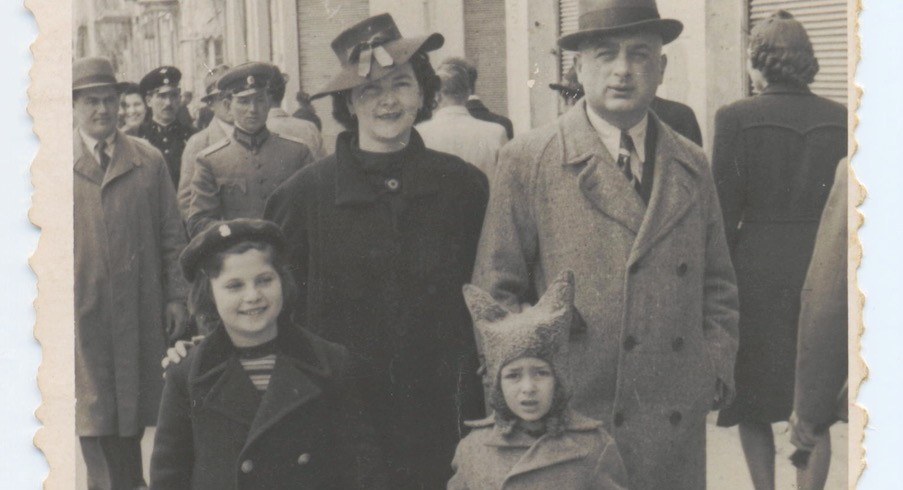
This combination of Bulgarian moral rectitude and political shrewdness is what saved 85-year-old Samuel Refetoff, a University of Chicago endocrinologist, and his family.
Refetoff grew up in Ruse, Bulgaria, a descendant of a long line of distinguished judges, lawyers, and military officers, mostly assimilated Jews. He had “a very happy childhood,” he said, even as turmoil spread through Europe.
Only the incursion of the Soviets into Bulgaria after the war propelled his family and most other Jewish Bulgarians to flee their homeland. Today, said Benatov, 4,000 to 5,000 Jews remain in Bulgaria.
In partnership with the Consul General of the Republic of Bulgaria in Chicago, the Illinois Holocaust Museum and Education Center will host Michael Bar-Zohar as he discusses his book Beyond Hitler’s Grasp: The Heroic Rescue of Bulgaria’s Jews. To learn more or to register, visit ilholocaustmuseum.org
Robert Nagler Miller is a journalist and editor who writes frequently about arts- and Jewish-related topics from his home in New York.