Remembering Max Westerman
MICHELLE COHEN
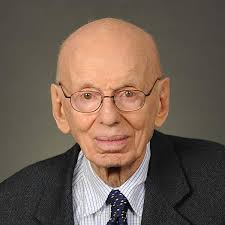
When Dr. Maxwell Phillip Westerman, M.D. died on Aug. 30–days before his 101st birthday–he had been a well-loved fixture of the medical community in Chicago for over 65 years.
Born in Pittsburgh in 1920, Westerman attended University of Louisville School of Medicine, interned at the University of Pittsburgh Medical Center, and completed his residency at Philadelphia General Hospital. He then served as a combat medical officer in the Air Force during World War II and the Korean War.
In 1959, he made a revolutionary contribution to the world of medicine by inventing the Westerman-Jensen Bone Marrow Biopsy Needle. This was the first needle that offered a non-surgical, less invasive method for obtaining bone marrow to study and diagnose and patients.
Westerman began his illustrious career at Mount Sinai in 1968, where he was hired as a Senior Attending Physician and later became the Chief of Hematology and Oncology. He also taught medicine at the University of Pittsburgh Medical School, Chicago Medical School, and Rush Medical College. He later lived in London for three years, where he worked with an international cohort to research sickle cell anemia-a medical passion he explored in over 100 published medical articles.
Westerman delved deeper into writing in 2019, when he published Medical Excellence for a Changing Community: How Chicago’s Sinai Health System Developed and Adapted , which examined the creation of a hospital as a Jewish care center and its development to serve the Black and Latinx communities in Chicago. The hospital’s accomplishments are told through over 100 interviews Westerman conducted.
Westerman was the beloved husband of the late Marcia and brother of Billie Kubrin and the late Robert Westerman. He is survived by many nieces, nephews, great-nieces, and great-nephews. Contributions may be made to Sinai Urban Health Institute, 1500 S. Fairfield Avenue, #1782, Chicago, IL 60608. Sinai Chicago is a partner with Jewish United Fund in serving our community.