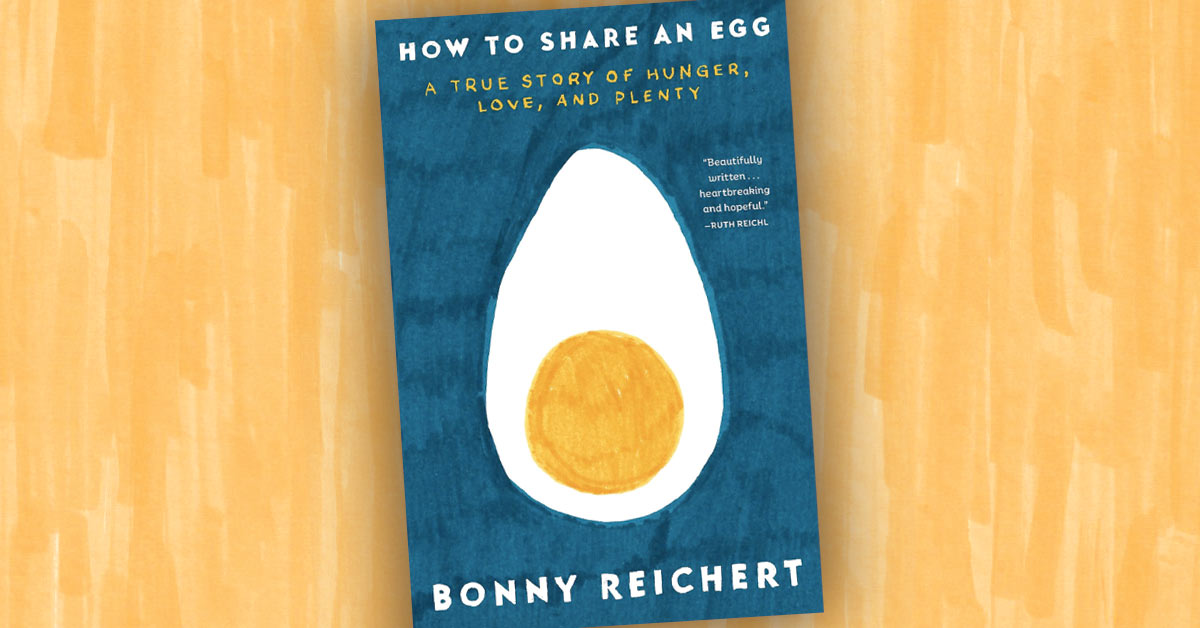
A memoir of sustenance and love
BETSY GOMBERG
Before she was a professionally trained chef and award-winning journalist, writer Bonny Reichert was the food-loving daughter of Saul Reichert, a successful restauranteur who embraced the big, busy, successful life he built for himself and his family in Alberta, Canada. This optimistic entrepreneur was also a Holocaust survivor who as a boy had faced hunger and horror.
Reichert’s multifaceted memoir, How to Share an Egg, is not what I expected. I assumed I’d find a daughter’s recounting of her father’s dark history. But instead, I found an incisive and heartfelt quest to uncover the ways that Reichert and her father, individually and together, faced their demons and pursued their dreams. Their intertwined story is sometimes joyful, sometimes fraught, but filled with love, matter-the-fact honesty, and unexpected culinary adventures.
At first no one was particularly interested in hearing the details of Saul Reichert’s experiences. For a long time, that seemed to work for him. He passionately wanted his children to live easy, happy lives, unburdened by his past. But as time went on, especially as his daughter grew into a skilled writer, a crack emerged in his thinking. He wanted Bonny to tell his story. At the same time, she found herself at odds with his expectations. On the heels of the collapse of her first marriage, she dug deep and determined she didn’t want the carefree life he craved for her; instead, she aspired to truly challenge herself. And she didn’t want anything to do with her father’s story of the Holocaust, which plagued and haunted her.
It’s food that changes Bonny’s trajectory, food that emboldens her to face her father’s past, and food that brings this story to life.
Along the way, we can almost taste the breakfast Bonny’s grandmother makes (freshly baked cinnamon rolls with pecans, flaky knishes filled with cheese), Bonny’s hesitant meals in her college apartment (creamy vichyssoise), her first success in chef school (salmon poached in leeks and white wine), and her family’s life-changing visit to Warsaw (a perfect bowl of borscht).
Betsy Gomberg reads (and sometimes writes about) Jewish books.
In this issue
-
-

-

Catching up with Judy Gold
The actor, writer, and comedian is known for her edgy wit and sharp timing
Read more