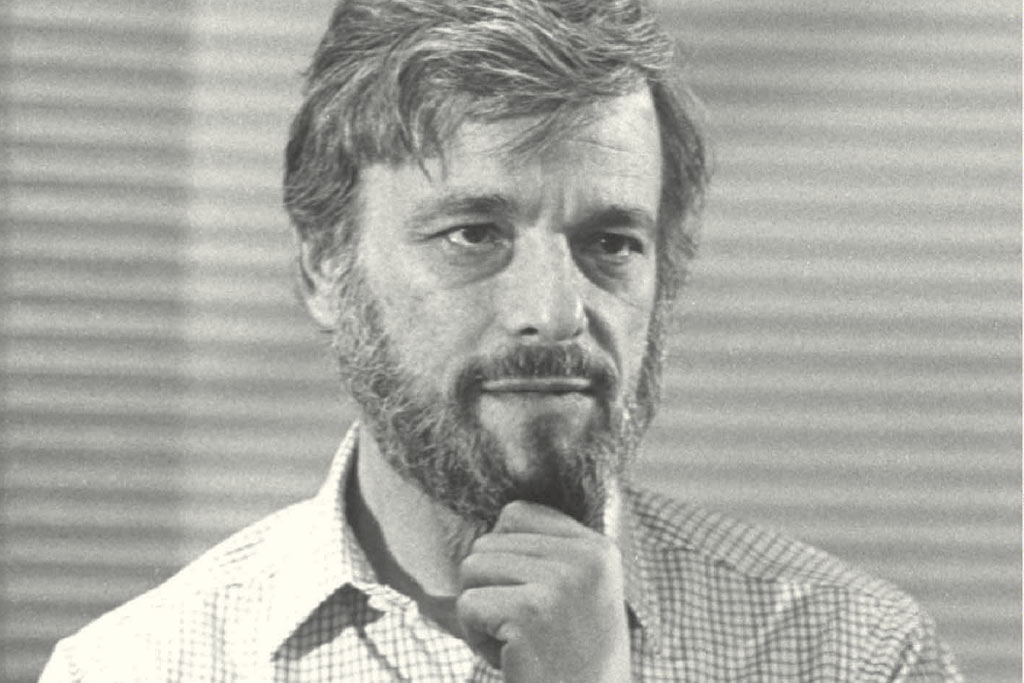
In the Oscar-nominated film Blue Moon, Broadway composer Oscar Hammerstein introduces songwriter Lorenz Hart to “Stevie,” his preteen neighbor, “a kind of walking encyclopedia of musical theater.” Hart asks the boy what he thinks of his own work. “I like it. It’s funny. Can be a little sloppy at times,” the precocious youth responded.
“Stevie” is Stephen Sondheim, who grew up to become the Tony, Grammy, and Pulitzer winning creative force behind some of Broadway’s most celebrated shows, including Follies, Company, Passion, A Little Night Music, Sweeney Todd, Sunday in the Park with George, and Into the Woods.
In his new biography, Stephen Sondheim: Art Isn’t Easy, author Daniel Okrent observes that there is no shortage of writing about Sondheim. The composer himself wrote a two-volume memoir-like collection of his lyrics, Finishing the Hat and Look, I Made a Hat.
What distinguishes Okrent’s book—part of Yale University’s Jewish Lives series—is his critical reading of Sondheim’s work through the lens of his often-fraught life and relationships, particularly with his mother. Their relationship, said Hammerstein’s son, Jimmy, was expressed in “sarcasm and innuendo” and was “something out of a play you didn’t want to see.” In one devastating anecdote, Sondheim’s mother, upon entering the hospital for the implantation of a pacemaker, wrote her son a letter that she insisted upon being hand-delivered to him. It read: “The only regret I have in life is giving you birth.”
Another story that grabbed Okrent with “particular force” concerned the creation of Sondheim’s Grand Guignol musical, Sweeney Todd. After listening to Sondheim sing her the first few songs, producer Hal Prince’s wife Judy—Sondheim’s acknowledged muse—dismissed Sondheim’s opinion that the bloody musical was an amusement. “It’s the story of your life,” she corrected him.
Sondheim’s parents divorced when he was 10, leaving “an emotional void at the center of his boyhood.” That void was filled in large part by Hammerstein, whom he met when he was 12.
The young Sondheim was “full of rage and pain and anger,” noted Hammerstein’s daughter, but her father “seemed able to bypass that, and get to some other place in him.”
Hamilton creator Lin-Manuel Miranda said that Sondheim and Hammerstein’s relationship was “the most significant in the history of our art form.” Sondheim himself said that if Hammerstein had been a geologist, he would have become a geologist.
Sondheim’s greatest works upended Broadway convention, and Okrent illuminates the autobiographical aspects of his legendary shows. Bobby, the unmarried lead character of Company, shared several traits with his creator: “the uncommitted man at the heart of his social circle, a man fearful of attachment and perpetually ambivalent.”
“Ambivalence is my favorite thing to write about,” the composer once said, “because it’s the way I feel, and I think the way most people feel.”
Okrent writes insightfully about Sondheim’s creative process as well as his personal demons, such as his alcoholism. “It would be easy to say Sondheim drank so much because of psychological demons, or his relationship with his mother, or with women, or with producers, or investors, or critics.”
He quotes Robert Hurwitz, who supervised 10 Sondheim cast albums: “His incredible gifts enabled him to use the pain in his life” in his work. He further noted that, “millions of people” endured similar pains, “but very few could write Sunday in the Park with George or Company.”
Sondheim died on Nov. 14, 2022. At the invitation-only memorial, just two Sondheim songs were played. The songs were “With So Little to be Sure of” from Anyone Can Whistle and “Someone in a Tree” from Pacific Overtures.
At a compact 230 pages—with more than 40 of notes and sources— Okrent has crafted a volume that is excellent, well, company for the best books about Sondheim.
Donald Liebenson is a Chicago writer who writes for VanityFair.com, The Washington Post, and other outlets.
In this issue
-
-
-
The least Jewish of Jewish holidays
Rosh Hashanah inspires the Jewish people to live in the balance
Read more