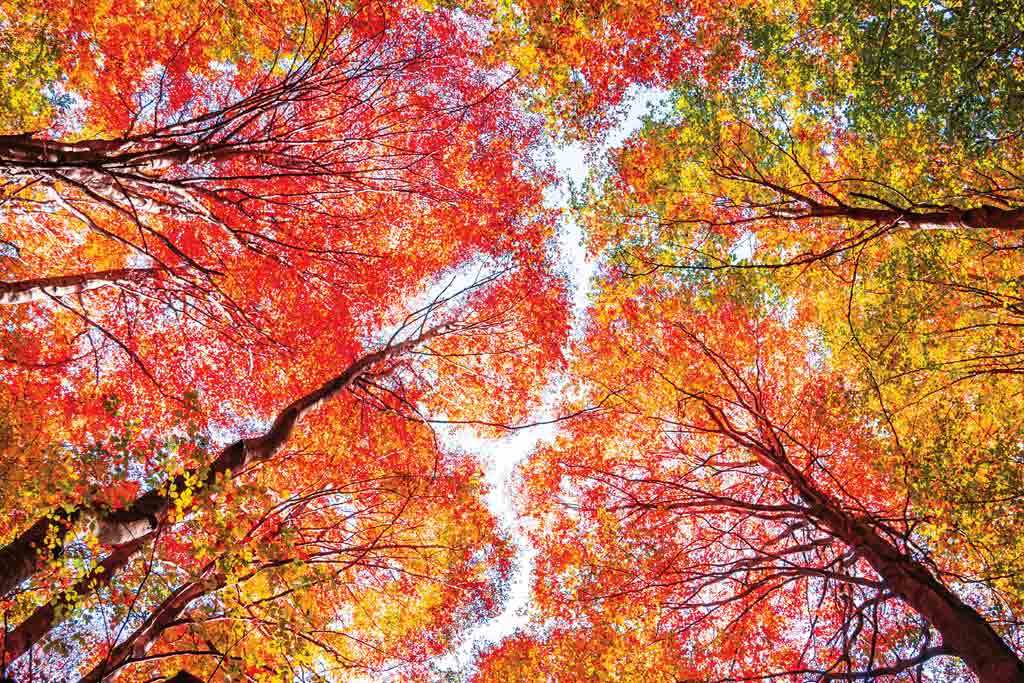
Our ancient harvest festival prompts us to gather with our loved ones to enjoy feasts under the changing leaves. Today, we see our seasons complicated by climate change creating unbearable heat waves and fomenting devastating natural disasters. Amidst widespread climate anxiety, many find it challenging to stay committed to our mission of maintaining a beautiful world for future generations.
Celebrating Sukkot provides an opportunity to engage with the strong Jewish tradition of environmentalism. In Chicago, organizations rooted in Jewish tradition make this work fun, and easy to share outside the Jewish community:
Dayenu
“The environment is truly one of the most intersectional, important places to be part of [social justice] work,” said Gabrielle Cooper, a Jews of Color Caucus Organizer at Dayenu, a movement of American Jews confronting climate change.
Dayenu defines itself as “a multi-generational Jewish movement that confronts the climate crisis with spiritual audacity and bold political action.” In addition to political organizing work, Dayenu facilitates in-person Dayenu Circles, where Jews meet regularly to discuss environmental issues. There are Dayenu Circles at Anshe Emet Synagogue in Lakeview (led by Cooper) and Beth Emet The Free Synagogue in Evanston. Dayenu also hosts virtual events, including one last year where participants built mini sukkahs out of recycled materials.
“I think we [as Jews] are so connected to our natural environment and world. We have so many holidays that highlight that connection, so it feels very natural for my Judaism to be connected to my environmental work,” Cooper said. “Historically, a lot of environmental movements have involved Jewish people, and been founded by Jewish women, so it’s important for me to be part of that legacy.”
During Sukkot, we dine in our outdoor sukkahs, where we can see the stars above us and hear the sounds of wildlife. As at all Jewish festivals, it is a mitzvah to invite honored guests. Dayenu publishes spiritual care and holiday guides that link Jewish wisdom to modern climate issues.
These resources, available on Dayenu’s website, can be used to facilitate impactful conversations with anyone joining you under the sukkah.
“For me, Sukkot is about opening up my community. I love to share Sukkot with people who have never experienced Sukkot before,” Cooper said.
Repair the World
Repair the World’s Chicago community galvanizes young Jews to participate in service rooted in Jewish values, including for people experiencing homelessness. Because these populations are especially vulnerable to rising heat and extreme weather, Repair the World consciously incorporates environmentalism into its programming wherever possible.
Paired with meaningful Jewish learning, volunteering opportunities include beach clean-up days, working at community gardens, and collaborating with recyclers to host clothing drives.
“There’s so much in who we are as Jews to take care of the world and connect with it,” said Mollie Kramer, Senior Program Associate at Repair the World Chicago.
The events create an opportunity to impact urgent issues, while deepening community connections. After all, Judaism is rooted in sharing traditions and values through generations. The Talmud features a story about a man planting a tree. He knows he won’t live long enough to see the tree bear fruit, but that doesn’t matter—he’s planting it for his descendants, saying, “The world was not empty when I entered it.”
Chicago Sukkah Design Festival
The potential of the sukkah as a community space will be showcased at the annual Chicago Sukkah Design Festival on Sept. 27 at James Stone Freedom Square in North Lawndale. This festival features creative sukkah-like structures designed by local organizations. Inspired by the shared Jewish and Black history of the neighborhood, the festival emphasizes interfaith and intercultural collaboration to create a fairer world.
Today, confronting the global climate crisis is crucial for, among other things, ensuring that our descendants enjoy beautiful Sukkot for years to come.
Kimberly Henrickson is a health and environmental journalist living in Chicago.
In this issue
-
An open door at Northwestern Pritzker Law
The Antisemitism Legal Advocacy Project has launched
Read more -
-