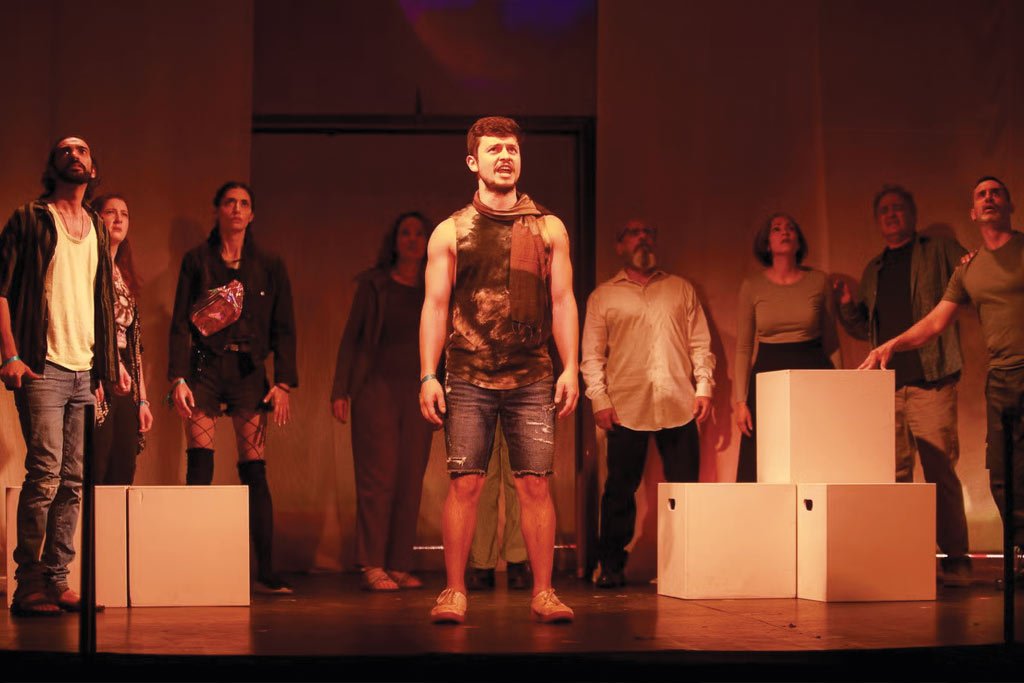
A scene from a past production of October 7, a verbatim play by Phelim McAleer and Ann McElhinney. (Photo courtesy of October7theplay.com)
A House of Blues Chicago concert to be headlined by American Jewish reggae singer Matisyahu was cancelled in 2024 because of the threat of protests. His most famous song? “One Day,” an anthem of hope and peace.
Later that year, Chicago bookstore City Lit Books pulled from its book club consideration Jewish author Gabrielle Zevin’s novel Tomorrow and Tomorrow and Tomorrow about a friendship between two videogame designers, labeling Zevin a “Zionist.”
And in October of 2026, on the eve of the third anniversary of the October 7 massacre, Northwestern Hillel hosted a staged reading of October 7, a play created verbatim from survivor testimony of those Hamas attacks. In the middle of the show, a fire alarm sounded, forcing the entire theater to evacuate. Once the fire department determined there was no fire, the show went on to a much smaller audience. The incident—whose cause is still under investigation—ignited an all-too familiar exasperation in an already anguished audience, which included slain hostage Hersh Goldberg-Polin’s grandmother and aunt.
In Chicago, and everywhere else, the list keeps snowballing.
The recent blacklisting of Jewish and Israeli art and artists in cultural spaces—as in so many other facets of society and geopolitics—feels like an endless game of Whac-A-Mole.
In its “State of the Arts” series of reports released on Oct. 1, the Anti-Defamation League asserts— three years after October 7—a “systematic exclusion of Jewish and Israeli artists” in the publishing, museum, and entertainment industries.
Unfortunately, for us Jews, and our non-Jewish allies, there is no foolproof manual on how to stop this train of antisemitism that’s too far gone from the station. No, we can’t make the “world’s oldest hatred”—which has again infiltrated our cultural spaces—disappear.
As author Dara Horn asks in her brilliant and provocative new book The Final Solution to the Jewish Question: A Love Story for the Living, is it “really the responsibility of Jews…to cure the pathologies of our harassers? That seemed like an outrageous ask.”
But wait, there’s hope. Because there has to be.
While we can’t “fix” this 4,000-year-old problem, we can draw upon 4,000 years of resilience. We can shine a light in the dark.
*We count the wins when they come.
Case in point: Artists Against Antisemitism, a nonprofit initiative founded in November 2023 by 33 authors, aims to stem the tide of antisemitism through education, advocacy, and the showcase of Jewish art.
One big win emerged this past summer when the group secured a panel at the American Library Association’s Chicago conference—after initially being rejected three times—with the help of the Association of Jewish Libraries. As a result, Artists Against Antisemitism was ultimately able to host a panel called “Jewish Stories Before and Beyond the Holocaust,” featuring four Jewish authors along with Ron Block, a Chicago librarian and ally of the Jewish community.
*We do our part to shine a light on Jewish artists.
In this issue, we’re proud to spotlight Jewish artists and authors—both American and Israeli—who create so much, for everyone, worth contemplating. Each add their threads to the beautiful patchwork of the cultural quilt. We’re thrilled to provide a platform to feature these artists.
And we, as an audience, must support their work, by downloading their music, buying tickets to their shows, reading their books, and sharing their works with others. We have to let them know that we, at least, see and hear, and are enriched by them.
*We lean on our allies.
Our community has to rely on our allies, our incredible non-Jewish partners in the arts and beyond, because G-d knows we Jews—only 0.2% of the global population—can’t go it alone.
Allies like Boy George, the LGTBQ+ British musician and frontman for the 1980s band Culture Club, whose songs like “Karma Chameleon” played on repeat during my childhood.
Boy George, an outspoken ally to the Jewish people and to Israel, will headline the JUF Vanguard event in November. This past July, he released a pro-Israel pop-reggae song honoring the victims of October 7. As the song goes, “Trust me, we will dance again.”
In this issue
-
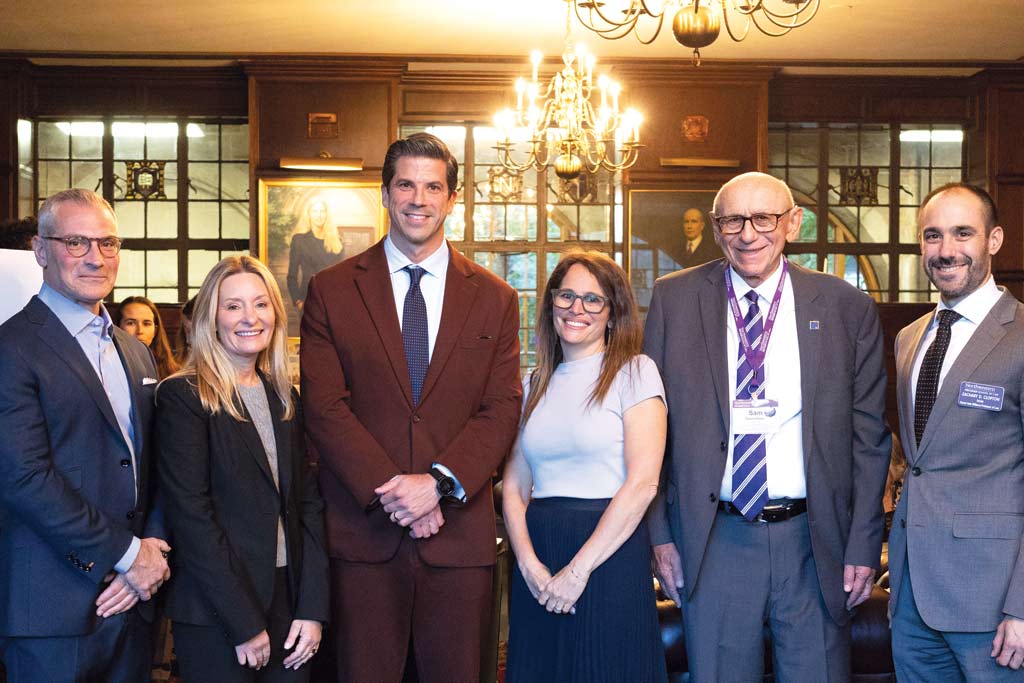
An open door at Northwestern Pritzker Law
The Antisemitism Legal Advocacy Project has launched
Read more -
-