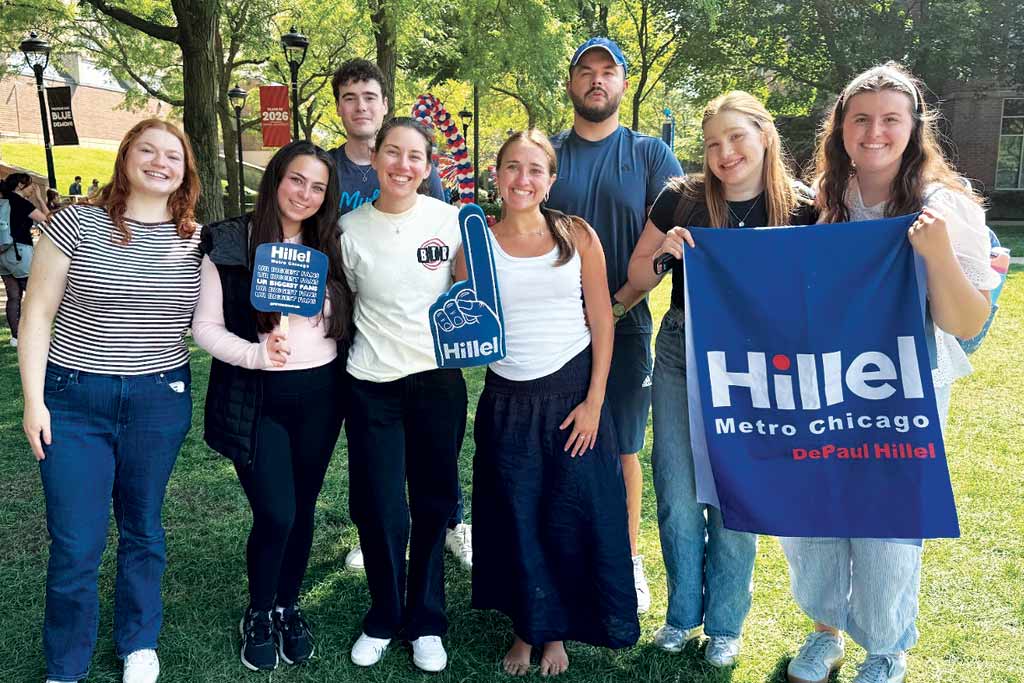
Jewish DePaul University students hanging out together.
For most of my time at college, I experienced casual antisemitism: a swastika drawn somewhere on campus, an offhand comment, a joke that was anything but funny.
After October 7, during my senior year, all of that changed. I began hearing things I never imagined I would hear on my college campus. “It’s funny the Jews think they are safe” or “rape is a justified form of resistance.”
What had once felt like something I could tolerate or brush aside suddenly became something else entirely.
I felt isolated and hurt. I needed to do something.
In February 2024, I traveled to Israel, where I volunteered and toured community sites deeply impacted by the October 7 attacks. I saw the Nova festival site, spent time in kibbutzim, met survivors, and visited a hospital where we met soldiers who had been severely injured while serving in the army.
As I walked out of the hospital, I began crying. One of our guides pulled me into a hug. I asked her what I could do to help. Her answer was simple: Share the stories you’ve learned.
I returned to campus determined to do just that. But when I tried to share what I had seen and heard, I was met with side-eyes, snide remarks, and silence. Many of my closest friends stopped speaking to me. I was told I shouldn’t be talking about Israel.
I felt as though I was failing everyone I had met in Israel.
It was surreal to graduate with only a handful of true friends, carrying a profound sense of emptiness and hurt.
As a student, I felt that so much responsibility had fallen on my shoulders. I hosted office hours for Jewish students, made public statements, and felt responsible for answering questions about Jews and Israel. Students are capable of so much. But that doesn’t mean they should have to do it alone.
Students shouldn’t be forced to carry the full weight of Jewish history, Israel, and antisemitism while also navigating classes, roommates, friendships, and all the other aspects of college life.
I wanted my experiences to lead to something positive. More than that, I wanted Jewish college students to have access to the support I desperately wished I had.
After college, I knew I wanted to work in the Jewish community. I found exactly the role I was looking for at JUF.
Working with students on campuses across the state, I’ve learned that there is no single way to support a Jewish student. Every student comes to campus with different experiences, questions, needs, and concerns. The role of a Jewish professional is to meet each student where they are.
Sometimes that means talking with a student about what it means to be Jewish. Sometimes it means helping a student file a bias report after experiencing antisemitism. And sometimes, it simply means giving a student permission to just be a college student.
For Jewish students who are struggling, the presence of a Jewish professional can make a profound difference.
My senior year showed me what it feels like to be isolated because of who I am. My work today has shown me the opposite: what becomes possible when young people know they are not alone.
That gives me hope.
Phoebe Stern is a Program Associate on JUF’s Academic Affairs team. She is a 2024 graduate of Bates College.
In this issue
-
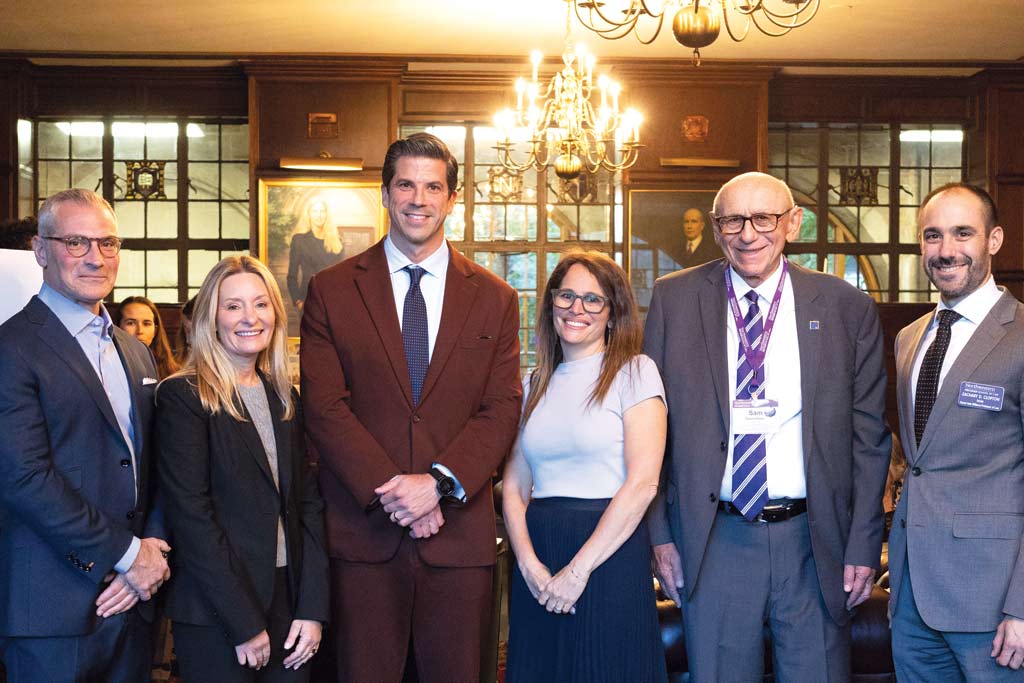
An open door at Northwestern Pritzker Law
The Antisemitism Legal Advocacy Project has launched
Read more -

-