A fine wine
OFER BAVLY
Aged wine is usually considered the best. But is there an expiration date for 3,800-year-old wine?
In the 1980s, archaeologists discovered a Canaanite king’s royal palace at Kabri, in the Western Galilee. It was built over 3,850 years ago during the Middle Bronze Age. Six years ago, archaeologists and researchers from Haifa University, Washington University, and Brandeis University uncovered all of the palace’s secrets but were not sure as to the reason it had been abandoned so soon after being built.
Then, three years ago, researchers discovered why the palace was abandoned abruptly: it was destroyed by an earthquake a few decades after its construction, and the king, fearing that the earthquake had been a sign of the God’s displeasure, abandoned his palace.
The palace was apparently very opulent, with ornate halls and wall paintings, hosting rich and sumptuous parties. It turns out that the Canaanite king liked wine-a common drink already in ancient times. The team discovered, among the palace’s remains, four rooms housing no less than 40 of the King’s huge wine jars (“amphorae”). Although the wine in the jars had long since evaporated, they contained enough sediments to take back to the labs in Haifa and at Brandeis for analysis. The results were incredible!
The jars contained red wine, infused with local spices and medicinal herbs including honey, cedar oil, nutsedge, mint, cinnamon, juniper, and myrtle. In ancient times, mixing wine with herbs was commonly done to purify water, improve its taste, and even to provide cures for all types of ailments.
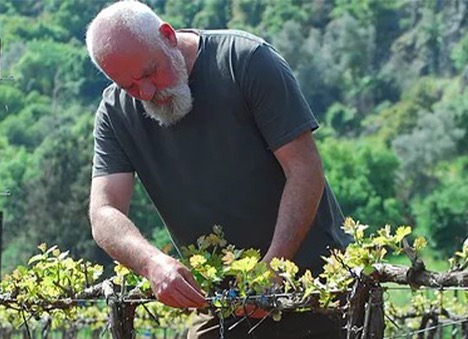
The same herbs contained in those ancient jars still grow in the region and are readily available. This gave an idea to winemaker Rami Na’aman: “When I read about the discovery, I was moved and felt the need to try and recreate the ancient recipe.” Naaman, who owns “Naaman Winery” (full disclosure: he happens to be my first cousin) got hold of the Brandeis analysis report. Working for three years to extract the essence of each component to ensure the correct blend and mixture of the spices, he finally combined them with his own local wine.
Naaman named his 3,800-year-old wine “Aluf.” In Hebrew, the term refers to the bull that leads the herd. It is also the modern Hebrew words for “champion” and general” in the military. Aluf also happens to be the name of one of the ancient Canaanite Gods and it is the word at the root of the first letter of the alphabet in many languages: “aleph” in Hebrew, “alpha” in Greek and Latin, and “Alif” in Arabic, to name but a few.
Rami Naaman was not always a wine maker. Following two decades as a movie director, cinematographer, and producer living in a Tel Aviv suburb, he decided that his true passion is actually wine. With his wife Bettina and three children, he moved to Ramot Naftali, one of the northernmost villages in Israel, on the Lebanese border and overlooking Mount Hermon and the Golan Heights.
Archaeological finds show that Ramot Naftali was a wine producing region as early as 6,500 years ago. Rami studied enology-the study of wines-and wine making, and with Bettina they launched their winery in 2004. Today, they produce over 10,000 bottles of different wines a year. Their love for classic rock music has given the names to their wines: King Crimson, Deep Purple, Pink Floyd, and Black Velvet. To this collection now comes Aluf, a spicy, new wine almost 4,000 years in the making!
Ofer Bavly is a JUF Vice President and the Director General of the JUF Israel Office.