“We feel our responsibility has not been met,” said Ronald Leopold, Executive Director of the Anne Frank House in Amsterdam.
In 2024, he and Tom Brink, the museum’s Head of Collections and Presentations, were in the United States and imagining how to bring Anne’s life and legacy to audiences unable to visit the Netherlands. Even those who can travel to the Netherlands sometimes struggle to get tickets to the Anne Frank House.
Leopold and Brink wanted to bring an exhibition to the U.S., but they were “two Dutch boys on bikes with no money, and no venue, and just a dream,” Leopold said. “And then, all of a sudden, it all fell together.”
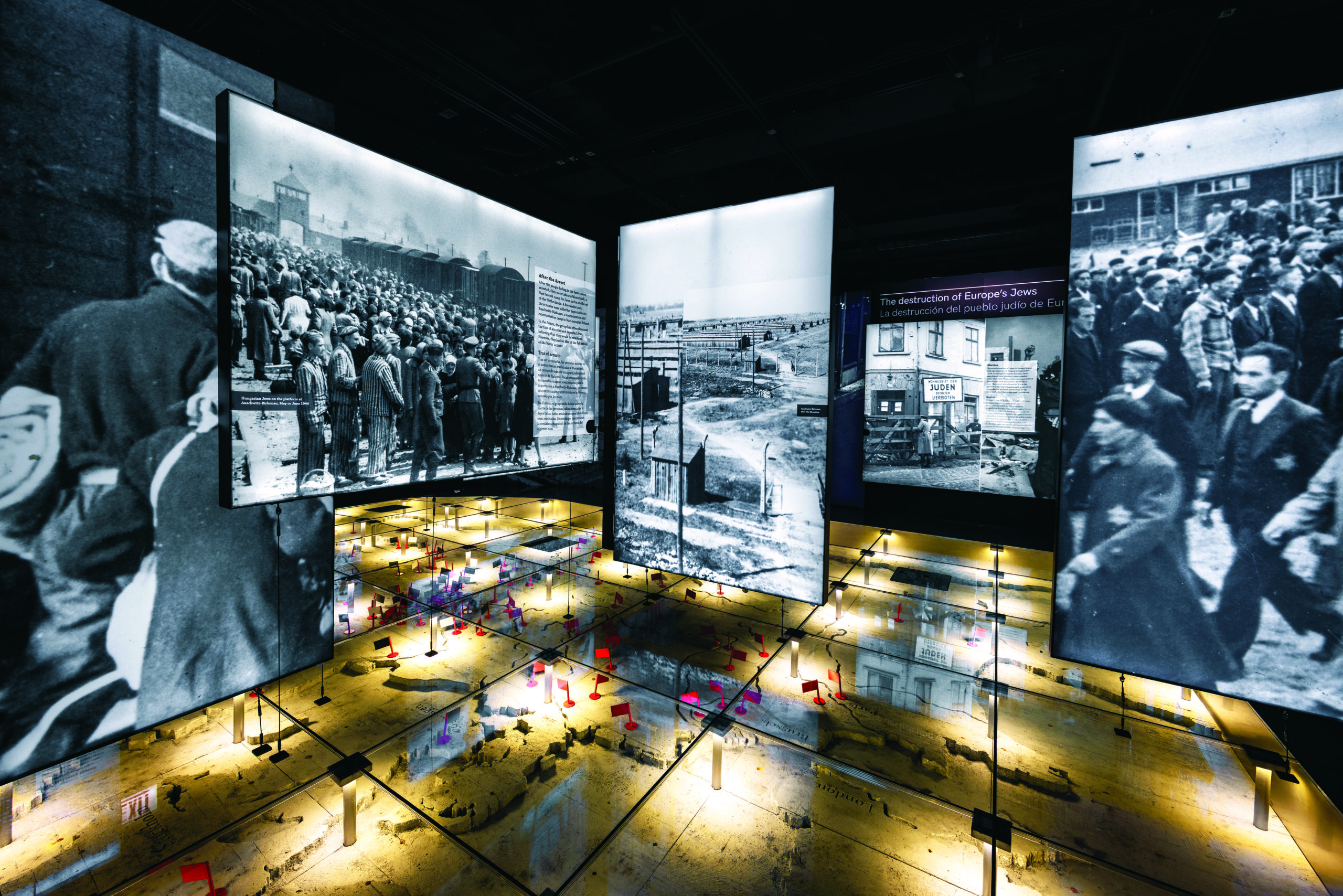
Anne Frank The Exhibition first opened in New York at the Center for Jewish History in 2025, on International Holocaust Remembrance Day, and ran for a full year. This year, on May 1, the exhibition debuted in Chicago at the Griffin Museum of Science and Industry (MSI). The exhibit, designed for children (ages 10 and older) and adults alike, is a presentation of the Anne Frank House and features a full-scale recreation of the Annex where Anne Frank, her family, the Van Pels family, and Fritz Pfeffer hid for two years to evade capture by the Nazis.
“If you look at the world around us, which has rising antisemitism and also rising hate, we’re bringing Anne’s words to a world that needs her words more than ever,” Leopold said. “This exhibition is very much a response to the responsibility that we feel.”
When Anne Frank The Exhibition premiered in New York, it was lauded for its immersive intimacy as well as its depth of content; over a hundred collection items from the Anne Frank House give shape and context to her “life, death, and posthumous fame.” Among the many visitors in New York were Dr. Chevy Humphrey, Griffin MSI President and CEO, and members of her team.
Humphrey cited two reasons for bringing Anne Frank The Exhibition to Chicago. The first is that when Griffin MSI brings in traveling exhibits, they bring exhibits that people in the region may not experience otherwise. Like Leopold, she mentioned the high barrier of entry to visiting the Anne Frank House in Amsterdam. Anne Frank The Exhibition is accessible in another important way—according to the Americans with Disabilities Act (ADA); when you go to the Anne Frank House, one has to go upstairs to access the Annex. “This is ADA-accessible so that everyone has the opportunity to truly understand Anne’s story,” Humphrey added.
The second major reason that Humphrey and her team knew that Griffin MSI needed to bring the exhibit to Chicago was that they have seen, first-hand, young people trying to make sense of everything happening in the world around them. She sees Anne Frank’s story resonating with so many because, through her diary, Anne was trying to do the same thing.
“We have a lot of curious young people trying to make sense of the world around them, and we saw that immediately in Anne’s curiosity to understand what was happening outside of the Annex, trying to be a teenager, trying to find hope,” Humphrey said.
Both Leopold and Humphrey connect the vision of Griffin MSI’s founder, the great Jewish philanthropist Julius Rosenwald, to the importance of bringing Anne Frank The Exhibition to Chicago.
“Humanity is so interconnected with science,” Humphrey explained. “Humanity is the why and science is the how—but you must have the why to actually act upon. And our vision statement is ‘Science discerns the laws of nature, industry applies them to the needs of humankind.’”
JUF is a proud co-sponsor of Anne Frank The Exhibition. Tickets can be purchased at annefrankexhibit.org, and admission is free for school field trip groups with advance reservations.
Photo: Anne Frank The Exhibition immerses visitors in the rise of the Nazi regime and the horrors that followed. (Photo credit: John Halpern)