Consider searching for love across our echo chambers
RABBI JESSIE WAINER
When I was younger, we would play the “Would You” game when talking about relationships. Would you date someone who was a Sox fan, when you were a die-hard Cubs fan? Would you be able to see yourself in a long-term committed relationship with someone who followed a different level of kashrut (Jewish dietary laws) than yourself? Would you marry someone who held fundamentally different political beliefs from yourself?
When we were younger, these were easy to answer. Relationships seemed black and white, and we could make a decision based on what we wanted, rather than understanding the nuanced compromise that it takes to be in a long-term committed relationship with another person.
All the more so, in today’s world where toxic polarization runs rampant, it can be harder and harder to see ourselves in committed relationships, romantic or otherwise, with individuals who hold seemingly fundamentally different beliefs from our own. It is easier to remain in our echo chambers and seek out people who are likeminded. However, when we do so, we miss out on connecting with a potentially large swath of the population who might enrich our lives in ways that we could have never thought possible.
What we may not realize, when we immediately eliminate individuals from our pool, based solely on a particular affiliation, is that we often have more in common with them than we might think. Rather than reducing our identities to a checkbox on a survey, we can consciously resist the growing polarization and embrace the cross-cutting identities (identities such as religion, social class, race, etc.) that may bring us closer together.
While the terminology that we are using to address this issue may be newer to our vocabulary, this issue has been an ongoing source of discussion in Jewish tradition. Dating back to the time of the Talmud, rabbis were having this same conversation.
In the Talmud, Rabbis Hillel and Shammai, and therefore the Houses of Hillel and Shammai, disagreed on almost everything. And yet, the Talmud (Yevamot 14b) teaches us that even though the Houses of Shammai and Hillel disagreed on just about everything, they never refrained from marrying people in each other’s communities. They recognized the importance of looking past the singular identity of their house, in order to find the person who was right for them.
In one of my previous communities, I worked with one such couple. Let’s call them Linda and Steve. Linda was a left-leaning Democrat who was an ardent Bernie Sanders supporter and proudly wore her pink hat during the Women’s March in 2017. Steve was a far-right Republican, having voted for President Trump, who continually voiced his dissatisfaction with the “liberal ideologies” of the community. When asked why they were still together, after all these years, they both reflected that their relationship was far more than their political identities, although that did cause tension in their marriage from time to time.
Connection, and love, is absolutely possible across significant divisions, like political affiliation, but only if we are willing to talk to each other and engage one another in meaningful conversation. When we are willing to be introspective and understand where our biases lie, and when we are willing to have hard conversations with others, we open ourselves up to a world of possible relationships with people we never thought possible.
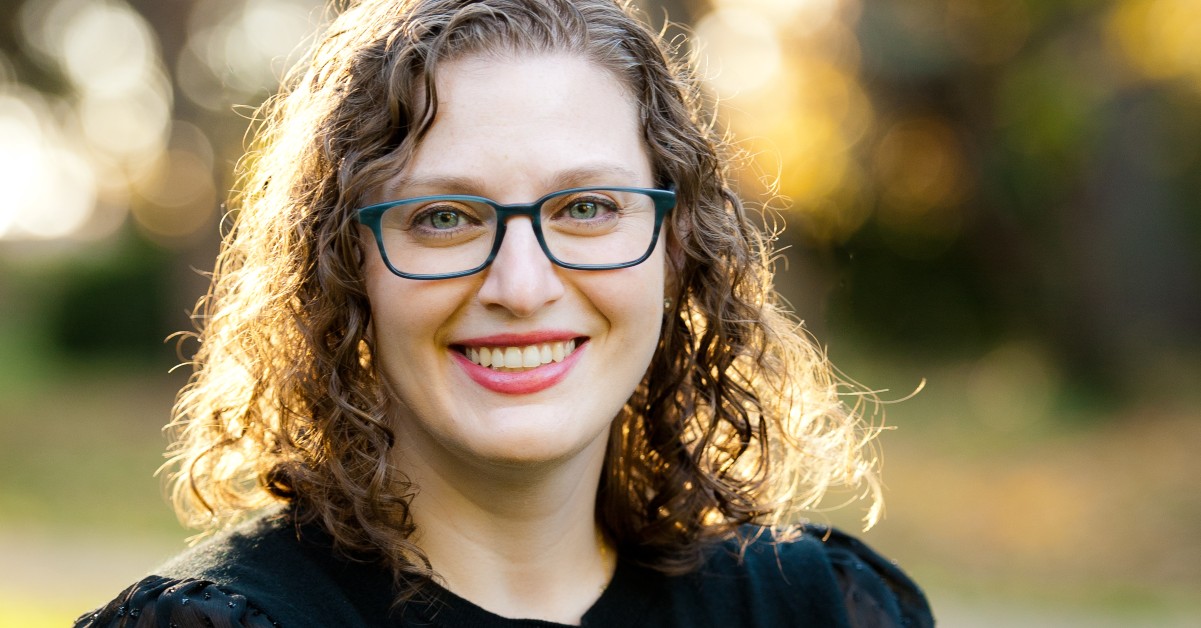
Rabbi Jessie Wainer is the Associate Rabbi of Congregation Etz Chaim in Lombard.