Cultural offerings to warm you up this winter
Hedy Weiss
The long-range weather forecast for the remaining winter months in Chicago may be decidedly frosty. But actors, musicians, dancers, and other artists will not be distracted, and it’s a good bet audiences will follow their example. Here are some suggestions of shows and concerts that are bound to warm you up. And, of course, for those who just want to hide under a blanket there is always a good book.
Spotlight on Speck
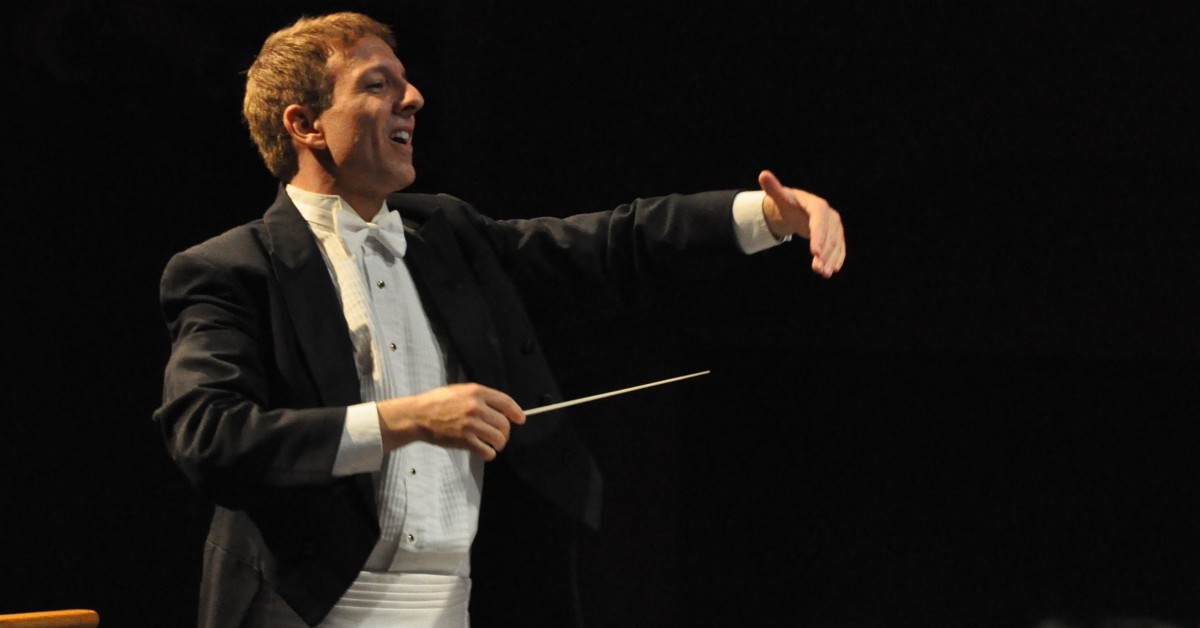
Chicago audiences know Scott Speck as the conductor who has served as Music Director of the Joffrey Ballet since 2010, and now leads the Lyric Opera Orchestra for the Joffrey’s performances. In addition, since 2013, he has been Artistic Director of the Chicago Philharmonic, which frequently performs at the Harris Theater for Music and Dance and other venues.
Watch Speck–who was born into a Jewish family outside Boston–as he conducts for the Joffrey, and you will see a man whose impeccable musical phrasing is in superb synch with the dancers. Attend the Chicago Philharmonic’s wonderfully varied programs and you will enjoy Speck’s lively commentary about the various works on these programs, as well as his expert mastery of a wide range of music. A man of multilingual skills, he also is the author of three popular books– Classical Music for Dummies,Opera for Dummies, and Ballet for Dummies. And he has the ability to connect with both artists and audiences in the most unpretentious but interesting ways.
This winter Speck–who began piano lessons at the age of 6, took up the cello after graduating from Yale, sang in choirs from the age of 18, and studied conducting in Berlin on a Fulbright scholarship in the mid-1980s–will be incredibly busy. Not only will he conduct the Joffrey Ballet’s performances of “Anna Karenina” at the Lyric Opera House (Feb. 15-26) but he also will helm several intriguing concerts with the Chicago Philharmonic. First up will be a program featuring Gustav Mahler’s early masterwork, the Lieder cycle “Songs of a Wayfarer” (Feb. 4 at the North Shore Center for the Performing Arts in Skokie). And Speck has some interesting thoughts about that composer.
“As a swiftly rising star in the world of conducting, Mahler wanted to be director of the Vienna State Opera at a time when that institution had a law preventing it from being led by a Jew. He officially converted to Catholicism in 1897, but he always considered himself Jewish. And the antisemitic press of the time did, too.”
And Speck added: “There is a Jewishness to much of Mahler’s music, and it comes from two main sources. On the surface, we hear it in the klezmer-style band music– reminiscent of wandering Jewish musicians–which crops up in unexpected places within his symphonies and song cycles, often in incongruous, exaggerated, and even grotesque ways. But on a much deeper level, like so much of Jewish history, Mahler’s life and music were dominated by alienation and loss. From the beginning, rightly or wrongly, Mahler felt exiled from his surroundings. He once said: ‘I am three times homeless: As a Bohemian native in Austria, as an Austrian among Germans, and as a Jew all over the world.'”
Performances by the CSO
Leading the Chicago Symphony Orchestra in works by Prokofiev and Rachmaninov on Feb. 9, 10, and 11 will be the Israeli-born conductor Lahav Shani. He has been Chief Conductor of the Rotterdam Orchestra from 2018, and, beginning in the 2020/2021 season, became Music Director of the Israel Philharmonic Orchestra, replacing Zubin Mehta who had held that position for 50 years. Born in Tel Aviv in 1990, Lahav began studying piano at the age of 6, and was later mentored by Daniel Barenboim during time he spent in Berlin.
On Feb. 16, 17, and 18, Klaus Makela, the excellent young Finnish conductor, will return to the podium at Orchestra Hall to lead the CSO in Mahler’s monumental, highly dramatic ” Symphony No. 5 ” along with a work by Peruvian-American composer Jimmy Bollido Lopez.
For tickets visit cso.org or call 312-294-3000.
Revivals of a slew of great Broadway musicals
It is common knowledge that throughout much of the 20th century, it was the work of Jewish composers and lyricists that most frequently lit up Broadway stages. The greatest of these musicals return on a regular basis, and this winter will see the return of many of them including:
*Tick Tick…Boom! at BoHo Theatre (score by Jonathan Larson of Rent fame). Runs Jan. 12 – Feb. 5. Visit bohotheatre.com.
*Cabaret at Porchlight Music Theatre (score by John Kander and Fred Ebb). Runs Jan. 14 -Feb. 12. Visit porchlightmusictheatre.org.
*A Chorus Line at Drury Lane Oakbrook Theatre (score by Marvin Hamlisch and Edward Kleban). Runs Jan. 25 – March 19. Visit drurylanetheatre.com.
*Into the Woods at the Paramount Theatre (score by Stephen Sondheim and James Lapine). Runs Feb. 1 – March 19. Visit paramountaurora.com.
*Les Misérables at the Cadillac Palace Theatre (score by Alain Boubil and Claude-Michel Schonberg). Runs Feb. 15 – March 5. Visit broadwayinchicago.com.
1776 at the CIBC Theatre (score by Sherman Edwards and Peter Stone). Runs Feb. 28 – March 12. Visit broadwayinchicago.com.
Finally, an interesting footnote
The latest exhibit at the Illinois Holocaust Museum in Skokie is The Negro Motorist Green Book (running now – April 23). It chronicles the history of the annual guide of that name that was first published in 1936 by Harlem postman Victor Green, and served as a source of information on everything from rooming houses and hotels to restaurants, gas stations, and barber shops that would serve the newly emerging African American middle class travelers who faced intense segregation; it was referenced in the 2019 Oscar-winning film Green Book . In reading about The Green Book, I also learned an intriguing fact: It was inspired by The Jewish Vacation Guide , a similar publication, created in 1917, that supplied Jews with information about the hotels, restaurants, and swimming pools, from the Catskills to Miami Beach and beyond, where they would be welcome. Many such facilities at the time made it clear that these places were “for Gentiles only.” Find more information at https://ihm.ec/greenbook .
Hedy Weiss, a longtime Chicago arts critic, was the Theater and Dance Critic for the Chicago Sun-Times from 1984 to 2018, and currently writes for WTTW-TV’s website and contributes to the Chicago Tonight program.