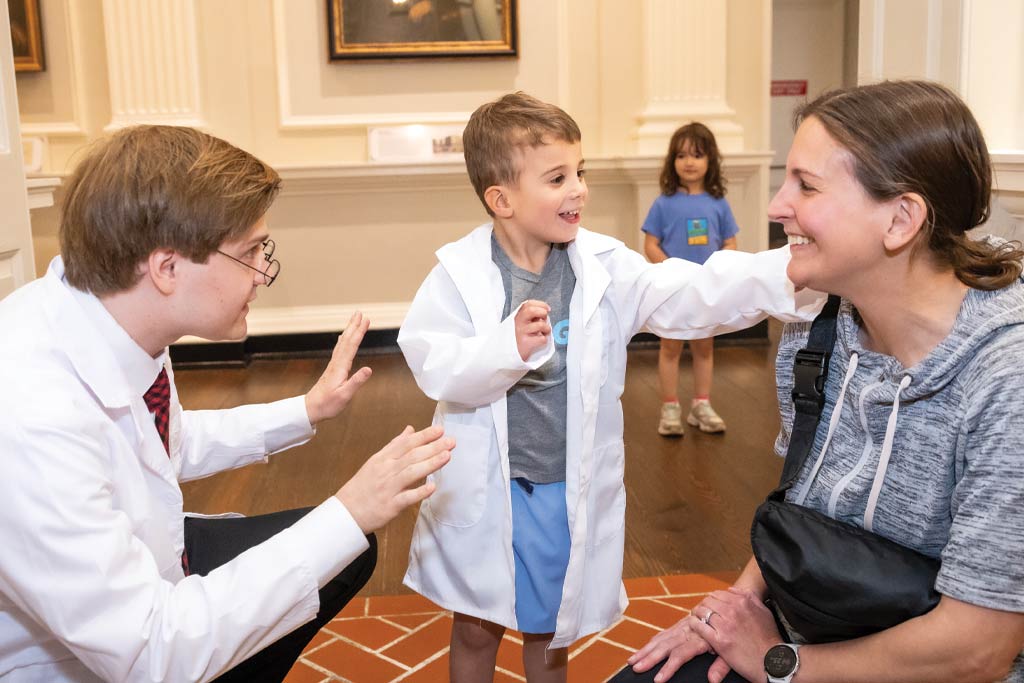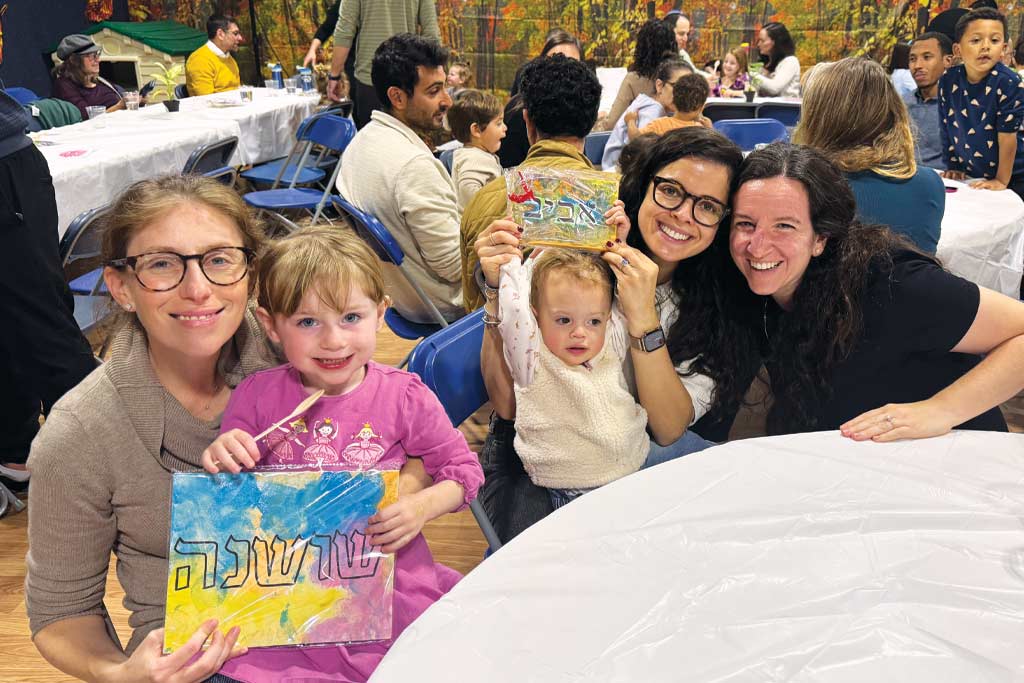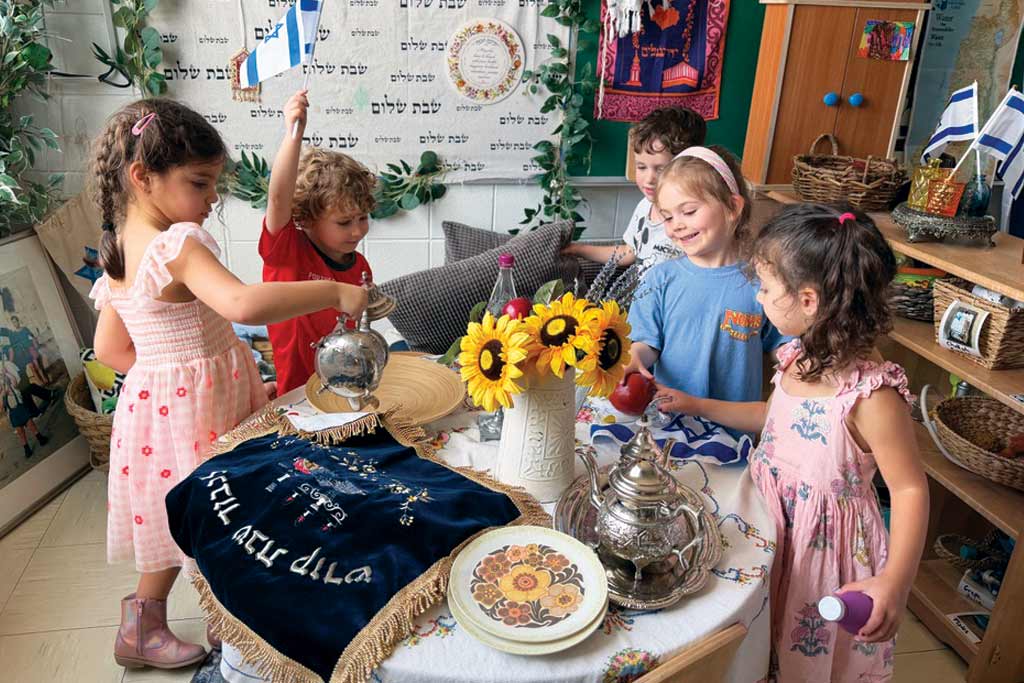
Keep children engaged at the Shabbat table begins by involving them in the preparation. (Photo courtesy of Rena Geller Grosser)
“Vayehi erev, vayehi boker, yom hashishi….”
In our home, these first words rise softly at the verge of Shabbat, marking the sacred threshold at which weekday time gives way to something slower, deeper, and whole.
Shabbat is a gift. It is not something we perform for our children, it is something we build with them. What might feel like a routine becomes an evolving, creative experience shaped by their hands, presence, and ideas.
One of the most meaningful ways we keep our children engaged at the Shabbat table begins long before the candles are lit. Preparation itself becomes part of the ritual.
Each Friday afternoon, my 7-year-old daughter, Lily, takes on the role of what we call the “place card artist.” Armed with markers, scraps of paper, and sparkly stickers, she creates original place cards for every person at our Shabbat table. Aside from names, each has a unique detail representing that person, as well as unique designs of portraits of them. Through this process, Lily is not just setting the table; she is shaping the emotional tone of Shabbat, using art as a language of care.
Her twin sister, Kaya, participates in an equally meaningful way. She moves thoughtfully around the table, filling each glass with water and placing them carefully at every seat. It is a simple act, but one rooted in attentiveness and anticipation. She is preparing for presence, making sure everyone has what they need before they even arrive at the Shabbat table.
We begin Shabbat with a moment that centers on connection. After lighting the candles and taking a quiet pause for prayer, we turn toward one another. Each person gives and receives a hug, a simple but powerful gesture that marks our arrival into Shabbat. It signals a shift from the outside world into a shared space of warmth, presence, and love. For children, this physical ritual anchors the abstract idea of Shabbat in something they can feel.
At the table itself, we invite our children into the core moments of Shabbat prayer in ways that feel accessible. My 10-year-old son, Wes, leads the hamotzi over the challah. When he says the blessing, he steps into something ancient and collective. It is not about getting every word perfect, it is about participation and the pride he beams as he rests his hands on the challah. It is about feeling that his voice belongs. Through repetition and ownership, the ritual becomes his.
Of course, engagement is not only built through structure. It is also sustained through joy. At some point during the meal, our table often breaks into laughter over a simple game of telephone. A whispered phrase moves from person to person, transforming along the way, until it returns completely changed. This moment of play reminds us that joy is not separate from Shabbat, it is the main part of it.
For families wondering how to explore ways to engage, start to notice what your children gravitate towards. Explore how those pieces of them can be brought into Shabbat, offering them moments of initiative and leadership, owning their roles. Bring children along to choose flowers to adorn your Shabbat table, to assist in the cooking, or to surprise loved ones with Shabbat treats. For younger children, invite authentic Shabbat ritual items into their play and see how they emulate these real-life Jewish moments. When children are given ownership, they rise to meet it with creativity and care.
When we shift from doing Shabbat for children and invite them into the preparation process, something powerful happens. They move from being observers to participants, from participants to contributors. Shabbat becomes more than a pause in the week, but a time to connect, reflect, and create meaningful moments together that we as a family cherish week to week.
Rena Geller Grosser—a Judaic Atelierista and mother of three—is an Early Childhood Educator at Bernard Zell Anshe Emet Day School and has a background in art therapy.