Remembering what they gave, what we lost
JAY TCATH
Memorial Day in Israel, which honors its fallen soldiers and victims of terrorism, is known as Yom HaZikaron. In contrast to how many Americans observe Memorial Day, Israel’s is a somber day marked by the vast majority of the population. The holiday opens with a nationwide siren sounding on the preceding evening at 8pm, lasting for one minute; during it, Israelis stop everything, including driving, and stand in silence, commemorating the fallen.
By law, all places of entertainment are closed on the eve of Yom HaZikaron, and regular television programs are replaced by a constant scroll of the names of the fallen for 24 hours.
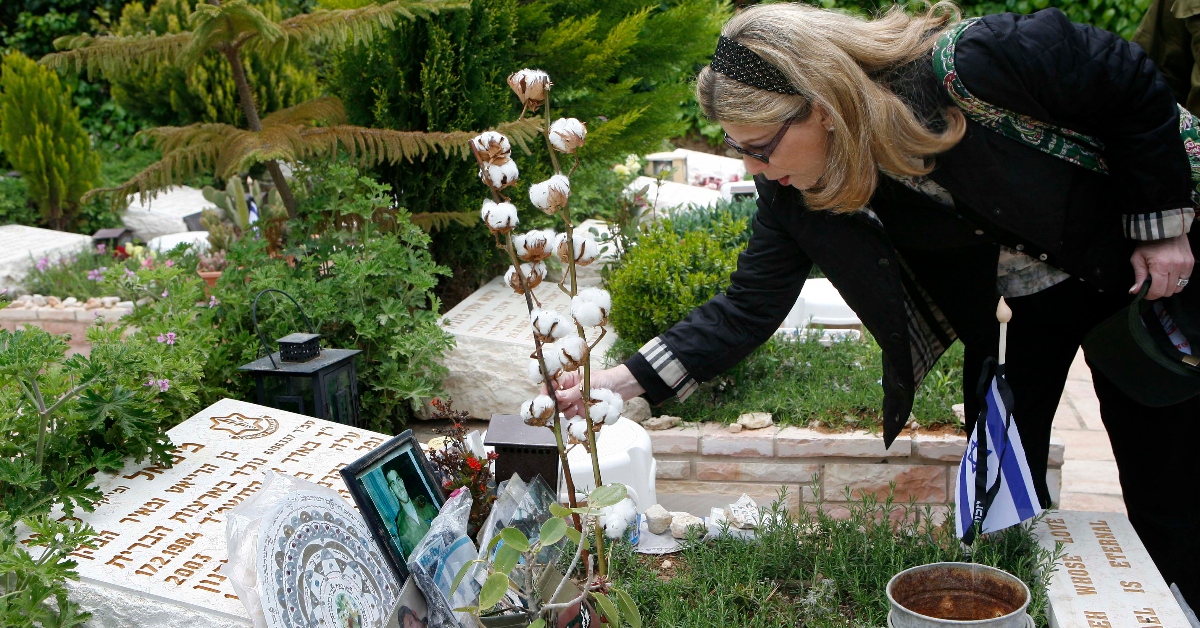
At 11 a.m. the following day, a two-minute siren is sounded, marking the opening of the official memorial ceremonies, and private remembrance gatherings, at each cemetery where soldiers are buried.
In Chicago, the Israeli Consulate annually sponsors the local Yom HaZikaron memorial program. This year it was held April 29 at Beth Hillel Congregation Bnai Emunah. JUF’s Executive Vice President Jay Tcath delivered the following remarks:
We Jews are a community, a nation, a global people. We are bound together across the miles and through the years, scarred by horrors and uplifted by blessings. We celebrate, mourn, and dwell- despite the distances- together. Though our ancestors took different ships to different shores- for America or to Eretz Yisrael- we remain in the same boat. We would have it no other way.
Tonight, our Jewish calendar’s clock has again summoned to dwell together for this year’s Yom HaZikaron memorial.
Memorials follow a natural trajectory. The prayers, the tributes, the tears begin outward facing… for those who have been taken from us. We start by focusing on them. Who they were, and who they might have been. It is not about us.
But the memorial’s trajectory arc then shifts our perspective, and our reflections turn inward: our tributes to them transition to what losing them means to us.
Just as their lives were full of meaning, so too were their deaths. Correction: so are their deaths. And that enduring meaning includes what we do with that meaning, how we embrace and harness it, for Zion’s sake. It is another way that, from beyond the grave, they continue giving to us.
By recalling their lives and their deaths and what it all means to us, we provide them an additional measure of honor.
That is what we can do for them. And, yes, it’s what we, the bereaved mourners, can also do for ourselves. And for one another.
Our heroes’ cemetery headstones provide few details. Nothing but their names, family connections, and dates of birth and death. And that tiny, little dash placed between the dates of their birth and their death hides so, so much. That dash, the smallest character engraved on the tombstone, obscures the most.
Yet through our tears, our mind’s eye does see what that dash conceals: we visualize so many special, mundane, and precious details of their lives. Their love of soccer, house music, Torah learning, sushi, the shuk, Shabbat, and of course, tragically, their love of spouses, children, parents, and fellow soldiers.
None of that blessed detail is engraved upon the cold stone of their final resting place. So much is missing from what is etched there. But their stories, and who they remain to us, are engraved deeply into our hearts. Their stories are forever rooted in the Jewish people’s shared, eternally beating heart. There it shall remain firmly etched, long after their headstone engravings are weathered clean.
Today, again, our hearts break. But the Jewish people are not broken. We will not break.
Since 1948, hundreds of Chicago Jews have served in the IDF.
Their courage is contagious. They, the entire IDF and its fallen, stood straight- and our spines stiffened.
They did it for us. For our sake. For our children. For Israel. They’re with us, forever.