The Windy City effect
PAUL WIEDER
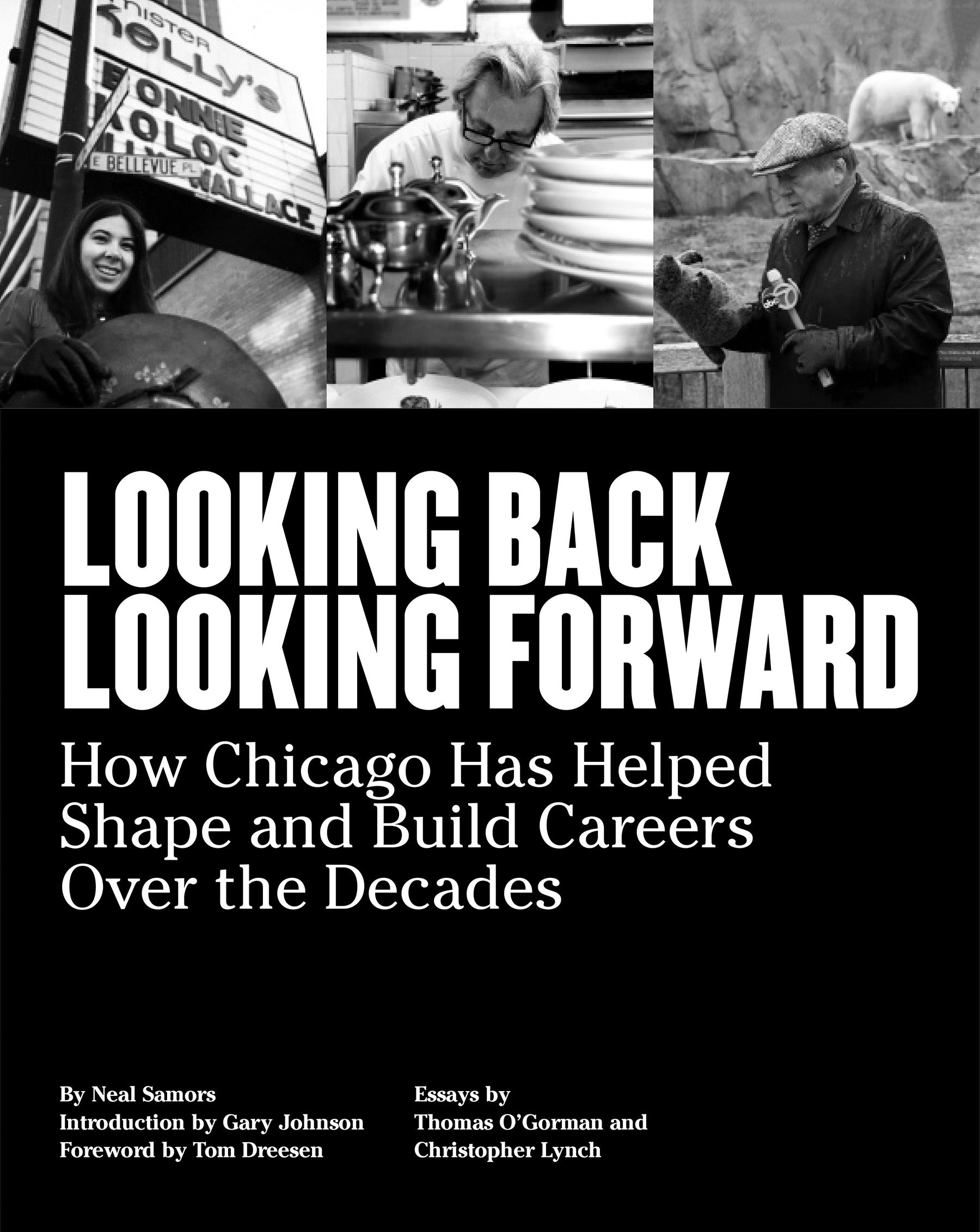
Neal Samors has made a career out of studying Chicago’s multi-faceted history. In fact, he has written, co-written, and published more than 30 books on the Windy City’s history. His latest, Looking Back/Looking Forward – How Chicago Has Helped Shape and Build Careers , examines how the city has influenced the lives of some of its finest.
To learn how working in Chicago can launch someone to stardom, the author interviewed movers and shakers– like director Harold Ramis, broadcaster Mike Wallace, comics Shecky Greene and Shelley Berman, baseball legend Ken Holtzman, and Crate & Barrel founder Gordon Segal. And those are just the Jewish ones.
Others include jazzman Ramsey Lewis, football superstar Gale Sayers, and Reverend Jesse Jackson, among other entertainers, athletes, politicians, judges, journalists, and chefs… everyone from Hugh Downs to Hugh Hefner.
“These individuals were either born and raised in Chicago or came here to build the early or middle portions of their careers,” Samors explained. “There were many opportunities in the city from the 1940s through 2020. The interviews share the powerful impact that it had on their careers, and their families and broader lives.”
The book’s 65 interviews discuss how Chicago provided both mentors and competitors. Samors noted that Chicago is made up of supportive neighborhoods around an aggressive downtown. Further, he added, Chicago is transportation hub with a very active media environment hungry for success stories and… the other kind of stories.
Each type of profession has their own designated sections with their own introductions, many written by Jewish notables. Introducing the entertainment section is David Marienthal, whose father and uncle founded Mr. Kelly’s star-studded nightclub. U.S. Rep. Jan Schakowsky introduces the politics chapter, food critic Penny Pollack introduces the restaurants chapter, and Eli’s Cheesecake scion Marc Schulman introduces the business chapter.
Samors notes that, far from being influenced only by others in their chosen profession, these professionals were part of a larger community of leaders and personalities that defined Chicago. He said, “Everyone in the book loved the city’s downtown– driving the streets, visiting the entertainment venues, attending sporting events, following the city’s media personalities, and considering themselves Chicagoans,” native or not.
While they got their starts in the city, they weren’t really considered to have “made it” until they succeeded elsewhere. Many stars of Second City fit that pattern, he noted, and while Ken Holtzman played for the Cubs, he played in the World Series with another baseball team.
Chicago has clearly been a source of inspiration for Samors himself. His first book about the city, a history of Rogers Park and West Ridge, was inspired by his second master’s degree. His subsequent topics include Chicago’s restaurants and radio stations, its politics and police, and the histories of Chicago’s downtown, airports, river, Michigan Avenue, and Lake Shore Drive. There are also individual books about growing up in Chicago in each decade, from the 1930s to the 1960s– and his autobiography.
Samors grew up in Rogers Park. His books have won the Independent Publisher Book Award’s first-place award in history and awards from the Illinois State Historical Society.
Looking Back/Looking Forward does tell, as its subtitle promises, how Chicago has helped shape and build careers. But it also reveals how these leaders shaped Chicago in return.
Looking Back/Looking Forward is published by Chicago’s Books Press and can be purchased through Amazon.com as a Print On Demand book.