
“And then the soldiers came and attacked our village and then they took my father,” said Pau, a young refugee from Burma who now lives in Chicago. His story begins, like so many others do, with war, terror, persecution, and death.
There is Khadijeh from Afghanistan, who when she couldn’t afford to pay the hospital bill a stranger offered to buy her newborn son.
And Said. He is an Assyrian Christian who worked as an interpreter for the American forces in Iraq. After the U.S. pulled out, he was called a traitor and received death threats. His life was in danger.
The Torah tells the Jewish people to welcome the stranger because we were once strangers in the Land of Egypt. For more than 35 years, the Jewish United Fund/Jewish Federation of Metropolitan Chicago has been living up to this ideal. Since the late 1970s, Federation has been welcoming refugees, like Pau, Khadijeh, and Said, who are fleeing to the Chicago area through administering the Refugee Resettlement program on behalf of the State of Illinois. The $4.2 million program is funded entirely with state and federal dollars and ensures that refugees receive the basics they need to thrive in their new homes.
But JUF/Federation brings more than just an understanding of the problem, said Marc Adelman, Assistant Vice President of Refugee Social Services for JUF. It brings a profound expertise in program administration that allows us to ensure that resources are being used appropriately and that people’s lives are better because of the services that have been provided. The Federation’s public-private partnership has made Illinois a model for resettlement programs around the country.
Thirty-five years ago, JUF/Federation was a the table to help draft the 1980 federal Refugee Act, which recognized the country’s imperative of giving refuge to people in danger and changed the way refugees were welcomed to the U.S.
To qualify as a refugee, a person must exit the border of his or country, be able to prove a well-founded fear of persecution, and be unable to safely return to their country of origin. The first to arrive were the Vietnamese, with more than 100,000 resettled in Chicago within the first few years of the law’s passage. Ultimately more than 35,000 Jews arrived from the Former Soviet Union through the statewide program. Today, a maximum of 70,000 refugees are admitted to the United States each year. Currently, most of the refugees are from Iraq, Myanmar/Burma, and Bhutan and many have spent multiple years in refugee camps awaiting processing by United Nations High Commissioner for Refugees (UNHCR) and the State Department. As civil unrest and war grows in the Congo and Syria, more refugees are expected to arrive from there in the future.
JUF/Federation contracts with partner agencies. Many of which are faith-based organizations while others are non-profit organizations that have a cultural understanding of the populations that the programs serve. Many of their staff members are former refugees themselves.
Last year alone, JUF/Federation, though its partner agencies, helped 2,680 refugees from 25 different countries. Services included Employment, English Language Training, Cultural Adjustment, mental health counseling, senior support, and help for refugee youth in the public school system.
“The refugees are so eager to make a place for themselves among us,” said Susan Sperry, Director of Refugee Services for World Relief in DuPage County, “where they can thrive, contribute and succeed.” They want the same things as all American want, she said, like stability, integration, and a better life for their children. “We pick them up from the airport, lease them a home and fill it with everything they need,” said Sperry. “We take them to the doctor for a health screening and explain to them what life looks like in the United States. Our employment services help refugees find their first job in the U.S., and then help them upgrade into new jobs and get on a career path.”
A total of 57 percent of clients through the program found jobs, which is a tremendous achievement, Adelman said, given that some of the refugees arrive illiterate in their own language, many are single moms and may have not worked before, and almost all have undergone severe trauma.
The programs help parents enroll their children in school and in after-school programming. “It’s a challenge for parents who don’t speak English to understand the school system here.”
Adelman said the refugees have been tremendously successful, in part because of the soft landing Federation’s partner agencies provide but mainly because of their incredible strength and perseverance. Like the rest of us they pay taxes and many will ultimately become citizens.
“These are people who have survived persecution. They cannot go home,” said Melineh Kano, Executive Director of RefugeeOne, one of the organizations JUF/Federation has chosen to provide services under the state resettlement program.
Kano herself is a refugee. An Armenian-Christian born in Iran whose family did not feel safe after the 1979 Iranian Islamic Revolution and fled to the United States.
“Refugees are survivors ,” she said, “and given the right opportunity they will get back on their feet. This program gives a second chance to people who otherwise would not have a future.”
In June, Federation and its Chicago partner organizations will celebrate World Refugee Day and the 35 th anniversary of the passage of the U.S. Refugee Resettlement Act with other celebrations occurring outside Chicago throughout the summer. On Monday, June 15, there will be a program celebrating World Refugee Day in Daley Plaza which will feature music, information, about refugees and the agencies that welcome and assist them. Then, on Saturday, June 20 th , the actual World Refugee Day, there will be a soccer tournament, youth activities, and a potluck picnic at Foster Beach beginning at 11 a.m. Both events are open to the public.
Lisa Pevtzow is a freelance writer living in the Chicago area.
One refugee’s harrowing story
By NGOAN LE
Thirty-five years ago, the waves of refugees from Southeast Asia catalyzed the United States to pass the historic Refugee Act of 1980.
This Act establishes a system for resettling refugees in the U.S. so that refugee admission is no longer treated as a one-time crisis requiring only a short-term emergency response. The U. S. Department of State and Office of Refugee Resettlement are the two key federal agencies working with state governments and hundreds of non-profits across the country to resettle more than 3 million refugees since the passage of the Refugee Act. Congress must approve the annual number of refugees allowed to be admitted to the U.S.
The fact that refugee admission could no longer be treated as a one-time crisis is indeed a sad reflection on our world. Today, there are 51.2 million displaced people globally. It is a historic high number, based on the report of the United Nations High Commission on Refugee (UNHCR). About half of all refugees are children under age 18 and the average stay in the refugee camps increased from nine years to 17 years by 2013.
The UNHCR was created 60 years ago to help refugees displaced from World War II. UNHCR now operates in 200 countries seeking to find durable solutions for refugees. For some refugees, it means being able to repatriate back to the homeland. For others, it could mean becoming residents of their first place of refuge in neighboring countries. For a very small number, it is the opportunity to be resettled permanently in another third country. Only 70,000 of the 52.1 million would be lucky enough to be offered resettlement in the U.S.
Forty years ago, I was in a refugee camp on Wake Island off the coast of the western side of the Pacific Ocean. My family arrived there after having fled Vietnam on April 30, 1975. The departure from Vietnam was harrowing. Our hometown had already been taken by the advancing communist troops a month earlier. My father abandoned the successful business he built and searched for a passage out of Vietnam. In the final hours before the fall of Saigon, following a rumor about an escape route, we pushed our way through the chaotic crowd onto a barge. We had no idea where the barge might take us.
Eventually, we were picked up by a rescue ship and brought to a refugee camp in the Philippines. After a few days of living in tents, we were transported to Wake Island, another refugee camp. We shared cramped quarters with two other families. We accepted the humility of having to stand in line for food. Sometimes, when the food supply ran out, we learned to cope with hunger. We tried to make our lives productive by organizing classes for the children. Mostly, we spent time worrying about what happened to other family members left behind and what may become of us.
After another stay at a third refugee camp in Arkansas, my family was offered to be resettled in Normal, Ill. The Wainscotts, who sponsored my family, gave us shelter in their home while helping us to find a place to stay and jobs to rebuild our lives in the U.S. The children learned English and adapted quickly to their new world. The adults took whatever jobs they could find, including working as a janitor, painfully reconciling with their proud past of being successful professionals.
Like my family, some 2,500 refugees who come to Illinois annually will begin to rebuild their lives. They will struggle with the survival guilt, trauma of the escape, and sadness from leaving their home and loved ones. They will feel grateful for the assistance provided by the resettlement agencies and volunteer sponsors to help them learn English and find their first job. In the quiet moments of the day, they will reflect on their fortune of being among the lucky few who can now live in peace and have a second chance in life.
JUF/Federation has partnered with the Bureau of Refugee and Immigrant Services over three decades to help resettle different waves of refugees coming to Illinois. Since 1975, Illinois has welcomed over 140,000 refugees from all over the world, including Jews from the former Soviet Union who came in the 1990s.
Last year, the Illinois refugee resettlement program was ranked fourth among the top ten states with the most successful records of helping refugees to gain economic self-sufficiency. This recognition is indeed a proper tribute to the 1980 Refugee Act that has enabled the outstanding work of the local resettlement agencies who help refugees make the most of the opportunities given to them in Illinois.
Ngoan Le is the Illinois State Refugee Coordinator.
Other stories
-
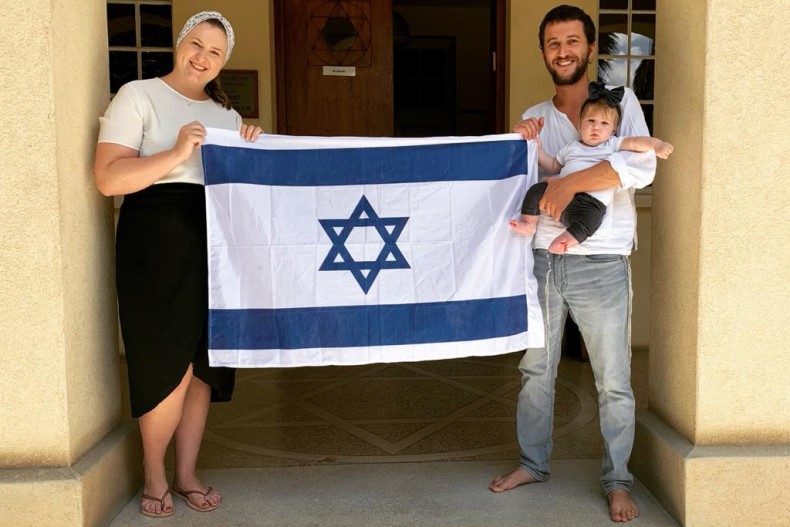
Chicago to Israel to Kenya
A family’s story of living Jewishly on three continents Michelle Cohen World May 28, 2021 Avital, Tzofia, and Netanel Kaszovitz outside their home in Nairobi on Yom HaAtzmaut. When Avital Kaszovitz prepared to be a Modern Orthodox shlicha (emissary) to the Jewish community in Ke
Read more -
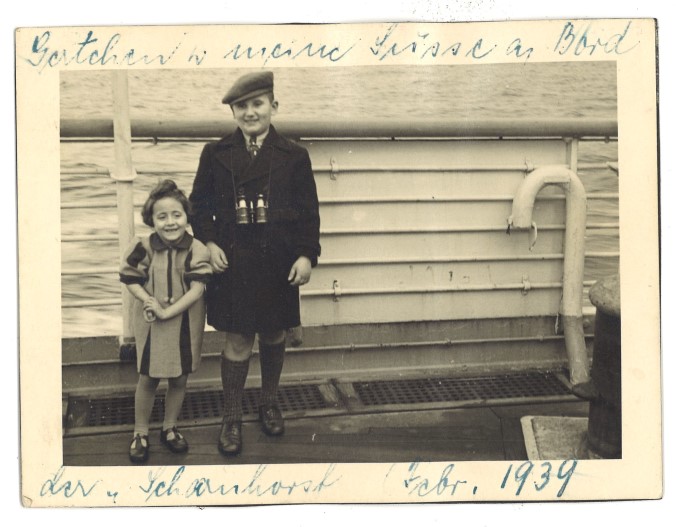
New exhibit spotlights the experience of ‘Shanghai Jews’
Explore a new Illinois Holocaust Museum and Education Center exhibit
Read more -
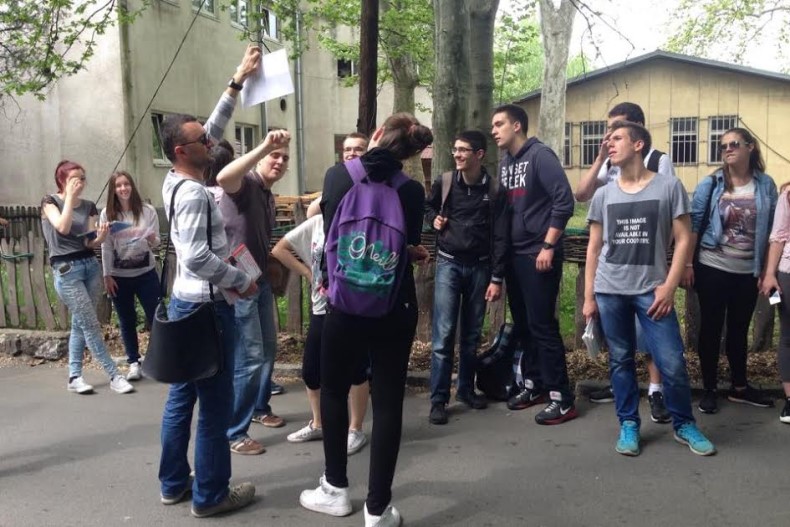
Europe’s brave new teachers of the Holocaust
Teaching the Holocaust in the modern era has its difficulties and rewards.
Read more
Jewish Chicagoans serve up advice for the graduates…Mazel tov!
Rabbi Michael Siegel, Chicago: Live with a sense of urgency, an awareness that we have but limited time to do great things. Wisdom comes when we apply the knowledge that we have gained to real world experiences today. Teach us the number of our days that we may gain a heart of wisdom. (90:12).
Ellen Hattenbach, Deerfield: In college, do not focus on what your major will be but rather who you want to become. And join Hillel or an on-campus Jewish organization to remain informed, active, belonging, and true to your being.
Adam Miller, Chicago: Network, network, network. Whether you have a job or not, things can change very quickly. Before your life gets busy, search for 2-3 networking events per month and take some of your contacts out for coffee.
Annice Moses, Glencoe: Before you even own a goldfish, travel. The world is a big place and before you decide what you want to do and be in it, you gotta see it.
Aaron B. Cohen, Evanston: It’s not the diploma, it’s the knowledge that counts. A framed piece of paper with fancy script is a nice addition to any office or den, and receiving a document like that helps make graduation day joyful. But what’s between the ears (and I’m not talking about the smile) counts more than anything. If you graduate without gaining knowledge, wisdom, and experience, then it’s just worth a piece of paper. The job of a student is to make it worth much more!
Dana Westreich Hirt, Chicago: Take a gap year! Life is not a race. An overwhelming percentage of colleges and universities will allow you to defer your acceptance for a year. Use the time to grow as a person; take a break after the rigorous grind of high school; give back through volunteerism and service learning; explore your areas of interest unconstrained by the rigidity of high school curricula; become a citizen of the world through travel, language study, and cultural immersion; earn some money and contribute to your college fund; learn a skill; gain some independence; challenge yourself, think outside of the box, and learn from your successes and failures as you navigate a year of exploration, growth, and self-discovery.
Josh Beiler, Chicago: Be bold, be brave, and seek out areas of inspiration in your career decisions. The money will follow. If you seek money first, passion and innate motivation will be much more difficult to find. Success is most often achieved and maximized when passion is inextricably linked to the arduous tasks inevitably involved.
Rabbi Scott Aaron, Chicago: Remember to pack some meaningful Jewish memories along with everything else you pack for college. A kippah from camp, a mezuzah for your dorm room, a menorah from home for Chanukah, a Jewish star necklace from Mom, whatever will make you feel closer to your family and friends back home when you can’t get there and have to spend Jewish holidays on campus. You may not think you will want them now, but they will be there when you do just like your family.
Linda S. Haase, Skokie: When you’re looking for a job, think beyond salary and job description, because whether you like your job will depend a lot on who you work for and with. When you interview for a position, consider whether the staff and supervisors you meet seem like people you’ll like and respect, because this can make all the difference in your job satisfaction. Pictured: Linda, receiving her master’s degree from Northwestern University’s Medill School of Journalism in 1983.
Rabbi Lizzi Heydemann, Chicago: “Yehi or!” Let there be light! Your job is to get ignited, to be on fire- for justice, for music, for learning, for whatever your passion is, for leaving the world a little more illuminated than you found it. These were God’s first words… and man, did they leave a legacy of creativity. Your light will, too.
Other stories
-
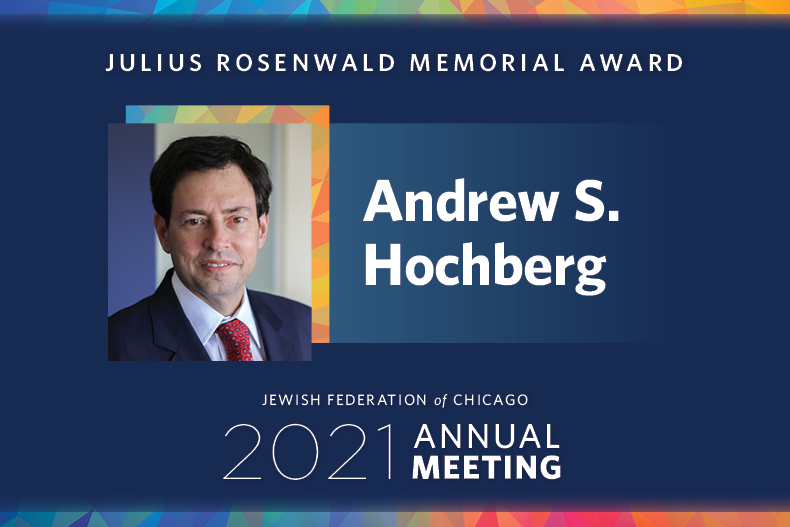
Meet Andrew S. Hochberg, 2021 Julius Rosenwald Memorial Award recipient
Celebrate Andy Hochberg at the virtual Annual Meeting on Sept. 14
Read more -
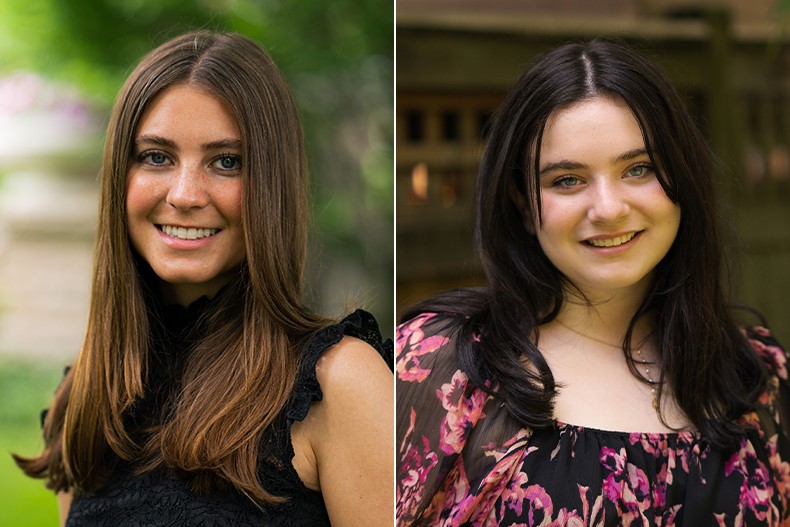
Two local teens win national recognition
Recipients of the annual Diller Teen Tikkun Olam Awards
Read more -

Celebrating six young award winners cultivating the community
Introducing young adult award winners
Read more
Billy was three years old at the time.
Today, he’s 21-and though it stung, that advice remains some of the best I’ve ever received. Yet, even once I started to re-evaluate what I’d pictured for my son’s future-rethinking what I’d assumed about where he would go to school, what kind of job he might have, where he would live-I still needed help planning for this new reality.
After Billy’s diagnosis, my life became a blur of paperwork. I was swimming in referrals, medication trials, insurance denials-not to mention the EEGs, IEPs, and IQ tests. The acronyms alone made my head spin. And it didn’t get easier as he got older-the closer Billy came to aging out of the school system, the more work I realized I needed to do. All the planning and learning was practically a full-time job.
So, I made it my actual job. I started working in the disability community and learned about accessing services and setting up person-centered plans for the future.
Today, Billy takes college classes, works part-time, and recently got his driver’s license. He is on the path to a paid full-time job and independent living. And me? I’m here to tell other parents of kids with special needs: You don’t have to do this alone. It doesn’t have to be so hard.
Here’s my ‘cheat sheet’ to get you started:
Have a young child who was just diagnosed?
- Sign up on the PUNS (Prioritization for Urgency of Need for Services) list and get a case manager ( www.dhs.state.il.us, type in PUNS ).
- Find a support group. Check out national web sites like www.autismspeaks.org , www.upsfordowns.org , or www.cerebralpalsy.org if you need local contacts.
- Don’t have an Individualized Education Plan yet? Go to www.Bridges4Kids.org and pick some goals that are important to your child. Set up an IEP meeting at your child’s school.
- Consult an attorney about starting a Special Needs Trust for when you are gone.
- Use your network. The Jewish community is full of organizations that can help. Check out Jewish Child and Family Services ( http://jcfs.org/ ) and Keshet ( https://keshet.org/ ) to see if any of their programs might be right for you.
Planning for middle school and high school?
- Think about what your child loves to do and how you can apply that to job skills for the future. What pre-employment skills do you need to teach now for your child to be successful later? I suggest a Person-Centered Plan ( www.lookbackplanforward.com) , a facilitated brainstorming session where you set goals and plan the steps to get there. (Full disclosure: I train the Illinois facilitators. We do one for my son every three years.)
- Look for social and recreational opportunities for your child through organizations like Best Buddies ( www.bestbuddiesillinois.org ), Special Olympics ( www.soill.org ), synagogue youth groups, or the Friendship Circle ( http://www.fcil.org/ ).
- Have a school transition planning meeting at age 14 1/2.
- Learn about Employment First ( www.dol.gov/odep/topicsyouthsoftskills/softskillspdf) .
- Don’t forget to renew your PUNS status every year.
- Update your Special Needs Trust.
Have a child in high school and don’t know what’s next?
- Schedule another Person-Centered Planning meeting. Discuss job coaching, networking opportunities, and potential housing options as your child (and you) age. Related: Check out CJE SeniorLife’s LINKAGES program ( http://cje.net/linkages ).
- Continue to train toward independence with chores at home and outings into the community for things like shopping, banking, and taking public transit.
- There’s a long list of things to do when your child turns 18: Have them sign the Delegation of Rights to Make Educational Decisions form. Get an ID card. Register to vote. Make guardianship choices and Power of Attorney plans. Apply for SSI (Supplemental Security Income), Medicaid, and reduced transit fares. Become a LIGAS Class Member ( https://www.dhs.state.il.us , type LIGAS).
- Update your Special Needs Trust.
Teri Steinberg is a frequent lecturer, facilitator, consultant, and trainer on disability issues, and has been interviewed many times for TV, radio, and print. She has worked in the disability community for over a decade through grants from the Illinois Council of Developmental Disabilities, the Department of Human Services and the Illinois State Board of Education. Steinberg consults transition programs, schools, and families on person-centered planning in keeping with the principles of self-determination and living an inclusive life in the community. She is also the founder of Plan A Better Future ( planabetterfuture.com ). For more information or personalized consulting, email[email protected].
Parents: Check out the following JUF-supported resources for people with special needs in Chicago’s Jewish community:
- Jewish Child and Family Services ( http://jcfs.org/ )
- Keshet ( https://keshet.org/ )
- CJE SeniorLife’s LINKAGES program ( http://cje.net/linkages ).
Other stories
-
Meet Andrew S. Hochberg, 2021 Julius Rosenwald Memorial Award recipient
Celebrate Andy Hochberg at the virtual Annual Meeting on Sept. 14
Read more -
Two local teens win national recognition
Recipients of the annual Diller Teen Tikkun Olam Awards
Read more -
Celebrating six young award winners cultivating the community
Introducing young adult award winners
Read more

Ray Asher has always loved baseball. As a boy growing up in the 1960s in Calumet City, on the border between Illinois and Indiana, he played on a team. But as much as he loved the game, his experience on the field wasn’t always positive. In a town with few Jews, Asher would hear his share of disparaging references to his being Jewish from the bleachers.
“When I was on the pitching mound, I remember hearing heckling from the sidelines,” he recalled.
So when Asher grew up, he knew he wanted to find a community with a large and active Jewish population where he and his family could feel comfortable as Jews, and where that comfort would extend to all facets of life–even the baseball field.
Asher and his wife settled in Skokie, became Shabbat observant, and had two sons, who love baseball like their dad. The boys joined Skokie Youth Baseball, a competitive baseball program where Shabbat observant children play baseball with Jewish values in mind, and where they don’t roll -or in this case pitch –on Shabbat, when many other leagues hold games.
Skokie Youth Baseball–under the umbrella of Skokie Youth Sports, which also has a girls softball team–is 95 percent Jewish, made up of predominantly Shabbat observant Jews, but is open to everyone, Jews and non-Jews alike, and the players play against both Jewish and non-Jewish teams. Today, more than 200 children-primarily boys and a few girls-play for Skokie Youth Baseball.
Players, coaches, and parents involved in the program say they hold themselves to a very high standard because they know they’re representing all Jews when they’re out there on the field. “We’re teaching Jewish values,” said Steven Greenberg, President of Skokie Youth Sports and a former coach for the baseball team. “It’s expected that our coaches behave in a different manner because we’re wearing kippahs and we know we’re representing the Jewish community.”
Skokie Youth Baseball is a feeder program for Chicagoland Jewish High School and Ida Crown Jewish Academy baseball teams. The two Jewish schools play each other twice each season.
In May, the Columbus Baseball Invitational, known as the Jewish world series, welcomed Jewish high schools from around the nation. The Ida Crown Jewish Academy baseball team won third place in the series.
Greenberg’s son, Seth, is a senior at Ida Crown and a player on the school’s baseball team. He has adored baseball since he was barely big enough to hold a bat. He loves that idyllic picture that baseball paints for so many. “It’s that perfect scene of walking onto the field when it’s 72 degrees, and the sun is out and there isn’t a cloud in the sky,” he said.
At age 6, Seth played tee-ball, and went on to play baseball for Skokie Youth where he says he felt “camaraderie, security, and brotherhood” with his Jewish teammates. Now a senior at Ida Crown, he plays catcher–and sometimes pitches–for his high school baseball team. He is graduating this spring, but will make use of his love of sports next year at Syracuse University, where he plans to study sports management.
Ultimately, the Skokie program is teaching the players about so much more than baseball. “We’re trying to help the kids in the community grow to be better human beings,” said Greenberg, the father. “Baseball is part of it, but we’re truly teaching them sportsmanship and life skills. This is about understanding that there is a winner and loser, but it’s also about walking off the field with your head held high. [This will help them] not just in sports, but in life.”
Other stories
-
Meet Andrew S. Hochberg, 2021 Julius Rosenwald Memorial Award recipient
Celebrate Andy Hochberg at the virtual Annual Meeting on Sept. 14
Read more -
Two local teens win national recognition
Recipients of the annual Diller Teen Tikkun Olam Awards
Read more -
Celebrating six young award winners cultivating the community
Introducing young adult award winners
Read more
With strong bipartisan support and zero “no” votes, the Illinois General Assembly passed SB 1761 prohibiting state pension funds from investing in foreign companies that boycott Israel. Illinois is now the first state to pass binding legislation countering the Boycott, Divestment and Sanctions (BDS) movement.
SB 1761 passed the Illinois House on May 18, following the Senate’s approval on April 22. Gov. Bruce Rauner immediately tweeted that he will sign the bill.
“In the face of growing number of public displays of anti-Semitism in Europe often taking the form of anti-Israel protests, I wanted to sponsor a bill with consequences for foreign companies that publicly declare an economic boycott of Israel,” said State Sen. Ira Silverstein, chief sponsor in the Senate. “Working closely with Richard Goldberg, deputy chief of legislative affairs for Gov. Rauner, and with State Rep. Sara Feigenholtz, chief House sponsor, we did just that with SB 1761.”
Modeled on earlier state legislation that divested from Darfur and Iran — legislation that JUF was also centrally involved in – SB 1761 builds on Federal law prohibiting American companies from boycotting Israel and establishes the Illinois Investment Policy Board to ensure compliance with the state’s three operative divestment laws (Darfur, Iran and now Israel).
“This legislation counters efforts to economically isolate Israel,” said State Rep. Sara Feigenholtz. In response to critics who are concerned about the increased costs to the state, Feigenholtz explained, “the creation of the Illinois Investment Policy Board will actually reduce the costs by creating one consolidated list, making it less costly to monitor compliance.”
“At this time of heightened partisanship in Washington and Springfield, it was inspiring to see legislators from all the caucuses — Republican and Democratic, Black, Latino, and Downstate — come together over one issue,” said Suzanne Strassberger, JUF’s Associate Vice President for Government Affairs, who worked closely with the sponsors in Springfield to move this legislation forward.
“Our friends in Israel should know that Illinois stands with them and we deeply value their statehood,” said State Sen. Darien LaHood, an early co-sponsor of the bill.
State Rep. Art Turner said, “Israel and Illinois have always been strong partners. Investing in companies that seek to weaken Israel economically is against the broad interests of Illinois taxpayers.”
Speaking in support of the bill during the House floor debate, State Rep. David Harris said, “What is sauce for the goose is sauce for the gander. It is hypocritical for the BDS proponents to criticize the intent behind this bill as an assault on their rights when they are advocating for universities to boycott Israel.”
In addition to lobbying in Springfield, JUF helped mobilize voter outreach to legislators.
“Members of our community are passionate and regularly ask how they can fight BDS in a meaningful way,” said David Golder, chair of JUF’s Government Affairs Committee. “When they were presented with this opportunity to make a difference, they responded quickly to the action alerts with over 1,400 emails, phone calls, and electronic signing of witness slips.”
“We were proud to be part of the effort to pass this historic anti-BDS bill,” added Government Affairs Committee State Chair Steve Greenbaum, “and are pleased by the wide press coverage highlighting the unanimous support our General Assembly provided in the fight against those who seek to delegitimize the State of Israel.”
Passage of anti-BDS legislation by the Illinois General Assembly drew extensive international and national coverage, and frequently highlighted JUF’s strong advocacy on behalf of the bill. ( View a list of media outlets – with links – that covered the story.)
Also, the Chicago Tribune published an op-ed by JUF Executive Vice President Jay Tcath , who was also interviewed by Jerusalem Post chief political correspondent Gil Hoffman for Gil’s radio show in Israel.
“JUF played a critical role in the passage of this important legislation,” said Richard Goldberg, Governor Rauner’s deputy chief of staff for legislative affairs. “Gov. Rauner appreciates JUF’s strong partnership in combatting BDS and anti-Semitism around the world.”
“At the core of the BDS movement is a quest to delegitimize Israel as a sovereign, democratic and Jewish state,” said JUF President Steven B. Nasatir. “This bipartisan legislation sends a strong message that Illinois will not tolerate such efforts. We anticipate that this legislation will become a model for similar action in many other states.”
Other stories
-
Meet Andrew S. Hochberg, 2021 Julius Rosenwald Memorial Award recipient
Celebrate Andy Hochberg at the virtual Annual Meeting on Sept. 14
Read more -
Two local teens win national recognition
Recipients of the annual Diller Teen Tikkun Olam Awards
Read more -
Celebrating six young award winners cultivating the community
Introducing young adult award winners
Read more
Passage of anti-BDS legislation by the Illinois General Assembly drew extensive international and national coverage, and frequently highlighted JUF’s strong advocacy on behalf of SB 1761.
View coverage featuring JUF:
- JUF Executive Vice President Jay Tcath op-ed in theChicago Tribune, “The high cost of boycotting Israel”
- Jay Tcath interviewed on podcast by Gil Hoffman of theJerusalem Post
- Jay Tcath letter to the editor in Chicago Sun-Times in response to op-ed “Illinois has no business boycotting those who boycott Israel”
Also view coverage in:
- Haaretz
- Times of Israel
- Arutz Sheva
- i24 News
- TheTower.org
- The Tower again
- Wall Street Journal
- Washington Post
- Pensions & Investments
- The Forward
- Tablet Magazine
- The Algemeiner
- JTA
- Jewish News Service
- JNS again
- World Jewish Congress
- JPUpdates.com
- State Journal-Register
- Crain’s Chicago Business
- WBBM NewsRadio
- Chicago Jewish Star
- The Daily Northwestern
- New York Daily News
- jweekly.com
Other stories
-
Meet Andrew S. Hochberg, 2021 Julius Rosenwald Memorial Award recipient
Celebrate Andy Hochberg at the virtual Annual Meeting on Sept. 14
Read more -
Two local teens win national recognition
Recipients of the annual Diller Teen Tikkun Olam Awards
Read more -
Celebrating six young award winners cultivating the community
Introducing young adult award winners
Read more
With a 102-0 vote in the House of Representatives on May 18 following a 49-0 vote in the Senate, Illinois became the first state to pass legislation countering the Boycott, Divestment and Sanctions movement. With the passage and impending signing of Senate Bill 1761, state pension systems supported by tax dollars will no longer invest in foreign companies that boycott Israel.
“At the core of the BDS movement is a quest to delegitimize Israel as a sovereign, democratic and Jewish state,” said Jewish United Fund President Steven B. Nasatir. “This bipartisan legislation sends a strong message that Illinois will not tolerate such efforts.
“Working with colleagues and friends throughout America, we anticipate that this legislation will become a model for similar action in many other states,” Nasatir said.
“Illinois has strong economic, scientific, educational and cultural ties with Israel, which bring jobs and other benefits to the citizens of our state,” said JUF Executive Vice President Jay Tcath. “Investing in companies that seek to weaken Israel economically is antithetical to the broad interests of Illinois taxpayers.”
“Over the past several weeks, members of our community responded quickly to our action alerts, and made sure their voices were heard,” said Steve Greenbaum, JUF’s vice chair of state government affairs. “We are grateful for their efforts, which we know made an impact.”
From the bill’s inception, JUF strategized closely with the Governor’s Office and Sen. Ira Silverstein and Rep. Sara Feigenholtz, the bill’s chief co-sponsors, to help ensure its successful passage. In the end, the bill had 22 co-sponsors, including members of the Black and Latino Caucuses, and Republicans and Democrats alike.
“We were thrilled to work closely with the governor, leaders from both parties in the General Assembly, and people from throughout the state to advance the bill,” said David Golder, chair of JUF’s Government Affairs Committee. “We look forward to Gov. Rauner’s signature, and applaud the swift and decisive action by the Illinois General Assembly.”
Other stories
-
Meet Andrew S. Hochberg, 2021 Julius Rosenwald Memorial Award recipient
Celebrate Andy Hochberg at the virtual Annual Meeting on Sept. 14
Read more -
Two local teens win national recognition
Recipients of the annual Diller Teen Tikkun Olam Awards
Read more -
Celebrating six young award winners cultivating the community
Introducing young adult award winners
Read more
With strong bi-partisan support, Illinois moved closer this week to becoming the first state to pass legislation countering the Boycott, Divestment, and Sanctions (BDS) movement.
SB 1761, which was voted unanimously out of the House Executive Committee on May 13, is expected to be voted on by the end of next week. Governor Bruce Rauner has already stated he will sign the bill.
“In the face of growing number of public displays of anti-Semitism in Europe often taking the form of anti-Israel protests, I wanted to sponsor a bill with consequences for foreign companies that publicly declare an economic boycott of Israel,” said State Senator Ira Silverstein, the bill’s chief sponsor in the Senate. “Working closely with Richard Goldberg, deputy chief of legislative affairs for Governor Rauner, and Representative Sara Feigenholtz, and with the support of Speaker Madigan who was a co-chief sponsor, we did just that with SB 1761.”
Modeled on earlier state legislation that divested from Darfur and Iran, SB 1761 requires the state’s five pension funds to divest from foreign companies that boycott Israel. Federal law already prohibits American companies from boycotting Israel. An Illinois Investment Policy Board will ensure compliance with the state’s three operative divestment laws (Darfur, Iran and Israel).
“This legislation is a way to counter efforts to economically isolate Israel,” said State Rep. Sara Feigenholtz, chief sponsor in the House. In response to critics who are concerned about increased costs to the state, Feigenholtz explained, “the creation of the Illinois Investment Policy Board will actually reduce the costs by creating one consolidated list, making it less costly for the State to monitor for compliance. I am proud to advance this legislation.”
“People ask how they can fight BDS in a meaningful way,” said David Golder, Chair of the JUF Government Affairs Committee. “Our community was eager to be heard and they responded quickly to our action alerts . If you have not already done so, we urge you to call your legislators.”
“At the core of the BDS movement is a quest to delegitimize Israel as a Jewish state,” said JUF President Steven B. Nasatir. “So we were thrilled to work with the Governor, leaders from both parties in the General Assembly, and people from throughout the state to advance the bill. We hope it quickly becomes a template for similar action in many other states.”
Other stories
-
Meet Andrew S. Hochberg, 2021 Julius Rosenwald Memorial Award recipient
Celebrate Andy Hochberg at the virtual Annual Meeting on Sept. 14
Read more -
Two local teens win national recognition
Recipients of the annual Diller Teen Tikkun Olam Awards
Read more -
Celebrating six young award winners cultivating the community
Introducing young adult award winners
Read more

This spring, the JUF Tikkun Olam Volunteer (TOV) Network partnered with Israel Education Center (IEC) and local Hillels to launch Chicago’s inaugural Good Deeds Day.
Good Deeds Day was started by Jewish philanthropist and businesswoman Shari Arison to catalyze positive social change. What started in Israel in 2007 now spans 50 countries across the globe and is an internationally recognized movement. With the tagline, “Made in Israel. Good for the World,” Good Deeds Day was intended to shift the focus from hostile anti-Israel sentiment and divestment to the positive impact Israel is having on the world.
Six local Hillels signed on to launch Good Deeds Day on their own campuses, each creating volunteer projects that resonated with them. Columbia College hosted a blood drive and collected enough blood to save 70 lives. Students relayed the positive message it sent to students of all streams, that Hillel is committed to bettering their community and applying Jewish values to their daily lives. It was an important message, especially in light of the anti-Israel sentiments pervading campuses.
Loyola University partnered with a Just Harvest, Inspiration Corporation, Cornerstone Community Outreach, Imerman Angels, and Ronald McDonald House for projects focused on hunger relief and raising the spirits of the sick. Students expressed the poignant timing of the event, only a day after the student government passed a divestment from Israel bill.
Students appreciated the opportunity to portray a different side of Israel and to partner with local student groups, including Alpha Psi Lamda (Latino student group) and Loyola Coalition for the Homeless, in addition to several others. The event sparked interest in future partnerships with Hillel, and provided an opportunity for student government members to show up in support and participate in an Israel-related event.
UIC used Good Deeds Day as an opportunity to create cards for children at both the Lurie Children’s Hospital in Chicago and a children’s hospital in Israel.
Northern Illinois University scheduled Good Deeds Day during their campus ‘Week of the Young Child’ and partnered with the Child Center in donating time to read, interact, and assist in activities with children throughout the day. It gave Hillel positive exposure on campus for the good they are doing in the community.
Northwestern University hosted a sandwich making drive for Campus Kitchens during Israel Celebration Week. Students also partnered with Cranes for Courage to make origami cranes that were sent to patients in mental hospitals or suffering from addiction. “Good Deeds Day provided students several easy and enjoyable opportunities to truly make a positive impact on those in need,” said one Northwestern student. “It was quite a successful initiative and I think Northwestern students should commit to continuing to sponsor this event for years to come.”
At the University of Illinois at Urbana-Champaign, students packed 800 bags of rice that were donated to the Wesley Food Pantry in their community and featured a “Giving Tree” that offered multiple opportunities to carry out random acts of kindness on their campus, with friends, family, and the community.
Good Deeds Day in Numbers:
- Over 1,500 individuals impacted
- 700 sandwiches made/donated to local shelters
- 800 bags of rice packed for local shelters
- 180 cards sent to local and Israeli hospitals
- 20 random acts of kindness
- 70 lives saved by blood donations
- 50 children impacted
- 207 volunteers
- 29 co-sponsors/organizations involved
- 6 college campuses participated
Yael Brunwasser is the director of Volunteer Services (TOV) of the Jewish United Fund of Metropolitan Chicago.
Other stories
-
Meet Andrew S. Hochberg, 2021 Julius Rosenwald Memorial Award recipient
Celebrate Andy Hochberg at the virtual Annual Meeting on Sept. 14
Read more -
Two local teens win national recognition
Recipients of the annual Diller Teen Tikkun Olam Awards
Read more -
Celebrating six young award winners cultivating the community
Introducing young adult award winners
Read more
(JTA) — A bill that would bar state pension funds from including companies that participate in the Boycott, Divestment and Sanctions campaign against Israel passed an Illinois State House of Representatives committee.
The bill on Wednesday was unanimously approved by the Illinois State House of Representatives Executive Committee by a vote of 10-0 and will now move forward for a vote by the full chamber. It previously passed the Illinois State Senate unanimously, 49-0.
The bill requires the state’s pension system to remove companies that boycott Israel from their portfolios. The bill, an amendment, is based on existing legislation that the Illinois Investment Policy Board currently enforces, mandating that state pension funds be divested from foreign firms doing business in Iran, Sudan or other countries with known human rights violations.
In a statement, B’nai B’rith International said it “applauds Illinois citizens and their representatives for taking such a strong stance against a movement rooted in anti-Semitism that ultimately impedes the peace process by opposing constructive dialogue between Israel and Palestinians.”
The Illinois Coalition to Protect Academic Freedom and Free Speech is opposing the bill. Among the groups participating in the coalition are: CAIR-Chicago, Jewish Voice for Peace-Chicago, Palestine Solidarity Legal Support, Committee for a Just Peace in Israel and Palestine, and Arab-Jewish Partnership for Peace and Justice in the Middle East.
The Indiana and Tennessee state legislatures have both passed nonbinding resolutions opposing boycotts of Israel.
Other stories
-
Meet Andrew S. Hochberg, 2021 Julius Rosenwald Memorial Award recipient
Celebrate Andy Hochberg at the virtual Annual Meeting on Sept. 14
Read more -
Two local teens win national recognition
Recipients of the annual Diller Teen Tikkun Olam Awards
Read more -
Celebrating six young award winners cultivating the community
Introducing young adult award winners
Read more