Visit JUF’s official Ukraine information page.
It started in November with peaceful protests against government actions to strengthen political ties with Russia instead of the European Union. It snowballed over the next few months into violent confrontations between police and protestors, resulting in dozens dead, hundreds injured, a fugitive ex-President, and scenes of destruction that have gripped the world. Now Russia has injected itself into the situation. And it’s not over.
Although the estimated 300,000 Jewish residents in the capital city of Kiev and throughout Ukraine had not originally been outright targets of violence, it has touched them like everyone else. Some Jews in Kiev live close to Independence Square, site of protest encampments and some of February’s deadliest clashes, and are afraid to leave their houses. On Feb. 23, the Giymat Rosa Synagogue in Zaporizhia, 250 miles southeast of Kiev, was firebombed. Five days later, swastikas and “Death to the Jews” were painted on a synagogue in Ukraine’s Crimea region.
There are rapidly growing concerns about deepening divisions in the country, the rise of the radical right, and the impact of Russia’s intervention.
In repsonse to the crisis, JUF has made available $110,000 in emergency funds to our agencies on the ground — the American Jewish Loint Distribution Committee (JDC), the Jewish Agency for Israel and World ORT. This is over and above its significant ongoing support.
Since those agencies have supported Jewish life and organizations in Ukraine for decades, they are able to step up when the need for help intensified.
- JDC has activated its emergency response network to ensure continued home deliveries of food, medicine, heating and cooking fuel, and sustained life-saving care at home for the elderly. JDC has increased security at select Jewish communal institutions and Hesed social welfare centers. For updates, please visit JDC’s Ukraine page .
- The Jewish Agency has tapped its Emergency Assistance Fund, started in 2012, to bolster security at Ukraine’s many Jewish institutions, including synagogues, yeshivas and community centers. For updates, please visit the Jewish Agency’s website .
- World ORT has launched a campaign to raise $200,000 to fund increased security at four of its schools in Ukraine. Each school has several hundred students, many of whom travel to class through now-dangerous areas; the father of a student at the Chernovtsy school was killed during clashes in Kiev on February 20. Plans include hiring additional security guards and installing closed-circuit TV and alarm systems on school grounds. For more information on World ORT’s Ukraine programs and needs, please read ORT’s Ukraine prospectus and school security plan .
- Additionally, NCSJ is sending out frequent communication briefs informed by various governmental, non-governmental, and Jewish communal sources. To receive updates, please visit NCSJ’s website .
These efforts, and so many more, are being funded by JUF dollars. Donate to the 2014 JUF Annual Campaign now to ensure we can continue to help Jews around the world during times of crisis.
Other stories
-
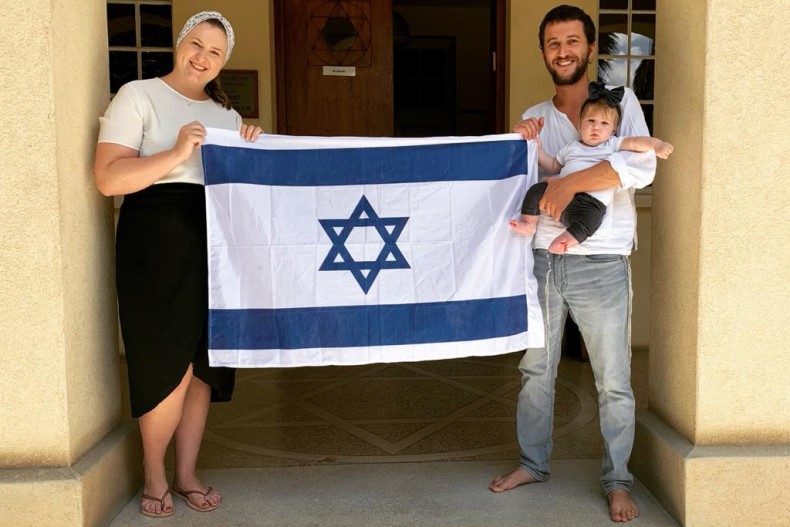
Chicago to Israel to Kenya
A family’s story of living Jewishly on three continents Michelle Cohen World May 28, 2021 Avital, Tzofia, and Netanel Kaszovitz outside their home in Nairobi on Yom HaAtzmaut. When Avital Kaszovitz prepared to be a Modern Orthodox shlicha (emissary) to the Jewish community in Ke
Read more -
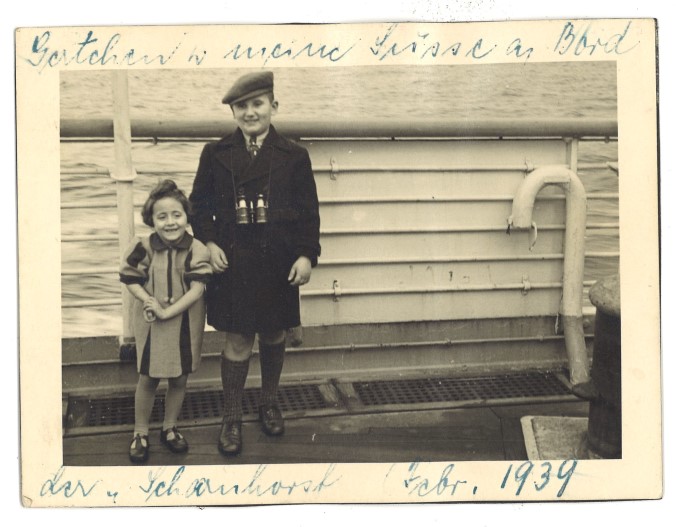
New exhibit spotlights the experience of ‘Shanghai Jews’
Explore a new Illinois Holocaust Museum and Education Center exhibit
Read more -
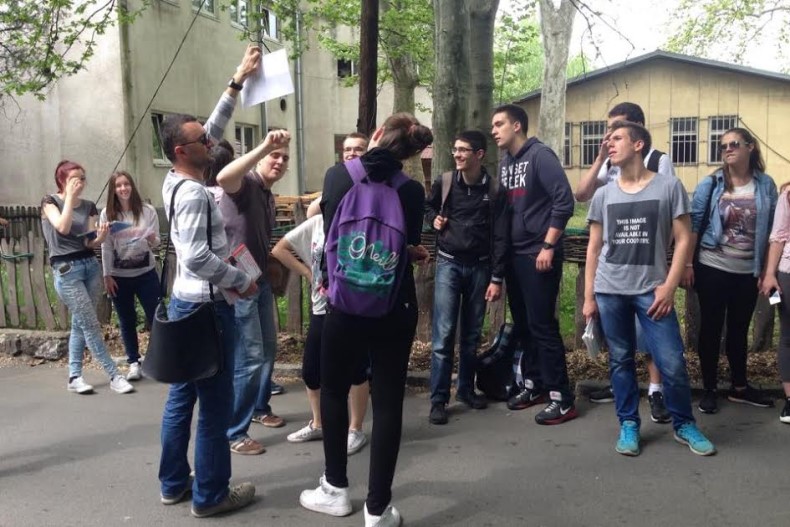
Europe’s brave new teachers of the Holocaust
Teaching the Holocaust in the modern era has its difficulties and rewards.
Read more
It was an interesting mix of things-delayed and instant gratification, involved planning and intense spontaneity, familiar faces and faces that became familiar and faces that I’ll probably never see again, long hours of work and leaving with a deep, joyous satisfaction after five days. At its most basic, helping others is an amazing experience that improves the lives of all who are involved.
Illini Hillel at the University of Illinois at Urbana-Champaign, a department of JUF’s Campus Affairs and Student Engagement, sponsored an Alternative Winter Break volunteer project with a group of 17 students from diverse backgrounds and two staff members. Our group included four non-Jewish students along with Jewish students representing different streams of Judaism. This Break was the first through Hillel that focused on a local service project. Students are so wrapped up in their on-campus university lives, it’s important to remember and appreciate the fact that there are many needs so close to home that we ignore. Volunteering in the surrounding cities helps students bridge connections between the university and the local communities, a connection that turned out being a very positive and insightful experience.
Not only were our students diverse, but our work experiences were as well. We went to many places in Champaign-Urbana: a nursery where parents with severe difficulties drop off their children for a bit; a retirement home; a church; a soup kitchen for multiple days; a Habitat for Humanity home-build sight for two days; and a local elementary school to talk with kids and help the school with some projects.
Additionally, we helped with tornado disaster relief in Penfield and Washington, Ill., where the damage was extensive. While a large undertaking, we cleared an entire lot of debris in one day. It was so satisfying to leave seeing a house lot completely transformed. What we did seemed like a drop in a bucket, but it was a powerful drop and I know that with enough determination the drops eventually will fill the bucket.
In addition to our work, we also had speakers come in-our University’s Chancellor, the Dean of Social Work, and the Mayor of Champaign. Our group was able to experience dinners with members of the community, too. The main emphasis was about coming together to help local communities, to gain a stronger connection with them, and to have a fun, full week of volunteering.
While some may think that Winter Break is meant to be spent skiing or lying on a beach, this service break was a rewarding and unforgettable experience. From the varying activities came the simple benefits of helping others, having new experiences, learning new things, connecting better with local communities, and creating and fostering friendships in the process.
Illini Hillel will again be participating in an Alternative Break trip in Illinois on March 24 to 27. We plan to continue visiting sites that have been devastated by the tornadoes in towns like Gifford and Washington, Ill. We will also be helping out the local synagogue in Champaign, Sinai Temple, by painting some classrooms. Every morning we will start our day by volunteering at the Daily Bread Soup Kitchen as a way to continue connecting with the local, non-campus community. Lastly, we plan to bring in new speakers from the communities to help inspire us each evening before we take on the new day. We are so excited to get out in the local community again and make a difference. There’s always an opportunity to lend a helping hand-take the opportunity. You will gain far more than you give.
Jason Steinberg is a junior in Psychology at University of Illinois at Urbana-Champaign and Tori Weinstein is a sophomore in Communications at University of Illinois at Urbana-Champaign.
Other stories
-
Local campus administrators convene on hate speech, bias
JUF and ADL brought together 17 student safety, diversity and inclusion and student affairs administrators and Hillel representatives from various Illinois campuses to discusses issues of hate speech and bias.
Read more -
Engaging students about Israel on campus
Too often we hear about difficulties facing Jewish college students on Illinois campus, but to focus solely on the politics gives only one piece of the complex narrative that is Jewish life on campus.
Read more -
Hillel International launches fellowship initiative to train young Jewish professionals
The Springboard Fellowship will train cohorts of young Jewish professionals in highly-valued skillsets and place them at local Hillel campuses for two years.
Read more
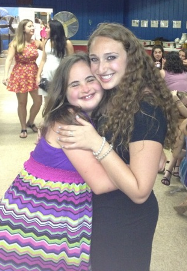
This article was previously published on JCC Camp Chi’s Winkle’s Blog as part of a four-part series in honor of Jewish Disabilities Awareness Month.
If you know my camper, Kelly, you would agree that she is funny, creative, spunky, an awesome dancer, and a great friend. These are just a few characteristics that would come to mind if her cabinmates, counselors, and I, her one-on-one counselor, were asked to describe her wonderful personality.
Kelly has been my camper at Camp Chi for the past two summers. She loves horseback riding, dancing, and swimming in the pool with her friends. Like all campers, she has made long lasting friendships over the past four years and looks forward to returning to camp each summer.
Kelly has special needs, and she is able to enjoy the overnight camp experience thanks to Camp Chi’s partnership with Keshet, an organization that provides educational, recreational, and vocational programs for individuals with special needs. While Kelly benefits greatly from spending four weeks in the camp environment, it is her typically developing peers who I believe gain the most from building a friendship with her.
Living with a girl who has Down Syndrome has given many young campers an opportunity to see Kelly – and other individuals with special needs – beyond their disabilities. These experiences have promoted the idea that a person with special needs is more than just what their disability entails. Campers are able to realize that Kelly is more than just a girl who has Down Syndrome, and they learn to see her for her unique and lively personality.
From sharing meals, going to specialties, and even on late-night adventures, the campers in Kelly’s cabin have developed so many positive values that will hold true throughout the rest of their lives. Kelly’s genuine friendships with her cabinmates are proof of the maturity and growth that these middle school girls are capable of.
After working with Keshet and Camp Chi, I’ve been able to witness all the benefits that an overnight camp can bring to individuals with special needs. I’ve had the privilege to watch Kelly become more and more independent over the years, and I know that coming to camp has helped her gain so many new skills.
I am so proud to work with these two organizations that give the incredible opportunity of attending a Jewish overnight camp to children with and without disabilities. I know this experience is so meaningful to all Camp Chi campers and is something that makes our summer camp truly special. I look forward to watching Kelly and other Keshet campers keep the Chi flame burning for many years to come.
Hannah Weiland is a sophomore at the University of Illinois majoring in Special Education. When she’s not busy with class, she also serves on the executive board of Sigma Delta Tau. Hannah has spent 10 summers at Camp Chi, and is a proud member of the summer staff of Camp Chi and Keshet.
Other stories
-
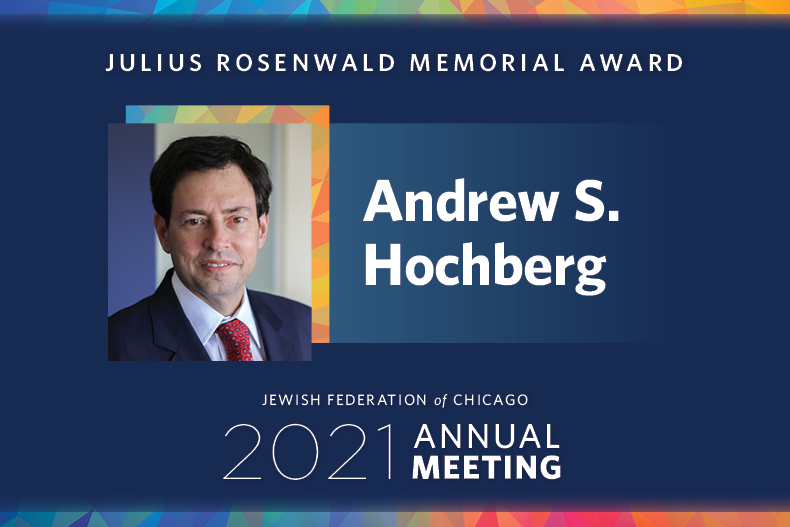
Meet Andrew S. Hochberg, 2021 Julius Rosenwald Memorial Award recipient
Celebrate Andy Hochberg at the virtual Annual Meeting on Sept. 14
Read more -
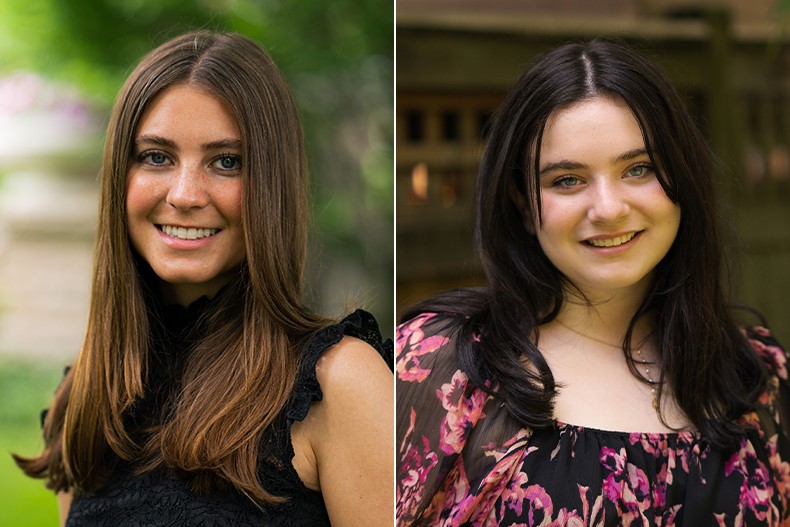
Two local teens win national recognition
Recipients of the annual Diller Teen Tikkun Olam Awards
Read more -

Celebrating six young award winners cultivating the community
Introducing young adult award winners
Read more
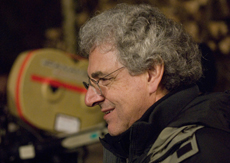
Chicago Jewish actor, director, and writer Harold Ramis died Monday morning at his Glencoe home. Ramis, 69, died from complications from Vasculitis, an autoimmune disorder that leads to inflammation and damage to blood vessels, according to the Associated Press.
Ramis’s filmography reads like an encyclopedia of great comic movies of the last 30 years. He was the brains–either writer, director or both–behind some of the most often quoted and referred-to film comedies of recent decades like Animal House, Meatballs, Caddyshack, Stripes, National Lampoon’s Vacation, Ghostbusters, Groundhog Day, and Analyze This. A Chicago native and a Chicago’s “Second City” alum, Ramis had returned to Chicago from Hollywood many years ago to be closer to his parents.
In the spring of 2009, JUF News interviewed Ramis over the phone, in advance of an appearance for the Chicago Jewish community. Here are excerpts from the interview:
JUF News: Your movies are constant pop culture references. How does it make you feel to know that so many of your films have made it into the cultural fabric of society?
Harold Ramis: Everyone starts out with big dreams, particularly people who want to be artists or have careers in entertainment. Then, when it happens, you dream about it, you picture it, you imagine what it’s going to be like, and then it’s so weird when it actually happens. You learn that it’s great on so many levels and in such a big way, it doesn’t change anything. You’re still who you are, you still have the same problems and issues and same insecurities, and the same responsibilities. I’m really glad people like these films and that a couple of them have lasted so long and I love doing what I’m doing, but I try not to be grandiose about it or be even more narcissistic than I already am.
Q. You don’t sound too narcissistic to me. Why did you choose a life in Chicago instead of Hollywood?
A. My wife grew up in L.A. and her father was a film director. We liked it out there. We weren’t really refugees to Chicago from there. I came back to Chicago to be near my parents, who were getting too old to travel. My mother passed away and my father is still around. He lives in Northbrook and is 94 years old. I wanted them to know my second family. I’d been married before and had been away all those years and thought this was a chance to reunite my family.
Q. Your movies have so much heart. Is there a common thread that all your movies share?
A. I’ve looked at the first few films I did and thought we were working off a kind of late 60s anti-establishment posture that came out of being in college, a kind of us versus them, the hipsters against the squares, the rebels against the institution. That was Animal House, Stripes, and Meatballs.
Having worked through that, I started looking at other concerns I have, like the movie Vacation was about what it was to be a good father and a good husband, two very difficult things to do in life.
Then I made three films–Groundhog Day, Multiplicity, and Bedazzled–about what it really is to be a good person in general. Groundhog Day is about how we use our time and priorities, losing our narcissism and vanity, taking a good look at others, and being in the moment. Then Multiplicity is about the divided self, the things that pull us in different directions and how can we integrate ourselves and be one person. Bedazzled is about the things we wish for that we think will make us happy, like money, fame, success, power, sex, good looks-all those things that we think are the keys to happiness and of course the film ends up saying that’s not where happiness comes from. They’re all about navigating in the midst of this great existential despair we’re all born into.
Q. Groundhog Day is probably referred to in conversation by my peers about once a week. I read that you said that that was the movie that got you to make “comedies that meant something.” Did you go on to follow that path?
A. I was always looking for meaning in the things I was doing, no matter how broad or silly or gross or crude they seem. To me, the [movies] meant something. Groundhog Day was the first film that was overtly about life and how we live it, and the response was so great. It was such a satisfying thing to invest a comedy with your real feelings about the most important issues in life. It made me want to do that again.
Q. How does your Jewish identity influence your work?
A. I use Passover as the central story of Judaism because, for me, it results in two concepts driving it. One is the concept of freedom, personal liberation, and political liberation. The other is the concept of justice-Moses receiving the law. For me, this fits perfectly with my own political liberalism and my yearning for social justice in the world. That’s where my Judaism connects with all my work and with this film in particular. I also wanted to say in this film that regardless of what anyone believes-creation, myths, or what God is or isn’t-the burden is still on us to act responsibly in the world.
Q. Do you feel a responsibility as a Jewish role model?
A. Yes, I feel that every Jew represents all Jews in the world…I have associations in Winnetka and Wilmette, not traditional Jewish territory. Sometimes I find myself in country clubs that were restricted or in settings where very few Jews are or have been. In places like that, I get even more Jewish than I am. I start speaking Yiddish and I just feel the need to represent. As an example to Jewish kids, I don’t push religion but I push integrity. I have incorporated a lot of Buddhism into my Jewish thinking too, which a lot of Jews have done. That kind of works for me because the [two religions] are similar. As a Jew and a Buddhist, I try to express a creed that is inclusive and focuses on personal responsibility.
Q. Is life as funny as your movies portray it to be or are your movies an escape from a world that isn’t really funny?
A. Someone once said that when we recognize that the world is insane, we have choices-we can see it as tragedy or we can see it as comedy. Everything can be funny, but not everything is funny. There are horrors and tragedies in life that I would not want to joke about or hear anyone else joke about it. Yet, conceptually, everything seems like fair game. I mourn any person’s death, but death as a concept is valid territory for comedy.
Q. What’s the secret to writing good comedy?
It’s all point of view. What fails in most comedy is not that the writers aren’t smart, but that [a lot of comedy] is like other things we’ve seen. To be funny, you need to be original. It’s like the kid who wants to play peek-a-boo. The first couple times it’s funny; the 400th time it’s not that funny…the kind of comedy that really scores is where you reveal or expose something that is deeply embarrassing or deeply shocking or deeply offensive in some way and put it out there in a clever, original way and allow people to process something that they haven’t been able to deal with or express in another way. That’s why there’s so much comedy about sexuality, because the funniest stuff is the stuff we’re most afraid of.
Q. I know you have been asked this a thousand times, but what’s your favorite film and why?
A. I never answer that question because I just love making films and every film I’ve made has been a great experience and I find it almost impossible to separate the results from the process…I love them all.
Harold Ramis is survived by his wife, Erica Ramos; sons Julian and Daniel; daughter, Violet, and two grandchildren.
Other stories
-
Meet Andrew S. Hochberg, 2021 Julius Rosenwald Memorial Award recipient
Celebrate Andy Hochberg at the virtual Annual Meeting on Sept. 14
Read more -
Two local teens win national recognition
Recipients of the annual Diller Teen Tikkun Olam Awards
Read more -
Celebrating six young award winners cultivating the community
Introducing young adult award winners
Read more
JCC Chicago is sponsoring a platform for social entrepreneurship, interpreted through a Jewish perspective – JCC PresenTense Chicago. A largely volunteer-run, vibrant grassroots community of entrepreneurs, mentors and volunteers, JCC PresenTense is fostering innovation by tapping into the talents and passions of everyday professionals in our community.
JCC is thrilled to announce the 2014 Fellowship Cohort of16 young entrepreneurs and professionals from the Jewish community who have committed the next six months to developing their original ideas into sustainable businesses.
Through an intensive boot camp like program, the 2014 Fellowship Cohort will develop transformational, sustainable and socially responsible ventures that will build a brighter future for and revitalize our community. The cohort includes 10 entrepreneurs: Aimee Halstuk, Miriam Ament, Cassandra Dara-Abrams, Laurel Grauer, Assaf Grumberg, Beth Jacobson, Jessica Katz, Alexey Kudashev, Devorah Richards, and Keri Rosenbloom, and six JCC Chicago intrapreneurs (those inspired to affect change, working and promoting within JCC ): Sarah Abbott, Wendy Singer, Alex Isaacson, Marnie Kalfen, Lawrence LeVine, and Elisa Lupovitch.
“All great innovators and creators need a fertile environment to grow their ideas. PresenTense is an organization dedicated to doing just that,” said 2012 Fellow and 2014 mentor, Karen Berk Barak.
Each Fellow works closely with a mentor and coach for guidance and support. In turn, mentors and coaches gain the opportunity to grow their skills, knowledge, and networks. Fellows attend monthly seminars, workshops and shark tank simulations to build skills. The program culminates with Launch Night in June, when Fellows share and pitch their ventures to potential partners and funders.
Fellows share an idealistic mission and a passion to make our world a better place. For example, entrepreneur Aimee Halstuk, who as a child was taught that she could do anything despite cerebral palsy, will be working to further “Just Give Me a Chance,” teaching children that despite challenges, they can grow up to be happy, successful people. Laurel Grauer, founder of Gesher Chicago, seeks to foster a welcoming atmosphere where the GLBTQ Jewish community can gather.
JCC Fellows are well positioned to develop innovative ideas that enrich lives and create connections across the vibrant communities JCC serves. For example, intrapreneur Sarah Abbott, Florence G. Heller JCC Early Childhood Program Coordinator, seeks to foster a deeper connection between JCC families and the greater Jewish community through classes, workshops, playgroups and open gym. Marnie Kalfen, JCC Children and Family Engagement Program Coordinator, aims to raise money for Jewish programming through health and wellness with a “Run for the J” fundraiser. Intrapreneur Elisa Lupovitch, JCC “Say It In Hebrew” Ulpan Program Coordinator, seeks to remedy the scarcity of Jewish educational programs available for post bar/bat mitzvah youth.
In the past two Fellowship cohorts, 20 Fellows have benefited while working on the development of socially responsible ideas into sustainable businesses. 2013 Fellow Rachel Sumekh founded Swipes for the Homeless as a student at UCLA. Students were asked to donate their remaining college dining hall meal credits to purchase food for the homeless. Swipes continues to grow, and Sumekh is now working as the first paid staff member.
“Participating in this community gave me a feeling of deep satisfaction.” said Jacob Forman, 2013 Coach, Advisory Team member, and Chair of 2013 Launch Night.
“As both Manager of the program and a 2012 Fellow, I know that a supportive community of bold thinkers can change the status quo, improve the quality of life in Chicago and impact the world,” said Becky Adelberg JCC PresenTense Chicago Manager. “If you are inspired by our Fellows’ ideas, visit our Web site to learn more, volunteer as part of our 2014 team, or join us at an upcoming event.” For more information, visit www.gojcc.org/presentense, or contact [email protected] or 847.763.3629.
Other stories
-
Meet Andrew S. Hochberg, 2021 Julius Rosenwald Memorial Award recipient
Celebrate Andy Hochberg at the virtual Annual Meeting on Sept. 14
Read more -
Two local teens win national recognition
Recipients of the annual Diller Teen Tikkun Olam Awards
Read more -
Celebrating six young award winners cultivating the community
Introducing young adult award winners
Read more
For the People of the Book, learning is a commandment, a lifelong imperative that can take many forms.
This Sunday, Feb. 23, the public-affairs program “Sanctuary,” which airs at 11 a.m. on ABC7-Channel 7, explores the rich world of Jewish learning for adults, a world that can immerse students in the centuries-old wisdom of sages and transform how they view their own lives today.
From rabbinic scholars to neophytes with little Jewish background and no knowledge of Hebrew, there’s a program for just about everyone, regardless of age, observance or denomination.
Featured are the Florence Melton School for Adult Jewish Learning; Svara: A Traditionally Radical Yeshiva; Yeshiva University Torah Mitzion Kollel; and the collection of educational programs offered by JCC Chicago. Rabbi Michael Balinsky of the Chicago Board of Rabbis serves as guide.
This episode is hosted by Cindy Sher.
Starting the week of Feb. 24, the program will be available for viewing here.
“Sanctuary” is a joint production of the Jewish Federation of Metropolitan Chicago and the Chicago Board of Rabbis, in cooperation with ABC7-Channel 7.
Other stories
-
Meet Andrew S. Hochberg, 2021 Julius Rosenwald Memorial Award recipient
Celebrate Andy Hochberg at the virtual Annual Meeting on Sept. 14
Read more -
Two local teens win national recognition
Recipients of the annual Diller Teen Tikkun Olam Awards
Read more -
Celebrating six young award winners cultivating the community
Introducing young adult award winners
Read more
Russian Jewish children from 4th-11th grade with at least one Jewish parent born in the former Soviet Union, can now receive scholarships to attend JCC Camp Chi, the Midwest Jewish overnight camp, thanks to a grant from Foundation for Jewish Campwith generous support from the Genesis Philanthropy Group. The grant’s purpose is to engage new campers and staff from Russian-speaking families in the summer of a lifetime at JCC Camp Chi. Campers gain increased self-confidence, pride in Jewish heritage, and life-long friendships. .
JCC Camp Chi’s overnight program features an opportunity for youth to explore and develop new skills and enjoy unparalleled activities, in a safe, nurturing environment. Russian-speaking staff will receive training and ongoing support to create enhanced relationships with new Russian campers and help for a smooth transition into an overnight experience.
“I think the Russian Jewish community will find their kids can have a lot of fun trying new activities, gaining experience in being independent, and living in a culturally Jewish setting,” said Polina Reisman, a Russian mother whose son attended camp. “My son wants to return each year.”
Svetlana Bayer, the mother of another Russian camper added, “For us, it’s important to send our child to a Jewish camp where he can learn Jewish values and traditions. My son had a great summer!”
For more than 90 years, JCC Camp Chi has been welcoming overnight campers, ages 9-16, on its 600 acres of pristine woods and waterfront property in Lake Delton, Wisc. Campers choose from more than 50 specialty options, with high-quality instruction from trained instructors in diverse programs such as water skiing, tennis, horseback riding, photography, video, drama, pottery, dance and much more. A staff-camper ratio of 1:3 ensures personalized attention among gender and age-specific village groups. Healthy, hot meals are provided, and attention is given to those with special dietary needs. Campers enroll in two, three or four-week sessions.
“For over 20 years, we have had a great community of campers from Russian-speaking families. We’re very excited about the incredible opportunity to engage many new campers and staff from Russian-speaking families,” said Ron Levin, Director of JCC Camp Chi. “When we create a welcoming, nurturing environment for children from diverse backgrounds, it makes the Camp Chi experience that much more special.”
Scholarships will be awarded on a first-come basis. Spaces are limited, so families are urged to apply immediately. To learn more or apply, contact Ron Levin, Director of Camp Chi at 847-763-3555 or [email protected].
Other stories
-
Meet Andrew S. Hochberg, 2021 Julius Rosenwald Memorial Award recipient
Celebrate Andy Hochberg at the virtual Annual Meeting on Sept. 14
Read more -
Two local teens win national recognition
Recipients of the annual Diller Teen Tikkun Olam Awards
Read more -
Celebrating six young award winners cultivating the community
Introducing young adult award winners
Read more
Jewish United Fund to seed community innovation with up to $1 million in Breakthrough Fund grants
Encouraging smart growth and innovation in the Jewish nonprofit sector are the goals of the Jewish United Fund/Jewish Federation of Metropolitan Chicago’s Breakthrough Fund, which is now requesting proposals for its current grant cycle.
Launched in Fall, 2013, the cutting edge grant program awarded $5,000 mini-grants to 10 local programs last December. The mini-grants funded programs focused primarily on different aspects of engaging unaffiliated individuals and families, and/or members of the LGBTQ community. Now, during its first full-scale cycle, the Breakthrough Fund will award up to $1 million in grants for new, innovative local programs and initiatives that meet local Jewish needs and engage community members Jewishly throughout their lifespans. Breakthrough Fund grants will support not only proven organizations that create and expand value-added programs and services, but also new voices, visions, and ideas that have never before been able to emerge in the Chicago and overseas communities.
“In order for our community to continue to grow and realize our values – caring for those in need, expressing shared ideals through collective action, and looking out for our fellow Jews worldwide – we must invest time, energy, and money in trying new approaches to our work,” said David T. Brown, JUF/ Federation Chairman of the Board. “We must be willing to build on prior achievements as well as learn from real-world experience about what works, and what doesn’t work.”
A Request for Proposals (RFP) was released this week and proposals will be accepted through March 31, 2014 at 5 p.m.
JUF invites prospective applicants to attend a workshop on Wednesday, Feb. 19, at 9:30 am, at the Jewish Federation. Registration is required. Attendees will learn more about the Breakthrough Fund’s goals, application process and requirements, and evaluation criteria. For more information contact Sarah Follmer, Senior Planning Associate, Strategic Partnerships at (312) 357-4547 or [email protected].
Other stories
-
Meet Andrew S. Hochberg, 2021 Julius Rosenwald Memorial Award recipient
Celebrate Andy Hochberg at the virtual Annual Meeting on Sept. 14
Read more -
Two local teens win national recognition
Recipients of the annual Diller Teen Tikkun Olam Awards
Read more -
Celebrating six young award winners cultivating the community
Introducing young adult award winners
Read more
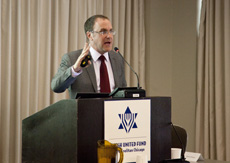
The Jewish Community Relations Council (JCRC) of the Jewish United Fund/Jewish Federation of Metropolitan Chicago hosted its latest meeting on Feb. 6 on the timely subject of “Food Security – What Israel can do to help Feed the World.”
JCRC Vice Chair Ellen Hattenbach, also chair of the JUF Hunger Awareness Project, welcomed Daniel Chamovitz, Director of the Manna Center for Plant Biosciences and founder of the Program in Food Safety and Security at Tel Aviv University. Ellen thanked American Friends of Tel Aviv University for bringing Daniel to speak to the JCRC.
Chamovitz, a graduate of Columbia University and Hebrew University, where he received his Ph.D. in Genetics, discussed food insecurity and hunger around the world. He said that of the 7 billion people in the world, about half are food insecure, including many who are hungry and undernourished. He also discussed how the mirror image of hunger is obesity, with over 10 percent of the world’s population being obese, including in North America, Europe and parts of the Middle East, where obesity is seen as a symbol of wealth. Obesity, like hunger, results from a lack of proper access to healthy, nutritious food.
Chamovitz discussed how food insecurity is relevant even to those to who are not hungry, as it affects the worldwide political and economic landscape. “Food insecurity leads to social and political insecurity,” he said. As an example, he stated, “The Arab Spring was not fed by a drive for democracy but by a drive to have food and the increase in bread prices.”
Israel, according to Chamovitz, is uniquely positioned to help feed the world. He said that Israel’s history, dating back to the chalutzim (pioneers), has provided skills to enable Israelis to grow a lot of their own food, while also helping other countries, especially Africa, where Israelis are making change on the ground. He said that Israelis’ experience with arid land, drip irrigation, saline-adaptable crops, heat-tolerant livestock, along with their society’s innovation, and multi-disciplinary chutzpah (personal confidence or audacity), has enabled them to “get their hands dirty” and make strides toward fixing the problem of worldwide hunger.
Chamovitz hopes to expand the reach of the Manna Center at Tel-Aviv University, where the missions of cutting edge research, education, and public outreach are already making a difference. In the future, he would like to see a strong partnership between Israel and the United States to promote food security, especially in the Middle East and Africa, where food shortages can lead to extremist activity.
Chamovitz closed with a quote by Jacques Diouf, Director-General of the United Nations’ Food and Agriculture Organization: “Hunger is not an issue of charity. It is an issue of justice.”
The next JCRC meeting will be a joint meeting with the Government Affairs Committee and Jewish Women’s Foundation focusing on human trafficking on March 25. The JCRC will also be organizing a Passover Seder focused on hunger and food insecurity on April 2. For more information about these programs and the JCRC, please call 312-357-4770 or email [email protected]. For more frequent updates, follow @ChicagoJCRC on Twitter.
Other stories
-
Meet Andrew S. Hochberg, 2021 Julius Rosenwald Memorial Award recipient
Celebrate Andy Hochberg at the virtual Annual Meeting on Sept. 14
Read more -
Two local teens win national recognition
Recipients of the annual Diller Teen Tikkun Olam Awards
Read more -
Celebrating six young award winners cultivating the community
Introducing young adult award winners
Read more
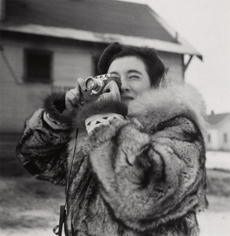
The Illinois Holocaust Museum and Education Center (IHMEC) has announced the Midwest premiere of Ruth Gruber: Photojournalist, a fascinating exhibitionthat celebrates the remarkable life, vision, and heroic tenacity of a 20th century pioneer and trailblazing photojournalist.
Now 102 years old, Gruber’s work spans more than five decades, and includes her groundbreaking work in the Soviet Arctic in the 1930s, her iconic images of Jewish refugees on the ship Exodus 1947, and her later work in the 1980s documenting Ethiopian Jews in the midst of a civil war. Ruth Gruber: Photojournalistfeatures a selection of vintage prints that are presented alongside contemporary prints made from original negatives, early film footage, and ephemera from Gruber’s personal archive.
Gruber’s life and work have been inextricably bound to the lives of the refugees whose plight she has showcased, and dedicated to their rescue, sanctuary, and liberation. Her tools have been her boundless tenacity, empathy, razor-sharp intellect, a Hermes typewriter, and a camera. With these tools, she has documented successive waves of migrants from Yemen, Iraq, Romania, Morocco, Tunisia, and Ethiopia, photographing often perilous journeys of emigration, small Jewish villages in North Africa and the establishment of new lives in Israel.
“We are delighted to recognize this extraordinary woman who used photography as a means to stand up for those in peril, even if it meant risking her own life in the process,” said Arielle Weininger, Chief Curator of Collections and Exhibitions. “Not only did Gruber break tremendous barriers as a female photojournalist, she represented the power of one person to be a voice for countless voiceless victims.”
Gruber is the author of 20 books and is the recipient of the 2011 Infinity Awards Cornell Capa Award. Her reportage and photojournalism have acted as advocate and witness for her subjects throughout her long career. Ruth Gruber: Photojournalist will introduce the broader photography community to one of the 20th century’s great humanitarians and photojournalists.
The IHMEC’s feature program in conjunction with this exhibition will be held on Sunday, Feb. 23. A film screening of Ahead of Time: The Extraordinary Life of Ruth Gruber will be followed by a discussion with the film’s executive producer, Patti Kenner, and a rare conversation via Skype with Ruth Gruber.To register for this event or to learn more, visit www.ilholocaustmuseum.org or call 847-967-4889.
This exhibition was made possible by friends of Ruth Gruber, and is a traveling exhibition of the International Center of Photography, New York. The Golder Family Foundation is lead sponsor for all Illinois Holocaust Museum special exhibitions. Additional local support provided by the David C. & Sarajean Ruttenberg Arts Foundation. This program is partially supported by a grant from the Illinois Arts Council Agency.
Other stories
-
Meet Andrew S. Hochberg, 2021 Julius Rosenwald Memorial Award recipient
Celebrate Andy Hochberg at the virtual Annual Meeting on Sept. 14
Read more -
Two local teens win national recognition
Recipients of the annual Diller Teen Tikkun Olam Awards
Read more -
Celebrating six young award winners cultivating the community
Introducing young adult award winners
Read more