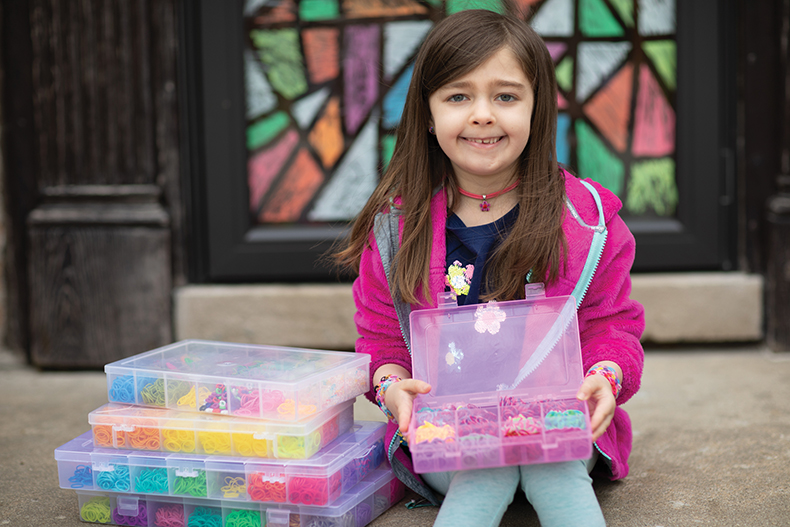
When 7-year-old Jewish Chicagoan Hayley Orlinsky overheard a news report that hospitals were running out of masks, she sprang into action.
“I decided I can make bracelets to help because I saw they’re in a struggle,” said Orlinsky, who had recently learned how to make plastic loop bracelets.
She told her mother, Lori, that she’d like to sell the bracelets for $3 each, or 2 for $5, and donate the money to Ann & Robert H. Lurie Children’s Hospital of Chicago, where she was born. Her project has soared far above her goal-she has donated over $18,000 to help the hospital purchase masks and other personal protective equipment.
Her customers include Chicago Mayor Lori Lightfoot, Illinois Gov. J.B. Pritzker, Hamilton cast member Miguel Cervantes, and White Sox sportscaster Jason Benetti.
“Hayley represents hope during a dark time. Her bracelets are bright and pretty; people look down at them and smile and forget what’s going on in the world,” Lori said.
As the enthusiasm for the project grows, Hayley has recruited friends to help her keep up with the increased demand of orders. “My life is eat, sleep, and make bracelets!” she enthused.
To learn more about Hayley’s bracelet project, visit bit.ly/hayleybracelets or email [email protected].
Other stories
-
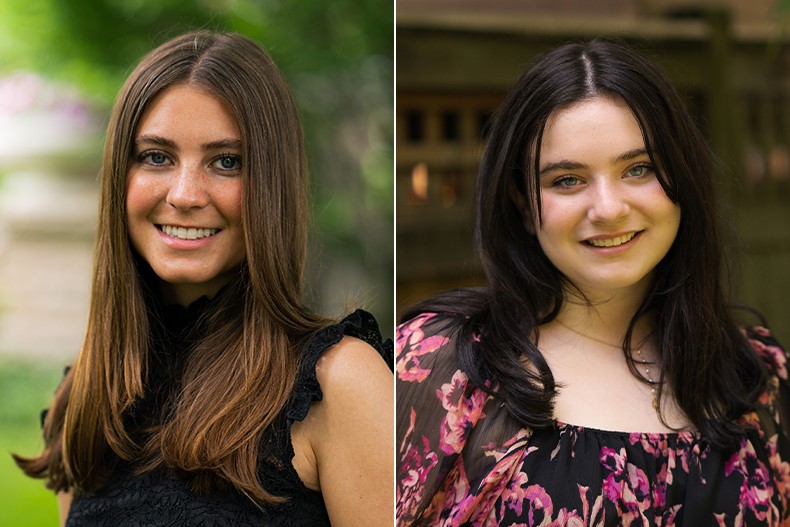
Two local teens win national recognition
Recipients of the annual Diller Teen Tikkun Olam Awards
Read more -
Celebrating six young award winners cultivating the community
Introducing young adult award winners
Read more -
Jewish Chicago comes together Sept. 17 for Federation’s first virtual Annual Meeting
JOEL SCHATZ
On Sept. 17, Jewish Chicago will come together-just as it has throughout the COVID-19 crisis-for the Jewish Federation of Chicago’s first-ever virtual Annual Meeting.
The hour-long event, which begins at 11 a.m., will focus on the unprecedented achievements of an unprecedented year and honor some of those who made those accomplishments possible.
It will be punctuated by videos that spotlight the profound impact donors have had on the community, during the pandemic and beyond.
The meeting is chaired by Linda Becker Ginsburg. Register online here .
Among the highlights of this 120 th Annual Meeting:
· Michael H. Zaransky will receive the 57 th annual Julius Rosenwald Memorial Award, the Federation’s highest honor. The award, named for the preeminent business icon and philanthropist, recognizes a lifetime of outstanding dedication and service to Chicago’s Jewish community.
Zaransky is a former JUF/Federation Board Chair who has described his greatest passion as “giving back to society and helping those most vulnerable in my community.” He headed JUF’s 2013 JUF Annual Campaign, as well as a wide range of key JUF committees. Professionally, he is founder and managing principal of MZ Capital Partners and co-CEO of Prime Property Investors, and has authored two books on commercial real estate investment.
· In the annual State of the Federation address, President Lonnie Nasatir will discuss how JUF/Federation quickly pivoted to respond to a crisis unlike any other, providing desperately needed financial resources and technical support to its partner agencies, enabling them to deliver help where it was most needed. Nasatir also will set the course for what is to come in the year ahead, in which other challenges are set against a backdrop of rising antisemitism.
· The Davis, Gidwitz & Glasser Award, celebrating an outstanding young volunteer leader’s achievements and promise, will be presented to Katie Berger.
Berger, who has been described as “passionate about building a stronger Jewish community,” is on the JUF/Federation Board and three major commissions and committees. After holding key roles with the Young Leadership Division, including a stint as Campaign Chair, she was a prime mover in creating the Ben Gurion Society Advisory Council, which strengthens NextGen leaders’ engagement with JUF. She also chairs the Jewish Women’s Foundation’s Economic Security/Legal Reform Subcommittee.
· The Samuel A. Goldsmith Award, spotlighting outstanding young Jewish agency professionals shaping Chicago’s community, will go to Emily White of JUF’s Israel Education Center and Elyse Saretsky of JUF’s Young Leadership Division.
White guides JUF’s programs and response to antisemitism and Boycott, Divestment & Sanctions efforts on campuses across Illinois and beyond, while also helping shape strategies nationally. Her work was a major factor in shifting federal government response on campus antisemitism and has tangibly helped make campuses safer for Jewish students, faculty and staff.
In less than two years as YLD Director, Saretsky has introduced a “change-positive mentality” that has reshaped programming, strengthened staff and lay leadership, expanded the Division’s outreach to new audiences, and envigorated collaboration among departments within JUF. She also has taken on leadership roles defining core organizational priorities throughout JUF, and is described by one supervisor as “one of the fastest rising young leaders in our organization.”
· Presentation of the Shofar Award to 2020 JUF Annual Campaign Chair Marc Spellman, and introduction of 2021 Chair Kim Shwachman.
· Election of new Board members and the passing of the gavel from 2018-2020 Board Chair Andrew S. Hochberg to incoming Board Chair Pam Friend Szokol.
Other stories
-
Two local teens win national recognition
Recipients of the annual Diller Teen Tikkun Olam Awards
Read more -
Celebrating six young award winners cultivating the community
Introducing young adult award winners
Read more -
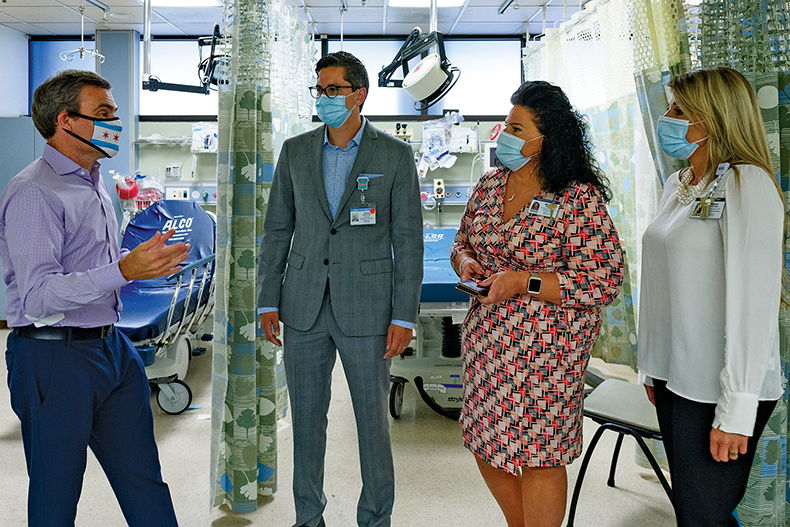
The Jewish blessing, “may you go from strength to strength,” takes on extra urgency as our community is buffeted by the winds of the COVID-19 pandemic.
Jewish Chicago is uniquely resilient, and we will get through this, as we have gotten through tough times before. That’s because of our community’s exceptional people and extraordinary infrastructure-the extensive network of agencies built over the generations by visionary donors who understand it as foundational to our community’s strength.
That infrastructure is anchored by the Jewish United Fund.
Infrastructure may not be a subject that lends itself to catchy slogans, but-as we have seen in recent months-when there’s a need to mobilize in a crisis, there is no substitute for having the resources at hand and the people and programs already in motion to help.
Once COVID-19 hit our community, JUF and our family of human service agencies instantly became a lifeline for tens of thousands of people who suddenly, desperately needed assistance.
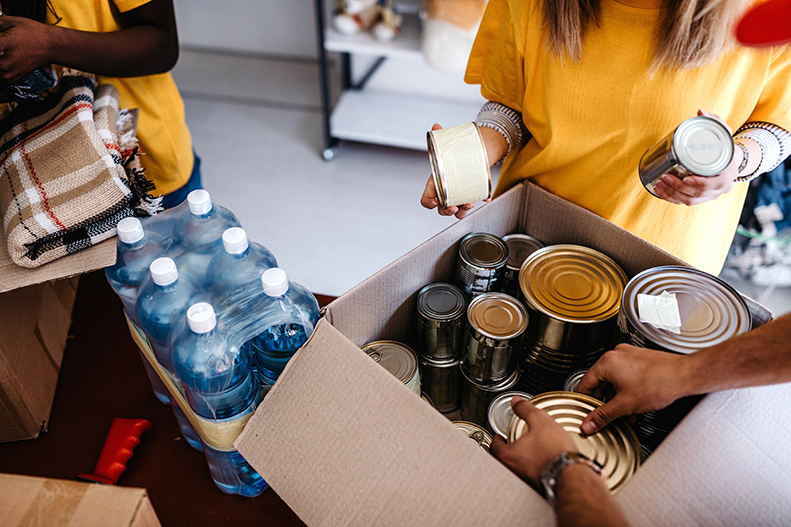
When hungry children could no longer get subsidized school lunches, we pivoted and delivered thousands of meals to feed them.
When professionals were laid off and needed cash to provide basic necessities for their families, we swiftly redirected millions of dollars in emergency financial aid to help them.
When front line health care workers required vast quantities of Personal Protective Equipment (PPE) and other support to safely care for the sick and the vulnerable, we quickly mobilized the resources to provide it.
Put simply, JUF was made for this.
The ability to respond in a time of crisis is JUF’s reason for being. It’s what we were built to do. Backed by the most far-sighted lay leaders in the world and the most generous community on the planet, we have developed the wherewithal, experience, and expertise to care for the community with unmatched effectiveness and efficiency.
We are fortunate to have exceptional partners who maximize our ability to be strategic with the community’s tzedakah .
Together with four major foundations, JUF is continually analyzing COVID-related needs across the community, conducting a series of surveys canvassing hundreds of service providers. This needs assessment is of paramount importance in pinpointing where scarce resources will have the greatest impact in the community.
A committee of remarkable lay leaders from across Jewish Chicago lend JUF a diverse depth of talent, insight, and expertise to approaching our COVID-19 grantmaking. This committee meets regularly to discuss emerging COVID-related needs and to provide emergency grants to address them.
How were we able to marshal the means to help so many so swiftly?
It’s thanks to the strength of the JUF Annual Campaign. Leveraging resources from the annual campaign, endowment, and access to additional credit, along with the support of other funders, is how we could make it happen.
That’s the power and the promise of collective action.
Together, we as a community are saving lives, caring for those in need, performing acts of loving kindness, and providing safe avenues for connection. At JUF, this is our mission every day-and during crises like this.
Stark moments in time like this demonstrate why our community needs this strong system and its network of safety net services-why we need JUF-always at the ready.
Lonnie Nasatir is the President of the Jewish United Fund of Chicago.
Other stories
-

Mother’s Day, Father’s Day, and the Jewish way
Let us pause and consider what it means for us to truly honor our parents
Read more -
Each time we study Torah, we experience the revelation
The mystical tradition of Judaism that lifts up the number 600,000 from the Exodus
Read more -
This is what we’re made for.
When the coronavirus stay-at-home orders took hold this past spring and many of us found ourselves changing our day-to-day routines to help flatten the curve, our lives were no longer the same.
For some, the virus has been devastating. A loss of a family member and an inability to mourn in a traditional way or say goodbye. A loss of a job or a business, and with that, financial strain or hunger. Feeling isolated and alone.
For others, the most difficult aspect has been the unknown. How long will this last? How will it impact my children and their plans? Will someone in my family or one of my friends get sick? Will I?
But through it all, there was one thing I did know: This is what we’re made for.
Through the decades, JUF and its partner agencies have responded to the Jewish community’s biggest crises, challenges, and opportunities. Raising dollars to build the State of Israel and then emergency dollars in its time of need. Rescuing Jews from the far corners of the globe and bringing them to Israel or resettling them here in Chicago. Providing stabilizing funds to our agencies so they could serve those needing our help during the Great Recession. And in recent years, engaging with the next generation and building new community partnerships through innovative programs and ideas.
Then came the pandemic. And we have risen to that challenge as well.
While JUF has responded during difficult times during its 120 years, it is our staff who make it happen each and every day. And they are joined in this sacred work by our committed volunteers and dedicated colleagues at our community’s agencies, schools, and synagogues.
But what makes our staff tick? What drives them to step up every day, lead on issues, and do their part to build our community and help those in need, especially during these past several months? The answer lies in a set of core values that are embedded in our approach to the work and to each other.
An organization’s core values guide behaviors, shape a culture, and define its identity. Our core values, combined with passion and energy, have carried us through this unprecedented time.
We like to talk about three: Own the Outcome. Elevate Relationships. Pull Together.
Those core values have guided us for years, but during this pandemic, a fourth value became even more evident, one which is a direct result of the other three: Deliver Results.
Since March, I have watched as my colleagues have delivered unbelievable results. They’ve worked side-by-side with our volunteers, helping in ways they never thought they would. From daily check-ins with constituents, donors, and service recipients, to surveying community organizations in assessing needs. From partnering with local foundations and funders in creating a special COVID Initiative Fund, to providing virtual programs that engage people of all ages.
It is the JUF way, a culture that puts a premium on thinking strategically, collaborating, trusting one another, and getting things done.
We deliver results because this is what we’re made for. And we do so because we are taught by our Jewish tradition the importance of tikkun olam -repairing the world, chesed- being kind and compassionate, and Kol Yisrael arevim zeh bazeh -all Jews are responsible for one other…and for that matter, the entire community.
Our staff have enormous pride in their work. They deliver results. And I couldn’t be prouder to be their colleague.
Jim Rosenberg is Chief of Staff of the Jewish United Fund of Chicago.
Other stories
-
Mother’s Day, Father’s Day, and the Jewish way
Let us pause and consider what it means for us to truly honor our parents
Read more -
Each time we study Torah, we experience the revelation
The mystical tradition of Judaism that lifts up the number 600,000 from the Exodus
Read more -
“Find a penny, pick it up,” goes the old saying, “and all day long, you’ll have good luck.”
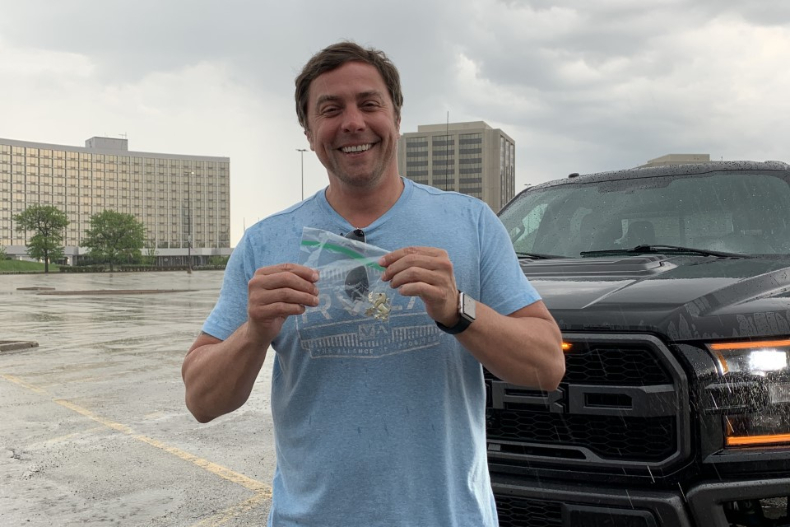
One lost Lion of Judah pin, instead, had the good luck to be found and picked up by a Mr. Penney.
Jeremy Penney recently found a gold brooch of a lion in the Millennium Park garage. “I could tell it must be valuable to someone,” said Penney, who owns vending-machine and roofing companies. “It was interesting and heavy, and I had never seen anything like it…and it had initials in it.”
The initials were those of Linda Kellough, a member of the JUF Board of Directors and a Lion of Judah, a woman who gives an individual gift of more than $5,000 a year to JUF.
Kellough said the pin was very meaningful to her. “It symbolizes my connection to the community,” she said. “When I was ready to become a Lion, I was surrounded by women who inspired me.”
After two weeks of searching, Penney tracked down Kellough through JUF. “I was very happy to be able to return the pin to its rightful owner,” he said.
Lion of Judah Endowments-a gift that continues in perpetuity to the JUF Annual Campaign-are recognized as part The Centennial Campaign. For more information on becoming a Lion of Judah, or about the Lion of Judah Endowment, contact (312) 337-4853, e-mail [email protected], or visit jufplannedgiving.com.
Other stories
-
Two local teens win national recognition
Recipients of the annual Diller Teen Tikkun Olam Awards
Read more -
Celebrating six young award winners cultivating the community
Introducing young adult award winners
Read more -

Just as the coronavirus was hurtling toward Chicago in March, Justin Jacobson spotted his son and daughter, ages 4 and 2, sweeping with their toy broom set.
Around that time, Jacobson’s Northbrook-based event production company, Platinum Events, was starting to lose business due to the pandemic.
A single Jewish father, he knew he had to act fast for the sake of his children–and his employees. “I had an army of staff who were depending on me,” he said.
His children’s game of pretend inspired Jacobson’s very real solution for saving his company from the brink of disaster: He would convert it into a decontamination business.
Platinum Sanitation Services, as he renamed it, was operational within a week. In the first two months of the crisis, Platinum had decontaminated close to 7 million square feet of industrial, manufacturing, retail, and medical facilities.
“I do believe what we’re doing is a mitzvah,” said Jacobson, who hopes to run both Platinum businesses simultaneously when event planning picks back up. “We are going into hot zones, where most people would not, to make them a safe environment for people to work.”
There are more than 1 million small businesses in Illinois, according to the Small Business Administration, including numerous Chicago Jewish mom and pop businesses.
With a blend of agility, creativity, compassion, and sechel , some small business owners, like Jacobson, are salvaging their companies, and the jobs of the people who work for them, while helping pandemic relief efforts at the same time.
Robert Birnecker and Sonat Birnecker Hart, Jewish co-founders of KOVAL Distillery in Ravenswood, retooled their business to meet the needs of the COVID crisis, too.
When the virus struck, like everyone else, Robert and Sonat noticed hand sanitizer disappearing from shelves. “We started thinking about the fact that we have a still, a necessary tool in making very high proof alcohol,” said Sonat, who spoke at a JUF Women’s Division event earlier this summer.
That’s when she and Robert, both former academics, dreamt up the win-win idea both to keep their Chicago team of 25 employees intact and to supply sanitizer to frontline workers and first responders.
So, KOVAL temporarily shifted its production from spirits to sanitizer.
It was not a simple pivot: Among the challenges, the distillery required permission to make the cleaner because federal law dictates a separation in the license for creating potable versus sanitizing alcohol.
Yet, within four days, they were up and running, and donating batches of sanitizer to the front lines.
But they couldn’t keep up with demand, so Sonat and Robert started a GoFundMe campaign to increase their sanitizer production without bankrupting their business.
A slew of companies–including breweries that donated their beer to convert into sanitizer–delivery drivers, and others supported KOVAL’s efforts monetarily or through in-kind donations.
So far, KOVAL has donated more than 4,000 gallons of sanitizer, and plans to maintain production at least through the summer.
Sonat’s Jewish upbringing and values fueled the distillery’s decision to give back. “I’ve been inspired by the teachings of my parents and grandparents and how they probably would have acted in this circumstance,” she said. “I feel happy that I grew up with a heritage that talks about doing tzedakah, which is not just charity, but justice.”
Like the proprietors of Platinum and KOVAL, Golden Ceramic Dental Laboratory’s Jewish owners Ben and Cydney Topaz wanted to help essential workers, while keeping their own staff employed. With dental offices closed for routine visits at the beginning of the pandemic, the Prospect Heights-based lab–which typically manufactures dental restorations like dentures and crowns–was slowing down. So, the Topazes, a husband and wife team, shifted some of their production to personal protective equipment.
Since March, they’ve produced more than 2,000 face shields on their 3D printer, supplying them to hospitals, assisted living facilities, and dental practices open for emergency visits. The company has imported an additional 10,000 face shields from their international supplier in China. The Topazes have managed to keep most of their staff employed.
“You don’t just shut down and leave when you don’t make money,” said Ben, an Israeli native. “I was raised to be part of a community. We stayed open because we knew people needed us.”
Other stories
-
Two local teens win national recognition
Recipients of the annual Diller Teen Tikkun Olam Awards
Read more -
Celebrating six young award winners cultivating the community
Introducing young adult award winners
Read more -
“You can’t be the king–you’re a girl.” Child development expert Dr. Ilana Dvorin Friedman Ph.D. says that when adults hear children making comments like this one, they should interject.
Friedman, a Chicago early child development instructor and consultant who focuses much of her work with educators on examining the interdependent relationship between culture and child rearing, says adults should encourage children to dialogue on identity issues and challenge stereotypes even from a very young age.
“Kids are already constructing ideas about their own identities and about others,” she said. “We often think children are innocent of this, but when we [think that], we’re denying the fact that children are already categorizing people based on social identity.”
When JUF’s Early Childhood Collaborative decided to engage in work around Diversity, Equity, and Inclusion (DEI) last year, they couldn’t have predicted the national reckoning on race, justice, and diversity that would be dominating the country less than a year later.
Back then, educators compiled a collection of children’s picture books that depict characters and themes celebrating diversity, and each JUF Right Start school received the collection of 60 titles for their classrooms. Then, earlier this year, JUF held a day of DEI learning for 400 Jewish Chicago-area early childhood educators.
And when the coronavirus struck, JUF teamed up with Gratz College, a Philadelphia-based Jewish college, to develop a course open to Jewish early childhood educators for this summer, when many teachers had more free time than usual because of the pandemic.
Friedman, an advisor to the JUF cohort of early childhood master’s students at Erikson Institute, is currently teaching the virtual course, titled “Family and Culture: An Anti-Bias Lens for Early Childhood Educators,” shedding light on issues of diversity in American life and the relationship between culture, family, and the development and education of young children. Fourteen Chicago Jewish early childhood educators from 10 different schools are enrolled in the class.
The curriculum is helping educators develop an anti-bias framework that they can take back to their respective classrooms. For instance, Friedman asks the educators to examine how they portray “families” in the classroom. “What language do you use with your students when you talk about caregivers?” Friedman said. “If I, as the teacher, ask them about their ‘mom’ and ‘dad,’ those types of labels perpetuate a stereotypical family that might not translate to everyone.”
As the national conversation around racial justice grows louder, Anna Hartman–Director of Early Childhood Excellence for JUF–says the class arrives at an important time. ”Jewish early child professionals want to be on the cutting edge of everything that’s right in the world,” she said. “In an ever-changing world, ongoing learning among educators continues to be key to educational excellence.”
Other stories
-
Two local teens win national recognition
Recipients of the annual Diller Teen Tikkun Olam Awards
Read more -
Celebrating six young award winners cultivating the community
Introducing young adult award winners
Read more -
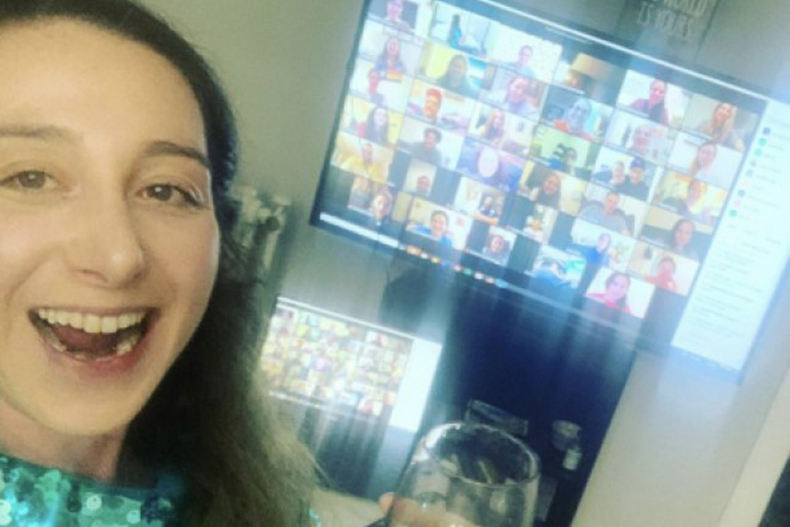
Dating is tough. Dating during a pandemic is tougher. We caught up with four Chicago Jewish singles who open up about socially distant dating–and how they’re making lemonade out of pandemic lemons.
The ‘baemaker’
On the first weekend of the quarantine, Stefanie Groner and her friend Rebecca, both single 20-somethings, were playing virtual trivia and drinking wine when their conversation turned to dating.
Inspired by the NYC-based Love is Quarantine –a social media spinoff of the hit show Love is Blind — the women chatted about creating a Windy City version of the experiment. A couple of glasses of vino later, “Quarantine Bae”–“Chicago’s only COVID-conscious complimentary matchmaking service,” as they dubbed it, was born.
Targeting single Chicagoans, ages 25 to 36, “Quarantine Bae” has sent more than 400 people on virtual first dates, many of them Jewish. Here’s how it works: “Baes,” as they are called, submit an intake form with bio info and match preferences, and then the matchmakers, or “baemakers,” set them up for blind phone dates. That’s right–blind–meaning no photos are initially exchanged. After the call, both baes tell the matchmakers whether they want a second date.
The purpose of the service, Groner said, is to foster a human connection–if not always a love connection. “The goal is to have positive human interactions with a stranger while people are feeling so isolated,” she said. “If it leads to a romantic relationship, that’s fantastic, but in general this has been a chance to create a moment on your calendar to look forward to in a really tough time.”
‘It feels like middle school’
Back in March, Ari Craven and his platonic roommate were cooking dinner and listening to a podcast about quarantine dating, when his roomie asked Craven if he would consider it. “Probably not,” replied Craven, a gay man in his 20s.
But, just two weeks later, with no end to the quarantine in sight, Craven, a graphic designer, changed his tune and dove into the quarantine dating pool.
To Craven, dating during the pandemic has felt quaint. “It feels a little like middle school,” he said. “I’m bound to my home and I take the call in my room to talk to a boy I like. As soon as we get off the phone, I sprint to my roommate and tell her what we talked about.”
You can tell a lot about people, Craven said, by how they face a challenge, like the one we’re living in now. He said he chatted with an “incredibly self-sufficient” man over the phone who told Craven that he’s been content passing the weeks of quarantine at home alone. Craven, a true extrovert, thought to himself, “Maybe I’m going to be a bit much for this guy.”
Her past prepped her for the present
Alexis Levy’s previous long-distance relationships have helped prepare her for quarantine dating. Whereas some of her single friends had to adjust to not meeting a potential match “in real life” right away, Levy, a Connecticut transplant to Chicago, adapted easily because she had already learned to date in an atypical circumstance.
“Dating long distance taught me how to date differently than everyone is used to,” said Levy, who is in her 30s and works in the hospitality industry. “When you can’t rely on [actual] dates, you have to rely on communicating more, building more of an emotional connection, and being more open about what you’re looking for before you ever meet.”
Even with long distance dating experience in her back pocket, Levy still says dating these days isn’t easy. “I find a bit more anxiety around all of this,” she said. “I still have a yearning to go out, meet new people, and connect with them in the same room.”
‘We’re social beings’
When Harold Gerber was swiping through dating app profiles while sheltering in place, he noticed more than one woman write the following: “I don’t want to go through another quarantine alone.” Those poignant words resonated with Gerber, a gregarious early 40-something, who says the quarantine has only crystalized in him his desire to meet his beshert . “It’s made me realize how important finding love with the right person is,” said Gerber, who works in commercial real estate.
That’s why he hasn’t taken a hiatus from dating during these strange times. When he encounters a dating prospect, they usually talk over the phone or FaceTime first. Once, Gerber said, a woman called him on FaceTime before he was ready for their virtual date. He’s not sure, he recalled, which was messier–his apartment or his hair–but he picked up the phone anyway, adding a bit of levity to what can be an awkward circumstance.
And as awkward as these dates can be, Gerber, like so many other single people, will keep dating. “Humans want to lean in. We’re social beings,” he said. “Pandemic or no pandemic, people still want to find love.”
Other stories
-
Two local teens win national recognition
Recipients of the annual Diller Teen Tikkun Olam Awards
Read more -
Celebrating six young award winners cultivating the community
Introducing young adult award winners
Read more -
A pair of Chicago political analysts and a civil rights attorney offered insights on the 2020 elections, the COVID-19 pandemic’s impact, and the push for racial equity at the July 22 virtual meeting of JUF’s Government Affairs Committee.
Over 100 people tuned in via Zoom to hear political commentators Lynn Sweet, the Washington bureau chief for the Chicago Sun-Times and Greg Hinz, a blogger and columnist with Crain’s Chicago Business , along with Ami Gandhi, a senior counsel at the Chicago Lawyers’ Committee for Civil Rights. The call was led by Judy Smith, vice-chair of Federal Government Affairs for the committee.
Sweet provided an inside look at what’s happening in Washington as Congress works to rollout another COVID-19 relief package and complete appropriations for FY 2021, all against the backdrop of the upcoming November presidential and congressional elections. As the Senate Republicans and Democrats continue to work out an agreement on the latest COVID-19 relief package, lawmakers are also negotiating with the White House. Congress is under a tight deadline to pass this next relief package as workers, nonprofits and businesses, hospitals, states and municipalities, and others are facing yet another month of challenges as a result of this pandemic. Congress has its sights on the August recess, but this year it will be during the Republican and Democratic conventions, which will be mostly virtual. The conventions that will affirm major policy platforms for both parties could have an impact on congressional activity when they return in September. Asked about the possibility of substantive legislation getting passed before Congress adjourns for the year, Sweet noted that the closer we get to the election, the chance of passing any legislation that favors one side or the other grows dimmer.
Hinz began by assessing Governor Pritzker’s and Mayor Lightfoot’s responses to the COVID-19 pandemic, emphasizing the many unknowns that make it almost impossible to predict how anything will play out electorally, and in terms of public policy and both budgets. Hinz opined that while Illinois has fared better than the South and the West, economic recovery won’t occur until people feel safe to go out again and tourism returns to Chicago. Hinz predicted that the state may very well find itself in a position where we have to raise taxes and cut services, and the same applies for a potential and highly unpopular Chicago property tax hike. While we are contending with the pandemic and huge holes in both the state and Chicago budgets, Hinz recognized that the accompanying explosion in social justice activism was necessary.
Although Hinz has not yet seen much out of Springfield addressing social justice and police accountability, he did highlight an upcoming resolution the Cook County Board will entertain on July 27. The resolution will address the Cook County police and jail and propose redirecting some of the funds to alternative programs designed to support the community and assist in economic development. However, noting the recent spike in the murder rate over the past several weeks, Hinz remarked that the vote is likely to be highly contentious. Regarding the November election, Hinz predicts that record numbers of early voters will force candidate campaigns to peak by mid-October. On a lighter note, Hinz anticipates a Chicago Bears season, albeit one that doesn’t include fans in the stadium.
Gandhi’s organization, the Chicago Lawyers’ Committee for Civil Rights, works to reduce barriers to voting and improve civic participation, especially in communities of color and low-income communities, as well as for persons with disabilities, pre-trial detainees, and newly eligible voters.
In order to have free and fair elections, Gandhi remarked that as a society we must listen to the needs of the hardest-hit communities, including whether or not they have proper access to polling places. Her organization runs a non-partisan Illinois election protection hotline. During the March primary, a significant percentage of calls her organization received came from voters whose polling places were closed down.
While Gandhi applauded the recently passed Illinois vote-by-mail enhancements for the November election, she explained that it is not a viable solution for all voters and pointed to statistics that only 11% of black voters utilized vote-by-mail during the 2018 mid-terms, while 24% of whites voted by mail in the same election. Gandhi was confident that proper precautions will be undertaken by Illinois election authorities for safe vote-by-mail and recommended that voters experiencing access issues before the election or on election day contact the Lawyers’ Committee hotline at 866-OUR-VOTE.
Gandhi reminded GAC meeting participants that even if they voted in a prior election by mail, they must make a new request to receive a mail-in ballot for the upcoming election.
“All three speakers were terrific,” said Judy Smith, JUF Government Affairs Committee Vice Chair for Federal Government Affairs. “While their messages weren’t particularly optimistic, I am heartened by the number of people who were on the call and were engaged in the issues. The more we know, the more effective citizens we are. I hope even more people join us the next time we gather.”
Other stories
-
Two local teens win national recognition
Recipients of the annual Diller Teen Tikkun Olam Awards
Read more -
Celebrating six young award winners cultivating the community
Introducing young adult award winners
Read more -

Summer usually brings summer camp. But this year, “usually” is out the window, and most summer camps are closed. Still, there are ways to approximate, or even replicate, some of the typical camp experiences while at home.
Be, even sleep, outdoors
One of the best parts of camp is being outdoors as much as possible. At some camps, everything from meals to prayer services are held outside. Exploring nature can be done anywhere–identify trees by their leaves, become a birdwatcher, or examine bugs. Try “camping out,” even sleeping outdoors. A portable grilling kit can substitute for campfires for cookouts, s’mores, and ghost stories. Don’t forget the flashlights, sleeping bags, trail mix–and bug spray.
Get crafty
Water, water, everywhere
Many camps include a lake and a pool. Long hot days call out for cool, refreshing water. Fill up the kiddie pool if you can get one. Bring out the hose, squirt guns, and water balloons. Pro tip: bring the towels outside while you are still dry!
Sing, sing, sing!
Songs from the Torah, the siddur, and Israel live side-by-side at camp with folksongs by Peter, Paul & Mary, Joni Mitchell, and Bob Dylan. If you play an acoustic guitar, now’s your moment! For the full camp sing-along experience, print out some song sheets and sit on the ground in a circle.
“Hello Muddah, hello Faddah…”
Letters home are a key part of camp. But you are already home! So, send letters to people you miss–in town or far away. Yes, you can talk on the phone or electronically. But a letter is more personal and lasts longer.
Required reading
For camp, “required reading” amounts to two things: comic books and MAD Magazine. On a rainy day, take out the cartoony-est reading materials you have– the more pictures, the better–and pass them around.
Snack time!
At many camps, campers get an allowance for a daily snack. This is something decidedly unhealthy: candy bars, chips, gum. So, dole out a given amount of coinage at the start of the week, then make your campers “pay” for their candy. Value the candy at different amounts–and you’ll be shocked at how quickly your little math-haters learn to budget for the higher-priced sweets.
All fun and games
From Capture the Flag and Marco Polo to full-on Color War, some games were just made for camp. One great game is Pillowcase Theater. Each team, or player, gets a pillowcase filled with a few random objects. They then have 10 minutes to create a skit using all the objects as props. Another is Story Chain. One person writes a line of a story on the top edge of a piece of paper, then folds it over to hide it. The next person writes another line, folds that over, and passes it on. When the paper is full, the whole thing is unfolded and read as one “story.” And of course, camp was where many of us learned a dozen card games For more: search online for “games” plus other keywords like “camp,” “kid’s party,” and “parlor.”
Yes, some aspects of camp– horseback rides, zip lines, canoes– will have to wait for actual camps to reopen. But if you think back to all the things that made camp “camp,” and apply some of that camp-born resourcefulness, “Camp Ourbackyard” can still create a memorable summer.
Other stories
-
Two local teens win national recognition
Recipients of the annual Diller Teen Tikkun Olam Awards
Read more -
Celebrating six young award winners cultivating the community
Introducing young adult award winners
Read more -