Wednesdays May 19, 26, June 9, 16, 23, 30
One Year Later: Looking Back, Moving Forward
With JUF Young Leadership Division
6 – 7:15 p.m.
Register here
Thursdays, May 27, June 24, July 29 & August 26
Jewish Communities Around the World
With JUF Young Leadership Division
12 – 12:45 p.m.
Register here
Month of June
Virtual College Road Trip
With Springboard Chicago
Register here
Thursday, June 3
YLD Pride Challah Braiding
With JUF Young Leadership Division
6 – 7 p.m.
Register here
Monday, June 7
BPN’s Financial Planning Workshop
With JUF Young Leadership Division
6 – 7 p.m.
Register here
Other stories
-
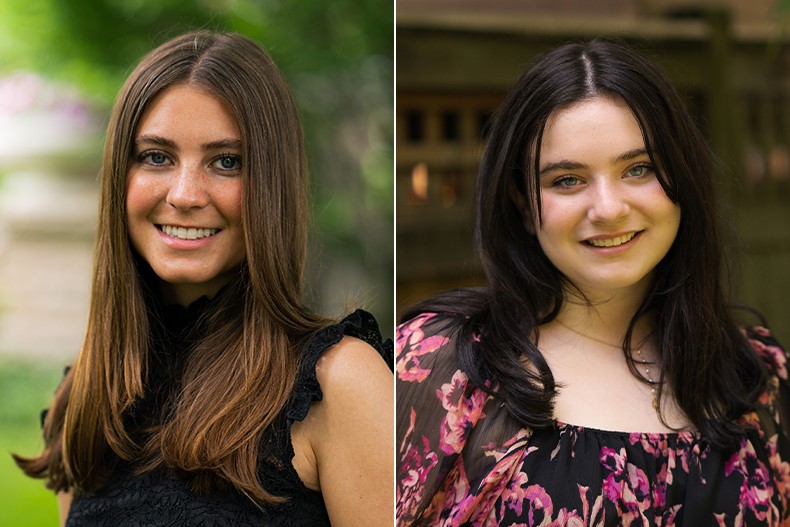
Two local teens win national recognition
Recipients of the annual Diller Teen Tikkun Olam Awards
Read more -
Celebrating six young award winners cultivating the community
Introducing young adult award winners
Read more -
This is not a fundraising letter — it is an update to keep you informed on how JUF is addressing the pandemic on behalf of our community.
These are uncertain, challenging times for the world, our country, Israel, and our community.
Your JUF will fulfill the mandate of “kol yisrael arevim zeh b’zeh” (all of Israel are responsible for one another). Our shared Jewish values provide a roadmap for weathering this coronavirus storm. As always, we translate those values into actions that define us: saving lives, caring for the sick and performing acts of loving kindness.
Obviously, it is not business as usual. JUF, like others, has cancelled public events. But we remain very much open for business to help the hungry, the sick and others at-risk.
The stock market’s decline has shaken many. Combined with other economic displacements, we are anticipating a dramatic increase in requests for emergency cash assistance for medications, rent, utilities, food, and other essentials.
JUF stands ready to help.
Powered by a strong community-wide annual campaign built precisely for moments such as these, JUF already has:
- Provided over $1 million in cash advances to our local agencies;
- Established a pool of additional funds to specifically address coronavirus-related organizational expenses;
- Launched a new volunteer database for those in low risk categories looking to lend a hand, and;
- Coordinated agency planning to provide integrated human service responses.
If someone you know needs a connection to social services, please have them call: 855‑ASK‑JCFS (855‑275‑5237).
Entrusted with the sacred stewardship of communal tzedakah , we have obligations to donors, the agencies we fund and those they serve. In this environment all nonprofits have concerns about lost revenue, raising funds, and making payroll.
This community has confronted many challenges. Our organizations are resilient. We have never failed to marshal the resources to do what is needed. We will do so again now.
Even as we no longer gather during this pandemic as a community at synagogues, JCCs, Hillels and other venues, we will continue coming together in other critical ways, providing support to each other and for the vital organizations and synagogues that give so much life to this lively community.
Yes, these are uncertain, challenging times. What is certain is that — together — we will meet the challenge. We will keep you apprised of communal needs, the ways we are helping and how you can, too.
Sincerely,
Andrew S. Hochberg Lonnie Nasatir
Chairman of the Board President
Other stories
-
Two local teens win national recognition
Recipients of the annual Diller Teen Tikkun Olam Awards
Read more -
Celebrating six young award winners cultivating the community
Introducing young adult award winners
Read more -
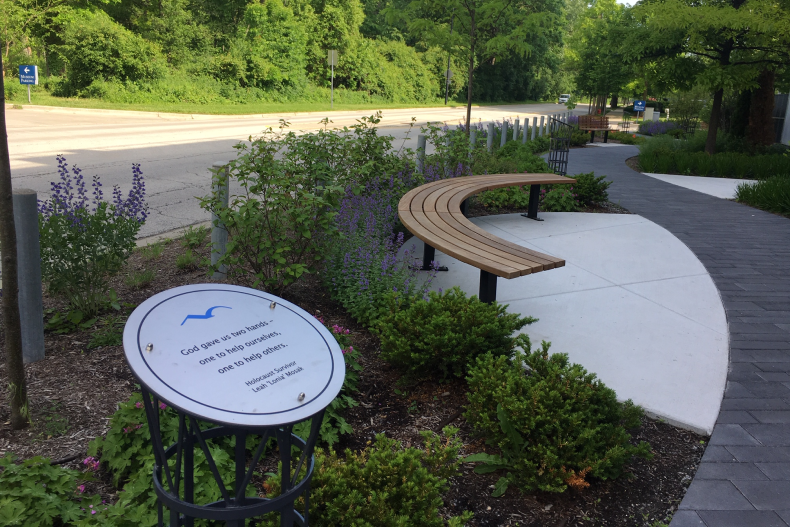
Peace garden surrounds Holocaust museum with a contemplative, relaxed space
When visitors walk from the Illinois Holocaust Museum and Education Center parking lot to the museum building, they traverse a flower-filled landscape.
The Peace Garden, which was dedicated last summer, was designed to “welcome visitors and create a sanctuary for reflection after their museum experience,” said the museum’s CEO, Susan Abrams. “The concept of a Holocaust museum could be intimidating, so this keeps the theme and provides a welcoming experience as you begin or end your experience.”
Visitors first encounter the “winding pathway through,” filled with “a mix of some evergreens and many, many perennials, so from the start of early spring all the way through late fall, there is always something in bloom with a range of colors,” Abrams continued. The garden also features four curved wooden benches along the path and signs to direct visitors to the museum.
When donors Harvey L. Miller and Steve Sarowitz pitched the idea to complement the museum with a tranquil exterior, Abrams quickly got on board. “The minute I heard the idea, it really resonated with me,” she said. An advisory committee including staff, board members, and funders created a plan that took just over a year to create.
The idea of a garden holds particularly strong meaning for Sarowitz, who is a member of the Baha’i faith. “To me, the idea of gardens and peace go together. I felt that it would be a way to surround [and soften] the building and show the contrast between war and peace.”
Sarowitz brought the architects from the Baha’i House of Worship in Wilmette on board, and together with the advisory committee, they created the design and chose five quotes representing speakers from different religions.
“One of my goals as a funder was to celebrate different religions and the beauty of all religions. Your own religion’s quote doesn’t have to be the ‘best’ one,” Sarowitz said. “Religion is not a competition but a celebration, and it would be better to celebrate together. To get to peace, it’s very necessary for the world to come to that same conclusion.”
At the dedication ceremony last August, the Sisters of Story–a trio of Muslim, Christian, and Jewish storytellers–inaugurated the space with a strong message of communality and peace.
The hope is “to have the garden emanate peace and serenity, to have it be a silent teacher, and to give people a place to digest the complex message of the museum in a peaceful, meditative environment,” Sarowitz said.
Miller, a longtime board member and donor to the museum whose contributions include multiple exhibits, sought similar beauty in the garden project. “I saw the garden as a visual that, as people are walki ng up to the museum, puts them in a better frame of mind. Then, once they have left the museum, if they have any thoughts that they want to share with their neighbor or the person they came with, the garden is a nice place to do it.”
Other stories
-
Two local teens win national recognition
Recipients of the annual Diller Teen Tikkun Olam Awards
Read more -
Celebrating six young award winners cultivating the community
Introducing young adult award winners
Read more -

Interior design tips to freshen up your home
Michelle Cohen and Jenna Cohen
Spring is just around the corner and it feels like the world is coming back to life. It’s the perfect time to breathe some new life into your home, too.
Not sure where to start? We’ve got hot tips from local interior designers Lauren Coburn, architect, designer and owner of Lauren Coburn Interiors for Architecture and Design; Marisa Mandrea, designer and owner of Horizon Lane, LLC; and Deborah Schrayer Karmin, co-lead designer at Karmin Schwartz Design.
First, find your inspiration.
Take a look at local design and art galleries, magazines, and design websites. Find a piece of art or furniture-or maybe a unique color-that inspires you.
“Pull images in which you love the wall color, shape of a piece of furniture, or just the feel of a room-all of this will be helpful when starting to create your new space,” said Karmin.
To help you stay organized, “start putting together a Pinterest or Houzz page to compile your ideas, suggests Mandrea. “It gives you a place to organize your own ideas and it makes it easy to communicate your tastes” with a designer.
Next, get out the measuring tape.
“You don’t want to get stuck with a piece that is too big or too small, and it’s important that the pieces you order fit in the doorway!” Karmin said.
It’s important to pick a focal point for your space, whether it’s an inviting fireplace, a sleek new sofa, or your Bubbe’s antique armoire.
“Less is more when it comes to focal points in rooms,” said Coburn. “Too much interest is not as effective for impact like carefully placed objects, textiles, etc. that become the ‘WOW’ in a space.
“It’s always helpful to start with a rug and build on the fabrics and furniture from there,” Coburn said.
To add visual interest, ‘try layering “textures, colors, materials, art and accessories,” Mandrea said. “I love bringing in ceramic vases, interesting baskets, glass, unique stone on counters, and local art.”
To avoid clutter, Mandrea recommends “[taking] something away before adding something new into the mix” to prevent accumulating too many things in one space.
Your home can reflect your Jewish heritage in ways as striking as displaying a collection of Israeli art or “as subtle as creating an extra-large dining room to accommodate large family Shabbat meals,” Coburn said.
Karmin decorated her own home with “a built-in cabinet with open shelves to display my Judaica collection. It is a wonderful way to showcase my special collection that means so much to me, and it is a way for my home to reflect my Jewish values.”
For Mandrea, it’s important to include Jewish books: “I love a room with lots of coffee table books–whether stacked on a table or arranged in an aesthetic way on shelves, books warm up a space.”
Most of all, it’s important to surround yourself with things that make you happy.
“Have fun creating a space that is filled with all the things you love,” Karmin said.
Other stories
-
Two local teens win national recognition
Recipients of the annual Diller Teen Tikkun Olam Awards
Read more -
Celebrating six young award winners cultivating the community
Introducing young adult award winners
Read more -
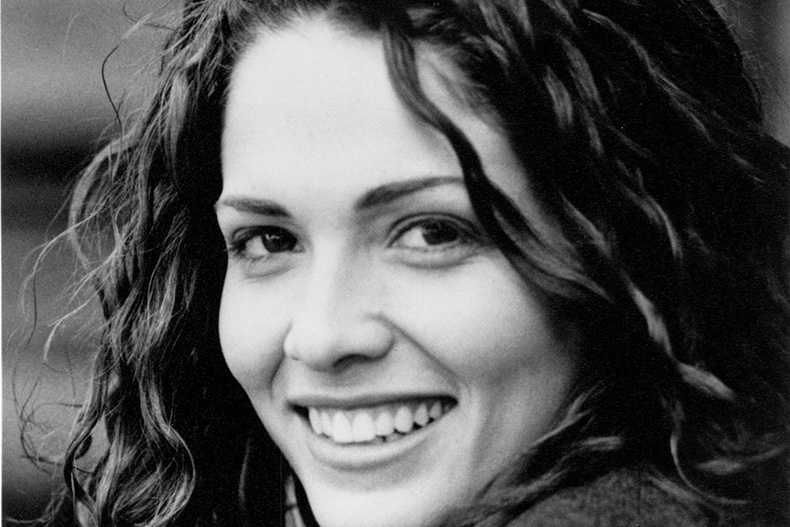
A daughter’s memory brings a community-gathering event to life
MICHELLE COHEN
Five years after Judy and Bill Goldberg unexpectedly lost their daughter Sarah, they are honoring her memory and legacy as an actress with “Sarah’s Stage,” an event designed to help young Jewish professionals engage with synagogue life.
They turned to their own congregation, Anshe Emet Synagogue, and clergy, Rabbi Michael Siegel, for guidance. After contemplating the problem of young people disengaged from synagogue programming, the Goldbergs and Siegel came up with the idea of a party that would encourage young adults, ages 23 to 36, to engage with Anshe Emet.
“This way, we could do something for the future of the synagogue and honor Sarah’s memory,” Bill Goldberg added.
The party, which will take place April 2 at City Hall, will include food and cocktails, including Sarah’s favorite, pink champagne, and a performance from the band Rod Tuffcurls and the Bench Press.
Sarah-who died in 2014 at the age of 40-began her stage life with a chance encounter as an extra on the 1997 film My Best Friend’s Wedding. Although Sarah majored in biology at Amherst College and had planned to study medicine, her experience on the movie set inspired her to move to Hollywood and seek a career in acting instead.
“She went to California and knew no one in show business,” Bill said. “She interned for the Jim Henson Company, took classes, got small parts-and that led to bigger parts.”
Sarah, who was sometimes known by her stage name of Sarah Danielle Madison, is best known for her role as Sarah Glass Camden in TV’s 7th Heaven, where she fell in love with-and later married-her husband.
She also appeared on the shows Judging Amy and 90210 as well as in the movie Jurassic Park III .
In addition to her acting career, Sarah had a vibrant life as a skier, volleyball player, yoga practitioner, and owner of two rescued dogs.
“Sarah had an incredible life clumped into a very short period of time,” Judy said. “It’s hard for us as parents to go through this, but Sarah’s Stage is a beautiful way to honor her.”
“Sarah’s Stage” will take place on April 2. Registration is required by March 27. For more information, email Mimi Weisberg at[email protected].
Other stories
-
Two local teens win national recognition
Recipients of the annual Diller Teen Tikkun Olam Awards
Read more -
Celebrating six young award winners cultivating the community
Introducing young adult award winners
Read more -
Peering over my shoulder, my son asked, “Mom, what is that?” I blinked stupidly.
I had been absentmindedly scrolling through Facebook on my laptop when a startling photograph took my breath away. The image was of Seth Paine Elementary in Lake Zurich, a school less than 20 miles away, with a giant swastika scrawled across the building in white spray paint.
I didn’t know how to answer, and it wasn’t the first time I had been stumped by a small child’s big question. Sweet little voices often ask the most mind-blowing queries, demonstrating the innocence of youth and the inadequacies of adulthood. With that hateful image flickering on the computer screen before us, I realized I had to learn how to talk about antisemitism with my children. It felt like a call I could not ignore, given this incident so close to my home and the recent rise of acts of hate against Jews in New York and elsewhere. Here’s some of what I learned:
“Children are reassured when parents lead and protect them through the daily structure of their life,” said Lynn Shyman, LCSW, Director of Adult, Child, and Family Services at JCFS Chicago. “When daily news brings us details of school shootings, antisemitic vandalism, or violence in Israel, we struggle to find age-appropriate explanations or words of comfort.”
“Kids need brief, factual, honest information,” she said.
Parents should be mindful of their children’s age, and let them lead the conversation, making room for kids to ask questions and share what they may already know. “You also want to let them know that, when something negative in the Jewish community happens, it’s upsetting. Validate their feelings.”
Parents should remember that children “pick up on our worry and our anger, so we want to put that into some sort of context,” according to Kathy Ham, LCSW, Director of the Virginia Frank Child Development Center and Glick Early Childhood Programs for JCFS Chicago. Parents may want to explain their own feelings about incidents of antisemitism, she said, in a simple way to reassure children and help them to verbalize their own thoughts and emotions. “The worst thing is when you’re afraid or angry, and you’re alone with it. We don’t want children to be alone with these feelings,” Ham said.
While these conversations may be difficult, they are necessary for both parents and children. Rabbi Wendi Geffen, a parent of two and Senior Rabbi at North Shore Congregation Israel in Glencoe, points out that it is essential to show children that hatred does not make sense and that it is not okay.
“If we choose only to talk about hate when it comes to other groups and not our own, we short the truth,” Geffen said.
“We need to have empathy for everyone who suffers at the hands of those who hate,” she said. “It’s the reason we have an obligation to help others who are discriminated against and also help ourselves because we know what it feels like to be ‘othered.’ We are the people who have this unique awareness and sensitivity.”
By informing our children, we empower them. As parents, we need to explain antisemitism in terms our kids can understand, but also help them form their own Jewish identity in the face of hate. To teach our children how to understand and respond to antisemitism, we must both encourage them to ask hard questions and take pride in who they are.
Leslie Hill Hirschfeld is a freelance writer living in the northern suburbs of Chicago.
Other stories
-
Two local teens win national recognition
Recipients of the annual Diller Teen Tikkun Olam Awards
Read more -
Celebrating six young award winners cultivating the community
Introducing young adult award winners
Read more -
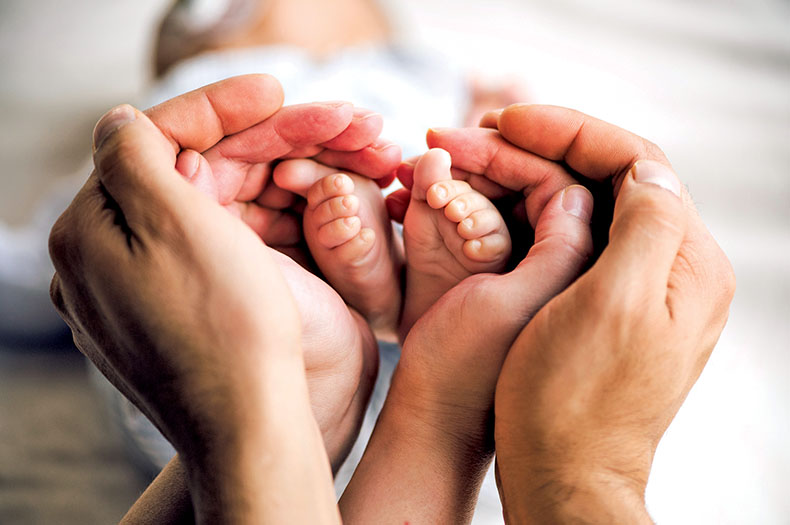
JUF has launched a new Infertility Support program, providing grants of up to $10,000 to help couples experiencing infertility pay for treatment. The first round of grants was made to six couples in late 2019.
“There’s a need to support members of the community facing infertility issues,” said Paula Harris, JUF Associate Vice President of Community Outreach and Engagement. “One in eight women suffer infertility issues, and men do, too. These rates may be higher in the Jewish community because we often delay for education and career advancement.”
“As we researched infertility, we were struck by how many Jewish communities around the country are developing assistance programs,” added Jason Rothstein, another member of JUF’s executive staff that helped bring this project to fruition. “Learning about the experience of other communities gave us valuable knowledge, and ultimately led us to partner with the Kevin J. Lederer Life Foundation to provide needed expertise to evaluate applications.
The program was initiated by David and Melissa Sarnoff, who provided the seed money for a three-year pilot program. Additional funding has been provided by Eli & Dina Field Family Foundation and the Harry and Sadie Lasky Foundation.
“We felt so incredibly fortunate when we became pregnant with our first child. I felt strongly that we needed to do something to help those less fortunate and the idea for this program was born,” said David Sarnoff, whose family has a significant legacy of giving back to the Chicago Jewish community. “Just knowing how many challenges friends have experienced in conceiving children, I thought it was important to create and fund an initiative whose sole purpose was to help Jewish people have babies.”
“Everyone who wants a baby should have a baby. You should not be foreclosed from having a child because you cannot afford fertility treatments,” said Melissa Sarnoff. “JUF is the perfect partner. Put simply, by helping the current generation of Jews grow their families, they are ensuring the next generation of Jews.”
The application for the grant is “as inclusive as possible,” said Harris, with the sole qualification to apply being that one member of the couple needs to identify as Jewish. The Life Foundation then assesses applications using medical, financial, and psychological criteria.
“We have a pretty robust scoring system,” said the Foundation’s president and Northwestern reproductive endocrinologist Dr. Eve Feinberg. She and other physicians look at factors like age, relevant diagnoses, and treatments, and use an “intricate validated point system” to determine who has a good chance of being pregnant. In the last five years, the Foundation’s success rate has been 70%, where rates of similar programs trend around 50%.
JUF and the Life Foundation will open the next round of applications in April on the Life Foundation website. The grants may include funding for IVF, implantation of unaffected embryos from couples who carry a genetic disease, sperm banking or freezing eggs due to cancer treatment, and other medical conditions.
“The images of Jewish life that we see frequently depict families with children. For a long time, our institutions have spent much of their resources serving the needs of families with children. All of this can be very alienating to those facing infertility, even though this is exactly the time they need their community the most,” said Rabbi Michael Weinberg of Temple Beth Israel in Skokie. “JUF’s new program says that the Jewish community cares for couples and individuals at all times of their lives, those we talk about and those times we keep most private. The initiative raises awareness and provides a path forward.”
For more information, contact Paula Harris at [email protected]. For more information about the Kevin J. Lederer Life Foundation, visit lifefindsaway.org.
Other stories
-
Two local teens win national recognition
Recipients of the annual Diller Teen Tikkun Olam Awards
Read more -
Celebrating six young award winners cultivating the community
Introducing young adult award winners
Read more -
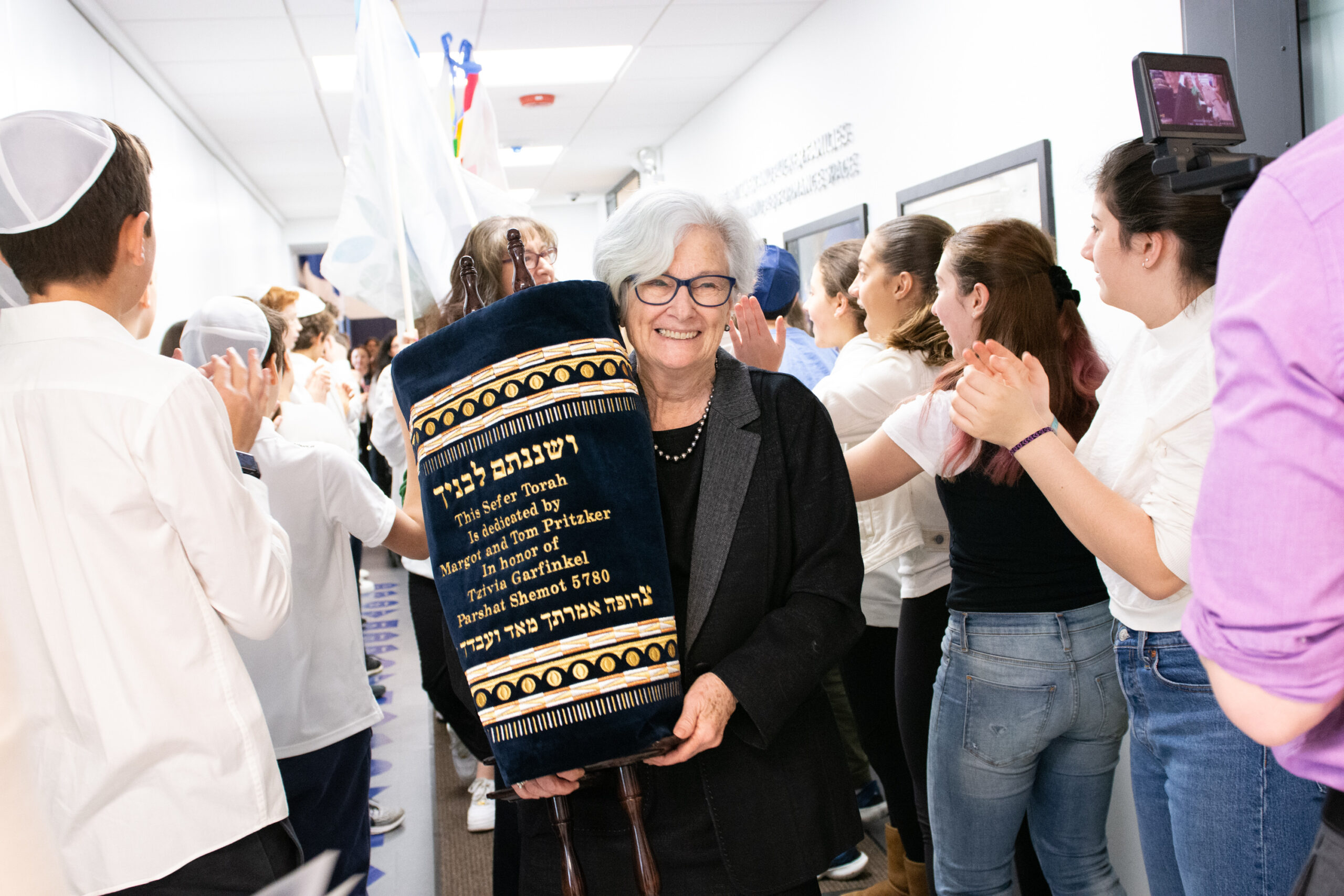
The last mitzvah commanded by the Torah is to participate in the writing of a Torah scroll.
In this spirit, a new Torah scroll was commissioned for the Bernard Zell Anshe Emet Day School, the first scroll the school has owned since its opening in 1946. Donated by Margot and Tom Pritzker, it was dedicated this January to honor Tzivia Garfinkel for her 25 years of service at Bernard Zell, most recently as the school’s Head of Jewish Studies. She retired at the end of the previous school year.
“My love of Torah came from my association with Ms. Garfinkel over 25 years ago, when I was part of the search committee that brought her to our school,” said Margot Pritzker. “Her genuine and authentic love for Torah has been communicated to so many of us; it is entirely fitting that the first ever Torah Scroll that this school has be dedicated to her.”
Gary Weisserman, Bernard Zell’s Head of School, welcomed attendees to the Hachnasat Sefer Torah (“Welcoming the Torah Scroll”) ceremony in January, which was attended by 500 students and local rabbis of all denominations. Also in attendance were JUF President Lonnie Nasatir, himself a Bernard Zell parent, and Aviv Ezra, Consul General of Israel to the Midwest.
“It is our hope that you as a school will use the Torah scroll, really use it, for reading whatever you are learning. It is in its use that it becomes familiar.” Pritzker told the students. “You are part of a tradition that has been doing this for thousands of years.”
In accepting the honor, Garfinkel said, “This day is a celebration of 25 years of Jewish learning that began when Margot Pritzker became Chair of the Board of Bernard Zell Anshe Emet Day School and I became the Head of Jewish Studies. It is a celebration of a lifetime of Jewish learning.
“While the Torah was given to the Jewish people only once, [it] is received by the Jewish people every time we learn Torah,” Garfinkel said. “With today’s dedication, the Bernard Zell Day School community stands at its own Sinai.”
The sofer, Yochanan Nathan, then inscribed one letter in each of the last four words of the scroll. Video of the writing was projected onto a screen, so attendees could watch the process.
One letter was for the students, represented by eighth-grader Eli Kamins, head of the student council. One was for the faculty, represented by teacher Rina Jacobius, the longest-serving current member of the school’s Jewish Studies teaching staff, with 23 years at the school. The last two letters were for Margot Pritzker and Garfinkel herself.
“Margot, your love of Torah has brought us to this occasion,” Garfinkel said as Pritzker’s letter was being inked, “as we fulfill the mitzvah of writing a Torah scroll.”
As in a Jewish wedding, a new Torah scroll is welcomed into a community with singing and dancing under a chuppah; after its completion, the Torah was paraded around the school, escorted by the band and chuppah, as students lined the halls. The procession ended at the Makom Rina, the school’s new sacred space. There, it was read from, then placed in its newly built Ark.
The Hebrew word for school is beit sefer- literally, “a house of scrolls.” And now, this beit sefer will, after more than 70 years, finally have a Torah scroll of its own.
Other stories
-
Two local teens win national recognition
Recipients of the annual Diller Teen Tikkun Olam Awards
Read more -
Celebrating six young award winners cultivating the community
Introducing young adult award winners
Read more -

Holocaust survivor earns Lifetime Achievement Award from game-design community
After Ivan Moscovich was liberated from the Bergen-Belsen Nazi death camp 75 years ago, he found his escape in “becoming a workaholic and choosing to be creative.” He was honored for seven decades of innovation in the toy and game industry at the Chicago Toy & Game Week in November with a Lifetime Achievement Award.
“Ivan was long overdue on being selected due to his incredible success in the toy, game and puzzle industry,” said Mary Couzin, CEO and founder of Chicago Toy & Game, an organization that promotes the industry. “His longevity, high achievement outside our industry, and the adversity he faced made him a further standout. It was our honor to honor Ivan.”
“His achievements are remarkable considering his history,” added Robert Fuhrer, founder and president of Nextoy LLC.
After surviving Auschwitz and two other concentration camps, plus two forced labor camps, Moscovich invented 111 games, including many milestones in puzzles and recreational mathematics. He has written over 50 puzzle books tackling mathematical problems.
His first game, The Amazing Magic Robot, was based on a challenge from Hungarian mathematician Paul Erdos, He also spent five years working with Mattel’s Jewish founders (and Barbie’s “parents”) Elliot and Ruth Handler in the 1960s.
Moscovich’s autobiography, The Puzzleman , details his family’s struggles in the Holocaust and his success in the years since.
“I like that the whole book isn’t about the war because that’s not all that defines him,” said Moscovich’s granddaughter Emilia, who traveled to Chicago with him for the award ceremony.
His memoir begins by detailing his family’s history, including his father’s murder in the Novi Sad Raid in 1942 and his time in the camps. It then moves on to his studies in technical school and his innovation of a rail-welding project.
After immigrating to Israel, he was tasked with creating scientific educational curricula. This work led to his creation of the first hands-on science museum in Tel Aviv in the 1960s, which later inspired San Francisco’s Exploratorium.
Moscovich found a way to combine his passions for science and art when he saw a toy called a harmonograph at the Toronto Science Museum and designed a larger version. Since 1965, he has created hundreds of unique “harmonograms” and became known as the first cybernetic artist, with successful exhibitions in Los Angeles, Mexico, Switzerland, London, and more.
“[My achievement] was a direct consequence of trauma in the camps – every survivor finds one way or another in order to forget the 100 percent thinking about Auschwitz,” Moscovich said. He recalled the obituary of Holocaust survivor Primo Levi, who took his own life, which said that Levi had died in Auschwitz 40 years before. “I may have been in the line of him, if I hadn’t chosen my escape of my mind,” Moscovich said.
Now 94 years old, he continues to “take revenge on the Nazi murderers through a long period of achievement and creativity” with new games, books, and art while spending time with his wife Anitta, daughter Hila and granddaughter Emilia.
“I’m so glad to be in Chicago,” Moscovich said prior to receiving the Lifetime Achievement Award. “I achieved nearly everything but the lifetime achievement award, now getting that– which is unbelievable– I can say I achieved everything I could have possibly achieved.”
Other stories
-
Two local teens win national recognition
Recipients of the annual Diller Teen Tikkun Olam Awards
Read more -
Celebrating six young award winners cultivating the community
Introducing young adult award winners
Read more -
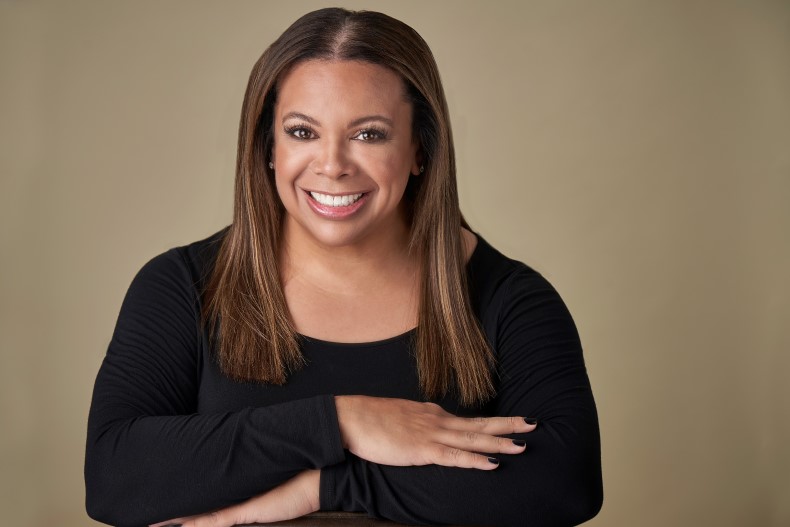
In her debut memoir, The Color of Love: A Story of a Mixed-Race Jewish Girl, independent film and television producer Marra B. Gad tells a deeply compelling story about her life as an adopted, biracial Jew growing up in Chicago in the 1970s. Told she was not “black enough” for black spaces, Gad simultaneously faced racism in the Jewish community–even within her own family. Her parents cut ties with relatives who discriminated against their daughter, including her beloved Great-Aunt Nette. But 15 years later, when Nette is dying of Alzheimer’s, Gad decided to become her great-aunt’s caregiver. In beautiful, fearless prose, Gad tells a story about that relationship that is alternately heart-wrenching and heartwarming.
JUF News recently spoke with Gad about The Color of Love :
What’s the one message you’d like people to take away from your story?
If I had to choose one thing that I would like people to take away from my story, it’s that love is the most powerful force in the universe, and that it is always a choice that we can make. Especially in the face of hate.
You make loving reference to your rabbi, Rabbi Schaalman (z”l). Was your experience at your own congregation different or better than in the general community?
I believe that a synagogue is simply a microcosm of the larger Jewish community, and my experience in my childhood congregation was reflective of my experience in the general community. There were many beautiful moments and many horrific moments. On the beautiful side, I was the president of my youth group, and my confirmation class. I found my way to OSRUI, where I went to summer camp. And I had some wonderful relationships, including the one with Rabbi Schaalman. That said, the terrible moments were certainly magnified because it was the place that should have been “home.”
With increasing diversity in the American Jewish community, do you see attitudes and behaviors changing? Do you think a young biracial or African-American Jew today would have the same experience you did?
I see the demographics in the American Jewish community changing and becoming more gorgeously diverse and that is a very good thing. When I was younger, I was always the only brown face in a sea of white, Ashkenazi faces. I never saw myself in anyone else, and that was painful and isolating. That is no longer the case. We are also talking about our diversity, and that is also a very good recent thing. That said, I cannot say that things are demonstrably different now behavior-wise than they were in the 1970s. They certainly are not markedly different for me. At High Holy Days services this year, a woman seated near me made a scene during services asking repeatedly–even after she watched me pray for nearly an hour–what I was “doing there” . . . I hold hope that by talking about things we will find our way to a better, more warm and wholly accepting place as a people. And I pray with all my heart that the gorgeous, young non-white Jewish children that I see around me and that I see out on my book tour will not experience the things that I have.
There’s a beautiful moment of reconciliation, where you and Nette share a piece of chocolate cake; can readers hold this image in mind as the end of the story?
While I appreciate the sweetness (no pun intended) in wanting to end the story with Nette and me sharing that piece of chocolate cake, it’s simply not where the story ends. Part of the joy in writing this book was finding the beauty in the truth–and the truth of my story extended beyond that piece of cake. While the book doesn’t offer up a traditional “happy” ending, to have ended the book by sharing Nette’s entire journey, and my own, was important to me. Because, as I share in the end, I know exactly who I am because of the entirety of my relationship with Nette. And I hope that my readers will find beauty in that, just as I have.
Other stories
-
Two local teens win national recognition
Recipients of the annual Diller Teen Tikkun Olam Awards
Read more -
Celebrating six young award winners cultivating the community
Introducing young adult award winners
Read more -