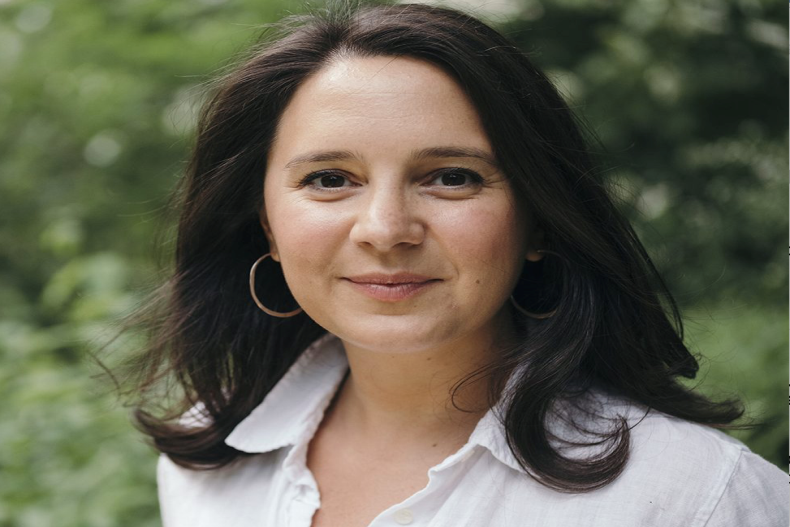
Journalist Bari Weiss had been contracted to write a book on the subject of “culture,” but the shooting at Tree of Life Synagogue in Pittsburgh, her hometown synagogue, shifted her focus on what to write about. After the attack last fall–literally hitting home for the journalist–she switched the topic of the book to antisemitism.
Weiss, who will speak at the JUF Women’s Division Lion Luncheon on Sept. 12, never imagined anything like Pittsburgh–and six months later, the Poway shooting in San Diego–could happen to the American Jewish community. After all, these attacks were something that, horribly, happened across the ocean. Not in America, the promised land her grandfather had described to her as a little girl, the land where generations of Eastern European Jewish immigrants had found a secure home.
In her book How to Fight Anti-Semitism (Crown), to be released in September, Weiss writes about antisemitism stemming from different communities: Radical Islam, the far right, and the far left. She examines the “double bind” she sees Jews caught in, the victims of white supremacy on the far right, and the aggressors on the far left in the context of Israel. She says Jews are treated as both “in league with the oppressed and the in league with the oppressor.”
She hopes Jews and non-Jews alike will use her book as a wakeup call to understand what antisemitism really is. It’s not just anti-Jewish prejudice, she said, but an entire conspiracy theory based on lies.
Over the summer, JUF News was the first media outlet to interview Weiss about the book, in advance of her appearance in Chicago.
JUF News : How did the Pittsburgh shooting change you?
Bari Weiss: It was one of the most heartbreaking weeks of my life. It was also one of the most uplifting. I’ll never forget being at the funeral of David and Cecil Rosenthal, which was packed with people not just from the Jewish community, but from all over Pittsburgh. I’ll never forget that Brett Keisel [Defensive end for the Pittsburgh Steelers] was a pallbearer at the funeral… I’ll never forget watching as therapists that I knew volunteered their time to give free therapy at the JCC. I’ll never forget seeing people I hadn’t known were members of the chevra kadisha (Jewish burial society) follow hearses down the street so the bodies would never be alone.
Do you believe antisemitism and anti-Zionism are one and the same?
If you’re an anarchist who believes in the abolition of all nation-states, it is entirely possible to be anti-Zionist and not be an antisemite. There are also plenty of anti-Zionists who don’t even know what it means and are identifying as such because anti-Zionism has somehow become a plank of being a good progressive. But do I believe that calling for the dismantling of a single state in the world, the state with the largest Jewish community and certainly the largest Jewish community of color anywhere in the world, is antisemitic? I don’t know what else to call it.
When you have experienced anti-Jewish sentiment against you personally–particularly because you are such a public face of Judaism–does it hurt you or do you let it roll off your back?
It does not hurt me when random trolls on the internet make fun of me for being a “Shylock” or a “slippery Jewess.” But it worries me deeply from a cultural perspective. Because this kind of dehumanizing speech is increasingly normalized.
What are the biggest takeaways you want readers to glean from your book?
I want readers to understand what [antisemitism] really is. There are grave misunderstandings about what antisemitism actually is. It is not just anti-Jewish prejudice. It’s a conspiracy theory. And understanding it as such is absolutely essential.
I [also] hope this book makes people braver. Telling the truth even when it’s hard and telling it to your own side is really challenging for Jews right now. White supremacists from the far right are, without question, the people that are most likely to kill us. But they are also the people most easy for us to call out. It is much much harder to call out an Ilhan Omar or a Rashida Tlaib, let’s say, and that’s for good reason. It’s because those people are also the targets of bigots. But it’s essential to be able to do both things at once: Both to say they shouldn’t be the subject of bigotry because of their faith, their gender, or their color, but also call them out for their own bad ideas.
Why have we survived through it all?
The Jews did not survive because we were anti -antisemites. The Jews have survived because we are carriers of an incredible set of values and ideas. If I have any hope for this moment, it’s that this rise in antisemitism reminds people of what those are–and why those are worth fighting to protect.
The JUF Women’s Division Lion Luncheon will be held at The Standard Club on Thursday, Sept. 12. Couvert is $85, and women who make an individual gift of $5,000 or more to the 2020 JUF Annual Campaign are invited to attend. To register, visit juf.org/2020LionLuncheon .
Other stories
-
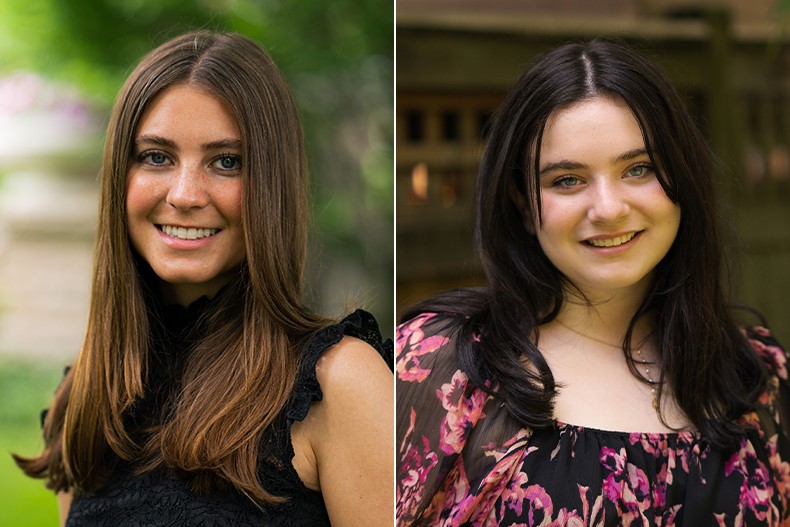
Two local teens win national recognition
Recipients of the annual Diller Teen Tikkun Olam Awards
Read more -
Celebrating six young award winners cultivating the community
Introducing young adult award winners
Read more -
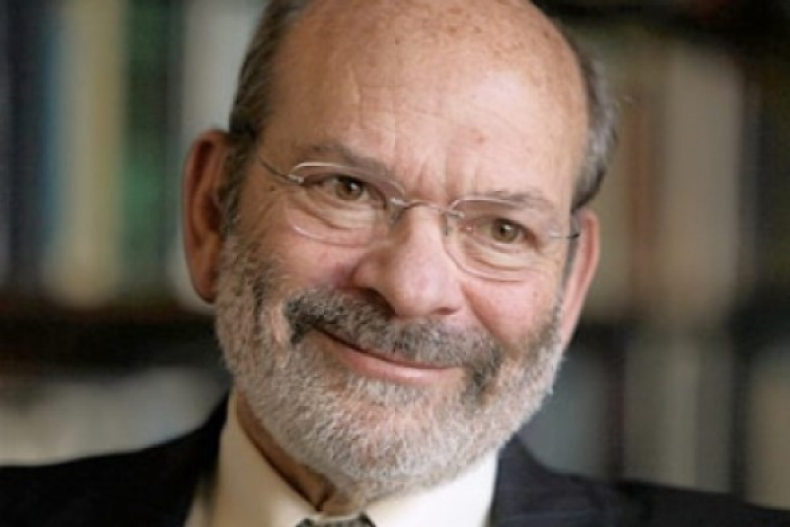
Rabbi Dr. Peter S. Knobel died Aug. 20 in Los Angeles, two weeks after suffering a massive heart attack. He was 76.
Rabbi Rick Jacobs, President of the Union for Reform Judaism, wrote this of his friend and colleague: “Who among us was not inspired by the way he combined serious Jewish learning with unbridled menschlichkeit –simultaneously speaking prophetic truth to power on critical issues facing the U.S., Israel, and the world?”
For much of his career, Knobel was the Senior Rabbi of Beth Emet The Free Synagogue in Evanston. More recently, he had served as rabbi emeritus at Beth Emet and as the Interim Senior Rabbi of Chicago’s Temple Sholom and Temple Judea in Coral Gables.
In addition to his congregational responsibilities, Rabbi Knobel served in leadership roles in the Reform movement in Chicago and on a national scale. He was a past president of the Central Conference of American Rabbis (CCAR), the Chicago Board of Rabbis, the Chicago Association of Reform Rabbis, and he served on the JUF Board of Directors.
He was a teacher to thousands. Knobel taught extensively at several colleges–including Hebrew Union College-Jewish Institute of Religion and Spertus Institute for Jewish Learning and Leadership .
Knobel authored and edited numerous articles and publications in the areas of Jewish Bioethics, Liturgy, and Zionist Thought and is the editor of Gates of the Seasons: A Guide for the Jewish New Year .
He was married to his wife, Elaine, for more than 50 years and they had two sons and six grandchildren. After the birth of each of his grandchildren, he wrote each one a letter, which he shared with his congregants on the High Holidays.
In one letter, he discusses mortality and using our limited time for good: “One of the quotations which rabbis repeat most often is repent on the day before your death. Since we do not know when we will die, each new day is the time for change. Most of us will not change radically, but if we can add each year at least one new mitzvah, the accumulated personal, family, and communal change will be significant.”
Other stories
-
Two local teens win national recognition
Recipients of the annual Diller Teen Tikkun Olam Awards
Read more -
Celebrating six young award winners cultivating the community
Introducing young adult award winners
Read more -
A political trap is being set for pro-Israel advocates. Unwittingly, some of us are digging it deeper.
As Congressman Brad Schneider was lining up bi-partisan support last month for his anti-BDS resolution (it passed 398-17), Congresswoman Ilhan Omar took lead sponsorship of what she and others – on both sides of the issue – labeled a competing, pro-BDS resolution.
Thing is, it isn’t. Her resolution endorses cherished First Amendment principles … restating the unchallenged right of individuals to boycott whatever companies or countries they choose.
The resolution cites iconic examples of boycotts undertaken by individual Americans: of Nazi Germany, Imperial Japan, and apartheid South Africa.
Our government didn’t interfere with such individual boycotts and wouldn’t today. Indeed, across America today individuals – with total impunity – can refuse to invest in Israeli companies or buy their products.
But Omar and other pro-BDS advocates besmirch anti-BDS legislation as criminalizing such individual boycott actions. That would be an obvious infringement of people’s rights, and the courts and the newspapers would be filled with the cases. Of course, they aren’t. That’s because anti-BDS laws infringe on no one’s individual’s rights.
None of the anti-BDS measures adopted by 26 states or proposed federal legislation jeopardizes anyone’s free speech or boycott rights. Among other normal activities, BDS advocates are entitled to disseminate their views in the media, on campus and to protest on public property.
What then do those anti-BDS laws in fact do? They sanction corporations – not individuals – for engaging in BDS. They are the natural extension of laws that sanctioned corporations for trading with apartheid South Africa, assisting Iran’s nuclear program or Sudan’s genocide of Darfurians. If sanctioning corporations doing business with those rogue countries didn’t imperil free speech, how does it suddenly do so (only) when those being sanctioned are boycotting Israel?
What then is the connection between Omar’s resolution – which doesn’t include the words “Israel,” “Palestine” or “BDS” – and anti-BDS legislation? Based on the text, nothing. But, as usual, subtext is everything.
Omar’s resolution is a ploy to trick pro-Israel advocates into opposing a harmless, toothless paean to the First Amendment. Relying on her and others’ false descriptions of the resolution as supporting BDS and knowing that some will automatically oppose anything with her name on it, Omar hopes to paint Israel’s supporters and anti-BDS laws with an anti-First Amendment brush.
Omar said the “resolution … really speak[s] about the American values that support and believe in our ability to exercise our First Amendment rights in regard to boycotting and …explain[s] why we support BDS.”
Unfortunately some fell for that spin:
The Forward wrote “Omar Introduces Pro-BDS Congressional Resolution,” and U.S. News & World Report said “Omar Seizes Spotlight to Push Pro-BDS Resolution.
And while the major pro-Israel groups haven’t given the resolution the oxygen it craves, others are neck-deep in the trap, baselessly claiming it is “antisemitic,” “protects BDS,” and “defies American values.”
Omar’s resolution will likely not even be called for a vote. Yet the fake war is fully underway over what it means and what it says about anti-BDS legislation.
The pro-BDS side, aided by our community’s overwrought reaction, is winning the argument with an important constituency: those who are neither passionate pro or anti-Israel Americans, the proverbial fence sitters, who care deeply about our constitution and are susceptible to misrepresentations that slander anti-BDS laws as unconstitutional.
Anti-BDS laws are constitutional. In politically polarized Washington, combating BDS stands upon uncommon common ground. It demonstrates solidarity with a strategic ally and aligns our nation’s values with our government’s corporate regulatory responsibilities.
Those in the media and our community echoing the misleading description of Omar’s resolution as a brave First Amendment response to the evils of anti-BDS laws have fallen into the semantic trap set. That trap ensures a public relations and public opinion victory for BDS, regardless of the resolution’s ultimate fate.
There is nothing to fear in Omar’s 420-word resolution. The fate of the First Amendment and anti-BDS laws do not lie in the balance. Let’s ignore the phony noise circulating around it and more knowledgeably advance anti-BDS public policies. There is real business to be done, further strengthening bipartisan support for the U.S. – Israel relationship and advancing the pursuit of peace. Anything else is a trap.
Jay Tcath is Executive Vice President of the Jewish United Fund of Chicago.
Other stories
-

Mother’s Day, Father’s Day, and the Jewish way
Let us pause and consider what it means for us to truly honor our parents
Read more -
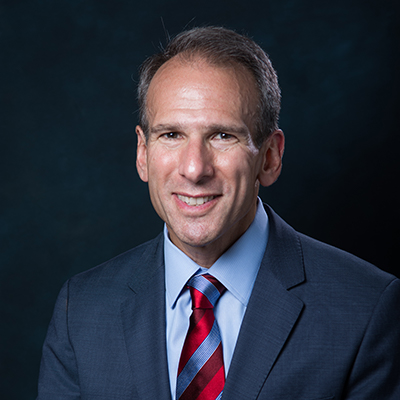
Each time we study Torah, we experience the revelation
The mystical tradition of Judaism that lifts up the number 600,000 from the Exodus
Read more -
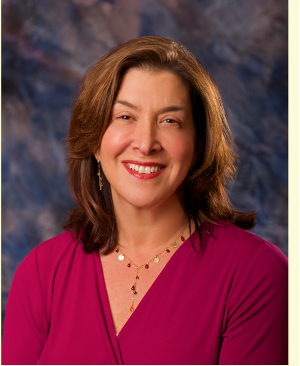

In response to the crisis at the nation’s southern border, the Jewish Federation of Chicago has opened the Fund for Asylum Seekers.
The Fund will aid those legally seeking asylum by providing temporary housing for those released from detention centers, legal representation, and case managers and advocates for unaccompanied and/or separated children.
“We are opening the Jewish Federation Fund for Asylum Seekers after hearing from many members of our community who were anguished about the situation,” said Bill Silverstein, Chair of JUF’s Jewish Community Relations Council. “The Torah teaches that when we see a person in crisis, we cannot turn away-and there can be no doubt that there is a crisis at our nation’s southern border.”
The Fund will support three organizations that are providing relief on the ground:
- Jewish Family Service of San Diego (San Diego Rapid Response Network) runs a shelter for families released from detention and provides a safe place to people as they decide on next steps while waiting for an asylum court hearing. The families-who frequently have only the clothes on their backs when they are released-are provided with food, toiletries, clothing and toys for the children.
- The Young Center , based in Chicago, provides case management for unaccompanied and separated children. The laws governing asylum do not require proceeding in the “best interests of the child,” so the volunteer case managers provided by the Young Center work to achieve that level of care.
- RAICES provides free and low-cost legal services to asylum seekers and refugees at its five Texas offices.
“The refugee’s welfare and rescue is the foundational commandment of the Torah,” said Lonnie Nasatir, President of the Jewish Federation of Chicago. “The drama of the Torah from beginning to end is the story of asylum seekers, culminating in Israel’s flight from slavery to asylum in the Promised Land.”
The number of people massing at or crossing the border to seek asylum in the U.S. has swelled in the first half of 2019, and Customs & Border Protection has detained nearly 700,000 in the past eight months. Although the number of people detained has recently decreased due to the newly implemented “remain in Mexico” policy, detention centers and shelters for those released from detention continue to be overcrowded and underserved.
Children are particularly vulnerable: on any given day, more than 2,000 children, including those separated from their parents, are housed in detention facilities.
“Jews are taught that ‘we were once strangers’ and therefore must treat strangers with dignity,” Silverstein said. “It’s a tenet of our tradition that takes on added significance and poignance during the 80 th anniversary of the voyage of the St. Louis.”
The St. Louis was an ocean liner carrying over 900 Jewish refugees seeking to escape Nazi Germany in 1939. After being denied permission to land in North America, the ship returned to Europe, and one-third of the passengers subsequently were murdered in the Holocaust.
Contributions may be made at www.juf.org/asylum , via hotline (312.444.2869) or by sending a check payable to: Jewish Federation Fund for Asylum Seekers, 30 S. Wells St., #3015, Chicago, IL 60606.
Other stories
-
Two local teens win national recognition
Recipients of the annual Diller Teen Tikkun Olam Awards
Read more -
Celebrating six young award winners cultivating the community
Introducing young adult award winners
Read more -
It has been 25 years since Ibrahim Hussein Berro, a Lebanese citizen and member of Hezbollah, allegedly drove a van packed with explosives into the AMIA Jewish center in Buenos Aires, Argentina.
The blast leveled the building, killing 85 people and injuring more than 300 others. To this day, not one person has been charged, though evidence implicates Hezbollah carrying it out at the direction of Iran.
Speaking at a memorial program held at JUF on Thursday, Aug. 9, Beatriz Vivas, Consul General of Argentina in Chicago acknowledged that the investigation has been marred by mismanagement and corruption.
“President Macri has pledged to reopen the investigation, and the government of Argentina took the important step of freezing Hezbollah assets in the country,” Vivas reported. “I hope that some justice will be achieved.”
Bringing names to the victims, Steven Dishler, JUF’s VP for International Affairs, shared that the youngest AMIA victim was 5-year-old Sebastian Barreiro, who died holding his mother’s hand as they walked in front of the building.
Twenty-one year old Paola Czyewski was a law student. She was visiting AMIA to meet her mother.
“The ideology of hate and bigotry that drives Hezbollah is the same hate behind the attack on the Tree of Life synagogue and the hate that we saw kill Muslims in New Zealand, Christians in Sri Lanka and members of the LGBTQ community in Orlando,” Dishler said. “Hatred and bigotry must be named as such and confronted. The alternative is unacceptable.”
“Am Echad, One People, was our message 25 years ago when we mobilized to support the Argentine Jewish community after the horrific attack, and that is our message today,” said David T. Brown, national campaign chair of Jewish Federations of North America and former JUF board chair. Brown led a national mission to Argentina last week, hearing from the nation’s deputy foreign minister and visiting the memorial dedicated to the bombing victims.
Other stories
-
Two local teens win national recognition
Recipients of the annual Diller Teen Tikkun Olam Awards
Read more -
Celebrating six young award winners cultivating the community
Introducing young adult award winners
Read more -
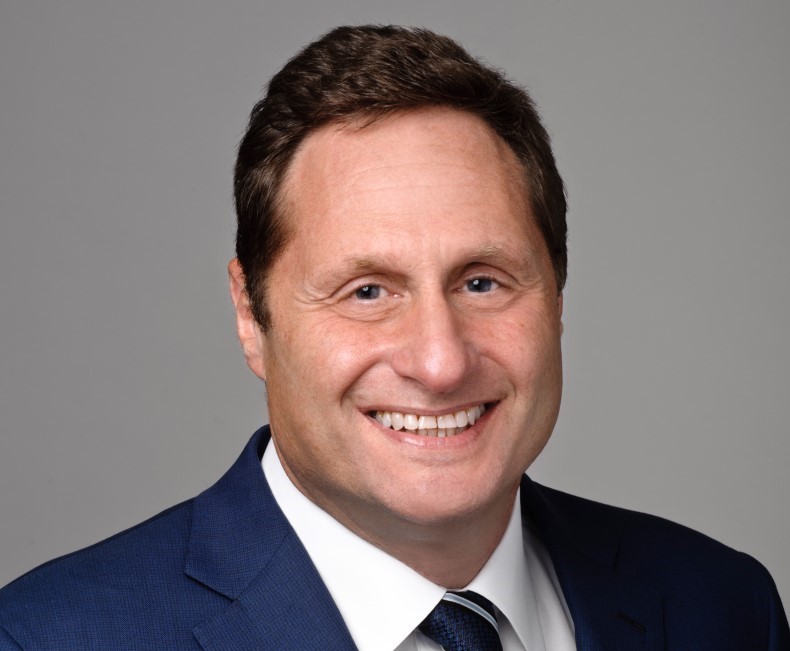
Bill Silverstein, a longtime leader in Chicago’s Jewish community, will receive the 56 th annual Julius Rosenwald Memorial Award, the Jewish Federation’s highest honor.
The award, presented each year at the Federation’s Annual Meeting, goes to an individual who has demonstrated a lifetime of outstanding dedication and service to the Federation and the entire Jewish community. It is named for Julius Rosenwald, the iconic Chicago business leader and philanthropist of the early 1900s.
Silverstein, a real estate developer and philanthropist, has an extensive record of leadership both within and beyond Chicago’s Jewish community. He chaired the JUF/Federation Board from 2014 to 2016, the JUF Annual Campaign in 2011, and has served in many other roles, including as Chair of the Overall Planning and Allocations Committee. Since 2017, he has chaired JUF’s Jewish Community Relations Council.
In 2006, he received the Federation’s Davis, Gidwitz & Glasser Young Leadership Award.
Silverstein has joined missions to more than 20 countries to explore Jewish life and attend to Jewish needs. And here in Chicago, he has been a foundational supporter of the award-winning, transformative Silverstein Base Hillel since its inception.
In the broader community, Silverstein is a Trustee of the Museum of Contemporary Art of Chicago and a Board Member of the Ann & Robert H. Lurie Children’s Hospital of Chicago. He also has long served on the Solomon Schechter Day School Board.
For more information or to register, visit here .
Other stories
-
Two local teens win national recognition
Recipients of the annual Diller Teen Tikkun Olam Awards
Read more -
Celebrating six young award winners cultivating the community
Introducing young adult award winners
Read more -
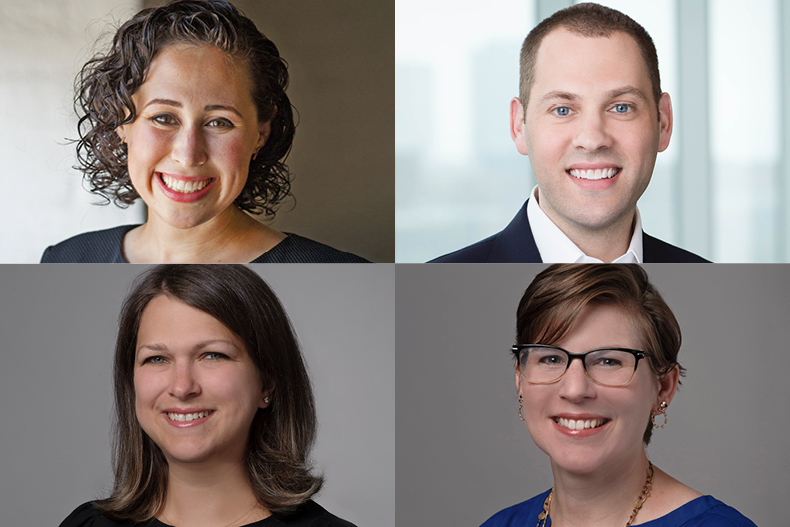
Four outstanding young leaders will be recognized for their service to Chicago’s Jewish community at the Jewish Federation’s Annual Meeting Sept. 17.
During the 10 a.m. Community Forum, Anna Hartman and Rabbi Michelle Stern, BCC, will receive the 32nd annual Samuel A. Goldsmith Young Professional Award, honoring Jewish professionals whose exemplary performance at a Jewish agency in the Chicago area has benefited the entire Jewish community.
- Hartman is Director of Early Childhood Excellence at the Jewish United Fund and also is Director of the Paradigm Project, a national network that nurtures emerging leaders in Jewish early childhood education. She received the Covenant Foundation’s inaugural Pomegranate Prize, honoring rising leaders in Jewish education, and has participated in two study tours of the renowned municipal early childhood centers in Reggio Emilia, Italy.
- Stern is the Rabbi and Chaplain for CJE SeniorLife, guiding religious life for clients and residents in CJE’s skilled nursing, assisted living, and memory care centers. She accompanies residents and their families through the aging process, provides pastoral and spiritual care, teaches classes on Jewish topics, and leads worship.
Following that presentation, Stacey Dembo and Joshua R. Liss will receive the Davis, Gidwitz & Glasser Young Leadership Award, presented to volunteers 40 and under who have demonstrated exemplary dedication and have made significant contributions to Chicago’s Jewish community.
- Dembo, a lawyer, has represented children and adults with disabilities in Social Security-related claims and litigation for more than a decade. Years ago, she began volunteering at JUF’s Community Legal Services Clinic, providing pro bono representation to immigrants, people with disabilities, and Holocaust survivors. For the past five years, she served as the clinic’s Chair, and now is its Ex-Officio. She also is on the Encompass Advisory Council, supporting that program’s work to build out Jewish community-based services for adults with intellectual/developmental disabilities, and the Ben Gurion Society Advisory Council.
- Liss, who chairs the Metro Chicago Hillel Board, has been deeply engaged in Jewish life in Chicago and nationally since moving here from Detroit in 2004. He served on JUF’s Young Leadership Division Board from 2007 to 2011 and held various leadership positions, including WYLD Annual Campaign Event Chair. Then he held a variety of leadership posts in the Jewish Federations of North America’s National Young Leadership Cabinet, including Chair of the National Summer Mission to Israel and Cabinet Retreat Vice Chair. He also served on JUF’s Missions and Health & Human Services committees.
For more information or to register, visit here .
Other stories
-
Two local teens win national recognition
Recipients of the annual Diller Teen Tikkun Olam Awards
Read more -
Celebrating six young award winners cultivating the community
Introducing young adult award winners
Read more -
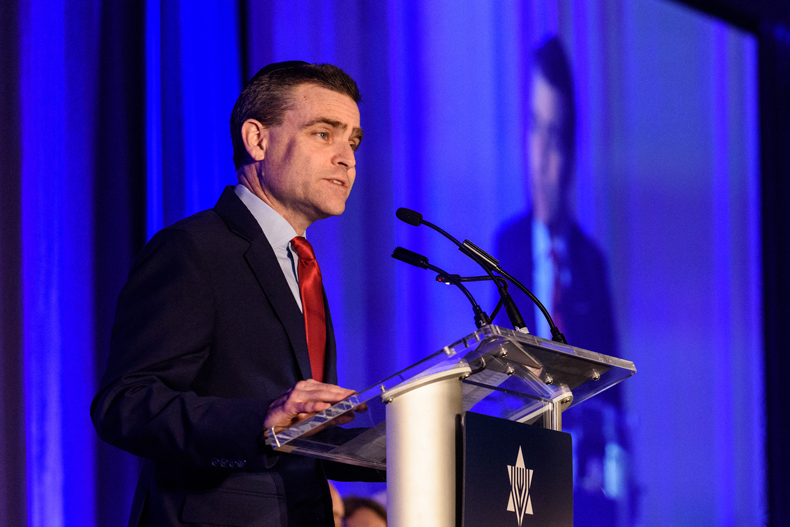
At the start of its 120 th year, the Jewish Federation of Chicago begins a new era.
As it convenes its Annual Meeting Tuesday, Sept. 17, new President Lonnie Nasatir–just the fifth chief executive in the group’s history–will, for the first time, present the State of the Federation address. In it, he not only will review the year past, but will outline some of his vision of what lies ahead for one of Chicago’s, and the nation’s, largest charitable organizations.
The Annual Meeting will be held at the Hyatt Regency Chicago, 151 E. Wacker Drive. It will include a 10 a.m. Community Forum, and a noon luncheon program.
At the morning Community Forum, four outstanding young leaders will be honored for their service to Chicago’s Jewish community, and the work of one of the Federation’s many programs, the Norton & Elaine Sarnoff Center for Jewish Genetics, will be highlighted. In addition, there will be the election of Federation directors; recognition of outgoing board members; and an opportunity to explore critical community issues with Federation and agency leadership. There is no charge for the morning session.
The lunch session will feature the President’s report; presentation of the Shofar Award to 2019 JUF Annual Campaign Chair Wendy A. Berger; and presentation of the Julius Rosenwald Memorial Award to Bill Silverstein. Luncheon charge is $45 per person; $25 for senior citizens, clergy, Jewish community professionals, and students.
For more information or to register, visit here .
Other stories
-
Two local teens win national recognition
Recipients of the annual Diller Teen Tikkun Olam Awards
Read more -
Celebrating six young award winners cultivating the community
Introducing young adult award winners
Read more -

CJE SeniorLife announces new independent senior living residence will open in Deerfield
At a Preview Celebration on July 28, CJE SeniorLife officially introduced their partnership in the construction currently underway of luxury, independent living apartments for people 65 and over.
The new 240-unit building is on 5-plus acres, adjacent to CJE’s Weinberg Community for Senior Living, which has been recognized for 20 years as a premier destination for assisted living and memory care. CJE SeniorLife, a JUF affiliate, will be responsible for managing and operating this new rental, residential building. The building, as yet unnamed, is located on Lake Cook Road in Deerfield. First move-ins are anticipated to begin in June 2020.
In addition to CJE, Banner Senior, LLC, is the managing partner and developer of the joint venture, with construction by Lendlease and financing by Harrison Street and Wells Fargo. The six-story building was designed by architectural firm Norr.
The new building will offer an expansive amenity package that includes 24-hour concierge service, housekeeping, indoor pool and day spa, yoga and fitness studio, a meal plan with three options of dining venues, outside terraces, library/business center, art studio, theatre, and life enrichment classrooms. Plenty of covered and surface parking will be available as well as valet service.
“CJE is extremely excited to have an opportunity to manage this independent living community on the North Shore and add it to our portfolio of residential options for active adults,” said CJE President and CEO Dan Fagin. “Located across from the highly-recognized and well-established Weinberg Community, this building will help CJE fulfill its mission to enhance the lives of even more older adults by adding breadth to our continuum of care. We are responding to a need for an upscale rental option for older adults in the Jewish and the larger community who have decided to downsize and let someone else do the cooking, housekeeping, and yard work!”
Community members who are interested in adding their names to a growing list of people who want to receive more information (when available) should call (847) 597-8772.
Other stories
-
Two local teens win national recognition
Recipients of the annual Diller Teen Tikkun Olam Awards
Read more -
Celebrating six young award winners cultivating the community
Introducing young adult award winners
Read more -
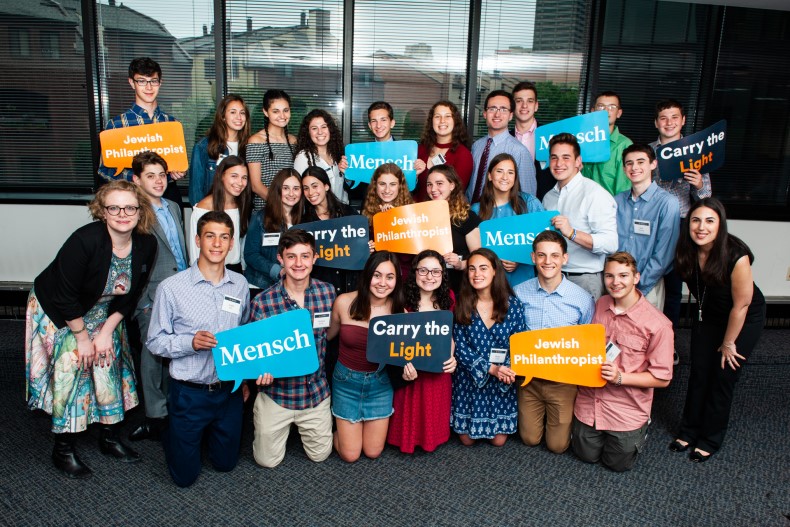
Largest study ever on American Jewish teens depicts cohort wrestling with modern challenges, while embracing family, culture
Jewish Education Project Staff
The largest study ever on American Jewish teens paints a picture of a cohort that simultaneously embraces family, Jewish culture, and friends, while also grappling with anxiety and pressure to succeed-in a world permeated by social media and constant communication. Researched and written by The Jewish Education Project and Rosov Consulting, GenZ Now: Understanding and Connecting with Jewish Teens Today shares survey results and interview responses from a total of 17,576 teens to reveal data and insights about their interests, challenges, and passions in all facets of life.
The report covers a range of areas:
On family:
· Jewish teens like their parents and value their perspectives.
· Being Jewish is often about family and is an expression of family bonds.
On contemporary challenges:
· Teens in the GenZ Now study believe adolescents need help with social-emotional issues. Similar to other American teens, teens in this study named coping with anxiety, academic pressure, self-esteem issues, and failure as the biggest needs of their peers.
· Jewish teens see positives and negatives to social media. Teens acknowledge that social media can cause them stress, but many also believe it helps cope with stress, connect with friends, and organize for change.
On religious practice:
· Americans increasingly describe themselves as having “no religion.” But even many “no religion” teens-a sizeable minority in the study-are interested in engaging with Judaism at certain points in their life.
· Teens feel Jewish culture is something to celebrate and most commonly use the word “culture” to express what it means to be Jewish. The concept of Jewish culture captures the elements of being Jewish about which teens feel good.
On antisemitism and Israel:
· Many of the teens interviewed for GenZ Now report antisemitic experiences, but do not feel personally threatened or see it as a primary lens to understand their life experience.
· Teens from the study are interested in Israel and believe that as Jews they have a special connection to the land and country. They want to ask trusted adults questions about Israel, and most teens who have not traveled there yet, hope to do so one day.
Researchers also looked closely at the influence of 14 Jewish youth-serving organizations (YSOs)– representing a range of ideologies and interests-on teens and teens’ abilities to flourish in life as defined by a 14 item framework that was developed in the 2016 Generation Now study (Available at JewishEdProject.org/GenerationNow).
The survey found that teens who participate with YSOs feel more of a connection to being Jewish, feel better about themselves, have deeper relationships with family, friends, and mentors, and feel empowered to make change in the world.
“A major shift is occurring in how the Jewish community understands its relationship to teens,” adds David Bryfman, Chief Innovation Officer and incoming CEO of The Jewish Education Project. “We no longer engage teens simply for the sake of Jewish continuity. Rather, GenZ Now is a call to engage teens on a deep level because Jewish experiences and community can be sources for their own personal growth and well-being. Teens care deeply about their friends, family and the broader world around them-and they want to create change that positively influences peoples’ lives. Jewish engagement that is meaningful to them will integrate those values and desires.”
Researchers gathered data from 17,576 Jewish teens between the ages of 13 to 19 in a national survey administered through the 14 participating YSOs: BBYO, Bnei Akiva of the US and Canada, The Bronfman Fellowship, CTeen, Diller Teen Fellows, Friends of Israel Scouts/Tzofim, Habonim Dror North America, JCC Association of North America, Jewish Teen Funders Network, Moving Traditions, NCSY, URJ Youth/NFTY, USY/USCJ’s Youth Movement and Young Judaea.
“Our GenZ Now research is premised on a framework of thriving,” adds Wendy Rosov of Rosov Consulting. “What conditions do teens need for optimal development? This study helps us understand how participating in Jewish activities helps teens grow in different aspects of their lives-personally, socially, and Jewishly. So, when we hear that they like being with their family, engaging in Jewish holidays and culture, asking questions about Israel, and more-those are important findings to understand and to bear in mind when creating programs and initiatives to engage and support teens.”
GenZ Now, along with a related 2016 study on Jewish teens, was funded by the Jim Joseph Foundation, Lippman Kanfer Foundation for Living Torah, and the Charles and Lynn Schusterman Family Foundation.
Other stories
-
Two local teens win national recognition
Recipients of the annual Diller Teen Tikkun Olam Awards
Read more -
Celebrating six young award winners cultivating the community
Introducing young adult award winners
Read more -