Even as Hurricane Dorian continues to batter the eastern seaboard, and the scope of the devastation in the Bahamas is just beginning to be known, the Jewish Federation of Chicago has launched an emergency relief fund to aid recovery efforts.
Donations to the Jewish Federation Hurricane Dorian Relief Fund can be made at donatenow.juf.org/disaster , by calling (312) 444-2869, or by sending a check payable to Jewish Federation Hurricane Dorian Relief Fund to 30 S. Wells Street, #3017, Chicago, IL 60606.
As always, 100% of collected funds will provide relief for those impacted by this disaster, with Federation absorbing all administrative costs. Federation works with long-established relief organizations on the ground to provide the most effective, efficient and coordinated response. Past partners have included IsraAID, NECHAMA: Jewish Response to Disaster, and the American Jewish Joint Distribution Committee.
Other stories
-

Two local teens win national recognition
Recipients of the annual Diller Teen Tikkun Olam Awards
Read more -

Celebrating six young award winners cultivating the community
Introducing young adult award winners
Read more -
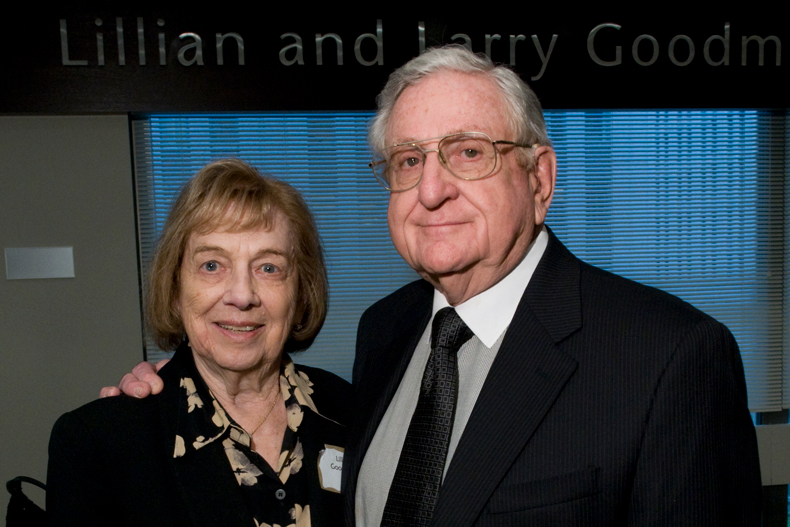
Lawrence “Larry” Goodman often saw potential where others did not. He turned army surplus goods into a small retail empire. He believed in the future of the modern state of Israel, even its desert. He thought a science fiction series from his childhood could spark an interest in space exploration for the youth of his day. He even believed that some good could come out of a family tragedy.
Goodman passed away on Aug. 2; he was 95.
In 1946, Goodman began selling army-surplus items, then expanded his inventory, creating Community Discount Stores, the forerunner of today’s self-service discount department stores. By the time he sold the chain 17 years later, he had grown it to 35 stores.
Goodman then established the Goodman Group and, in 1965, American Asset Management Services, a real estate company that owns and operates shopping centers and office buildings. Always eager to foster the potential in others, he sat on the Advisory Board of the University of Illinois at Chicago Business School, and was named to that university’s Chicago Area Entrepreneurship Hall of Fame.
Born and raised in Chicago, Goodman attended Herzl College and DePaul University in Chicago, and the University of North Dakota. He then served as an Army Air Corps navigator during World War II.
While home on furlough at age 19, he married his high school sweetheart Lillian Wool, then 18. Over only a couple of years, they were stationed at 12 different military bases. After his service, the Goodmans settled in Highland Park, but never stopped traveling. During their 66-year marriage, they circled the globe twice. They visited Jewish villages in Ethiopia, and protested on behalf of Soviet Jews in Moscow itself.
Naturally, Israel was high on their list of destinations. Goodman traveled there nearly 60 times, starting in 1958. Back home, he advocated tirelessly for the Jewish state, serving as Midwest regional chairman for Israel Bonds, on the board of the Development Corporation for the State of Israel, and as both president and chairman of the America-Israel Chamber of Commerce.
The Goodmans have also supported Israel’s soldiers in many ways, funding an exercise facility, a Torah scroll, and a system for them to earn scholarships through community service.
Passionate about exciting the next generations about Israel, Goodman supported the teaching of modern Israeli history at JCC Camp Chi and at JCC camps nationally, and sponsored teen trips to Israel.
While concerned with all of Israel, Goodman agreed with David Ben-Gurion about the enormous potential of its Negev region and its “capital,” Be’er Sheva. Goodman founded the American Friends of the Be’er Sheva Foundation and served as its national chairman. The Goodmans enhanced the city’s arts, social services and hospitals, and public recreation. For all his efforts, he was honored by the city with its Distinguished Citizen Award for Lifetime Achievement.
Goodman also served on the board of governors of the city’s Ben-Gurion University and enhanced its infrastructure. The university awarded him an honorary doctorate.
Many of Goodman’s efforts have been channeled through the Lillian and Larry Goodman Foundations, but he also served on the boards of many other institutions.
In Chicago, Goodman sat on the Board of Trustees of Illinois Holocaust Museum and Education Center. Goodman was also active at North Shore Congregation Israel, and many other Jewish institutions. Goodman served on the board of American Jewish Joint Distribution Committee, traveling to former Soviet republics and Latin America on its behalf.
Goodman also served on the JUF Board of Directors. “Larry exemplified the ideal of commitment to the Jewish community and Jewish causes,” said Lonnie Nasatir, JUF President. “We appreciate his generosity every day at JUF, and even hold meetings daily in the Lillian and Larry Goodman Conference Center in our headquarters.”
Active in the larger Chicago community, Goodman also supported the Greater Chicago Food Depository and funded Lawrence and Lillian funded a fieldhouse for Roosevelt University’s athletic programs.
Following the passing of his granddaughter, Cebrin, he created the Cebrin Goodman Center, with the hope of saving others from drug addiction.
Many Chicagoans knew Goodman from his Sunday morning TV appearances. He was the first department store TV advertiser, and his commercials were live. He sponsored- and hosted- broadcasts of the 1930s Flash Gordon serial and his own Outer Space Quiz Show .
Goodman was predeceased by Lillian, their daughter Ilyse (Bob) Lopatin, and their granddaughter Cebrin Goodman. He is survived by his children Sharyn Johnson, Gary Goodman, and Nancy Goodman. He was “Poppy” to Michele (Ed) Taylor, Lindsey Lopatin, Rachel (Rush) Sturges, Hailey (Jonathan) Cole, Chelsea (Jason) Lawson, Scott Goodman, Nathan Goodman, and his nine great-grandchildren.
Memorials may be made to the Greater Chicago Food Depository, the Illinois Holocaust Museum and Education Center, or the American Friends of the Be’er-Sheva Foundation.
Other stories
-
Two local teens win national recognition
Recipients of the annual Diller Teen Tikkun Olam Awards
Read more -
Celebrating six young award winners cultivating the community
Introducing young adult award winners
Read more -
On a journey through Poland, Jews and Christians bear witness together to history, horror
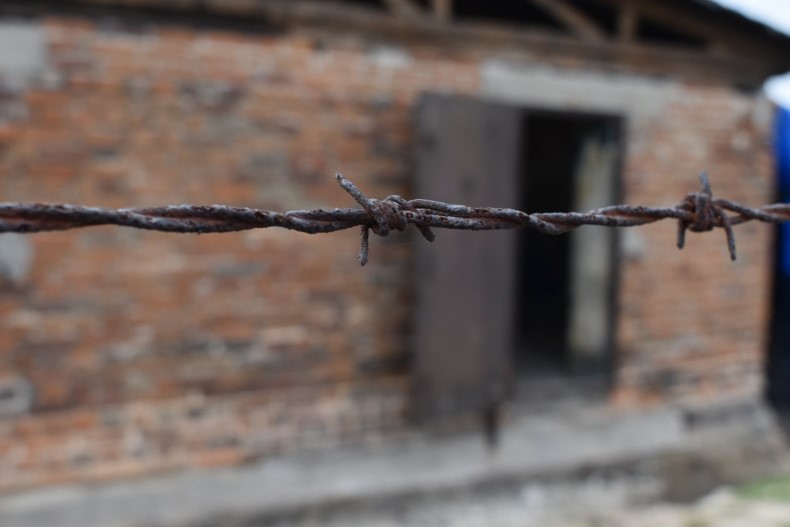
A group of nearly 40 Christian leaders and staff from the Jewish Federation of Chicago traveled in mid-August to Poland, where they stood together at the Auschwitz, Treblinka and Majdanek death camps.
Together, they walked through the Warsaw Jewish cemetery where some of Hasidic Jewry’s greatest thinkers lie, just yards from a mass grave of those killed in the Warsaw ghetto. And together, they mourned for the 2,100 Jews of Tiktin who were murdered and buried in a nearby forest.
For five days, the diverse group of Christian religious leaders, theologians, academics, journalists and lay leaders – most from Chicago, but also from California, Washington, Florida, New York and England – traveled through Poland with Rabbinic Scholar Rabbi Yehiel Poupko and others from the Federation. Poupko designed the trip to introduce Christian leaders to the breadth and depth of Jewish history in Poland and eastern Europe, until its near complete eradication by Nazi Germany and its allies in World War II.
The delegation visited what remains of the Warsaw Ghetto, where the idea and practice of concerted Jewish resistance took root, and the last Polish Jewish ghetto to be liquidated, in Krakow. And they were welcomed at an Orthodox synagogue in Krakow that survived the war and is once again home to Jewish prayer, ritual and learning.
“It was a privilege to bear witness together in Treblinka, Lupochko Forest (the site of the mass murder of the Jews of Tykocin or Tiktin), Majdanek, Auschwitz, and the Warsaw and Krakow ghettos,” Illinois State University Prof. Michael Gizzi said of his first visit to Poland. “Entire civilizations have been lost, but they are not forgotten.”
Bishop Sally Dyck, president of the General Board of Church and Society for the United Methodist Church and a member of the Central Committee of the World Council of Churches, said “We were deeply grateful to have this unique experience and will treasure it as it continues to inform us, our faith and ministry.”
Summing up the importance of Jews and non-Jews learning from the Holocaust, Myron McCoy, senior pastor at First United Methodist Church at the Chicago Temple, quoted Dr. Martin Luther King, Jr. “He who passively accepts evil is as much involved in it as he who helps to perpetuate it. He who accepts evil without protesting against it is really cooperating with it.”
Rabbi Poupko was joined on the trip by Temple Sholom’s Rabbi Shoshanah Conover, Jewish Federation of Chicago colleagues Jane Charney, Rabbi Reni Dickman, Daniel Goldwin, Christopher Melton and David Rubovits, and Ethan Felson of the Jewish Federations of North America.
Other stories
-
Chicago to Israel to Kenya
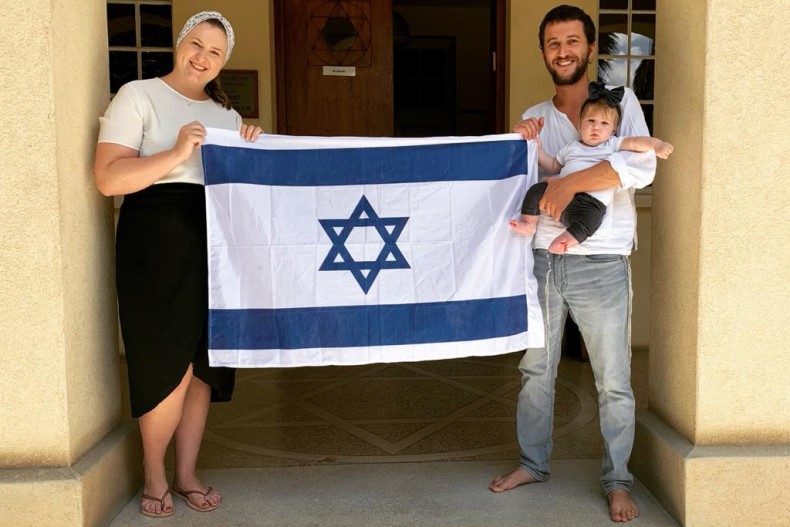
A family’s story of living Jewishly on three continents Michelle Cohen World May 28, 2021 Avital, Tzofia, and Netanel Kaszovitz outside their home in Nairobi on Yom HaAtzmaut. When Avital Kaszovitz prepared to be a Modern Orthodox shlicha (emissary) to the Jewish community in Ke
Read more -
New exhibit spotlights the experience of ‘Shanghai Jews’
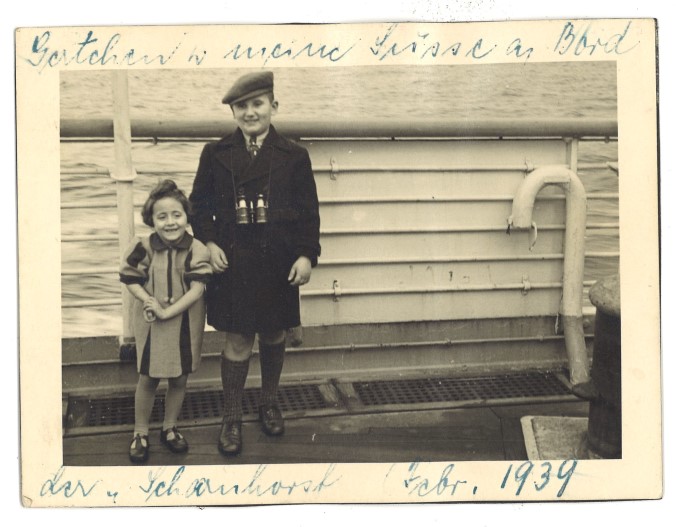
Explore a new Illinois Holocaust Museum and Education Center exhibit
Read more -
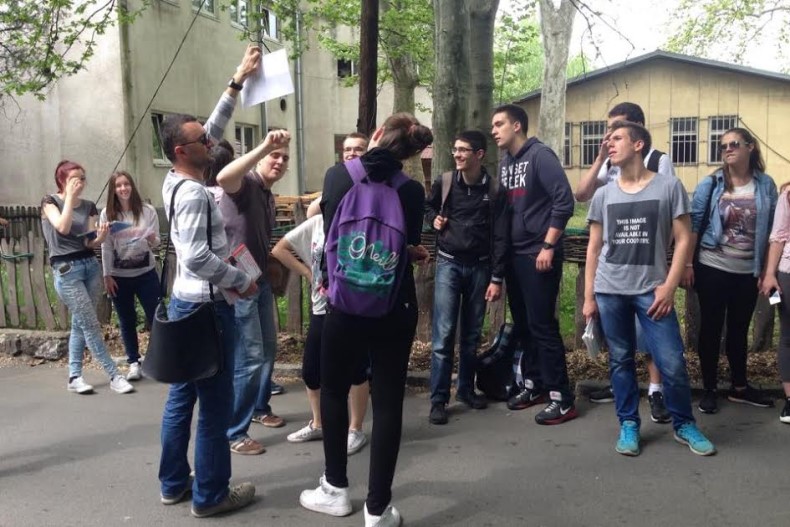
Europe’s brave new teachers of the Holocaust
Teaching the Holocaust in the modern era has its difficulties and rewards.
Read more

The new year that comes in January is mostly celebrated with parties and champagne, while resolutions are an afterthought. But Rosh Hashanah puts resolutions front-and-center- the holiday focuses on getting rid of bad habits and replacing them with better ones.
Here are some Rosh Hashanah resolutions from around Chicago:
“My resolution for Rosh Hashanah is to face myself honestly and with loving acceptance, and to be authentic in all of my interactions. It is an ongoing process, and I have made significant progress to that end, but I know I have more work to do.”
Erica Walker
“Resolution: To set aside at least 15 minutes every day for traditional daily prayer, and to introduce prayer to my children at shul .”
Naomi Richman
“My resolution is to shed 40 lbs. through diet and exercise. Go big or go home! My hope for 5780 is that there will be peace and sanity in the Middle East… L’Shanah tovah.”
Dave Brottman
“My hope for the New Year is that I can spend every day enjoying the present- time is flying way too fast!!”
Brooke Cader Herzage
“In the new year I’d like to remember to put on my tefillin more often. I’ve gotten pretty good, but on some especially busy days I’ll remember at night that I forgot to put on my tefillin that day. There are some mitzvot that don’t come easy for me but putting on tefillin is eminently doable.”
Jonathan Edelman
“I resolve to keep working actively for the environment and critical habitats that support us, our children, and our fellow creatures on God’s planet. I pray that our country will regain its leadership role on climate and environment in the year to come.”
Ricca Slone
“My hope for this new year is as follows: That no matter our financial background, our social position, our apparent privileges or our dissociation from reality, we don’t forget where we come from and that we are all one. When one hurts, we all hurt; when one is discriminated upon, we are all discriminated upon; when one is shunned, we are all shunned. Until we see ourselves in others and understand that the other’s best interest is our best interest, we will continue to live in cognitive dissonance, exacerbating our differences.”
Rene Garza
“I wish that, with starting high school, to meet new kids and make more friends!”
Juliette Leder, 12
“I wish that everyone would care for each other. That the world would be a better place. And that everyone would try to give food to the homeless, and evil people stop being mean.”
Ethan Leder, 8
~Compiled by Paul Wieder
Other stories
-
Two local teens win national recognition
Recipients of the annual Diller Teen Tikkun Olam Awards
Read more -
Celebrating six young award winners cultivating the community
Introducing young adult award winners
Read more -
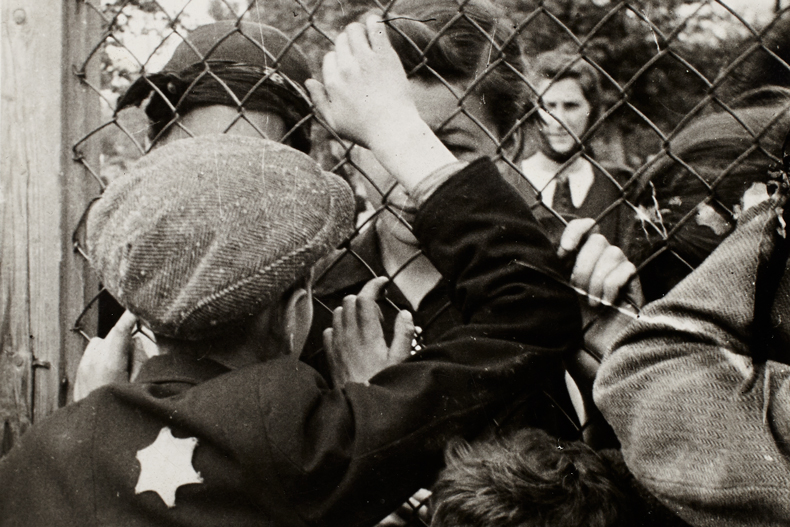
During the darkest days of the Holocaust, the Lodz Ghetto in Poland was home to one of the largest remaining communities of Jews. Now, the Illinois Holocaust Museum & Education Center is bringing this lost world to life in Chicago for the first time.
Soon after Germany invaded Poland in 1939, they entered the city of Lodz, which was then home to Poland’s second largest Jewish community. Jews were banned from most professions and forced to wear a yellow star. Within weeks, over 160,000 Jews were forced to move into an area measuring just one and a half square miles; later on, tens of thousands of Jews from other from other parts of Europe were forced into the Lodz Ghetto, too.
One of the Jews imprisoned in the ghetto was Henryk Ross, a 21-year-old who’d worked as a sports photographer for a Warsaw newspaper. In the ghetto, he was assigned the job of official ghetto photographer, taking pictures of workers for their factory IDs and shooting carefully controlled propaganda photos.
In addition to performing his official duties, Ross risked his life to resist the Nazis, shooting thousands of photographs that showed what life was truly like in the Lodz Ghetto. He hid his camera underneath his coat and cut holes in his pockets so he could manipulate his camera unseen, and roamed the ghetto, single-minded in his determination to record as many images as he could for posterity. Ross’ wife Stefania, whom he married in the ghetto in 1941, assisted him, risking her life to serve as a lookout, helping him evade Nazi guards and ghetto police.
The Nazis set up factories and workshops in the Lodz Ghetto, and made a grim promise: Jews would stay alive there so long as they worked. For years, despite thousands of Jews being deported from the ghetto to be murdered in Auschwitz and elsewhere, a community of Jews somehow found the strength to continue living. By 1944, the Lodz Ghetto was one of the last remaining communities of Jews in Europe, with a population of about 75,000 Jews.
Today, Ross’ photos document this lost world. He captured tender family portraits and lighthearted moments of children playing, young lovers flirting, and grandparents caressing their grandchildren. He also chronicled the excruciating labor and living conditions that the Jews of the ghetto endured. Approximately 20% of the Jews imprisoned in the ghetto died of starvation and disease. Posing for Ross’ photographs was these Jews’ way of defying the Nazis, allowing a record of their suffering and their lives to be recorded for posterity.
Ross took photos of Jews writing notes to their families before they were deported, of children waiting to be sent away on transports to certain death, of Jewish workers performing backbreaking labor while they were emaciated and barefoot.
Ross also captured rare images recording Nazi brutality and murder. On one occasion, he managed to spend all day hiding in a warehouse, watching as Nazis forced Jews into train cars bound for Auschwitz. At Adolph Eichmann’s trial in 1961, Ross’ photographs and testimony provided proof of the Nazis’ crimes.
“He resisted the Nazis only way he could, given his situation,” said Arielle Weininger, Chief Curator of Collections and Exhibitions at the museum. The Lodz Ghetto was liquidated in 1944, and almost all of its remaining residents were sent to their deaths in Auschwitz. Ross buried his precious negatives: “I wanted to leave a historical record of our martyrdom,” he later recalled.
Miraculously, both Henryk and Stefania survived the war. They moved to Israel, bringing their precious negatives with them. Now, 300 of these images will be displayed at the museum, offering visitors a rare glimpse into the lost world of the Lodz Ghetto.
Visitors will also be able to hear music that was written and performed in the Lodz Ghetto by Yankele Hershkowitz, a young tailor who was imprisoned there. He wrote new lyrics to Yiddish folk tunes, parodying and commenting on life in the ghetto, and became known as “the bard of Lodz.” His songs entertained and gave hope to thousands of Jews during the Holocaust.
Two versions of Hershowitz’s songs are featured in the museum: some versions recorded by the international klezmer band Brave Old World, and also renditions by Yaakov Rotenberg, a Lodz Ghetto survivor, who recalled listening to them while incarcerated in the ghetto.
“Memory Unearthed: The Lodz Ghetto Photographs of Henryk Ross” runs Sept. 22, 2019 – Jan. 12, 2020 at the Illinois Holocaust Museum & Education Center. For more information, visit ilholocaustmuseum.org.
Yvette Alt Miller, Ph.D. lives with her family in the northern suburbs of Chicago.
Other stories
-
Two local teens win national recognition
Recipients of the annual Diller Teen Tikkun Olam Awards
Read more -
Celebrating six young award winners cultivating the community
Introducing young adult award winners
Read more -

Lessons I have learned from the children and teenagers at our synagogue
RABBI DAVID RUSSO
The focal point of tefillah (prayer) on Rosh Hashanah and Yom Kippur is the Unetaneh Tokef prayer. This poem teaches us that three things can avert the severity of a bad decree for our coming year: teshuvah , repentance; tefillah , prayer; and tzedakah , charity, or righteousness.
I want to share three lessons that I have learned from the children and teenagers at our synagogue because it is the youth in our community who have taught me that despite whatever lies before us in life, we can make other people’s lives, and our world, better, through teshuvah , tefillah , and tzedakah .
Lesson #1: Teshuvah-To say sorry, and actually mean it.
Kids are not necessarily better at saying sorry. But real teshuvah is not only about the apology itself. It’s about moving on after the apology. Adults may be better at saying the words, ‘I’m sorry.’ But children are better at meaning their apology through its most genuine expression: moving on. How often do we see them, five minutes later, playing together without holding a grudge? Something that I know is difficult for me, and I’m sure for any of you.
Lesson #2: Tefillah-To pray, and to love it.
For the past few years, we’ve held a special Simchat Torah service and reading for kids. The first year, in preparation, we did a practice of the hakafot (circling) on Shabbat, singing, and dancing as we took out the Torah. There was the palpable excitement in the room as kids sang at the top of their lungs.
Then came a moment where I learned something from our children. After eating Kiddush lunch as quickly as possible, a group of them ran into the coatroom, pulled out the plush Torah scrolls, and sang the songs and hakafot again, on their own. These kids were not playing around-they wanted to keep davening , to keep praying, to keep singing, because they felt passion, spirit, and love of Torah. As adults, we either don’t feel that same passion, or are too afraid to exhibit it.
Every one of us can learn from our students’ example. That prayer is not meant to be a passive exercise, but an outpouring of the soul. And that it should be like that not only during the service itself, but in places as random as coatrooms.
Lesson #3: Tzedakah-To help out, even when it’s not your job.
At a regional United Synagogue Youth convention, our teenagers were sitting at a Shabbat meal. Afterward, the staff told the students that they had free time. Most people ran out of the cafeteria.
But our teenagers noticed that the eating area was a mess, and they decided that this was not okay. They stayed behind, and for almost half of their free time, they bonded, they enjoyed hanging out with each other, while cleaning up other people’s messes. Without complaining, they decided that they could make the world better by cleaning up, one plate at a time.
Our children have so much to teach us. And while it is my job to teach and guide students, I find that often, they are teaching and guiding me.
We don’t know what lies ahead in the coming year. We all hope for blessing, health, sweetness, happiness. But no matter what we face, what are we going to do to make our lives, and the lives of others, better?
This year, can we, like our children, say sorry, and actually mean it?
This year, can we, like our children, pray, and love it?
This year, can we, like our children, help out, even when it’s not our job?
This is our great task-and may we support each other, every step of the way.
Shanah tovah .
Rabbi David Russo came to Anshe Emet Synagogue in 2011, where he strives to create a warm and welcoming atmosphere for the Chicago community within the context of meaningful, traditional, and inspiring Jewish practice.
Other stories
-
Two local teens win national recognition
Recipients of the annual Diller Teen Tikkun Olam Awards
Read more -
Celebrating six young award winners cultivating the community
Introducing young adult award winners
Read more -

As the new year begins, many people feel weighed down by belongings taking over their homes. But at this “time to start fresh and bring the new you into the new year,” said professional organizer Jessica Litman, known professionally as The Organized Mama, “with the new you comes time to let go of some physical items that can be weighing you down.”
A cleaning project like this may seem monumental, but Litman and other professionals have great tips for getting a fresh start in your home for the new year, and doing some mitzvot along the way.
The process, said Brooke Milton, an organizer known as the Duchess of Declutter, begins with a walk through your home. An appraising walk can help determine which areas are most in need of organizing. She recommends beginning in the kitchen, “where people congregate and use every day,” and tend to be congested with small appliances, spice jars, canned and boxed food, and more.
Twenty to 30 minutes is a good starting time for decluttering–small steps like finding and taking out expired food in the kitchen, checking the back of closets and drawers for extra products you didn’t know you had, and sorting toys by age-appropriateness for your children can make a huge dent in the cleanliness of your home. Cleaning at Rosh Hashanah, added organizer Deena Fischer, can offer prime opportunities for donating winter items like hats and coats. “Start your new year with a mitzvah!”
Fischer advises using cleaning time as a time to catch up on podcasts and using them to mark the time. She also advises setting small goals around the time of the holidays that you can ease into all year long, beginning with these smaller cleaning sessions.
After tackling the easier projects, it’s time to look deeper. “Most clutter is emotional attachment to an object,” said Litman, who advised thinking of each item as a choice of what you want to bring into the new year. If the item isn’t something with special purpose, it’s time to donate it or throw it away. Once you’ve narrowed down which items you’re keeping, it’s time to sort the items and find a place where they make sense.
If the process sounds intimidating to do alone, Lisa Joy Rosing, an organizer known as Joy of Downsizing, advises finding a friend, family member, or professional consultant to help you stay on track. “It’s not just the heavy lifting” of organizing that can be hard, she said–these people can help with the “really tough decisions on what to keep, discard, and sell” when you’re emotionally attached to the items.
She advises using the High Holidays as a springboard for the rest of the year, using the idea of new year’s resolutions to create a long-term plan and intermediate goals for the upcoming weeks and months.
Although “everybody has too much stuff,” said Rosing, she and the other organizers are confident that you can create a home environment with less stress and more peace for the year to come.
Bonus Advice
Looking for more tips from our organizers? Here’s some advice to help your de-cluttering process go smoothly!
“If you buy something new, something old goes out!” – Brooke Milton, Duchess of Declutter
“Commit to going through your mail regularly, sign up for everything paperless, and consider using an app such as paperkarma to take you off all those mailing lists.” – Deena Fischer
“The trick to storing items is to find containers that can hold your items, not the other way around.” – Jessica Litman, The Organized Mama
“When looking at a wardrobe, think about going on a two-week cruise for each season. That helps you figure out how much you have that you don’t need.” – Lisa Joy Rosing, Joy of Downsizing
Other stories
-
Two local teens win national recognition
Recipients of the annual Diller Teen Tikkun Olam Awards
Read more -
Celebrating six young award winners cultivating the community
Introducing young adult award winners
Read more -

For most people, Yom Kippur is defined by a fast–the total abstention of food and water for a full day. But what about people who can’t?
As someone who is unable to fast for medical reasons, it’s been difficult to figure out exactly what to do. I’d gotten so used to the fast as the main thing about the holiday that when my doctor told me not to fast, I felt lost. It felt like a barrier to reaching the true meaning of the holiday.
It was easy to feel isolated, but I’m not alone: pregnant women and nursing mothers, older adults, children, and people with various health problems may be unable to fast. But, in my experience, it’s not discussed. Yom Kippur is the fast, and for people who can’t do it, I’ve seen reactions from feeling like a “bad Jew” or a “sinner” to shamefully sneaking around with food and water.
I became determined to find some other way to honor the meaning of the day, even if I can’t do it in the most common way. I didn’t expect to find a rich liturgical tradition and supportive rabbis from across the denominational spectrum ready to help.
“The fast is one means to the end” of awareness of one’s mortality, said Rabbi Reni Dickman, head of the Chicago Board of Rabbis. Without the fast, there can be other means, some of which come from the traditional Unetaneh Tokef prayer. In that prayer, there are three factors– teshuva , tefilah , and tzedakah .
Teshuva (repentance) is sometimes limited to vague apologies right before the holiday starts, but Dickman disagrees with this practice. “Repentance is not a one-day activity, but a lifetime pursuit of being the best version of ourselves,” she said, pointing to a section of Isaiah read as the Haftarah on Yom Kippur. In it, a famous passage beginning with “Is this the fast I desire?” expresses God’s disdain for simply following a tradition for the sake of tradition, rather than truly engaging in the meaning of the day.
Tefilah (prayer) is also crucial. Rabbanit Leah Sarna of Anshe Sholom Bnai Israel Congregation advises non-fasters to “find a service that’s going to suit you, in a denomination that feels right, and put the day into it. Even if you aren’t fasting, you would still have a very spiritually enriching day because of all the activities happening in the synagogue.”
Tzedakah (righteous giving) can take many forms, including helping a synagogue put the service together; donating to a synagogue-sponsored food drive, which is common around Yom Kippur; or finding your own way to give back. Rabbi Lizzi Heydemann of Mishkan Chicago advised using the day as “a kick in the pants to get more involved in the coming year to make the city more just and equitable. What an incredible change Chicago would see if everyone who went to Yom Kippur services decided to do a little bit of volunteering!”
As for following tradition, she said, “fasting is not the only way to do what the Torah says” for Yom Kippur. When the Torah says Initem et nafshoteichem –afflict your soul–it can also mean not wearing leather or not using lotions and perfumes that hide your natural state. “These other ways to observe Yom Kippur are very traditional and still have meaning.”
Even the act of eating can become meaningful–Sarna and newly ordained Rabbi Marianne Novak both referred to an addition to the Birkat HaMazon , the blessing traditionally recited after eating, specifically meant for Yom Kippur.
For Novak, not fasting on Yom Kippur offers unique opportunities. “It allows people to observe some other commandments that they wouldn’t be able to do if they weren’t required to eat on Yom Kippur,” including “improving your relationship with yourself, the community, and God.” Focusing too much on the fast, she said, can get in the way of the “spiritual reboot” at the core of the day.
She added, “If the purpose of Yom Kippur is to do what God wants for you, you aren’t sinning by eating. You’re doing what you’re supposed to do.”
With a plethora of options, I’m looking forward to a meaningful experience this year–and the opportunity to do a mitzvah described in a supplemental reading in the Reform machzor Mishkan HaNefesh: “I honor the divine gift of my life and the sacred imperative to preserve life. Therefore, I am prepared to fulfill the mitzvah of eating and drinking on this day . ”
Other stories
-
Two local teens win national recognition
Recipients of the annual Diller Teen Tikkun Olam Awards
Read more -
Celebrating six young award winners cultivating the community
Introducing young adult award winners
Read more -
“People need to understand that antisemitism is a real, physical threat to all Jews. We shouldn’t have to wait for another synagogue shooting to make people in power understand the impact of this threat.”
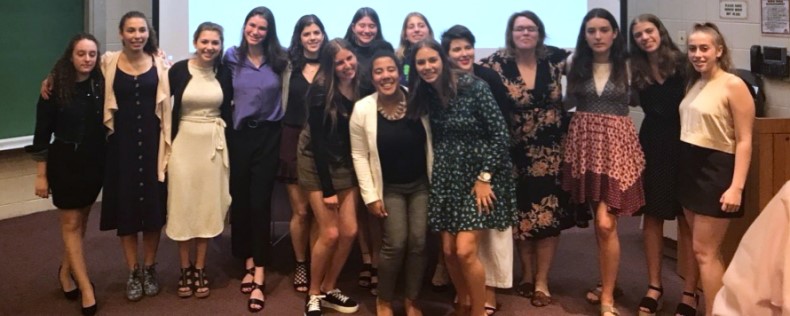
This powerful statement from Sabrina Goldsmith, one of 14 teens in this year’s Jewish Federation of Chicago’s Research Training Internship (RTI) program, is one of many that opens a new report on antisemitism compiled by high school students determined to change the world.
Open to female and nonbinary high school students, RTI focuses on teaching teens how to explore social justice issues they see in the world and educate those around them while learning feminist research methods from instructors from DePaul University.
“As the broader Jewish community, we often ask what Gen Z cares about,” said Beckee Birger, the group’s director. “This is a chance to listen to and learn from them, giving the next generation of Jewish leaders space and time to see what they think is important and we as a community should care about.”
With past topics including what makes a “perfect” Jewish girl, rape culture, and eating disorders, this year’s RTI cohort decided to research antisemitism, in the wake of the shootings at the Tree of Life – Or L’Simcha Synagogue and Chabad of Poway.
The process began with twice-monthly meetings at DePaul University, where the teens discussed different issues and brainstormed their topic. Once the interns chose antisemitism as their topic, it was their choice how to research antisemitism and present their findings. Finally, the process culminated in a 2-hour community presentation where they shared their conclusions.
The group used feminist research methodology and participatory action research to create a report with four different sections–each led by a smaller subgroup–tackling different aspects of antisemitism, each one concluding with a way to heighten awareness of antisemitism in Jewish holidays and rituals.
First, the teens delved into the history of antisemitism in America. “Antisemitism is not just the Holocaust, it is a cycle of sustained oppression and discrimination,” the report reads before diving into a timeline beginning with the arrival of Sephardic refugees in North America in 1654 and going through the shooting at the Chabad of Poway. At the end of the timeline, Jewish heroes Ruth Bader Ginsburg, Sandy Koufax, and Emma Lazarus are presented as options for a meaningful Purim costume to celebrate Jewish history.
Next, the cohort surveyed and interviewed high school students, millennials, adults age 40-70, and Holocaust survivors to gauge the impact of antisemitism on everyday life. While many of the respondents saw antisemitism in daily life, few saw it manifest in the same way. From anti-Israel rhetoric to microaggressions and hate crimes, the teens’ summaries of the interviews explore these incidents and more, including questions about politics and Jewish representation in the media. With these educational remarks in mind, the associated ritual is an eight-day observation of Chanukah with opportunities to educate and act every day.
A third subgroup within the cohort researched connections between antisemitism and mental health. In addition to the everyday anxiety induced by antisemitism, some research suggests a correlation between the Holocaust and mental health problems both for survivors and their children and grandchildren. Following this, the teens “reimagined the role and practice of the mikvah (ritual bath) to heal from current and ongoing effects of antisemitism” in a group context, rather than individual practice–complete with affirmations, prayers, journaling, and more.
Finally, the fourth subgroup interviewed Jewish organizations with experience fighting back against antisemitism. The teens shared these stories of victory and the lessons they convey, as well as suggestions of what works to fight back, including sharing stories, advocacy, “people power,” legislation, and voting. Following this section, the teens provide a Passover thought exercise to think of ways to stand up and combat oppression and hatred.
Overall, the teens presented six takeaways: Live Jewishly; Organize in your community; Connect with people who are already as engaged as you are; Involve people in power; Educate people who are open to learning; and We need allies to win. These cutout cards can be kept in one’s wallet to remind the report’s readers how to carry on this important mission.
For the cohort, the experience was lifechanging. “RTI has truly been one of the most incredible experiences of my life,” said participant Gwen Tucker. “I have learned so much about oppression and privilege and huge world issues, while also exploring my own identities. I love RTI!”
Other stories
-
Two local teens win national recognition
Recipients of the annual Diller Teen Tikkun Olam Awards
Read more -
Celebrating six young award winners cultivating the community
Introducing young adult award winners
Read more -

The best Jewish pitcher ever? That’s a no-brainer: It’s Sandy Koufax. The dazzling lefty, who began his major league career with the Brooklyn Dodgers and became an icon after the team relocated to Los Angeles for the 1958 season, is on every short list of the greatest hurlers in the game’s history.
The best Jewish pitcher today? Well, that seems to be a no-brainer, too: It’s Max Fried. Also a lefty, he broke into the big leagues with the Atlanta Braves in 2017 and blew up in 2019, reaching double digits in victories in his second start after the All-Star break. History can wait in Fried’s case; he’s all of 25 years old.
But the two are linked. Fried met Koufax during the 2018 playoffs when the Braves and Dodgers collided in L.A.
“It was incredible,” Fried recalled this season in the visitors’ clubhouse at Wrigley Field.
Fried grew up in Los Angeles, where he played in high school with White Sox pitcher Lucas Giolito-who blew up himself in 2019, becoming a first-time All-Star-and each is on the other’s short list of best friends. Both are Koufax fans, but Fried is especially; he wore Koufax’s number with the Dodgers, 32, in the Hall of Famer’s honor in high school. A young Jewish pitcher in that neck of the woods is going to hear about Koufax all the time, including at temple.
“The more success I had growing up, the more I heard about Sandy Koufax in the Jewish community,” Fried said. “Growing up in Los Angeles and being left-handed, eventually I started idolizing him. Obviously, he was before my time. But I always strived to follow him. And everything I ever heard was about how great a person he was rather than how great of a pitcher.”
Koufax famously chose not to start Game 1 of the 1965 World Series because it fell on Yom Kippur. Fried’s Jewish identity hasn’t been nearly as big a part of his baseball identity. He has, though, been thrown into clubhouses with more than a few teammates who were surprised to learn of his religious background.
“I’ve had multiple teammates, actually, tell me I’m the first Jewish person they’ve ever met,” he said. “I’d say over five people have told me that.”
A reporter wondered if these were players from Latin countries, but no-these were players from small-town America, mostly in the South.
“Mostly, people who grew up in towns with maybe a couple thousand people,” he said. “There are a lot of stereotypes that they ask you about, too, but no one has actually treated me differently because of it. It’s never been too much in the forefront in the locker room or anything.”
The Braves clubhouse is full of praise for Fried, a pitcher with pinpoint control that leads to a lot of strikeouts. Veteran catcher Brian McCann raves about Fried’s command of the craft at such a young age. Fellow pitcher Josh Tomlin, who started two games against the Cubs in the 2016 World Series as a member of the Cleveland Indians, describes Fried as a “bulldog.”
“He is very, very good and he is very, very smart,” Tomlin said. “He is willing to learn, always. He’s got unbelievable stuff, but he’s willing to come to the ballpark and try to learn something different every day. And he competes. I’m telling you, he is one of the best competitors I’ve ever seen.”
And then there’s Giolito, who calls Fried a “straight-up stud.”
Giolito and Fried had another prep teammate at the Harvard-Westlake School, Jack Flaherty, who has become one of the better pitchers for the St. Louis Cardinals. Their shared success story-three big-league standouts from one high school team-is off-the-charts amazing. Then again, maybe not.
“It’s really cool,” Giolito said, “but, at the same time, it’s what we were expecting. When we were in high school, we knew we were really good and we knew that we were all going to get to the big leagues.
“And the way I look at it? If we can all, at the end of the day, have all these All-Star seasons between us, World Series, great [statistics], all that kind of stuff, that would be the dream. How cool would it be if all three of us get dinner when we’re in our 60s and look back on our careers and where we all came from? That would be awesome.”
Just guessing that Koufax would love to be there, too.
Steve Greenberg is a sports columnist for the Chicago Sun-Times.
Other stories
-
Two local teens win national recognition
Recipients of the annual Diller Teen Tikkun Olam Awards
Read more -
Celebrating six young award winners cultivating the community
Introducing young adult award winners
Read more -