400 walk out as U of I Urbana-Champaign Student Government declares anti-Zionism is not antisemitism
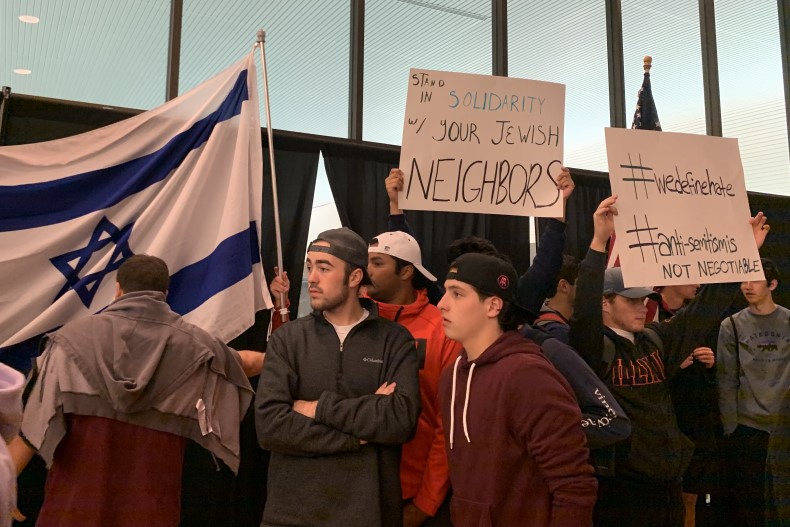
To a rally cry of “We do not negotiate antisemitism,” over 400 Jewish students at the University of Illinois Urbana-Champaign – from fraternities, sororities, Hillel, Chabad and elsewhere — walked out of a Wednesday night student government meeting debating a resolution that declares anti-Zionism is not antisemitism.
The proposal, which later passed 29-2 with two abstentions, was drafted by supporters of Students for Justice in Palestine, with zero input from any mainstream Jews or Jewish groups.
As the Jewish students at the meeting stood among signs proclaiming “Free Palestine F*** Zionists,” student Lauren Nesher, the granddaughter of Holocaust survivors, declared “we do not negotiate antisemitism, we do not negotiate our safety, we do not negotiate our fear, we do not negotiate our homeland, we do not negotiate antisemitism.”
She then called for the students to walk out. Outside on the Quad, waving Israeli flags, they joined in a somber remembrance as leaders from Hillel and Chabad recited the names of the most recent victims of antisemitism in Pittsburgh, Paris, Poway, Israel and Halle. Then they danced to “Am Yisrael Chai.”
“We are using our position as student leaders to define what the Jewish community goes through,” Student Body Vice President Jack Langen said. “I believe this is wrong, and we would be speaking for a community that has publicly disagreed with how we would be representing them.”
“Tonight was one of the most inspiring displays of Jewish solidarity we’ve ever seen from a university community,” said Emily Briskman, associate vice president of campus affairs at the Jewish United Fund and executive director of JUF’s Israel Education Center.
Other stories
-
Two local teens win national recognition
Recipients of the annual Diller Teen Tikkun Olam Awards
Read more -

Celebrating six young award winners cultivating the community
Introducing young adult award winners
Read more -
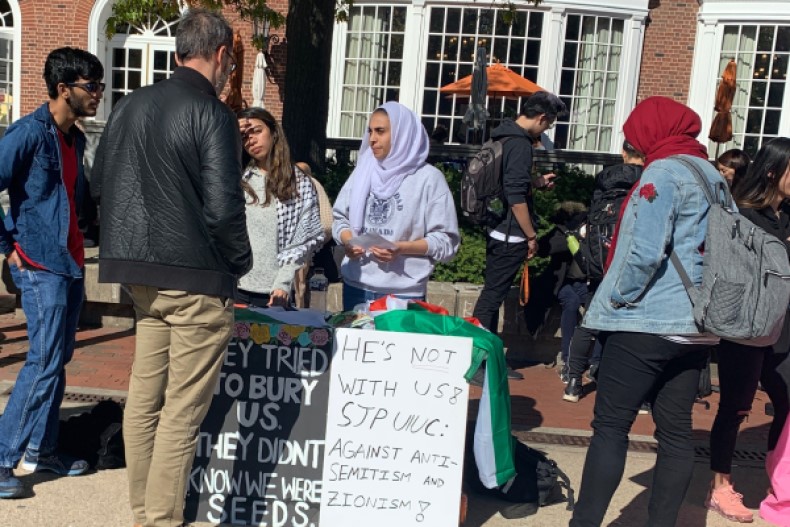
A resolution declaring that “anti-Zionism is never antisemitic” has been introduced in the U of I Urbana-Champaign Student Government by supporters of Students for Justice in Palestine.
The action followed Chancellor Robert Jones’ Oct. 10 statement to students condemning antisemitism, which JUF President Lonnie Nasatir strongly applauded and called a “watershed moment” for the university.
Jones’ statement came in response to ongoing incidents on campus that were capped by a mandatory staff meeting for resident hall advisers that included a presentation on “Palestinian Resistance to 70 Years of Israeli Terror.”
Resolution backers said “the presentation was improperly characterized, had no Anti-Semitic content in it.” The proposal’s authors are not Jewish and did not work with any Jews to craft it. The resolution currently is in committee.
During an initial Student Government hearing, Jewish students spoke passionately about why they chose to oppose the resolution in its entirety.
“I don’t need anybody here to tell me what antisemitism is. I don’t need anybody to tell me what it feels like to hide my Jewish star when I cross the quad. To fear hanging a mezuzah on my door. To fear bringing my Israeli family to campus. That fear, the deep fear of antisemitism, is something that I do not need anyone to define for me,” one freshman student said.
Erez Cohen, executive director of the U of I Hillel, said it is critical that every Jewish student feel welcome and safe on campus. “I want to express my gratitude to Chancellor Jones for his commitment to combatting antisemitism alongside the Jewish community.”
Other stories
-
Two local teens win national recognition
Recipients of the annual Diller Teen Tikkun Olam Awards
Read more -
Celebrating six young award winners cultivating the community
Introducing young adult award winners
Read more -
Union for Reform Judaism to hold Biennial conference in Chicago in December
The Union for Reform Judaism (URJ) will host its Biennial conference in Chicago Dec. 11-15. Sessions will explore Jewish education, gender, and justice in the Jewish community, and mobilizing the Reform movement around Israel.
Among the scheduled featured speakers are Jodi Kantor, Pulitzer Prize winning journalist; Daniel B. Shapiro, former U.S. Ambassador to Israel; Julie Fisher, Founder and Director of Consortium for Israel and the Asylum Seekers; Sarah Hurwitz, former Michelle Obama speechwriter and author; Michael Arad, 9/11 Memorial architect; and Deborah Lipstadt, historian and author of Anti-Semitism: Here and Now . The Second City will entertain the participants.
“We’re thrilled to showcase the power and vibrancy of Jewish life in Chicago as the URJ Biennial presents unprecedented opportunities to study, worship, and celebrate together,” said Chair of the URJ Biennial 2019 Alec Harris, a member of Chicago Sinai Congregation.
Sessions are open to the entire Chicago community and Chicagoans are welcome to take full advantage of the Biennial sessions or join for Chicago Shabbat, a full day of Biennial Shabbat programming.
In addition, there will be opportunities for teens and college students to participate, including special programming, unique internships, and offsite trips.
The conference will also include more than 150 artisans, Israel travel operators, and Jewish publishers in the exhibit hall
The Jewish United Fund is a sponsor of the Biennial. The full schedule for the URJ Biennial can be found at URJBiennial.org.
Other stories
-
Two local teens win national recognition
Recipients of the annual Diller Teen Tikkun Olam Awards
Read more -
Celebrating six young award winners cultivating the community
Introducing young adult award winners
Read more -
Following virulent antisemitic training at UIUC, JUF lauds university for response
The Jewish United Fund applauds the University of Illinois at Urbana-Champaign for taking strong action against an antisemitic University staff training titled: “Palestine and the Great Return March: Palestinian Resistance to 70 Years of Israeli Terror.”
Wednesday evening, after the end of Yom Kippur, UIUC Chancellor Robert Jones released a statement apologizing for the presentation by a Multicultural Advocate, which was a mandatory training session for Resident Advisors. He pledged to take immediate action to launch wide-ranging campus education and training about antisemitism; to review the University’s training, programming and hiring practices; and to commission an external review of the University’s multicultural education programs.
“This is a watershed moment for the University of Illinois at Urbana-Champaign,” said Lonnie Nasatir, President of the Jewish United Fund. “JUF applauds Chancellor Jones for his resolve to ensure the university lives up to the values codified in “Inclusive Illinois,” UIUC’s commitment to cultivating a campus community where ‘everyone is welcomed, celebrated, and respected.'”
Over the last three years, JUF leadership has worked closely with University leadership to alert and advise the administration about protective steps that could be taken to address and mitigate antisemitic attitudes and incidents on campus.
“We are thankful that University leadership has come to understand that antisemitism is on a par with racism, Islamophobia and other forms of hate,” said John Lowenstein, JUF Vice President of Campus Affairs. “Chancellor Jones’ commitment to review hiring practices and to institute a first round of training on antisemitism, especially as it affects students, is a positive first step toward staunching the recent surge in antisemitism on campus.”
Prior incidents include swastikas painted on dorm room doors, mezuzahs torn from doorposts and reports of Jewish students hiding their Jewish identities on campus for fear of harassment, Lowenstein said.
“We have been and will continue to be in constant communication with the university and look forward to our ongoing partnership with them in combatting antisemitism,” Lowenstein said. “It is significant that the University has taken responsibility, publicly denounced antisemitism, and that it will take immediate steps to prevent antisemitism’s spread-and JUF stands at the ready to support next steps.
“It is our hope that the University also will continue to call out antisemitism by name when it occurs, will enact specific tracking of antisemitic bias incidents and the University’s response to them, and will institute campus-wide, comprehensive training on antisemitism in all its forms,” Lowenstein said.
Other stories
-
Two local teens win national recognition
Recipients of the annual Diller Teen Tikkun Olam Awards
Read more -
Celebrating six young award winners cultivating the community
Introducing young adult award winners
Read more -
This year remains special for tourists who cannot help but recognize two momentous celebrations: The 75th anniversaries of the D-Day landing on June 6, 1944, and the liberation of Paris, August 25, 1944.
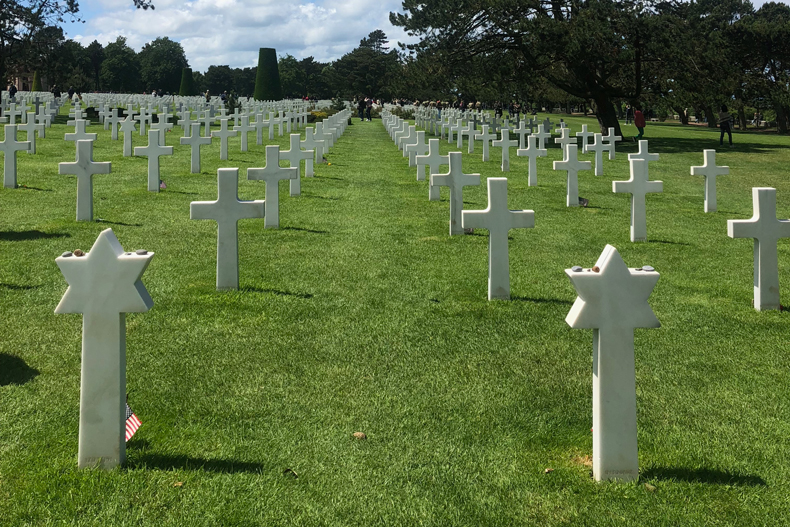
It’s a two-hour drive from Paris to Caen in Normandy. While Paris survived destruction in WWII, Caen was almost totally destroyed. The day I’m there, the sun is out, the waves wash ashore, the beaches are calm, and silence reigns at the Normandy American Cemetery and Memorial, Colleville-sur-Mer, lined with crosses and Stars of David. I stop by several graves of American Jewish soldiers and place pebbles on the headstones.
Our knowledgeable guide of the Caen Memorial Museum shepherds us to Omaha Beach, where thousands of American soldiers died at Normandy to defeat Nazism and preserve freedom. A number of D-Day Jewish veterans, who participated in the liberation of Paris, attended the 75th anniversary celebration of that victory this past August.
I tour the Caen Memorial Museum, which highlights the events leading up to the war, plus the Normandy invasion itself. This year, the museum is showcasing a Norman Rockwell exhibit titled “Enduring Ideals: Rockwell, Roosevelt and The Four Freedoms . ” The exhibition, which runs until Oct. 27, usually resides in the Norman Rockwell Museum in Stockbridge, Mass.
Included in the Rockwell display shipped to France are the paintings: Freedom of SpeechFreedom of Worship , Freedom from Want , and Freedom from Fear , as well as 30 other works by the American master. The Four Freedoms paintings are Rockwell’s pictorial interpretation of lines from President Roosevelt’s speech in 1941. According to Laurie Norton Moffatt, director of the Norman Rockwell Museum: “Rockwell’s aspirational paintings shifted American attitudes towards engagement in the war in defense of the free world, and ultimately helped to make the case for universal human rights.”
Walking through the exhibit, I am moved by the paintings, illustrations, prints, and artifacts: The radios of the late 1930s and early 1940s, the photos of FDR, and the many other Rockwell posters. Rockwell is most famous for his illustrations of everyday life, created the cover of The Saturday Evening Post magazine, nearly five decades ago.
There is also his poignant, iconic painting of a key moment in the Civil Rights Movement from 1963- six-year-old Ruby Bridges, the African-American girl, being escorted to a white New Orleans school by four federal marshals. At this exhibit, this painting serves as a reminder of the dignity and freedom for which the American soldiers buried in Normandy died.
Back in Paris, I head to my favorite section, Le Marais, still a viable center of Jewish life. Here stood the site of the 13th century ghetto of Paris known as the Juiverie , later called by the Yiddish word, the Pletzel, “little square.”
I visit one of Europe’s finest Jewish museums, the Museum of Jewish Art and History, housed in one of the most palatial mansions, the Hotel de Saint-Aignan, built in the 17th century. Located at 71 rue du Temple, the museum sponsors an exhibition, running through early Decmber, that deals with resistance during the Nazi occupation.
The display cites Adolfo Kaminsky a remarkable photographer. Joining the French resistance at only 17, he used his knowledge of chemistry to become an expert in forging official documents for the Jewish resistance and the French military secret services. His forgeries were so good that the police never suspected that the forger they were after was an adolescent.
Overall, this young man’s work saved 14,000 Jews in WWII. He facilitated the immigration of tens of thousands of concentration camp survivors, contributing to the very creation of the state of Israel.
For more information on the Caen Memorial Museum, contact Olivier Pizzimenti at [email protected]. For the Museum of Jewish Art and History , mahj.org and us.france.fr/en.
Ben G. Frank, travel writer and journalist, is the author of A Travel Guide to Jewish Europe 4 th edition, (Pelican Publishing) and the just-published, historical novel, Klara’s War .
Other stories
-
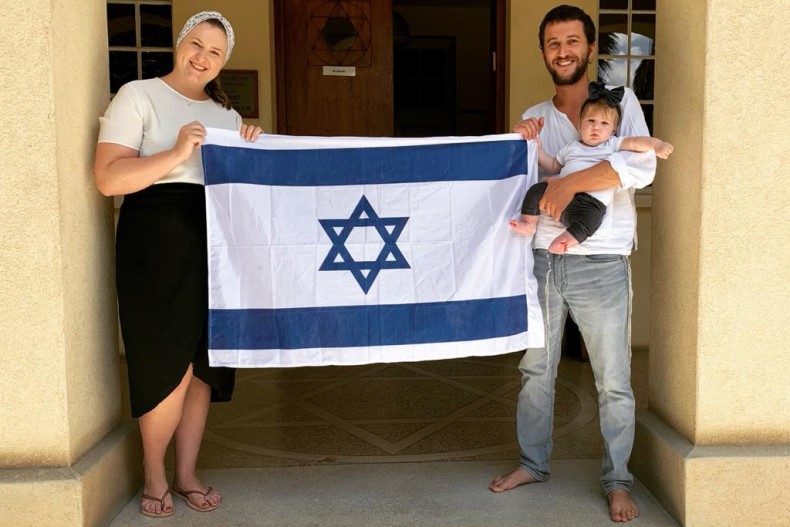
Chicago to Israel to Kenya
A family’s story of living Jewishly on three continents Michelle Cohen World May 28, 2021 Avital, Tzofia, and Netanel Kaszovitz outside their home in Nairobi on Yom HaAtzmaut. When Avital Kaszovitz prepared to be a Modern Orthodox shlicha (emissary) to the Jewish community in Ke
Read more -
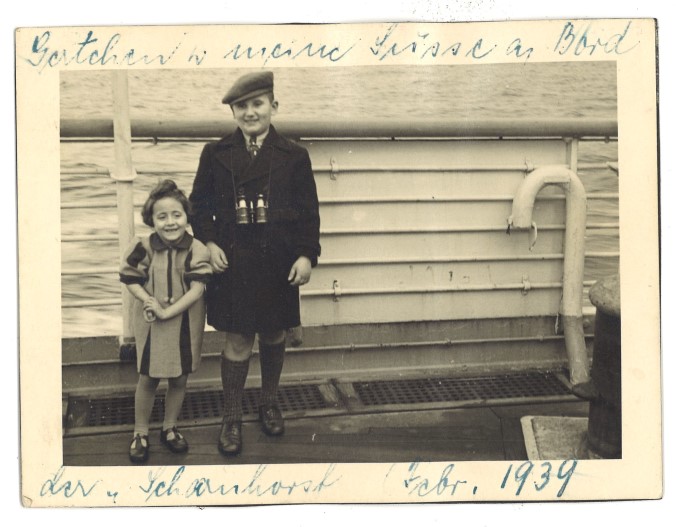
New exhibit spotlights the experience of ‘Shanghai Jews’
Explore a new Illinois Holocaust Museum and Education Center exhibit
Read more -
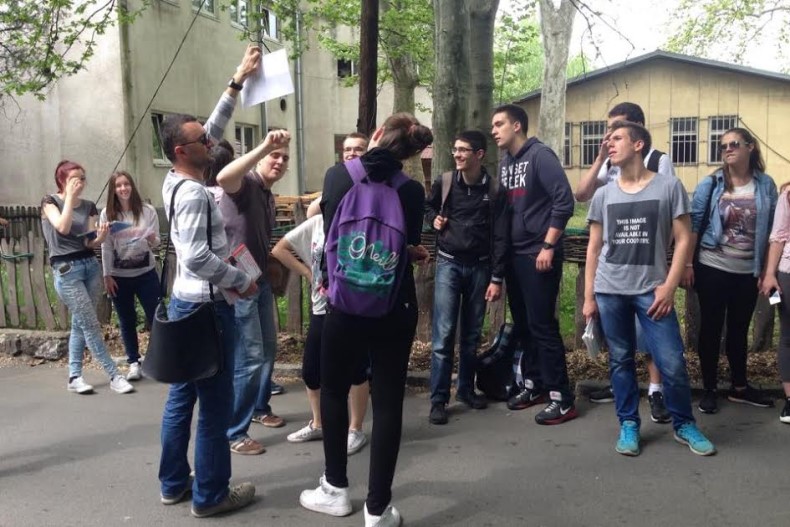
Europe’s brave new teachers of the Holocaust
Teaching the Holocaust in the modern era has its difficulties and rewards.
Read more
The Jewish community has long understood the danger of folded arms in the face of evil. One of the goals for a recent interfaith mission to Poland was to help our Christian friends and neighbors to understand it, too.
In August, I was among 10 Jewish professionals honored to participate in a mission to Poland with 29 Christian leaders representing nearly every major Christian denomination. The trip was led by JUF’s Rabbinic Scholar Rabbi Yehiel E. Poupko and the Very Rev. Dominic Barrington, Dean of St. James Cathedral in Chicago. Rabbi Poupko designed the trip to teach about the origins, evolution, and ultimate destruction of European Jewry.
The day before the organized trip began, I had a taste of the emotions we would face as we toured a country that was home to 3 million murdered Jews.
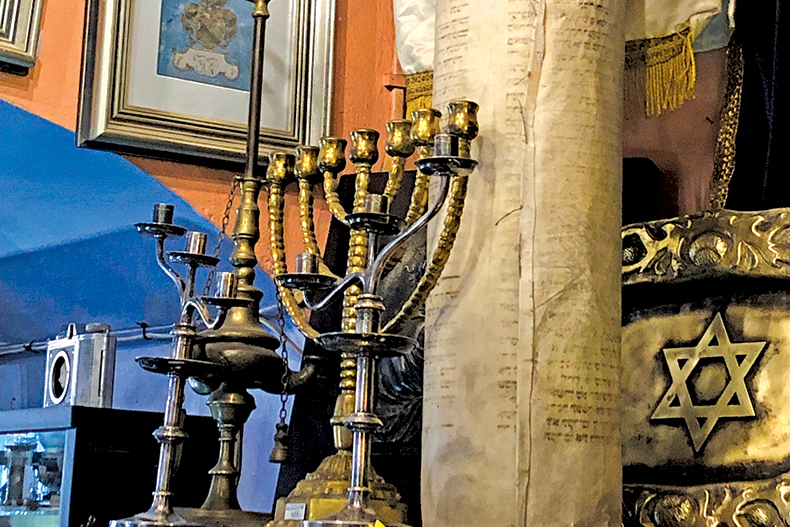
Two colleagues and I entered an antique shop in Warsaw’s Old Town, in which we found a display of antique Judaica. As I gazed at the display, I couldn’t help but wonder what had happened to the items’ original owners. Then I gasped: On the top shelf stood a Torah scroll. Where did it come from? Where was its synagogue? Are you kidding me? Those were just some of the questions that tormented me, then and now.
The next day, Rabbi Poupko explained that when he finds such orphaned Torah scrolls, he buys them and either has them repaired and given to synagogues in need or disposes of them with appropriate dignity. My colleagues and I vowed to follow his example, only to find the store was closed, and wouldn’t reopen until after we had left Warsaw.
My failure to act when I first saw the Torah haunts me.
Whenever I’ve considered the Nazi death camps, I imagined they were loud, dirty, and dark, which is why the site of Treblinka-the only death camp solely dedicated to killing Jews and Jews alone-also continues to haunt me.
Treblinka operated for a mere 15 months in 1942-43 and was the setting for approximately 900,000 murders. But if you go there now, there is nothing left from those hellacious months; the Nazis destroyed the camp to hide their crimes. What you see now is a pastoral setting in the woods. Visitors must imagine what it looked, sounded, and felt like for those who were killed there.
I looked up at the towering pine trees that encircled the camp, closed my eyes, and listened as the breeze whistled through their narrow branches. Did mothers carrying their babies, or sisters leading their brothers to the gas chambers hear that same whistle? Did they look up at these same pines and question how such hate and horror could be at home in this idyllic setting?
My mind wandered to a similar place later that day when we gathered in a clearing in the middle of a forest near the town Tykocin, where 700 Jews were shot dead on August 26, 1941. We recited the Mourner’s Kaddish together with 100 Israeli teens who happened to arrive just as we did. Again, I looked up at the graceful, slender pines, listened as the wind whistled through them, and wondered what those 700 were thinking as they were marched to their deaths.
Did the Christian mission participants have the same visceral experience as they thought about the towns’ silent witness of this evil?
Rev. Dr. Myron McCoy, Senior Pastor at First United Methodist Church at the Chicago Temple, answers my question by quoting Dr. Martin Luther King Jr. in a social media post about the trip: “He who passively accepts evil is as much involved in it as he who helps to perpetuate it. He who accepts evil without protesting against it is really cooperating with it.”
Daniel Goldwin is the executive director of Public Affairs for the Jewish United Fund of Chicago.
Other stories
-
Chicago to Israel to Kenya
A family’s story of living Jewishly on three continents Michelle Cohen World May 28, 2021 Avital, Tzofia, and Netanel Kaszovitz outside their home in Nairobi on Yom HaAtzmaut. When Avital Kaszovitz prepared to be a Modern Orthodox shlicha (emissary) to the Jewish community in Ke
Read more -
New exhibit spotlights the experience of ‘Shanghai Jews’
Explore a new Illinois Holocaust Museum and Education Center exhibit
Read more -
Europe’s brave new teachers of the Holocaust
Teaching the Holocaust in the modern era has its difficulties and rewards.
Read more
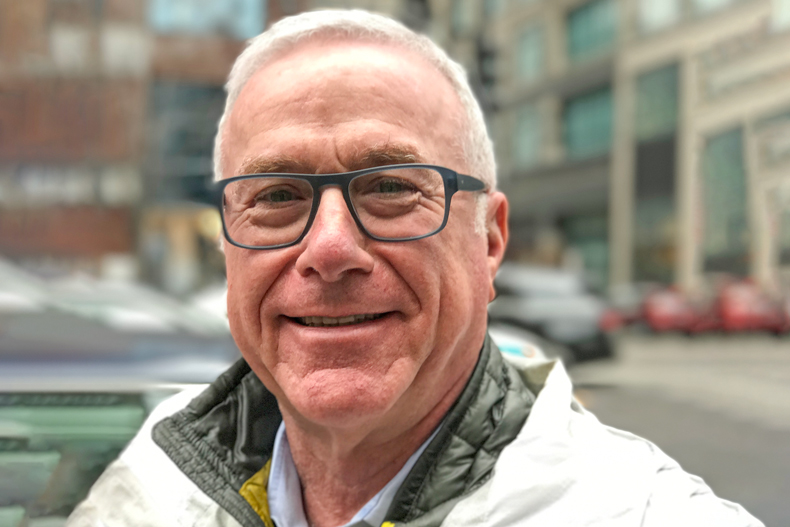
“There’s an overlap between being the son of Holocaust survivors, and being gay and living through the AIDS crisis… like my parents, most of my friends are just memories,” the late Michael Bauer once wrote on the website Unsilence. “There’s a conclusion I’ve drawn: This is what happens to people when they lack political power.”
After the 1978 assassination of gay Jewish San Francisco city official Harvey Milk, Bauer wrote: “I remember thinking, ‘They’re killing people like me.'”
Bauer’s response, ultimately, was to work on campaigns that helped many more LGBTQ people reach public office: Ald. Tom Tunney, Chicago’s first openly gay alderman; Cook County judge Tom Chiola, the first openly gay person ever elected to Illinois political office; and Judge Sebastian Patti, the first openly gay person elected countywide in Cook County. Just before his passing, Bauer chaired the campaign of Lori Lightfoot, Chicago’s first openly gay mayor.
Over the years, Bauer worked on more political campaigns, including those of Vice President Al Gore, Senators Dick Durbin and Barack Obama, Attorney General Lisa Madigan, State Controller Dan Hynes, and State Rep. Kelly Cassidy.
Bauer passed away on Aug 29 at 66 of melanoma. At his side was his husband, Roger Simon. They met in 1982 in Chicago, but married in 2003 in Canada.
“He was a mensch,” recalled Simon. “He was always willing to help, and never expecting anything in return.” Simon added that they always attended Rosh Hashanah services, and he would use Bauer’s tallit bag this year. Bauer also created a Shabbat tradition, Simon said, of texting his mother Tema- now 103- beautiful photos every Friday evening when reminding her to light candles.
Bauer served on the national board of directors of Lambda Legal Defense and Education, the Gay & Lesbian Victory Fund, and the Global AIDS Alliance. He also served on the boards of the AIDS Foundation of Chicago, IMPACT, and the Hearts Foundation. He was also honored by progressive organizations from the ADL to the ACLU.
Bauer was an active member of both JUF’s JCRC and Government Affairs Committee and a frequent mission participant to Washington D.C. and Springfield.
He also championed Israel. “Both Israel and America are stronger and safer due to Michael’s advocacy,” said Lee Rosenberg, president of American Israel Education Foundation, AIPAC’s affiliated Foundation. “He was respected throughout the Congressional delegation, due to his knowledge, authenticity, and passion.”
“The Holocaust… goes to the core of who I am. My colleagues and I helped to put together a first-of-its-kind academic symposium on the Nazis’ homosexual victims,” Bauer wrote. “I’m now the co-chair of the Illinois Holocaust and Genocide Commission. This work is very personal to me.” He also chaired the first gay and lesbian mission to the United States Holocaust Museum.
Born in East Rogers Park, Bauer graduated Senn High School at 16. He earned his undergraduate, law, and MBA degrees at Northwestern. Before entering politics, Bauer practiced law for 10 years, served as executive at Bell & Howell for another decade, and then owned a court-reporting agency.
Unsilence’s founder, Dr. Danny M. Cohen, a professor and activist, recorded Bauer’s story. “What makes Michael’s story so important is how he integrated the lost memories of his family within his own identity,” he said at Bauer’s funeral. “Michael Bauer, the gay son of Jewish Holocaust survivors… was able to turn his family’s devastation into his passion for civil and human rights.”
Bauer is survived by his husband Roger Simon, mother Tema (late Morris) Bauer, and brother Dr. Jerry (Adrienne) Bauer. He was the brother-in-law of Bert (Kathleen) Simon, and uncle of Michelle (Stuart) Primack, Dr. Hillary Bauer (Jeff) Cohen, Aaron (Lauren) Bauer, Julia (Mauricio) Fallas, Laura (Ben) Weinstein, and Jaclyn (Michael) Fisherman. He was also a great uncle and cousin to many.
A funeral service was held at Anshe Emet Synagogue, followed by interment at Shalom Memorial Park. Arrangements were made by The Goldman Funeral Group. Memorials to the Michael Bauer Fund- set up to support Holocaust education, LGBT issues and cancer research-can be made to the Jewish Federation.
Other stories
-
Two local teens win national recognition
Recipients of the annual Diller Teen Tikkun Olam Awards
Read more -
Celebrating six young award winners cultivating the community
Introducing young adult award winners
Read more -
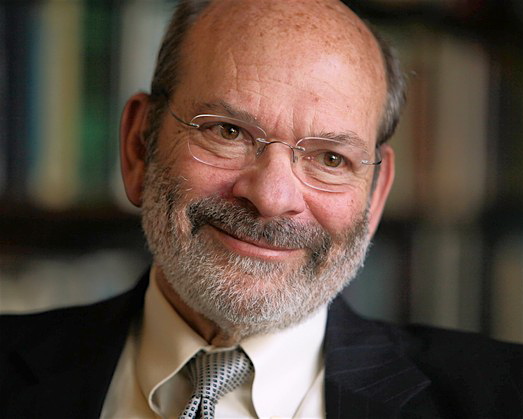
His memory, a blessing: Rabbi Dr. Peter S. Knobel
Paul Wieder, Associate Editor
At their birth, the late Rabbi Dr. Peter S. Knobel wrote each of his grandchildren a letter. In one, he wrote: “One quotation rabbis repeat is: ‘Repent on the day before your death.’ Since we do not know when we will die, each new day is the time for change.”
Over a lifetime of service, Knobel fostered significant change for his local and national Jewish community. He died at age 76 on Aug. 20 in Los Angeles, where he had been serving as an Interim Rabbi for Temple Israel of Hollywood.
For 30 years, Knobel was the senior rabbi, then rabbi emeritus, at Beth Emet The Free Synagogue in Evanston, where he had served since 1980.
Beth Emet’s Senior Rabbi, Andrea C. London, eulogized him as “a mensch who placed the greatest emphasis on the accomplishments of others,” and who inspired his congregants to create a soup kitchen and a burial society.
Knobel also was on the faculty of Spertus Institute for Jewish Learning and Leadership. He also taught at Hebrew Union College-Jewish Institute of Religion (HUC-JIR), Yale University, and the University of Connecticut.
He earned his undergraduate degree at Hamilton College, his rabbinic ordination and MAHL from the HUC-JIR, and his Ph.D. from Yale in 1976.
“A Renaissance-man rabbi, Peter was at home in the classics of Western civilization, and a masterful rabbi to the members of his synagogue,” recalled Rabbi Yehiel E. Poupko, JUF’s Rabbinic Scholar. “He was an outstanding Jewish scholar possessed of both a penetrating intellect and an innate sense of goodness.”
Beyond the pulpit and podium, Knobel was an activist of national impact, serving on the boards of the Union for Reform Judaism and the American Jewish Committee. He also served as president of the Central Conference of American Rabbis (CCAR) and chaired the CCAR committee for Mishkan T’filah , the Reform Movement’s new prayer book.
“I was privileged to serve as an officer of the CCAR during Peter’s tenure, and I will always remember his moral integrity,” said Rabbi Rick Jacobs, president of the Union of Reform Judaism. “During his term as the president, Peter launched the reimagination of the organization as we know it today.”
Knobel was passionate about Israel. He served on the national board of the Association of Reform Zionists of America and chaired its Institute for Reform Zionism. He was also a member of the National Interreligious Leadership Initiative on Peace in the Middle East.
Locally, Knobel was the president of JUF’s Chicago Board of Rabbis from 1993-97 and served on JUF’s Board of Directors; he and his wife were Silver Circle donors to the JUF Annual Campaign. He also served as president of the Chicago Association of Reform Rabbis and was active in the Chicago Black-Jewish Dialogue.
Knobel’s interests were as widespread as his impact. He was a prolific writer and editor who wrote about everything from Reform Zionism, Jewish bioethics, and liturgy to assisted suicide, spirituality and same-sex marriage.
Knobel, the son of the late Lothar and Lotta Knobel, is survived by his wife of 53 years, Elaine “Goodie” (nee Goodman) Knobel, and his sons Seth and Jeremy (Alyssa) Knobel. He was the grandfather of Leah, Alana, Heather, Stephen, Lily, and Oliver. He was brother-in-law to Judy and Tom Varga and Howard and Janet Goodman, and uncle to Lauren and Michele Yanoff and Scott and Dana Goodman.
The funeral was held at Beth Emet The Free Synagogue, with interment at Memorial Park Cemetery in Skokie; arrangements were by Chicago Jewish Funerals. Memorials may be made to Beth Emet The Free Synagogue.
Other stories
-
Two local teens win national recognition
Recipients of the annual Diller Teen Tikkun Olam Awards
Read more -
Celebrating six young award winners cultivating the community
Introducing young adult award winners
Read more -
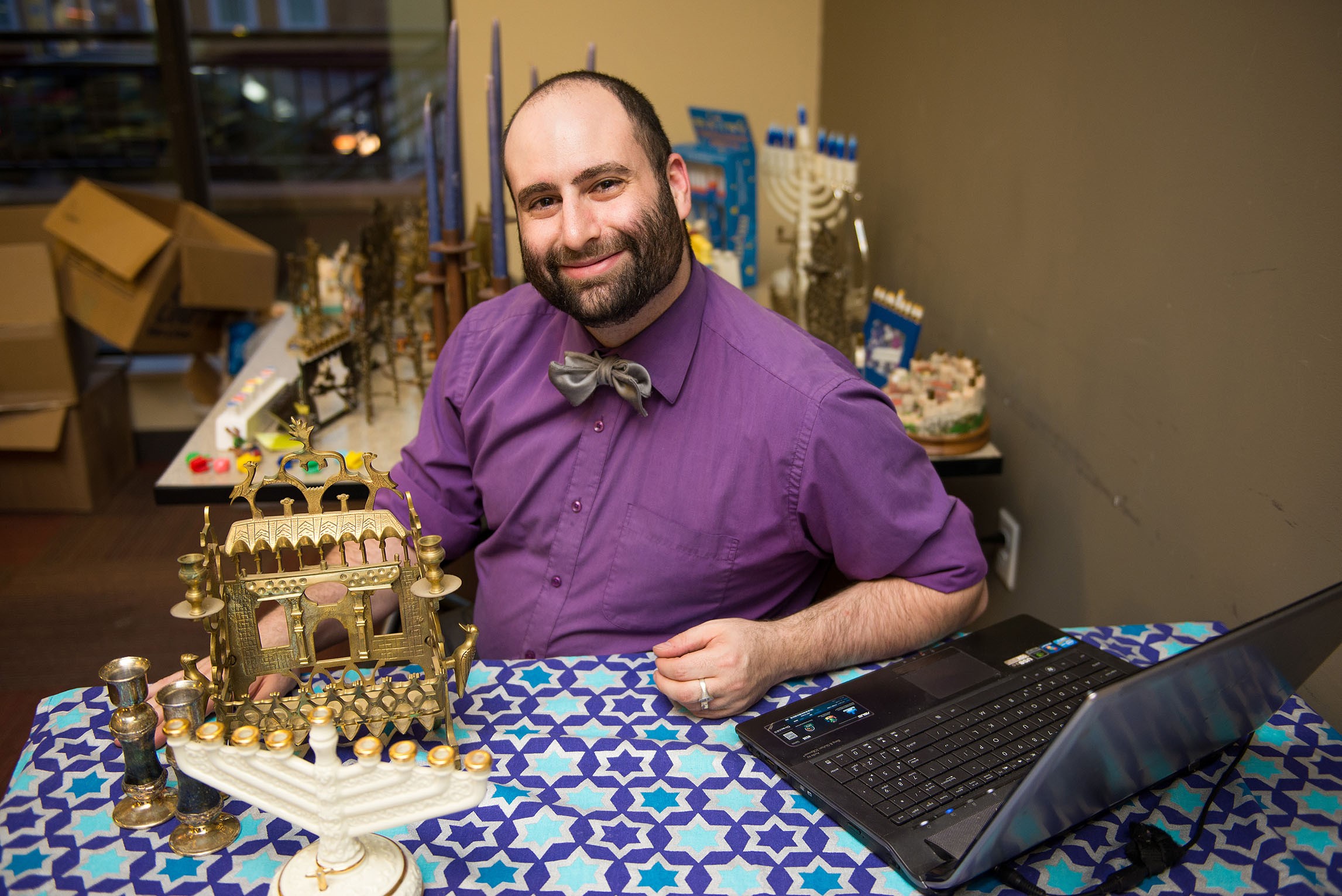
Rather than unwanted Judaica ending up forgotten in an attic or basement, Adam Schwartz decided these items should go to those who want and will use them.
When Schwartz’s wife’s grandmother wanted to pass on her set of four Kiddush cups, no one in the family wanted them. Schwartz felt bad, but he and his wife already had their own Kiddush cups, meaningful and personal to them, and didn’t need more-even though his grandmother’s cups had familial history and sentimental value attached. Thus, the idea for Heritage Judaica was born.
Schwartz, who lives in Minneapolis, was a participant of The Jewish Agency for Israel’s 248 Community Action Network, a member of the second cohort. Envisioned four years ago, 248 was born of the need for a place where community-minded young adults could engage with each other and play a part in the Jewish landscape, both locally and globally. The Jewish Agency’s Partnership2Gether program launched the initiative, along with the Ruderman Family Foundation and the Jewish Federations of North America.
The idea behind Heritage Judaica was to take older people’s Jewish ritual items that they no longer wanted, that had a story, and give it to those who want and don’t have Judaica. From converts who never had Jewish items to individuals who fled from abusive relationships leaving their own Judaica behind to those who simply couldn’t afford Judaica, Schwartz knew there was a need and market for his concept.
“These older Jews want their Judaica to live again. And so many Jews feel like they’re not really part of the community, especially converts… and this helps,” said Schwartz, who has his Ph.D. in Environmental Health. “Some of the receivers of donated Judaica have even had Shabbat and holiday meals together with the people they got the items from.”
Heritage Judaica makes connections, bonds people to Judaism through ritual items, and overall ensures the Jewish story continues. So far, Schwartz has collected more than 1,100 items in the Twin Cities, getting the word out mostly through Facebook. He’s hosted pop-up events in parks, at shuls, and other local spots. These events allow him, and those looking for Judaica, to hear the stories of the donated items directly from those rehoming them. This personal connection from the giver to the receiver is an impactful and meaningful part of the journey.
Schwartz has received an overwhelming number of Judaica items, including books, art, menorahs, Kiddush cups, and more, whose owners are eager for them to be passed on to other Jews. His project has been so successful, he’s even sent shipments of 30-40 items to Guatemala and South Korea after the Jewish communities in those countries reached out to him. Other cities, including some in Israel, are also considering implementing Heritage Judaica projects locally.
“If having Judaica items will make people’s Jewish life better, these items should live again instead of getting dusty and being forgotten on people’s shelves. These items help Jews feel a part of the Jewish family, that they have a piece of the story,” said Schwartz. “Heritage Judaica makes connections, bonds people to Judaism through ritual items, and overall ensures the Jewish story continues.”
If you have items to donate, requests for items or want more information, contact Adam Schwartz at[email protected].
There is also a Chicago branch of Heritage Judaica. For more information, check out their Facebook page by entering “Heritage Judaica – Chicago.”
Elana Goodwin is a writer/editor at The Jewish Agency for Israel based in New York City.
Other stories
-
Two local teens win national recognition
Recipients of the annual Diller Teen Tikkun Olam Awards
Read more -
Celebrating six young award winners cultivating the community
Introducing young adult award winners
Read more -
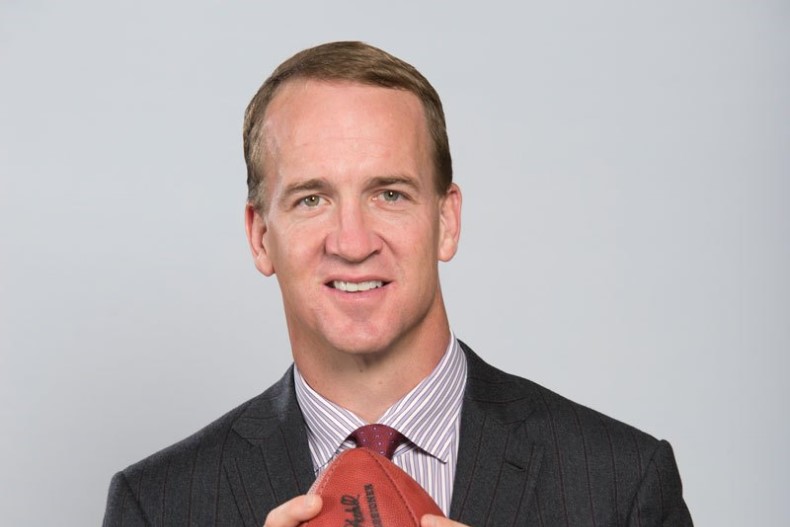
JUF Vanguard Dinner—kickoff event of the 2020 JUF Annual Campaign—to feature football star Peyton Manning
Jeremy Fine
Few who have ever strapped on a helmet and put on shoulder pads have been considered greater than Peyton Manning. As an NFL quarterback, he is on a short list with Tom Brady, Joe Montana, and Chicago’s own Sid Luckman for the greatest of all time. The former Tennessee Volunteer turned NFL #1 draft choice by the Indianapolis Colts, and eventually Denver Broncos, was revered on and off the field by teammates, opponents, and fans.
One of the memorable times Manning took center stage with Chicago eyes upon him, he was breaking the hearts of Chicago Bears fans in Super Bowl XLI. That was Manning’s first of two Super Bowl rings, and certainly the one that solidified him as one of the game’s all-time greats; even if it was at Chicago’s expense.
Manning-whose father Archie played pro football and whose brother Eli plays for the New York Giants-comes from arguably the greatest football lineage. But it has been Manning’s qualities-leadership and humility-that have nothing to do with throwing a ball that make him so respected. Manning was always the first to compliment his teammates after a big win, and no quarterback in history has ever been more trusted with a team’s play calling.
On Nov. 13, Manning will bring his one-of-a-kind presence to Chicago’s Jewish community. The JUF Vanguard Dinner, featuring Manning, will consist of remarks by the athlete and then a moderated sit-down conversation with him, to be held at the Hyatt Regency Chicago.
JUF’s General Campaign Chair for 2020 is Marc Spellman, this year’s Vanguard Dinner Chairs are Sheryl & Daniel J. Perlman, and the Vanguard Dinner Vice Chairs are Carey Davidson and Rachel & Stephen Sotoloff.
“Manning has wonderful charisma and a tremendous sense of humor, but he also has substance,” said Daniel Perlman. “He’s a leader at the highest level of professional sports and I think he’s going to give us excellent insight into what it means to be a leader.”
The dinner marks the kickoff to the 2020 JUF Annual Campaign. Vanguard is JUF’s giving society for those making a minimum gift of $5,000 to the JUF Annual Campaign.
“I’m looking forward to playing even a small part in this important JUF fundraising event, kicking off the 2020 JUF Annual Campaign season,” Davidson said. “This is a one of the biggest opportunities of the year to see so many dedicated members of our community gather to show their support of what JUF does for the Chicago community and for Jews around the world.”
To inspire future generations and to ensure continuity of JUF’s tradition of tzedakah , attendees are invited to bring their young adult children as their guests. Being a part of the Vanguard Dinner is a full-circle moment for Rachel Sotoloff.
“I remember coming to this event with my parents when I was a young girl,” she said. “It was my first foray into the JUF world and learning about the impact that my parents were making. I saw that all those people came together in our community for one purpose-to help those in need in our community. And now that drives Stephen and me to continue our involvement in JUF.”
Couvert for the JUF Vanguard Dinner is $100 per person, which is not tax-deductible. To register, visit juf.org/Vanguard and reserve your spot by Nov. 6.Questions? Call Shana Domash at (312) 357-4888 or email [email protected].
The Vanguard Dinner is sponsored in part by a grant from the Manfred & Fern Steinfeld Campaign Events Fund and generous JUF corporate partners.
Jeremy Fine is the senior rabbi at Temple of Aaron in St. Paul, Minn. Check out Jeremy’s blog, The Great Rabbino, at thegreatrabbino.com.
Other stories
-
Two local teens win national recognition
Recipients of the annual Diller Teen Tikkun Olam Awards
Read more -
Celebrating six young award winners cultivating the community
Introducing young adult award winners
Read more -