Chicago Jewish Historical Society celebrates Illinois’ Bicentennial with stories
Jenna Cohen
On December 3, 2018, the state of Illinois will celebrate its bicentennial-two hundred years of statehood.
To commemorate this milestone, the Chicago Jewish Historical Society (CJHS) is embarking on a special project called Beyond Chicago: Illinois Jewish Roots to collect and share the stories of Jewish families with Illinois origins beyond the Chicago metropolitan area.
It is a chance, explains Leah Axelrod, CJHS board member and president of the Illinois State Historical Society, for the local Jewish people “to take stock in their lives and in their communities.” “Now,” elaborates CJHS co-president, Dr. Rachelle Gold, “is an occasion for Chicago Jewish historians to explore and acknowledge the contributions of Jews who lived beyond our local borders.”
While largely untouched by history books, the rural Jewish narrative is a familiar one: courageous people leaving their home country to build a new and prosperous life in America. Many such immigrants were drawn to the nation’s big cities, which promised greater opportunities for employment and community. But moving to large cities like Chicago, even in the city’s early days, was expensive. If you didn’t have much money or family ties to the area, moving to smaller country towns was a safer economical choice.
It was also a very brave choice. More often than not, Jews who settled in small towns during the 1800s were one of, at most, a handful of other Jewish families. Sometimes, they were the only Jews in the area-a reality that made it challenging to maintain a Jewish identity.
Yet, despite these and countless other challenges, the Jewish people persevered. They built homes and families; entered new industries; founded tight-knit Jewish communities; and built rapport with their non-Jewish neighbors-in some cases, even becoming local community leaders. Many opened dry goods stores; became traders; and served their communities as tailors, lawyers, and doctors. These professions, explains Dr. Gold, are common among Jews as a “migratory people.” For centuries, the Jewish people have relied upon portable skills for income and to positively impact their community.
One man who did just that was named Abraham Jonas. Born in England in 1801, Jonas came to New York as a young man and then made his home in Williamstown, Ky. by way of Cincinnati. In 1836, Jonas moved to Adams County, Ill., becoming the state’s first Jewish resident. Together, Jonas and his brothers ran an iron and carriage business, but before long, Jonas left the business to pursue an interest in law. By 1843, Jonas opened his own law partnership and was elected to the state legislature.
He was also appointed postmaster of Quincy, Ill., by U.S. presidents Taylor, Fillmore, and his dear friend, Abraham Lincoln. Jonas helped arrange the 1858 Lincoln-Douglas debate in Quincy and supported Lincoln in his candidacy for president. A more detailed account of Jonas’ history can be found in the fall issue of the CJHS quarterly journal, Chicago Jewish History.
Through the Beyond Chicago project, the Society hopes to collect and share more stories, like Jonas’, about remarkable Jewish pioneers across the state of Illinois. In addition to demonstrating that the Illinois Jewish history is not confined to big cities, “we hope our readers will be inspired by the enterprise of our people,” says Bev Chubat, editor and designer of Chicago Jewish History. “We did, and we do go into unknown places, new industries…we are a forward-looking people. We should know our history.”
The project begins with the Spring 2018 issue of Chicago Jewish History, which is available to members in print, or online at www.chicagojewishhistory.org . Each quarter of Illinois’ bicentennial year, CJHS will publish a few new stories. Those interested in contributing to the project can send their stories, photographs and other materials to [email protected] .
The Chicago Jewish Historical Society was founded in 1977 and is in part an outgrowth of local Jewish participation in the United States Bicentennial Celebration of 1976 at the Museum of Science and Industry by the Jewish Federation of Metropolitan Chicago and the Jewish American Congress. After celebrating its fortieth year, the Society’s unique mission continues to be the discovery, collection, and dissemination of information about the Jewish experience in Chicago through publications, open meetings, tours, and outreach to youth.
For more information on the Chicago Jewish Historical Society, visit www.chicagojewishhistory.org .
Jenna Cohen serves as Grants and Planning Associate for Jewish Child & Family Services and is a freelance writer living in Chicago.
Other stories
-
Meet Andrew S. Hochberg, 2021 Julius Rosenwald Memorial Award recipient
Celebrate Andy Hochberg at the virtual Annual Meeting on Sept. 14
Read more -
Two local teens win national recognition
Recipients of the annual Diller Teen Tikkun Olam Awards
Read more -
Celebrating six young award winners cultivating the community
Introducing young adult award winners
Read more
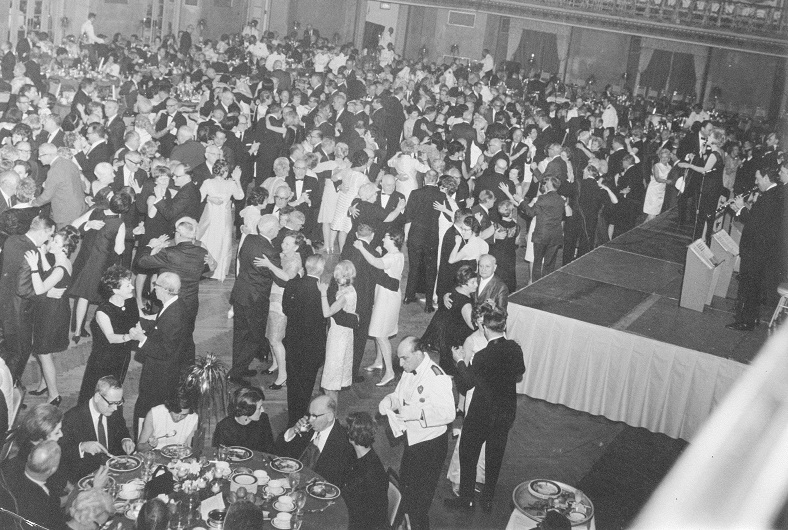
In 1867, Jewish life in Chicago existed solely south of the river. That year, a group of Orthodox German immigrants came together to form North Chicago Hebrew Congregation.
Three years later, the synagogue, located on Wells and Superior Streets, changed denominations and embraced the Reform movement.
Five buildings, seven rabbis, and 150 years later, that community is still thriving at Temple Sholom in Lakeview.
The community’s sense of resilience has contributed to the congregation’s continuity, according to Senior Rabbi Edwin Goldberg.
“Just four years in was the Chicago Fire, when the building burned down, the city burned down, and the rabbi left because there was no money to pay him,” Goldberg said. “But they rebuilt and got the rabbi back and moved through five different buildings. A building is just a building-it’s the people that makes a community.”
Temple Sholom’s current building, located at 3480 N. Lake Shore Drive, was dedicated in April 1930. Since then, the temple has hosted several notable figures at Temple Sholom, including Dr. Martin Luther King, Jr., Eleanor Roosevelt, and Elie Wiesel.
Over the last 150 years, the temple has stayed relevant by changing with the times, according to Goldberg.
“We see ourselves as a place for the marriage of tradition and modernity,” Goldberg said. “The Temple Sholom of today is a lot different than the Temple Sholom of 100 years ago, and I’m guessing it’s going to look a lot different 100 years from now. Certainly, if a Reform Jewish person from 100 years ago came to Temple Sholom today, they’d say, ‘Oh my God, you’ve become Orthodox. The rabbi wears a kippah (yarmulke). Your services are on Saturday, not Sunday.’ We always try to be relevant with the times but there is more of an embrace of the tradition, and we are certainly reflective of that.”
Rather than confining the celebration to one event, Temple Sholom’s anniversary committee-led by Roger and Teri Rudich and Beth and David Inlander-chose to mark its anniversary through multiple events engaging all members of their community for a year.
One major event the temple hosted was a panel discussion on restorative justice, featuring Tom Dart, the Cook County Sheriff, and Kim Foxx, Cook County’s State Attorney, as well as leadership from organizations working for justice in Chicago and nationally.
“Social action has been a hallmark of Temple Sholom for many years,” David said. “That was important to a number of people in the congregation that we focus activities on social justice.”
Temple Sholom also held events to engage people from outside their congregation. Last fall, the temple hosted an open house through the Chicago Architecture Foundation, and author and journalist Thomas L. Friedman spoke at a community-wide event last winter.
A permanent timeline was installed at the synagogue to commemorate the community’s rich history, chronicling everything from the late musician Debbie Friedman’s visit to the synagogue’s first bat mitzvah.
The highlight of the yearlong series of events was the 150th Anniversary Weekend Celebration last spring, featuring a Reunion Shabbat and the Lamplighter’s Ball.
“There’s so much to celebrate,” Teri said. “We felt the significance of our congregation being a significant, relevant force in this city. We have a nice, tight, dedicated community here, and we wanted them to feel the importance of this anniversary.”
Other stories
-
Two local teens win national recognition
Recipients of the annual Diller Teen Tikkun Olam Awards
Read more -
Celebrating six young award winners cultivating the community
Introducing young adult award winners
Read more -
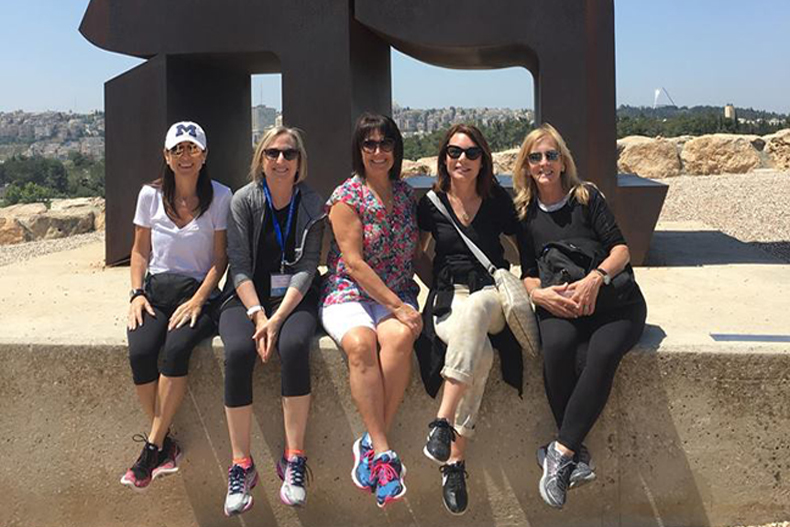
Mission to Israel strengthens Chicago Jewish women’s connection to Israel
RADA BURDEEN, DANA GORDON, LISA ROTH, MELISSA WEISS SPELLMAN, and JANE LEDERMAN
It was fitting that our trip of strong Jewish women began at Mount Herzl, where we learned about the women warriors who fought for the establishment of the state of Israel.
Thus began the JUF Women’s Division mission to Israel in April-during the week of commemoration for Yom Ha-Shoah (Holocaust Remembrance Day) and Yom Hazikaron Israel’s Memorial Day, and in celebration of Yom Ha’atzamut , Israel’s 70th anniversary.
Forty women traveled with the group, 11 of them first-timers to Israel. During the mission, staffed by Elissa Kagan and Lindsay Gordon, we journeyed through the Old City of Jerusalem and celebrated Shabbat at the Kotel. We shared Shabbat with Bat-Galim Shaar, mother of Gilad Shaar, one of the three Israeli teenagers kidnapped and murdered during the summer of 2014.
We then went to Moshav Netiv Haasara and met with Hila Fenelon, who passionately told us what life is like living near the Gaza Border and shared her optimistic outlook on why she and others on her moshav stay.
We paid a visit to the Wall of Peace, where each participant placed a tile on the wall, adding to the mosaic security wall that expresses Israel’s desire to have peace with its neighbors. We went north to the Syrian border and were briefed on Israel’s current security situation.
We explored Tel Aviv, where we got updates on the latest in Israeli innovation. We dined at two vineyards, listened to the sirens on Yom Hazikaron in honor of Israel’s fallen soldiers, and partied on a private rooftop and beach for Yom Ha’atzamut.
We also learned about many of the programs that JUF supports in Israel. We visited Kiryat Gat, our Partnership Together region, and met with Enosh, providers of mental health care. We packed boxes with SAHI, which helps at-risk youth. We had lunch with the Orthodox girls from Tzahali, a pre-military academy, and learned about their gap year program before they join the Israel Defense Forces (IDF).
We met with Lesley Sachs from Women of the Wall and visited United Hatzalah Ambucycle headquarters, where we learned about the organization’s lifesaving free volunteer-based emergency medical services.
We heard from terror attack survivor, Ido Lazan, and his mom, and learned how NATAL-Israel’s Trauma Center for Victims of Terror and War-helped him with his recovery. We were also fortunate to hear from an IDF Major Casualty Notification officer, who shared personal stories of what it’s like to notify families of fallen loved ones.
Every speaker impacted us and left our hearts full of empathy and pride for what it means to live in Israel.
Rada Burdeen, Dana Gordon, and Lisa Roth were the Women’s Mission Co-Chairs; Melissa Weiss Spellman is the JUF’s Women’s Board 2018 Vice President, Campaign; and Jane Cadden Lederman is JUF’s Women’s Board President.
Other stories
-
Two local teens win national recognition
Recipients of the annual Diller Teen Tikkun Olam Awards
Read more -
Celebrating six young award winners cultivating the community
Introducing young adult award winners
Read more -
Direct to consumer BRCA tests offer promise, deliver pitfalls
Jason Rothstein
On March 6, after a lengthy examination process, the U.S. Food and Drug Administration (FDA) granted approval to consumer genetic testing company 23andMe to include information about a small number of BRCA1 and BRCA2 mutations in its reports to customers.
Mutations in these genes increase lifetime cancer risk for breast cancer in women and in men, ovarian cancer, prostate cancer, and certain types of pancreatic cancer and melanoma. The mutations included in 23andMe’s test are most commonly found among Ashkenazi Jews.
Many in the medical and scientific establishments have issued cautionary responses urging consumers to understand the limitations of such testing and to consider traditional clinical pathways instead. For an individual, learning that she or he has one of these mutations can be life-changing. Some BRCA-positive individuals opt for careful surveillance, while others choose a path of radical surgery which reduces cancer risk, but is not without risks of its own.
The Norton & Elaine Sarnoff Center for Jewish Genetics issued a statement from its Board of Directors to help educate our community about these critical issues. As important as these cautions are for all consumers, the fact that the newly approved test targets mutations more common among Jews demands that we provide our community with the information individuals need to understand their options and make informed decisions.
Our statement highlights four key issues for people to understand when considering direct-to-consumer testing, or taking action based on results, whether positive or negative.
1. The results given by these tests are extremely limited and potentially misleading. The three mutations identified in 23andMe’s test represent only a small fraction of more than 1,000 known cancer-related mutations in theBRCA1/BRCA2genes. Additionally, this test does not provide any information about mutations in other genes that can dramatically increase a person’s cancer risk. Individuals with a significant personal or family history of cancer should consult with a genetic counselor or healthcare provider about more comprehensive testing options, as a negative 23andMe result does not eliminate the possibility of a different genetic mutation.
2. Those who receive positive test results without assistance from a genetic counselor or qualified physician are not likely to have adequate preparation to understand their risk or evaluate appropriate preventative measures.
3. Those who receive negative test results may not understand their remaining risks for hereditary or non-hereditary cancer. Only about 10 percent of cancers are directly linked to mutations such as those found in the BRCA1/BRCA2 genes. Some cancer is familial, but most cancer (about 70 percent) is sporadic, with no directly traceable genetic or familial component. A negative test result alone says very little about an individual’s ultimate risk for cancer.
4. In almost all cases, physicians and genetic counselors who see patients regarding direct-to-consumer (DTC) test results will and should recommend that patients get more comprehensive testing.
For individuals who have concerns about their hereditary cancer risk, we recommend:
- Meeting with a genetic counselor, or with a physician or health care provider involved with cancer treatment and prevention.
- Discussing with that professional your personal and family history of breast, ovarian, and other cancers, what testing results can and cannot reveal, and the options that exist if a test reveals a mutation that increases risk for cancer.
The Norton & Elaine Sarnoff Center for Jewish Genetics offers a wealth of resources for people who want to learn more about their risk and options for testing, prevention, and early detection. These resources include community access to a genetic counselor who is available to speak with concerned community members, provide education, answer questions, and direct individuals to appropriate clinical resources.
On Thursday, June 21, the Center will also host a community education event, What’s Jewish About BRCA? , featuring Dr. Susan Domchek of the Basser Center for BRCA. To learn more about this event, and to read the full statement from our Board of Directors, visit JewishGenetics.org.
Jason Rothstein, MPH, is the director of the Norton & Elaine Sarnoff Center for Jewish Genetics.
Other stories
-
Two local teens win national recognition
Recipients of the annual Diller Teen Tikkun Olam Awards
Read more -
Celebrating six young award winners cultivating the community
Introducing young adult award winners
Read more -
Remembering Dad—and his gift of kosher barbecued chicken—on Father’s Day and always
RABBI TARON TACHMAN
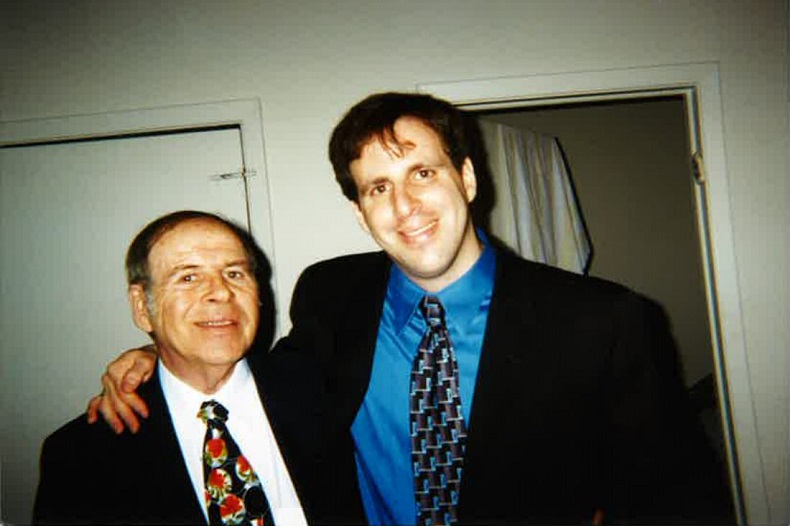
My father, Raymond Tachman (z”l), died suddenly and unexpectedly. My father was kind, loving, and giving. He was patient and loyal and he was quite a character. Dad was someone who in word and deed was able to communicate his love and concern for the people in his life. His legacy, in part, is that he was someone who would go to the ends of the Earth; simply for the pleasure of knowing he made that person happy.
Though I did not get a formal chance to say goodbye, our last phone call speaks volumes to who my father was as a person, what he lived for, and to the legacy he leaves behind. Our conversation started with jokes about the Chicago Cubs-it was 2010. My father then told me with excitement about the unique way he had found the perfect present for my mother for Valentine’s Day and he laughed about having been convinced by my nephew, his grandson, to take an inner tube down a ski run, and how they ended up tumbling down most of the hill.
Not everything that week was happy for him, however. A few days before, on Tuesday, he drove out to the cemetery in a midst of a pure Michigan snowstorm to visit my brother’s grave on what would have been my brother’s birthday.
Though the weather was more than most people would have braved, nothing was going to stop my father from doing what he felt was the right thing to do.
He then told me about something that he had hoped would be a surprise for me; a project that didn’t quite work out as he had planned. I actually think this is the sweetest story about my father. My dad knew how much I loved barbecued chicken and he thought it would make me so happy to receive in the mail a chicken cooked by him. (My mom later relayed to me all that he went through to make this happen.) With this in mind, my father searched every grocery store in his town of Grand Rapids to locate the one kosher chicken in the entire city, and he then spent hours outside in the cold barbequing it.
Next, dad packaged the cooked chicken up with blue ice and went to the post office to overnight mail it. Part of my father’s lasting legacy is the extremes to which he would go to, the tenacious creativity he would employ simply for the joy of making those he loved happy. As it turned out, in his rush to send the cooked chicken off to me, he wasn’t able to confirm my address with my mom and he just trusted the address the post office provided. He planned to send it to me at the Temple where I was serving at the time as a rabbi, and he definitely remembered the “Sholom” part of where I worked. But that must have been all he remembered of the name.
As it turned out, that large, frozen, barbecued kosher chicken, packed with blue ice, the chicken that my father had worked so hard to find, cook, and mail, was sent-not to Temple Sholom-but to Rechovot Shalom, which apparently is a Jehovah’s Witness Center somewhere in Illinois. To this day, I smile when I imagine the Jehovah’s Witnesses surprise: We Jews are knocking at their doors, and we too -have an important message of Eternal Salvation: “ Eat kosher chicken! “
At the end of our phone conversation, my father shared with me words that always came easily to him, “I love you and I am proud of you.”
About those we lost, Rabbi Alan Lew writes: “What lives on of the people we have loved and lost? What breaks our hearts when we think of them? What do we miss so much that it aches? Precisely that suchness, that unspeakable, ineffable, intangible quality, which takes up no space at all and which never did. That’s what survives that great crossing with us. That’s what makes it through the passage from life to death.” How right he is.
Happy Father’s Day to all of you who have lost your fathers, and may their memory and legacy always be a blessing.
Rabbi Taron Tachman, a former contributor to Oy!Chicago, serves as rabbi at Beth Tikvah Congregation in Hoffman Estates, and is the proud father of two adorable toddlers. His favorite food is still kosher barbecued chicken.
Other stories
-
Two local teens win national recognition
Recipients of the annual Diller Teen Tikkun Olam Awards
Read more -
Celebrating six young award winners cultivating the community
Introducing young adult award winners
Read more -
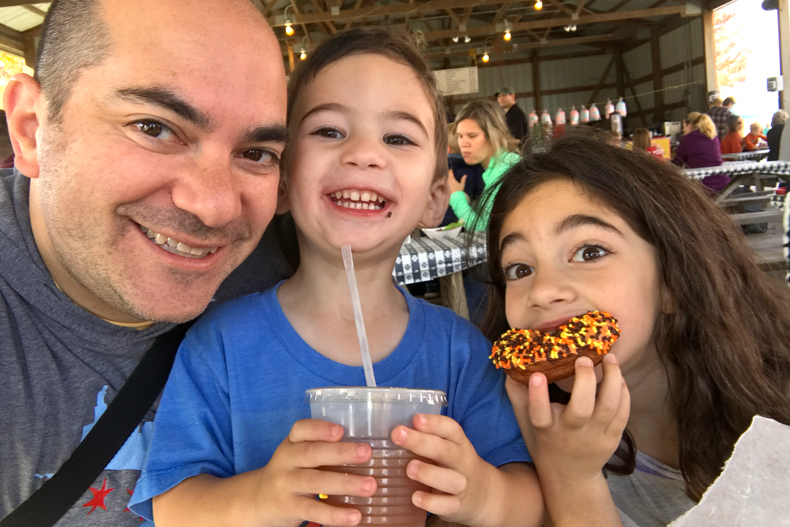
I recently picked up my 7-year-old daughter from her after-school program. I started the car and WBBM was playing on the radio. From the back seat I heard, “Dad, why don’t you ever listen to music when you’re in the car? It’s always the news with you.”
I couldn’t help but laugh out loud. In that moment, I realized I had become my dad — and I had never been happier.
With three young kids (ages 7, 3 and 14 months), I get to experience these types of moments almost daily. Moments when I catch myself doing something my dad did when I was a kid, reinforcing how old I thought he was and how cool I knew I was. Moments when I say something to my kids I swore I’d never say — or when I embarrass them until they’ve finally had enough and kick me out of the room.
Then there are those moments when I watch with joy and awe as one of my kids does something that lets my wife and me know we’re doing okay and raising a crew of three good Jewish kids.
I remember playing Candy Land with my daughter who was 3 at the time. It was her turn and she picked the card with a popsicle on it. The picture — if you can remember — is an old-school popsicle with two sticks coming out of the bottom. We thought her cheering and jumping up and down was because she got to move up on the board. Turns out, she was so excited because she thought she had picked the Torah card.
Then there’s my 3-year-old son. A couple of weeks ago he was in his room working diligently to try and spin a dreidel on his own (because it is never too early to prepare for Chanukah!). He finally got it and ran into our room screaming, “I did it. I spinned the dreidel. We need to say the shehecheyanu” — the prayer Jews say to celebrate special occasions and thank God for helping us reach this great moment. We, of course, obliged and the whole family joined him in celebration.
And then there’s the youngest one. The moment when he says a new word, discovers he’s capable of a new skill (climbing is often involved), or can’t stop laughing as his big brother chases him around their bedroom. His laugh is contagious, and I really should make it my cell phone ring before he grows up.
As a kid, I remember my dad telling me his favorite job was being a dad. He often told me the greatest joy he had in life was watching my siblings and me grow up and be successful. I always assumed this was just a line from a guy who was in sales for most of his life, one of those things parents say because they’re supposed to.
Seven years into fatherhood, I now know my dad wasn’t lying. Indeed, without a doubt, being a dad is the greatest job in the world. I’m sorry for doubting you, Dad.
Beyond the joy I get in watching my kids grow up and have their own successes, every day my kids make me a better person. They aren’t afraid to call me out and remind me what you say and how you say it really does matter. They ensure I don’t take myself too seriously and have the uncanny ability — especially when teaming up — to turn a moment of discipline into uncontrollable family laughter. And when we least expect it, they take the lessons we try to teach them and give us back moments of incredible delight when they put the needs of others before themselves.
In case you haven’t figured it out, I love being a dad. It is the greatest job in the world and I’m thrilled it’s a lifetime appointment.
David Goldenberg is a JUF board member, an adoring father of three, and a resident of Highland Park.
Other stories
-
Two local teens win national recognition
Recipients of the annual Diller Teen Tikkun Olam Awards
Read more -
Celebrating six young award winners cultivating the community
Introducing young adult award winners
Read more -
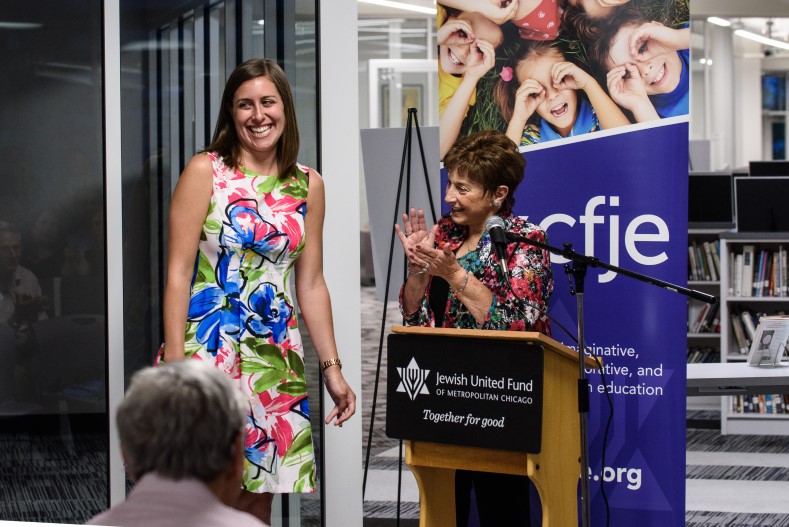
Rita Weintraub receives JUF’s Sue Pinsky Award for Excellence in Jewish Education
Rita Weintraub, a preschool teacher at Moriah Early Childhood Center, was presented with the Sue Pinsky Award for Excellence in Jewish Education on May 30 in recognition of her exemplary accomplishments in early childhood Jewish education.
“Rita has a magnetic presence, bringing a nurturing and creative energy to her Jewish classroom community,” wrote colleague Cherene Radis in her nomination of Weintraub for the prestigious award. “She lives with her Jewish values at the forefront, and as a result, her classroom is a kehilah , its own community within our larger school community. Rita fundamentally understands how children learn, and fuels their curiosity to explore, think, make connections, problem solve and live their Judaism joyously.”
The celebratory event was hosted by JUF’s Education division, formerly the Community Foundation for Jewish Education. More than 150 educators and supporters of Jewish early childhood education gathered at Ida Crown Jewish Academy to celebrate their collective accomplishments, especially in the area of professional development.
“As Jews, passing on our values to the next generation is central to carrying on our culture and community,” said Sue Pinsky, the award’s namesake and a celebrated former educator herself. “Teachers help us make this possible. We trust them to shape and care for the minds and hearts of our children-and today, we thank them and celebrate them.”
Sue’s son Mark and his wife, Lisa, share in Sue’s support of exceptional educators. They established the Sue Pinsky Award for Excellence in Jewish Education in her honor to recognize dynamic, inspiring Jewish teachers whose enthusiasm and caring help students develop a lifetime love of learning and Judaism. They created an endowment fund through the Jewish United Fund’s Agency Endowment Program to ensure that this award will be given in perpetuity.
Weintraub has many leadership roles in at Moriah, and is a mentor to a fellow in the Chicago Teachers Project. She is also a participant in the new cross-community Learning Exchange between Colorado and Chicago, and has been a part of a national documentation initiative piloted by The Jewish Theological Seminary in New York.
Other stories
-
Two local teens win national recognition
Recipients of the annual Diller Teen Tikkun Olam Awards
Read more -
Celebrating six young award winners cultivating the community
Introducing young adult award winners
Read more -
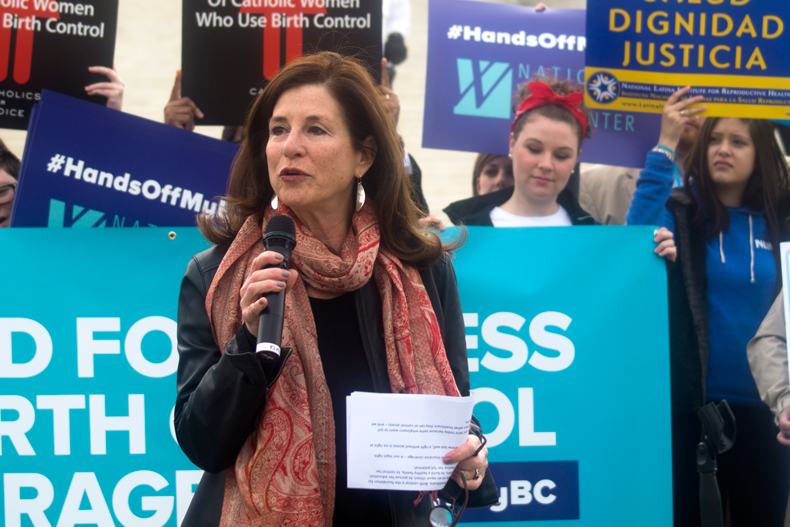
As the #MeToo movement continues to build momentum worldwide, the Jewish Women’s Foundation of Metropolitan Chicago (JWF) publicly commits to a yearlong effort to harness its lessons and implications to foster positive change in the Jewish community.
Since 1997, JWF has awarded over $3.7 million in grants to 160 projects in Chicago, Israel, and around the world to foster a safe, healthy, and inclusive world for Jewish women and girls.
JWF’s first step in responding to #MeToo was to invite Loribeth Weinstein, CEO of Jewish Women International (JWI)-a Jewish organization working to empower women and girls-to address its advocacy committee in April
at JUF.
“Lori Weinstein is a key national leader in this area who has been instrumental in organizing a Jewish response to the #MeToo Movement,” said JWF Advocacy Chair Susan Rifas. “Whether it’s sexual assault, abuse, trafficking, or the gender pay gap and lack of female leadership in the workplace, all of these issues are related to the #MeToo Movement and they are all topics of concern to us at JWF.”
For Weinstein, who has been working on issues of violence against women for more than 30 years, ongoing and substantive conversations must precede solutions.
“The questions for consideration include: How did this go on for so long and what are we doing to address it culturally and systemically? The #MeToo movement launched eight months ago in response to the eruption of sexual harassment charges, and so much has happened in that short period of time. I have long understood the importance of first having deep, thoughtful, and ongoing conversations before taking concrete next steps,” she said.
One powerful side effect of the movement is the way it is turning social mores upside down.
“For so many of us, this was a moment where we stopped and thought about all the things we had lived through, put up with, and experienced,” said Weinstein. “We knew it was wrong, but we had no one to go to. It just seemed the cost of doing business as a professional woman.”
Zeroing in on the Jewish community, Weinstein said the movement has “given us a chance to take a hard look at our organizations.”
“We must have a pipeline [in Jewish organizations] that allows women to speak out and register complaints, and have those complaints listened to,” she said.
As part of her work in this area, Weinstein advocates for ongoing, in-person sexual harassment training without leadership present.
“I don’t believe there is one size that fits all,” she said. “Every organization has its own unique culture and your training has to be specific to that culture and reflective of your people, your culture, and your mission.”
In Chicago, the Jewish United Fund recently held anti-harassment training for all of its employees. “We take the notion of building a safe workplace environment and culture very seriously and have no tolerance for harassment of any kind,” said Jim Rosenberg, JUF’s chief of staff, who helped create the anti-harassment training. “We all need to own the issues and work together to fix them.”
In working to shift the culture, Weinstein not only urges likeminded women to join the conversation, but asks men to be part of the change as well.
So far, a host of Jewish organizations and foundations have begun the long process of self-reflection and examination. The Charles and Lynn Schusterman Family Foundation recently formed a coalition of Jewish organizational leaders who are addressing many issues that have emerged since #MeToo. The Foundation for Jewish Camp has launched an initiative to prevent abuse and misconduct at camps, and organizations like the Jewish Funders Network have been offering webinars on topics like “Sexual Harassment Revelations: What Jewish Funders Need to Know and Do Now.”
“This is our moment to think creatively to make change and to work together,” said Weinstein.
For its part, the advocacy committee of JWF has begun identifying areas of change.
“Through our dialogue with Lori Weinstein, we were empowered to look at which tools we can leverage to begin to create a real cultural shift that can be sustained over time,” said Nancy Kohn, chair of the steering committee.
These include supporting systemic change to create safe work environments; sensitivity training that is appropriate for different generations in the workplace and includes role-playing; and a determined effort to achieve greater parity between men and women in positions of power and authority, according to Kohn.
The Jewish Women’s Foundation is an independent project of the Jewish United Fund/Jewish Federation of Metropolitan Chicago. For more information, visitwww.juf.org/jwf.
Abigail Pickus is a freelance writer living in Evanston.
Other stories
-
Two local teens win national recognition
Recipients of the annual Diller Teen Tikkun Olam Awards
Read more -
Celebrating six young award winners cultivating the community
Introducing young adult award winners
Read more -

In a nod to the ground-breaking work JUF, its family of agencies and its community partners are doing here in Chicago, dozens of local programs have been chosen for inclusion in this year’s Slingshot Guide highlighting the top 50 innovative projects in Jewish life.
Slingshot’s Guide-now in its 13 th year-highlights trailblazing initiatives nationwide. Special this year, a Chicago-only edition catalogues the best of Chicago’s thriving Jewish community. Both editions spotlight programs that are motivating new audiences to participate in Jewish life and are responding to the community’s evolving needs in new and creative ways.
For the second consecutive year, JUF’s jBaby Chicago was selected for the national guide. jBaby helps expectant parents and families of newborns and tots make connections, build friendships and engage in Jewish life.
Also included in the national guide were several national programs that have local efforts housed at JUF here in Chicago, including PJ Library and Base Hillel .
Thanks to The Crown Family Philanthropies and the Jack and Goldie Wolfe Miller Fund, this year’s special Chicago guide highlights 20 local organizations and shows the breadth of inspiring work happening right here in our own backyard.
“I am in awe of this community, which is doing such impressive and imperative work to keep Jewish life thriving here in Chicago,” said Steven B. Nasatir, JUF president. “And I am in awe of our JUF/Federation, which is a part of nearly all these initiatives in some way-whether they are JUF programs, JUF partner agencies or receive funding through JUF’s Breakthrough Fund. The impact we are having on this Jewish community is truly remarkable.”
The Chicago Edition includes the following JUF programs:
jBaby Chicago has connected with over 2,100 new families since its launch in 2014.
PJ Library sends free Jewish books and music to families with children ages 6 months to 8 years.
Silverstein Base Hillel, a home in Lincoln Park where a rabbi and her wife provide a hub for young Jewish adults, grounded in pluralism, learning, hospitality and service.
Ta’am Yisrael, an 8th grade educational experience in Israel for non-day school students, organized by JUF’s Education department.
The guide also highlights a variety of programs and organizations that are JUF’s partner agencies or receive or have previously received funding from JUF.
These include:
A Wider Bridge builds bridges between Israelis and LGBTQ North Americans and allies.
Center for Jewish Leadership – housed at the Spertus Institute for Jewish Learning and Leadership-cultivates innovative approaches to leadership and enhances the abilities of Jewish professionals and lay leaders.
Honeymoon Israel offers highly subsidized, nine-day trips to Israel for disengaged couples with at least one Jewish partner.
InterfaithFamily supports interfaith couples and families exploring Jewish life and encourages Jewish communities to welcome them.
Jewish Enrichment Center’s trailblazing educational approach to Jewish children’s learning believes that students should be the cocreators of dynamic Jewish life.
Keshet Special Needs. Extraordinary Opportunities offers support services and training for individuals with disabilities to achieve their potential.
Libenu Foundation provides residential, vocational, social recreational and respite programs for Jewish children and adults with disabilities.
Mishkan Chicago, an independent spiritual community, is reimagining and reinvigorating Judaism and bringing spirit, song and celebration to places without a Jewish institutional presence.
Moishe House gives Jewish 20somethings a place where they can define Jewish community and identity on their own terms.
Moving Traditions emboldens teens to thrive by fostering self-discovery, challenging sexism and inspiring meaning and connection in Jewish life
OneTable inspires people in their 20s and 30s to create their own Shabbat dinner experiences.
Orot: Center for New Jewish Learning provides innovative Jewish learning experiences to open up Jewish tradition to people from a variety of backgrounds.
SVARA is a traditionally radical yeshiva that makes spiritual, moral and intellectual technology of Talmud study accessible for all Jews.
Synagogue Community Partnership , a project of Jewish Child & Family Services, works with congregations to provide easily accessible, welcoming support and services in places where Jewish individuals work, live, learn and worship.
The Chicago guide also highlights Avodah Chicago , which trains and supports emerging Jewish leaders for social change, and Reboot , which reinvigorates Jewish traditions by producing events, exhibitions, digital tools, books and more to reimagine Jewish life.
The Slingshot Guide, published annually, is available in hard copy and as a free download at www.slingshotfund.org .
Other stories
-
Two local teens win national recognition
Recipients of the annual Diller Teen Tikkun Olam Awards
Read more -
Celebrating six young award winners cultivating the community
Introducing young adult award winners
Read more -
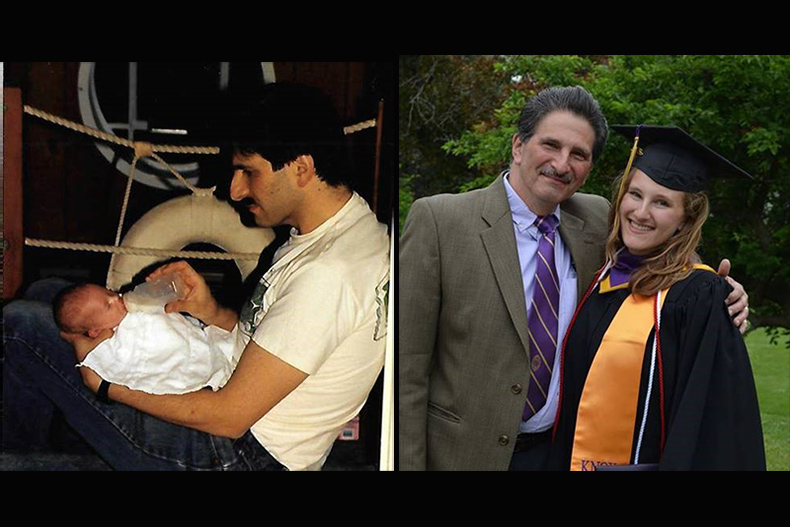
I hadn’t intended on being a stay-at-home dad; the thought had never crossed my mind.
I didn’t know any men who were “caregiver #1.” For our family, it was just the practical choice: As a classical musician, my schedule was more forgiving during the day. Our vague plan was for me to stay home with the baby-but my road to fatherhood shifted before I knew what happened when our daughter, Jenna, was born two months early.
I fell into the role of Mr. Mom very quietly. I wasn’t ashamed of it, but somewhat in denial. I would discuss my new “caregiver” life to people, but only if they asked the right questions. It took a while for me to own the experience of being Jenna’s daily protector/feeder/nurturer. In doing so, I gradually discovered what an amazing gift I had been given.
When Jenna was about 5 months old, after a last-minute baby sitter cancellation, I had to take her along to teach some music lessons. One of my colleagues, a ferociously talented former college classmate, stopped in to meet Jenna. “Joel,” Arlene said quietly, “that is the best work you’ve ever done.”
I didn’t quite get it, yet. How could this cute bundle of baby possibly be worth more than decades of serious musical performance?
A year or so in, I had found my rhythm: feedings, walks, diaper changes, trips to the park. Since I had to weave in my work schedule, there were constant calendars to configure, as well as timing the day so we could greet my wife, Jenna’s mom, at the train station. I managed to not screw things up too badly, just an occasional gaffe like locking the keys in the car one on a cold winter’s day. But I was still not fully owning being “Mr. Mom.”
Jenna and I started taking day trips during her toddler years. At the Lincoln Park Farm-In-the-Zoo, the barn cat got most of Jenna’s attention. A ride on the Yellow line was always a good afternoon, and I was able to parlay those rides into a “practice” trip to O’Hare, so when the time came for our family to fly somewhere, going to the airport wasn’t a big deal. As people watched us, and smiled, I felt more and more comfortable with being the caregiver.
When Jenna entered preschool, I was the only dad in the room-on a daily basis. I didn’t quite fit in with the moms and started feeling a bit resentful. Could they not see that I was doing the same stuff as them, and almost as well? Perhaps this is where my parental “ownership” finally started to emerge.
As the years progressed-trips to the library, hardware store, and supermarket-we got our bonding on! I walked with pride, holding this young lady’s hand, just doing daily errands. I suspect that Jenna was getting the better part of the deal; while I searched for furnace filters or books, she somehow ended up with an impressive collection of beanie babies.
One memorable day, Jenna sent me off to rehearsal wearing stick-on earrings. Maybe I just forgot to take them off-or maybe I was starting to get it. Fast forward 10 years, when I met up with a long-lost college chum. He’d been travelling the world on business, with little time at home. When asked what I was doing, I sheepishly mentioned my stay-at-home dad-ness. Without any hesitation, he said he would have loved to have traded places, having missed lots of time being with his kids. Hearing this finally allowed me to fully own the mantle: “Mr. Mom.”
From the “cyclone” of day to day errands, trips, and appointments, it was hard for me to see the big parenting picture. I knew my efforts were going towards something important. I just didn’t have the luxury of stepping back to see what was being accomplished. Now, I get it. I really get it. I was given a great gift: to be there, every day, in helping Jenna find her way in becoming the fantastic person she is.
I am proud to have been the primary person on call for our daughter’s growing years. I own the title “Mr. Mom”, and given the chance, would happily do it all again.
Joel Cohen is a proud father, husband, and member of the Chicago classical music community
Other stories
-
Meet Andrew S. Hochberg, 2021 Julius Rosenwald Memorial Award recipient
Celebrate Andy Hochberg at the virtual Annual Meeting on Sept. 14
Read more -
Two local teens win national recognition
Recipients of the annual Diller Teen Tikkun Olam Awards
Read more -
Celebrating six young award winners cultivating the community
Introducing young adult award winners
Read more