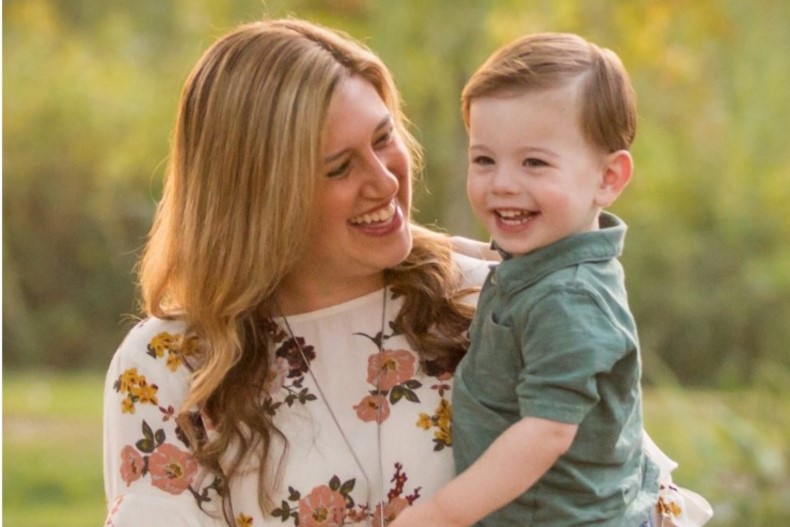
A couple years back, I did something totally crazy-I created a human! A tiny, beautiful, miraculous human. Well, I guess I had a little help from my husband, but I did most of the heavy lifting (pun intended).
And while, amazingly, I am not the first and only person to accomplish this ridiculously incredible feat, I know I will not be the last. So I thought I’d share what I learned throughout my pregnancy-things I wish I’d known before starting out on this crazy journey.
People will say the weirdest stuff to you-don’t let it get to you.
People will tell you that you’re carrying big. “Yes, I’m sure there’s just one in there,” you will tell them. They will tell you for sure you’re carrying like it’s a girl even though I have the ultrasound picture to prove it’s a boy. They will tell you horrific labor stories that you can’t unhear. One day, when I was about eight months pregnant, I was walking out of Starbucks and this woman just pointed at me and said “You’re pregnant!!” and kept walking. No kidding.
The thing is, people will also be pretty nice to you and treat you like some kind of super human (which you are.) They will hold doors for you, help you carry things, occasionally they will give up their seat on the train for you-but not always. Well-meaning strangers will smile at you, ask you when you’re due, offer words of advice, wish you well and warmly welcome you into the club of parenthood. You will totally do the same annoying thing the minute you become a parent.
Connect with other moms-to-be. ASAP!
The weird thing about being pregnant is that in those early weeks, when you are completely freaked out and feeling awful, you can’t really talk about it. After my first trimester, when I finally did tell all my friends, I blabbed to them for hours about everything I had been worrying about and wished I could have told them from the start. Obviously everyone has different comfort levels when it comes to this, but if you have one friend or family member you can trust to confide in during those early weeks, I say go for it.
Once your pregnancy is Facebook official, or at least all your friends and family know, my number one suggestion is to find a mommy buddy who is due around the same time as you. Someone you can talk to who totally understands what you’re going through in that very moment. JUF’s jBaby Chicago hosts wonderful programs and classes for expectant parents that are great places to connect with other pregnant couples and get some great info along the way. The mommies-to-be you meet during pregnancy will be your lifelines during maternity leave and beyond-plus the babies have buddies lined up right from the start!
Dr. Google is not your friend
One night, I woke up and my foot was itchy. I googled “itchy feet pregnancy,” a condition came up, and I was sure I had it. “I’ll have to have the baby early!” I told my husband at 2 a.m., freaking out. So he looked at my foot. “Um, you have a mosquito bite.”
I googled so many ridiculous things while I was pregnant. “Can you eat _____ when you’re pregnant?” I can’t tell you how many meals I sent back because I suspected there may have been unpasteurized cheese or a rogue bean sprout on my plate. Yes, there are some foods to avoid during pregnancy, but there is also a lot of gray area and for most questions there will always be a website to tell you yes, you can eat that and another that tells you no, you can’t and you will literally drive yourself insane.
Just take the pamphlet your doctor gives you at your first visit and abide by those rules. I kept a list in my phone of all my crazy questions as they came up and asked them at each appointment and they didn’t laugh at me (most of the time.)
While you’re at it, don’t stay up all night reading pregnancy message boards. Trust me-do as I say, not as I did on this one!
Get moving!
If you have clearance from your doctor to work out, there are lots of prenatal exercise classes and programs out there. I did small group prenatal training with a mom’s group from the time I was about 15 weeks on. I felt strong throughout my pregnancy-I could still hold a plank for one minute when I was 9 months along!-and got to connect with other moms in the process.
And if all else fails, just walk. There were days I felt like I could barely move, but walking, even just for a little bit, always made me feel better.
Your body is going to change and do some crazy stuff. The sooner you come to terms with this, the better. It may never be the same, but I promise that eventually you will feel like yourself again. On that note: embrace maternity pants! They are seriously the best-why don’t all pants come without a waistband?-and they are hard to give up after your pregnancy-or so I’ve heard.
Enjoy it
This is, at times, easier said than done. You’re big, you’re uncomfortable, you can’t sleep, and there is a parasite inside of you that not only takes all of your nutrients but kicks you a lot. There will be times when you will bring new meaning to the term “hangry,” you will cry, you will nest like crazy, you will pee like crazy, you will be baffled by your own swollen feet, and you will catch your reflection in a window as you walk down the street and think to yourself “who is that person?”
But then you will be somewhere doing something ordinary, like eating in a restaurant or checking your email and a little foot will jab you in your ribcage as if to say “Hey Mom, it’s me, your little parasite. Thanks for that delicious burrito you had for lunch today. I love you.” And you will smile and cry and reach for that little foot and whisper, “I love you too, baby.”
And just wait until you see that little foot for the first time.
This column originally ran on Kveller.com .
Other stories
-
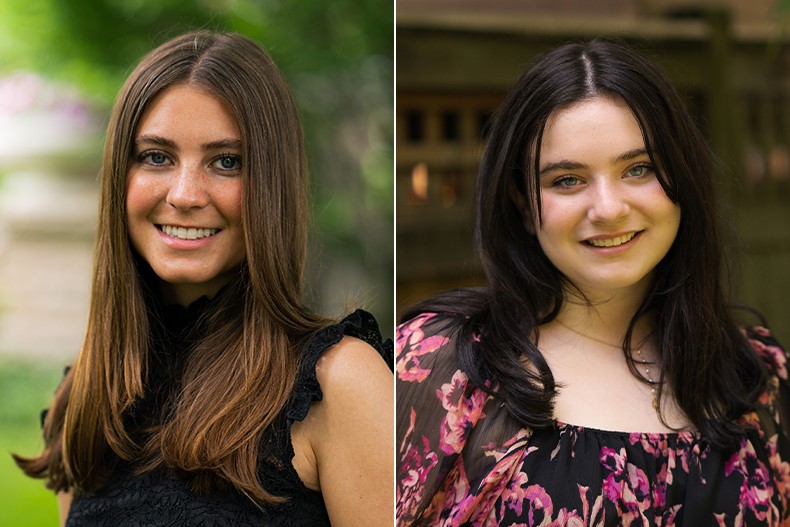
Two local teens win national recognition
Recipients of the annual Diller Teen Tikkun Olam Awards
Read more -

Celebrating six young award winners cultivating the community
Introducing young adult award winners
Read more -
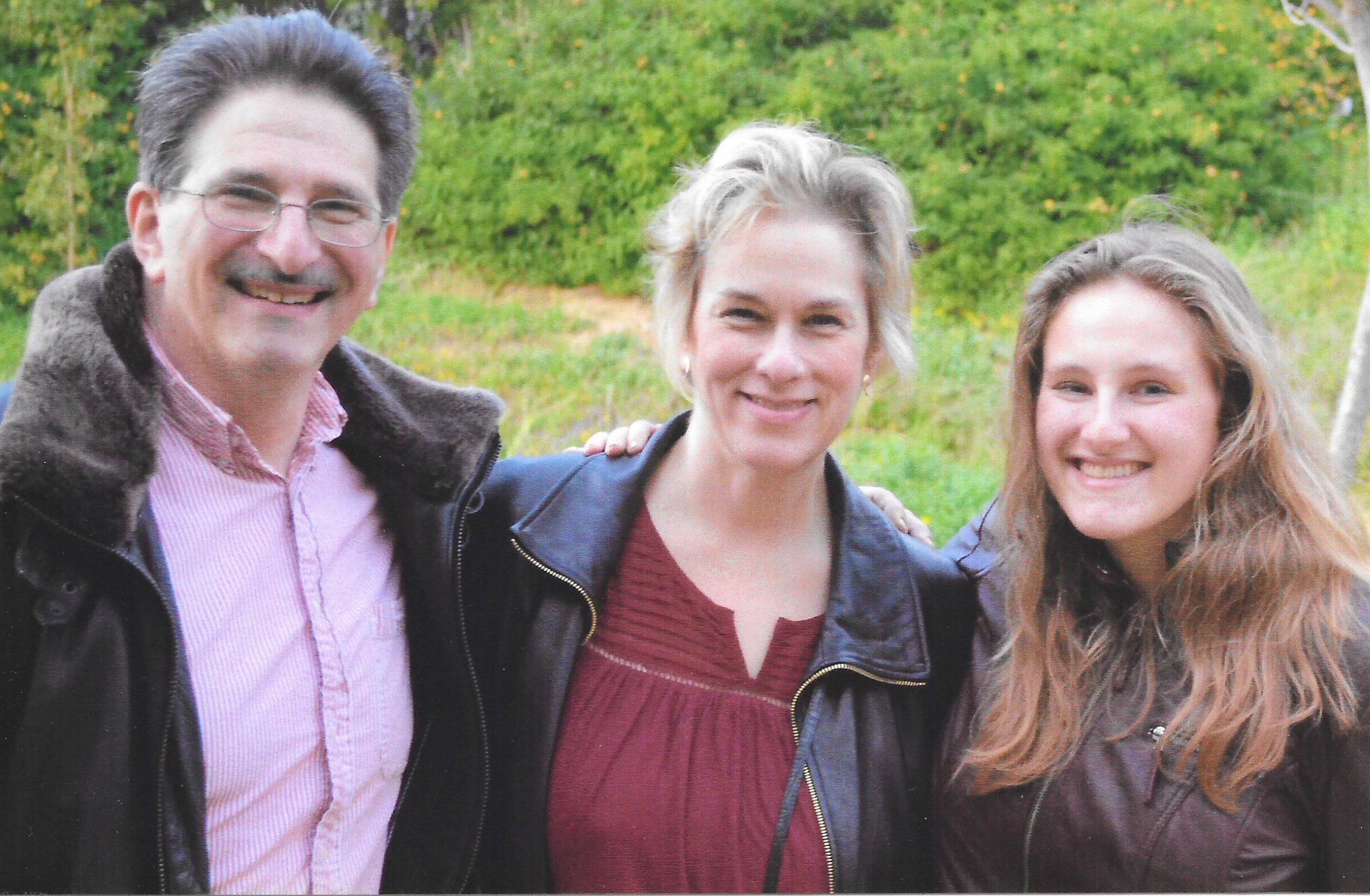
When I was a new mother, I was away at a conference and called home to hear how my baby’s check-up had gone. It went fine, my husband assured me; the pediatrician even cleared her starting solid foods. So that morning, he fed Jenna a banana.
I burst into tears. My baby had tasted her first solid food, and I missed it.
Much has been said about the myth of women “having it all.” The prevailing new wisdom is that women can have it all, just not at the same time. Which is swell if you’re Grandma Moses, who started painting at age 70, or Laura Ingalls Wilder, who first published the Little House books in her 60s, or Julia Child, who launched her first cooking show at age 50. But the harsh reality for most working women is that the peak years for both our careers and our fertility happen to be the same ones.
Mine is among the more than one in three households today where the mother is the primary bread earner. Joel’s work is seasonal, and he is the one who stayed home to rear our daughter. When she was small, he did the laundry and the grocery shopping and made dinner during the week.
When they learned this, my colleagues would gasp-women with envy and men with horrified disbelief. “You are so lucky,” women would say. Men at best shook their heads.
“Yes,” I would reply with a tight smile. “He is wonderful.” I didn’t want my co-workers to think I didn’t appreciate Joel, but wondered how many of them would have told him how lucky he was if I were the one who worked part-time and cooked dinner.
As a Mom Who Worked Outside The Home, I definitely overcompensated.
School bake sale? Of course! I whipped up batches of gourmet cookies and brownies, only to find that other moms had brought in Entenmann’s mini-muffins.
Halloween costume? Heck, yeah! I was there with my hot glue gun, creating enormous monarch butterfly wings out of felt, only to find all the other kids wearing store-bought Disney costumes.
Softball games? I’d be Team Mom! Every year! Arriving for each game with a trunk full of snacks and ice packs-and, I might add, missing only two games in five seasons.
You get the picture. Funny, right? But there were also moments of true soul-searching.
“She has a very close relationship with her dad, and I believe this has been important for her self-esteem as a woman,” I often intoned. I actually did (and do) believe this to be true, but when Jenna was small I agonized: What if she was closer to her Daddy than her Mommy? I cannot describe the unmitigated relief I felt when Jenna was three and scraped her knee at the playground. Both Joel and I were there-but she sobbed for her Mommy.
So yes, sometimes we fell into or deliberately assumed traditional roles. I baked her birthday cakes and took her shopping for her bat mitzvah dress; Joel taught her knock-knock jokes and helped her learn her Torah portion. But Joel taught Jenna how to throw, and I taught her how to hit. He taught her to ride a bike, and I taught her to drive a car. Both of us helped her with homework, brought her to work with us, and took her on college visits. So I always liked to think Jenna got the best of both worlds.
Of course, I was never sure what she would have to say about that. The opportunity to find out came her freshman year in college, when her Gender Studies class was assigned to write an essay about a personal experience confronting gender-based societal expectations. Jenna couldn’t think of a topic so I finally suggested she tackle the obvious, the household in which she grew up.
She didn’t know what I meant.
“You know,” I said. “The whole me going to work, Dad staying at home thing.”
“Oh,” she said. “Is that not usual?”
Other stories
-
Two local teens win national recognition
Recipients of the annual Diller Teen Tikkun Olam Awards
Read more -
Celebrating six young award winners cultivating the community
Introducing young adult award winners
Read more -
Healing children after trauma through art—on both sides of the ocean
Cindy Sher
When we hear of children caught in the crosshairs of violence, whether on the South Side of Chicago or in the Middle East, we wish we could help them-though most of us are at a loss for how.
But Skokie Jewish native artists and teachers Rena Grosser and Ariela Robinson, and Jewish activist Craig Dershowitz figured out how to leverage their work and talents to help heal the youngest victims of violence.
Years ago, Dershowitz, the executive director and co-founder of Artists 4 Israel (A4I)-an organization that brings healing through art to people in Israel ravaged by fighting-had a conversation with a now-deceased artist and firefighter who served in New York on 9/11. How helpful it would have been, he told Dershowitz at the time, if the children affected by 9/11 had had access to art supplies to distract them on that horrible day.
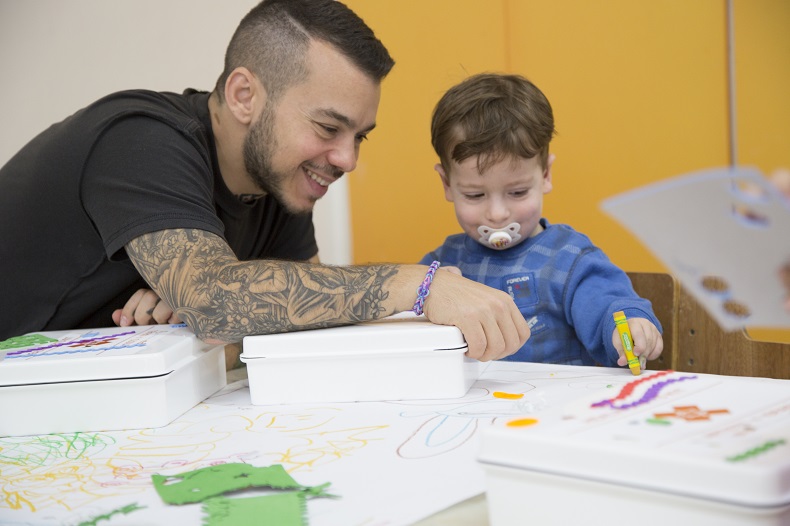
Dershowitz built on that idea and wondered what if those art tools had the power to heal, too. He and Chicago-based Grosser and New York-based Robinson formed a collaboration through A4I, along with a team of mental health professionals, artists, art therapists, art teachers, and first responders. Together, in 2014, they created “Healing Arts Kits,” therapeutic art supplies as a first response tool that Israeli children could use during their time spent in bomb shelters, when forced to flee rocket attacks.
Four years later, A4I has now brought the art therapy kits to children in Chicago, to be utilized in the city’s most violent neighborhoods on the South and West Side following incidents of violence and loss. In addition to Chicago, the kits have also been used in New York.
For children, art can elicit expression in a way that verbal communication sometimes falls short. “I’ve seen the power of how art can be a source for communication, healing, reflection, and positive distraction,” said Grosser, an art therapist who teaches early childhood education at Bernard Zell Anshe Emet Day School.
The kits help children start the healing process, according to Dershowitz, who splits his time between Los Angeles and Israel. “For anyone experiencing such pain, they need an outlet, a new way to see their present and to creatively imagine a better future,” he said. “The Healing Arts Kits provide a new way for children, regardless of where they are or the cause of their trauma, to cope and rebuild.”
The first test batch of 200 kits were deployed in Chicago this past winter by the A4I team in partnership with Urban Gateways, which engages young people in art, and Chicago Survivors, which steps in to help families with crisis intervention following violent loss.
The kits are designed to be used immediately following a trauma-helping children start to heal by slowing or preventing the onset of Post-Traumatic Stress Disorder by providing the child with activities that interrupt the trauma. Clinicians assigned to work with families and their children following violent incidents, such as shootings, homicides, and sexual abuse, administer the kits to the children however they see most effective for each individual child.
Chicago Survivors social worker JaShawn Hill utilizes kits in her therapy. “I have found them to be a great tool to build relationships with the youth, teach techniques to cope with addressing anger and anxiety, as well as open the lines of communications with their caregivers around the emotions they feel,” she said.
Among the contents of each kit are bubbles to help children focus on deep breathing; clay to mold representations of their feelings; finger puppets to keep the kids communicating; and a notebook, to channel their thoughts and emotions.
In February, as part of their chesed (lovingkindness) work, students from Ida Crown Jewish Academy-from which both Grosser and Robinson graduated-helped pack kits and write cards of love and support for kit recipients. Grosser said she hopes the Chicago kits, like those in Israel, will soon be used as part of bar and bat mitzvah projects and other service projects.
Proving effective in both Israel and Chicago, the kits demonstrate the universality of both children and of art. “Something that originated for the purpose in Israel so fluidly was able to transfer to Chicago, unfortunately for tragedy and horrific circumstance,” Grosser said. “But nothing really had to change, which speaks to the power of art.”
Artists 4 Israel plans to bring the kits to other communities in need and seeks partners around the United States. To learn more about Artists 4 Israel, visit artists4israel.org.
The Healing Arts Kits project has received support from the National Endowment for the Arts and the Pritzker Pucker Family foundation to pilot the initiative in Chicago.
Other stories
-
Two local teens win national recognition
Recipients of the annual Diller Teen Tikkun Olam Awards
Read more -
Celebrating six young award winners cultivating the community
Introducing young adult award winners
Read more -
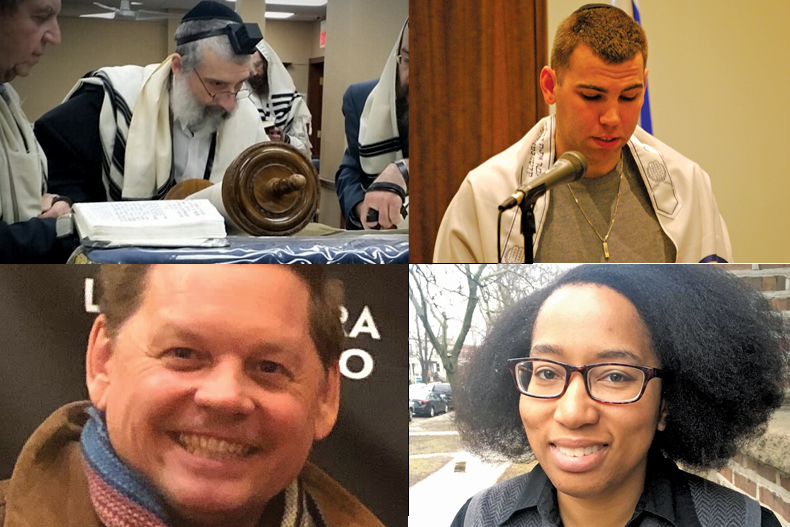
When Ruth the Moabite clung to her mother-in-law with the famous words, “Wherever you go, I will go, wherever you live, I will live-your people will be my people and your God my God,” she linked her destiny forever with the Jewish people.
Over 3,000 years later, people from all different paths of life continue to choose Judaism as their religion, community, and way of life.
In honor of Shavuot, we profile the inspiring stories of four Chicago-area Jews-by-Choice.
Dovid Yehuda Imbo
Professor Dovid Yehuda Imbo grew up in an Italian family on Chicago’s Near West Side.
“My childhood was challenging. There was a lot of crime, violence, and poverty in my neighborhood. Some of my friends didn’t make it to adulthood. But there were also many kind and wonderful people,” he said.
He attended a Catholic elementary school, Lane Tech High School, and then entered the University of Illinois at Chicago (UIC). It was at UIC that his life took an unexpected turn. “Here I was-this street kid with no money and no pedigree-and I decided to study theoretical physics, philosophy, and mathematics.”
After obtaining his bachelor’s degree at UIC, he received his Ph.D. from the University of Texas, and was awarded a prestigious post-doctoral fellowship at Harvard University. He then returned to UIC as a faculty member in 1992.
Throughout his life, Imbo was often mistaken for a Jew. “People would always tell me that I look Jewish. Sometimes people would call out to me in Yiddish or try to get me to join a minyan ,” he laughs.
In the late 90s, he began reading esoteric Jewish texts with great interest. It was around this time that he met his future wife, Sara Freida, a Jewish woman who had grown up in a Conservative Jewish home. In one of their first serious discussions, she asked him that if they were to marry, would he be willing to raise their children Jewish. “I said, ‘Yes,’ that would be fantastic!'” The couple married and began raising their daughter in the Lakeview neighborhood. It was there that they began to grow Jewishly as a family.
While in Lakeview, Imbo developed a close relationship with Rabbi Baruch Hertz, the leader of Congregation Bnei Ruven in West Rogers Park, who also founded the Lakeview Chabad House with his wife Chanie. “They were always very welcoming even though they knew I wasn’t Jewish,” said Imbo.
“The more I looked into it, the more fascinated I became with Hasidic philosophical and ethical teachings,” he said, noting that he found surprisingly deep connections between many of these teachings and his own research in quantum physics.
Then three years ago, under Rabbi Hertz’s guidance, Imbo began studying with a variety of Chabad rabbis. He quickly evolved from studying a few hours a week with them, to learning practically every day. Conversion seemed a natural progression. “We had started to live an authentic Jewish life on a day-to-day basis.” He met with members of the beit din (rabbinic court) of the Chicago Rabbinical Council (CRC) in 2016 to begin the conversion process, with Rabbi Hertz’s sponsorship. “They were all so loving and supportive,” said Imbo. The family then decided to move to West Rogers Park to join Hertz’s congregation.
Imbo completed his conversion in 2017 at the age of 55, just days before Passover. “I’ve always been wandering and looking for a spiritual home, but it wasn’t until I got to the Chabad community that I actually found one.”
Joseph Steiner
When he was only five years old, Joe Steiner told his mother that he was going to be Jewish.
And this once Catholic kid raised on the Northwest side of Chicago was true to his word. “It felt like the right thing for me to do,” the 30-year-old said.
Having gone to both Catholic and public school as a child, it was at the homes of Jewish friends growing up that his connection to living a Jewish life took root.
As an adult, Steiner, an emergency medical services professional, was stationed as a security guard at both B’nai Jehoshua Beth Elohim Congregation (BJBE) and the Rochelle Zell Jewish High School in Deerfield. Being in these Jewish environments awakened Steiner’s interest in Judaism, and after connecting with BJBE’s then Associate Rabbi Brian Stoller, he began attending Shabbat services in 2014.
“One night I just felt this connection with God. That hadn’t happened since I was a kid in grade school. Something just felt right inside,” said Steiner.
He decided to officially become a Jew and began meeting with the clergy at BJBE for an entire year. Steiner even joined BJBE in New Orleans on a volunteer mission to rebuild the city.
At Rochelle Zell Jewish High School, Academic Dean Bruce Scher also mentored Steiner while he was in the process of conversion, helping him learn to read Hebrew and guiding him. But what has inspired Steiner the most is the support he’s received from the Jewish community.
On December 4, 2015, Steiner converted to Judaism.
“It’s been a very positive experience and the community has been everything to me,” he said. “On the day of my conversion I went from the community mikvah (ritual bath) in Wilmette to a service at BJBE and all the seniors from the high school came for that to welcome me officially as a Jew.”
Elizabeth Atwater
Elizabeth Atwater was raised Southern Baptist in a family that attended church every Sunday. She even briefly considered becoming a missionary in high school, but by her early 20s, she started falling away from that path.
Interested in spirituality, she first turned to yoga and meditation. “I developed a personal, more consistent spiritual practice involving prayer and trying to discern the right way to act to be a force for good in the world,” said the 36-year-old business analyst who grew up in a suburb outside Chicago.
Although she has many Jewish friends, the thought that Judaism could be her intended path didn’t occur to her until two years ago when a Jewish friend, an avowed atheist, began a program to rediscover her Judaism. Atwater joined her, and as it was the Jewish high holidays, she soon delved into deep reading and reflection about what the high holidays mean.
“I experienced a sense of longing that I had never felt before. There was also a sadness that this beauty and this tradition were not mine and would not ever be mine,” she said.
And yet, Atwater felt the pull so strongly that she continued her reading about Judaism.
When she stumbled upon a “Taste of Judaism” course at Chicago’s Temple Sholom and she looked around the room at all of the people from different paths, she began to think that perhaps becoming Jewish was possible for her. So she set about living an entire year by the Jewish calendar. “I really believe that becoming Jewish is the most significant decision I could make and I didn’t think it could be done lightly,” she said.
She attended programs and classes and celebrated holidays at Temple Sholom and Mishkan Chicago, a Jewish spiritual community, and started taking a Torah study class at Anshe Emet Synagogue in Chicago before deciding to pursue her conversion there.
During the height of her studies, she was taking classes at Anshe Emet five days a week, absorbing everything from Hebrew to Jewish heritage.
Atwater formally converted last year before a beit din. “More than anything else, converting to Judaism is my soul coming home,” she said. “It’s like that feeling when you return home from vacation and when you open the door you are so much more at peace than you ever were on vacation but only once you’re home do you know it.”
Rick Williams
When Rick Williams fell in love with a Jewish woman over 25 years ago, he also fell in love with how her close-knit family celebrated Shabbat.
“The tradition of Shabbat was very strong for my wife and her five siblings who grew up doing Shabbat and continued to stay close even as adults. That tradition really touched something in me. Just getting together every Friday night as a family meant a lot to me,” said Rick Williams about his longtime wife, Laurie.
Growing up in a small town in Maryland, his father was in the hospitality business, which made family meals a rarity. There wasn’t a lot of religion in his home, either. While Williams did attend a Baptist youth camp one summer, his parents did not raise their children with any religion.
But for the 52-year-old recruiter for a construction supply company from Highland Park, Judaism, which began through marriage, has evolved into a true way of life. After moving to Chicago from California, the couple joined North Shore Congregation Israel (NCSI) in Glencoe where their son celebrated his bar mitzvah. The family attended High Holiday services and soon Williams became to hunger for more. “I was so drawn to learning. It just felt right,” he said.
First, he began taking classes at NCSI. Then, Rabbi Lisa Greene approached him and asked if he would be interested in the adult b’nai mitzvah class, and Williams decided to give it a try. “This has all been such a natural process,” he said. “The things that I learned and heard in Temple just stuck a chord with me, such as doing mitzvot and learning about tikkun olam (repairing the world) . These were things that felt so right and so important.”
At a certain point, the conversion process seemed a natural next step. For two years, Williams took classes on Judaism at NSCI. He also learned Hebrew fundamentals and the prayers and celebrated his bar mitzvah.
Williams officially converted in 2015 and continues to be an active member of NSCI where he regularly chants from the Torah on Shabbat and is part of the choir.
“I felt like I was living a Jewish life, but now I have the guidance and structure of the Torah,” he said. “Everything has come together for me and with NSCI I also have a spiritual home and sense of community.”
Other stories
-
Two local teens win national recognition
Recipients of the annual Diller Teen Tikkun Olam Awards
Read more -
Celebrating six young award winners cultivating the community
Introducing young adult award winners
Read more -
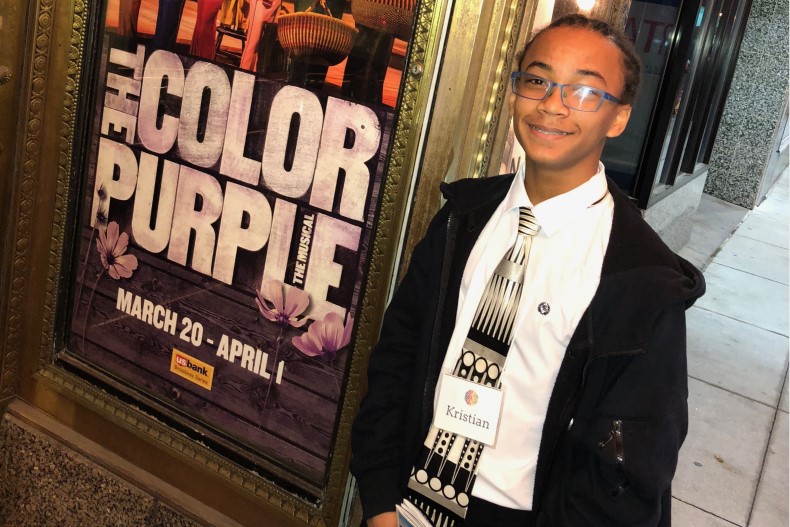
In March, 36 African-American and Jewish teens from Chicago traveled together to the nation’s South on a bus trip called “Let’s Get Together: An Interfaith Journey Toward Justice.” What follows are reflections from an African-American student on the trip, as part of the Springboard school break program, a community initiative created wiith the support of JUF, the Jim Joseph Foundation, and a consortium of local funders. Read a Jewish student’s reflection on the trip here.
“Men often hate each other because they fear each other; they fear each other because they don’t know each other.” ~ Dr. Martin Luther King Jr.
In the spirit of learning, I feel it necessary to quote Dr. Martin Luther King Jr. because his dream is now a reality; our trip was the epitome of all that he could ever want for two groups of people that have so many disparities. This was a life changing event that every student–and I am extremely confident in saying every student–took advantage of in order to learn more about other cultures, strengthen their mindset, and develop as human beings.
I noticed the students’ willingness to communicate and form bonds in the first session before the trip even started. These bonds were only enhanced as we progressed throughout the trip.
During our visit to a synagogue, we created multiple lists of stereotypes, forms of prejudice, and types of discrimination we heard about the other group’s culture. The black students wrote lists for the Jewish students and vice-versa. Despite the difficulty and/or awkwardness that normally comes with these conversations, we were able to respectfully talk about how these issues affected us and offer consolation to one another.
This experience changed me for the better. I see multiple jokes about the Jewish community on shows like Family Guy, Saturday Night Live , and others, and now I understand the impact that the media has on all our lives. The scenes portrayed in these shows affect our communities and the way we treat each other. There are many misguided individuals who only know falsehoods due to the portrayals of others through the media.
This trip made me realize how easy it is to love rather than hate. I have already told all of my friends about the success of this trip and taught them about Jewish culture. Because of this opportunity, I have convinced my friends to reach out to the Jewish community at their schools. I plan to continue efforts uniting people of all races and religions after this program.
We students who went on the trip agree that this program and intermingling of different groups should be available for everyone, so we will start clubs at each of our schools that is a safe space. The club members will talk about how to fix current problems in our society including how to unite our communities, our neighborhoods, our country, and the world.
Before this trip, the only time I had ever heard of Jewish culture or history was in relation to World War II, but the history of their struggles, their numerous amounts of mass migrations, and their empathy is never taught in schools. This is a major problem that needs to be addressed in our schools and I plan to meet with my principal to make a change.
If schools teach about Christopher Columbus’ “discovery” of America, then why don’t we teach about the Jewish heroes during World War II, or about the persecution of the Jewish community all throughout history by Christian nations. It is disappointing to see the lack of knowledge about Jewish culture. There are so few museums dedicated to their culture that our counselors had to create a makeshift gallery of information in order to teach our group about Jewish history.
Despite not being able to visit a museum dedicated to the Jewish community, I learned an incredible amount of information and enjoyed the trip. The trip leaders did an amazing job of keeping us engaged and asking profound questions that made me rethink certain topics. I hope this trip is offered to many other students for years to come.
Kristian Walker is a sophomore at the Latin School of Chicago.
“Let’s Get Together” was part of the Springboard School Break Program, made possible through a collaboration between Anshe Emet Synagogue, the Anti-Defamation League, Bright Star Church, Bright Star Community Outreach, Chicago Urban League, and JUF’s Jewish Community Relations Council.
Other stories
-
Two local teens win national recognition
Recipients of the annual Diller Teen Tikkun Olam Awards
Read more -
Celebrating six young award winners cultivating the community
Introducing young adult award winners
Read more -
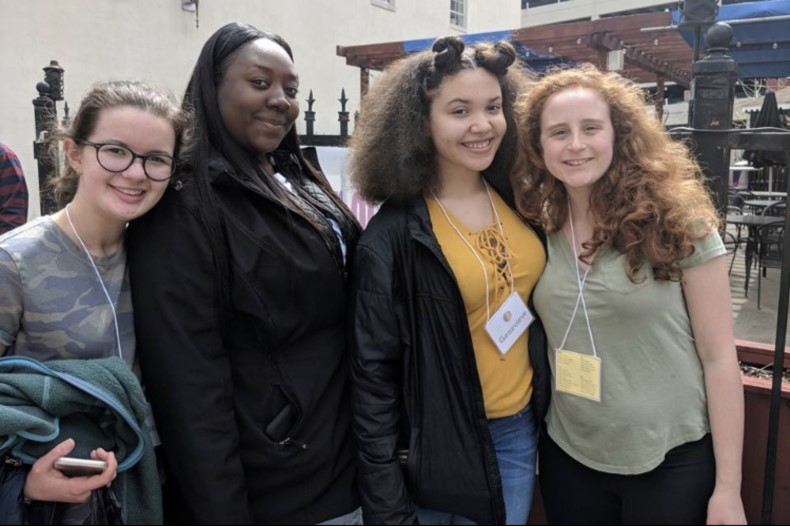
In March, 36 African-American and Jewish teens from Chicago traveled together to the nation’s South on a bus trip called “Let’s Get Together: An Interfaith Journey Toward Justice.” What follows are reflections from a Jewish student on the trip, as part of the Springboard school break program, a community initiative created with the support of JUF, the Jim Joseph Foundation, and a consortium of local funders. Read an African-American student’s reflections on the trip here .
I grew up reading books about the Civil Rights movement. At school we read about Dr. Martin Luther King Jr., his powerful speeches, and the legacy of his assassination. I read about the struggle to integrate public schools in Warriors Don’t Cry , by Melba Pattillo Beals. But I never thought I would one day visit the places where this history unfolded.
This year, as the Jewish people prepared to celebrate our own journey to freedom and as the country prepared to commemorate the 50th anniversary of King’s assassination, I prepared for my own journey.
Over the course of four days, I experienced the Civil Rights movement in a newly formed community of African-American and Jewish teens from Chicago. As we traveled from the Memphis hotel room where King was shot, to Little Rock Central High School, where the battle for school integration continued, each stop on our journey created greater understanding of ourselves and each other. After touring the high school, we dug deep into our own experiences and how they shaped our shared journey.
Our group split up into Jews and African-Americans to create a list of stereotypes about both groups. Creating these lists was supposed to make us feel uncomfortable–and it did. Many of the stereotypes were negative. As a Jew, I wondered why it was so easy to think of stereotypes, when my previous interactions with African-Americans had been limited.
When we came back together, something was evident. Each group generated a long list of stereotypes about African-Americans, while our lists of stereotypes about Jews were unequal. We learned that our African-American peers knew few stereotypes of Jews. Both communities have each experienced hardship and oppression. Yet anti-Semitism, while increasing around the world, has not created an impression on my African-American peers, in the same way that racism has left a strong impression on me and the rest of the Jewish teens.
Later that day we studied Jewish history, specifically the times Jews have experienced oppression and anti-Semitism. For many African-Americans on our trip, this was the first time they had heard the word anti-Semitism and learned about the Jewish people and our struggles. While acknowledging the many differences in our past, this time of learning shed light on some of the similarities.
After a day full of history, each night we broke into small groups to gain more personal insight. We shared our feelings and I learned that many of my new African-Americans friends have been told by role models and peers to “act white” in order to succeed. One friend told me that she thinks of the Jewish people as other successful white people in society, and asked for my advice on how she can overcome the stereotypes that hold her back. This question made me pause and consider how little adversity I have personally experienced. Her question still weighs on me.
But then night came. It was a time for fun; we put aside the many deep conversations, and a new tone was set. We packed into one hotel room and blasted the music. Our goal was to stay up as late as possible and to have fun. We danced, played loud rap music, and ordered food from anywhere that would deliver.
The last night on the trip, my roommates and I found ourselves locked out of our room. We had our keys, but the deadbolt had somehow opened inside the room. We had no clue how that happened and began to fear the worst. In that moment–black and white, Jewish and Christian faded as we faced the unknown together. The manager eventually broke the deadbolt and let us into the room, but for the rest of the night we joked about our safety in what we agreed was a haunted hotel.
The trip gave us a chance to begin to bridge a gap between two communities that share so much, including our separate histories of discrimination and oppression. Most importantly, it showed us the strength we hold when have each other’s backs.
Mia Strubel Iram is a sophomore at Niles North High School in Skokie.
“Let’s Get Together” was part of the Springboard School Break Program, made possible through a collaboration between Anshe Emet Synagogue, the Anti-Defamation League, Bright Star Church, Bright Star Community Outreach, Chicago Urban League, and JUF’s Jewish Community Relations Council.
Other stories
-
Two local teens win national recognition
Recipients of the annual Diller Teen Tikkun Olam Awards
Read more -
Celebrating six young award winners cultivating the community
Introducing young adult award winners
Read more -
While the Boycott, Divestment, and Sanctions movement is best known for its presence on campus, the movement to divest from Israel has also targeted the Socially Responsible Investing (SRI) sector.
At JUF’s Jewish Community Relations Council April 26 meeting, Julie Hammerman, founder and executive director of JLens, explained how the network is countering the BDS movement and educating companies about investing in peace, rather than divesting from Israel.
“The perfect counter to BDS in our field is to invest, instead of divesting from one side of a two-sided conflict and attempt to solve the conflict in that manner,” Hammerman said. “[We encourage companies] to invest in coexistence. To invest in building two-states. That resonates very strongly in our field.”
JLens is a network of over 9,000 individual and institutional investors who seek to apply a Jewish lens to the modern context of values-based impact investing.
“The [SRI] area has become a really powerful influential arena for advocacy on a range of social issues and environmental issues,” Hammerman said. “We need representation there. We need to have our voice heard, not only on Israel but on all the things our community cares about.”
JLens advocates for social and environmental causes, as well as Israel.
“Our mission at JLens is to be a bridge for the Jewish community to engage in this movement,” Hammerman said.
Other stories
-
Two local teens win national recognition
Recipients of the annual Diller Teen Tikkun Olam Awards
Read more -
Celebrating six young award winners cultivating the community
Introducing young adult award winners
Read more -
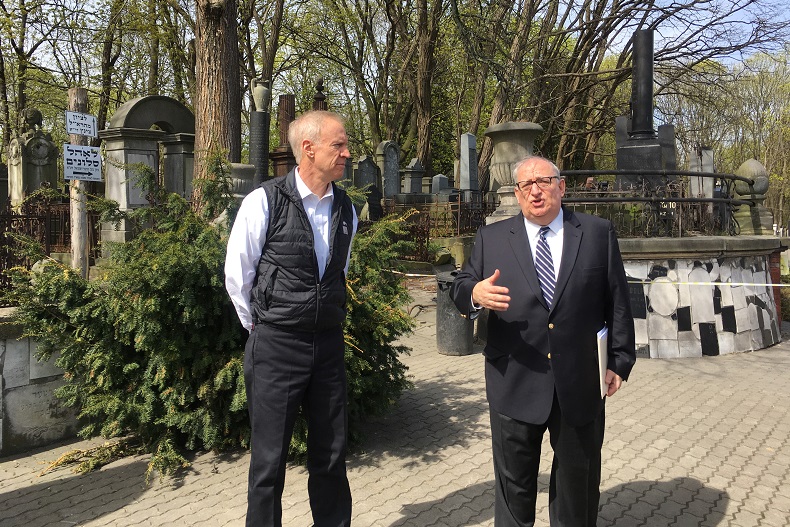
JUF Rabbinic Scholar accompanies governor, state delegation to Warsaw
Abby Seitz
Rabbi Yehiel E. Poupko, JUF’s Rabbinic Scholar, accompanied Gov. Bruce Rauner and a delegation of state business leaders in Warsaw, Poland as they visited the Warsaw Ghetto and other Jewish historical sites of interest in April. The stop in Warsaw was part of an 11-day trade mission through Germany and Poland.
“The Governor took a meaningful block of time to visit these important sites,” Poupko said. “Three million of those killed in the Holocaust were Polish Jews. You can’t grasp the destruction of Jewish Poland-what was there and what was lost-without visiting these sites.”
The delegation visited both the 1944 and 1946 memorials to the Warsaw Ghetto Uprising and laid a wreath at the nearby monument.
In addition to visiting the Warsaw Ghetto, the delegation visited memorials built over the command bunker of the Jewish Fighting Organization, as well as a memorial to the approximately 350,000 Jews deported to Treblinka.
“During the Holocaust, there were the murderers and the murdered, but most were members of the tribe of folded arms. They were bystanders,” Poupko said. “It’s important to visit these sites because public officials are responsible for making sure our society and government is moral.”
Rauner and the delegation also visited Auschwitz during their trip to Poland.
“I think it’s important to the people of Illinois to show solidarity against anti-Semitism,” Rauner told Crain’s Chicago Business .
In April, the governor spoke at JUF’s annual Yom Hashoah (Holocaust Remembrance Day) commemoration in Springfield.
Other stories
-
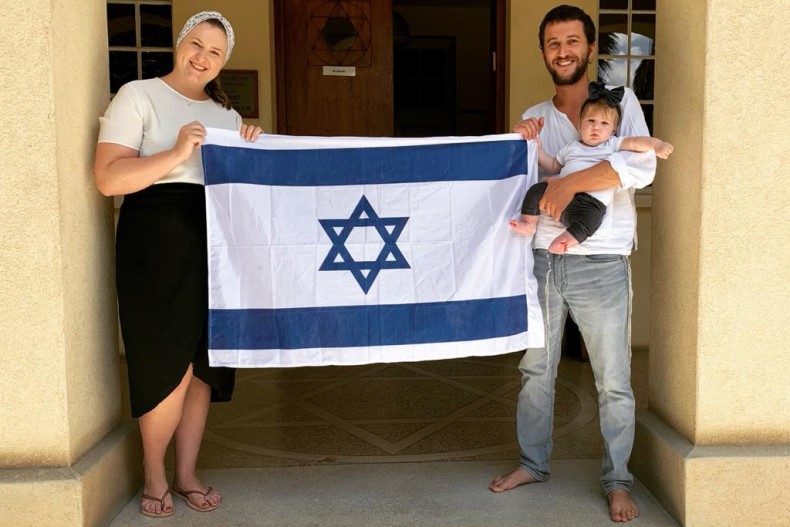
Chicago to Israel to Kenya
A family’s story of living Jewishly on three continents Michelle Cohen World May 28, 2021 Avital, Tzofia, and Netanel Kaszovitz outside their home in Nairobi on Yom HaAtzmaut. When Avital Kaszovitz prepared to be a Modern Orthodox shlicha (emissary) to the Jewish community in Ke
Read more -
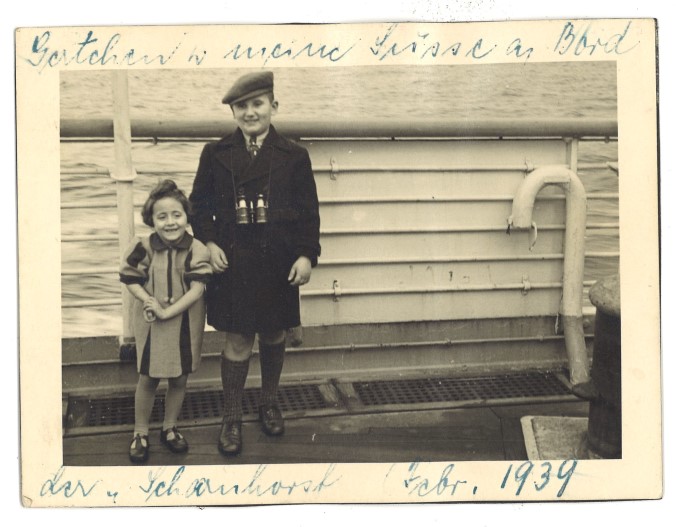
New exhibit spotlights the experience of ‘Shanghai Jews’
Explore a new Illinois Holocaust Museum and Education Center exhibit
Read more -
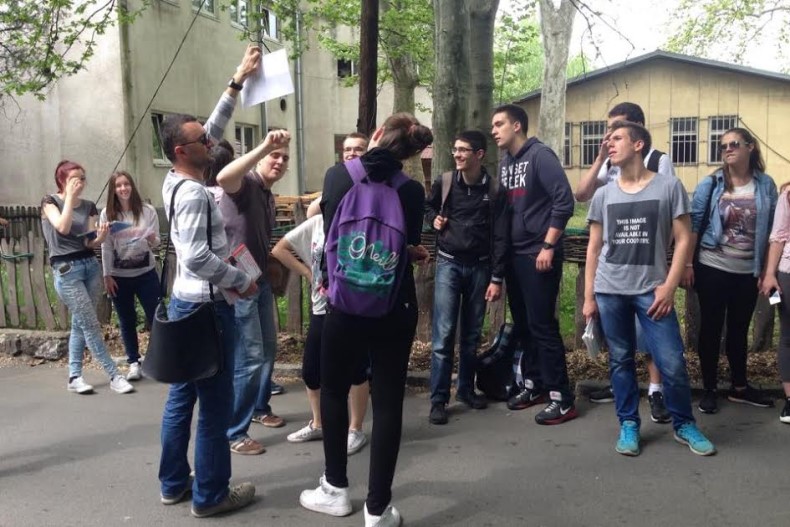
Europe’s brave new teachers of the Holocaust
Teaching the Holocaust in the modern era has its difficulties and rewards.
Read more
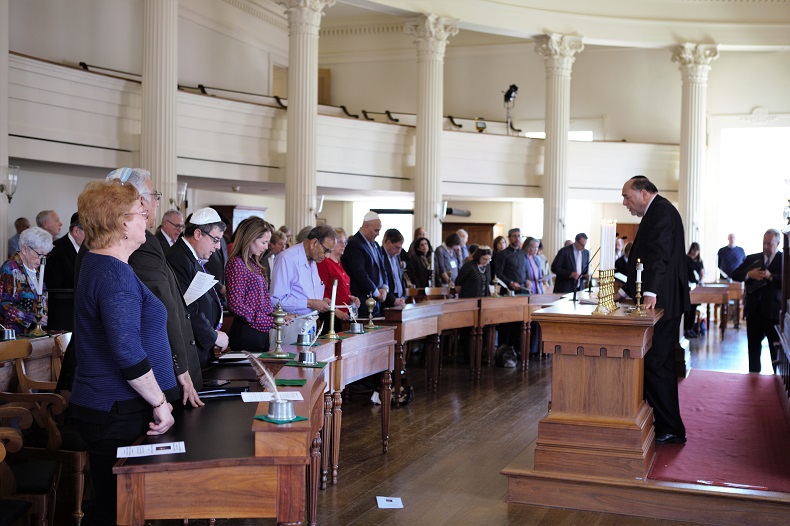
Persistence of Memory: Yom HaShoah observances highlight commitment to “Never Forget”
Jane Charney
Two recent observances – one in Springfield, IL and one in Skokie – guided attendees toward a more comprehensive understanding of what “Never Again” and “Never Forget” mean today. The ceremonies honored the memory of the six million men, women and children murdered in the Holocaust and recognized survivors, partisans and Resistance fighters, righteous gentiles, and other upstanders.
“As we move away from the 20th Century and the number of survivors living among us dwindles, it is particularly important for us to remember that an entire civilization of European Jewry was almost destroyed at the hands of the Nazis and their collaborators,” said JUF Government Affairs Committee Chair David Golder at the Annual Statewide Yom HaShoah observance in Springfield April 12. “We remember and honor every man, woman and child murdered. We honor the survivors who continue to tell their stories and keep the memory alive.”
As in years past, Governor Bruce Rauner reiterated his commitment to ensuring that hate and bigotry have no place in Illinois. He also issued a proclamation declaring the week of April 8-15, 2018, as Illinois Holocaust Remembrance Days. The proclamation urges all Illinoisans to continue to remember the victims of the Holocaust and to honor survivors.
State Rep. Jonathan Carroll reminded attendees that hate still exists today and pledged to work to stop “the cycle of hate that ravages our country.”
“Yom HaShoah will always remain as an important reminder of the devastation and destruction the Holocaust caused not only to Jews like myself, but many other people that didn’t fit the ‘mold.’ Those people who are different. Those people who don’t meet a dangerous standard,” he said.
Holocaust Survivor Ida Paluch Kersz, who was a Hidden Child, shared her experience with the gathering and detailed losing her mother and then being separated from an older sister and a twin brother. She reconnected with her brother more than 50 years later in the mid-1990s.
“I tell my story because I am a living witness,” she said. “So many people don’t believe that the Holocaust happened. But I’m here to say that I lived through it.”
The program also included an invocation by Rabbi Bryna Milkow of Congregation Anshai Emeth of Peoria, Ill.; a benediction by Rev. Susan Phillips of First Presbyterian Church of Springfield; and a recitation of the Mourner’s Kaddish prayer led by Rabbi Barry Marks of Temple Israel of Springfield. Marks lit six memorial candles, each representing one million Jews put to death by the Nazis during World War II as well as 600,000 “righteous gentiles” who helped save Jews, even at great danger to themselves.
Meanwhile, at Sheerit HaPleitah’s 73 rd annual Chicago-area Holocaust memorial service, survivors and their families recommitted to ensuring memory and action against hate go together as they memorialized the victims of the Nazi regime. Sheerit Hapleitah is a coordinating committee of Chicago-area Holocaust survivors’ groups.
“‘Never Again’ means not here and not now, whether it’s hate directed against us or any act of hate committed against any person or any institution in our city and our country. We will not stand idly by as hate tears at the fabric of our great nation,” said Jewish Community Relations Council Chair Bill Silverstein, who represented JUF at the service.
Silverstein highlighted JUF-funded Holocaust Community Service at CJE SeniorLife, which supports and sustains Holocaust survivors through housing, food and medical services. He also spoke about JUF’s many educational programs for children and adults that focus on the lessons of the Holocaust and teach real-life advocacy skills.
Other speakers included Illinois Lt. Gov. Evelyn Sanguinetti; Israel’s Consul General to the Midwest, Aviv Ezra; Skokie Mayor George Van Dusen; and Rabbi Dr. Julian Ungar-Sargon, who spoke about his personal journey and his study of post-Holocaust trauma.
A high point of the service each year is the candle lighting ceremony honoring the six million martyrs, including one and a half million innocent children, who were murdered only because they were Jews. Each candle was lit by survivors and their children and grandchildren, who represent the failure of the Nazis’ ultimate goal.
“We must be relentless in ensuring that the world must know what happened,” said Renee Birnberg Silberman, member of Sheerit Hapleitah’s memorial committee. “Memory is naming the evil, but it is also the capacity to overcome evil.”
Other stories
-
Two local teens win national recognition
Recipients of the annual Diller Teen Tikkun Olam Awards
Read more -
Celebrating six young award winners cultivating the community
Introducing young adult award winners
Read more -
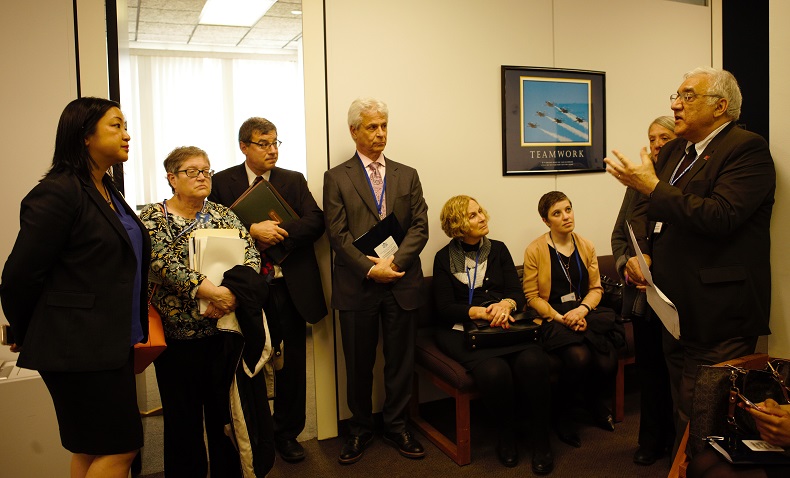
Local agency leaders discuss mental health, gun violence in Springfield
Suzanne Strassberger
More than forty Chicago and Springfield Jewish community leaders and professionals convened at the State Capital on April 11-12 for JUF’s annual State Advocacy Mission.
“This year our message focused on the need to protect the partnership between our agencies and state government and on our steadfast commitment promoting community safety” explained David Golder, Chair of the JUF Government Affairs Committee. “Our credibility as a bi-partisan group and a leader in providing critical health and human services in Illinois means we can help move the needle on the pressing issues impacting our agencies and our community as a whole.”
Over the course of two full days, the delegation, which included representatives from JUF, Jewish Child and Family Services, CJE SeniorLife, Sinai Health System, EZRA, and Jewish Vocational Services, received briefings on new mental health legislation and efforts underway to reduce gun violence, and met state leaders including Governor Bruce Rauner, State Treasurer Michael Frerichs, Senate President John Cullerton, Senate Minority Leader Bill Brady, and Speaker Michael Madigan.
“There are few other groups that can say that they met first with Speaker Madigan and Senate President Cullerton and then immediately march downstairs for a meeting with the Governor” reflected Golder. “This illustrates our ability to build strong relationships with elected officials from both sides of the aisle and highlights our representation as a credible voice and trusted partner.”
Following a luncheon briefing, the participants fanned out in lobbying groups across the State Capital to meet with more than twenty elected officials. After first thanking legislators for passing the hospital assessment and then detailing concerns about the State’s low reimbursement rates, the conversations transitioned into policy strategies to prevent violence and increase community safety by investing in mental health services and passing reasonable reforms to curb gun violence.
Participants then dined with members of the Jewish Caucus including Senators Daniel Biss and Julie Morrison and Representatives Jonathan Carroll, Kelly Cassidy, Sara Feigenholtz, Laura Fine, and Will Guzzardi. The mission formally concluded at noon on Thursday with the Statewide Yom HaShoah Commemoration at the Old State Capital.
“The trip was an eye-opening experience” reflected Susan Segal, CJE SeniorLife Board member and one of the twelve new participants on the mission. “It enabled me to see firsthand the connection and voice the Federation has with legislators, as well as the connection between agency professionals and volunteers who are passionate about advancing Federation’s mission and delivering services to our most precious populations.”
Other stories
-
Two local teens win national recognition
Recipients of the annual Diller Teen Tikkun Olam Awards
Read more -
Celebrating six young award winners cultivating the community
Introducing young adult award winners
Read more -