Women faith leaders urge collaborative activism to address community violence during Jewish Women’s Foundation anniversary event
Christine Sierocki Lupella
Seeking solutions to common problems-even among people who may fundamentally disagree-is key to healing a community besieged by violence. And women can the job done, noted Emily Sweet, executive director, Jewish Community Relations Council and Government Affairs, and past executive director of the Jewish Women’s Foundation of Metropolitan Chicago.
Reflecting on her recent work to address violence, Sweet said, “It is the women of our city-and in many cases women of faith-who are the ones getting it done-organizing, moving the needle and leading the charge.”
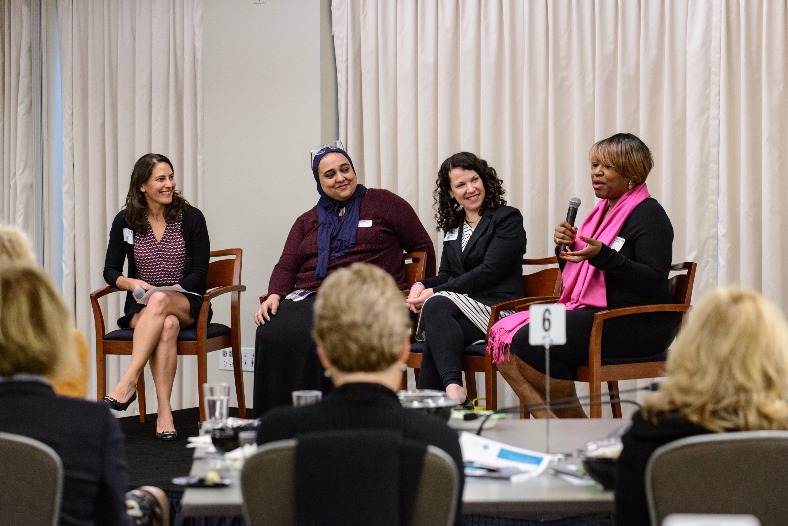
Sweet facilitated a panel discussion, “Faith Leaders on the Front Lines,” with three Chicago faith leaders-one Jewish, one Muslim, and one Christian-during the April 20 Jewish Women’s Foundation Ideas Exchange, part of JWF’s two-day 20 th Anniversary Celebration. Nearly 90 trustees, former executive directors, JWF grant recipients, and staff attended the event.
“We’ve all worked around these issues of violence. Why aren’t we sitting in the same room talking about the same things?” said Eman Hassaballa Aly, Health Communications Manager at NORC at the University of Chicago, Muslim community activist, and Shalom Hartman Institute Muslim Leadership Initiative fellow. “We’ve all been working in our own circles, but now it’s time to make a difference together,” she said.
“We’re mothers, we’re sisters, we’re aunts, we’re surrogate mothers,” said Rev. Dr. Marcenia Richards, executive director, Fierce Women of Faith, an interfaith, multi-racial group working to bring peace to families and communities affected by violence. “We have so many things in common, and that’s what we wanted to build on.”
Rabbi Shoshanah Conover, associate rabbi at Temple Sholom in Chicago’s Lakeview neighborhood, said her congregation has been focused on justice issues-in particular, restorative justice. “(We want to) bring a better way to restore the harm done in communities by violence,” she said.
“Eighty percent of our African American families are raised by women. The men are absent,” Richards said, noting that for this reason, it’s critical for women to lead social change efforts.
People need to spend time nurturing, organizing and setting the tone for their own communities-and they need to learn from other communities by inviting people from other communities to tell their stories, Conover said-even when it’s difficult to engage groups of people with different worldviews.
“Instead of skirting the issue (we need to) be able to have some of these conversations,” Conover said. “More often than not we do find ways to move our bigger agenda forward.”
Aly said some Muslim groups will not cooperate with Jewish organizations and causes because of fundamental disagreements about Israel-and noted that she personally does not support the Boycott, Divestment and Sanction movement.
“What I’ve told these groups is, ‘The table is huge. There’s plenty of work to do, and the work is going to be done. Sometimes you have to put some beliefs aside…in working together on those (common) issues, you’ll find you can come together,'” she said. “We need to be intolerant of intolerance.”
“I try to get people to agree to disagree,” Richards said. “It’s a moral issue. It’s about the life of children.”
“The responsibility is always on somebody to do it,” Aly said. “I can sit back and let someone else do it, but if I want (something) for myself I have to create the space around me that’s going to work for me… The bonus is that it works for everybody else, too. That’s the kind of stuff that gives me hope.”
Building relationships with individuals from different backgrounds and groups makes it possible to bring them together to work on common concerns. Indeed all of the panelists had been connected over the past year as a result of various programs and events convened by the JCRC and JWF that were aimed at building and organizing a multi-faith coalition of women to address violence in Chicago.
“The only way that we can make an impact in Chicago is by working together” Richards said in her closing remarks.
The JWF Ideas Exchange included additional panel discussions facilitated by past JWF executive directors and featuring JWF trustees on the front lines of feminist issues and current JWF grant recipients. Future events include a Leadership Luncheon on July 20 in collaboration with the JUF Women’s Division, and Marketing the Movement, a stakeholder workshop, on Nov. 14.
For information on JWF and these future events, visit www.juf.org/jwf .
Since 1997, the Jewish Women’s Foundation, an independent project of the Jewish United Fund/Jewish Federation of Metropolitan Chicago, has been seeking to expand and improve opportunities and choices in all aspects of Jewish women’s and girls’ lives through strategic and effective grantmaking. The Foundation empowers Jewish women as leaders, funders, and decision-makers.
Other stories
-
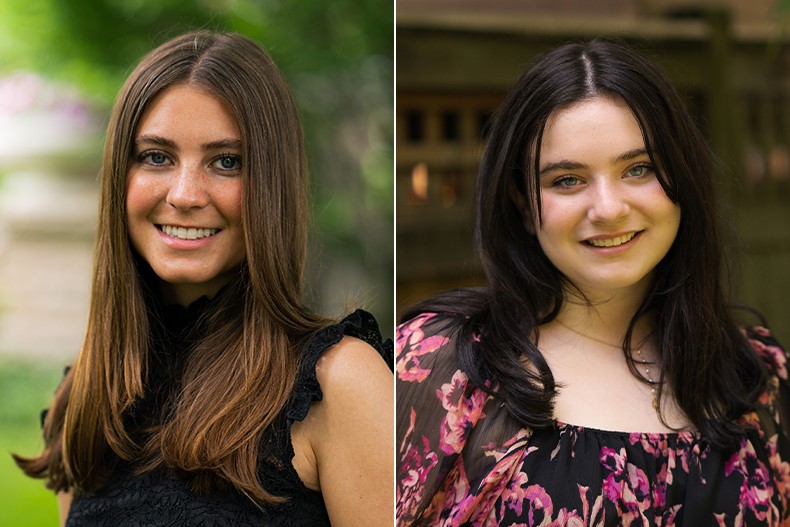
Two local teens win national recognition
Recipients of the annual Diller Teen Tikkun Olam Awards
Read more -
Celebrating six young award winners cultivating the community
Introducing young adult award winners
Read more -
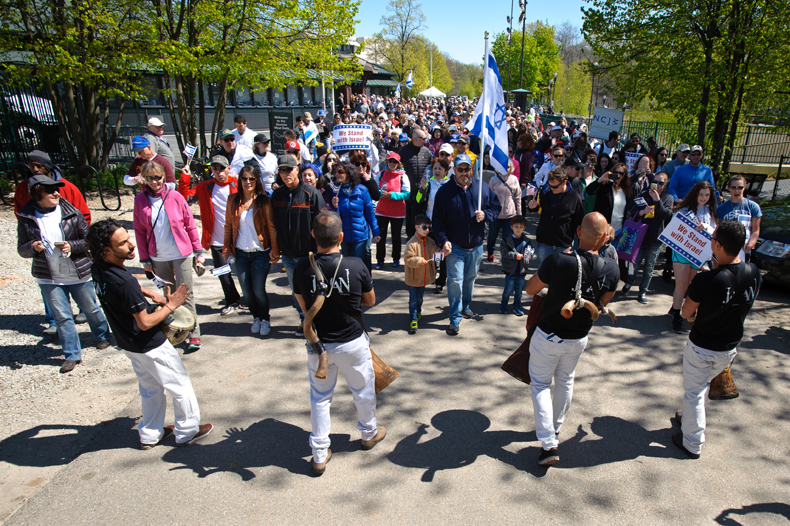
Thousands gather to celebrate, stand with Israel at JUF’s Israel Solidarity Day
More than 4,500 members of Chicagoland’s Jewish community came out on Sunday, May 7 to celebrate and support Israel at JUF’s Israel Solidarity Day, which raised funds for at-risk Israeli youth.
Highland Park’s Ravinia Festival became a playground of festivities for the whole family as people of all ages joined together for food, music, crafts, and a three-mile Walk with Israel. The event featured performances by the Jamman Drum Circle, Mama Doni and the Nefesh Mountain Band, and headliner Idan Raichel, a world-renowned singer, songwriter, and keyboardist. Also new this year was an Israeli Market Place and Art Festival, with unique, handmade Judaica, jewelry, and more. The atmosphere was warm and welcoming, drawing a cross-section of Israelis, Russian-speakers, suburban and city-dwellers alike.
“It is important that all of us stand up and speak out on behalf of the State of Israel,” said Dana Hirt, event chair, during the opening ceremony. “We can be proud of Israel’s many accomplishments, from settling Jewish refugees and immigrants from across the globe, to helping poor African nations improve their agricultural practices. We can also be proud of a strong and stable democracy in an increasingly hostile world, and as the United States’ greatest ally in the Middle East. We can also be proud of this community’s dedication to the welfare of our sisters and brothers living in Israel.”
Aviv Ezra, Consul General of Israel to the Midwest, also spoke at the event, welcoming all on behalf of the State of Israel. Cantor Pavel Roytman, cantor at Beth Hillel Congregation B’nai Emunah in Wilmette, led the community in singing both the U.S. and Israeli national anthems. Several public officials also attended the event to show their support, including: Illinois Congressman Brad Schneider; Illinois State Treasurer, Michael Frerichs; Illinois State Representative Lou Lang; Illinois State Representative Scott Drury; Mayor of Highland Park, Nancy Rotering; and Highland Park City Councilman, Alyssa Knobel.
Children’s activities throughout the afternoon included arts and crafts, face-painting, and an acoustic performance by Mama Doni.
Teen activities included a reunion for Ta’am Yisrael, JUF’s signature Israel trip for Chicago area eighth graders, as well as soccer, crafts, and a virtual reality exploration of Israel. Area youth groups and other teen organizations were also on-site to educate teens and parents about opportunities for local Jewish high schoolers.
“We love Israel, and wanted to come out and support the Jewish community,” said Dana Chesler, who attended the event with her daughter. “I’ve been coming for ten years. It’s so festive, and nice to be all together as a community.”
“Seeing the many generations out enjoying and celebrating Israel reminded me of the all-encompassing work JUF does to bring the Jewish community together,” added Michael Oxman, past president of JUF’s Young Leadership Division.
Gifts raised through the event will help 6,500 at-risk youth in JUF’s Partnership Region of Kiryat Gat-Lachish-Shafir. For more information on this partnership, visit www.juf.org/p2g .
See photos from the event here.
Other stories
-
Two local teens win national recognition
Recipients of the annual Diller Teen Tikkun Olam Awards
Read more -
Celebrating six young award winners cultivating the community
Introducing young adult award winners
Read more -
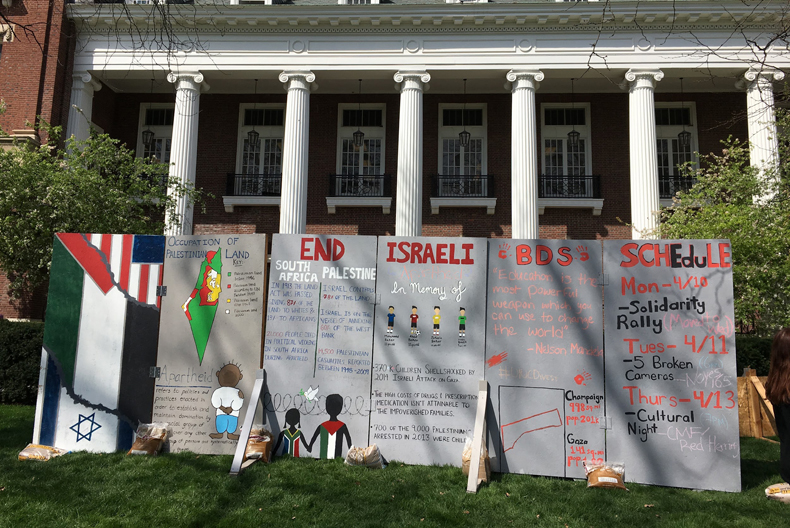
An open letter to the University of Illinois Board of Trustees on the BDS movement
Jack Cadden
Jack Cadden, a freshman at the University of Illinois at Urbana-Champaign, wrote the following open letter to the university Board of Trustees as part of a class assignment.
Dear Board of Trustees,
My name is Jack Cadden. I am a freshman here at the University of Illinois studying Political Science and trying to pursue a Business minor. I was born in Illinois and have lived in the state my whole life. I grew up in Glencoe, a northern suburb of Chicago, and graduated from New Trier High School where I was a minority in terms of my religion — Judaism.
I do not wear a kippah, or any traditional Orthodox clothing; I resemble your typical white suburban kid. I am a member of a Reform synagogue; I was bar mitzvahed at age 13; I go to temple for the High Holidays; I go to a seder for Passover. I am part of the Jewish community, but in no means would I be considered a deep follower of the religion. However, when I stepped on this campus after winter break, I felt threatened because of my religion due to the pickup of the BDS movement.
Two months ago, in your annual spring referendum, you allowed a question that turned heads not only here in Champaign-Urbana, but nationwide in the Jewish community. The following was on question four: “This referendum calls upon the Board of Trustees to pull its investments from companies that normalize, engage in or fund recognized violations of human rights, including those of the Palestinian people and all people marginalized on the basis of race, ethnicity, religion, sexuality, gender, class, and ability.”
So let me break this down. A group of students called on you to sever your ties with corporations that also do business with countries who commit human rights violations. However, this group only called out one country — Israel. See, when you allowed these students to include “…including those of the Palestinian people…,” you not only gave this cause a vital rebirth, but jeopardized the safety and security of Jewish students on campus.
Now, let me explain the BDS movement and why it is flawed. BDS stands for Boycott, Divestment and Sanctions. The goal of the campaign is simple: to criminalize and delegitimize the State of Israel, through calling on universities to withdraw funding from companies who do business with Israel.
Unfortunately, we live in a world where human rights are abused in several countries and across several continents. With this movement only narrowing in on Israel, we should question whether this campaign is really about human rights, not on Israel’s right to exist. Wouldn’t it make sense that if the campaign was actually focused on human rights they would be mentioning the evils of the Islamic State or the violations in countless countries across Africa? This movement is not about protecting human rights around the world, it is about the push for anti-Zionism, the idea that Jewish people do not have a right to political sovereignty in a Jewish state.
To further this argument, let’s talk about what constitutes human rights. The United Nations established the “Universal Declaration of Human Rights” at the U.N. General Assembly in Paris back in 1948. Being three years removed from World War II and finding the barbaric remains of the Nazi attempt to exterminate Jews, Gypsies, and other minorities, the world knew they needed a piece of legislation stopping those horrors from ever happening again. The result was 30 articles establishing what it is to be human and the liberties, freedoms, and rights which come with being a human.
In the first article, the declaration states, “All human beings are born free and equal in dignity and rights.” The key word I want you to look at here is “all.” Rights are either guaranteed for all or they are not rights at all; every human on earth is guaranteed these liberties. Therefore, when your referendum allowed the question to only call out Israel, you allowed this campaign to trick you into thinking this is about human rights when it is simply not.
To be honest, however, I am not going to ignore the elephant in the room when talking about Israeli-Palestinian relations. The main accusation of the BDS movement has been the claim that the Israeli government’s settlement building in the West Bank and East Jerusalem violates the Palestinian’s right to their land.
Settlement building is an issue, which is why the U.N. Security Council voted 14 to 0 this past January in favor of condemning Prime Minister Benjamin Netanyahu and the Israeli government for the expansion of settlements. The U.S. even refrained from vetoing the resolution, breaking a longtime commitment to defend their ally in the U.N.
With President Trump in office, there has been a new push to bring the two parties together for peace talks, rather than rapid settlement-building. Netanyahu even “…shared information with the Israeli media on his intention to slow settlement activity to appease Trump.” This proves that the Israelis are willing to make compromises as their main goal is to establish peace in the region.
It might seem fair for the BDS movement to campaign against the rapid settlement building as much of the land is occupied by Palestinians. However, as Rabbi Jonathan Sacks, puts it, “The Jewish connection with the land of Israel goes back roughly twice as long as the history of Christianity; three times as long as the history of Islam.”
So although much of the land is currently occupied by the Palestinian people, the Jewish people have had a presence in this territory for a much longer tenure. Therefore, when the BDS movement notoriously displays images of Israel’s “land grabs” in some of the images below, the claim is dangerously flawed because of a Jewish presence in the territory, dating back thousands of years longer than the Palestinians. How can Israel be a colonial state when the lands they are building settlements on have been occupied by Jewish people longer than anyone else that have lived there? Well, the answer is easy, Israel is not a colonial state.
I also want to display how anti-Zionism is just another form of anti-Semitism. Essentially, we can define anti-Semitism as the idea that a group of people, in this case the Jewish people, are banned from freedoms, liberties, and rights that other members of the population or nation bear.
Anti-Zionism is the idea that the Jewish people should not have a right to their own country among the other countries that make up our world. The only difference between the two ideas is that one is discriminating against the individual in the population while the other discriminates against the population within the international community of countries. So although I am not Israeli, and the anti-Zionist movement may not seem to personally affect me, it is clear that the term is intertwined with anti-Semitic beliefs. Therefore, when walking on the quad and seeing the protesting of “human rights” solely against the Jewish State, it is hard to not feel the underlying discrimination that is being displayed.
The counter from the other side of the aisle is that anti-Semitism goes both ways. Alla Tartir, a Palestinian who now works in Geneva, Switzerland on the topic of Middle Eastern Relations, traveled to Israel in the summer of 2015 where he has since reported testimonies from Israeli citizens about Palestinian people such as, “…I have Palestinian friends but would never trust them.” This comment is one of the few Tartir includes which are of a discriminatory nature. However, there is no known campaign going on at the University of Illinois whose sole objective is to argue against a country’s right to existence based on discrimination. Yes, it is reasonable and fair that an Israeli citizen would be skeptical of their Palestinian neighbor as the region has seen unstopped violence initiated by the Arab alliance since the 1947 UN Assembly establishing Israel.
The BDS movement is flawed and is rooted in anti-Semitism. It was tough to stand witness to prospective students and their parents walking on the quad last week past BDS movement posters, one of which read “Israel Nuked WTC 9/11.” This hateful manner is not normal and has no place in the college community. Why should our school even be involved in this? This is a political issue, this is a non-partisan university, am I missing something here? The posters, which were allowed by the university registrar’s office last week during one of the Jewish religion’s most sacred holidays, Passover, were arguably slander.
For about 80 years, the Israeli-Palestinian conflict has gone on with no apparent stoppage of violence. As an American Jew, it is my goal to one day see peace in the region. The BDS movement makes no such attempt at returning leaders from both sides to talk peace. Instead, it provokes hate toward Israel and Jewish people claiming we stand bystander to these horrid human rights violations. Israel and the Jewish people have been the only ones to obtain a lasting, effective country in the region. As the governing board of student life, do not let this movement trick you. This is simply just the latest efforts by anti-Zionists at ending the only effective democracy in the Middle East.
Sincerely,
Jack Cadden
Other stories
-
Two local teens win national recognition
Recipients of the annual Diller Teen Tikkun Olam Awards
Read more -
Celebrating six young award winners cultivating the community
Introducing young adult award winners
Read more -
DePaul students explore Israel through fashion, food and learning
Jonah Brandhandler
At most colleges, April is the time to wrap up the academic year, say goodbye to graduating seniors, and support students as they prepare final exams. Students at DePaul University are fortunate (though some may disagree) to be on the quarter system, so they don’t finish school until the middle of June. DePaul Hillel is using the spring quarter to focus on Israel education and advocacy. In the month of April alone, we’ve had seven different Israel-related events reaching over 200 students.
We kicked off the third-annual Chicago Israel Week with 90 students through Shabbat dinner at Silverstein Base Hillel. We worked with students to be “table captains” and trained them to help lead discussions during dinner on topics related to different aspects of Israeli society. Afterwards, students read poems and short stories by their favorite Israeli authors and spoke movingly about their personal connections to Israel in a poetry slam style setting. Students left Shabbat with more knowledge and curiosity about Israel, and for many, a stronger desire to return to Israel or sign up for Birthright.
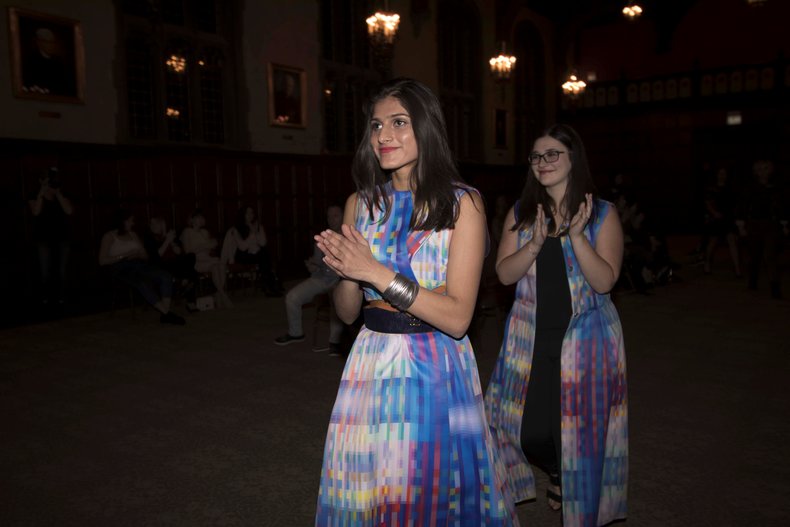
Chicago Israel Week continued at DePaul on Good Deeds Day, when Jewish and non-Jewish students came together to make school supply kits for local kids in need. The highlight of the week on campus, however, was undoubtedly our Israeli fashion show. We brought in Tali Kogan of Tel Aviv Couture. Students modeled her client Hidas’ work on the runway. Hidas’ clothes are unique because they were all designed in collaboration with an architect from Gaza. Kogan talked about fashion as an art form that can break down barriers between different groups of people. Chicago Israel Week events were created and planned by DePaul student leaders who intern at JUF’s Israel Education Center and Hillel’s Israel Fellow, Itiya Schnall.
Israel programming on campus did not slow down after Chicago Israel Week. In a lecture co-sponsored by the History Department and the Center for Religious Culture and Community and organized by DePaul’s Israel interns, Israeli law professor Amos Guiora shared his research on the bystander effect in the Holocaust, particularly from his unique perspective as the only child of two survivors. To commemorate Yom HaShoah, Hillel hosted two Holocaust survivors on campus to share their stories. A few days later, on Yom Ha’atzmaut, we celebrated Israel’s independence in the most Israeli way possible — with a barbecue, music, and lots of fun!
More opportunities for students to engage with Israel before the school year ends are in the works. Our events throughout April and the 200 incredible students who made them possible show just how vibrant and passionate the DePaul Jewish community is when it comes to Israel on campus.
Jonah Brandhandler, a shawarma connoisseur, is Metro Chicago Hillel’s engagement associate serving DePaul University.
Other stories
-
Two local teens win national recognition
Recipients of the annual Diller Teen Tikkun Olam Awards
Read more -
Celebrating six young award winners cultivating the community
Introducing young adult award winners
Read more -
Jewish DNA expert to speak on genealogy and connecting with family
PEGGY MORROW
If you’re curious about your genealogy, don’t know where to start investigating your family’s roots, or have reached a research dead end, DNA testing may be the answer. DNA testing is used by genealogists to learn “where they came from” and to confirm or disprove family relationships. It involves sending in a cheek swab and receiving information about individuals that match your DNA patterns as well as your ethnic and geographic origins.
You are invited to learn all about DNA testing at the Jewish Genealogical Society of Illinois (JGSI) www.jgsi.org meeting on May 21, featuring Family Tree DNA Founder and CEO Bennett Greenspan (www.familytreedna.com), who will present “General DNA and Genealogy” followed by “DNA of the Jewish People.”
There is a lot of activity in the area of DNA testing and Jewish genealogy including special interest groups, reuniting families separated by the Holocaust, and genetic studies.
JewishGen (www.jewishgen.com ) offers databases, research tools, educational courses, an online community, and other resources. On the topic of DNA, it hosts geographic, surname, and heritage projects.
The DNA Shoah Project is building a global genetic database of Holocaust survivors, their children, and grandchildren in an attempt to match displaced relatives, provide Shoah orphans with information about their biological families and eventually, when the database has reached sufficient size, assist European governments with the identification of Holocaust-era remains that continue to surface.
A DNA study found that Ashkenazi Jews started from a founding population of about 350 people between 600 and 800 years ago. The genetic link is so close that that most European Jews are estimated to be at least 30th cousins. Studies also show which genetic diseases those of Jewish heritage are more likely to carry than the general population and that the children of Holocaust survivors have a greater likelihood of stress disorders.
Greenspan caught the genealogy bug early, completing his first family tree around age 12. Greenspan’s attempts to prove a genealogical theory prompted him to contact Dr. Michael Hammer at the University of Arizona. Greenspan convinced Hammer to use a Y-DNA test for genealogy, when the test proved his theory, he decided to start Family Tree DNA. Greenspan will present two topics and have DNA kits for sale.
In “General DNA and Genealogy,” he will address the use of DNA testing to enhance genealogical research and explain the types of DNA tests and their applications, outline the basics of genetic genealogy, and discuss why family history researchers should test their DNA.
During “The DNA of the Jewish People,” Greenspan will discuss the genetic profiles typically found among Jews, including Ashkenazim, Sephardim, and Mizrahim as well as the profiles of the Europeans among whom Jews have lived for the past 2,000 years. Some say the Ashkenazim did not originate in the Fertile Crescent region of the Middle East but instead are descendants of Khazars who converted to Judaism in Eastern Europe. But what do the genetics say? In this talk, Greenspan revisits the genetic ancestry of Jews.
JGSI, established in 1980 and now with over 280 members, helps members collect, preserve, and perpetuate the records and history of their ancestors and serves as a resource for the worldwide community to research their Chicago-area Jewish roots. It hosts monthly meetings with speakers, assistance using research materials in the over 800-volume library, and volunteers at computer help stations. JGSI publishes an informative newsletter and holds beginners’ workshops. Its website includes a guide to Chicago resources, cemetery data, memorial plaques, and much more. Members have access to additional databases, workshop recordings and handouts, and an online members’ discussion forum.
“General DNA and Genealogy” and “DNA of the Jewish People” will be presented by Bennett Greenspan, founder and CEO of Family Tree DNA, on Sunday, May 21, at Temple Beth-El in Northbrook. Registration is at 12:30 p.m., the program runs from 1:00 – 4:00 p.m., and is free and open to the public. To learn more about this and future meetings, as well as the many resources available to genealogists, contact the Jewish Genealogical Society of Illinois at www.jgsi.org, at (312) 666-0100, or at [email protected].
Peggy Morrow is a marketing consultant in Chicago’s northwest suburbs who started researching her family’s roots 10 years ago after yet another Thanksgiving dinner conversation wondering where the family came from. She is a JGSI Board member and editor of its newsletter “Morasha.”
Other stories
-
Two local teens win national recognition
Recipients of the annual Diller Teen Tikkun Olam Awards
Read more -
Celebrating six young award winners cultivating the community
Introducing young adult award winners
Read more -
Fifty years ago, the 1967 Six-Day War redefined not just the map of the Middle East — expanding Israel’s borders and reunifying Jerusalem — but also the political, economic and social course of the region for decades to come.
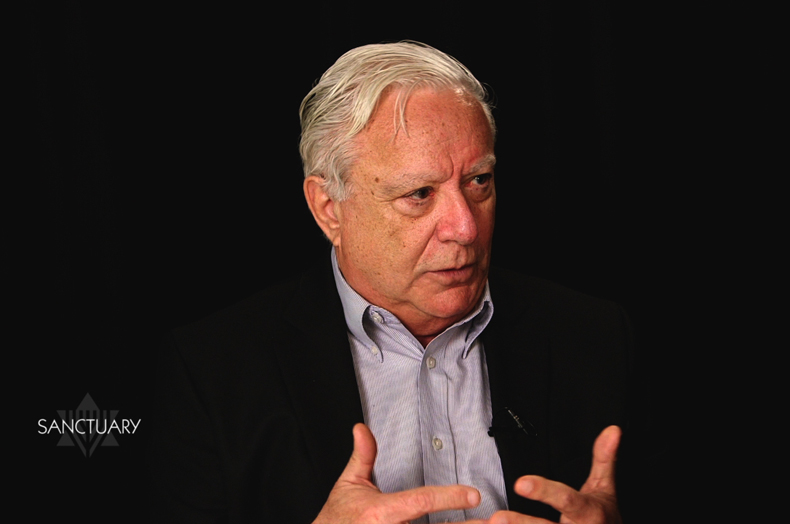
On the next episode of “Sanctuary,” the quarterly public affairs program of the Jewish United Fund and the Chicago Board of Rabbis, JUF’s Aaron Cohen talks with Prof. Elie Rekhess about the incredible impact those events have had, and continue to have, on the evolution of the Jewish State and the region.
Rekhess is Northwestern University’s Crown Visiting Professor in Israel Studies and one of Israel’s leading experts on Jewish-Arab relations and the Arab minority in Israel.
This episode of “Sanctuary” will air at noon every Sunday in May on ABC’s Live Well Network, 7.2. Check local cable listings for the channel. The program also can be viewed on the JUF website here .
“Sanctuary” is a joint production of the Jewish United Fund of Metropolitan Chicago and the Chicago Board of Rabbis, in cooperation with ABC7.
Other stories
-
Two local teens win national recognition
Recipients of the annual Diller Teen Tikkun Olam Awards
Read more -
Celebrating six young award winners cultivating the community
Introducing young adult award winners
Read more -
If you’ve ever driven a car in Israel you already know that betting at Las Vegas roulette or entering the lion’s cage doused in barbecue sauce are safer endeavors. It’s not exactly that Israelis don’t know how to drive-they can operate tanks and fighter jets and huge navy ships, and for the most part can operate a family sedan; that’s not the problem. Rather, the issue is one of attitude, or as is commonly described in Yiddish: c hutzpah.
The Israeli driver may be divided into roughly four typologies: the most common is “The Road Owner.” Typically, this Israeli feels that, as a somewhat regular taxpayer and someone who has given three years of his life to the military, he has thereby purchased the national road system and may do with it as he wishes. Ownership of Israeli streets and highways entitles the local driver to zoom by at supersonic speeds, overtake other road owners on the right and, if necessary, use the sidewalk, and generally drive with no regard to the laws of civil society, physics, or the penal code.
The second type of Israeli driver is known as the “5 mph Enforcer”-that quaint driver who believes that any speed over 5 mph is dangerous both to his vehicle and to his own safety. Typically, this driver’s car will be over 15 years old and may be recognized by its strict adherence to the left (supposedly passing) lane on major highways. The 5 mph enforcer will glare at anyone overtaking him and will consider it a personal affront if anyone within a radius of a mile uses his horn.
The third type of Israeli driver is the “Zig-Zagger.” Intuitively, he believes that the shortest route between any two points is a zig-zag with sharp turns and quick changes of direction. As an astute mathematician, he will calculate the relative speed of every car at a red light stop in order to determine which lane will move faster once the light turns green. As a seasoned Zig-Zagger, he will weave in and out of traffic, missing other cars by fractions of inches, in order to gain a full car length over the course of a three-mile stretch of road. In the process, he will have imperiled a hundred other drivers, but as a road owner himself, he will pay no attention to them.
The fourth type of Israeli driver is the “Multi-Tasker.” In terms of driving skills, this driver considers himself second only to Mario Andretti. In fact, he is so adept at handling his vehicle that he can place his left foot on the dashboard, send text messages with his right hand, and make obscene gestures at passersby with his left. His eyes will be riveted to the rearview mirror so he can ascertain that he is as handsome as he was when he left his home in the morning. With all those tasks being handled, it is probably understandable that the Multi-Tasker cannot signal before turning or indeed keep to one lane for more than two or three seconds.
And then, in a category unto himself is the ubiquitous Israeli taxi driver. Much like Darwin predicted in The Origins of Species , the local cabbie is the evolution of all types of drivers (except for the 5 mph Enforcer), forged through years of road rage into one mega-driver, Israel’s solution to Tokyo’s Godzilla in sheer destructive capacity. He owns the road and will let nobody forget it (in Hebrew, Arabic, Russian, and even English). He will drive all other road owners off his turf without batting a lash. He will zig-zag in a way that can only be described by other drivers as a haphazard, chaotic trajectory of something that only incidentally resembles a motor vehicle. And he will do all that while texting with one hand and holding in his other a dripping heap of shawarma in a humid wrap that may explode at any instant, scattering bits of lamb, tomato, cucumber, and tahini all over his clothes and panicked passenger.
This is Israel’s secret weapon against Iran, against Hamas, against Hezbollah, and against ISIS: if worse comes to worst, Israeli drivers will be unleashed upon the streets of our enemies, wreaking confusion, havoc, and destruction. At the very least, let them suffer from our taxi drivers-after all, why should we suffer alone?
*Disclaimer: though I only used the male pronoun, proof of full Israeli equality is that our women are “just as good” at driving as Israeli men, and driving skills are equally suspect among our Jewish and Arab citizens.
Ofer Bavly is the director general of the JUF Israel Office.
Other stories
-

Mother’s Day, Father’s Day, and the Jewish way
Let us pause and consider what it means for us to truly honor our parents
Read more -
Each time we study Torah, we experience the revelation
The mystical tradition of Judaism that lifts up the number 600,000 from the Exodus
Read more -
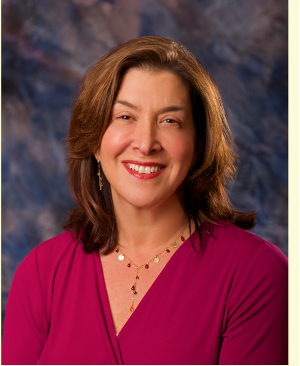
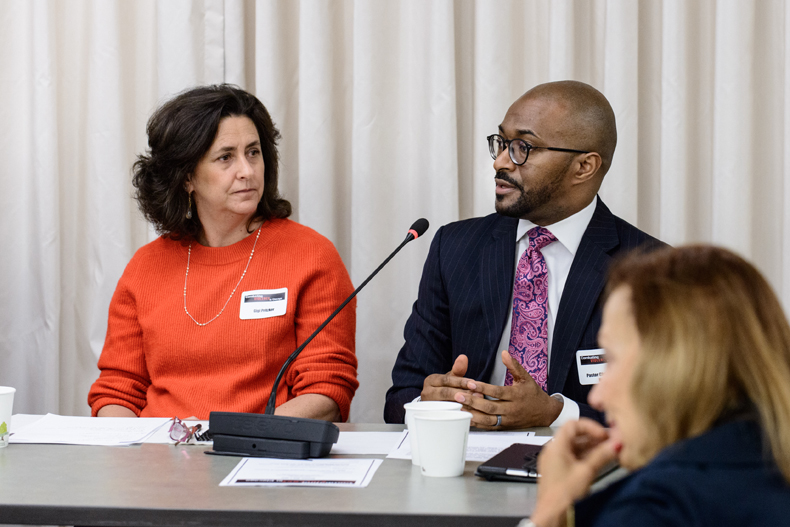
When it comes to finding solutions for gun violence in Chicago, activists and researchers are promoting collaborative and holistic approaches. Drawing from their experience on the ground in Chicago’s most affected neighborhoods, these leading experts spoke to nearly 100 Jewish philanthropic and community leaders on May 1 at “Combating Violence in Chicago.”
Co-sponsored by the Center for Jewish Philanthropy, JUF’s Jewish Community Relations Council, and the Jewish Women’s Foundation, the summit featured Gigi Pritzker, president of the Pritzker Pucker Family Foundation; Dr. Sharon Holman, president of the Sinai Urban Health Institute at Mt. Sinai Hospital; Pastor Chris Harris Sr., founder and CEO of Bright Star Community Outreach and The Urban Resilience Network (TURN) Center; and Teny Gross, executive director of the Institute for Nonviolence Chicago.
The idea for “Combating Violence in Chicago” came from a commitment to educate and engage Chicago’s Jewish community on the issue of community violence and how it affects the most vulnerable Chicagoans. The goal was for attendees to gain a deeper understanding of effective strategies being used to combat violence in the city, said JCRC Chair David T. Brown, who emceed the event.
“We hold firm to our Jewish values that teach us we are all responsible for one another,” said JUF President Dr. Steven B. Nasatir in his opening remarks. “And we must remember that if any one child is not safe, then none of our children are safe.”
Nasatir also announced that the Federation will soon launch a multi-pronged systemic violence prevention program, formed with the assistance of Pritzker and her family foundation and in partnership with United Way, Sinai Health System and the Institute for Non-Violence Chicago. The program will be funded through a trust connected to the Federation.
Beyond stories of individuals affected by the trauma of violence, the speakers focused on community-based solutions, which require a new way of looking at the problem. The speakers agreed that gun violence is a symptom of a systemic lack of resources for the affected neighborhoods.
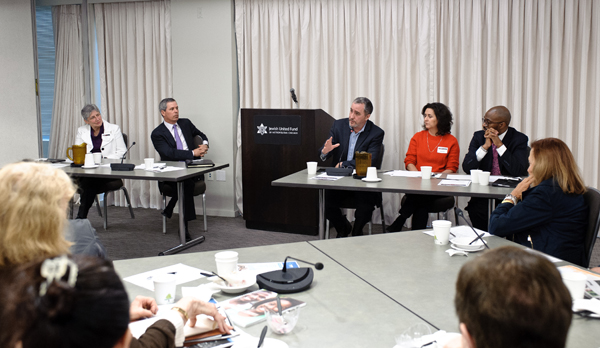
Panelists (left to right) Dr. Sharon Holman, JCRC Chair David T. Brown, Teny Gross, Gigi Pritzker and Pastor Chris Harris Sr. (Photo by Robert F. Kusel)
“It will take our whole city to combat this problem,” said Pritzker, whose foundation focuses on supporting innovative and collaborative approaches to urban problems.
Holman presented findings of the Chicago Gun Violence Research Collaborative, a group of academics and organizations processing data and drawing conclusions for policy and action recommendations. One of the most striking data points, she said, is the nearly 40 percent rate in post-traumatic stress disorder among residents of the city’s most violence-stricken neighborhoods, located primarily on the South and West sides of Chicago.
That’s four to 10 times higher than in neighborhoods without shootings or where shootings are rare.
The Sinai Urban Health Institute, which houses the Collaborative, engages the entire community to figure out what solutions might work.
“Solutions need to be driven by the community and have to be responsive to the community’s needs,” Holman said. “All sectors — law enforcement, healthcare, education, etc. — must be in involved in comprehensive solution-building through a sustainable, smart and cost-effective approach.”
The idea for Harris’ TURN Center came about following the pastor’s trip to Israel in 2012. While there, he encountered NATAL, a program that provides psychological counseling to victims of terror. The TURN Center employs the NATAL model with a twist: It trains faith leaders in counseling techniques to create a safe space for those with mental health issues related to surviving or witnessing violence.
So far, 60 faith leaders have participating in the trainings provided by NATAL staff, who spent five weeks in Chicago in late 2016.
“While we always say that community-based solutions have to be by us and for us, it doesn’t have to be just us,” Harris said.
To that end, TURN Center partners with Northwestern and University of Chicago hospitals as well as with the United Way to provide counseling, parent education, advocacy, and workforce development and mentoring.
Harris encouraged attendees to engage with organizations already working on solutions and to advocate for a more equitable allocation of resources to vulnerable neighborhoods.
For Gross, his involvement in violence prevention has roots in Israel, where he grew up as a grandchild of a Holocaust victim. He served in the Israel Defense Forces and then turned to the peace movement before immigrating to the United States as a student.
The Institute for Nonviolence Chicago follows on the heels of similar projects in Boston and Providence, Rhode Island. The Institute focuses on street and school outreach, and building strong relationships with high-risk individuals and community stakeholders to defuse and de-escalate conflicts.
Working primarily in Chicago’s Austin neighborhood, Gross and his team respond to shootings within one hour of being notified, provide individual case management, collect and evaluate data, and advocate for victims of violence while working to reduce retaliatory violence.
“Violence is a tool we cannot control,” he said. “We can unleash violence but we can become slaves to it.”
Working with a network of partners, including law enforcement and community-based anti-violence groups, Gross hopes to change the environment in Austin and create a consistent, positive anti-violence culture.
The speakers also shared other ways to get involved beyond supporting existing efforts. Among them are attending open listening sessions being held by Sinai Urban Health Institute as well as joining peace-building faith community efforts.
“The issues are longstanding and systemic,” Brown said. “The Jewish community needs to stand up for how we can invest in the entire Chicago community and collectively make a difference.”
Jane Charney is the director of domestic affairs at JUF’s Jewish Community Relations Council.
Other stories
-
Two local teens win national recognition
Recipients of the annual Diller Teen Tikkun Olam Awards
Read more -
Celebrating six young award winners cultivating the community
Introducing young adult award winners
Read more -
Few things impact a family more than the death of one of its members. For many families, the loss of a loved one can lead to a heightening of old conflicts creating stress and strife. At a time of deep pain, family members often feel they cannot turn to each other for solace. But, it is also possible for families to grow together through the experience of loss.
On May 18, the Jewish Healing Network and The Lauri S. Bauer Foundation for Sudden Loss will present the 5th Annual Conference on Help, Healing and Hope after Loss. This year’s conference will feature Janice Nadeau PhD, who will speak about Grief and the Family: Finding Balance after Loss. Dr. Nadeau is a psychologist and former hospice nurse who has spent over 30 years working with families through end of life issues and loss. In addition, Dr. Nadeau experienced the death of her husband and adult daughter in the same year, making her an especially empathic helper. The conference is an opportunity to bring together individuals, families, mental health practitioners and clergy to gain support from each other, and learn ways to better navigate the mourning process.
Dr. Nadeau focuses on grief and the family utilizing a unique teaching tool, her Nadeau Family Mobile TM. This three-dimensional mobile is a visual representation of the family as a system and the impact of loss on the entire system. Dr. Nadeau explains that each family member experiences their loss differently, but as a unit they can learn to survive the loss, and actually thrive and grow closer. Dr. Nadeau is an engaging, warm presenter who sprinkles her presentation with a deep sense of compassion and humor reminding us of the deep humanity and growth that can come from dealing with loss.
The 5th Annual Lauri S. Bauer Conference on Help, Healing and Hope after Loss will be held on Thursday, May 18, 2017 at the Doubletree by Hilton Hotel, Skokie. Please join us for a reception at 7pm, followed by the program at 7:30 pm. The event is free, and open to the community. Register today
“Families Making Sense of Death: Professional and Personal Implications,” a workshop for professionals, will be held on Friday, May 19, 2017 from 9 am – 4 pm at Beth Hillel Congregation Bnai Emunah in Wilmette. The cost of the program is $20 for the program, which includes Kosher box lunch. 6.0 CEUs for Social Work/Counseling provided for no additional fee. $10 additional CEU fee for psychologists. This session is sponsored by the Lauri S. Bauer Foundation for Sudden Loss. Register today
For questions contact Elizabeth Cohen at 847.745.5404
Elizabeth Cohen, LCSW, FT is a bereavement specialist and the manager of Jewish Healing Network at JCFS
Other stories
-
Two local teens win national recognition
Recipients of the annual Diller Teen Tikkun Olam Awards
Read more -
Celebrating six young award winners cultivating the community
Introducing young adult award winners
Read more -
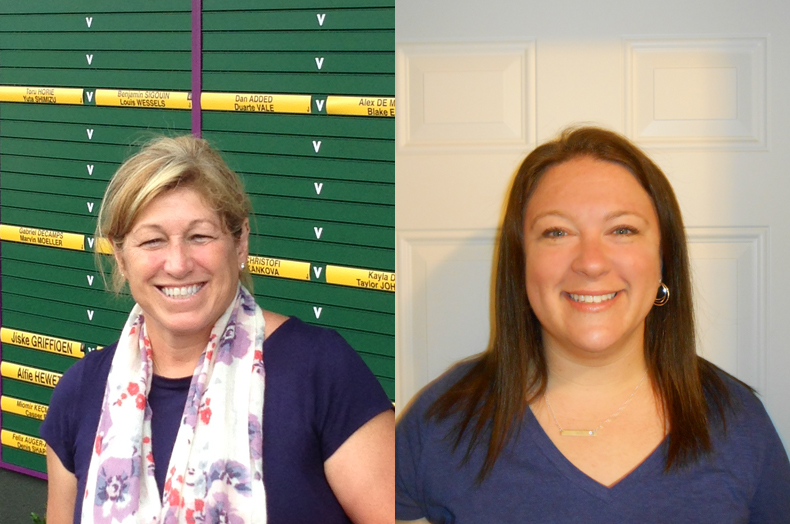
Jewish educators to be honored with the Sue Pinsky Award for Excellence in Jewish Education and the Grinspoon Award
Margie Pines, an early childhood educator at JCC “Z” Frank Apachi in Northbrook, will receive the third annual Sue Pinsky Award for Excellence in Jewish Education, administered by JUF’s Community Foundation for Jewish Education (CFJE).
The Pinsky Award, established in 2015, is an annual award given by CFJE to a Chicago-area early childhood teacher.
Colleagues describe Pines as “a truly dedicated professional that makes a strong impact on every family fortunate to have her as their child’s teacher… She sees each child as a unique individual and is quick to identify their abilities as well as encourage them to take appropriate risks as they learn and grow.”
Though she started her career as an attorney, Pines’ passion for teaching young children led her to pursue her Associate’s Degree in Early Childhood. She now serves as a Lead Teacher and as Lead Content Specialist at JCC “Z” Frank Apachi, both teaching in her own classroom as well as guiding other teachers in the area of outdoor education and Jewish values surrounding protecting the earth.
The Pinsky Award was established by her family in honor of Sue Pinsky, a long-time Jewish educator who was instrumental in the founding of the North Suburban JCC. In her 50 years of being a Jewish educator, it is estimated that Sue worked with over 5,000 children in our community. Sue’s son, Mark Pinsky, and his wife, Lisa, generously established an endowment fund in Sue’s honor to ensure the award in perpetuity through JUF’s Agency Endowment Program.
“My hope is that this award will be a way to recognize dynamic Jewish teachers who serve as an inspiration for the next generation,” says Sue, who lives in Highland Park. “It’s those small tastes of Judaism in preschool, in camp, and in congregational programs — those little sparks that come out of an innovative teacher saying something to a child — these are the things that can turn into a lifelong love of learning and Judaism.”
The 2017 Pinsky Award will be officially presented to Pines at CFJE’s upcoming symposium on May 23.
Andrea Raskin, an educator with several Chicago-area institutions, will also be honored at the event, receiving the second annual CFJE-Grinspoon Foundation Award for Excellence in Jewish Congregational Education. A 15-year veteran teacher at Temple Jeremiah in Northfield, Raskin also works as a Keshet paraprofessional at Bernard Zell Anshe Emet Day School, where she will begin teaching Kindergarten Jewish Studies in the fall. In addition, she serves as the Hebrew Director for eJewcateMe.com.
“Andrea exemplifies everything one would want in an educator, the teacher of their children,” said Raskin’s nominator. “Every child feels special; every child wants to participate with spirit because of the atmosphere in the classroom. This is true in her second grade class, her eighth grade class and her Hebrew classes.”
The Grinspoon Awards (formerly Grinspoon-Steinhardt Awards) have recognized over 700 outstanding educators in the U.S. and Canada in the past 15 years. Today the award celebrates successful innovation in Jewish education.
Both awards will be presented at CFJE’s upcoming symposium, Thinking Together: Community Conversations on Israel Education for Chicagoland Jewish Educators, which will take place from 8:30 a.m. to 3:30 p.m. on Tuesday, May 23 at North Shore Congregation Israel in Glencoe.
For more information or to register, please visit http://juf.org/cfje/Thinking-Together.aspx .
Other stories
-
Two local teens win national recognition
Recipients of the annual Diller Teen Tikkun Olam Awards
Read more -
Celebrating six young award winners cultivating the community
Introducing young adult award winners
Read more -