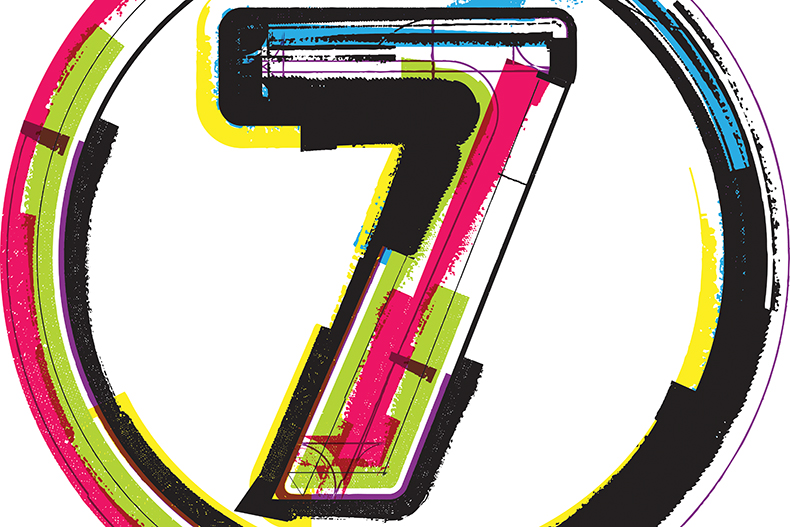
It is 2017, and with it comes the opportunity to commemorate a whole series of anniversaries for events that took place in years ending with 7. In a few weeks we will commemorate the 50th anniversary of the Six Day War, in June 1967.
In this commemoration we will celebrate the reunification of Jerusalem. We will confirm the end of our status as victims. Those of us old enough to remember will never forget when U Thant, Secretary General of the United Nations, listened to Nasser. Then he withdrew the U.N. buffer forces in the Sinai, thus permitting Nasser to fill the Sinai with tens of thousands of troops, tanks, and the like adding to his blockade of the Straits of Tiran, thus choking off Israel’s lifeline port, Eilat, from the world.
We will remember the indecision and the “it will all work out alright” attitude of the West. We will remember one of the most famous CIA-taped phone calls when Nasser telephoned then-King Hussein of Jordan (who later signed a peace treaty with Israel in 1994) asking him why he hadn’t opened up another front in the war against Israel in the West Bank. Indeed, Israel had sent messages through the United States that it was not interested in the West Bank. Hussein told Nasser that he was not opening a front because he heard reports that the Egyptian Air Force had been destroyed on the ground during the first day of the war. Nasser said it was a lie. Hussein believed him.
This is not the only anniversary we commemorate for events that happened in years ending in 7. This is the 120th anniversary of the First Zionist Congress in Basel, Switzerland in 1897. Theodor Herzl declared, “This night I gave birth to the Jewish state.” What an amazing prophecy. He was right. Fifty-one years later, the State of Israel was established.
There is another great anniversary of a year ending in seven. This year is the 100th anniversary of the Bolshevik Revolution in 1917, or more precisely the Bolshevik or Communist coup d’etat. When that Iron Curtain descended across Europe, more than three million Jews were trapped in the Soviet Union and suffered deeply for 74 years. Nearly a million and a half were reunited with us at the end of the last century.
There is the 80th anniversary of the Peel Commission in 1937 to commemorate. In 1937, the Peel Commission, originally known as the Palestine Royal Commission, headed by Lord Peel, recommended that the League of Nations Mandate had become unworkable and recommended partition of British Mandate Palestine into two states, an Arab state and a Jewish state. The Arabs rejected it. This was to be followed by a series of tragic replications.
Here comes another year Seven Anniversary. It is the 70th anniversary of November 29, 1947, when the United Nations recommended the partition into two states, a Jewish state and an Arab state, and once again the Arabs rejected that.
1967 has another important commemoration, the three famous No’s of Khartoum, when the Arab League declared: No recognition; No negotiations; No peace, in the wake of Israel’s monumental victory in 1967. As Abba Eban noted at the time, where and at what other time in history have the vanquished sued for ongoing war, and the victor sued for peace?!
There is another year Seven Anniversary to commemorate. Anwar Sadat, one of the most hated names in all Israel for having launched a war against Israel and the Jewish people on Yom Kippur 1973, came to Jerusalem in 1977 recognizing Israel as the nation state of the Jewish people. He got back everything he wanted. It is a pity that others haven’t learned that lesson.
After the year 2017, we get the year 2018. This will give us the opportunity to commemorate the anniversaries of events in years ending in 8. The most spectacular of those anniversaries will of course be the 70th Anniversary of the establishment of the State of Israel in 1948. See you then!
Rabbi Yehiel E. Poupko is Rabbinic Scholar of the Jewish United Fund of Metropolitan Chicago.
Other stories
-

Mother’s Day, Father’s Day, and the Jewish way
Let us pause and consider what it means for us to truly honor our parents
Read more -
Each time we study Torah, we experience the revelation
The mystical tradition of Judaism that lifts up the number 600,000 from the Exodus
Read more -
The Naomi Ruth Cohen Institute for Mental Health Education (NRCI) at The Chicago School of Professional Psychology (TCSPP) will devote its 16th annual Community Mental Health Conference to the mental health of children.
Titled, ” Raising Resilient Children: Prioritizing their Mental Health ,” the conference will be held on Sunday, June 4, at the Beth Emet Synagogue in Evanston, and will address several key issues impacting youth and families today. The conference is open to the public and mental health professionals . The conference is sponsored in part by the Jewish United Fund of Metropolitan Chicago and its affiliates: Jewish Child and Family Services and Jewish Vocational Services, The ARK.
The conference brings together nationally recognized experts and local resources to help parents, grandparents, and other caring adults gain essential knowledge and support to raise children who will have the skills they need to grow into emotionally healthy, well-adjusted adults that can live satisfying lives and be active in their communities. Expert speakers include:
• Louis Kraus, M.D., Director of Child Psychiatry at Rush University Medical Center; much of his work focuses on child and adolescent psychiatry and the law, and clinical interventions, as well as education work and advocacy for children.
• Mark Reinecke, Ph.D., Chief Psychologist, Division of Psychology, Department of Psychiatry and Behavioral Sciences, Feinberg School of Medicine, Northwestern University. Dr. Reinecke’s research and clinical interests center on understanding and treating depression, suicide, and anxiety among children and adolescents.
• Rabbi Eleanor Smith, M.D., Internist, Northwestern Memorial Physicians Group. After ordination from Hebrew Union College in 1993, Dr. Smith became Assistant then Associate Rabbi at Beth Emet. During her rabbinate she began to desire to understand the workings of the human body as well as the human spirit.
• Christine Walker, MPPA, Founder, The Chasing Hope Foundation, which seeks to fill the void in community-based supports for children with autism and related conditions. Walker was inspired to create the Chasing Hope Foundation as an extension of her work to support families like her own who are raising a child with autism and related brain disorders.
• Schuyler Walker, 16-year old mental health and special education advocate. Schuyler is a Chicago native and made his first trip to the Illinois State House at the age of 7, as part of Autism Lobby Day. Since then, Schuyler has made several trips to Washington, D.C. helping elected and appointed officials better understand issues of mental health, special education and brain research.
Tiffany Masson, Psy.D., Campus Dean of TCSPP’s Chicago Campus, will moderate the conference, which will feature 19 discussion groups, designed not only to inform, but also to help advance the discussion about mental and behavioral issues affecting children. They include:
• Early Childhood: Right from the Start, What Parents Need to Know
• Children who Learn and See the World Differently
• Depression and Anxiety in Children and Teens
• How Schools Help Your Child’s Behavioral and Educational Needs: Know Your Rights and Resources
• How Violence Affects the Lives of Our Children and Communities
There is no cost to attend the conference, but a voluntary fee of $45 per person would be appreciated. Early registration is strongly encouraged. For more information, contact: [email protected].
The Naomi Ruth Cohen Institute for Mental Health Education’s goal is to overcome the stigma of mental illness. To learn more, visit naomicoheninstitute.org .
Jewish United Fund/Jewish Federation of Metropolitan Chicago and its Affiliates, Jewish Child and Family Services,CJE Senior Life,Jewish Vocational Service, The Ark are benefactors of this conference.
Other stories
-
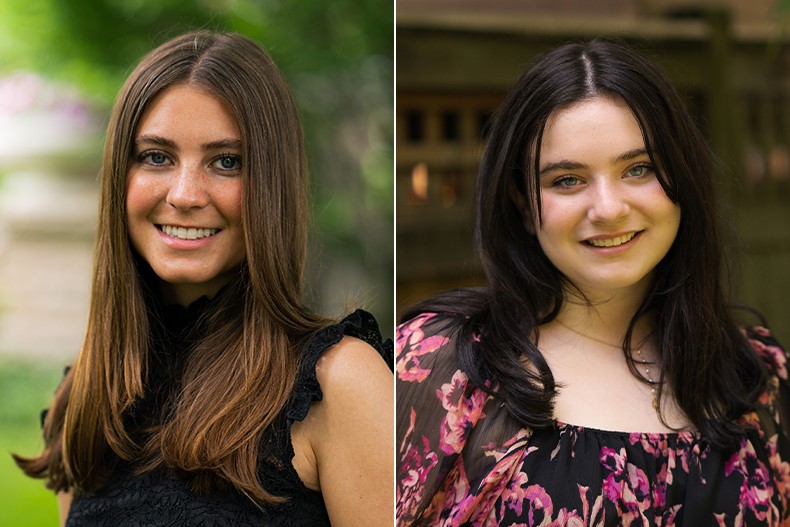
Two local teens win national recognition
Recipients of the annual Diller Teen Tikkun Olam Awards
Read more -
Celebrating six young award winners cultivating the community
Introducing young adult award winners
Read more -
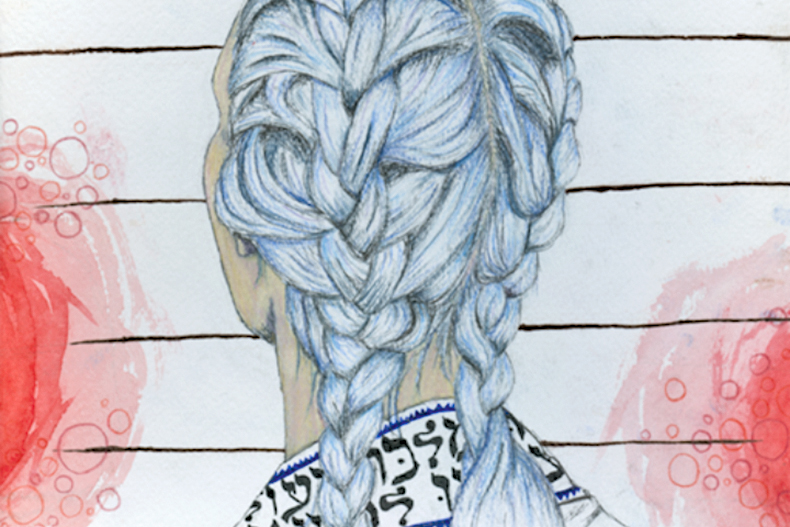
Jewish teens present ‘The Revenge of Dinah: A Feminist Rape Culture Seder’ on May 21
The Passover seder is a complex, ancient tradition steeped in values and meaning. Using the Haggadah as a guide, Jews around the world reflect on events set forth in Exodus, hearing the story of the Jewish People, connecting with Jewish culture, and internalizing the Jewish experience.
One group of Jewish teen girls has found stories of women missing from the Haggadah, so over this past school year, they wrote their own. They will host “The Revenge of Dinah: a Feminist Seder on Rape Culture in the Jewish Community,” on Sunday, May 21, from 1-3 p.m. at DePaul University, 2250 N. Sheffield Ave., Chicago. The seder is open to people of all backgrounds, religions, and gender. Registration is required.
The event is the culminating project of the Jewish United Fund of Metropolitan Chicago Research Training Internship (RTI), a selective 10-month paid internship for high school-aged girls, where students discuss, examine, and report on the cultural messages Jewish teen girls receive about who they are supposed to be and become. RTI is a joint program between JUF and DePaul’s Beck Research Initiative for Women, Gender, and Community.
Ten Chicago city and suburban high school students who make up the third RTI cohort began meeting last fall. Through their discussions, they focused their research on rape culture.
“The underlying themes and commonalities in our society normalize and perpetuate not only rape, but sexual assault and violence in general through cultural norms, media, victim-blaming attitudes, and the frequent objectification of women’s bodies,” said Chloe Wagner, a junior at Francis W. Parker High School in Chicago. “That is rape culture.”
Rather than writing a more traditional research paper to present their findings, the girls wrote a Haggadah based on the life of Dinah, whose rape and its subsequent aftermath are described in the Book of Genesis. Although Dinah’s brothers seek to avenge the rape, “It’s them trying to protect the family name, not her,” said Jordana Bornstein, a junior at Deerfield High School.
“The idea for a Haggadah on rape culture took a while to come up with. As a cohort, we wanted our work to affect the right people and engage the proper audience,” said Meghan Kier, Schaumburg High School junior.
Their research has made them more sensitive to the both the overt and subtle sexism they observe in American and Jewish culture, the girls said.
“The effect rape culture has on Jewish teen girls in everyday life is astounding. This can be seen in such expectations as trying to be the ‘perfect’ Jewish girl,” Wagner said.
“We know that rape culture is a huge task to take on because it encompasses so much,” Kier said. “But, if we educate the right audience, that change can start to happen.”
The girls’ Haggadah features data-driven context with new rituals that reflect on the social consequences of rape culture and its related issues.
While the project focuses on educating participants about rape culture-it also provides a framework of hope for the future. The text reads: “…Our potential to make change is not something impossible to attain. Rather, the tree of life, our prospective growth, lies right in front of us.”
“By getting teens to come together to talk about it, that in itself is making change,” Bornstein said.
Becca Gadiel, a junior at Jones College Prep in Chicago, wants participants to realize they can stop sexist speech and attitudes in their own lives and social circles. “I feel like the biggest thing is awareness and educating people, especially teenagers,” she said. “Unless you know what’s going on, you can’t really do anything about it.”
“If we can give those tools to other teens, by the time people of our generation are parents, we can stop the language that perpetrates rape culture,” Bornstein said.
Register for the seder here . For more information, contact [email protected].
Teens create social change through JUF Research Training Internship
The Jewish United Fund Research Training Internship (RTI) offers Chicago area high school-aged girls the opportunity to advise JUF’s work from their unique perspectives. Students explore the messages Jewish teen girls receive-from popular culture, parents and other adults, the Jewish community, from school and from peers-about who and what they should be. Students meet twice a month at DePaul University, and receive a $200 stipend at the end of the internship.
RTI is hosted by JUF, DePaul University, the Beck Research Initiative for Women, Gender, and Community in partnership with Ma’yan and with funding from the Jewish Women’s Foundation of Metropolitan Chicago, the Ellie Fund of the Jewish Women’s Foundation of Metropolitan Chicago, and The Hadassah Foundation.
“Students focus their research on injustice as it relates to the Jewish community,” said Stephanie Goldfarb, JUF Director of Youth Philanthropy & Leadership.
Prior cohorts have researched the roles of power and privilege on the lives of Jewish teen girls in Chicago; and on the perpetration of pressure on Jewish teen girls to achieve high standards of academic success, beauty, religious life, relationships and more.
Students are seeing a positive effect, not only on themselves, but also on the Jewish community.
“Women and girls are definitely the future of the Jewish community,” said Becca Gadiel, junior at Jones College Prep, Chicago. “It’s really important to keep younger people involved and connected to Judaism. (By) making it more inclusive … it will help attract and connect younger people.”
“I think that the fact that an organization like RTI and similar groups exist says something,” said Jordana Bornstein, Deerfield High School junior. “There are girls in the Jewish community that are knowledgeable and want to do this-break gender roles, and be more inclusive.”
“In the Jewish community programs and opportunities like RTI should continue to be available,” said Meghan Kier, Schaumburg High School junior. “As teenagers, sometimes we feel that we don’t have a voice. RTI gives Jewish women a powerful voice that could affect people worldwide.”
Other stories
-
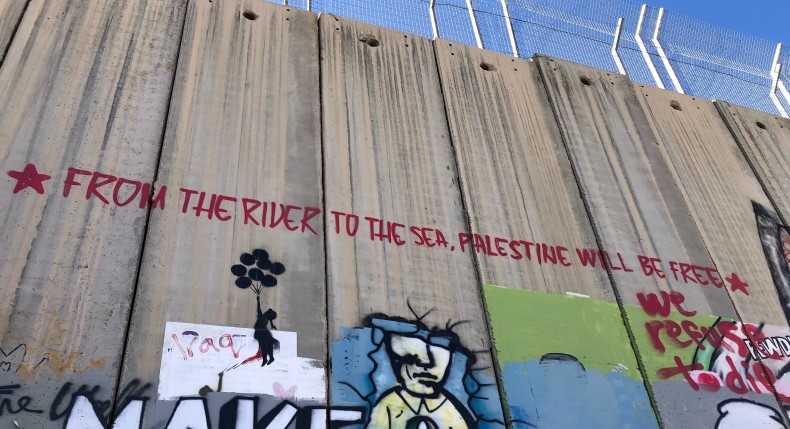
Is there hope?
JCRC’s executive director, Daniel Goldwin, reflects on conversations with Palestinians on a recent trip to Israel.
Read more -
Israel@70: 10 Israeli Movies (and Their Directors) That Vied for Oscar's Affection
The movies Israel makes, and the directors who make them, definitely have caught the attention of the Academy of Motion Picture Arts & Sciences nominators.
Read more -
Israel@70: 10 Celebrities Who Got Their Start (in Life) in Israel
Whether stars of cinema, symphony, sports, rock or runway, all were born in the Jewish State.
Read more
Why is breast cancer risk slightly higher among Jewish women than among other women in the US? According to the National Institutes of Health, this increased risk is likely due to the high prevalence of BRCA1 and BRCA2 gene mutations in Jewish women of Eastern European descent.
NorthShore University HealthSystem and the MRW Leadership Board recently hosted LIFE as a Pre-Vivor, a free workshop for those at greatest risk of developing breast and ovarian cancers. The expert panel of surgeons, genetic counselors, and nurse practitioners discussed the risks associated with these genetic abnormalities, and considerations necessary to stay healthy.
As the second generation MRW Leadership Board focuses on educating and empowering those at hereditary risk of developing breast and ovarian cancer, the first generation MRW Benefit Committee continues its 20-plus years of raising funds to support and educate patients.
After being diagnosed with breast cancer, Myra Rubenstein Weis lived for 10 years before the disease claimed her life in 1990. Her sister, Eileen Rubenstein Goldstein, and brother-in-law, Paul D. Goldstein, MD, continue to honor Myra’s life and her upbeat spirit by hosting an annual benefit luncheon with a group of dedicated volunteers and friends who plan the event. The May 3 rd luncheon honors Dr. Katharine Yao for her work and contributions as a breast surgeon at NorthShore. Dr. Michael Caplan serves as keynote speaker.
For more information, visit here.
Other stories
-
Two local teens win national recognition
Recipients of the annual Diller Teen Tikkun Olam Awards
Read more -
Celebrating six young award winners cultivating the community
Introducing young adult award winners
Read more -
Anti-Israel divestment resolution passes at UW-Madison following procedural irregularities
Abby Seitz and JTA
After voting to table a resolution demonizing Israel last month, the Associated Students of Madison accepted the presentation of a new, more generalized divestment resolution, which members amended to include language condemning Israel.
On March 29, the first resolution was tabled indefinitely after more than six hours of debate. At the following ASM meeting, which fell during Passover despite protests from the Jewish community, ASM suspended its bylaws and attempted to create a financial transparency committee with the power to pass divestment legislation.
On April 26, at ASM’s final meeting of the school year, students presented a resolution calling for divestment from any businesses involved in private prisons, arms manufacturing, fossil fuels, and border walls. Members of ASM then introduced amendments to the legislation that condemned Israel, including laying blame on Israel for training U.S. police in tactics that they say harm African-Americans .
During the debate, anti-Israel ASM members disparaged the Jewish community, calling it an “oppressor” and saying Jewish students oppose divestment against Israel because it “threatens their white privilege.” Jewish students and their allies were also targeted and harassed during the meeting, according University of Wisconsin-Madison Hillel Executive Director Greg Steinberger.
Staff members from JUF and the Israel Action Network have been providing extensive consulting and strategic support to Hillel and pro-Israel students throughout the process. The groups released a statement Friday along with the Jewish Federation of Madison and the Milwaukee Jewish Federation.
Emily Briskman, executive director of JUF’s Israel Education Center , said it “became clear during the meeting that many members of ASM were determined to demonstrate their single-minded desire to disparage Israel.”
Ultimately, the legislation passed by a vote of 24-0-2.
In response, the university issued a statement strongly condemning the vote .
Other stories
-
Two local teens win national recognition
Recipients of the annual Diller Teen Tikkun Olam Awards
Read more -
Celebrating six young award winners cultivating the community
Introducing young adult award winners
Read more -
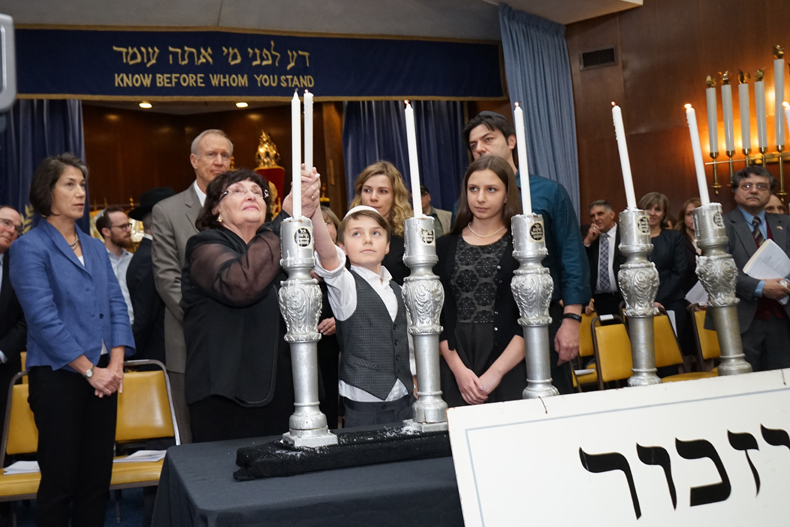
State, local Holocaust observances reinvigorate spirit of ‘never again’
Jane Charney
The words “never forget” rang throughout Illinois this past week as the Jewish community held observances honoring Yom HaShoah, Holocaust Remembrance Day.
At the 36th annual statewide Yom HaShoah observance and memorial service, which took place April 27 at the Old State Capitol in Springfield, Jewish Community Relations Council Chair David T. Brown voiced a rededication to this yearly proclamation.
“From generation to generation, we bear this responsibility,” he said. “We hope and pray that anti-Semitism, bigotry and terrorism will one day be things of the past and that we will soon usher in an era of peace and prosperity for all.”
The statewide observance, co-sponsored by the Office of the Governor and the Jewish Federations of Illinois, marked the official “Day of Remembrance” designated by Congress to commemorate victims of the Holocaust.
In his remarks, Gov. Bruce Rauner emphasized his commitment to a safe and flourishing Jewish community in Illinois.
“We stand with survivors, with the Jewish community, and with people of all backgrounds who believe in fundamental human rights, justice, dignity and freedom,” he said. “It is our moral duty to speak out against hate, bigotry and intolerance.”
As in years past, the governor issued a proclamation declaring the week of April 23-30, 2017 as Illinois Holocaust Remembrance Days. The proclamation urges all Illinoisans to continue to remember the victims of the Holocaust and to honor survivors.
Illinois State Rep. Kelly Cassidy, whose district includes West Rogers Park, said that the words “never again” have never been more relevant than today.
“We must declare that ‘never again’ applies to immigrants, to Muslims, to refugees, to LGBTQ people,” she said. “We can and should refuse to go back to a time of darkness and fear for anyone. We as Jews can and should lead that charge.”
Dr. Eva C. Muller, a child of Holocaust survivors from Hungary, also highlighted the contemporary meaning of “never again.” She spoke to 43 seventh and eighth grade students from Chicago Jewish Day School, who traveled to Springfield with the JCRC delegation to attend the memorial service and lead a responsive reading.
“When we don’t see each other as interconnected, as brothers and sisters, we allow evil to flourish,” Muller said.
The program also included an invocation by Rabbi Rebecca Dubowe of the Moses Montefiore Congregation in Bloomington, Ill., a benediction from Dr. Maryam Mostoufi, Muslim community chaplain and president of the Greater Springfield Interfaith Association, and a recitation of the Mourner’s Kaddish prayer led by Rabbi Michael Datz of Temple B’rith Sholom of Springfield. Datz led the lighting of six memorial candles, each representing one million Jews put to death by the Nazis during World War II as well as 600,000 “righteous gentiles” who helped save Jews, even at great danger to themselves.
Earlier in the week, on April 23, Sheerit Hapleitah of Metropolitan Chicago hosted the 72nd annual Chicago-area Holocaust memorial service. Four generations of survivors’ families lit a six-armed candelabrum to memorialize the six million Jewish men, women and children who perished in the Holocaust. Sheerit Hapleitah is a coordinating committee of Chicago-area Holocaust survivors’ groups.
JUF President Dr. Steven B. Nasatir spoke at the service about the individual and communal responsibility to never forget those who were lost.
“Though not all of their names are known, and though not all of them are remembered personally, we remember them all as members of our family, our people,” he said.
Nasatir said that survivors remain a priority for the Federation and its network of agencies. The “Defiant Requiem” benefit held by the Jewish Federation on March 23 raised more than $4.6 million to continue to provide vital social services to address survivors’ special needs. That sum will combine with the $4.1 million allocation the Federation already provides for these services annually.
Also speaking at the service were Rauner and Illinois First Lady Diana Rauner, Skokie Mayor George Van Dusen, Consul General from Israel to the Midwest Aviv Ezra and author Jeffrey Gingold.
Other stories
-
Two local teens win national recognition
Recipients of the annual Diller Teen Tikkun Olam Awards
Read more -
Celebrating six young award winners cultivating the community
Introducing young adult award winners
Read more -
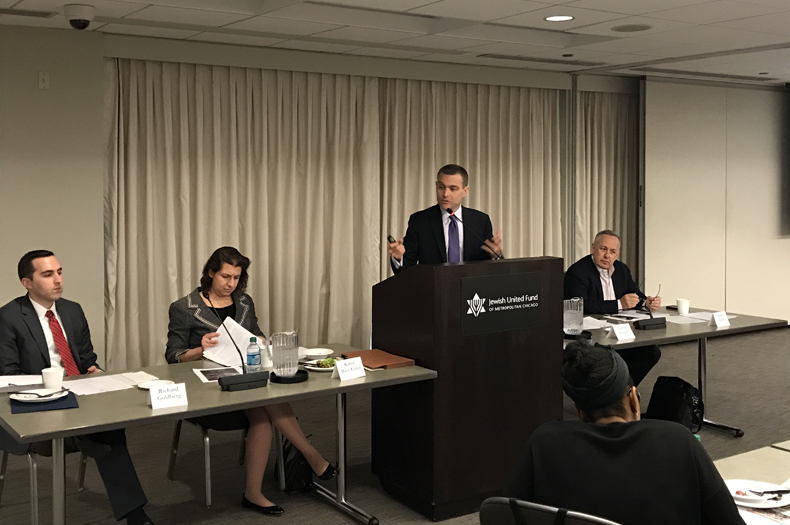
ADL, Illinois state officials offer strategies for combatting hate
Jane Charney
In 2016, incidents motivated by hatred against Jews increased by 34 percent, according to new data released by the Anti-Defamation League this week. The data also show doubling in the amount of anti-Semitic bullying and vandalism at non-denominational K-12 grade schools.
Nearly 60 Jewish community and organization leaders heard the alarming news about the rise of anti-Semitism and anti-Jewish attitudes in the United States during a joint meeting of JUF’s Jewish Community Relations Council and the Jewish Federation’s Government Affairs Committee on April 24. In addition to discussing the results of a recent study of anti-Semitic attitudes, the panelists also shared strategies for combatting hate and bigotry.
The timely discussion followed on the heels of a series of recent anti-Semitic attacks in Chicago and throughout the U.S.
“As we have witnessed in the past several months, anti-Semitism is, unfortunately, still very much alive today in America,” said JCRC Chair David T. Brown. “The vandalism of the Chicago Loop Synagogue in January was one such attack against our community. We continue to assess the threats and respond to them and recognize that many other communities are also feeling vulnerable and uncertain.”
The ADL survey, which has been conducted since 1964, showed a slight increase in anti-Semitic attitudes to 14 percent in 2016 from 12 percent in 2015. However, a steady and troubling one-third of those surveyed continue to believe that American Jews are more loyal to Israel than to the U.S., said Lonnie Nasatir of the ADL Greater Midwest Region.
“This result goes to the heart of the anti-Semitic stereotypes that Jews not only control things, but do so to the detriment of the United States,” Nasatir said.
The recent rise in anti-Semitic harassment and incidents comes from both the right and the left, he said. Nasatir specifically noted the so-called alt-right’s harassment of Jewish journalists taking place throughout the presidential campaign as well as provocations against Jewish and pro-Israel students on college campuses, which are primarily the purview of the left.
“We need to be vigorous and speaking out forcefully against both these extremes,” he said. “Education is key: we need more anti-bias training, especially in terms of viewing ‘the other’ as a positive rather than a negative.”
Nasatir also noted that key findings indicate that Jewish communities need to more strategically partner with communities of color, including joint projects on issues of mutual concern and engaging in personal interaction based on similar value systems.
The Jewish Federation has been actively supporting and testifying on behalf of several anti-hate legislative efforts at the city, county, and state levels. Most recently, Federation’s Associate Director of State and Local Government Mara Ruff, along with Chicago Human Relations Commissioner Mona Noriega, ADL, law enforcement agencies, and targeted groups, testified at a hate crimes subject matter hearing at City Hall on April 26, before the Human Relations Committee.
Also at the JCRC/Government Affairs meeting, Karyn Bass Ehler, chief of the Illinois Attorney General’s Civil Rights Bureau, noted that her office regularly receives reports of anti-Semitic incidents and many other forms of hate and bigotry. Illinois Attorney General Lisa Madigan recently convened a round-table of more than 20 community groups that shared their recent experiences, fears and uncertainty, in which JCRC participated.
Ehler also reported that one strategy to combat hate currently making its way through the Illinois General Assembly is House Bill 3711, which offers amendments to the Illinois Hate Crimes Act by adding the crimes of intimidation, cyberstalking and transmission of obscene messages to this list of crimes that can be prosecuted as hate crimes in order to address an increasing use of technology to attack victims. The legislation also ensures all victims of hate crimes are afforded the ability to file a civil cause of action in response to such incidents and imposes civil penalties.
“Strengthening the hate crimes law will help people feel safe in Illinois, no matter who they are or what they believe,” she said.
Richard Goldberg, Gov. Bruce Rauner’s Chief of Staff, said that the governor prioritizes tacking anti-Semitism through preparing law enforcement for dealing with incidents as well as through highlighting education, particularly curricula focusing on the Holocaust, and working on initiatives that thwart the anti-Israel Boycott, Divestment and Sanction movement that frequently uses anti-Semitic language.
Goldberg said collaboration between various law enforcement sectors is key to successfully enforcing existing anti-bias and anti-hate crimes laws. In the plans are new courses for Illinois State Police cadets focusing on hate crime prevention and investigation as well as educational opportunities for other law enforcement bodies.
“If we continue to be confident in our principles, we will defeat this scourge,” Goldberg said.
For ADL’s survey results on anti-Semitism in America, visithttp://bit.ly/2p9IpIe.
Other stories
-
Two local teens win national recognition
Recipients of the annual Diller Teen Tikkun Olam Awards
Read more -
Celebrating six young award winners cultivating the community
Introducing young adult award winners
Read more -
Chief Rabbi of South Africa Dr. Warren Goldstein will speak at 7 p.m. Monday, May 1, at Bernard Weinger JCC, 300 Revere Drive, Northbrook. The event is free and open to the public. Pre-registration is requested here .
Goldstein is an international leader whose impact has been felt in South Africa and around the world. A visionary who has championed social reform that has impacted education, and ultimately crime-fighting, has emerged as a powerful voice working to unite the Jewish community.
Goldstein has published several books, is a Jerusalem Post contributor and is one of the co-founders of the Shabbat Project, a global event which brings together more than one million Jews around the world to celebrate Shabbat as one united community.
Goldstein is bringing his message of peace and unification to Chicago when he speaks at the JCC in May. He’ll discuss how all movements of Judaism, and all those who connect to Jewish culture in some way, can find commonality and connection.
Other stories
-
Two local teens win national recognition
Recipients of the annual Diller Teen Tikkun Olam Awards
Read more -
Celebrating six young award winners cultivating the community
Introducing young adult award winners
Read more -
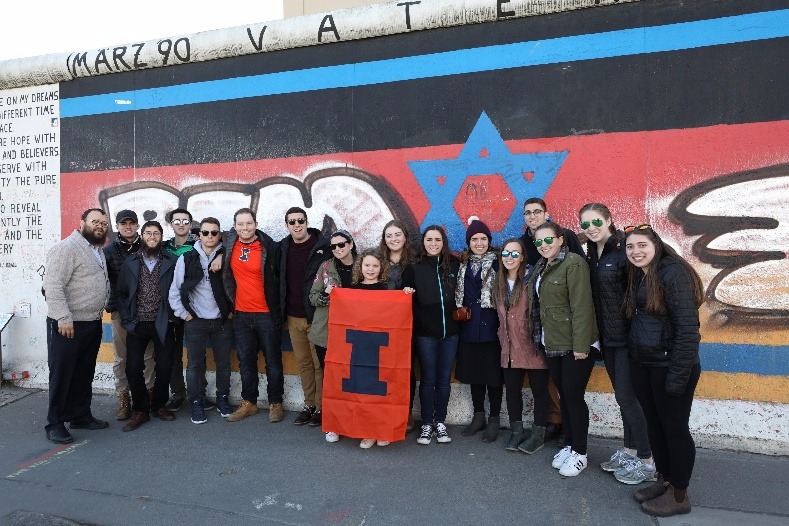
U of I students spend spring break in Berlin
Mikayla Pollard and Matt Sherman
Eighteen Jewish students-a number fittingly equaling chai, or life, in Jewish Gematria-from the University of Illinois at Urbana-Champaign traveled to Berlin for a weeklong Alternative Spring Break in March. Led by Rabbi Dovid Tiechtel, co-director of Illini Chabad, the ASB students found a thriving Jewish community in Berlin, and experienced Jewish pride in a place they thought unlikely.
Upon arriving in Berlin, Tiechtel led the students in dancing at the Berlin airport, singing “Am Yisrael Chai”-“the people of Israel live.”
“Before the trip, I really wasn’t sure why a Jewish individual would want to visit Germany, let alone live in the country that once tried to destroy us,” said Mikayla Pollard ’20, one of the ASB student participants. “I also was unsure how people in Germany would react to a group of 18 American Jewish college students standing tall, walking together through the Berlin streets. And now, I do have an answer to the ‘why Berlin’ question. Judaism must thrive in Germany because it is a place where the Nazis tried to exterminate an entire religion there, our religion, 75 years ago. I went to Berlin to further connect to my Jewish heritage and to stand with pride in the country that once said that I do not deserve to be alive.”
During their visit, the students cleaned up the Weisensee Cemetery, the resting place of fallen Jewish soldiers in World War I, where the students also put on tefillin (phylacteries) and prayed. The soldiers, whose families were murdered shortly after World War I, have no visitors. “These soldiers had no one to come visit them, so in honor of their service, we put in a few hours of work to beautify their resting places,” said ASB Student Jacob Apter ’19. “The soldiers had no way of thanking us for the time we put in today, but Rabbi Dovid told us that they would still be quite thankful…”
Among the many highlights of the trip was the Shabbat the group spent with Rabbi Yehuda and Leah Tiechtel, directors of Chabad-Lubavitch of Berlin and brother and sister-in-law of Rabbi Dovid Tiechtel. Just before Shabbat, the students packaged and distributed Shabbat meals to 80 needy Jewish families in Berlin. Later on, after the women lit Shabbat candles, the students joined other members of the Berlin Jewish community in the Friday night prayers and the celebration of a bat mitzvah in the community.
Most of the activities on the trip were somber, yet inspiring. The students saw up close the planning of the “Final Solution” at the Wannsee Conference, where they danced and sang “Am Yisrael Chai”. They visited the building that used to house the activities of the Hitler Youth, where there is now a thriving Jewish day school, and danced with the students there, singing “Am Yisrael Chai”. They visited Hitler’s bunker where he committed suicide, where they put on tefillin, danced and sang “Am Yisrael Chai”. They visited a concentration camp, where they saw the secret, makeshift shul the Jews had made with the words “Am Yisrael Chai” scrawled on the walls.
“Touring around the main streets of Berlin has changed the way I see myself as a Jew,” said Matt Sherman ’18, an ASB student participant. “Walking through the main squares, Pariser Platz, Checkpoint Charlie and many more, I wore my chai necklace, along with my Illini Chabad kippah (something which I rarely do in the States), head up and smiling. Today I feel that pride of being a Jew. I reflected upon not just the past, but the present and the future of the Jewish People.”
“The ASB Berlin trip was an emotional roller coaster and a huge success,” said Rabbi Dovid Tiechtel. “On the one hand, it was hard and challenging to see the places where they murdered so many of us. On the other hand, the students felt victorious as Jews and brought light to what was once the seat of Nazi power. We are here, they are not. While many talk about the proper response to anti-Semitism, I’m proud to say that we took action, connected with each other and the Jews of Berlin, and the students came back empowered to lead others in building Jewish unity wherever they go.”
This is the ninth year that Illini Chabad has sponsored the ASB Berlin trip.
Mikayla Pollard, `20, and Matt Sherman, `18, are all students at the University of Illinois at Urbana-Champaign.
Other stories
-
Two local teens win national recognition
Recipients of the annual Diller Teen Tikkun Olam Awards
Read more -
Celebrating six young award winners cultivating the community
Introducing young adult award winners
Read more -
The Chicago area’s 72nd annual collective Holocaust memorial observance will be held Sunday, April 23, at Skokie Valley Agudath Jacob Synagogue, 8825 East Prairie Road, in Skokie.
The service, which begins at 1:30 p.m., is traditionally the largest gathering of Holocaust survivors in the Midwest and one of the largest in the United States.
“Unfortunately, anti-Semitism continues to increase around the world, to the point where it is acceptable in some countries to equate Israel with Nazi Germany,” said Charles Lipshitz, president of Sheerit Hapleitah of Metropolitan Chicago, the umbrella organization for the area’s Holocaust survivor groups and sponsor of the memorial service. The commemoration is co-sponsored by the Jewish United Fund of Metropolitan Chicago.
“Those of us who experienced the horror of Auschwitz and the other camps know better, which is why we hold this service every year. Some of the European countries that claim that they, too, suffered under the German Nazi regime still tolerate marchers chanting ‘Death to Jews’ in their countries — and they are supposed to be our allies.
“We also will observe the 72nd anniversary of our liberation from the concentration camps,” Lipshitz said.
“The number of Holocaust survivors is dwindling to a precious few as we approach the 72nd anniversary of the end of World War II,” said event chairman David Levine, of the Association of Children and Grandchildren of Holocaust Survivors. “We, as children and grandchildren of survivors, are taking an active role in reminding the world that the crimes of Nazi Germany can happen again if we do not maintain vigilance.
“The legacy of the Holocaust survivors will be sustained and enhanced through our dedication and outreach efforts,” Levine said, “for we shall never forget the sacrifices of the six million Jews who did not live to see the Nazi war machine defeated.”
Speakers at the 2017 service will include Jeffrey Gingold, author of “Tunnel, Smuggle, Collect: A Holocaust Boy;” Israel’s Consul General to the Midwest, Aviv Ezra; Skokie Mayor George VanDusen; Jewish United Fund President Dr. Steven B. Nasatir; Lipshitz and event co-chairman Henry Jelen. Officials of the Jewish War Veterans – Skokie Post 318 and Boy Scout Troops #69 and #243 also will participate.
As part of the ceremony, a grandchild of survivors will pay tribute to the enormous contribution that Holocaust survivors have made to the Chicago community in passing their legacy of courage to future generations.
A high point of the service is the candle lighting ceremony honoring the six million victims, including 1.5 million innocent children, who perished in the Holocaust. The ceremony will be conducted by Sherry Rubinstein Warsaw of Dor Ledor, the Young Leadership Division of Sheerit Hapleitah, assisted by David Levine, with the participation of children and grandchildren of local Holocaust survivors. Proclamations by Gov. Bruce Rauner and Mayor Rahm Emanuel of Chicago will be published in the memorial book.
The Village of Skokie is symbolic to Sheerit Hapleitah’s efforts to sustain the memory of the Holocaust. When, in 1978, the American Nazi Party chose Skokie as the site of its infamous proposed demonstration, Sheerit Hapleitah helped lead the opposition, with the assistance of former Mayor Albert J. Smith and the village trustees.
That struggle was portrayed in a made-for-television movie starring Danny Kaye. Sheerit Hapleitah later led the movement to construct a monument in memory of the Holocaust victims on the Skokie Village Green, on land donated by the village and using funds collected from area individuals and synagogues and the Jewish United Fund.
The sculpture by Edward Chesney, depicting three generations, prayer books, a menorah, and other items symbolizing the destruction of European Jewry, was unveiled on May 31, 1987. That night, the memorial received worldwide attention after it was desecrated with spray paint, including the epithet “Jew liars” and other messages of hate.
“This insidious act made the message on the dedication plaque even more meaningful,” said Lipshitz. It reads, “This monument will remain in perpetuity as a reminder of what hate can do to mankind if decent people are not vigilant to forestall such a calamity in the future.”
Sheerit Hapleitah includes the following groups: Association of Descendants of the Shoah – Illinois, Inc.; Hofesh Chapter — NAAMAT; Holocaust Memorial Foundation of Illinois; Jewish Lithuanian Club of Chicago; Laor Organization; Midwest Chestochover Society; New Citizens Club; Workman’s Circle; The United Chicago Jews of Hungarian Descent, Inc.; Dr. Janusz Korczak B’nai Brith Lodge; and Dor Ledor – a group of children and grandchildren of Holocaust survivors who will play an important role in carrying on our legacy.
Other stories
-
Two local teens win national recognition
Recipients of the annual Diller Teen Tikkun Olam Awards
Read more -
Celebrating six young award winners cultivating the community
Introducing young adult award winners
Read more -