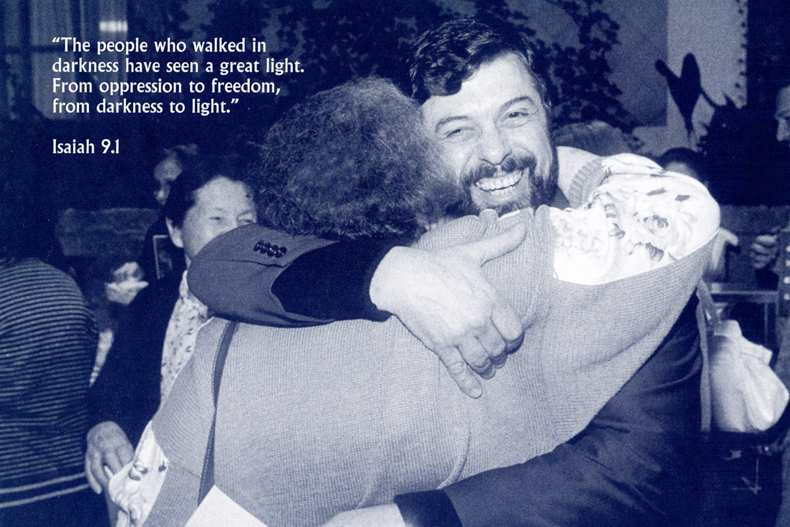
Jewish Federation calls for a safe, rational and coordinated national refugee policy
Since 1975, the Jewish Federation of Metropolitan Chicago has been the administrator of the Illinois Refugee Social Service Consortium.* Under every Democratic and Republican state administration, the Federation has been directly responsible for the successful resettlement of refugees, including Soviet Jews, Vietnamese, Hmong, Cubans, Iraqis, Darfurians, Ethiopians, Bosnians and Syrians of various faiths, among others. During those four decades, the Federation has helped more than 125,000 people build new, more secure lives with the blessings of America’s freedoms.
The Federation has encountered–and overcome–policy, budget, and other obstacles over the decades but has never wavered in its commitment to fulfill this sacred Jewish and American task. On behalf of the Jewish community, the Federation is proud of this accomplishment, and pledges to continue this important work.
The Federation welcomes America’s refugees who have passed the most thorough vetting process of any group of foreigners seeking to come to our country, and applauds the statements from many Jewish and non-Jewish groups that are now speaking out on this issue.
Every public policy should be reviewed and strengthened, especially when it involves our security. However, the administration’s sweeping, sudden, and uncoordinated executive order undermines the noble ideal of our nation serving as a safe harbor for those fleeing persecution, and directly imperils the Federation’s work on their behalf. The Federation opposes policies that bar or privilege certain groups of refugees solely because of their religion or country of origin. It is the well-founded fear of persecution by any country against any minority that has long inspired America to provide refuge.
The Federation is engaging with its Illinois Refugee Social Service Consortium partners on how best to work through the current situation and to help ensure a safe, rational and coordinated national refugee policy.
The Federation will apprise the community as developments unfold.
* The Illinois Refugee Social Service Consortium is composed of Catholic Charities of Archdiocese of Chicago, Catholic Charities of Rockford, Ethiopian Community Association of Chicago, Heartland Alliance, Iraqi Mutual Aid Association, JCFS- HIAS Chicago, RefugeeOne, Pan African Association, Rock Valley College, and World Relief.
Other stories
-
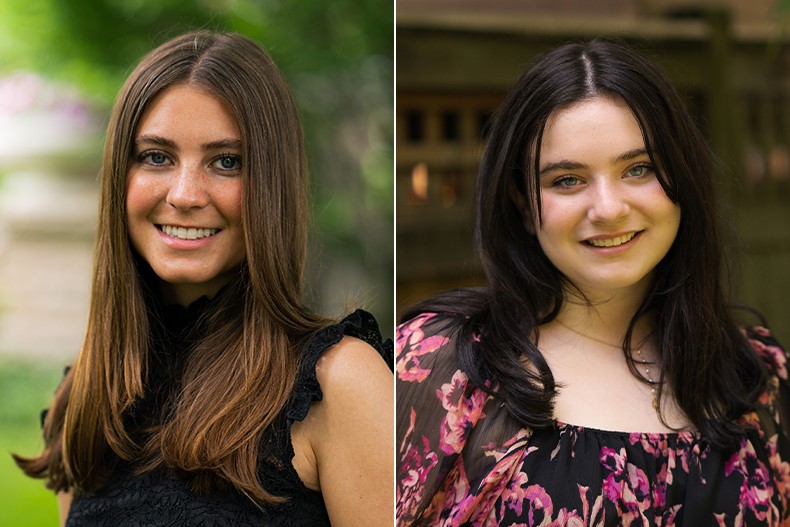
Two local teens win national recognition
Recipients of the annual Diller Teen Tikkun Olam Awards
Read more -

Celebrating six young award winners cultivating the community
Introducing young adult award winners
Read more -
The 22nd Annual Joseph Cardinal Bernardin Jerusalem Lecture will take place at 7 p.m. Monday, Feb, 13 at DePaul University. Professor David Shatz, Ph.D., will discuss the work of his teacher, Rabbi Joseph B. Soloveitchik, in a talk titled Judaism and Christianity in Dialogue: Reflections on the Work of a Towering Jewish Thinker .
Soloveitchik critiqued the theological dialogue between Christians and Jews, yet made extensive use of Christian theologians like Kierkegaard in his writings. The lecture will focus on this paradoxical relationship, and also touch on The Rav’s heartfelt recognition of the common interests, ideas, and challenges of American Christians and Jews.
Shatz is a Professor of Philosophy, Ethics, and Religious Thought at Yeshiva University. He also edits the MeOtzar HoRav series, devoted to publishing Soloveitchik’s manuscripts. Shatz earned his doctorate at Columbia University and his ordination from The Rabbi Isaac Elchanan Theological Seminary. He has edited, co-edited, or authored 15 books and over 80 articles and reviews on general and Jewish philosophy.
The annual Jerusalem Lecture was established to commemorate Cardinal Bernardin’s 1995 visit to Israel, hosted by JUF, and continues the dialogue he advocated between Jews and Catholics. To present this lecture, the Spertus Institute for Jewish Learning and Leadership partners with the Archdiocese of Chicago, American Jewish Committee, Anti-Defamation League, Chicago Board of Rabbis, and Jewish Federation of Metropolitan Chicago.
Reservations to attend the Jerusalem Lecture may be made here .
Other stories
-
Two local teens win national recognition
Recipients of the annual Diller Teen Tikkun Olam Awards
Read more -
Celebrating six young award winners cultivating the community
Introducing young adult award winners
Read more -
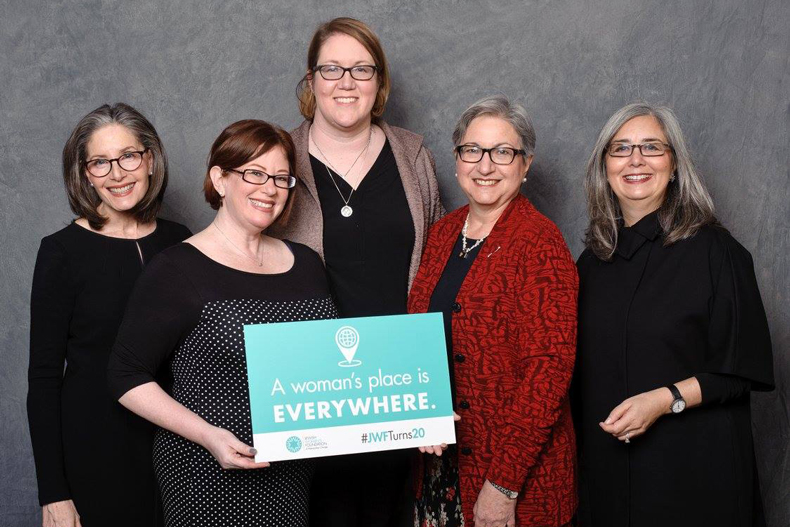
Rabbis discuss anthology ‘Tales from the Sacred Calling: Four Decades of Women in the Rabbinate’
Christine Sierocki Lupella
Preserving the legacy of women in the rabbinate was the common goal when Rabbi Alysa Mendeslon and Rabbi Rebecca Schorr collaborated on their anthology, “Tales from the Sacred Calling: Four Decades of Women in the Rabbinate.” The rabbis spoke about the historic significance of women in the rabbinate at the Jewish Women’s Foundation of Metropolitan Chicago Annual Meeting on Jan. 18.
“Until recently, women were not the keepers of their own stories, Shorr said. “This is why this book is so important to us,” she said.
The rabbis co-edited and wrote chapters for the book published by CCAR Press and recently reviewed by JUF News .
Shorr’s father was a rabbi. “Gender was not an issue in my congregation (when I was) growing up,” she said. One of her rabbis at summer camp was among the first 10 ordained rabbis who were women, an inspiring role model to the future rabbi. “It wasn’t that she was a ‘woman’ rabbi. She was a rabbi,” she said.
When Schorr announced to her parents that she was going to rabbinical school, her mother was concerned. “She saw what I didn’t see, of how difficult it is in any career being a working mom, but especially to be a rabbinic working mom.”
“From a very early age, women rabbis were part of my Jewish life,” Mendelson said. “They helped me fall in love with Judaism.” She wanted to be a rabbi until she saw the congregation’s reaction when the rabbi had her first baby. People criticized the way the rabbi handled her children, how they behaved, what she wore, and so on.
Instead of rabbinic school, Mendelson went to law school. She practiced matrimonial law for a year before she realized she was “supposed to be doing this…I took the leap of faith and went to rabbinical school,” she said. “It truly is a sacred calling.”
Reflecting on the changes during the past 40 years since the first woman was ordained, Schorr said, “Jewish communal life as a whole has been positively affected and influenced by the Reform movement allowing women to become rabbis.”
“Women brought new issues to the table,” Mendelson said. “And women also brought new styles of leadership to the Jewish world.
“When women entered the rabbinate, I think they helped move things in a different direction. The ways (women) think about success…it was just different (from men.) It was really about the quality of relationships and the way we connect with each other.”
In the recent past-and the present-rabbis often serve their congregations with a top-down leadership style. Women in the rabbinate “can’t be compared to that old paradigm,” Schorr said.
There have been ripple effects on Jewish life and the rabbinate in general, Mendelson said, noting that their male colleagues have benefited by a new definition of success.
The book is an anthology of essays from Jews across the spectrum, written by both women and men. They each wrote chapters-Schorr’s focusing on parenting, and Mendelson’s, on the importance of setting a “Gold Standard” for maternity leave-three months of paid leave, so rabbis can spend the time with their newborns.
“There are still women (rabbis) who are not getting paid leave at all, whose congregations don’t want to put it in their contracts,” Mendelson said, noting that often, the argument is that people in the corporate world don’t get that kind of paid maternity leave.
“Please don’t compare Jewish life or Jewish leadership or actually, what Jewish organizations should be doing to the corporate world,” she said. “We are supposed to be the ones that show everyone the right thing to do. And while there may be corporations that don’t want to do the right thing, Jewish organizations should always be at the forefront of doing the right thing.”
The Jewish Women’s Foundation is an independent project of the Jewish United Fund/Jewish Federation of Metropolitan Chicago. The Foundation seeks to expand and improve opportunities and choices in all aspects of Jewish women’s and girls’ lives through strategic and effective grantmaking. The Foundation empowers Jewish women as leaders, funders, and decision-makers.
Rabbi Alysa Mendelson Graf is currently the rabbi of Port Jewish Center in Port Washington, NY, and has served for 11 years on the Women’s Rabbinic Network Board and is its immediate past co-president. She is a 2016-17 Fellow with the NY Rabbinic Fellowship for Visionary Leaders.
Rabbi Rebecca Einstein Schorr is a CLAL Rabbis Without Borders Fellow, a contributing writer at Kveller.com, and is the former editor of the newsletter of the Central Conference of American Rabbis. She has contributed her writing to numerous anthologies, magazines and other publications.
Other stories
-
Two local teens win national recognition
Recipients of the annual Diller Teen Tikkun Olam Awards
Read more -
Celebrating six young award winners cultivating the community
Introducing young adult award winners
Read more -
Jewish Women’s Foundation honors Trustees Frances Horwich, Gerri Kahnweiler
Christine Sierocki Lupella
The Jewish Women’s Foundation of Metropolitan Chicago kicked off its 20th anniversary year on Jan. 18, with nearly 100 trustees and guests attending JWF’s Annual Meeting. The event included “Funny, You Don’t Look Like a Rabbi: Tales from the Sacred Calling” — a conversation with speakers Rabbi Alysa Mendelson Graf and Rabbi Rebecca Einstein Schorr about the historic significance of women in the rabbinate .
Frances Horwich, who became a Multigenerational Trustee and a member of the Five Sisters Legacy Society in 2016, was recognized for her dedication and contribution to JWF. She has provided resources and leadership for over 50 years through her support of the Jewish United Fund, the Jewish Community Center of Chicago, Brandeis University, and local arts organizations.
“Of her many involvements, however, Frances is especially proud of being a founding lifetime trustee of the Jewish Women’s Foundation,” said Nancy Kohn, JWF Chair.
“Frances and Franklin (her late husband) Horwich each came from families with strong Jewish backgrounds and active involvement in the Jewish community. They were driven by a deeply ingrained commitment to help those in need,” Kohn said “They sustained and grew that tradition, and have instilled it in the next generation.”
Horwich and her two daughters, five granddaughters, and four great-granddaughters, are now JWF trustees, Kohn noted. Horwich will receive a Miriam’s Cup to commemorate her generosity and commitment to JWF.
Gerri Kahnweiler, JWF immediate past chair, was also honored. She received a Tzedakah box in recognition of her leadership. A multigenerational trustee and member of the newly-established Five Sisters Legacy Society, a community of Jewish women who are making JWF a defining part of their charitable legacies, Kahnweiler has served in numerous leadership positions and on every JWF committee.
“It is an understatement to say that Gerri’s vast knowledge of all things JWF, combined with her wisdom and institutional history, make her an invaluable asset to the Foundation,” Kohn said.
Focusing on JWF’s 20th anniversary theme, “Celebrating 20 years of bold, innovative grantmaking,” Ellen Carmell, JWF Executive Director, reflected on the way JWF has helped empower women and girls while effecting social change at the individual, institutional and communal levels. Since 1997, JWF has doubled its capacity to make grants to organizations and projects serving Jewish women and girls, with a focus in three areas: economic security and legal reform; education and leadership development; and health and well-being.
“Social change is hard, and it’s slow,” Carmell said. “Even with JWF’s significant two-decade record of impact, our work feels more urgent and more critical than ever.”
Carmell highlighted upcoming events of the year-long 20th
anniversary celebration that include a two-day event with dinner, theater, and ideas exchange in April; a leadership luncheon with the Jewish United Fund Women’s Division in July; and “Marketing the Movement,” a stakeholders’ workshop in November.
Mendelson and Schorr expressed appreciation for JWF’s work in the broader Jewish community.
“You tackle the least sexy issues,” Schorr said. “Mazal tov on 20 years. May you use the next 100 years to seek out the injustices, even when they are not the popular causes, to be the voice of those who cannot speak and to restore their voices … and to continue to bring light to our darkened world.”
The Jewish Women’s Foundation is an independent project of the Jewish United Fund/Jewish Federation of Metropolitan Chicago. The Foundation seeks to expand and improve opportunities and choices in all aspects of Jewish women’s and girls’ lives through strategic and effective grantmaking. The Foundation empowers Jewish women as leaders, funders, and decision-makers.
For information, visit http://www.juf.org/jwf/.
Other stories
-
Two local teens win national recognition
Recipients of the annual Diller Teen Tikkun Olam Awards
Read more -
Celebrating six young award winners cultivating the community
Introducing young adult award winners
Read more -
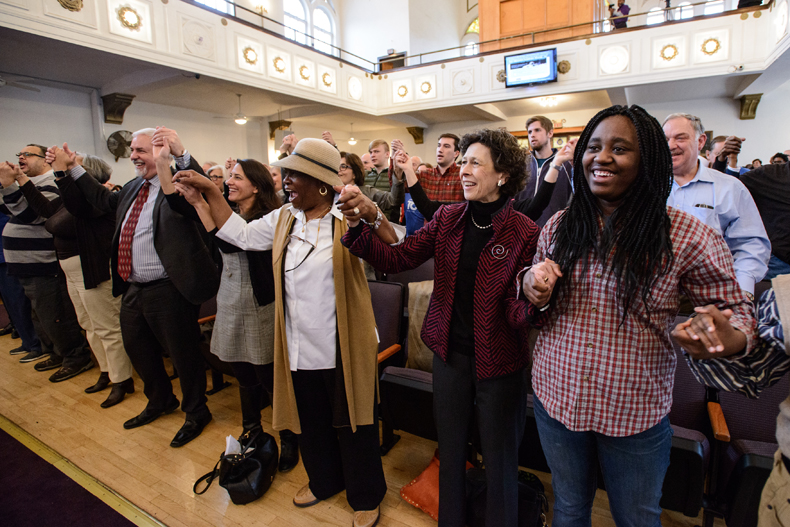
Jews, African-Americans reaffirm commitment to Martin Luther King's dream
Jane Charney
“The band that sings for freedom must get back together,” said Bishop Derrick Fitzpatrick during his welcoming remarks at the fourth annual Dr. Martin Luther King Jr. Day commemoration program.
More than 200 members of the Jewish and African-American communities gathered Jan. 16 to affirm a shared commitment to promoting justice, equality and freedom. The program included reflections on King’s legacy and on the relationship between the Jewish and African-American communities as well as performances by student musicians from the North Lawndale area.
The event was orchestrated by JUF’s Jewish Community Relations Council, Stone Temple Baptist Church, the North Lawndale Historical and Cultural Society, Sinai Health System and the Firehouse Community Arts Center
“We are at a critical juncture in our country’s history,” said Fitzpatrick, who leads Stone Temple Baptist Church. “We cannot allow the repeat of injustice, the repeat of history. The band that leads the way toward equality and hope must get back together.”
JUF’s Jewish Community Relations Council Chair David T. Brown echoed Fitzpatrick’s call for action.
“Our two communities have a long history of working together toward making our shared values a reality for all of us,” Brown said. “None more so than Dr. King understood that our values must also translate into action. Today, we must look toward tomorrow and in doing so pledge our continued commitment to pursue full equality, safety, opportunity, and justice for all humankind.”
The keynote speaker was Shari Runner, president of the Chicago Urban League. She highlighted the kind of transformation required to make the ideals of justice and equality a reality for all Chicagoans and recognized the longstanding partnership between the Jewish and African-American communities. She urged all to confront silence in the face of injustice.
“Silence allows hate to thrive,” Runner said. “Dr. King said that ‘our lives begin to end the day we become silent about the things that matter.’ Silence is not an option.”
Several students contributed music and words of inspiration to the program. Pianist Devin Shaw, an eighth grader at Lane Tech Academic Center, and opera singer Maya Barber, a junior at ChiArts High School, performed; middle school students Marina Brown, Harold Walter Jr. and Tamarion Lewis also offered their take on following in King’s footsteps.
“We need to re-awaken Dr. King’s dreams,” Lewis said.
Prior to the event, 40 volunteers from JUF’s TOV Volunteer Network joined Stone Temple members for a special service project, preparing and serving a hot breakfast to the North Lawndale community. Seventh graders from the community also gathered with Chicago Jewish Day School students for a series of games and conversations.
North Lawndale is a historically special place for both African-Americans and Jews in Chicago. The community was once a hub of Jewish life in Chicago and became known as “Chicago’s Jerusalem.” It was also where King lived in the late 1960s during his affordable housing campaign. King preached at Stone Temple on many occasions even as city administrators threatened to cut off funding from daycare and school programs for letting him speak there.
“We are here to remember what Dr. King did and to remember that we need to push a little further,” Fitzpatrick said. “Dr. King didn’t just have a dream; he had a vision that America would be a better country. We’ve come here believing that things will get better. No matter what the circumstances may look like around us, we know that it’s going to get better.”
Other stories
-
Two local teens win national recognition
Recipients of the annual Diller Teen Tikkun Olam Awards
Read more -
Celebrating six young award winners cultivating the community
Introducing young adult award winners
Read more -
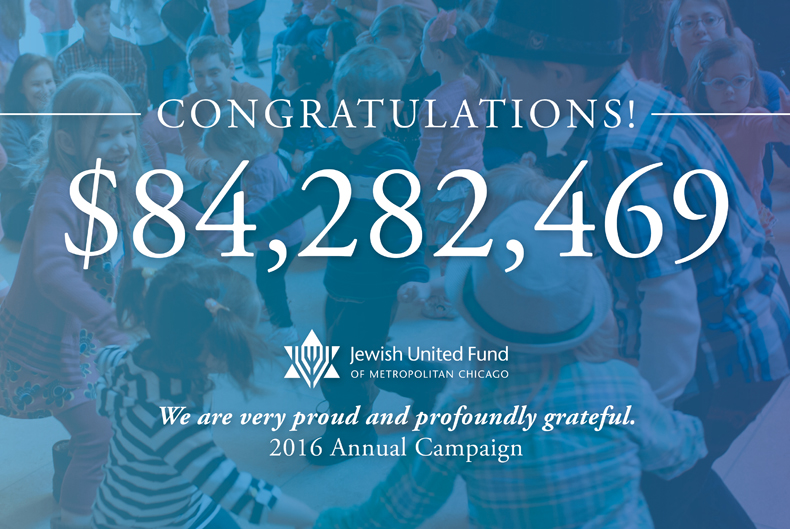
Jewish community raises $84.3 million for 2016 JUF Annual Campaign to care for the most vulnerable
The just-completed 2016 Annual Campaign of Chicago’s Jewish United Fund, one of the largest annual fundraising efforts in the nation, raised $84,282,469, an increase of $1,159,705 over the previous year.
“This is an incredibly generous outpouring from our community,” 2016 JUF Annual Campaign Chair Harry Seigle said. “But what really counts is the difference those dollars will make, enabling us to rush aid to more people in crisis, to lend relief to more of the most vulnerable among us, to transform more lives, and to strengthen our community, here in Chicago, in Israel, and around the globe.
“We are deeply grateful for the trust our supporters place in JUF,” Seigle said. “We truly are ‘Together for Good.’ “
The funds donated annually through JUF support a network of more than 70 vital social service agencies and programs that heal and nurture more than 500,000 Chicagoans of all faiths, and provide humanitarian assistance to millions of Jews in Israel and throughout the world.
The Annual Campaign is the most significant component of JUF’s overall fundraising efforts, which also include bequests, the Centennial Campaign, corporate sponsorships, donor advised funds, support foundations and more. They also include donations to emergency relief efforts, which this past year have helped Israelis rebuild from the devastation of forest fires, aided Syrians fleeing the bombing of Aleppo, and supported victims of the Baton Rouge flood and those in the path of Hurricane Matthew.
As a major funder of human services addressing the needs of Illinois’ most vulnerable populations, the Federation also receives significant grants – totaling nearly $16.4 million in 2016 – from governments and foundations, and is a beneficiary of the United Way of Metropolitan Chicago.
“The Annual Campaign makes it possible for us to turn our commitment into action,” said JUF Board Chairman Michael H. Zaransky. “It provides the tools to make life better for people all over Chicago, Israel, and remote corners of the Jewish world. And it also is the way every single donor says ‘I am part of this community, and I make a difference.’ ”
“An effort of this scale takes incredible commitment by hundreds of volunteers,” JUF President Steven B. Nasatir said, “a commitment to all of those we help and serve, and to our community. It simply could not have happened without people like Harry Seigle and so many, many others. Thank you to all of them, and to the JUF staff who worked hand in hand with them.”
Among the other volunteer leaders of the 2016 Campaign were End-of-Year Chairs Gita Berk and Jimmy Sarnoff, Major Gifts Chair Kim Shwachman, Women’s Division Campaign Chair Cindy Kaplan, and Young Leadership Division Campaign Chair Bryan Rosenberg.
Other stories
-
Two local teens win national recognition
Recipients of the annual Diller Teen Tikkun Olam Awards
Read more -
Celebrating six young award winners cultivating the community
Introducing young adult award winners
Read more -
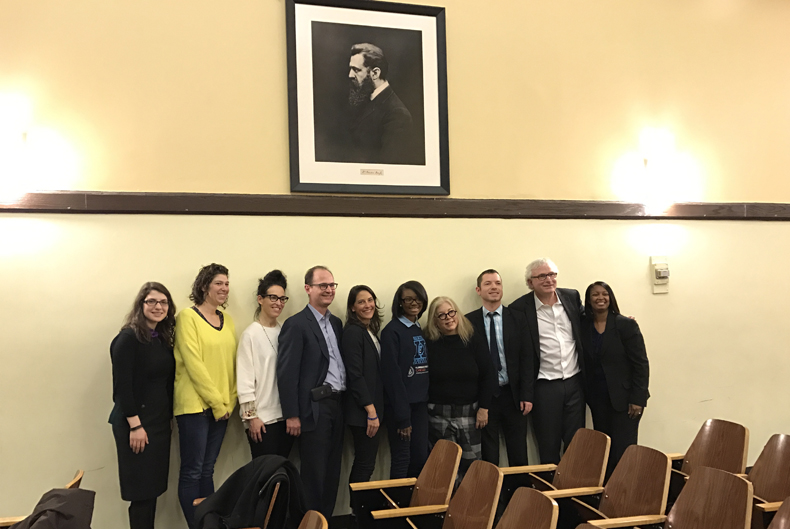
Herzl School of Excellence Principal Tamara Davis has a dream; it’s to see her students through four graduations: eighth grade, high school, college and graduate school.
“We are the living legacy of both Theodore Herzl and Dr. Martin Luther King Jr.,” Davis said. “We’ve got to ensure that we do the work that furthers their legacy.”
Built in 1915, the school was named in honor of Herzl, the founder of modern Zionism, even though he never set foot in the United States. At that time, the school’s neighborhood of North Lawndale was the hub of Jewish life in Chicago, often referenced as “Little Jerusalem.”
Davis honors the neighborhood history, and students learn about Herzl as well as about American heroes, African-American leaders, and other inspirational figures. She points to the lesson of working hard and achieving dreams despite seemingly insurmountable obstacles.
“Both [Herzl and King] wanted people to look toward a bright future and not get stuck in the dark past,” eighth-grader Marina Brown said at a ceremony to unveil a new portrait of the school’s namesake on Jan. 17. “Both believed in dreams and fought for their beliefs that dreams can become reality. Both men made their mark, and now it’s our turn.”
Davis invited Jewish community leaders, including David T. Brown, chair of JUF’s Jewish Community Relations Council, to speak to the school’s 59 eighth grade students about Herzl’s legacy. Moran Birman, consul for public diplomacy at the Consulate General of Israel, also participated in the event, which took place the day after Dr. Martin Luther King Jr. Day.
“Herzl teaches us to dream a bigger dream,” Brown said. “Our city faces many challenges, and it’s up to us to link arms together to find solutions.”
Donated by Toronto-based attorney David Matlow, the Herzl portrait is part of a nascent collection of images of inspirational leaders such as King, Herzl graduate Michael Scott Sr., whose son Michael Scott Jr. now represents North Lawndale as alderman, and President Barack Obama. The gallery will hang in the school’s newly refurbished auditorium.
“The most powerful thing in the world is an idea,” Matlow said during the dedication. “Lots of people have brilliant ideas but never act on them. Herzl is my hero because he acted on his idea that the Jewish people should live in a place where they are safe and no one looks down on them. When you look at [Herzl’s] picture, I want you to think, ‘there’s a guy who dreamed big and did something about it, and I want to do the same.'”
Herzl School students watch Matlow’s documentary, “My Herzl,” every year. He owns one of the largest private collections of Herzl memorabilia in the world.
Other stories
-
Two local teens win national recognition
Recipients of the annual Diller Teen Tikkun Olam Awards
Read more -
Celebrating six young award winners cultivating the community
Introducing young adult award winners
Read more -
Sixteen Jewish Community Centers throughout the U.S. received telephonic bomb threats on Monday, all of which turned out to be false. In each case, the facilities were immediately evacuated and swept by local law enforcement until the threats were deemed false. The FBI is currently investigating these cases, none of which occurred in Chicago or Illinois.
These incidents highlight the importance of the Nonprofit Security Grant Program, which allows nonprofit institutions to make security enhancements and provide preparedness training. The Jewish Federation of Metropolitan Chicago remains a strong advocate for this program, which has provided local Jewish community and other local nonprofits with nearly $12 million in funding since 2005.
“This program has been instrumental in securing physical security enhancements and providing preparedness training at Jewish communal institutions throughout the Chicago area,” said David Golder, chair of JUF’s Government Affairs Committee. “Unfortunately, the threats to our community have increased in recent years. It is our hope that the 115th Congress and members of our Illinois delegation will work to increase resources for this important program in the Fiscal Year 2017 and Fiscal Year 2018 budget.”
Other stories
-
Two local teens win national recognition
Recipients of the annual Diller Teen Tikkun Olam Awards
Read more -
Celebrating six young award winners cultivating the community
Introducing young adult award winners
Read more -
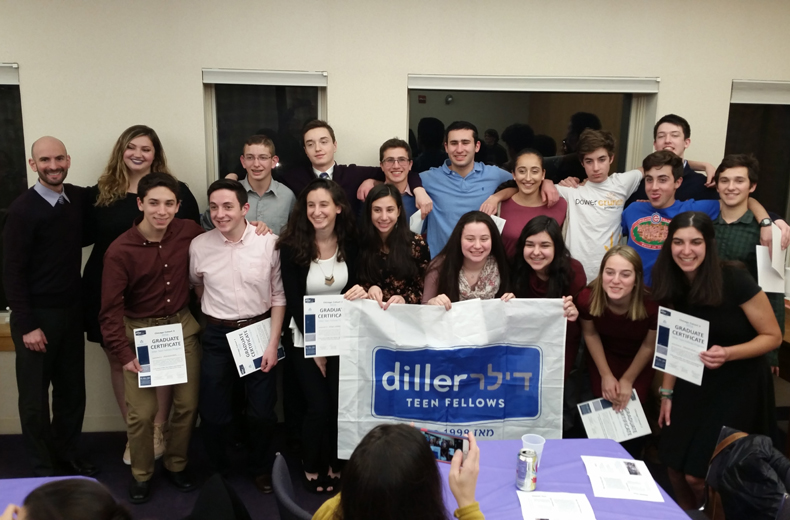
Diller Teen Fellows graduate reflects on experiencing Israeli culture
Elly Qunell
Following 16 months developing leadership skills, exploring Jewish identity, experiencing Israel, and participating in acts ofTikkun Olam , 19Jewish teens from the Chicago area graduated from the Diller Teen Fellows program on Sunday, Jan. 8. Graduating Fellow Elly Qunell, a junior at Naperville North High School, delivered the following speech.
Hello everyone. For those of you who do not know me, my name is Elly Qunell.
I’m here to speak to you about one of the Diller Pillars, Israel. A peak experience of Diller Teen Fellows is the Israel Summer Seminar. This is the three weeks we spend together in Israel. Honestly, it is one of the main reasons I applied for the program.
I feel that we spent a lot of time building up to the trip. There was not a workshop or Shabbaton when we didn’t spend time talking about current Israeli events or learning valuable communication skills that we would use in Israel. However, the Israel pillar is much more than just a trip that we all plan and take together. The Israel experience represents something much larger, a coming together and belonging for Jewish teens from across the globe.
During our three weeks, we met Jews from Canada, South Africa, and Australia, as well as other parts of the United States and Israel. I learned what Israel means to different peoples and how being in Israel as a fellow of Diller is truly blessing. Despite differing religious and political views, over 700 Jewish teenagers were able to come together in harmony and be a part of one, diverse and pluralistic family.
I live all the way out in Naperville where the Jewish population is relatively small. My confirmation class had less than ten people. My motivation to join Diller was to be part of a bigger Jewish community. I never thought that throughout these 15 months my community would consist of hundreds of people from around the world.
Before Diller, I had been to Israel once with my family. For those two weeks, I was with Americans doing American things, visiting all of the most popular sights in Israel. My only exposure to Hebrew was our tour guide speaking it to others as he navigated our way through the country. What I didn’t know was that being a tourist and actually living in a country are completely different.
It’s hard to truly experience a country and its culture until you live there with a native’s perspective. You can travel to the Western Wall and you can eat the best falafel, but none of that compared to living in an Israeli household.
As a cohort, we got the purest form of Israeli culture. We spent a week seeing the country from an Israeli perspective and learning to navigate daily life. For most of the time I spent at with my host family, I was observing. I was hosted by a Diller Teen Fellow from Kiryat Gat, Lachish, and Shafir named Liron. Liron spoke English fairly well, but the only other member of her family who spoke English was her mom. Liron spent a lot of her time translating from Hebrew to English, and back again. However, my favorite conversations were the unspoken ones with her younger siblings. We spent entire nights playing card games and video games that require no spoken communication, but truly made me feel like a member of the family.
After everything, I had the opportunity to experience while in Israel, I’m still shocked at how much I still don’t know. Through Diller, I have developed a stronger connection with not just the land itself, but with the people who live there and the meaning Israel has to all Jewish people.
I want to leave you with a quote by Alan Dershowitz, who is a famous Jewish lawyer and juror. “No country in the history of the world has ever contributed more to humankind and accomplished more for its people in so brief a period of time as Israel…”
Thank you all very much.
Elly Qunell is a junior at Naperville North High School and a graduate of Diller Teen Fellows Cohort 3. In addition to Diller, she has taken a number of leadership positions in the community including the Naperville chapter of Operation Snowball and the Student Advisory Board at the Alive Center. She is also active in her school community, serving as a Link Crew Leader, an Adaptive PE leader, and is a member of French Honors Society.
Other stories
-
Two local teens win national recognition
Recipients of the annual Diller Teen Tikkun Olam Awards
Read more -
Celebrating six young award winners cultivating the community
Introducing young adult award winners
Read more -
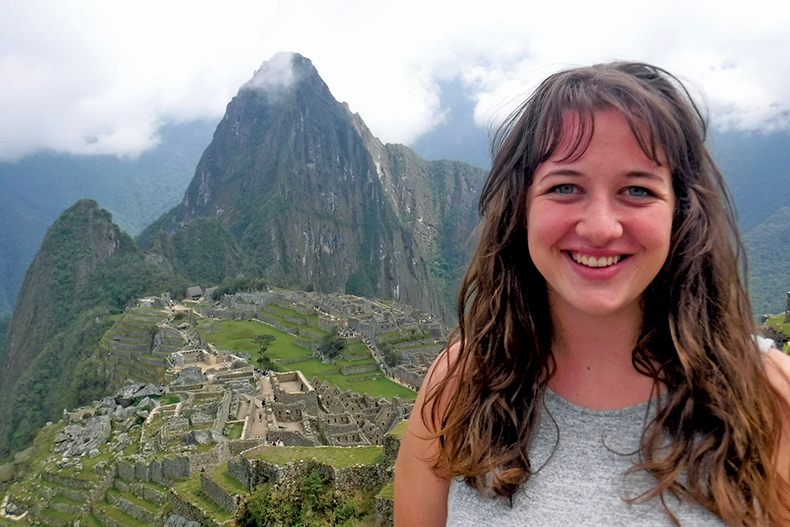
When I began researching study abroad programs, I knew I wanted to learn about as many cultures as I possibly could in four months.
I ultimately chose Semester at Sea. I spent the fall semester living aboard the MV World Odyssey, a former cruise liner that was transformed into a floating campus, offering the same facilities as any other college-classrooms, a library, dining halls, a theater, and a campus store.
The ship docked in 12 ports across Europe, Africa, and South America. Through a combination of Semester at Sea sponsored programs and independent travel, I learned firsthand about each country’s religions, cultures, politics, and histories, as well as the contemporary issues each region faces.
Greece and Italy were the first ports on our itinerary. While I enjoyed walking through thousands of years of history atop the Acropolis and eating gelato after every meal in Rome, I longed for the incredible Jewish community I had left behind in Chicago.
KAHAL-a Chicago-based recipient of a JUF Breakthrough Fund grant-came to my rescue. KAHAL connects students studying abroad to Jewish communities around the world. When my classmates and I realized we would be in port during Rosh Hashanah and Yom Kippur, KAHAL reached out to local synagogues and made all of the arrangements for us.
A group of Semester at Sea students came together to spend Rosh Hashanah at Cominidad Israelita, a tight-knit Reform synagogue in Barcelona. None of us had been to a synagogue that wasn’t in America or Israel, so we weren’t sure what to expect. We were all homesick for our respective synagogues, but as soon as the service started, we realized the tunes and hymns were exactly the same.
Ten days later, I found myself in Morocco during Yom Kippur. KAHAL put me in touch with Rabbi Levi Banon, a Chabad emissary based in Casablanca. Rabbi Banon and his family graciously hosted me for the entire holiday, from the pre-fast dinner to the post-fast feast. While I spent the day refraining from eating, bathing, and wearing leather, I didn’t stop learning. The Banon family told me about the history the local Jewish community, from the Rambam’s days in Fez to the contemporary challenges of living a Jewish life in Morocco.
A few weeks later, the MV World Odyssey crossed the Atlantic and docked in Brazil, where I spent a long weekend with Rio de Janeiro’s diverse community. At Hillel Rio, I spent an evening eating hummus, jamming to samba music, and learning about Hillel’s impact in Brazil. The next day, I joined Hillel students and other young adults for Shabbat. Everyone in the community was so welcoming and eager to share stories, illuminating Brazilian Jewish history and culture. I was thousands of miles from Columbia College’s Hillel in Chicago, but their hospitality made me feel like I was at home.
My incredible Shabbat experience in Rio led me to seek out Jewish communities in the voyage’s final two ports: Guayaquil, Ecuador and San Jose, Costa Rica.
Through Semester at Sea, I pushed myself out of my comfort zone and learning about peoples besides my own. I have dozens of memories from time spent learning about post-colonialism in Senegal or the four days hiking through Peru’s Sacred Valley, learning about indigenous culture. However, the holidays and Shabbats I spent with Jewish communities changed my entire perspective about Jewish identity and peoplehood.
Prior to Semester at Sea, I had only visited Jewish communities in Israel. Immersing myself in Jewish communities across three continents made me realize that as a part of the Jewish people, I am part of something much bigger. Whether we’re in Ecuador or Chicago, we are reciting the same blessings over challah, reading the same weekly Torah portion, and sharing the same 3,000-year tradition of peoplehood, even if our families have different customs or we speak different languages.
Abby Seitz is a third-year journalism student at Columbia College Chicago and an intern at JUF’s Israel Education Center.
Other stories
-
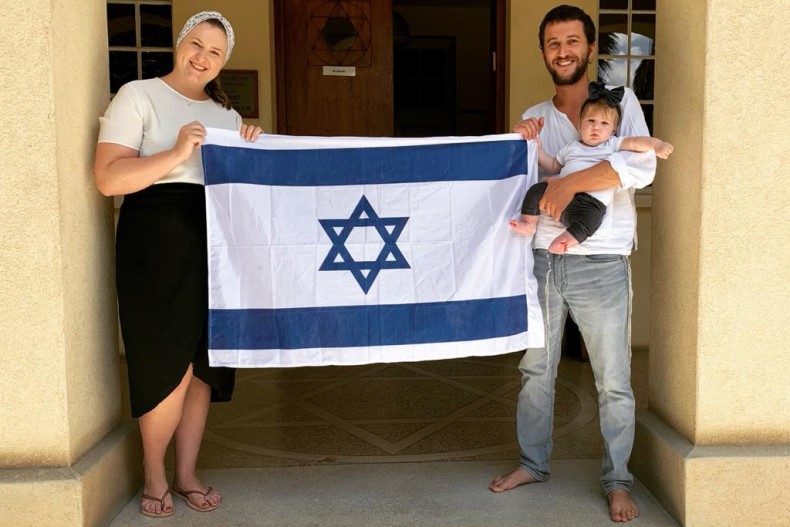
Chicago to Israel to Kenya
A family’s story of living Jewishly on three continents Michelle Cohen World May 28, 2021 Avital, Tzofia, and Netanel Kaszovitz outside their home in Nairobi on Yom HaAtzmaut. When Avital Kaszovitz prepared to be a Modern Orthodox shlicha (emissary) to the Jewish community in Ke
Read more -
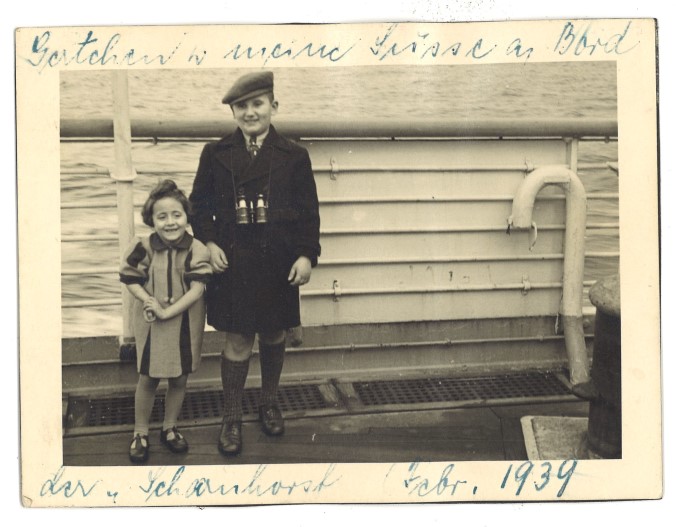
New exhibit spotlights the experience of ‘Shanghai Jews’
Explore a new Illinois Holocaust Museum and Education Center exhibit
Read more -
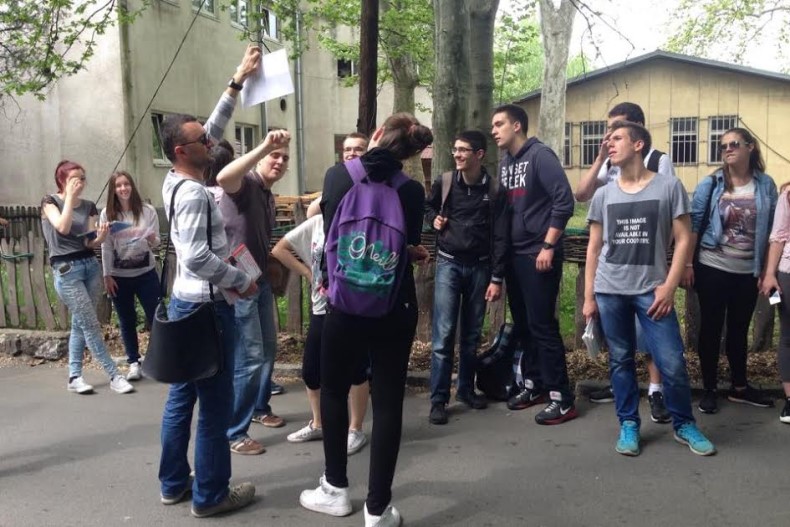
Europe’s brave new teachers of the Holocaust
Teaching the Holocaust in the modern era has its difficulties and rewards.
Read more