Covenant Foundation grant will spur innovation in Jewish early childhood education
The Community Foundation for Jewish Education of the Jewish United Fund of Metropolitan Chicago has received a Signature Grant from The Covenant Foundation to launch The Chicago Teachers Project: A Laboratory for Jewish Early Childhood Education.
“The new initiative will attract and serve as the innovative training ground for a new generation of teachers in Jewish early childhood education,” said Anna Hartman, CFJE’s Director of Early Childhood Excellence, who will serve as project director.
The Chicago Teachers Project is one of nine Covenant Foundation Signature Grants awarded this year. The grants support Jewish organizations and initiatives with novel and imaginative approaches to Jewish learning and wide geographic reach.
“These new grants combine creative visions with robust program designs,” said Cheryl R. Finkel, Chair of the Board of Directors of The Covenant Foundation. “They introduce fresh ideas in diverse domains of Jewish learning and hold exciting potential to inspire communities across North America.”
Applications sought
The Chicago Teachers Project is now recruiting Fellows both locally and nationally; Fellows will assume full-time co-teaching positions in six high-quality Jewish early childhood centers in the Chicago area,. During each of the program’s two years, the Fellows will learn and reflect together in a retreat, a summer intensive, monthly seminars, biweekly meetings with the cohort, and biweekly visits by mentor teacher.
“Ideal candidates for the program are recent Jewish college graduates who are bright, passionate, and seeking meaningful full-time employment. Candidates who have demonstrated a commitment to Jewish life will be strongly considered, due to their expected ability to impart an authentic appreciation for Jewish living,” Hartman said.
Applications for the fellowship, which provides competitive compensation and benefits, are due March 6, 2017. CFJE also is seeking host schools and mentor teachers. Prospective candidates should email [email protected] or call (312) 673-3265.
“As we celebrate our 25th anniversary, we’re both taking stock of the remarkable impact a quarter century of grant-making has had on the field and taking the long view forward into the future,” said Harlene Appelman, Executive Director of The Covenant Foundation.
The Community Foundation for Jewish Education of the Jewish United Fund of Metropolitan Chicago serves as JUF’s department of Jewish Education. CFJE’s mission is to advance imaginative, compelling, collaborative, and experiential Jewish education. The Covenant Foundation is a program of the Crown Family Philanthropies. The foundation is currently inviting 2017 Signature and Ignition grant applications. Visit www.covenantfn.org/grants for information and guidelines.
Other stories
-
Two local teens win national recognition
Recipients of the annual Diller Teen Tikkun Olam Awards
Read more -
Celebrating six young award winners cultivating the community
Introducing young adult award winners
Read more -
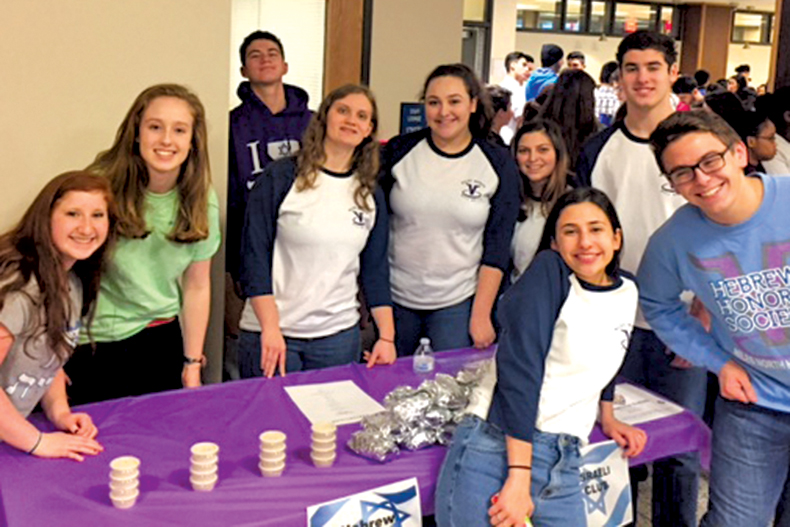
“Shalom!” is not something a student expects a public high school teacher to say on the first day of class. Unless it is a Hebrew language class.
With seven such classes, Chicago stands out as having more public schools teaching Hebrew than any other community in the United States; Hebrew is now being taught to students at Deerfield, Evanston, Glenbrook North, Highland Park, New Trier, Niles North, and Stevenson high schools. Chicago also is the only Federation which promotes and supports the enrollment of Jewish teens in public-school Hebrew language programs. With enrollment of more than 500 students, Chicago accounts for the largest share of students, estimated at around 1,500 nationally.
Israel’s significance to the U.S. makes Hebrew one of the languages sought by the Foreign Service for its employees. Many top colleges offer Hebrew, too.
Hebrew, an official language of Israel, is a link both to its ancient past and its high-tech present. “Learning this language makes me feel a connection to history and to the people who have been speaking it for thousands of years,” said Hannah W., a sophomore at Glenbrook North. “This class has allowed me to create special bonds with my classmates, creating a lively environment for me to learn in.”
Josh Morrel started teaching Hebrew there in 2010, the year its Hebrew program began. That year, it was the smallest language class, with 50 students. “Now that we consistently top 80 kids, we are the third largest language, behind French and Spanish,” Morrel said. “Today, we serve five levels, including advanced topics and independent studies.”
Morrel adds that his school, like others, now offers the STAMP (STAndard Measurement of Proficiency) test, a nationally recognized standard Hebrew exam for students to earn accolades, such as the Illinois State Seal of Bi-Literacy, which now merits college credit in every university in Illinois.
New Trier, where Hebrew has been taught since the 1980s, also has some 80 students, in all four grades. The students are typically active in the community and their congregations. The teacher, Kimberly Hafron, grew up in Tucson, Ariz., went to an ulpan (Hebrew immersion course), and has studied Biblical Hebrew. This is her 15th year teaching the subject.
Some of her students continue their Hebrew education in college, and some place out of their college freshman course. “Students are not aware how significant Hebrew is for college admissions, how unique it makes them,” Hafron notes, adding, “Students benefit from doing what they didn’t know they could do. It prepares them with the confidence that creates further success.”
New Trier’s Hebrew program partners with the iCenter, she says, for “one awesome crazy event every year”-this year’s being an Israel film festival.
The iCenter- the “i” is for “Israel”-promotes Israel education in schools and Jewish organizations. Among their services, it offers professional development for Hebrew teachers. “Teachers have to maintain certification and licensure,” explains Binnie Swislow, an iCenter consultant. “iCenter offers these accredited hours, teaching the Hebrew language and its culture.”
Speaking of Israel, some Hebrew students can now go there-on an American-Israeli exchange program at Niles North, the first of its kind with a public school in the U.S. “The students will go to Israel for 10 days over spring break,” said Anna Raiber, who teaches Hebrew at Niles North, and now at Evanston as well. The exchange school in Israel is in Carmiel, her Israeli “hometown”- and her mother is its principal.
Niles North offers Hebrew in all four grades, plus Advanced Placement. “We don’t think of this as a Jewish class, but as a foreign language class,” she said. Niles North is a huge school, she adds, but the Hebrew class offers a daily dose of community. Niles North also had an Israeli movie night, Raiber said, hosted by their Hebrew Honor Society, which was attended by 500 students and their friends and families.
Niles North senior Spencer Schwartz is the president of the school’s National Hebrew Honor Society chapter. “The Hebrew Program at Niles North is more than a language, rather a community of students passionate about their identities,” he said. “We are able to teach peers, learn from others, and flourish as one family.”
“I am so lucky to be able to study Hebrew at public school,” said Niles North senior Alana Stein. “Hebrew connects me with my cultural and religious identity, and it creates a small, meaningful community in such a large school. I am so grateful for the incredible Hebrew program at Niles North.”
Raiber was born in Russia, and then moved to Israel before coming to the U.S. She is still fluent in Russian, which she says is harder to learn that Hebrew. In fact, students can become fluent in Hebrew by their third year, rare for a foreign language.
Raiber pointed out that Spanish and French are often taught in middle school, or junior high, which naturally leads students to want to continue those languages into high school. Hebrew, however, is not taught in middle schools-yet.
“It is important to introduce Hebrew into the middle schools, because whatever language the students are taking in those grades tends to be the one they continue to take in high school,” agreed longtime JUF Board Member Andrea Yablon, who also has served as Chair of the JUF Overall Planning and Allocations Committee and is a member of JUF’s SAFA Foundation.
SAFA, the Foundation for Promotion of Hebrew Language and Israel Culture in Public Schools, is named for the Hebrew word for “language.” JUF established SAFA in April 2015 to be the first foundation aimed at promoting the study of Hebrew and Israeli culture in the public schools. SAFA brings together organizations, students, and parents involved in existing Hebrew programs; advocates for expanding Hebrew to more school districts; and raises and allocates funds to support these efforts. The foundation also is working introduce Hebrew language study to middle schools.
Some students take Hebrew in high school after having taken it in day school in their elementary school years, Yablon said; adding Hebrew to public middle schools will allow those students to enter high school Hebrew with familiarity with the language as well.
Helene Herbstman also is part of that effort. Her previous job was to recruit students to take Hebrew in high school. Now, she chairs a JUF committee that continues that work, marshaling the resources of many Jewish organizations that interact with young teens and their parents: congregations and rabbis, youth groups and Israel-experience programs, day and overnight camps, and more. Along with learning the language, she pointed out, Hebrew class provides an education about Israel itself, which is useful whether visiting there or defending Israel against protesters at college. Non-day school students can begin Hebrew I studies without any fears of being behind others. It’s a great opportunity for everyone, regardless of background.
Devra Shutan, who serves on JUF’s Women’s Board, also serves on this committee. In a recent meeting, she listed several advantages to taking Hebrew in high school, from learning about Israeli culture to engaging with Israelis themselves. “If students continue Hebrew in college,” she said, “it’s like having something familiar there from home.”
The Hebrew teacher at Deerfield, Yaffa Berman, teaches some 80 students and wants them to connect to Israel. She uses the textbook as a starting point, supplementing it with Israeli media. “My goal is to get the students to speak- and speak correctly- quickly,” she said.
Every Friday, her students watch a movie with a theme or story they have studied all week, from the Entebbe rescue to immigration to Israel from across the Middle East. Berman’s parents made aliyah (immigrated to Israel) from Iraq in 1951; while she was born in Israel, she shared their immigrant story.
“Language has to connect to a land, a people,” she said. She uses videos to immerse the students in Israeli culture-teaches them how to make hummus in the school’s kitchen, has them act out Israeli plays, and shows them the paintings of great Israeli artists.
Guests to Berman’s classroom have run from Israeli politicians and soldiers to U.S. Congressional figures to the Israeli rap group “Strong Black Coffee.” “Some 600 people came to their performance,” she said. “It was their largest audience on their North American tour.”
A hundred students and family members attended the recent inductions to the school’s Hebrew Honor Society. And every January brings “Israel Day,” in which her students turn the school’s lobby into a shuk (marketplace), with hummus-making, hamsa painting (amulet popular in Israel), Israeli music, and falafel for sale.
“We are very visible and strong,” she said. “We are very proud of what we have accomplished, but there is always more to do. Our students come back every year; there is a sense of mishpacha.”
Hebrew classes have even made the news, thanks to Anna Gorbikoff, who was profiled in The Chicago Tribune . Gorbikoff teaches Hebrew at Stevenson, a total of 32 students in three grades. Many of her students are involved in their congregations, youth groups, and camps outside of the classroom, and she hopes all will go on Birthright Israel trips. Some are native Israeli speakers, but now have to learn to read and write the language. In class, she focuses on language that is applicable and relevant-“It helps if it means something to them,” she said.
Gorbikoff was born in Ukraine and went to school in Israel, also practicing her Hebrew with a shlichah (Israeli cultural ambassador) at her Hillel. Plus, she teaches Spanish. “Learning your fourth language is easier than your third,” she laughed. “Language is my thing,” she said. “Nothing is more exciting than being able to express yourself in different ways.”
For high schoolers in the Chicago area, Hebrew class can provide a taste of adventure, a taste of comfort-or even a taste of hummus. Truly, something for all tastes.
Enrollment for Hebrew courses for 8th graders, who will be entering one of these high schools next year as ninth graders, takes place in January or February.For more information about Hebrew in public schools, contact [email protected].
Other stories
-
Two local teens win national recognition
Recipients of the annual Diller Teen Tikkun Olam Awards
Read more -
Celebrating six young award winners cultivating the community
Introducing young adult award winners
Read more -
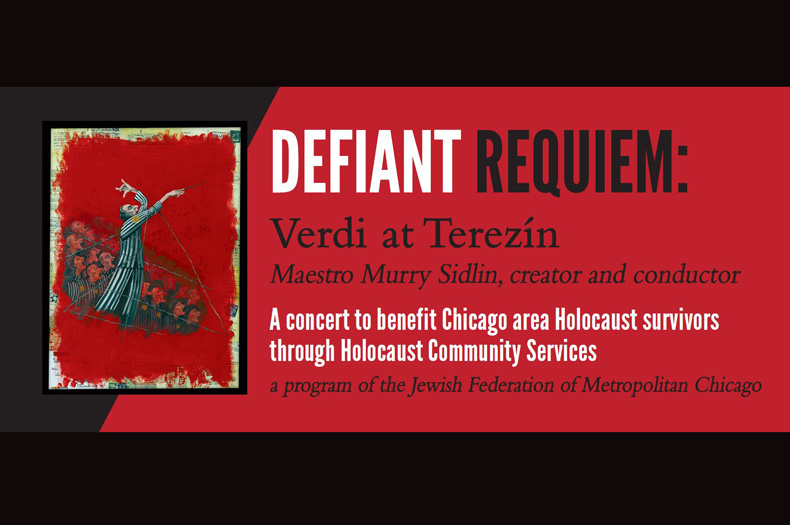
Tickets now are on sale for the Jewish Federation of Metropolitan Chicago’s gala presentation of “Defiant Requiem: Verdi at Terezin,” a remarkable multimedia production that makes its Chicago premiere Thursday, March 23, at Symphony Center, 220 S. Michigan Ave.
Created by Maestro Murry Sidlin, “Defiant Requiem” commemorates the story of how, in the depths of the Holocaust, within the notorious Terezin (Theresienstadt) concentration camp, one man’s dream gave birth to an unparalleled act of defiance and hope.
The production combines full orchestra and concert choir with elements of on-stage drama, video interviews and authentic film from the era. The Chicago performance, which Sidlin will conduct, features actors Jeremy Piven and Tovah Feldshuh, the Chicago Philharmonic, the Chicago Vocal Artists Ensemble conducted by Cheryl Frazes Hill, soprano Jennifer Check, mezzo-soprano Ann McMahon Quintero, tenor Zach Borichevsky and bass Nathan Stark.
The local presentation is a one-time effort to raise significant funds for the Federation’s Holocaust Community Services program. Lead sponsors are the Crown Family and Pritzker Family Philanthropic Fund, which have underwritten all productions costs. 100 percent of all other gifts and proceeds will go directly to support Holocaust survivors in need.
Tickets for the Chicago performance can be purchased at JUF.org/DefiantRequiemTickets .
Sponsorship opportunities also are available. For information on those, call Rachel Sternberg at (312) 444-2893.
The Chicago premiere is chaired by Virginia and Norman Bobins and Karyn and Bill Silverstein.
“Defiant Requiem” brings to life the tale of Raphael Schächter, a young conductor deported to Terezin from Prague, who organized a chorus of 150 fellow prisoners that, from a single smuggled score, mastered Verdi’s two-hour “Requiem Mass.” Despite suffering from hunger, disease, and forced labor, the prisoners performed the famous oratorio 16 times in the camp-including one concert before senior SS officers and a Red Cross delegation.
When sung by prisoners rather than worshippers, the words of the requiem became a condemnation of the Nazis. Confronting their captors face to face, these Jews sang to the Nazis what they could not say.
Since its debut in 2002, “Defiant Requiem” has been experienced by some 65,000 people across the United States and around the globe, most notably in New York, Boston, Washington, D.C., Budapest, Prague, Berlin, Jerusalem-and on the grounds of Terezín.
The Chicago area is home to more than 6,000 Holocaust survivors who, in addition to the physical, psychological and financial challenges faced by many seniors, must deal with a wide range of issues unique to their experiences.
The Jewish Federation’s Holocaust Community Services program provides safety-net services to rescue many of them from material and social poverty. HCS delivers food, medical care, dental care, financial aid, and in-home care to Holocaust survivors in need, and creates a sense of extended family and community among survivors through regular socialization opportunities and weekly support groups.
Other stories
-
Two local teens win national recognition
Recipients of the annual Diller Teen Tikkun Olam Awards
Read more -
Celebrating six young award winners cultivating the community
Introducing young adult award winners
Read more -
Jewish Women’s Foundation awards $345,000 in grants
Christine Sierocki Lupella
The Jewish Women’s Foundation of Metropolitan Chicago (JWF) has awarded $345,500 to 21 outstanding projects that improve the lives of Jewish women and girls in Chicago and around the world.
With more than 330 trustees and a pledged endowment of nearly $9 million, JWF has awarded $3.5 million to 153 unique projects to improve opportunities in all aspects of Jewish women’s and girls’ lives, and will mark its 20 th year of bold, innovative grantmaking in 2017.
“The Jewish Women’s Foundation started in 1997 with a vision- and in the 20 years since, the reality has far exceeded that vision,” said Alona Anspach, JWF’s first chair, and a founding and multigenerational trustee.
JWF’s grants fund strategic projects that create social change at the individual, communal and institutional levels. This year’s total includes multi-year grants and grants from The Ellie Fund at the Jewish Women’s Foundation of Metropolitan Chicago (see sidebar) .
“JWF serves as a forum for Jewish women to be heard, to learn, to act, and to lead,” said Nancy Kohn, JWF Chair. “Sitting at our philanthropic table are women representing different perspectives and generations, but who share a deep commitment to advancing Jewish women and girls.”
Trustees make grants to organizations and projects serving Jewish women and girls, with a focus on one of three areas: economic security and legal reform; education and leadership development; and health and well-being.
This year, several of JWF’s new grantees include:
Economic security and legal reform: WePower: The College for Women in Politics addresses the disproportionate distribution of political power in Israel by helping women gain the skills and knowledge they need to run, be elected and ultimately advocate for women’s rights and representation in Israeli government from the local to national levels.
Education and leadership development: Project Kesher: Next Gen: If Not Now, When? equips young Jewish women living in Russia, Ukraine, and Belarus with leadership skills, strengthened Jewish identity, and the knowledge to conduct social justice initiatives in their communities, in the press, and via social media, through ongoing mentoring and support, and online Russian language resources.
Health and well-being: The Tel Aviv Sexual Assault Crisis Center: Sexual Assault Testimony Project helps liberate survivors of sexual violence from their hidden trauma through audiovisual documentation of their personal testimonies of sexual assault. For many survivors, this may be the first time they feel they have received emotional acknowledgement or validation of their experiences. Documentation also serves as a tool to show victims that they are not alone in their suffering.
“There is no stopping a bunch of smart women coming together to tackle issues such as violence against women across the globe,” said Shari Slavin, JWF Grants Chair. “Our balanced docket represents the power of providing Jewish women with meaningful, multigenerational involvement at the philanthropic table.”
New grants have also been awarded to the Midwest Access Project; and Jewish United Fund/Jewish Federation of Metropolitan Chicago : May’yan Research Training Institute.
In addition, JWF has awarded a new two-year multi-year grant to the Jewish Women’s Funding Network, to support collaborative and effective efforts for women’s rights and gender equality in Israel with a focus on labor rights.
JWF renewal grants include: ATZUM: Task Force on Human Trafficking ; National Council of Jewish Women Chicago North Shore Section: Jewish Community Against Sex Trafficking Coalition Chicago ; Adva Center: Community Empowerment to Improve the Lives of Women and Girls ; Yeshivat Maharat; Mavoi Satum: Supreme Court Appeals Department: Advancing Change in the Realm of Personal Status in the State of Israel ; Bishvilaych Women’s Health Organization: Your Health is in Your Hands: Breast Health Awareness ; Eden Center: Crisis and Health Intervention Training for Israeli Mikvah Attendants ; Shalom Bait, Asociacion Civil de Prevencion de la Violencia Familiar : Pursuing Justice, the Law as a Tool of Change ; and the third installment of a three-year multi-year grant to SHALVA: Legal Liaison Program .
Grants through the Ellie Fund at the Jewish Women’s Foundation of Metropolitan Chicago include: Chicago Metropolitan Battered Women’s Network: Medical Response Collaborative ; Midwest Access Project; Paamonim: Economic Empowerment for Single Mothers ; The Voices and Faces Project: The Stories We Tell ; University of Chicago Medicine: WomenLab ; and Women Moving Millions.
“At its core, JWF is about social change philanthropy; we use both a gender lens and a Jewish lens to determine our grantmaking priorities,” Kohn said. “As trustees, we use our combined voices and philanthropic dollars as a catalyst to effect positive change-and that is a powerful experience.”
About The Ellie Fund at the Jewish Women’s Foundation of Metropolitan Chicago
Ellen H. Block, a founding Lifetime trustee of the Jewish Women’s Foundation of Metropolitan Chicago and its first “Women Moving Millions” member, established The Ellie Fund at the Jewish Women’s Foundation of Metropolitan Chicago in 2013 with the first $100,000 of her multi-year Women Moving Millions pledge to JWF. The Ellie Fund at the Jewish Women’s Foundation of Metropolitan Chicago supports causes, issues, initiatives, and programs that promote safety, security, equal rights, equal voice and equal opportunities for girls and women.
The following are detailed descriptions of the 2016 JWF grants:
Economic Security/Legal Reform for Women and Girls
ATZUM: Task Force on Human Trafficking works on the grassroots level with other non-governmental organizations, engaging public, government, and law enforcement agencies to confront and eradicate sex trafficking in Israel. This project is at the forefront of efforts to ensure that the Knesset legislate a Nordic Model law, designed to criminalize the purchase of sexual services and protect the prostituted person.
Mavoi Satum: Supreme Court Appeals Department: Advancing Change in the Realm of Personal Status in the State of Israel . According to halacha (Jewish law based on the Talmud), a couple cannot divorce unless the man gives his wife a get (writ of divorce). Stringent interpretation of this law has resulted in discrimination against women. By creating a department specializing in Supreme Court appeals, Mavoi Satum will establish new precedents that will create positive, long-lasting change and expose this injustice within the Chief Rabbinate.
Midwest Access Project (MAP) fills gaps in medical education and clinical training and reduces barriers to health care, providing medical practitioners with reproductive health training and patients with access to services-both of which are hindered by religious and ideological institutional refusals. MAP’s ongoing programs include individual clinical training, provider and community education, and regional collaboration to restore reproductive health care options where none or too few exist.
National Council of Jewish Women Chicago North Shore Section: Jewish Community Against Sex Trafficking Coalition Chicago (JCAST) works to eradicate sex trafficking in the Chicagoland area through public awareness, community engagement, and advocacy at local, state, and national levels. Inspired by Jewish values, JCAST partners with interfaith and human rights groups, non-profit organizations, government officials, and law enforcement agencies to advocate for policies, services for victims, and greater awareness.
WePower: The College for Women in Politics seeks to elevate women’s status and representation in Israel by increasing the number of women who run and are elected to public office, helping Israeli women access the knowledge they need to run, be elected, and increase the number of women in high-level decision making positions throughout the country who can ultimately advocate for women’s rights and representation.
Education/Leadership Development for Women and Girls
Adva Center: Community Empowerment to Improve the Lives of Women and Girls . This grassroots community organizing project gives Israeli women the tools they need to become politically active in both formal and informal settings throughout their community. Through education, women in communities throughout Israel will become empowered to effect change in their local municipalities.
Jewish United Fund/Jewish Federation of Metropolitan Chicago: Ma’yan Research Training provides high school-aged girls an opportunity to engage in serious inquiry about the topics that matter most to them. RTI interns produce new, well-researched evidence of the needs and experiences of Jewish teen girls, which can be used by community professionals to improve existing programs. This project is a partnership between the New York-based Ma’yan, the Jewish Federation of Metropolitan Chicago, and DePaul University’s Beck Research Initiative for Women, Gender and Community.
Project Kesher: Next Gen: If Not Now, When? equips young Jewish women living in Russia, Ukraine, and Belarus with leadership skills, strengthened Jewish identity, and the knowledge and ability to conduct social justice initiatives in their communities, in the press, and via social media.
Yeshivat Maharat, the first yeshiva in the United States to ordain women as Orthodox clergy, provides a credentialed pathway for women to serve as spiritual leaders or in rabbinic positions.
Health and Well-Being for Women and Girls
BishvilaychWomen’s Health Organization: Your Health is in Your Hands: Breast Health Awareness targets women in low socioeconomic religious communities throughout Israel who are at high risk for breast cancer. Due to cultural insulation and modesty laws, Orthodox women in Israel tend to be uninformed about breast health. Primary care physicians, obstetricians and gynecologists will be trained by staff breast surgeons in clinical breast exams and women in each community will participate in workshops to help them become proactive about breast health.
Eden Center: Crisis and Health Intervention Training for Israeli Mikvah Attendants seeks to change the objective of mikvah (ritual bath) attendants from performance of the mikvah ritual to becoming an advocate for women’s health and well-being. Through education, Israeli mikvah attendants will address pressing issues such as domestic violence, post-partum depression, and breast health.
Shalom Bait, Asociacion Civil de Prevencion de la Violencia Familiar: Pursuing Justice, the Law as a Tool of Change . Located in Buenos Aires, Shalom Bait is the only Jewish organization working directly to meet the needs of Jewish victims of domestic violence in Argentina. This project will increase public awareness, train professionals in the community on how to intervene in cases involving domestic violence, and engage in advocacy efforts to enforce and strengthen the domestic violence laws in Argentina.
Tel Aviv Sexual Assault Crisis Center: Sexual Assault Testimony Project assists silenced survivors of sexual violence liberate themselves from their hidden traumas though audiovisual documentation of their personal testimonies of sexual assault. The project is designed to help victims to raise their voices and share their stories. Documentation also serves as a tool to show victims that they are not alone in their suffering.
Multi-year Grants
SHALVA: Legal Liaison Program ( third installment of three-year multi-year grant.) SHALVA, the oldest independent Jewish domestic violence agency in the United States, works to address domestic abuse in Chicago Jewish homes and families through counseling and education. SHALVA’s Legal Liaison Program will hire attorneys to provide legal information and support to women who are engaged in lengthy legal battles with the men who abused them. Additionally, the Legal Liaison works to identify and recruit attorneys who will provide pro bono legal representation for SHALVA’s clients.
Jewish Women’s Funding Network (first installment of two-year multi-year grant ) supports collaborative and effective efforts for women’s rights and gender equality in Israel with a focus on labor rights.
The Ellie Fund of the Jewish Women’s Foundation of Metropolitan Chicago
Chicago Metropolitan Battered Women’s Network (CMBWN): Medical Response Collaborative has been created to shift the medical system’s response to domestic violence. Bringing together member service providers in partnership with hospitals, Medical Response teams advocate for doctors and nurses to treat domestic violence as a public health issue where they can play a proactive role in reducing future violence and help those in crisis by properly screening and referring victims.
Midwest Access Project . (See above description . )
Paamonim: Economic Empowerment for Single Mothers aims to increase the financial literacy of single mothers in Israel by teaching them how to change their consumer habits, handle debt, balance their budgets, improve their value in the job market, and manage household finances.
The Voices and Faces Project: The Stories We Tell. This award-winning, Chicago-based storytelling initiative explores how public testimony can be used as a tool for social change and brings the testimonies of Jewish survivors of sexual violence to the public sphere. By sharing the testimony of those who have lived through or witnessed gender related violence, the project seeks to challenge public response to violence against women.
University of Chicago Medicine: WomenLab , In contrast to wide public awareness of and exceedingly profitable advances in medical treatment for male sexual dysfunction, female sexual function and dysfunction remain largely invisible, stigmatized topics, even between women and their physicians. The WomanLab project will provide the public, particularly women and their physicians, with reliable and consumable evidence-based information that will help women and their physicians to interpret and constructively respond to the impending, unprecedented consumer marketing campaign addressing sexual dysfunction.
Women Moving Millions (WMM) is a community of individuals who have made gifts and pledges of one million dollars or more to organizations and initiatives promoting the advancement and empowerment of women and girls. This community believes that women and girls are the single best investment towards creating healthy societies, economic growth, and global stabilization. WMM is committed to funding systemic change and building a peaceful and equitable world.
Other stories
-
Two local teens win national recognition
Recipients of the annual Diller Teen Tikkun Olam Awards
Read more -
Celebrating six young award winners cultivating the community
Introducing young adult award winners
Read more -
Chicago’s Jewish community has watched in horror for five years as one humanitarian tragedy has followed another in Syria, which in turn has created the additional crisis of fleeing refugees. This week’s developments in Aleppo have brought a whole new level of misery.
In response, the Jewish Federation of Metropolitan Chicago has opened an Aleppo Assistance Fund , which will help our overseas partner, the American Jewish Joint Distribution Committee (JDC) bolster its efforts through its Jewish Coalition for Disaster Relief . JDC, along with Israeli institutions providing humanitarian relief to Syrians, has been at the forefront of relief efforts throughout the Syrian crisis.
To contribute to the Aleppo Assistance Fund please donate online or send a check to the Aleppo Assistance Fund, Jewish Federation of Metropolitan Chicago, 30 S. Wells St., Chicago, IL 60606. As is our policy, 100 percent of all funds will be distributed without any administrative cost reimbursement to the Federation.
Please see the following for additional information and background on the situation:
- The American Jewish Joint Distribution Committee (JDC) led- Jewish Coalition for Disaster Relief has been at the forefront of relief efforts.
- News coverage of the Jewish Community Relations Council educational event with Syrian American groups .
- JUF’s Sanctuary TV program , which aired on ABC-7, focused on the Syrian crisis during last week’s show.
- Aleppo enjoyed a major Jewish presence for centuries.
Other stories
-
Chicago to Israel to Kenya
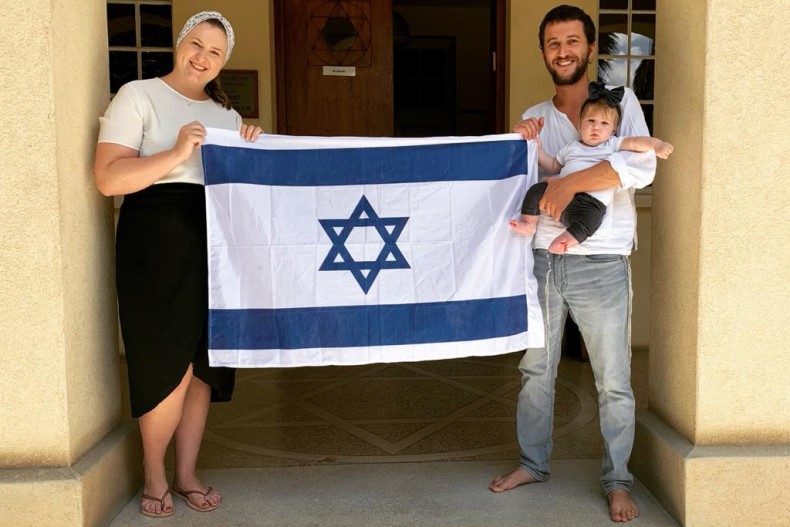
A family’s story of living Jewishly on three continents Michelle Cohen World May 28, 2021 Avital, Tzofia, and Netanel Kaszovitz outside their home in Nairobi on Yom HaAtzmaut. When Avital Kaszovitz prepared to be a Modern Orthodox shlicha (emissary) to the Jewish community in Ke
Read more -
New exhibit spotlights the experience of ‘Shanghai Jews’
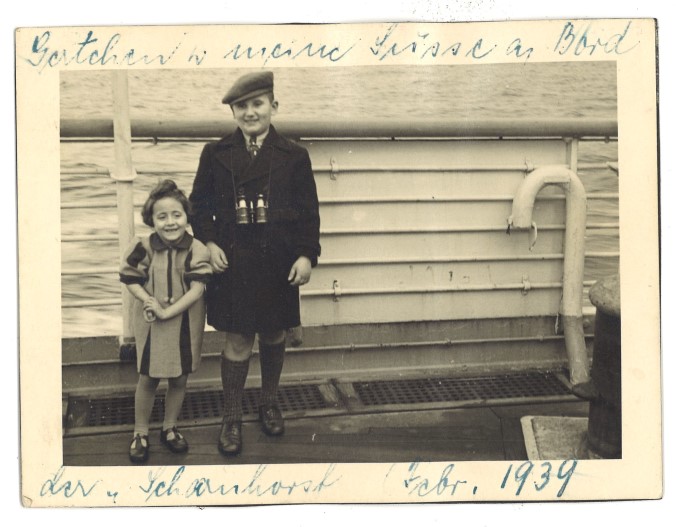
Explore a new Illinois Holocaust Museum and Education Center exhibit
Read more -
Europe’s brave new teachers of the Holocaust
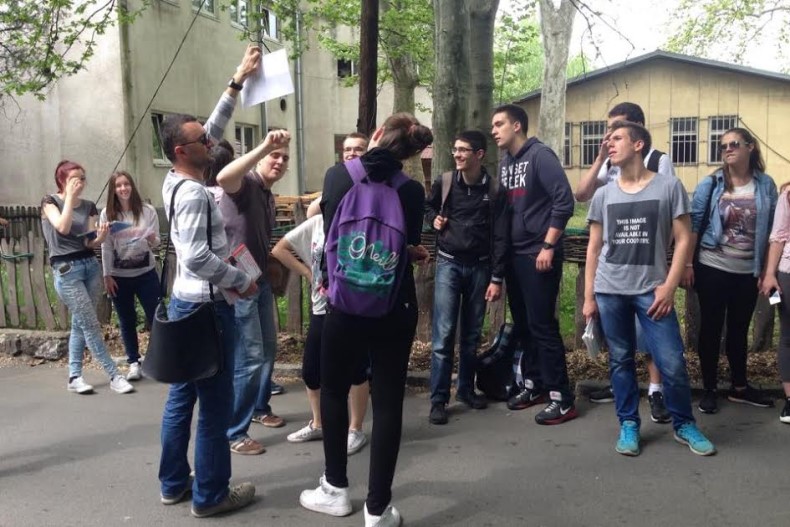
Teaching the Holocaust in the modern era has its difficulties and rewards.
Read more
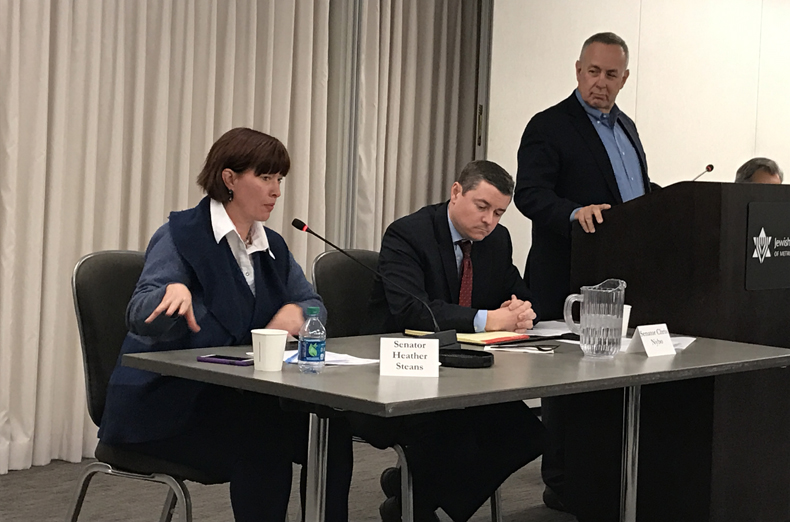
JUF’s Government Affairs Committee convened a discussion with State Sens. Julie Morrison, Heather Steans and Chris Nybo, and Secretary of the Illinois Department of Human Services James T. Dimas on Dec. 12 about Illinois’ new vision for serving individuals with behavioral health needs, state budget negotiations and options for moving forward.
In recent years, Illinois has struggled to meet the mental health and substance abuse needs of people served by the Departments of Healthcare and Family Services, Human Services, Corrections, Child and Family Services, Juvenile Justice and Public Health. After a year-long collaboration among all the directors — with input from community stakeholders including the Jewish Federation — the state submitted an 1115 waiver request to the Federal Government, the entity that would pay for the new program.
“With no state budget and prospects for getting one dim, this is a gusty undertaking,” Dimas said.
The waiver program allows states to apply for Medicaid funding for demonstration projects or pilot programs. If successful, the waiver could bring in roughly $2.7 million in Federal funds to help care for people with mental illness or in need of substance abuse treatment, and will integrate DHS with other departments providing health care, criminal justice, public health and child welfare services. Slated to start next July 1, Dimas said he is hopeful that the Federal government will approve the waiver in the coming months.
Steans, who represents Chicago, and Nybo, who represents Elmhurst, then talked about possible options for a budget resolution. To the dismay of many, the General Assembly and Office of the Governor continue to fail in agreeing on a budget. Now 18 months with no state budget, Steans expressed frustration at lack of progress and urged the public to stop being polite and to start holding General Assembly members accountable.
“A budget is a moral document and we need to determine if we live in a moral state,” Steans said.
Nybo, on the other-hand, is encouraged that a resolution on the budget crisis is coming soon. Citing recent bipartisan efforts that led to passing the controversial state energy bill, Nybo believes the capacity to make hard decisions exists. “A template for a successful negotiation is one when no one gets everything they want,” he said.
Nybo said his focus this session is on improving the process over substance. He believes process reform will mend broken relationships and help rebuild trust between leadership and the administration. When asked how to improve the process, Nybo said open communication is the key to maintaining healthy relationships.
In closing, Government Affairs Committee Chair David Golder stressed the importance of coming together as a community to engage in open dialogue with key officials, which he said is so crucial to the work the Jewish Federation does in Springfield and Washington, D.C.
“As we are fast approaching the end of the state’s temporary spending plan Dec. 31, the grim reality of our state’s fiscal health is near, where spending outstrips revenues by more than $7 billion and where the state owes more than $10 billion in unpaid bills,” Golder said.
Golder highlighted the upcoming Government Affairs Committee 2017 advocacy missions as a critical opportunity to continue the dialogue with elected official. The missions will take place in Washington, D.C. March 21-22 and in Springfield May 9-10.
Other stories
-
Two local teens win national recognition
Recipients of the annual Diller Teen Tikkun Olam Awards
Read more -
Celebrating six young award winners cultivating the community
Introducing young adult award winners
Read more -
With the start of the 115th Congress, there may be new tax legislation limiting charitable deductions. To receive the greatest benefits from charitable tax deductions, consider establishing a Donor Advised Fund before the end of the year. If you already have a Donor Advised Fund, now is a great time to add funds. Another great option to maximize your charitable deduction this year, is to establish a Charitable Gift Annuity.
A Donor Advised Fund is like a charitable giving account. You can gift appreciated securities to open the fund before year end, immediately take a charitable tax deduction for the full value of the security, and recommend where your charitable gifts will go any time it’s convenient for you. In addition, a Donor Advised Fund helps you simplify your giving and permits you to take advantage of our staff’s assistance with your philanthropy.
A Charitable Gift Annuity is a combination of an annuity and a charitable gift. This is a great fit if you have low-yielding assets and are seeking higher returns. In exchange for your charitable gift of cash or appreciated securities, the Jewish Federation will make lifetime payments to you. The benefits of this gift are as follows:
• Receive a lifetime of payments;
• Generate a current income tax deduction;
• Bypass all or a portion of the capital gains on appreciated assets;
• Make a future gift upon your passing to support the community.
Here is a sample of our competitive rates:
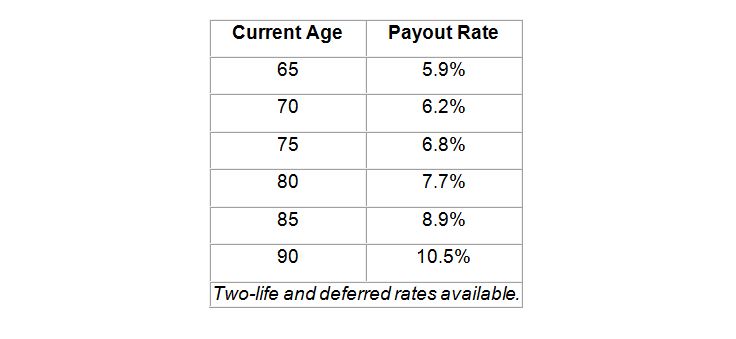
The best asset to fund your Donor Advised Fund or Charitable Gift Annuity is appreciated securities, held for over a year, which may also be limited under new tax laws. Gifts of appreciated securities have the following benefits:
• A charitable deduction for the full fair market value of the asset;
• Bypass of federal and state capital gains taxes;
• Avoidance of the tax on net investment income.
Appreciated securities can be used to make a gift to the JUF Annual Campaign or Centennial Campaign .
If you would like more information, or have any questions, please contact me at (312) 444-2916 or [email protected] . I look forward to speaking with you.
This is not legal advice. Please consult your tax and/or financial advisor before making a gift.
Other stories
-
Two local teens win national recognition
Recipients of the annual Diller Teen Tikkun Olam Awards
Read more -
Celebrating six young award winners cultivating the community
Introducing young adult award winners
Read more -
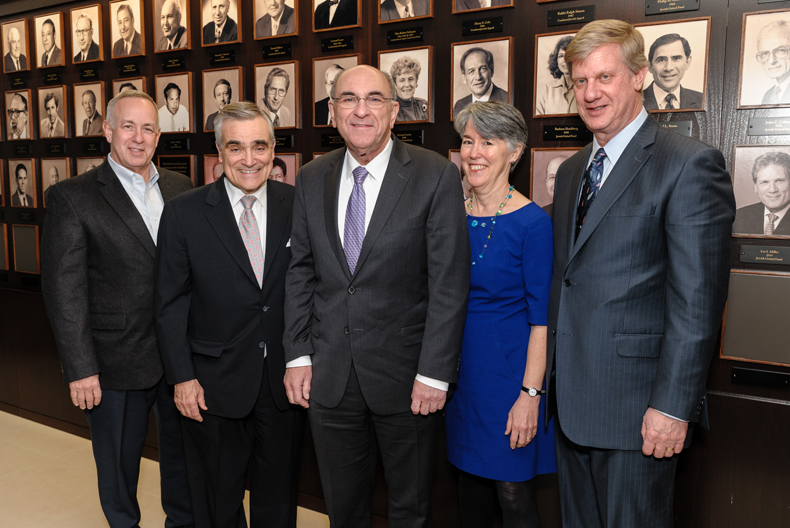
The Jewish United Fund/Jewish Federation of Metropolitan Chicago honored Illinois House Deputy Majority Leader and State Rep. Louis Lang at its December 2016 Board of Directors meeting, paying tribute to his 30 years of service in the Illinois General Assembly.
“Since Lou Lang was elected in 1987, he has been our good friend and a wonderful legislator,” said JUF President Dr. Steven B. Nasatir. “He worked to pass legislation for vulnerable people so our agencies-CJE SeniorLife, Jewish Child & Family Services and Sinai Health System-could continue their life-saving work.”
Over the years, Lang has helped shepherd key legislation on behalf of the Jewish community, including measures to divest from foreign companies doing business with Iran and to fight the Boycott, Divestment and Sanctions movement that targets the State of Israel.
“Lou represents the finest traditions of public service,” said David Golder, Chair of JUF’s Government Affairs Committee. “Committed to his constituents and the issues that are of most importance to all Illinoisans, he stands out for his dedication to getting things done that move us all forward.”
Other stories
-
Two local teens win national recognition
Recipients of the annual Diller Teen Tikkun Olam Awards
Read more -
Celebrating six young award winners cultivating the community
Introducing young adult award winners
Read more -
YLD's Big Event Fundraiser featuring comedy duo Key & Peele scores big laughs, big crowd
Paul Wieder and Cindy Sher
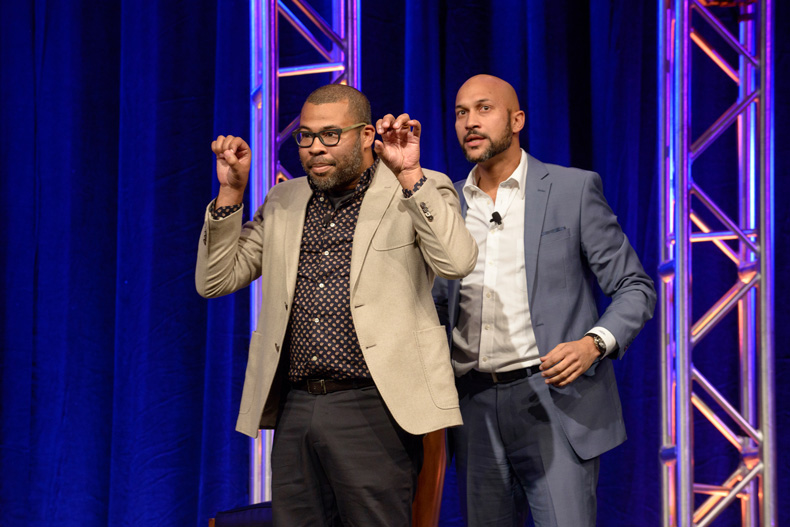
Two weeks before Chanukah, 2,000 young Chicago Jews got some early gifts: the gift of laughter with a performance by comedy duo Key & Peele–and the gift of being part of, and supporting, Chicago’s vibrant Jewish community.
It was all part of the ninth annual YLD’s Big Event Fundraiser, JUF’s premiere fundraising event for young Jewish Chicagoans and the kickoff for YLD’s 2017 Annual Campaign.
“It is incredible to be in the company of 2,000 Jewish young adults. We are so proud that YLD’s Big Event Fundraiser remains the largest annual gathering of Jewish young adults in the country,” YLD President Orly Henry said. “JUF is proud to help you support the things you care about most, like building Jewish communities and fighting hunger.”
The fundraiser and comedy show, held Dec. 10 at the Sheraton Chicago Hotel, raised more than $200,000; while many have supported YLD and JUF for years, the evening brought in 700 first-time donors.
The show was preceded by a party at Public House sponsored by DineAmic Group, and a VIP reception for the Ben-Gurion Society (BGS) at the Loews Chicago Hotel.
BGS is a national donor recognition society for adults age 25-45 who make a contribution of at least $1,000 to the JUF Annual Campaign. Here in Chicago, there are over 700 BGS members, accounting for almost $3 million of the annual campaign. The event offered an exclusive opportunity to join BGS with double the impact, thanks to the 2017 JUF Match Fund. New gifts of, or increased to, $1,000 were matched, resulting in nine new BGS members.
The show was followed by an after-party, also at the Loews, featuring two hours of open bar, late-night food, and live music.
“I personally have seen JUF’s life-changing work here in Chicago and around the world,” said 2017 YLD Campaign Chair Katie Berger. “Whatever you care about, JUF is there. JUF really does it all.”
YLD’s Big Event Fundraiser is an evening for the Jewish young adult community come together to make a big impact, and it’s a gateway into the community for young Jewish Chicagoans, according to Michelle Kallick, a past YLD board member, who has attended the fundraiser every year. “The evening is a great example for older generations of Chicago Jews to see how much the younger generations of Jews care about the community,” she said.
A Key & Peele Reunion
Then Keegan-Michael Key and Jordan Peele–best known as Key & Peele–treated young Jewish Chicagoans to a rare Key & Peele reunion.
Key & Peele embodied hundreds of provocative characters on their Comedy Central sketch show, titled Key & Peele . On the show–which has won both an Emmy and Peabody and ran from 2012 to 2015–Key & Peele, both themselves biracial, explored complicated subjects like complicated racial identities, racism, and even slavery.
The format of their YLD show was presented as a discussion with the duo, moderated by Annoyance Theater founder and The Second City director Mick Napier. As he asked them about their various TV sketches, however, they rose from their seats and assumed their famous characters, in improvised scenes. These included henpecked husbands, substitute teachers, terrorist-wary airline passengers, and movie-mad valets.
They also discussed their partnership’s origins at Chicago’s Second City , where they trained in improv. “The friend who introduced us? Jewish,” noted Key, “and we fell in comedy love.” Key described how many of the characters they now perform were inspired by people they observed in Chicago, including the bickering couple André and Meegan from Wrigleyville. Unlike that pair, they said they had one had just one fight in their years as partners, when they realized that whatever their dispute, “The answer is in each other,” said Peele.
That was 13 years ago, they said, and who better to spend their bar mitzvah celebration with than a roomful of Jews? In fact, they told the crowd they had played a bar mitzvah and learned about “party motivators,” hired for such events to encourage shy teens to dance. This inspired a Key & Peele sketch about two such entertainers named “Gefilta Fresh & Dr. Dreidel.”
But we’ll stick with Key & Peele.
A special thank you to YLD’s Big Event Fundraiser Corporate Sponsors: Lead Sponsors – Eleven City Diner and Exhibit on Superior. Platinum Sponsors – The Cohn Weisskopf Oxman Group at Morgan Stanley, Lettuce Entertain You Enterprises Inc., and The Second City Training Center. Event Sponsors – Dreamtown Realty and HFF. Table Host Program Sponsor – DineAmic group. Supporters – Sheraton Grand and Cloudspotter. Another special thank you to the 150 Table Hosts whose support of this event made it an enormous success.
For photos from YLD’s Big Event Fundraiser, check out YLD’s Facebook page at facebook.com/ChicagoYLD . For more information, visit yldchicago.org .
Other stories
-
Two local teens win national recognition
Recipients of the annual Diller Teen Tikkun Olam Awards
Read more -
Celebrating six young award winners cultivating the community
Introducing young adult award winners
Read more -
Norton & Elaine Sarnoff Center for Jewish Genetics offers genetic screenings with new provider
After a brief hiatus, the Norton & Elaine Sarnoff Center for Jewish Genetics has revamped its genetic screening program and is once again offering genetic screenings for Jewish and Interfaith couples, as well as individuals.
A new medical partner, Insight Medical Genetics, will provide genetic screening services.
“The Norton & Elaine Sarnoff Center for Jewish Genetics wants carrier screening to be accessible for all Jewish and interfaith couples in Illinois,” said director Jason Rothstein.
The Sarnoff Center’s screening program uses a panel that includes the 19 Ashkenazi Jewish disorders such as Tay-Sachs disease, Canavan disease, Gaucher disease, and cystic fibrosis, and 60 more pan-ethnic conditions. It also includes Fragile X screening for women, unless otherwise requested.
“As part of updating our program, we changed the cost structure to make testing more affordable for participants,” Rothstein said. “Participants pay a nominal fee upfront – $99 with private insurance, $349 without – to cover non-testing parts of the program.”
The Sarnoff Center’s medical provider works with insurers and the laboratory to cover the costs of the actual genetic test, but the Center offers patient assistance to participants who request it to cover expenses not reimbursed by insurance. The Sarnoff Center may also waive the program fee in cases of financial hardship.
To participate, couples or individuals register with the Sarnoff Center and take a short online course to prepare them for the screening test. After completing the test, participants register with the medical provider. They receive a saliva sample kit in the mail, which they return directly to the provider.
Results are generally available within two to three weeks after returning a sample. A genetic counselor follows up with all participants, and in-person appointments are available to those who may need them- although most participants do not.
While most participants can complete the screening process entirely from home, Sarnoff Center staff and genetic counselors are available at every step of the process to answer questions and provide assistance.
“Ideally, people get screened prior to conceiving a child, but our program serves many people who are already expecting,” Rothstein said. “In the case of pregnant participants, the Sarnoff Center can work with its medical partner to expedite the process.”
Many people participate at the same time as their partners, but both must register and complete the education and screening process individually, he added.
In addition to genetic screening and other resources related to genetic disorders, the Sarnoff Center also provides community education and advocacy related to hereditary cancers in the Jewish community, particularly those related to the BRCA mutation, which greatly increases the risk for breast cancer in women and men; ovarian cancer, pancreatic cancer, prostate cancer, and melanoma.
The Norton & Elaine Sarnoff Center for Jewish Genetics is a supporting foundation of the Jewish United Fund of Metropolitan Chicago .
For information or to register, visit www.jewishgenetics.org , or email [email protected]
Other stories
-
Two local teens win national recognition
Recipients of the annual Diller Teen Tikkun Olam Awards
Read more -
Celebrating six young award winners cultivating the community
Introducing young adult award winners
Read more -