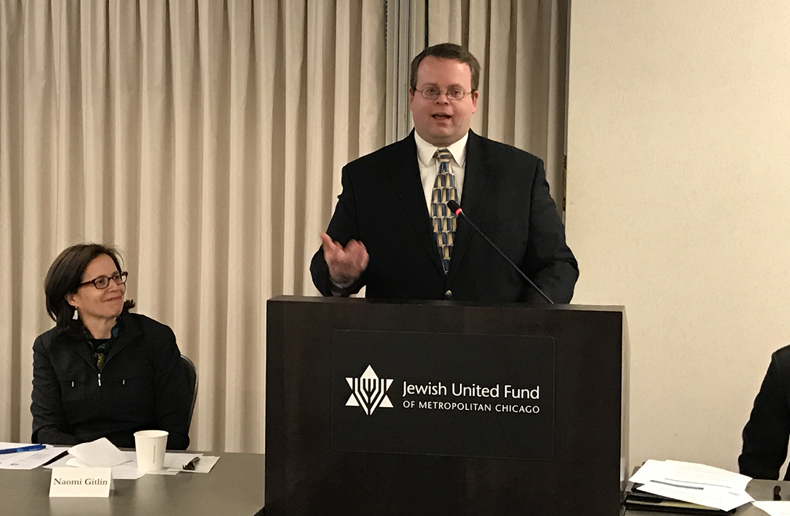
JCRC convenes post-election discussion, explores implications for the Jewish community
Molly Horwitz
The post-election dialogue continued among local Jewish community leaders this week. More than 50 representatives from Jewish community organizations gathered on Thursday, Dec. 8 for a discussion featuring Northeastern Illinois University Assistant Professor of Political Science William Adler.
“Last month’s results articulated deep divisions throughout our country — divisions that also are reflected within our own Jewish community,” said David T. Brown, chairman of JUF’s Jewish Community Relations Council, which hosted the discussion. The meeting followed a Nov. 22 conversation on the same topic , organized by the Jewish Federation’s Government Affairs Committee.
In his presentation, Adler shared exit poll data on Jewish voters that confirmed the trend of past elections: a majority of Jews (70 percent) voted for the Democratic presidential candidate, while about 25 percent voted Republican.
Of the issues Jewish voters identified as most important to them during the campaign, Adler said that Israel was ranked ninth, with the economy, health care, and fighting ISIS and terrorism at the top.
“Jews decide how to vote the same way as everyone else does: based on the issues that matter both domestically and internationally,” Adler said. “Historically, there is a correlation between the economy and voting for the incumbent party. If the economy is strong, the incumbent is likely to get a higher percentage of the vote.”
Adler also discussed some of the top “Jewish moments” from the past campaign, and concluded with what he believes to be the top four issues that the Jewish community will face in the coming years: the changing U.S.-Israel relationship; the future of the Iran deal; the rise of hate crimes due to increased white nationalism; and the developing relationship with the Muslim community.
Discussion during the meeting centered on addressing the phenomenon of fake news, the rise of the so-called “alt-right” — an offshoot of conservatism mixing racism, white nationalism and populism — and the false comparison of the white supremacy and Zionism. The conversation also focused on the possible effects of Donald Trump’s presidency on local politics.
Referencing JCRC’s recent civility statement , Brown said, “it is our hope and expectation that moving forward our community finds ways to discuss and handle our differences with respect and civility.”
JCRC Executive Director Emily Sweet closed the meeting by addressing the implementation of the anti-BDS legislation in Illinois and updating members on the Anti-Semitism Awareness Act of 2016, which was recently introduced in Congress. JUF’s Washington, D.C. representatives are closely monitoring the legislation’s path forward.
Other stories
-
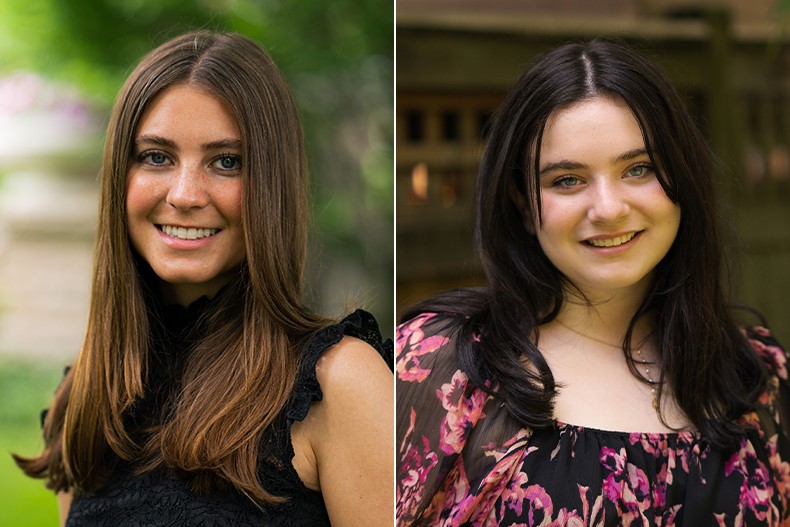
Two local teens win national recognition
Recipients of the annual Diller Teen Tikkun Olam Awards
Read more -
Celebrating six young award winners cultivating the community
Introducing young adult award winners
Read more -
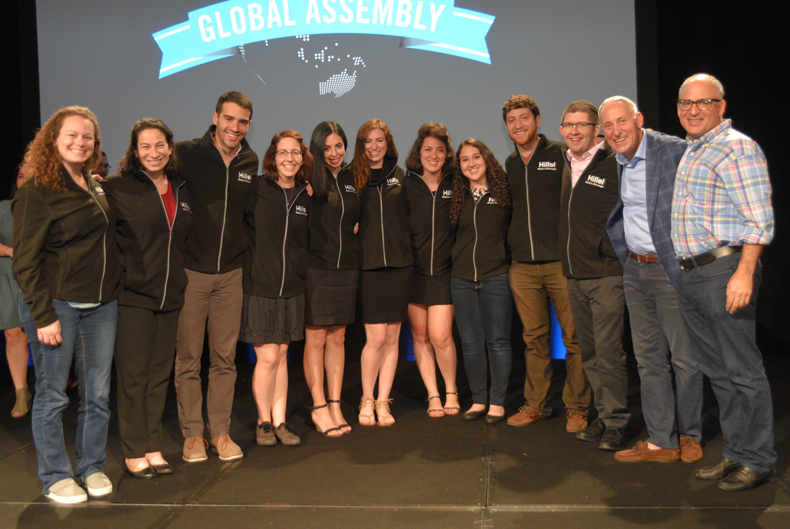
Metro Chicago Hillel , which serves Jewish students on campuses throughout the Chicago area, has received the Phillip H. and Susan Rudd Cohen Outstanding Campus Award from Hillel International.
The award, the highest honor given to an individual Hillel, was presented in Orlando at the annual Global Assembly of Hillel International, the largest Jewish campus organization in the world. The award recognizes Metro Chicago’s success in adopting new ways of connecting with students.
“The staff has mastered both the art of identifying students and the elusive next step, resulting in a seven-fold increase in active student participation,” the announcement from Hillel International noted.
“The rapid growth of Metro Chicago Hillel, which is part of the Jewish Federation of Metropolitan Chicago, is thanks to a talented staff of educators and community organizers, a dedicated board, and a community heavily invested in the future of the Jewish people,” MCH Executive Director Rabbi Seth Winberg said.
Metro Chicago Hillel serves Jewish students at DePaul University, Loyola University, Columbia College Chicago, the University of Illinois at Chicago, Northeastern Illinois University, Oakton Community College, Illinois Institute of Technology, Roosevelt University, the School of the Art Institute and other campuses.
It also includes the Silverstein Base Hillel, a Lincoln Park home that welcomes young adults into a diverse, warm and hospitable Jewish family. Silverstein Base Hillel provides a home in which a pluralistic rabbinic couple, Rabbi Megan and Paige GoldMarche, help young Jews explore their Jewish identity through hospitality, learning and service.
“Living Judaism is an immersive experience,” Rabbi GoldMarche said. “It’s not just teaching; it’s modeling that life.”
“Metro Chicago and this year’s other winners serve as a model of how enthusiasm and dedication can help campus Hillels across the country succeed in engaging and educating students, no matter their size or location,” said Eric D. Fingerhut, President and CEO of Hillel International. “We’re proud of our professionals for the work they do every day to help achieve Hillel International’s mission of reaching every Jewish student on campus.”
Other stories
-
Two local teens win national recognition
Recipients of the annual Diller Teen Tikkun Olam Awards
Read more -
Celebrating six young award winners cultivating the community
Introducing young adult award winners
Read more -
The Jewish United Fund of Metropolitan Chicago has issued its 2017 Request for Proposals (RFP) for the Breakthrough Fund, a grant program launched in 2014 to encourage smart, strategic growth and creative program development in Chicago’s Jewish community.
Letters of Intent will be accepted through Monday, Jan. 9, 2017, at 4:30 p.m. via the new online application portal: https://juf.fluidreview.com . Emailed applications will not be accepted under any circumstances.
JUF will award up to $960,000 in new grants for leading-edge programs; capacity-building efforts; planning, research and development initiatives; and new approaches that address the wide array of needs, interests, individuals and identities that reflect the diverse Jewish community in Chicago, in Israel and other countries overseas.
In addition, JUF will distribute $256,000 in multi-year funds for Breakthrough Fund grants committed during its last cycle. All told, the Breakthrough Fund will provide just over $1.2 million in FY18.
Breakthrough Fund grants will support both established organizations with a legacy of creating and expanding value-added programs and services, and also early-stage organizations and entrepreneurs whose voices, visions and ideas are just emerging.
“Just like many of you in the community who are taking the opportunity to test new ideas, take calculated risks, and continually adapt your models in dynamic iterations, the Breakthrough Fund also continues to adapt to best support the interests and needs of our community,” said Michael H. Zaransky, Jewish United Fund Chairman of the Board.
Since its launch, JUF’s Breakthrough Fund has awarded $3.5 million in grants to 46 initiatives.
Who is Eligible to Apply:
- Existing nonprofit organizations that possess current 501(c)(3) status.
- Synagogues and other Jewish religious organizations that do not possess current 501(c)(3) status but are in good standing with their home state’s regulatory agencies for religious organizations (i.e., Attorney General’s Office, Department of Revenue, or Secretary of State).
- Entrepreneurial individuals or emerging organizations who apply with an appropriate fiscal sponsor that has 501(c)(3) status.
- Applicant organizations from any state may apply; however the proposed project must be for implementation in the Chicago metropolitan area.
- Programs proposed for implementation in Israel or other overseas communities are eligible to apply by invitation only , and invitations for this year already have been sent. Israeli organizations interested in being considered for future grant cycles should contact [email protected] .
All applicants will be notified by Monday, Feb.13, regarding whether they are invited to submit a full proposal.
JUF strongly encourages prospective applicants to attend a workshop from 2:30 to 4 p.m. Monday, Dec. 12, to learn more about the Breakthrough Fund’s goals, application process and requirements, and evaluation criteria. The workshop will be held at JUF headquarters, 30 S. Wells St, Chicago, in the Lillian and Larry Goodman Conference Center. Advance registration is required ( http://tiny.cc/JUFApplicant2016 .)
Interested organizations located outside the Chicago area may participate via conference call.
For more information, contact Sarah Follmer, Director of Grants, at (312) 357-4547 or [email protected] , or visit www.juf.org/grants/breakthrough.aspx .
Other stories
-
Two local teens win national recognition
Recipients of the annual Diller Teen Tikkun Olam Awards
Read more -
Celebrating six young award winners cultivating the community
Introducing young adult award winners
Read more -
North Suburban Synagogue Beth El and North Shore Congregation Israel are co-sponsoring a debate titled “Left Vs. Right: The Battle for Israel’s Soul,” on Wednesday, Jan. 11, 2017 at 7:45 p.m., in the Blumberg Auditorium of North Suburban Synagogue Beth El, 1175 Sheridan Road, Highland Park. The program is free of charge and open to the community. RSVP’s are requested to 847-432-8900 x 210.
Jonathan S. Tobin and J. J. Goldberg will debate suppositions about the State of Israel. Rabbi Vernon H. Kurtz of North Suburban Synagogue Beth El (Conservative) and Rabbi Wendi Geffen of North Shore Congregation Israel (Reform) will moderate the discussion.
Goldberg is editor at large and senior commentator at the Jewish Daily Forward , where he served as editor in chief from 2000 to 2007. Previously, he has served as U.S. bureau chief of The Jerusalem Report and managing editor of New York Jewish Week . His books include “Jewish Power: Inside the American Jewish Establishment,” which was listed by the Philadelphia Inquirer among the 100 Most Important Books of 1996; and “Builders and Dreamers,” a history of Labor Zionism in America. He has been a member of the Pulitzer Prize jury.
In the past, he worked as an education specialist with the World Zionist Organization in Jerusalem, as a founding member of a kibbutz near Tel Aviv, and as a New York City cabdriver. He also served as a member of the Israeli Border Police.
Tobin is the award-winning senior online editor and chief political blogger of Commentary magazine, covering the relationship between the United States and Israel, Middle East diplomacy, the Jewish world as well as the American political scene. In addition,
Tobin’s articles appear regularly in the New York Post , The Weekly Standard , TheChristian Science Monitor , TheAmerican Spectator and many other publications. Previously, he has also served as a columnist for the Forward and Britain’s Jewish Chronicle, and for many years, he wrote the “View from America” column for The Jerusalem Post .
For more information, visit www.nssbethel.org or www.nsci.org .
Other stories
-
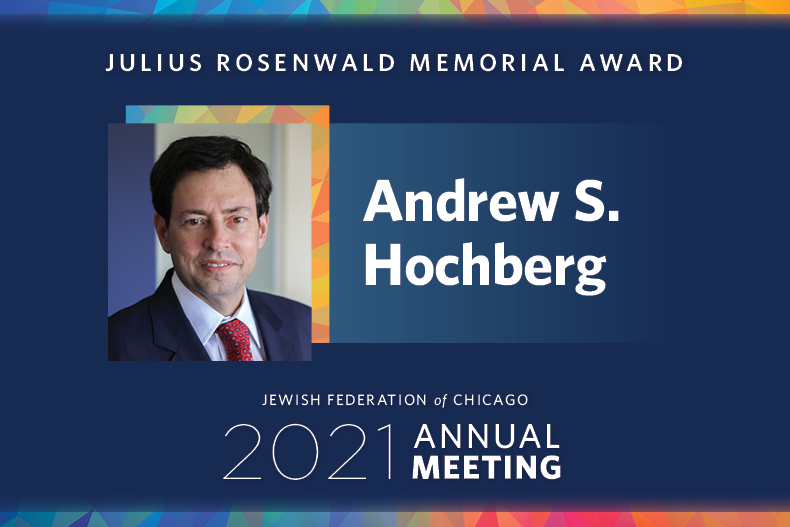
Meet Andrew S. Hochberg, 2021 Julius Rosenwald Memorial Award recipient
Celebrate Andy Hochberg at the virtual Annual Meeting on Sept. 14
Read more -
Two local teens win national recognition
Recipients of the annual Diller Teen Tikkun Olam Awards
Read more -
Celebrating six young award winners cultivating the community
Introducing young adult award winners
Read more
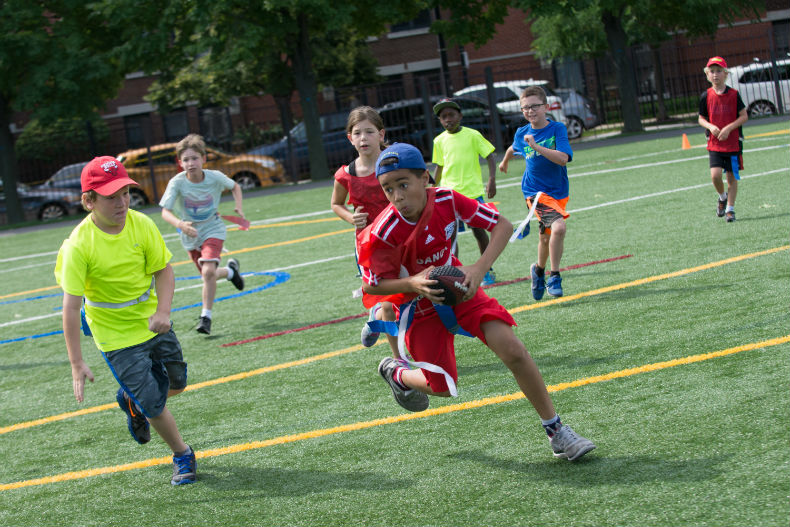
J Camp summer fun is exploding with innovative new programs throughout the year for kids of all ages at various locations. Take a look at the amazing ways we are re-imagining the camp experience and impact of Jewish camp on each and every child.
Early Summer Mini Camps at Elaine Frank Apachi
Lake Zurich
June 12-June 16
Mini camps offer morning specialties in art, science, golf, and sports, paired with an afternoon of lunch, camp games, and swimming. This is the perfect way to start summer early and let your child take extra time to explore his or her interests.
Chicago
June 26-July 7
Budding biologists, engineers and artists in 3 rd -6 th grade will head outside and explore the beautiful wooded grounds of Northside College Prep, the North Shore Channel Trail, and nearby parks. At EcoApachi, curious campers will immerse themselves discovering life-science through hands-on activities and experiments.
Apachi Ivrit at Apachi Village
Northbrook
June 19-August 11
Think about how you learned Hebrew as a child. Now imagine how it would have been if your first exposure to the language was in a fun, friend-filled camp setting. This is Hebrew Immersion at Apachi Village Day Camp. Kids, 3-6 years old, will learn a new language while experiencing the friends and fun of day camp.
Apachi Sports at Apachi Chicago and Apachi Northside
Chicago
June 26-August 18
Sports obsessed campers receive expert instruction and skill-building, plus enjoy swimming, fitness activities, and outdoor and indoor games. Perfect for campers who love sports but also all the fun of J Camp.
ZFA Sports at “Z” Frank Apachi Day Camp
Northbrook
June 19-August 11
The summer answer for kids who can’t get enough sports. Your child’s camp day is filled with expert sports instruction with enough time for ZFA favorites like free swim, Wacky Wednesday, and Shabbat.
Lake Delton, Wisc.
Experience the best of Camp Chi with an activity schedule of mostly team and individual sports-with a bit of time spent at other Chi favorites. Try Chi Sports campers will be grouped and live in cabins together to enjoy evening programs, cookouts, and more.
Lake Delton, Wisc.
December 26-29, 2016
If they can’t wait until summer for camping fun, this is a great way for your kids to spend winter break.Indoor activities such as cooking, art, talent shows, and movie night and tons of outdoor fun including, snow play, sledding, ice fishing, broom ball, skiing, and more. Open to all third- through eighth-graders. Winter Camp, in partnership with Keshet, is a fully inclusive camp experience.
Visit jccchicago.org/camps for a full list of all our J Camps, including dates, pricing and special offers.
Elizabeth Abrams is communications manager of JCC Chicago.Other stories
-
Two local teens win national recognition
Recipients of the annual Diller Teen Tikkun Olam Awards
Read more -
Celebrating six young award winners cultivating the community
Introducing young adult award winners
Read more -
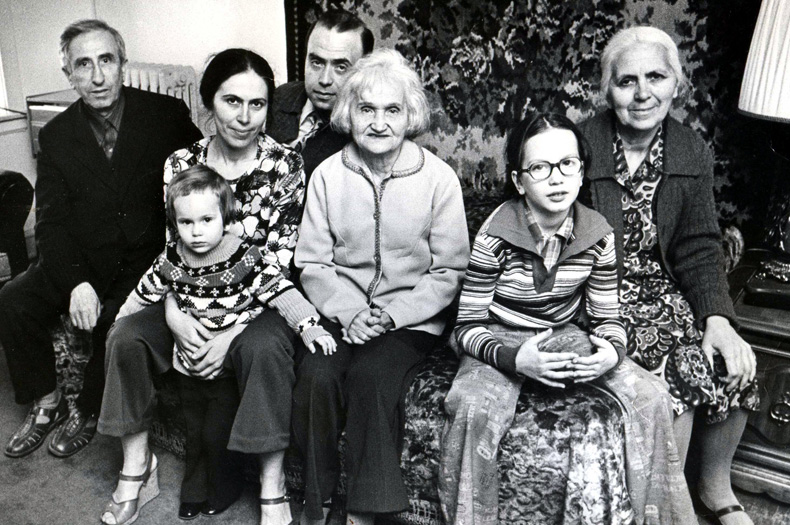
As a child growing up in Soviet Ukraine, my grandmother gave me 72 kopeks each fall that she called Chanukah gelt. The number had to divide by 18, she said. I asked why by 18 and what was Chanukah but had to be satisfied with “what you don’t know won’t harm you.” Translation: “what you don’t know you won’t blab about to strangers and get us all into trouble for being religious.”
I knew, without being told, not to mention this gift outside the family. Or the day when adults fasted then we dipped apple in honey before dinner. Or the week in the spring when my grandmother ate flatbread called matzoh brought in a pillowcase by a landsman. Or her refusal to do anything on Saturday, even fix the hem of my dress.
Our secret customs had to do with being Jewish. Most families did not follow them even secretly but it didn’t matter. Our passports announced “Nationality-Jewish” anyway, so we needed no customs.
As I grew into adulthood, my parents carried on the tradition, giving my daughter 72 kopeks accompanied by “what you don’t know won’t harm you.” In the spring, my retirement-age father officially ordered matzoh at the back of the only Kyiv synagogue — times were liberal. Of course, he did not actually enter the synagogue for fear that his grandchildren would be expelled from school or that I would lose my job. He carried the matzoh in pillow cases hidden in suitcases. In front of my daughter we called it flatbread.
Shortly before we emigrated in 1976, our daughter, a first-grader, witnessed an ambush on a boy for “being Jewish,” in her words. She approved — what she didn’t know already harmed her. Apparently, we had not mentioned her Jewish “nationality” to her yet; neither did her name or appearance advertise it. Had she been a boy, she might have joined the bullies. We waited to tell her until we were on the train to Vienna.
Vienna — our first taste of life outside Soviet Ukraine. A flower shop at the train station — who’d ever heard of such a thing? — a flower shop run by a lady in a clean apron! Milk available after eight in the morning! Sales people saying thank you! — if that was not a sign of another planet I didn’t know what was.
HIAS representatives greeted us as we stepped off the train. HIAS, ORT, the American Jewish Committee, the Jewish Federation of Metropolitan Chicago, many synagogues anticipated our needs and matched us with volunteers to help us adjust. Welcome signs saying “Save Soviet Jews” and “Never again is now” made us feel grateful and lucky. There were about 500 of us in Chicago when we arrived. My parents, a few months later, were the one-thousandth. Their arrival was captured on the cover of the Chicago Tribune.
Adjustment and culture shock ensued. Some things were easier than others: toilet paper in public bathrooms, policemen not expecting bribes, shopping carts. It took longer to get used to bar and bat mitzvahs and the idea that “Jewish” was a religion, full of beliefs and traditions, and not just a nationality stamped on a passport. Americans eventually accepted that the Soviet Union provided refrigerators and running water and valued professionals the least. But the concept of communal apartments remained elusive.
Once enrolled at a Jewish school, I packed pork chops in my daughter’s school lunch. Kosher? How do you spell it? (Aha, stomachache was not the true reason behind my grandmother’s rule to avoid milk after meat!) My friend’s Orthodox volunteers escorted her out for bringing over her signature meal of borsht with sour cream. A rabbi reprimanded a man with a surname Kogan (Russian for Cohen) who didn’t know the significance of his name. Invited to a proper seder, we insulted the hosts with our ignorance of the afikomen. A synagogue sisterhood complained that the new arrivals flaunted their graduate degrees, knew nothing about the Jewish holidays, and had probably never belonged to a temple. I didn’t understand the expression “to belong to a temple” but it struck me that had we not been afraid of attending a temple we would not have required saving.
Here we are, almost 40 years later, having reclaimed the religious meaning behind practices of my ancestors in USSR, and learned to understand new ones. The tradition continues. We spend Yom Kippur in the temple, and then get together to break the fast. We celebrate bar and bat mitzvahs and dance the hora at weddings.
While little, our children and grandchildren receive toys on Chanukah. Their gift of choice lately is Starbucks cards — any amount would do but from me it comes in increments of 18.
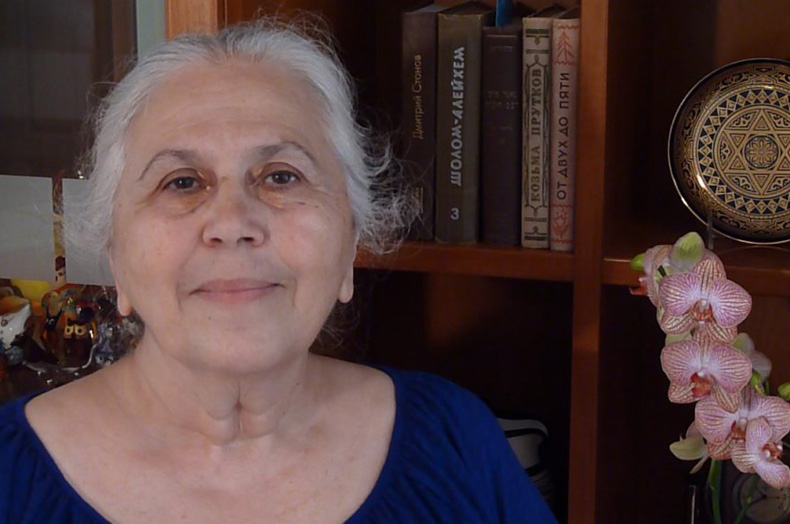
Bena Shklyanoy and her family were the one-thousandth immigrants to arrive in Chicago with help from HIAS Chicago in 1976. Bena’s family story starts in 1852 in the Kiev region. It spans two world wars, the Bolshevik Revolution, annihilated shtetls, the Holocaust, the Soviet empire (rise and decline), and the 1970s large scale immigration of Soviet Jews to the U.S. Read Shklyanoy’s story and share your story at www.appledoesnotfall.com
Other stories
-
Chicago to Israel to Kenya
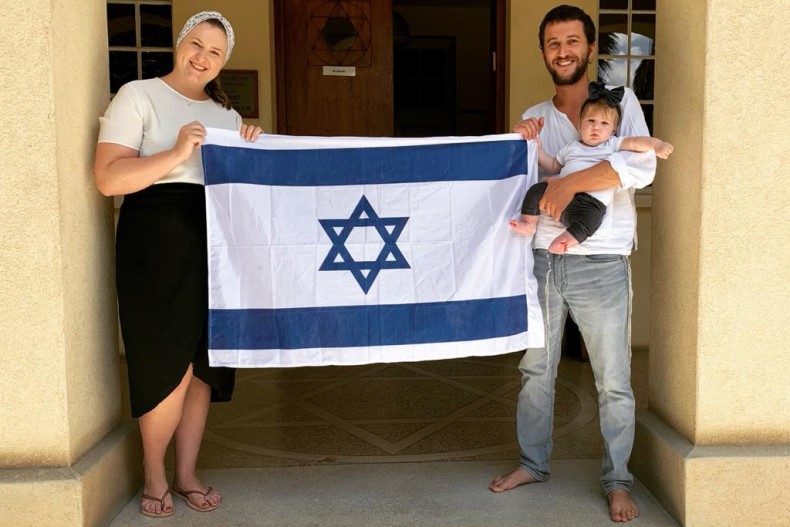
A family’s story of living Jewishly on three continents Michelle Cohen World May 28, 2021 Avital, Tzofia, and Netanel Kaszovitz outside their home in Nairobi on Yom HaAtzmaut. When Avital Kaszovitz prepared to be a Modern Orthodox shlicha (emissary) to the Jewish community in Ke
Read more -
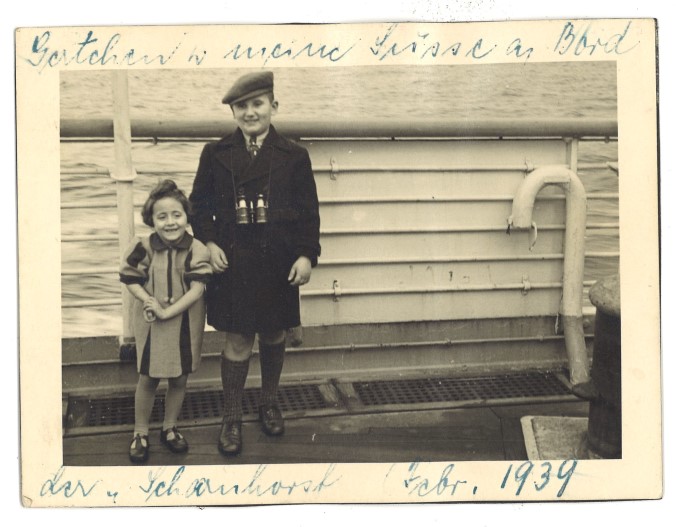
New exhibit spotlights the experience of ‘Shanghai Jews’
Explore a new Illinois Holocaust Museum and Education Center exhibit
Read more -
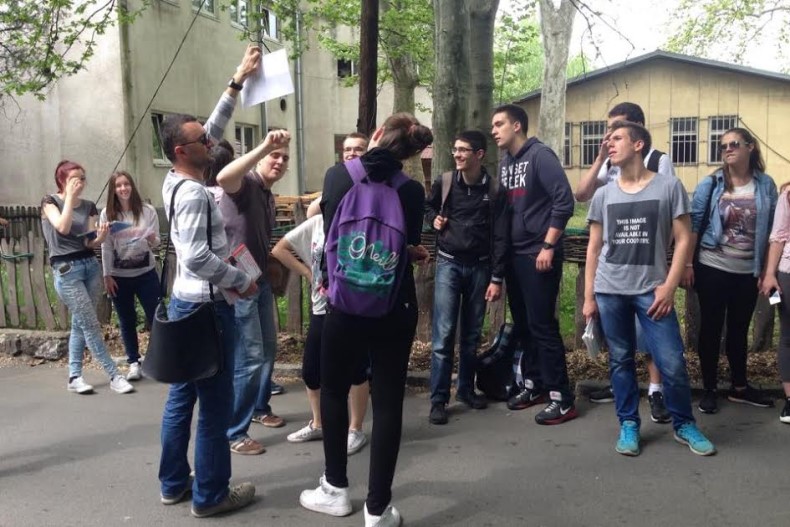
Europe’s brave new teachers of the Holocaust
Teaching the Holocaust in the modern era has its difficulties and rewards.
Read more

JUF’s first ever mission to China provided 18 Chicago Jewish community members the opportunity to not only to see the country and learn about it, but also to dig deeper and explore its Jewish history, its ever-expanding ties with Israel, and connect with some of the thousands of Jews (Israelis, Canadians and Chicagoans) currently living and working in China, many of whom are successfully creating new Jewish communities there.
Led by Todd Lustbader, Lee Miller and David Sternberg, the group visited Shanghai, Xian, Beijing and Hong Kong.
The Jewish Hongkou Ghetto District in Shanghai, administered by the occupying Japanese, was where over 20,000 Jewish refugees from the Shoah found safety. Some 6,000 of them got there thanks to travel papers issued by Japan’s vice-consul in Lithuania, Chiune Sugihara , who risked his career and his family’s lives. In 1985, Israel named him to the Righteous Among the Nations for his actions, the only Japanese national to be so honored.
The group was guided by renowned Dvir Bar Gal , an expert on China’s Jewish past who is leading an effort to locate and refurbish thousands of Jewish cemetery headstones that were cast away during the country’s Cultural Revolution. (CNN labeled him “Shanghai’s Jewish Tomb Saver.”) The group also visited Shanghai’s historic Ohel Rachel synagogue and the city’s Jewish Refugees Museum . Shabbat dinner guests included the head of the American Jewish Joint Distribution Committee’s Shanghai operations and three residents of the city’s Moishe House, who come from Toronto, New Jersey and Paris.
In Beijing the group dined and toured the Chabad House and met with Israel’s Ambassador to China, former IDF General, Member of Knesset and Government Minister Matan Vilnai . The group enjoyed a breathtaking view of the Great Wall of China during a private lunch at the weekend home of one of the country’s leading Jewish figures, Roberta Lipson . Dinner was hosted at the residence of the Acting U.S. Ambassador to China, David Rank , who, like his wife Mary, is an alumnus of the University of Illinois at Urbana-Champaign.
Mission Co-Chair and JUF Board Member Lee Miller commented that “these special, boutique missions with JUF allow community members to learn more about our Jewish world, how their JUF contributions are positively impacting lives in 58 countries and to connect with Jews and Israelis leading fascinating lives in exotic locations.
“Moreover, China’s role in the world is a huge issue for our country, and its blossoming business relationship with Israel is a major development, one that perhaps one day will also lead to greater Chinese support for Israel in various international forums, especially the United Nations. This group returned home having enjoyed China and having learned much of Jewish and Israeli interest in that most wondrous of countries.”
Other stories
-
Chicago to Israel to Kenya
A family’s story of living Jewishly on three continents Michelle Cohen World May 28, 2021 Avital, Tzofia, and Netanel Kaszovitz outside their home in Nairobi on Yom HaAtzmaut. When Avital Kaszovitz prepared to be a Modern Orthodox shlicha (emissary) to the Jewish community in Ke
Read more -
New exhibit spotlights the experience of ‘Shanghai Jews’
Explore a new Illinois Holocaust Museum and Education Center exhibit
Read more -
Europe’s brave new teachers of the Holocaust
Teaching the Holocaust in the modern era has its difficulties and rewards.
Read more
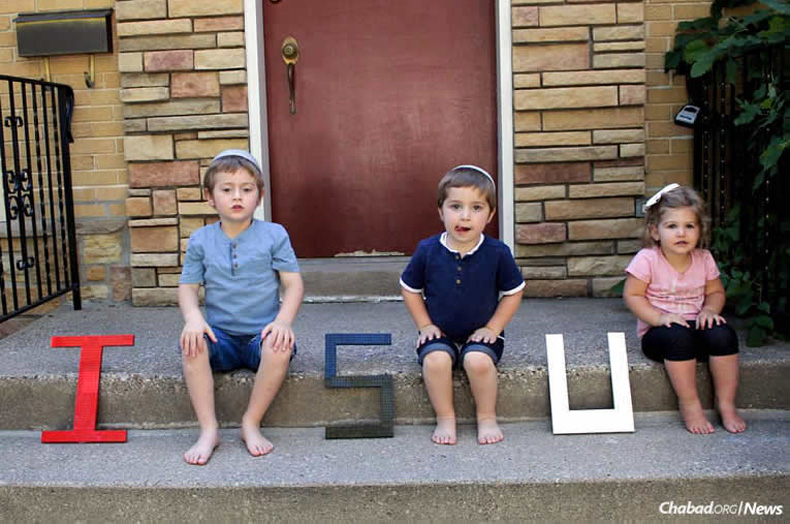
Lubavitch Chabad of Illinois has established its newest branch, Chabad of Bloomington/Normal, under the direction of Rabbi Chaim Moshe and Rochel Telsner. The Telsners will serve Illinois State University.
Normal, which sits 130 perfectly flat miles from Chicago, will now be the fourth city in central and southern Illinois to have a Chabad House, following Champaign (University of Illinois at Urbana-Champaign), Peoria (Bradly University), and Carbondale (Southern Illinois University).
According to Regional Director Rabbi Meir Moscowitz, the appointment coincides with the 40th anniversary of the opening of the first Chabad House in Illinois. In the four decades since, Chabad has opened nearly 50 centers throughout the state including 10 at local college campuses.
Other stories
-
Two local teens win national recognition
Recipients of the annual Diller Teen Tikkun Olam Awards
Read more -
Celebrating six young award winners cultivating the community
Introducing young adult award winners
Read more -
Federation Government Affairs Committee discusses election results, possible impact
Mara Ruff
More than 60 Jewish community leaders, representatives from Jewish-affiliated agencies and government officials gathered at JUF on Nov. 22 to discuss the results of the Nov. 8 election.
Convened by JUF Government Affairs Committee chair David Golder, the discussion featured post-election analysis from Andy Shaw, a 30-year political journalist veteran and current president and CEO of the Better Government Association.
Shaw began the conversation comparing the 2016 presidential election results to the outcome of the 1983 Chicago mayoral race, when Harold Washington unseated the Chicago political machine, ousting incumbent Jane Byrne and second runner-up, Richard M. Daley.
In this election, Shaw emphasized how the polls got it wrong, failing to take into account the political climates of non-urban areas. He also said standard campaign strategies did not bode well this election cycle as illustrated by the slight win margins in key states. Last, the usual platforms — newspapers, TV — used by the electorate to gather information was turned upside down by a steady stream of information sent to a dis-satisfied electorate through by tweets and other social media platforms.
JUF’s Washington, D.C. Director Lisa Shuger then joined the conversation to discuss what impact the election’s outcome could have on the Jewish Federation’s federal policy priorities. At great risk are the Affordable Care Act and entitlement programs, such as food stamps and cash subsidies. On the foreign policy side, though President-elect Trump’s stance on Israel is not clear, Shuger said there are talks of Prime Minister Netanyahu visiting the U.S. in March for a meeting.
The meeting then turned to the state level. Suzanne Strassberger, JUF’s representative in Springfield, talked about the impact of the ongoing state budget stalemate on Federation’s social service network. The six-month stop-gap budget will expire on Dec. 31, putting the community care program for non-Medicaid eligible frail older adults and other important human service programs on the chopping block.
“Both Gov. Rauner and Speaker Madigan have compelling reasons for wanting to stand true to their agenda and not negotiate,” said Strassberger said. “Sadly, that leaves the state without a budget for possibly the next two years.”
Other stories
-
Two local teens win national recognition
Recipients of the annual Diller Teen Tikkun Olam Awards
Read more -
Celebrating six young award winners cultivating the community
Introducing young adult award winners
Read more -

My Nonny used to say in her lilting Jewish accent, “Michele-y, you’ll find a nice Jewish husband. You’ll have many beautiful kinderlach (children). You’ll be happy.” It was some kind of Jewish pronouncement from her all-knowing mouth on behalf of God, I guess. With her two front teeth permanently schmeared in bright red lipstick, I internalized her words as emet (truth). The path to becoming the Jewish woman I always wanted to be meant marriage and having a big family. Fill in the blanks with Passover seders, bar mitzvahs, and a regular helping of her homemade mandelbrodt. ” L’Chaim ,” she would say.
When I received the fateful phone call that marked the rest of my life, my Nonny’s voice haunted me. I was 12 weeks pregnant with my second child, bouncing around a local play space with my then 2-year-old daughter, when I learned that the fetus growing inside of me had a rare and severe Jewish genetic disorder. The words on the other end of the phone kept going, but I did not hear anything beyond “positive test results.”
Everything is different
It is a strange moment when nothing actually changes, but everything is different. The little bundle of cells inside of me was still who he was. I still had the fantasy of my parents bringing my daughter to the hospital to meet her new baby brother, proudly parading around in her “I’m a Big Sister” t-shirt and stuffing herself full of celebratory candy. I still had my running list of “M” names- Max, Mordechai, Moses- to name our baby after my husband’s deceased father. I still mused about how we would possibly juggle two kids, a dog, work, marriage-and life.
Yet, hanging onto the Frozen costume that my daughter hurriedly discarded into my arms, my idyllic fantasies were flooded with feelings of dread, hopelessness, and panic. There were choices that needed to be made. There were consultations with specialists, tearful phone calls with genetic counselors, and pages of research to interpret. I was forced to consider questions of gigantic magnitude with implications that could barely be uttered. And hinging on these choices were all of the things that mattered most in life like family, God, and my “happy.”
On Dec. 25, when the holiday cheer was at its merriest, I went to the hospital to terminate my pregnancy. I do not actually remember much of the event that shaped everything in my life that followed. There were pleasantries exchanged with the only doctor and nurse available on Christmas to do the procedure. It turns out that they were also husband and wife. They spoke of their shared duties in preparing the Christmas meal that afternoon. She would make the brisket; he would make the stuffing. She would bake the apple pie; he would slice the ham. I imagined the swarm of guests partaking in what promised to be a lovely and lavish affair with all of the holiday trimmings. It was better to ponder the theory that I had crafted since I was a little girl as to how much more fun Christians have during this time of year than Jews. I was awake the entire procedure fantasizing about Santa Claus when I heard the needles, the sucking, and the silence of the ultrasound. I heard no heartbeat. I did not know silence could be so loud. Squinting my tears away, I muttered a prayer hoping that God was with me, and with him, even on Christmas.
“Be fruitful and multiply” is a basic tenant from the Torah that dictates in no uncertain terms my task as a Jewish woman. I must have done something immensely wrong to deserve a fate that my doctor insisted was only a statistically slim possibility. Should I have prayed harder on Yom Kippur to wipe myself clean of my sins? In addition, and this I could only barely admit, I wondered if I failed the little soul whose name would have started with the letter “M.” It was this guilt that kept me up at night, that could scarcely be whispered in the darkest crevices of my mind or in the tear-filled safety of my husband’s arms.
Grief, loss-and guilt
“Thou shalt not kill,” the Torah teaches. I was sure that in the ancient times of Avraham and Moshe, God would have declared me as a sinner punishable by stoning or exile. Even now, the mere mention of miscarriage makes people very squeamish. Throw in a termination, for medical reasons (TFMR), and you get righteous judgments, averted looks, and political posturing. Sometimes, I am even one of these people. After all, was I allowed to mourn a loss that I had a choice in losing? There are so many women who have undergone multiple rounds of in vitro fertilization (IVF) and have drained their savings to be in my position. Was I allowed to feel anguish about a much wanted baby that I chose to give up? The taboo, avoidance, and silence surrounding these issues made me question if I still counted as one of the women of valor praised in the Eishet Chayil prayer we sing over Shabbat dinner every Friday night.
Shame is a sticky one. It gloms onto you with its strong grip and makes you do all kinds of odd things. Like make up excuses as to why you look twelve weeks pregnant, but are not. Like avoid social functions that once brought you joy such as your little nephew’s birthday party or Kiddush at synagogue. Shame shoves your heartbreak into a corner where it can lie untouched and alone. So many of us going through infertility and pregnancy loss silently wear shame like an invisible Scarlet Letter branded onto our heavy hearts.
Mishpacha : the Hebrew name for “family” that begins with the letter “M”. While defined by our Nonnies and Bubbies in a seemingly straightforward manner, a new definition of mishpacha is emerging. For me to come to terms with my pregnancy loss-I just need to say it out loud-my pregnancy termination. I needed to cast off my Scarlet Letter as women burned their bras before me and re-define what being a Jewish woman of valor meant to me. I broke the shroud of silence and began sharing about our grief with friends, family, and my Jewish community. It was painful and at times awkward, but it also felt good to cut through judgments, averted, looks, and politics and connect around what truly mattered. My family suffered a traumatic loss and lost something deeply precious. We did what we thought was best for our family and for the treasure whom I carried. Though I may never feel completely at peace with our decision, I am hopeful that I can honor the soul whom I never met by stepping out of the shadows of shame and sharing our story of heartbreak. Maybe others will do the same.
In broad terms, the new misphacha means that at Kiddush , in the halls of our synagogues, and over Shabbat meals, we openly support each other through family-building challenges with the chesed (loving kindness) that our Jewish communities are built upon. Whether that means bringing a meal to a couple who suffered a miscarriage; or asking your friend how she is feeling while she is undergoing infertility treatments; or helping your community member prepare for her adopted baby to come home. Through our choices and our challenges, I think that we can do better.
Forever connected
A research study came out which discovered that cells from a developing fetus actually cross the placenta barrier and become permanently part of the mother’s body, even if the baby is never born. I often think about the cells of my much wanted baby “M” floating around inside of me. I feel a connection to him, as his mother, through his baby helixes that are forever within me. It is not what my Nonny proclaimed, but I have re-branded our family with our own complicated, painful, joyful, and connected version of mishpacha . And it is my emet .
Michele L. Weiss, LMFT, is a licensed marriage and family therapist. She specializes in treating women and couples dealing with infertility and perinatal challenges in her private practice in Lakeview.
JUF’s Norton & Elaine Center for Jewish Genetics is an educational resource for hereditary cancers and Jewish genetic disorders. For more information, visit www.jewishgenetics.org/
Other stories
-
Two local teens win national recognition
Recipients of the annual Diller Teen Tikkun Olam Awards
Read more -
Celebrating six young award winners cultivating the community
Introducing young adult award winners
Read more -