The Jewish United Fund/Jewish Federation of Metropolitan Chicago applauds and endorses the Nov. 21 statement of the United States Holocaust Memorial Museum. As a community that is home to some 6,000 Holocaust survivors, we especially share USHMM’s deep alarm at the hateful rhetoric that occurred at a conference of white nationalists held over the weekend In Washington, D.C.
“The Holocaust did not begin with killing; it began with words. The Museum calls on all American citizens, our religious and civic leaders, and the leadership of all branches of the government to confront racist thinking and divisive hateful speech,” the statement reads.
The USHMM statement came in reaction to remarks by white nationalist leader Richard B. Spencer, who said, “America was until this past generation a white country designed for ourselves and our posterity,” Spencer said. “It is our creation, it is our inheritance, and it belongs to us.”
We will continue to work with all levels of government, and with Jewish and non-Jewish partners, to call out hate and uphold America’s most cherished values.
Michael H. Zaransky, Chairman
Steven B. Nasatir, President
Jewish United Fund/Jewish Federation of Metropolitan Chicago
Statement by the United States Holocaust Memorial Museum
The United States Holocaust Memorial Museum is deeply alarmed at the hateful rhetoric at a conference of white nationalists held on November 19 at the Ronald Reagan Building just blocks from the Museum.
According to press reports, Richard Spencer, the leader of the National Policy Institute – a white nationalist think tank – that sponsored the conference, made several direct and indirect references to Jews and other minorities, often alluding to Nazism. He spoke in German to quote Nazi propaganda and refer to the mainstream media. He implied that the media was protecting Jewish interests and said, “One wonders if these people are people at all?” He said that America belongs to white people. His statement that white people face a choice of “conquer or die” closely echoes Adolf Hitler’s view of Jews and that history is a racial struggle for survival.
The targeting of Jews was central to Nazi racist ideology. The Germans attempted to kill every Jewish man, woman and child they could find. Nazi racism extended to other groups. By the end of World War II, the Germans and their collaborators had murdered six million Jews and millions of other innocent civilians, many of whom were targeted for racial reasons.
The Holocaust did not begin with killing; it began with words. The Museum calls on all American citizens, our religious and civic leaders, and the leadership of all branches of the government to confront racist thinking and divisive hateful speech.
Other stories
-
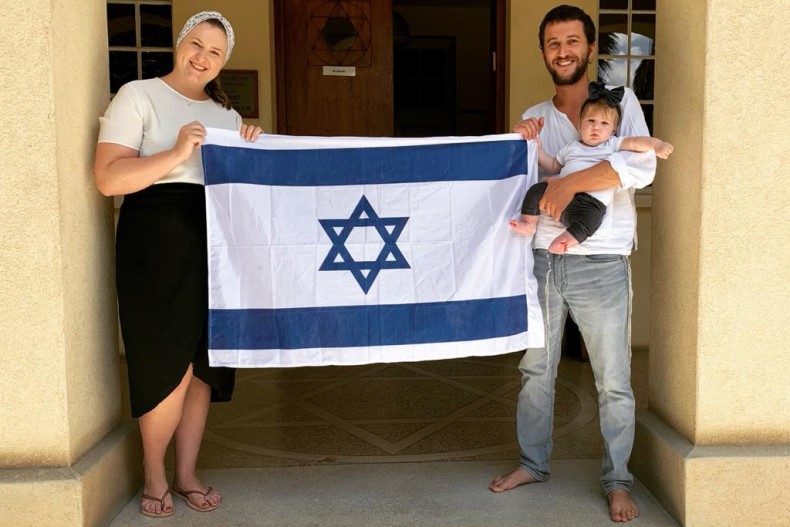
Chicago to Israel to Kenya
A family’s story of living Jewishly on three continents Michelle Cohen World May 28, 2021 Avital, Tzofia, and Netanel Kaszovitz outside their home in Nairobi on Yom HaAtzmaut. When Avital Kaszovitz prepared to be a Modern Orthodox shlicha (emissary) to the Jewish community in Ke
Read more -
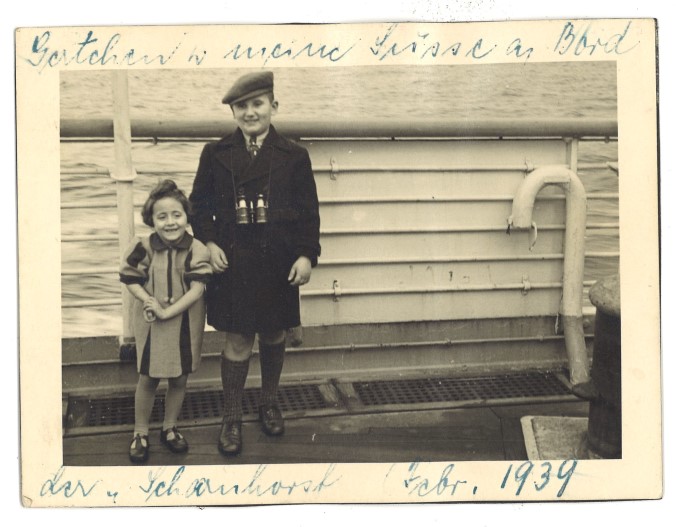
New exhibit spotlights the experience of ‘Shanghai Jews’
Explore a new Illinois Holocaust Museum and Education Center exhibit
Read more -
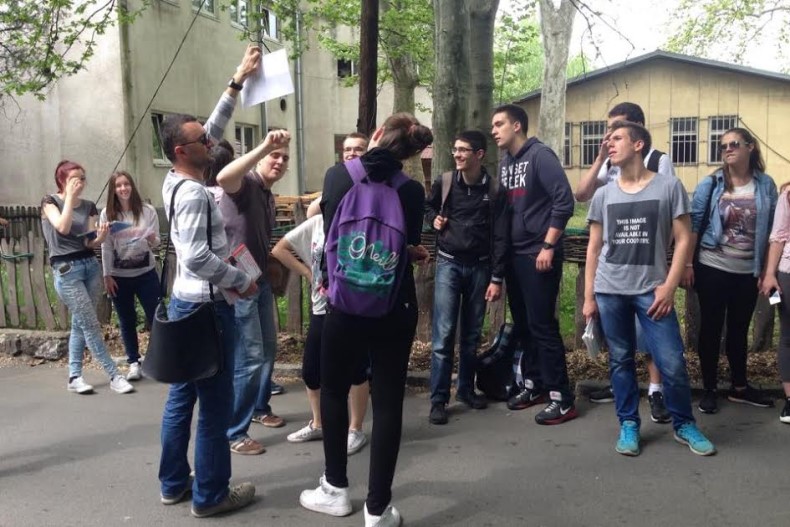
Europe’s brave new teachers of the Holocaust
Teaching the Holocaust in the modern era has its difficulties and rewards.
Read more
Housed at the Jewish Federation, the Center for Jewish Philanthropy manages over 900 donor advised funds, assisting close to 2,000 generous individuals reach their philanthropic goals. A donor advised fund is an easy-to-use charitable giving fund that can simplify and streamline individuals’ and families’ giving. Donors can support Jewish and secular charities in Chicago, the United States, and around the world.
With over 900 funds, there are just as many unique, powerful stories as to why each fund was established. Funds are opened for a wide range of reasons, including in memory of a family member, in honor of a b’nai mitzvah or a wedding, or to pass on the value of tzedakah to future generations. In addition to these motives, opening a donor advised fund is a prudent financial choice, enabling donors to reach their highest charitable potential.
According to the most recent Giving USA report, charitable giving in the United States was over $373 million in 2015 and one of the fastest growing vehicles for philanthropy is a donor advised fund. A DAF has many financial benefits, the most noteworthy being that donors have control of the timing of their charitable deductions. When cash or appreciated securities are contributed to the fund, an immediate tax deduction is received for that year — and contributions of appreciated securities allow donors to gain the additional advantage of avoiding capital gains tax. Donors receive the direct benefit of a tax deduction in the year they contribute assets with the freedom to continue their charitable giving into the future, something especially helpful for those who may be retiring or are expecting a reduced income.
Financially minded givers will find that a donor advised fund through the Jewish Federation offers many monetary benefits in addition to the emotional reasons for giving. All charitable dollars contributed are invested tax free and donors have the option of investing in a wide range of vehicles, ranging from low risk money market type accounts to potentially higher yielding mutual funds and the Federation’s diverse, in-house endowment portfolio. Fund holders with more than $250,000 can also recommend that an approved, independent investment advisor manage the assets, giving the flexibility to continue working with a trusted financial advisor.
A low $1,000 initial gift allows a personally named donor advised fund to be opened at the Jewish Federation, though some donors may not start their family’s philanthropy with a donor advised fund. Take one generous, financially savvy and philanthropic family, for example:
This family owned a lucrative business and gave a share of the company to the Jewish Federation in order to establish a donor advised fund. Giving these types of assets to a public charity is advantageous because, for a contribution of a closely held asset, a donor can deduct the full fair market value of the asset, in contrast to only deducting the cost basis of the asset were it gifted to a private foundation.
After using their DAF at the Jewish Federation for a while, the family decided to close their private foundation and add those assets to the donor advised fund. By putting the entirety of their philanthropic dollars into the DAF, the family has the convenience of handling all of their giving in one location. Also, unlike a private foundation, which must be established as a non-profit entity and requires a yearly tax return and audit, a donor advised fund has no such administrative burdens.
At the Center for Jewish Philanthropy, our core value is encouraging that the important values of tzdedakah be passed on l’dor v’dor, from generation to generation. This family has done just that by also establishing funds for each of their children to pursue and support their own charitable interests.
Our staff would love to hear your family’s story, to be a partner in your charitable giving, and to support you in reaching your philanthropic goals. Please contact me at (312) 357-4719 or [email protected] to hear more about how a donor advised fund can be the ideal vehicle for your charitable giving.
Amy Saltzman is endowment associate of Donor Advised Programs for JUF’s Legacies and Endowments.
Other stories
-
Two local teens win national recognition
Recipients of the annual Diller Teen Tikkun Olam Awards
Read more -
Celebrating six young award winners cultivating the community
Introducing young adult award winners
Read more -
Congregation Beth Tikvah in Hoffman Estates is partnering with Be The Match and City of Hope to search both domestically and internationally for a stem-cell match for one of its members, Aaron Lee.
Lee is battling Stage IV non-Hodgkins Lymphoma and is undergoing aggressive chemotherapy; he also requires a stem-cell transplant.
Beth Tikvah is asking for help from the community and will hold a bone marrow registration event from 1 to 3 p.m. Sunday, Nov. 20, at Beth Tikvah, 300 Hillcrest Blvd., Hoffman Estates. Those interested in participating can also join the registry online .
Other stories
-
Two local teens win national recognition
Recipients of the annual Diller Teen Tikkun Olam Awards
Read more -
Celebrating six young award winners cultivating the community
Introducing young adult award winners
Read more -
The 2016 election saw a modest increase in the numbers of Jewish legislators in Washington, D.C., and a decrease of one for the state.
In the U.S. House of Representatives, the Jewish delegation increased its representation from 19 to 22 seats . Five Jews were newly elected to the House, while two Jewish representatives, one from Florida and one from New York, are retiring. The Senate Jewish contingent dropped from nine to eight.
Locally, Democrat Brad Schneider won a tight race against incumbent Bob Dold in Illinois’ 10 th District. Schneider previously served in Congress from 2013 to 2015. In Maryland, Democrat Jamie Raskin was elected to the state’s 8th District in an open seat race, while Democrat Josh Gottheimer beat out longtime Republican Rep. Scott Garrett in New Jersey’s 5th District. Elsewhere, Democrat Jacky Rosen, a synagogue president, won Nevada’s 3rd District and Republican David Kustoff won Tennessee’s 8th District.
Sen. Barbara Boxer of California and Reps. Steve Israel of New York and Alan Grayson of Florida will be retiring at the end of this Congress.
Other notable federal election results in Illinois include Rep. Tammy Duckworth defeating incumbent Republican Sen. Mark Kirk for the junior U.S. Senate seat in Illinois; Democrat Raja Krishnamoorthi will fill Duckworth’s seat in Illinois’ 8th District, having defeated Peter DiCianni. Krishnamoorthi is the first Hindu Indian-American to be elected to the House.
JUF sent letters to all the outgoing members of the Illinois delegation thanking them for their continuous support for JUF’s policy priorities and their service to the country.
At the state level, Rep. Jack Franks, a member of the Jewish Caucus from McHenry County, stepped down this year to campaign for and win the position of Chair of the McHenry County Board. There were no other changes in the representation of Jewish legislators in Springfield, which now totals two senators and eight representatives.
On the whole, Republicans gained six seats in Illinois General Assembly, four in the House and two in the Senate. This new makeup means the House no longer holds a super-majority.
Other stories
-
Two local teens win national recognition
Recipients of the annual Diller Teen Tikkun Olam Awards
Read more -
Celebrating six young award winners cultivating the community
Introducing young adult award winners
Read more -

Anti-Semitism scholar details intensifying global landscape for Jews
Jane Charney
Indiana University Professor Alvin Rosenfeld separates what he calls “age-old anti-Semitism” from a resurgent brand of anti-Semitism — one proving lethal and focused not just on Jews but also on the elimination of Israel.
Rosenfeld, director of the Institute for the Study of Contemporary Antisemitism at IU and founder of the University’s Borns Jewish Studies Program, spoke to about 50 Jewish Community Relations Council organizational leaders and Jewish community members on Nov. 7 at a program titled “Anti-Semitism and the Delegitimization of Israel,” which was co-sponsored by AJC Chicago and the Anti-Defamation League.
“In the time of intensifying anti-Semitism, to be a Jew in some places in the world is a capital sentence,” he said, mentioning more than 10 years of deadly attacks on Jews including those in India, Pakistan, France, Germany, and Belgium, among others.
Rosenfeld reflected that the danger lies not only in the resurgence of anti-Semitism, but in the conflation of anti-Jewish bias with anti-Zionism and a hatred for the modern State of Israel. “Those who promote an anti-Israel agenda not only take shots at Israel, but also at Jews as a people,” he said.
Rosenfeld blamed those on the extreme left and those on the extreme right for the rise in anti-Jewish and anti-Israel sentiment. He quoted from Arab world media, which calls Jews a Satan and promotes a “lethal obsession with Jews.” He also noted that textbooks in Muslim-majority countries as well as sermons from religious leaders often peddle the theory that “a Zionist conspiracy is laying siege to the entire Arab world.”
“We need vigilance and knowledge to curb this phenomenon,” Rosenfeld said, “though the chances of changing minds of people in the extreme anti-Israel camp are slim because they aren’t interested in listening to facts.”
Despite the grim recent history he detailed, Rosenfeld offered a ray of hope: world leaders such as former Canadian Prime Minister Stephen Harper, French Prime Minister Manuel Valls, and Pope Francis have all spoken out against anti-Semitism and attacks against Israel. In addition, Muslim intellectuals are defying anti-Semitic teachings and standing strong against anti-Semitism in the Arab world despite great personal risk.
In discussion with attendees, Rosenfeld differentiated between “well-intentioned criticism of Israel’s policies” and anti-Zionism. “Anyone comparing Israel to apartheid South Africa or to Nazi Germany is not well-intentioned,” he said.
The topic for the JCRC meeting dovetailed with a new JCRC initiative about protecting civility in public discourse.
“As the convening body of Chicago’s Jewish community, our JCRC has a longstanding commitment to civil discourse and the exchange of differing views on difficult topics, as this strengthens our community and our democracy,” said JCRC Executive Director Emily Sweet. “Given the increasing polarization we are witnessing in our country today, we felt it was time for JCRC to re-affirm the norms and values we have always used to guide our public discourse, and renew our commitment to derech eretz — the traditional Jewish standards of common decency.”
JCRC Assistant Vice President Steven Dishler sat down for a conversation with Rosenfeld that can be watched below.
JCRC member organizations and other Jewish institutions are being asked to sign on in support of this statement, which will be shared broadly with the Jewish community in the coming months.
Other stories
-
Chicago to Israel to Kenya
A family’s story of living Jewishly on three continents Michelle Cohen World May 28, 2021 Avital, Tzofia, and Netanel Kaszovitz outside their home in Nairobi on Yom HaAtzmaut. When Avital Kaszovitz prepared to be a Modern Orthodox shlicha (emissary) to the Jewish community in Ke
Read more -
New exhibit spotlights the experience of ‘Shanghai Jews’
Explore a new Illinois Holocaust Museum and Education Center exhibit
Read more -
Europe’s brave new teachers of the Holocaust
Teaching the Holocaust in the modern era has its difficulties and rewards.
Read more
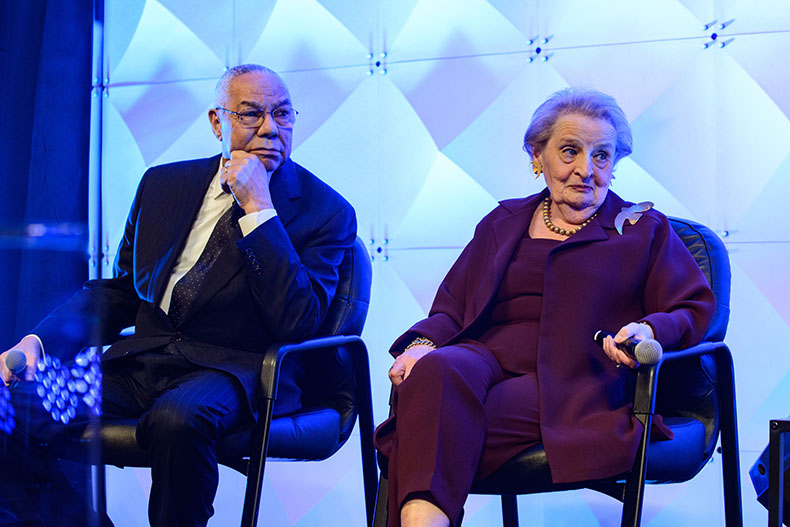
Two former US Secretaries of State — Dr. Madeleine K. Albright and Gen. Colin Powell, USA (Ret.) — headlined this year’s JUF Vanguard Dinner, where they discussed the U.S. role in world affairs, both arguing against isolationism.
“The world doesn’t work if the U.S. is not involved,” Albright said, in the conversation moderated by David Makovsky, a Ziegler Distinguished Fellow at the Washington Institute and director of the Project on the Middle East Peace Process. Powell agreed. “We need to start playing a vital role in the world,” he said.
The Vanguard Dinner, held at the Hyatt Regency Chicago on Monday night and attended by more than 1,100 people, launched the 2017 JUF Annual Campaign, which helps protect, sustain, and enrich the Jewish community. This year’s Event Chairs were Rebekah and Ilan Shalit, and the Vice Chairs were: Janna and Keith Berk; Gigi Cohen and Michael Levin; and Elissa and Craig Goldsmith. JUF’s Annual Campaign Chairman for 2017 is Larry Levy. (View photos from the event)
Albright and Powell discussed a wide variety of foreign-policy topics, mostly focused on the Middle East — from the crisis in Syria to the nuclear deal with Iran, from the Arab Spring and ISIS to the War in Iraq, and even back to the Gulf War. A great deal of the conversation revolved around Russia’s involvement in these areas and how best to deal to deal with Putin’s aggression.
The discussion also turned to the interplay between domestic and foreign affairs. Albright decried the anti-Israel anger on college campuses, and expressed solidarity with Israeli and Jewish students. Powell noted that a politically divided country with a gridlocked Congress weakened America’s stature when trying to influence foreign leaders.
Israel was a major focus. Both experts discussed the peace process and whether the goal should be, as the moderator put it, “a homerun” or more on incremental successes, “singles and doubles.” Albright said a major effort should be made to explain that the Israel-Palestinian conflict was not to blame for everything in the Middle East. Powell reassured that there should be “no doubt in the mind of Israelis — the US will be there for them” regardless of who is president, and pointed to the success of the Iron Dome defense system.
The discussion concluded with warm, personal memories of the late Israeli leader Shimon Peres.
Other stories
-
Two local teens win national recognition
Recipients of the annual Diller Teen Tikkun Olam Awards
Read more -
Celebrating six young award winners cultivating the community
Introducing young adult award winners
Read more -
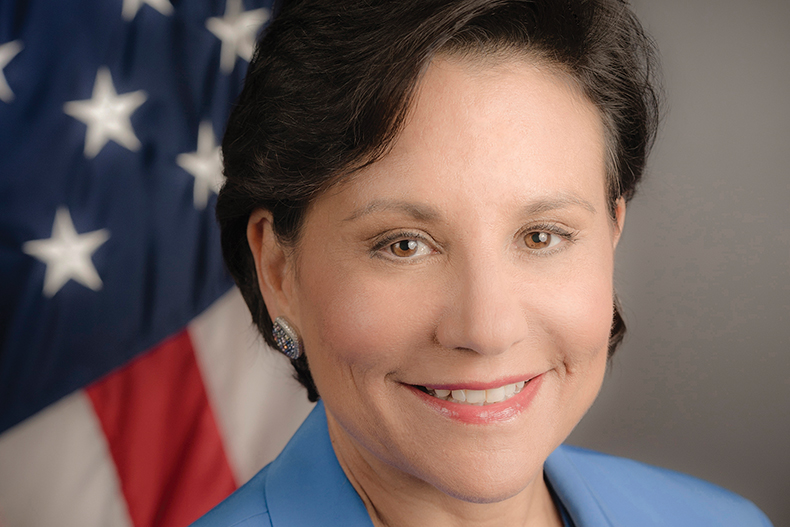
It was an “only in America” story when President Barack Obama appointed the Hon. Penny Pritzker to lead the Presidential Delegation to the 75 th anniversary memorial commemoration of the massacre at Babi Yar in Kyiv, Ukraine in the fall.
Pritzker, U.S. Secretary of Commerce and Chicago native, returned to the very city from which her great-grandfather had fled Czarist oppression.
Babi Yar is the largest mass urban murder site in Europe. On Sept. 28 and 29, 1941, coinciding with Yom Kippur, 33,771 Jews were shot to death by the Germans at the edge of a ravine, into which they fell and in which their bodies remained, until the Germans seeking to hide the evidence dug them up and burned them, heaping indignity upon indignity.
Included in the delegation were Rabbi Yehiel E. Poupko, JUF Rabbinic Scholar, the U.S. Ambassador to Ukraine, a member of the National Security Council, and the chair of the U.S. Holocaust Memorial Council.
Pritzker, a longtime, stalwart supporter of Chicago’s Jewish community has served on JUF’s Campaign Cabinet and has helped fund several Jewish-education and Israel initiatives through JUF. She will step down from her Cabinet post at the end of the Obama administration, and will join an esteemed group of other Jews who have served in the U.S. Cabinet, including Dan Glickman, Arthur J. Goldberg, Philip M. Klutznick, Edward Hirsch Levi, and Abraham A. Ribicoff.
Pritzker’s poignant and compelling remarks, reprinted here, reflect the saga of the Pritzker family as it fled Czarist Russia in 1882 and settled in Chicago, and embody a veritable epoch in Jewish history:
“On behalf of the President of the United States, it is my great honor to be here in Kyiv-a city that has been close to my heart literally since the day I was born.
One hundred thirty-five years ago, my family lived in Podil-less than an hour’s walk from here in an apartment above their grain store on the Zhitny Rynok. But six decades before the atrocities of Babi Yar, my family fled this magnificent city following the pogroms. Had they not fled, my family’s remains might be in this ravine.
We gather today to remember what happened here at Babi Yar.
How do you speak about the unspeakable? How do you imagine the unimaginable? As my then 10-year-old great-grandfather was preparing to flee Kyiv, he looked to the Torah for an explanation of why God would allow his people to suffer so much – and so I, too, look to the Torah for guidance.
We all know the story of Cain and Abel. Jealous that his brother was more favored by God, Cain killed Abel while they were working in the fields.
The Lord said to Cain, ‘Where is your brother Abel?’
‘I don’t know,’ he replied. ‘Am I my brother’s keeper?’
To which the Lord said, ‘What have you done? Listen! Your brother’s blood cries out to me from the earth.’
In this place, the blood of the victims of Babi Yar still cries out to us from the earth. Seventy-five years ago, a basic tenet of humanity was violated. We are all destined to return to the earth someday, but it is not for man to decide when we return. A person may not shed another’s blood.
And yet, over 100,000 Jews, Roma, political prisoners, and Soviet prisoners of war were murdered where we stand-each with a name, each with a face, each with a story.
Like Abel, their blood cries out to us from the earth. It cries out for us to be our brother’s keeper. It cries out for us not to be silent.
Although we can never bring back the souls that were taken, we cherish their memories by resolving that the past shall not repeat itself. A promise that is easily made but difficult to honor. Today, 75 years after Babi Yar, human beings continue to commit unspeakable and unimaginable acts against each other.
Across Europe, across the United States, and across the entire globe, we are seeing a rising hate and fear of the other-like the kind that once drove my family from Kyiv and that made the Holocaust possible.
In times like these, it is all too easy to retreat into narrow self-interest. To ignore the plight of the stranger. To say to ourselves, ‘I am not the victim. This does not concern me.’
But, as Elie Wiesel taught us, ‘Neutrality helps the oppressor, never the victim. Silence encourages the tormentor, never the tormented.’
In times like these-when millions of men, women, and children are driven from their homes by hate and fear-we cannot afford the cost of indifference. Indifference spreads the notion that the problems of your neighbor are not your problems. It absolves us of our responsibility to be our brother’s keeper. It betrays our promise of ‘never again.’
We owe our fellow human beings more than indifference.
If one of the lessons of the Holocaust is ‘thou shalt not be silent,’ then today, on this solemn anniversary, we must honor the memories of those who were murdered by taking action against hate.
We must not only speak out against hate, but fight every day for the ideals of inclusion and tolerance that form the root of our humanity. We must not only embrace the dignity of difference, but open our doors and our hearts to the victims who-in another life-might have been us.
May we never forget the basic tenet of our humanity: that it is not for man to decide when we return to earth. Even one life is too high a cost to pay for our indifference.
And we must always remember the sons and daughters silenced forever in this ravine, 75 years ago on Yom Kippur-a day devoted to the proposition that every human being can renew and become better.
In their memory, let us leave here today committed to do better and be better. Let us leave here today committed to be our brother’s keeper.”
Other stories
-
Chicago to Israel to Kenya
A family’s story of living Jewishly on three continents Michelle Cohen World May 28, 2021 Avital, Tzofia, and Netanel Kaszovitz outside their home in Nairobi on Yom HaAtzmaut. When Avital Kaszovitz prepared to be a Modern Orthodox shlicha (emissary) to the Jewish community in Ke
Read more -
New exhibit spotlights the experience of ‘Shanghai Jews’
Explore a new Illinois Holocaust Museum and Education Center exhibit
Read more -
Europe’s brave new teachers of the Holocaust
Teaching the Holocaust in the modern era has its difficulties and rewards.
Read more
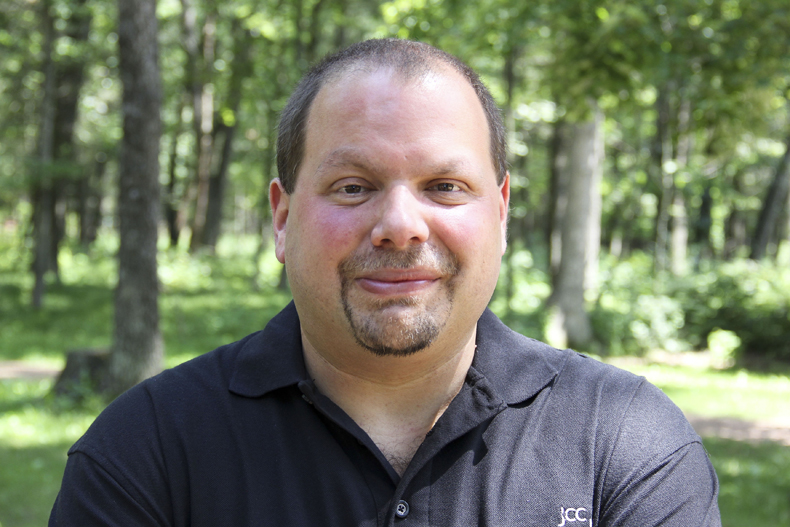
Brad Finkel has been named Director of JCC Camp Chi, it was announced today by Todd Braman, vice president, JCC Chicago. Finkel most recently served as Associate Director of the camp and replaces Ron Levin, who will retire in March 2017 after 37 years as Director of Camp Chi.
Finkel began his career with JCC Chicago in 1994 and since that time has held key leadership positions at Camp Chi and overseen nearly every aspect of camp. He was named associate director of Camp Chi in 2005. Before that, he was assistant director, program director, teen camp director and was a village leader and counselor during the first four years of his career.
“Brad provides outstanding vision, is respected by families and staff alike, and is uniquely positioned to achieve the goals of Camp Chi’s strategic plan,” said Braman. “Brad, Ron and their senior staff have continually collaborated to create new programs, innovative opportunities for year-round engagement and diversified camp experiences for children, teens, families, parents and grandparents.”
Finkel’s leadership style blends an unmatched, lifelong love of camp and a strong, strategic approach to continually grow the business. For more than two decades, he has been an integral part of the leadership team that has built a national reputation for Camp Chi and grown the content and participation of signature camp programs. Some key accomplishments include:
- The Modern Israel Historical Program is now a key component of camp life and includes recruitment of talented Israeli staff members each summer and the seamless integration of Jewish values – respect (kavod), kindness (chesed), community (kehillah) into camp life.
- Chi Town Connections, Camp Chi’s year round teen engagement experience, was reimagined, as was the Staff In Training (SIT) program that grew into a sought after leadership training program for high schoolers.
- Working closely with JCC Chicago Day Camps to create a financial incentive for families interested in both programs during one summer.
- Growth of the preeminent teen tour experience to the Pacific Northwest, PNW, from 15 campers during its first summer to more than 90 campers in 2016.
- Creation of unbreakable partnerships with Keshet and Camp Firefly to serve 125 campers with special needs and to create a fully inclusive camp experience that has garnered national attention and been a life-changing opportunity for children and teens over the last two decades.
A graduate of Indiana University, Finkel also received a Masters in Jewish Professional Studies from Spertus Institute for Jewish Learning and Leadership. He is currently part of the 2020 Beyond Leadership Cohort, an intensive, executive development program.
Finkel and his wife, Rachael, live in Buffalo Grove with their two children, both of whom are Camp Chi campers.
Other stories
-
Two local teens win national recognition
Recipients of the annual Diller Teen Tikkun Olam Awards
Read more -
Celebrating six young award winners cultivating the community
Introducing young adult award winners
Read more -
I grew up in an abusive home. My father regularly berated me, my mother, and my sisters by shouting a litany of things we hadn’t done or had done wrong. To this day my body has an immediate visceral reaction–trembling, sweaty palms, pounding heart–to raised voices. To this day being more than 50 years later.
It’s this personal experience as well as the expansive perspective that I have in my role as senior director of Community Services for Jewish Child & Family Services that causes red flags to go up whenever there is public strident rhetoric about sexual assault, harassment, and inter-personnel relationships. And there have been plenty of incidents to stir the pot in the not too distant past–Bill Cosby, Penn State, Stanford University, Ray Rice, and our recent presidential election to name just a few.
The public rhetoric can empower the large numbers of women, men, and children who experienced or witnessed some form of abuse at some point in their lives to finally share their stories. When author Kelly Oxford posted the message “Women: tweet me your first assaults,” over 27 million people responded or visited her Twitter page in just a single weekend. But for others, all the chatter can trigger renewed traumatization and feelings of shame.
Moreover, the unhealthy impact doesn’t end there. Each time an individual’s wellbeing is threatened, an entire family is affected and each time a family’s overall health and welfare is shaken the strong fabric of our community is compromised.
To be clear, we do want a Jewish community that welcomes robust conversation. We take pride in the tremendous work that has been done to encourage abuse victims to come forward, teach children that it is okay to tell when something just didn’t feel right, and enable bystanders to feel more comfortable intervening than watching unhealthy interactions.
But our responsibility doesn’t end there. We need to create more intentional opportunities for open dialogues, to be prepared to offer patient answers to questions like “why didn’t she report?” or “why would he decide to now share what happened decades ago?”
We must be aware that topics like assault, rape, and abuse are very likely to stir up a range of different emotions. We need to maintain adequate services so that anyone who seeks help for those emotions or experiences assault, abuse, or trauma can easily access sensitive, effective support. We absolutely must ensure that prevention efforts such as the Safer Communities initiative that JCFS facilitates in synagogues and schools are prioritized and fully funded.
We shouldn’t hesitate to convey distaste for sexist comments and to hold abusers accountable for their behavior. It was not until I was a grown woman, a wife, and a mother that I found the strength to respond to one of my father’s tirades with eight simple words: “You will not speak to me that way.” That was all it took to put an end to the intimidating yelling.
I think about how different it might’ve been if, as a young boy, the seeds that blossomed into my father’s full force bullying had been interrupted by someone who named it as inappropriate. Might I have been spared a lifetime of trembling, sweaty palms, and pounding heart? Yes, all the rhetoric is cause for concern. But it is also fuel to catapult our longtime communitywide commitment to safe, healthy Jewish homes and families forward.
There are so many ways to hop on the bus. If your congregation has not participated in the JCFS Safer Synagogue Initiative, call us to get going. If you are a professional seeking education, make sure you are receiving updates about our JCFS Community Services Professional Training Initiative. Invite SHALVA to lead an Adult Education session or Response to talk with teens about healthy relationships.
Expand your knowledge by reading the enlightening information on websites such as Rape Victims Advocate, Children’s Advocacy Center, or Zacharias Center.
If we hesitate individually or collectively, we’ll miss out on this this moment of potential. It’s time to be bold, take a few leaps, and change the world.
Amy Rubin is the senior director of Community Services for Jewish Child & Family Services.
Jewish Child & Family Services is a partner in serving in serving the Jewish United Fund.
Other stories
-
Two local teens win national recognition
Recipients of the annual Diller Teen Tikkun Olam Awards
Read more -
Celebrating six young award winners cultivating the community
Introducing young adult award winners
Read more -
With more than 6,000 Holocaust survivors, Chicago is home to one of the largest and most diverse groups of survivors in the world.
While they, like other seniors, encounter new and increasing obstacles as they age, many also face unique challenges stemming from their past deprivation and suffering. A significant number lack the financial or family resources to meet these needs.
Today, one in three local Holocaust survivors lives in poverty.
To effectively address those needs, Holocaust Community Services — which will receive 100 percent of the proceeds from the Chicago performance of “Defiant Requiem” — was founded by JUF/Jewish Federation in 1999. Administered by CJE SeniorLife, in partnership with Jewish Child & Family Services and HIAS Chicago, HCS has partnered with additional Federation-funded agencies, including EZRA Multi- Service Center, Maot Chitim and The ARK, as demand for services has skyrocketed.
While the size of Chicago’s survivor population is declining as elders pass on, the needs of those who remain grow as they age. HCS is serving more than twice as many survivors as it did just five years ago.
Cuts in Medicare and Medicaid have further burdened survivors’ ability to access health and dental care, while rising medical expenses hinder their ability to pay for other necessities. Decreased state funding for senior services exacerbates their plight.
Many face cruel choices, skipping meals in favor of purchasing medication, or skipping medication to pay a utility bill.
HCS Emergency Financial Assistance grants help with critical, one-time costs, from fixing a leaky roof to covering funeral costs for a loved one.
To ensure that survivors don’t lose the ability to eat — tantamount to another form of starvation — HCS makes dental care a priority. And Chicago’s HCS also has one of the largest food assistance programs for Holocaust survivors in the country. With sufficient resources, though, HCS could increase that program by at least 50%.
Survivors are twice as likely as other seniors to be in poor health and need help with personal care and daily tasks. By helping to provide tens of thousands of hours of in-home care to assist with daily tasks, from dressing and bathing to light housekeeping and laundry, HCS enables local survivors to live independently in their homes.
Such in-home care is significantly more cost-effective than a nursing home — and preserves equilibrium for those whose trauma would be compounded by institutionalization.
Survivors’ past trauma can create unique challenges as they age. Painful memories can resurface with a vengeance, and post-traumatic stress disorder can masquerade as dementia or exacerbate existing cognitive issues.
HCS helps families, caregivers and professionals understand potential triggers for post-traumatic stress and how to defuse them. Special training helps loved ones and caregivers cope with behaviors that might be new and frightening, from hoarding food to refusing to take a shower.
Two in three Holocaust survivors live alone. HCS creates a sense of extended family through regular socialization opportunities, holiday and birthday celebrations; outings to concerts, dance performances and plays; and special Holocaust memorial programs and commemorations.
There also are weekly support groups, in both English and Russian, where clients can discuss current events in a sensitive environment, surrounded by people with shared experiences and perspectives, hopes and fears.
HCS offers computer literacy training to help survivors feel less isolated, enabling them to Skype and email far-flung family members. A new volunteer program will pair community members with survivors for social interaction, training volunteers to make wellness calls and home visits. In the coming months, HCS also will add in-home mental and physical health programming.
In the next few years, more and more survivors will need assistance. HCS must grow its resources today to ensure that Chicago’s Holocaust survivors can live in comfort and dignity tomorrow.
Other stories
-
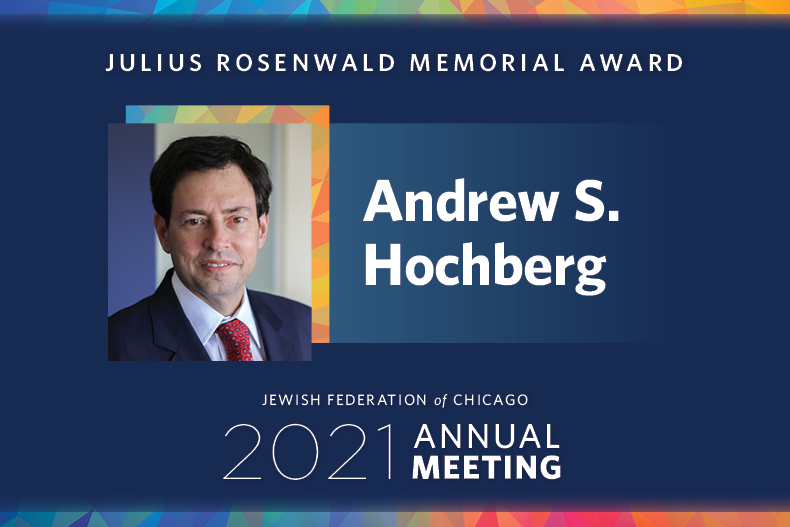
Meet Andrew S. Hochberg, 2021 Julius Rosenwald Memorial Award recipient
Celebrate Andy Hochberg at the virtual Annual Meeting on Sept. 14
Read more -
Two local teens win national recognition
Recipients of the annual Diller Teen Tikkun Olam Awards
Read more -
Celebrating six young award winners cultivating the community
Introducing young adult award winners
Read more