Rick Davis began noticing a tremor in his left leg in 2010, but dismissed the symptom until the tremor became more prominent a few years later. Then, concerned by the increasing unsteadiness of his leg, which became worse with cold temperature and the rise and fall of his emotions, Davis sought an opinion from his primary care physician and then a movement disorders specialist. In the summer of 2014, he was diagnosed with Parkinson’s disease.
Since that time, Davis-who lives in Evanston-has used his health as an opportunity to learn about medicine, religion, and his own physical and mental capabilities. He immersed himself in books to better understand this neurological disorder and ways to potentially manage symptoms. He learned about neurological pathways, the role of exercise in managing Parkinson’s symptoms, and the power of meditation on well-being. He also learned about his own sense of discipline and the importance of positivity.
“A Parkinson’s diagnosis does not mean you have to give up on living,” he said. “There is hope for slowing the progression of the disease, but you have to put the time into your treatment plan and learn to accept the adjustments you may need to make in your life.”
And he certainly puts in the time for his health. In addition to taking medication three times per day, he incorporates physical and mental exercises into his regimen. Along with mediation, a typical week for Davis may include Thai Chi or Qigong, swimming, walking on the treadmill, and lifting weights.
In addition, he participates in the new Parkinson’s Wellness Programs offered at the Bernard Horwich JCC in West Rogers Park. Northwestern Medicine Parkinson’s Disease and Movement Disorders Center, CJE SeniorLife, and JCC Chicago are bringing innovative movement therapy sessions, a caregiver support group, and community-wide Parkinson’s disease educational events directly to the community. The Wellness Programs are made possible by a grant to the National Parkinson Foundation from The Edmond J. Safra Philanthropic Foundation.
With the next session of Parkinson’s Wellness Programs at JCC Chicago set to begin on April 25, Davis will continue to manage his disease with a dedication to fitness and his signature positive mindset.
For more information or to register for the Parkinson’s Wellness classes at JCC Chicago please visit www.jccchicago.org/parkinsons .
JCC is a partner with the Jewish United Fund in serving our community.
Other stories
-
Meet Andrew S. Hochberg, 2021 Julius Rosenwald Memorial Award recipient
Celebrate Andy Hochberg at the virtual Annual Meeting on Sept. 14
Read more -
Two local teens win national recognition
Recipients of the annual Diller Teen Tikkun Olam Awards
Read more -
Celebrating six young award winners cultivating the community
Introducing young adult award winners
Read more
Evening of learning and libations showcases community-transforming projects
BETSY GOMBERG
Members of the community were recently treated to a taste of innovative work by young Jewish leaders.
At a reception hosted by Spertus President Dr. Hal M. Lewis, students of Spertus Institute’s Master of Arts in Jewish Professional Studies (MAJPS) program presented groundbreaking projects. Through Spertus Institute’s Center for Jewish Leadership, this program teaches students to address 21st-century Jewish needs. Interested Chicagoans can apply in one of two tracks, one for Jewish organizational professionals, the other an accelerated program for executives.
Four students presented projects in a lightning-fast format called “Pecha Kucha,” which started in Japan and is now used worldwide. The presenters were Scott Frankel of Chicago’s iCenter; Yulie Kromchenco of Israeli’s Institute for Democratic Education; Nadav Savaia of the Union of Reform Judaism; and Elana Kahn of the Jewish Community Relations Council of the Milwaukee Jewish Federation.
Frankel presented the Jewish Moments Project , an initiative which evolved from his Spertus thesis into a project in developing with the iCenter. When complete, users will be able to share Jewish stories of personal importance to a multimedia platform, creating an interactive path for families to grasp the role of Judaism in their own lives and the lives of others. Kromchenco shared how her team is composing ways for Israeli educators to use music to connect students to diverse Jewish traditions, broadening their perspectives of Jewish history.
Savaia and Kahn presented projects that build bridges between North American and Israeli Jews. Savaia illustrated, with examples from his own experience, how shlichim (emissaries) from Israel placed within American communities create lasting bonds. Kahn shared how her Spertus education has helped her implement ways for Jews in Milwaukee to grow their understanding of Israel-to reveal areas where authentic, personal connections can be made.
“These projects illustrate why we at Spertus are so committed to the training and development of first-rate Jewish leaders,” Lewis said. “Jews today live in complex times. By fostering careers and growth for those who serve our communities, we build more responsive organizations, and enhance the quality-and in fact the very future-of Jewish life.”
For more information, visit www.spertus.edu/center .
The Center for Jewish Leadership is supported by generous grants from the Crown Family. Spertus Institute is a partner with the Jewish United Fund in serving our community.
Betsy Gomberg is Spertus Institute’s Director of Marketing and Communications.
Other stories
-
Meet Andrew S. Hochberg, 2021 Julius Rosenwald Memorial Award recipient
Celebrate Andy Hochberg at the virtual Annual Meeting on Sept. 14
Read more -
Two local teens win national recognition
Recipients of the annual Diller Teen Tikkun Olam Awards
Read more -
Celebrating six young award winners cultivating the community
Introducing young adult award winners
Read more
The 2016 JPRO Network Conference is bringing together hundreds of Jewish community professionals for professional development and networking; showcasing the leading thinkers, activists, and teachers who are advancing our communities and the Jewish people. The program will highlight best practices and newest developments, at times questioning assumptions as well as exploring creative solutions to existing issues. There will be skill-strengthening workshops and social gatherings with ample opportunities for networking. The conference is designed to enhance professional development, strengthening the professionals and the field in which they work.
The Event is being co-chaired by Audra Berg, vice president, Leadership Engagement and Board Relations at JUF. Both Steven B. Nasatir, president of JUF, and Dr. Hal Lewis, president of Spertus, will be headliners at the conference.
For more information or to register, visit www.jpro.org .
Other stories
-
Meet Andrew S. Hochberg, 2021 Julius Rosenwald Memorial Award recipient
Celebrate Andy Hochberg at the virtual Annual Meeting on Sept. 14
Read more -
Two local teens win national recognition
Recipients of the annual Diller Teen Tikkun Olam Awards
Read more -
Celebrating six young award winners cultivating the community
Introducing young adult award winners
Read more
Talking. Eating. Smiling. Things you take for granted-until something is wrong with your teeth.
For many Holocaust survivors, dental care is both an urgent need-and an impossible luxury. Many simply cannot afford it. Yet, it is an essential part of basic health. Without being able to eat properly, their nutrition suffers, putting them at risk for other health issues. Not being able to talk or smile easily also inhibits survivors socially, which has a psychological impact.
But in 2013, Vice President Joe Biden announced a new White House effort to aid aging Holocaust survivors-120,000 in the US, 25 percent of whom live in poverty- calling on other public-private partnerships to help survivors age with dignity and support.
One group who responded was Alpha Omega, a 100-year-old Jewish dental fraternity. Originally founded on the East Coast to combat anti-Semitism in the dental profession, Alpha Omega has since become an international organization. Among its many achievements, it helped found the dental profession in Israel, and has ensured access to dental care for thousands of Jews in need worldwide.
Spurred by Biden’s announcement, Alpha Omega began working with JUF’s Holocaust Community Services, an inter-agency program with CJE SeniorLife and Jewish Child and Family Services, all of which are supported by JUF. Starting in March 2015, Holocaust Community Services has been identifying Holocaust survivors who need critical dental care-but who find it beyond their means-and sending them to Alpha Omega dentists.
These dentists then provide that dental care, free of charge. Some 30 Chicago-area dentists, all Alpha Omega members, have been seeing these patients at their own dental offices-and at the dental clinic at The ARK, also supported by JUF.
The Chicago effort is part of a nine-city pilot program launched in 2015 which, if successful, will be rolled out nationally. HCS has been commended as a model program, thanks to the systems the program has developed which identifies clients, and facilitates referrals between HCS and the local Alpha
Omega chapter.
In just one year, these dentists have provided crucial, life-changing dental services to 50 Holocaust survivors in the Chicago area. Many needed new dentures to replace ones they have been using for 20 years or more.
“The clients have been extremely grateful,” said Yonit Hoffman, Ph.D., Holocaust Community Services Program Director. “Through this program, survivors are receiving high quality, critical care they would not be able to afford otherwise.”
Dr. Laurie Gordon-Shaw, a dentist working out of the Blue Island area, treats the survivors in The ARK’s dental suite, which she praises as a “beautiful facility.”
“Aside from simply not being able to afford dental care,” she explains, “some have been scared of dentists, or have had dental work in other times and places that do not meet today’s American standards of care. Some simply lack the manual dexterity” necessary to properly clean their teeth, she says. “Many have been suffering for years.”
The patients are mostly in their 70s and 80s, she says, and the oldest she treated was in her 90s. Often, patients have to come back multiple times until their procedures are finished-and in certain cases, those appointments are postponed due to other health issues that arise.
While working with survivors on their dental care, Gordon-Shaw she also forms friendships with them. “I spend a long time with each patient. I do the dentistry, but I also carry on their stories. I keep the memory going,” she said. “In my 27-year career, this has been
the highlight.”
Aside from the benefits to their physical health with their improved teeth, Gordon-Shaw notes that she sees other effects as well. “I had one patient who was so self-conscious about her teeth, she didn’t smile for years,” she said. “Now, she smiles all the time.”
All of the services the patients receive are completely free, funded by Henry Schein Medical Supply and other sources, including JUF. Alpha Omega also partners with a dental lab that has providing all of its services pro bono.
And while her patients can’t pay her with money, Gordon-Shaw says they find other ways to express their gratitude; “I get a lot of hugs and chocolate!” she said. “This work truly embodies the motto of Alpha Omega: Making friends, one smile at a time.” n
For more information about the program or volunteering dental services, call Leah Buchbinder, JUF Senior Planning Associate, at (313) 357-4722, or e-mail her at [email protected].
Other stories
-
Meet Andrew S. Hochberg, 2021 Julius Rosenwald Memorial Award recipient
Celebrate Andy Hochberg at the virtual Annual Meeting on Sept. 14
Read more -
Two local teens win national recognition
Recipients of the annual Diller Teen Tikkun Olam Awards
Read more -
Celebrating six young award winners cultivating the community
Introducing young adult award winners
Read more
On May 5, Illinois Governor Bruce Rauner and the Jewish Federations of Illinois will sponsor a Statewide Yom Hashoah (Holocaust Remembrance Day) Memorial Service at 11 a.m. at the Old State Capitol Building, 5 th & Adams Street in Springfield, Ill. This event is held at the conclusion of the Government Affairs Committee’s State Advocacy Trip. Speakers will include, for the first time, a Holocaust survivor from the former Soviet Union, a member of the Jewish Legislative Caucus, and the Governor. For more information, contact Mara Ruff, associate director of State & Local Government at [email protected] or the Government Affairs Department at (312) 357-4770.
Other stories
-
Meet Andrew S. Hochberg, 2021 Julius Rosenwald Memorial Award recipient
Celebrate Andy Hochberg at the virtual Annual Meeting on Sept. 14
Read more -
Two local teens win national recognition
Recipients of the annual Diller Teen Tikkun Olam Awards
Read more -
Celebrating six young award winners cultivating the community
Introducing young adult award winners
Read more
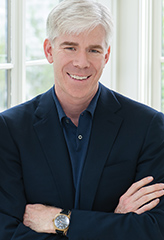
Three people in journalist David Gregory’s life motivated him to explore his Jewish journey: His wife, President George W. Bush, and, of course, Gregory himself.
When Gregory first mentioned to his wife, Beth, that he wanted to raise their future children Jewish, Beth-who grew up as a religious Protestant-said she was on board with the decision as long as he could first deepen his own understanding of what it means to be Jewish.
She told him if he plans to lead the family in faith, he first has to figure out what his faith, and being Jewish, means to him. “I know what you are,” she told him, “but what do you believe?”
Raised by a Catholic mother and a Jewish dad, Gregory had always identified with his Jewish cultural and ethnic identity, but didn’t possess any real belief until he was asked that question by his wife.
Later, as a White House correspondent covering the Bush administration, Gregory was asked by the president: “How’s your faith?” Gregory, who Bush was quite fond of, was startled by the question. After all, it was usually the reporter who was the one who asked the tough questions-not the other way around.
Finally, it wasn’t just others who asked Gregory the big questions. It was he himself-in part because he was in a place of deep gratitude for his personal and professional success-who was experiencing a spiritual longing and wondering what else is out there. Then, after being asked to leave his job as moderator of NBC’s Meet the Press news show in 2014, his quest for spiritual meaning deepened further. With the help of a modern Orthodox Jewish mentor, a woman named Erica Brown, Gregory has been able to use his inquisitive journalistic skills to explore his own Judaism.
The journalist, father to a 13-year-old son and 10-year-old twins (a son and a daughter)-will be discussing his new book, aptly named How’s Your Faith? (Simon & Schuster) when he speaks at a JUF event in the northern Chicago suburbs on April 18. In advance of his Chicago appearance, Gregory, now an analyst for CNN and Fox News, sat down for a phone interview with JUF News to talk about his Jewish journey.
JUF News: How’s your faith these days, and how has it changed since the first time President Bush asked you that question?
David Gregory: Immersing myself more deeply in prayer and faith…and study has changed me. I feel like it’s been a path-there’s a process of transition that happens almost daily.
The gift of the book…asking questions of myself, of God, and of faith leaders, has also opened up another path of discovery. For me, what’s changed since I was initially asked that question is that faith has really moved from a matter of my head to a matter of my heart. Knowing God, believing in God, has moved from mere study and questions of identity to a real sense of being closer to God, and more deeply grounded in faith.
Why is that question ‘How’s your faith?’ so important to you?
…It begs the questions what does it mean to be Jewish, what does it mean to be a person of faith? What does it mean to examine myself more deeply in a way that I think faith asks us to… Is my life deeper and is my life better because my faith is deeper? For me, the answer to these questions are [both] yes.
Did you know that this sense of spirituality was missing back when it was missing?
A big part of my initial search, which I write about, is a return to my teenage years and how I grew up. Erica (his Torah study partner) always says the spiritual journey begins by understanding the family dynamic. I do talk about an absence of faith growing up, an absence of belief, at a time when I really could have used it. Trust in God and faith are about understanding that things may not go as they hope you do, but, in the end, everything is going to be okay. That doesn’t mean there’s not pain and hardship and mistakes, but everything is going to be okay. I wish I’d had a sense of that during tough parts of my adolescence and I don’t really think I did. And so, understanding all of that, and wrestling where my mother was as an alcoholic and where my father was in his denial…learning to forgive and make sense of all that, the absence of faith was really what was striking.
What have your professional and personal challenges taught you?
When you go through something difficult, you say I’m glad I learned some of these lessons, but I could have done without learning it that way. I could have done without my mother’s alcoholism and her getting arrested and the shame, isolation, and anger and all of that. But there is a resilience that comes with that and that things don’t work out as you plan. It gave me a certain grit that served me well and in some ways did not serve me well. I do believe that hardship has a way of renewing your life. Like Psalm 23 says, God renews our life. And as we walk through the valley of death, it says that we don’t stay in the valley, but we walk through it. So it’s in the walking through that we find some renewal…
It’s very hard to examine yourself-to examine the questions ‘Who am I? Who am I really? What gives me a sense of identity?. It is, I think, hard to [examine those questions] purely out of a sense of gratitude, until you know some kind of pain, some kind of loss, some kind of personal failure, until you can find a way to take something that is broken and make it better.
You write that your identity used to be wrapped up in being a journalist. Are you in a different place now?
I strive to be. It doesn’t mean that the old impulses aren’t there-they are-but I think I work very hard through prayer, through faith to reset that… ‘Who am I?’ is a much deeper question. It gets to the fullness of my identity, whether I’m on television or not. I could be the manager of a hardware store and ask the same question about what gives me identity.
I’d be remiss if I didn’t ask you about politics. Have you ever seen anything like what’s going on with the current presidential campaign?
No, I really haven’t seen anything like it. The lack of decorum and the debasement of the process is really unsettling, as it is to so many people. I worry that we’re now part of a political culture that has accepted the complete vulgarization of our political discourse…I don’t mean to sound that prudish about it because we’ve had outlandish periods in our politics throughout our history so we’ll get past it, but it’s pretty low.
What’s your favorite Jewish ritual?
Shabbat! We have really developed a Shabbat ritual-dinner on Friday night with our children-that I think has matured into just a beautiful family time, separate from the rest of the week. I really think it’s holiness in time and space and it’s what Rabbi Abraham Joshua Heschel describes as “stopping time,” and having a chance to reflect. I’m always trying to go deeper into the ritual, to really feel the transcendence, through prayer, through the martini I have on Friday nights, through studying Torah, through the conversations we have around the table, and to just lose myself in the light of Shabbat.
David Gregory will be speaking at a synagogue in the northern suburbs on April 18 in the evening. For more information and to make a reservation, call Sandi Kaplan at (312) 444-2841 or e-mail: [email protected]. Advance reservations required to attend.
Other stories
-
Meet Andrew S. Hochberg, 2021 Julius Rosenwald Memorial Award recipient
Celebrate Andy Hochberg at the virtual Annual Meeting on Sept. 14
Read more -
Two local teens win national recognition
Recipients of the annual Diller Teen Tikkun Olam Awards
Read more -
Celebrating six young award winners cultivating the community
Introducing young adult award winners
Read more
Too often we hear about difficulties facing Jewish college students on Illinois campus, but to focus solely on the politics gives only one piece of the complex narrative that is Jewish life on campus. Students work hard to bring Israel to their schools, and meaningful, informative engagements introduce pro-Israel students to the broader campus community.
Many campus events around Israel help create positive, apolitical associations with the state, and these positive Israel engagements carry over in interactions across campus, creating a more open, vibrant campus environment. Here are a few…
Jeffrey Goldberg comes to town
Journalist Jeffrey Goldberg visited the University of Chicago to share his insights about the reality on the ground in Israel in his talk titled, “Settlements and Israel’s Isolation from Her Closest Allies.” His analysis of the situation garnered positive reception by the audience. Jewish, Israeli, Palestinian, and curious unaffiliated students, as well as faculty, were engaged and interested, asking thoughtful questions of Goldberg.
After his University of Chicago visit, Goldberg headed south to the University of Illinois, where he joined Hillel students and others for Zionist Food for Thought to present “Israel and the Middle East: The Tragic History of a Two-state Solution.” Students gathered to listen to Goldberg and to ask deep questions to help further their understanding and knowledge about Israel.
Conversations about race
Yavilah McCoy and Rick Pinderhughes, experts on dialogue surrounding race on university campuses, spoke with students at Northwestern University Hillel and JUF’s Israel Education Center Israel Interns over two days in February. McCoy, who is African-American, was raised in an Orthodox Jewish family and community. She has expertise in facilitating dialogue, while Pinderhughes’ background in psychology and community trauma helped guide the students in attendance. The speakers helped students understand ways to be more authentic in their interactions across differences on campus, guiding the students toward better listening and engagement, and helping frame the Northwestern campus affinity groups in new language that inspired nuanced understanding and complexity.
Israel loves you!
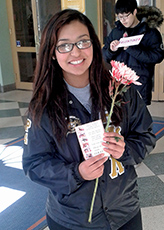
For Valentine’s Day, many Illinois campuses wore their hearts on their sleeves with the annual “Israel Loves You!” event. Students from Hillel passed out roses and cards saying “Israel Loves You!” to passing students. The event put smiles on faces across campus, spreading love and positivity, rather than the buzzword negative reactions that the anti-Israel movements seek to foster.
At the University of Illinois at Urbana-Champaign, the “Israel Loves You!” event reached least 75 students and faculty, many of whom had never before engaged with Hillel or Israel-related campus activities. The love campaign garnered warm reception from both students and faculty on campus.
Coming soon…
Good Deeds Day
Campuses across Illinois will play host to Good Deeds Day on April 10 in partnership with JUF’s TOV Volunteer Netork. Inspired by Israel, Good Deeds Day is a celebration of giving back through projects, donations, and collaboration to bring the goodwill of students to bear on some of our communities’ more pressing challenges. Students will make fleece blankets to donate to homeless young people, collect toiletries to donate to survivors of sex trafficking, and write cards for children in the hospital. Last year’s Good Deeds Day was a huge success, reaching over 1,500 individuals. On April 10, organizations across the region will be hosting events to encourage volunteerism and support of our neighbors and community members. We can’t wait to see how many people we can reach this year through good works on campus and in our neighborhoods. As we like to say, Good Deeds Day: Made in Israel, Good for the World.
For more information on projects for all ages across Chicago, visit http://juf.org/tov/good-deeds-day.aspx .
Emily White is program director of JUF’s Israel Education Center.
Springboard Chicago, a new initiative designed to increase the number of teens actively engaged in Jewish life, is pleased to announce the release of the Request for Proposals (RFP) for 2017 Springboard Vacation Experiences. Ideas should inspire, connect, educate, welcome and celebrate Jewish teens’ life and learning and enhance Jewish teens’ interest and involvement in the broader Chicagoland Jewish community.
This year, Springboard partnered with JCC Camp Chi to pilot StudioChi , a five-day immersive Spring Break experience designed to appeal to different passions, interests and backgrounds. StudioChi focused on how storytelling, music and film can affect activism and social change. Learn more about the pilot at www.SpringboardChicago.org
“In 2017 we hope to offer ten unique school vacation experiences,” said Sarina Gerson, director of JUF’s Teen Engagement Initiative. “Each of these programs represents a new entry point for Jewish teen engagement as well as another meaningful experience that can enhance the Jewish journey of teens in the Chicago area.”
Contact [email protected] to receive a copy of the RFP. Letters of intent for all interested program providers are due by 5 p.m. on Wednesday, April 13.
All questions should be directed to Sarina Gerson, Director of the Teen Engagement Initiative, by email at[email protected]or phone at 312-357-4987.
Springboard Chicago is made possible by generous grants from the Jim Joseph Foundation, The Jewish United Fund of Metropolitan Chicago, the Crown Family, and an anonymous donor.
Other stories
-
Meet Andrew S. Hochberg, 2021 Julius Rosenwald Memorial Award recipient
Celebrate Andy Hochberg at the virtual Annual Meeting on Sept. 14
Read more -
Two local teens win national recognition
Recipients of the annual Diller Teen Tikkun Olam Awards
Read more -
Celebrating six young award winners cultivating the community
Introducing young adult award winners
Read more
JERUSALEM ( JTA ) – A group of the last remaining Jews from Yemen arrived in Israel in a secret operation coordinated by the Jewish Agency for Israel.
The 19 Jews who arrived Sunday include 14 from Raydah, including the community’s rabbi, and a family of five from Sanaa, the capital. The rabbi brought with him a 500- to 600-year-old Torah scroll, the Jewish Agency said in a statement issued Monday.
The Sanaa family included the son of Aharon Zindani, who was killed in an anti-Semitic attack in 2012. Zindani’s widow and several of their children made aliyah shortly after the attack, and his body was brought to Israel for burial.
Some 200 Jews have been secretly brought to Israel from Yemen by The Jewish Agency in recent years, including several dozen in recent months, as attacks against the Jewish community have increased and the country has become embroiled in civil war.
“This is a highly significant moment in the history of Israel and of aliyah,” Natan Sharansky, chairman of the executive of The Jewish Agency for Israel, said in a statement. “From Operation Magic Carpet in 1949 until the present day, The Jewish Agency has helped bring Yemenite Jewry home to Israel. Today we bring that historic mission to a close.
“This chapter in the history of one of the world’s oldest Jewish communities is coming to an end, but Yemenite Jewry’s unique, 2,000-year-old contribution to the Jewish people will continue in the State of Israel.”
More than 51,000 Yemenite Jews have immigrated to Israel since the country’s establishment in 1948. The majority of the community – nearly 50,000 people – was brought to Israel in Operation Magic Carpet in 1949 and 1950.
Attacks against Jews in Yemen have risen sharply since 2008, when Jewish teacher Moshe Yaish Nahari was murdered in Raydah. In 2012, Zindani was murdered in Sanaa and a young Jewish woman was abducted, forced to convert to Islam and forcibly wed to a Muslim man.
Some 50 Jews remain in Yemen by choice, including approximately 40 in Sanaa, where they live in a closed compound adjacent to the U.S. Embassy and are currently under the protection of Yemeni authorities.
“The Jewish Agency will continue to assist any Jew who wishes to make Israel his or her home,” the statement concluded.
Other stories
-
Chicago to Israel to Kenya
A family’s story of living Jewishly on three continents Michelle Cohen World May 28, 2021 Avital, Tzofia, and Netanel Kaszovitz outside their home in Nairobi on Yom HaAtzmaut. When Avital Kaszovitz prepared to be a Modern Orthodox shlicha (emissary) to the Jewish community in Ke
Read more -
New exhibit spotlights the experience of ‘Shanghai Jews’
Explore a new Illinois Holocaust Museum and Education Center exhibit
Read more -
Europe’s brave new teachers of the Holocaust
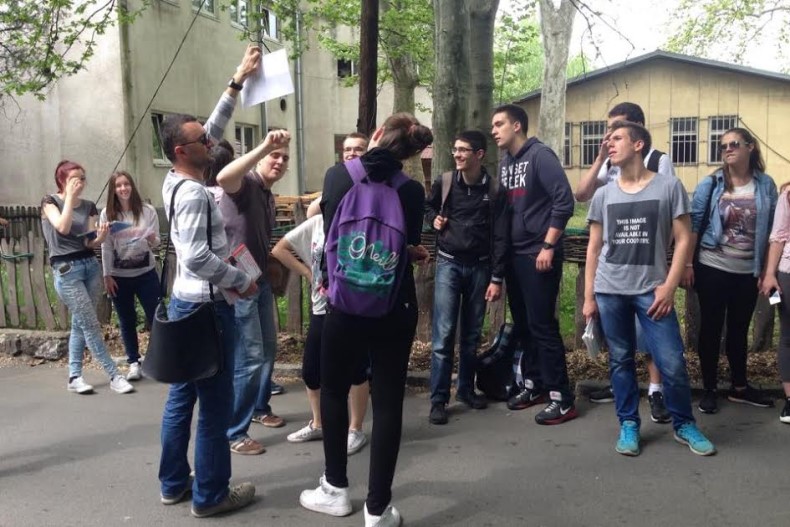
Teaching the Holocaust in the modern era has its difficulties and rewards.
Read more
Ta’am Yisrael participants reunited.
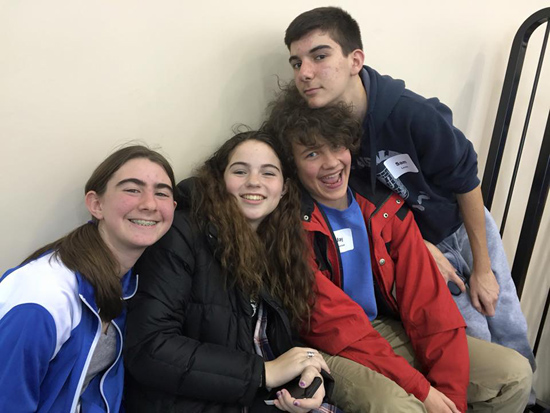
Ta’am Yisrael 2016 participants continued to savor their taste of Israel as many of the 174 eighth-graders on the February trip attended a reunion on March 6 to reinforce their connections to Israel, the Jewish community and each other.
During the celebration, held at the Rochelle Zell Jewish High School in Deerfield, Ta’am participants reunited with their bus-mates for hugs and to discuss favorite memories. They also got a “taste” of different high school programs and opportunities, including youth movements, Hebrew language classes and volunteering.
At the same time, several dozen parents discussed the impact the trip had on their children, and how to sustain and build upon the experience through future programs and other engagement. ( View photos from the reunion. )
Plans for the 2017 trip, open to Jewish eighth-graders in Hebrew schools and other programs throughout the Chicago area, already are in the works. More information about Ta’am Yisrael is available at www.TaamYisrael.org .
Other stories
-
Meet Andrew S. Hochberg, 2021 Julius Rosenwald Memorial Award recipient
Celebrate Andy Hochberg at the virtual Annual Meeting on Sept. 14
Read more -
Two local teens win national recognition
Recipients of the annual Diller Teen Tikkun Olam Awards
Read more -
Celebrating six young award winners cultivating the community
Introducing young adult award winners
Read more