A single voice, whether coming from behind a podium or across the ether via webcam, can change the way people think, act and relate to their world. All because of the power of words.
The next episode of the public-affairs program “Sanctuary” – which airs at noon Sunday, Nov. 8, on ABC7-Channel 7 – delves into the art and impact of the spoken word, and particularly the ancient yet contemporary presentation known as the sermon. For millennia, speakers have offered insight, observation and opinion that has shifted perceptions, altered actions and, on the grandest stage, changed history.
Discussing how that happens, and what goes into crafting an effective sermon, are two frequent speakers who address different audiences in very different ways: Rabbi Wendi Geffen of North Shore Congregation Israel in Glencoe, and Dr. Michael Slater, an emergency physician at Chicago’s Mount Sinai Hospital. Cindy Sher hosts.
The program also is available for viewing on the Jewish United Fund website, www.juf.org/videos.
“Sanctuary” is a joint production of the Jewish United Fund of Metropolitan Chicago and the Chicago Board of Rabbis, in cooperation with ABC7-Channel 7.
Other stories
-
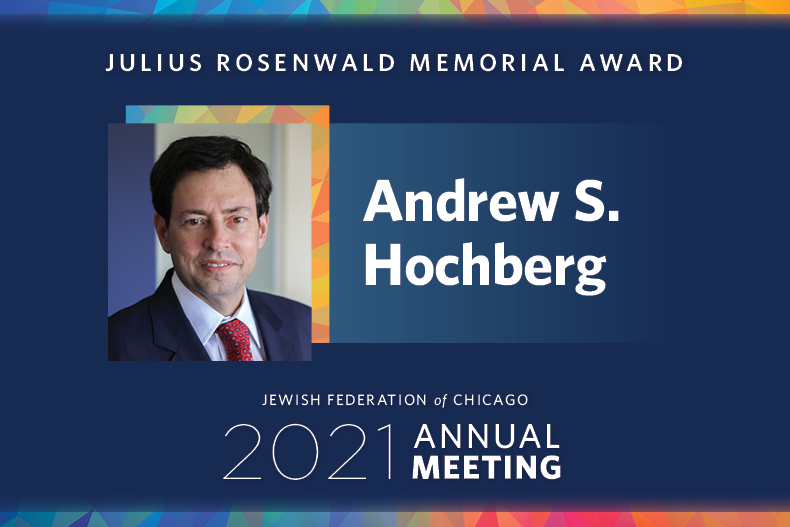
Meet Andrew S. Hochberg, 2021 Julius Rosenwald Memorial Award recipient
Celebrate Andy Hochberg at the virtual Annual Meeting on Sept. 14
Read more -
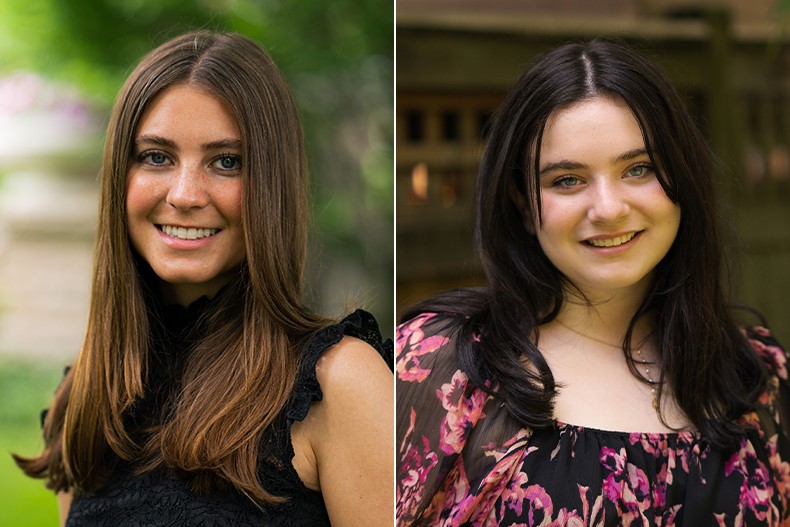
Two local teens win national recognition
Recipients of the annual Diller Teen Tikkun Olam Awards
Read more -

Celebrating six young award winners cultivating the community
Introducing young adult award winners
Read more
‘Build Me a House for All People’: JUF asks community for input in all-new Synagogue Inclusion Project
JESSICA LEVING
When her son Danny was younger, Jodi Newmark remembers even the simple act of going to synagogue could be nerve-wracking.
How is Danny going to behave? She would worry. How will people react?
Concerns like these might ring true for the parent of any young child – especially at long programs with lots of sitting still. But for Jodi, whose son has autism, the struggle was heightened, and often events specifically aimed at children still presented hurdles.
“You might have a wonderful community Hannukah event where most kids would enjoy the dancing and the songs,” she said. “But for kids like Danny, that sensory stimulation might be too much.”
That’s why today, Jodi, whose son is now a young adult, works tirelessly to build support for families of kids with disabilities in the Jewish community. As the director of the Encompass program at Jewish Child and Family Services, she played a key role in launching the all-new Chicago Synagogue Inclusion Project – a year-long collaborative effort by Encompass and JUF’s Synagogue Federation Commission to support Chicago-area synagogues in building inclusive communities.
“Beit Knesset, the Hebrew term for synagogue, literally means a place for all to enter,” said Rabbi Michael Schwab, of North Shore Synagogue Beth El, who co-chairs JUF’s Synagogue Federation Commission along with JUF Board Member Marc Roth. “Synagogue life should be accessible to all.”
To coordinate the project – which will begin with a large-scale community survey seeking input on current needs ( www.surveymonkey.com/r/JewishDisabilityInclusion ) – JUF has engaged national inclusion specialist Ed Frim of the United Synagogue of Conservative Judaism.
“What we’re trying to do is create a culture where inclusion just happens naturally – where we see people with disabilities as people, and naturally do whatever it takes to make them feel part of the community,” said Frim. “We want to get to a place where it doesn’t even have to be called ‘inclusion’ because people just get it. What we’re really talking about is creating community.”
The initiative – which is funded by JUF’s Breakthrough Fund and administered by JCFS – officially kicked off on Tuesday, Oct. 20th, with a community event at Beth Hillel Congregation Bnai Emunah in Wilmette featuring Jay and Shira Ruderman of the Ruderman Family Foundation, which supports a multitude of inclusion efforts in the larger Jewish community.
“We come to this issue from a civil rights perspective,” said Jay Ruderman. “People with disabilities have the right to be included in all aspects of our society. We need to speak out loudly and clearly and tell them and their families that they’re welcome.”
“Inclusion is a mindset,” added Shira Ruderman. “We have to advocate for a change from charity to justice.”
More conversation than lecture, the Oct. 20 th event was designed as an opportunity for lay, rabbinic, and professional leaders in Chicago’s synagogue community to provide input, helping initiative organizers identify needs and structure the process. Event participants were also encouraged to take the survey ( www.surveymonkey.com/r/JewishDisabilityInclusion ) and share it with their networks.
“We need to do a needs assessment for the community and engage people with this before we dive in and start providing programs,” said Frim. “It’s all about getting everyone involved in the conversation.”
“We hope this will be a starting point for a sustainable effort toward educating, sharing and creating awareness on how to more seamlessly incorporate those with special needs into daily synagogue life,” added Roth.
The next round of community meetings are slated for this fall.
For more information, please contact[email protected].
Other stories
-
Meet Andrew S. Hochberg, 2021 Julius Rosenwald Memorial Award recipient
Celebrate Andy Hochberg at the virtual Annual Meeting on Sept. 14
Read more -
Two local teens win national recognition
Recipients of the annual Diller Teen Tikkun Olam Awards
Read more -
Celebrating six young award winners cultivating the community
Introducing young adult award winners
Read more
This year’s General Assembly (GA), the Jewish Federations of North America (JFNA) national conference, will be held in Washington, D.C. from Nov. 8-10. The theme is “Think forward.” More than 30 members of the Chicago Jewish community will be attending and leading sessions. Former Board member Michele Sackheim Wein is chairing JUF’s delegation from Chicago.
Speakers will include Israeli Prime Minister Benjamin Netanyahu, Ambassador Dennis Ross, former Congressman Barney Frank, members of the Israeli Knesset and Canadian Parliament, former NBC moderator David Gregory, and actress Debra Messing. The Emmy-winning star of Will & Grace , she now stars in The Mysteries of Laura .
One of the breakout speakers this year will be David Brown. Now JFNA’s Chair of Global Operations: Israel & Overseas, Brown is on the JUF Board and its immediate past chairman. An attorney, Brown is chairman of the Chicago-based law firm Much Shelist, P.C. He also just completed his eleventh Chicago Marathon, running this time on behalf of JUF. His topic: ” Outside Your Backyard: Domestic Advocacy, Overseas Initiatives and Your Campaign .”
Also from Chicago is the GA’s co-chairman, Alan Solow, a member of JUF’s Board of Directors. JUF’s Senior Planning Advisor Peter Friedman and David Prystowsky, JUF Vice President, Campaign, will be presenting as well. Amy Kirsch and Michael Teplitsky will be recognized for receiving the Davis, Gidwitz & Glasser Young Leadership Award for lay leaders under 40, which they were given at the JUF Annual Meeting in September.
Registration is $499 for general admission, $399 for Jewish communal professionals. To register, visit generalassembly.org .
Other stories
-
Meet Andrew S. Hochberg, 2021 Julius Rosenwald Memorial Award recipient
Celebrate Andy Hochberg at the virtual Annual Meeting on Sept. 14
Read more -
Two local teens win national recognition
Recipients of the annual Diller Teen Tikkun Olam Awards
Read more -
Celebrating six young award winners cultivating the community
Introducing young adult award winners
Read more
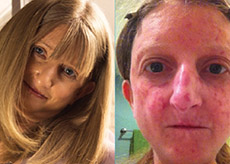
Lisa Goodman-Helfand shows the face of scleroderma in social media campaign
LISA PEVTZOW
Facebook doesn’t reject many ads.
But over the summer, it turned down one from Lisa Goodman-Helfand, who was trying to raise awareness of scleroderma. The autoimmune disease can cause hardening of the skin and organ failure. The ad showed a picture of Goodman-Helfand, whose skin is mottled in red and blue spots from the disease, and a picture of another woman with scleroderma, who looks perfectly healthy but is facing multiple organ failure.
Although Facebook ultimately relented and accepted the ad, from that experience, Goodman-Helfand, who is Jewish, was inspired to begin an online campaign. In August, Face Off for Scleroderma (#SclerodermaSelfies), which she kicked off at Congregation Solel in Highland Park went viral.
Goodman-Helfand has been asking people–whether they have scleroderma or not–to take a selfie of themselves without makeup and post it any social media website, from Twitter to Facebook and Instagram. She is also asking people to make a donation for scleroderma medical research and nominate others to post their own selfies.
“I not only want to raise awareness and funding for research,” said Goodman-Helfand, who lives in Highland Park and is married with two children. “I also want to spread the notion that all faces deserve a place in this world. I want people to honor difference and a person’s inner beauty.”
Goodman-Helfand was first diagnosed with when she was 10, although she began having symptoms of the disease when she was 7. Her mother wanted to shield her from the disease and made the decision not to share too much information with her, she recalled. For many years, she didn’t understand the impact it would have on her life. It wasn’t until she was 19 and underwent some routine tests that she finally learned. She immediately headed for the Skokie Public Library and looked up scleroderma.
“I learned that the life expectancy was 7 years,” said Helfand, who now works as a reading specialist at a Skokie school. “It was a huge blow.”
“I went through adolescence looking so different,” she said. “Even at 40, I am still learning to embrace how I look and who I am on the inside, and the role of friendship, faith, and family.”
Goodman-Helfand said she has been incredibly lucky that the disease has largely left her internal organs alone. In her 30s, though, when she was pregnant with her second child, scleroderma masked the symptoms of preeclampsia and she wound up in the hospital near death for more than 200 days. In a mystical ceremony, her Hebrew name was changed from Laya to Chaya (life in Hebrew) to thwart the angel of death. She wrote about this experience in her book titled “Does This Hospital Gown Come With Sequins? (and Other Questions Asked During My 218-Day Hospital Stay).”
She has grown from the Facebook experience, as well. For 28 years, Goodman-Helfand never went out of the house without heavy makeup. She never shared a picture of herself without makeup. She never even took the trash to the curb without makeup.
“Essentially, because I don’t want to receive looks of horror from people thinking I’m contagious or that there’s something wrong with me. Already I feel that I look different,” she said. “Nobody wants to be stared at or questioned.”
In the last few months, she has taken what she calls baby steps toward showing people her true face.
She will now leave the house without makeup to walk around the neighborhood, to answer the door to someone she knows, to pick up something from a friend’s house.
“I don’t know for sure but I hope one day I’ll be able to tackle this and go out in public,” Goodman-Helfand said. “This is a journey for me, too.” n
Find out more details about Face Off for Scleroderma at Goodman-Helfand’s website at http://comfortableinmythickskin.com .
Other stories
-
Meet Andrew S. Hochberg, 2021 Julius Rosenwald Memorial Award recipient
Celebrate Andy Hochberg at the virtual Annual Meeting on Sept. 14
Read more -
Two local teens win national recognition
Recipients of the annual Diller Teen Tikkun Olam Awards
Read more -
Celebrating six young award winners cultivating the community
Introducing young adult award winners
Read more
Will final state budget harm people served by JUF-funded programs?
SUZANNE STRASSBERGER
The State of Illinois just ended its fourth month without a budget. This does not mean the State has stopped spending money.
Constitutional rules, court orders, and the signed education appropriations bill require payments for debt service, local government allocations, pensions, K-12 education, child welfare and Medicaid. That represents about 90 percent of all state spending. Though reimbursement is delayed by three months or longer, at least these programs are seeing some funding. Compare this to social service providers like JUF-funded agencies who have signed contracts-and therefore must deliver services-but are receiving no reimbursement. It is a dire situation, but actually only a part of the state budget crisis.
The other part is the mismatch between spending and revenues, with spending exceeding revenues by over $5 billion on a base of $37.14 billion. Any actual budget may well include additional funding reductions, revenue enhancements, and further delays in bill payments.
The following examples illustrate what all this means for JUF-funded agencies and more importantly, the people they serve.
“Mild to moderate developmental delays in toddlers is often easy to fix,” explains Marlies Gramann, who supervises the Jewish Child and Family Services Early Intervention program. “But if you wait until the child enters preschool or kindergarten, chances are that the delay will have increased and the child will need special education for much longer than if he had used early intervention service like speech and the occupational therapy.” Proposed policy changes limiting service eligibility to children delayed 50 percent or more, as opposed to current guidelines of 30-50 percent delayed, will push Illinois into the category of being the third most restrictive state in the nation.
Much research documents the success of CJE Seniorlife Adult Day Services Program in keeping older adults facing cognitive, physical, and emotional challenges engaged in community and providing respite and support for their family caregivers. CJE Seniorlife has supplemented the gap between the costs of the program and the government subsidy with private fundraising. However, if the rate reductions being threatened by the Governor and General Assembly are implemented, CJE may be forced to seriously consider restricting admission to only private pay clients. “This doesn’t make sense,” said Melissa Gelfand, director of Adult Day Services. “If this program goes away for the government funded clients, caregivers will be forced to quit jobs or place the clients in nursing homes. How much will that cost the state?”
“There is real danger ahead because State spending far exceeds tax revenues,” said David Golder, chair of the JUF Government Affairs Committee. “We are worried that the Governor and the General Assembly will cut spending on tremendously cost-effective programs such as community care for seniors and supportive housing for people with disabilities, so they can avoid the more difficult decisions required for a long term fix to the State budget. The JUF Government Affairs Committee is continually advocating to keep these investments in the final budget and to keep the eligibility rules for these important programs at current effective levels.”
Suzanne Strassberger is associate vice president of Government and Community Partnerships for the Jewish Federation of Metropolitan Chicago.
Other stories
-
Meet Andrew S. Hochberg, 2021 Julius Rosenwald Memorial Award recipient
Celebrate Andy Hochberg at the virtual Annual Meeting on Sept. 14
Read more -
Two local teens win national recognition
Recipients of the annual Diller Teen Tikkun Olam Awards
Read more -
Celebrating six young award winners cultivating the community
Introducing young adult award winners
Read more

November is Family Health History Month. When families gather at Thanksgiving, they may notice that they share common habits, lifestyles, and physical traits from holiday traditions to Jewish heritage to eye color. These commonalities are often passed down through the generations, both biologically through DNA, and socially through learned behaviors. Diseases that run in families are often connected to certain genes. Some diseases, such as Tay-Sachs, are based on single gene mutations, while others are based on a combination of genes, lifestyle, and environmental factors. Many genetic mutations occur more frequently in specific ethnic groups than in the general population. Therefore, knowing information about your ethnicity and your ancestors’ countries of origin can help you determine if you or your family might be at risk.
The National Office of Public Health Genomics found that 96 percent of Americans believe that family health history is important to health but only 30 percent have tried to organize their family health history information. The Surgeon General’s annual Family Health History Month campaign is designed to encourage people to gather their family health history and discuss their findings with their healthcare provider so that this information can be added to their medical records and used to guide shared decisions about care. Today, an abundance of online tools have emerged to make tracking and sharing family health history information easier than ever.
But family health history information can provide benefits that go beyond individual health care. This November, the Center for Jewish Genetics will collaborate with the Michael J. Fox Foundation (MJFF) for Parkinson’s Research to encourage families of Ashkenazi Jewish descent to talk with their relatives about family health history and to learn about the MJFF landmark study on the connection between Parkinson’s disease and genetics. About 10 percent of all cases of Parkinson’s disease (PD) are genetic. Individuals of Ashkenazi Jewish descent are more likely than the general population to carry a mutation in either the LRRK2 or GBA gene. The study, the Parkinson’s Progression Markers Initiative (PPMI), is taking place at 33 sites worldwide including Northwestern University here in Chicago. The study can be extremely valuable in understanding Parkinson’s indicators and in discovering new treatments. People with and without Parkinson’s-who carry one or both of the genetic mutations-can visit www.michaeljfox.org/ppmi/genetics or call (888) 830-6299 for more information. PPMI provides free genetic counseling and testing for the LRRK2 and GBA genes. Thanksgiving Day is the perfect time to start this important conversation to identify family members who are eligible to participate. A decision to get involved in PPMI is an opportunity to join forces with thousands of families worldwide committed to advancing scientific progress. Michael J. Fox will be the keynote speaker at this year’s Vanguard Dinner sponsored by the Jewish United Fund of Metropolitan Chicago. Since launching his foundation in 2000, the MJFF-the largest non-profit funder of Parkinson’s drug development in the world-has raised $450 million dollars to search for a cure for this incapacitating disease.
But knowing your family health history and identifying family members is just the first step along the continuum of care. For those already affected with PD, JUF affiliated agencies provide programming and services for individuals and families. The National Parkinson Foundation recently selected the Jewish Community Centers of Chicago (JCC) to launch the Edmond J. Safra National Parkinson’s Wellness Initiative in partnership with Northwestern University’s Parkinson’s Disease and Movement Disorders Center (a National Parkinson Foundation Center of Excellence), and CJE SeniorLife. The program will take place at the Bernard Horwich JCC in Rogers Park, and will provide exercise, education, and wellness services for adults with any stage of PD as well as support for their caregivers. Exercise classes and support groups will begin the week of Jan. 4, 2016. For more information or to register, please call (773) 516-5864.
CJE SeniorLife provides support for individuals and families affected by PD in order to promote positive, healthy aging. CJE has collaborated with MJFF on local educational and screening programs examining PD as a Jewish genetic disease and is committed to providing the best care for persons with PD. Most direct care staff is required to receive agency-wide PD training. CJE offers seated exercise classes, caregiver support groups and therapeutic art classes. All of CJE’s PD programs are open to the public and free of charge.
This Thanksgiving start a new tradition. Pass on your family’s health history to your children, grandchildren and those you care about most. Give thanks for the blessing of good health, and help yourself and others by sharing your information with your healthcare provider and researchers so that our community will benefit now and in future generations.
Surgeon General: My Family Health Portrait: http://1.usa.gov/1xDsG4p
My Family Health Portrait is an online tool that makes it easy for you to record your family health history. The tool is easily accessible and simple to complete. It assembles your information and makes a “pedigree” (family tree) that you can download. It is private and does not keep your information. The tool gives you a health history that you can shore with family members and/or send to your healthcare provider.
Genetic Alliance Family Health History Tools: http://bit.ly/1LaRu8F
Karen Litwack, LCSW, is the senior advisor for national and educational initiatives for the Center for Jewish Genetics-an educational resource for hereditary cancers and Jewish genetic disorders-a cooperative effort of the Jewish United Fund of Metropolitan Chicago and the Ann & Robert H. Lurie Children’s Hospital of Chicago, and supported in part by the Michael Reese Health Trust.
Other stories
-
Meet Andrew S. Hochberg, 2021 Julius Rosenwald Memorial Award recipient
Celebrate Andy Hochberg at the virtual Annual Meeting on Sept. 14
Read more -
Two local teens win national recognition
Recipients of the annual Diller Teen Tikkun Olam Awards
Read more -
Celebrating six young award winners cultivating the community
Introducing young adult award winners
Read more
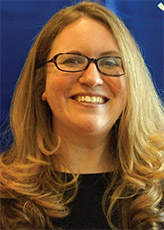
Eager to share the struggle she has overcome and empower others, Miriam Ament, an Ida Crown alum who lives in West Rogers Park, has made it her mission to combat the stigma of mental illness in the Jewish community. Thanks to her passion and the help of a committed board, Ament’s organization, No Shame On U, is making an impact in the Chicago Jewish community.
Ament struggled with depression as a teen and hit a low in her early 30s, when she sought hospital treatment. At the time, there was little public discussion about mental illness, and when she needed help more than ever, Ament felt alienated. One close friend went so far as to tell her that she only wants to be friends when Ament is happy. The two never spoke again.
In an interview with WGN, Ament said, “You can’t find people to talk about it because there’s such a stigma.”
But, talking is a necessary part of healing, said Ament. Those who feel ashamed about mental illness are less likely to seek professional help. More than one in four Americans over 18 lives with a diagnosable mental illness, and the majority of them don’t receive treatment.
“Mental health should be part of the conversation just like any physical illness, but with mental health, the conversation rarely gets started,” said Ament.
Now that she’s in a better place, Ament left her career at a law firm to dedicate her profession to educating the Jewish community about mental illness. Her first step was a fellowship with JCC’s PresenTense, a Jewish entrepreneur program that fosters social change.
Since launching No Shame On U in the summer of 2014, more than 17,000 people follow the organization’s Facebook page, and Ament receives inquiries every day. Her purpose is to refer people to the help and resources they need. She also hopes to educate community members about how to better support those with illness and help normalize the mental health conversation so no one is ashamed to get help. Ultimately, she hopes her efforts will save lives.
More than one out of every 100 deaths is by suicide, which is a higher number than those who die in car accidents. And more than 80 percent of Americans diagnosed with clinical depression are not getting any treatment for it. Studies have shown that one of the key barriers to people seeking treatment is the stigma associated with mental health. With the help of No Shame On U, maybe that barrier will no longer be quite so great in Chicago’s Jewish community.
No Shame On U will hold their inaugural event on Saturday, Nov. 7 at the Mayer Kaplan JCC, featuring Kevin Briggs. For more information, visit www.noshameonu.com/events.html .
Wendy Margolin is Communications Director for Ida Crown Jewish Academy.
Other stories
-
Meet Andrew S. Hochberg, 2021 Julius Rosenwald Memorial Award recipient
Celebrate Andy Hochberg at the virtual Annual Meeting on Sept. 14
Read more -
Two local teens win national recognition
Recipients of the annual Diller Teen Tikkun Olam Awards
Read more -
Celebrating six young award winners cultivating the community
Introducing young adult award winners
Read more
Two boats ride a sea of blue. In between them is the Statue of Liberty. In one of the boats are two braided challahs, while in the other there is a prayer book.
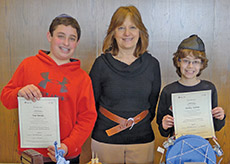
The artwork is titled L’Chaim- to life-and it portrays 7th grader Jason Garfinkel’s family’s journey to America. It is on display at Beit Hatfutsot, Israel’s Museum of the Jewish People in Tel Aviv, where Garfinkel was honored this past summer.
“It symbolizes that although Jews have lived in adversity for most of their history, they pick themselves up and create a better life,” said Garfinkel, a student at North Suburban Synagogue Beth El’s Jack and Mildred Cohen Religious School in Highland Park.
Every year, young people from around the world take part in a yearlong genealogical program, called My Family Story. The program, created by Bet Hatfutsot, encourages youngsters to delve into their own family stories and how they fit into the larger narrative of the Jewish people. Projects from each school are sent to the museum to be judged and the finalists are brought to Israel to take part in an awards ceremony and exhibit.
“Each child contributes a little piece of the puzzle,” said Alicia Gejman, Beth El’s director of formal learning, who teaches the genealogy class. Gejman herself is an immigrant from Argentina. “They see how their own family stories add to the collective narrative of the Jewish people.”
Gejman said the students began the year by researching the origins of their family names and their meanings. Next they created a family and found objects meaningful to their family, a tiny silver Kiddush cup brought over from Russia, for instance, and a tallit (prayer shawl) a father wore at his bar mitzvah. To fill out the narrative of their families with stories and detail, they spoke to older family members.
Toward the end of the year, the students created three-dimensional art projects depicting their family story. Beth El sent Jason’s project and the project of seventh grader Bradley Kaufman to Beit Hatfutsot. Garfinkel was selected as one of about 40 winners. About 20,000 students from 155 schools around the world participated in My Family Story program this past school year.
For Garfinkel and his family, it became more than just a project. It became a family reunion, a celebration.
“I now have a much richer understanding of family,” Garfinkel said. “I grew closer to my whole family. I met cousins I never met before.”
He spent about two months researching his family tree. He found about 200 relatives going back six generations. His mother’s parents survived the Holocaust and met in a displaced persons camp after the war. His father’s family is from Romania. The challahs on his project represent the ability of his mother’s parents to celebrate Shabbat after the war. The prayer book depicts his paternal grandmother’s faith and the prayer book that she brought to America.
“The best part…is to see your 12-year-old son stand with 39 other Jewish kids from around the world, all singing Hatikvah ,” said Jason’s mother, Judy Garfinkel. “Tears rolled down my face. I can’t think of anything better as a Jewish parent.”
Lisa Pevtzow is a freelance writer living in the Chicago area.
Other stories
-
Meet Andrew S. Hochberg, 2021 Julius Rosenwald Memorial Award recipient
Celebrate Andy Hochberg at the virtual Annual Meeting on Sept. 14
Read more -
Two local teens win national recognition
Recipients of the annual Diller Teen Tikkun Olam Awards
Read more -
Celebrating six young award winners cultivating the community
Introducing young adult award winners
Read more
On Oct. 11, 17 Bank of America Chicago Marathon runners not only crossed the finish line-they went the distance to help thousands of people throughout Chicago and around the world by running as a part of TeamJUF.
This is JUF’s third marathon team and continues the tradition of encompassing both age and experience with both novice and longtime runners. Prior to the race, they raised over $21,000, with proceeds going to support JUF’s life-changing work caring for people in need and sustaining the Jewish community.
The essence of community was especially captured in sibling pairs Alexa and Hannah Ehrlich and Andrew and Courtney Zessar.
“We grew up in Danville, Ill., where there were few other Jews so when we moved to Chicago we wanted to make Jewish friends and have a Jewish community. This is what ultimately brought us to JUF’s Young Leadership Division (YLD),” said Alexa, YLD Board member who watched the marathon with her sister, Hannah, for years.
“Running in the Chicago Marathon was always on our bucket list,” Hannah said. “Each year we looked at each other and wondered when we would do it. Once we saw the opportunity to run with TeamJUF, we knew this was the year. Fundraising for JUF was natural because we wanted to give back to the organization that has given us so much.”
Siblings Andrew and Courtney Zessar were also excited to be supporting JUF even if they attend college in different cities. Courtney even returned home to Chicago during her fall break to run the marathon. They have always been supportive of one another and training is no exception. “We plan mini-workouts to motivate each other,” said Andrew, a Northwestern senior who ran for the second time with TeamJUF.
“I created a 300-plus song playlist on Spotify for our runs so we were always connected,” added Courtney, a sophomore at the University of Pennsylvania. “I know that I couldn’t have run my first marathon if it weren’t for Andrew.” And whatever they did worked, because this sibling team is at the top of the leaderboard for fundraising with over $3,000 raised.
Rounding off the team, seasoned runner Ralph Siegel ran his 26 th marathon this year-and his third with TeamJUF. “Training for the marathon is reminiscent of when I worked at JUF,” Ralph expressed. “Every morning I used to run from my home to the JUF office on Franklin. Even though I no longer work there, I still feel connected to the cause and community.”
This sense of connection was solidified by the TeamJUF pre-race dinner, hosted for the third year in a row by Israeli Consul General Roey Gilad and his wife, Nitza. This year, we were honored to be joined by Consul General Toshiyuki Iwado of Japan and Paul Miller representing the Bank of America Chicago Marathon.
No matter where each trained or what motivated them to run, this year’s TeamJUF was symbolic of the community it represents: strong, vibrant, and determined to make a difference.
For more information about TeamJUF, visit www.JUF.org/Marathon .
Robyn Schneider is a donor officer in the Trades, Industries and Professions (TIP) Division and director of the Financial Services and High Tech, Marketing, and Media Divisions of the Jewish United Fund of Metropolitan Chicago.
Other stories
-
Meet Andrew S. Hochberg, 2021 Julius Rosenwald Memorial Award recipient
Celebrate Andy Hochberg at the virtual Annual Meeting on Sept. 14
Read more -
Two local teens win national recognition
Recipients of the annual Diller Teen Tikkun Olam Awards
Read more -
Celebrating six young award winners cultivating the community
Introducing young adult award winners
Read more
‘Measuring Excellence’ proves that Hillel makes a difference on campus and beyond
KAREN MARTIN
Engaging one student is an art. Engaging 3,000 is a science, and we have the data we need to drive our strategy.
As the result of participating in a major research project titled “Measuring Excellence,” through Hillel International, we know that Hillel really matters. We have data that involvement in Hillel significantly enhances Jewish identity and the likelihood of involvement in Jewish life long after college. Most importantly, the research has enabled each Hillel to be data-driven to better inform program design. When it comes to engaging a single student, it’s all about relationships. However, when it comes to engaging an entire Jewish campus, it’s now science.
One of the study’s major findings has given us critical information to make enhancements to better direct our engagement work. In years past, our strategy was premised on the belief that high impact programs like Birthright and Alternative Breaks mattered most. We learned that diverse and abundant options in student driven programming can have an equal or greater impact on Jewish identity. Our goal had been to engage a minimum of 40 percent of students in at least four substantive programs annually. The research showed that to really change identity, students had to attend six, not four programs. However, based on the students’ background, the mix of programs was very different.
Students whose families were less engaged in the Jewish community or Jewish practice benefitted most from trying six different types of programs. Students who had a more active Jewish upbringing became more engaged in Jewish life on campus by finding their niche and digging deeply, attending the same activity six or more time and taking ownership of that activity. Students with the strongest Jewish backgrounds became most engaged by taking on leadership opportunities and engaging other students.
With this new information, our Hillels’ leadership can strategically plan their budget with an eye toward maximizing student engagement and enrichment. Hillels need both a breadth of programming to engage the greatest number of students, and depth of programming to give students ownership and leadership opportunities. “Measuring Excellence” also provided each of the 18 programs that participated in the inaugural study with personalized data to help them drive their campus programming.
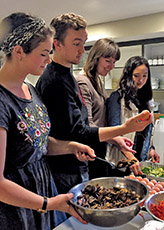
For example, the University of Chicago is taking their findings to heart and creating low-barrier programs that pack a high-impact punch. Sarah Zeichner, a fourth year, and Rabbi Anna Levin Rosen, director of Jewish Student Life at The Newberger Hillel Center, worked together to create Mixed Flavors: Multicultural Dinners , a dinner series that brings together students to cook a meal and talk about what it means to have multiple identities. “Some students come because they like to cook, or they want to support a friend,” Rosen said. “The first conversation was led by a student with Korean and Jewish heritage that invited the whole group to think about their upbringing and how they wanted to pass Judaism along to the next generation.”
“We are opening up a conversation that reflects the lives of today’s students. We invite students to bring their whole selves to Hillel and don’t want anyone to check part of their identity at the door,” she added.
Illinois Hillels are among the best in the nation, but we cannot stop working to become even better. With new data, Illinois Hillels have new goals to create a stronger impact. Our Hillels are working toward meeting 90 percent of Jewish students on campus in the hopes engaging them in meaningful ways that create long lasting relationships with Hillel and the broader Jewish community.
Karen Martin is director of the Lewis Summer Intern Program and Development Manager for the Hillels of Illinois. She started her professional career as an Engagement Associate at Miami University Hillel.
Spertus Institute is a partner with the Jewish United Fund in serving our community. Find out more at spertus.edu .
Other stories
-
Local campus administrators convene on hate speech, bias
JUF and ADL brought together 17 student safety, diversity and inclusion and student affairs administrators and Hillel representatives from various Illinois campuses to discusses issues of hate speech and bias.
Read more -
Engaging students about Israel on campus
Too often we hear about difficulties facing Jewish college students on Illinois campus, but to focus solely on the politics gives only one piece of the complex narrative that is Jewish life on campus.
Read more -
Hillel International launches fellowship initiative to train young Jewish professionals
The Springboard Fellowship will train cohorts of young Jewish professionals in highly-valued skillsets and place them at local Hillel campuses for two years.
Read more