
Harvard ‘happiness’ Professor Dr. Tal Ben-Shahar to speak at Spertus about creating great places to work
Thanks to a new initiative at Spertus Institute for Jewish Learning and Leadership, this fall Chicagoans will have a rare opportunity to spend an afternoon learning from the author of Being Happy , Happier (a New York Times bestseller), and Choose the Life You Want .
Dr. Tal Ben-Shahar will appear at Spertus Institute on Sunday, Nov. 1 at 1 p.m. to discuss “How Great Leaders Create Great Places to Work.”
At a time when employee satisfaction (and sometimes the lack thereof) is important enough to make headline news, frank discussions about workplace happiness are critical. Much of the recent press has focused on major corporations, but the need to create positive work environments is equally-if not more-important for nonprofit organizations and agencies, which often face additional hurdles in hiring and retaining top talent.
According to a recent study by The Leadership Pipelines Initiative, this is particularly true in the Jewish community, which is why Spertus Institute will feature Dr. Ben-Shahar as the inaugural event in its yearlong initiative on Great Places to Work. “Attracting and retaining first-rate professionals is a challenge for many Jewish organizations,” according to Spertus President and CEO Dr. Hal M. Lewis. “More often than not, organizational leaders have the capacity to address this issue before it becomes a crisis.”
An organizational psychologist with a PhD from Harvard University, Dr. Ben-Shahar is known for teaching Harvard’s most popular class, Positive Psychology , as well as the hugely successful The Psychology of Leadership . Today, he consults and lectures around the world on leadership, happiness, innovation, and resilience. He lives with his family in Israel and has not made a Chicago appearance since 2008.
At Spertus, he will share groundbreaking research and trailblazing insights on how employers and employees can significantly improve workplace satisfaction and performance. He will highlight best practices from institutions that have successfully helped staff find purpose in their work and have established lasting patterns of personal and organizational growth.
After an intermission, Dr. Ben-Shahar will transition from the philosophy of positive workplaces to the real-world steps participants can take to make their businesses, organizations, and agencies great places to work.
In a recent statement, Tal Ben-Shahar said, “More and more research is pointing to the fact that creating a positive and dynamic work environment is a good investment. Organizations with this kind of work environment bring out higher levels of creativity, engagement, and motivation in their employees. For too long, organizations and individuals have had it wrong-thinking that success, whether financial or other-leads to happiness. In fact, the exact opposite is the case: increasing levels of happiness lead to more success.”
“I look forward to speaking at Spertus Institute,” he continued, “which has taken a leadership role in bringing the issue of workplace happiness forward in the Jewish community and the larger nonprofit arena.”
Tal Ben-Shahar’s appearance at Spertus Institute is open to the public. It is designed to be relevant and meaningful to nonprofit and corporate professionals alike, as well as community leaders and trustees, HR professionals, consultants, clergy, executives, entrepreneurs, emerging leaders, and anyone who cares about building better places to work. Tickets are $18 (with a $10 discounted price for Spertus Institute members and groups of ten or more). Student tickets are $8 with a valid student ID.
Tickets can be purchased online at spertus.edu or by phone at (312) 322-1773.
Spertus Institute for Jewish Learning and Leadership is located at 610 S. Michigan Avenue. Discount parking is available for $11 with Spertus validation at the Essex Inn, two blocks south of Spertus.
Tal Ben-Shahar’s presentation is a program of Spertus Institute’s Center for Jewish Leadership, supported by a generous grant from the Crown Family.
For more information, visit spertus.edu .
Spertus Institute is a partner with the Jewish United Fund in serving our community.
Other stories
-
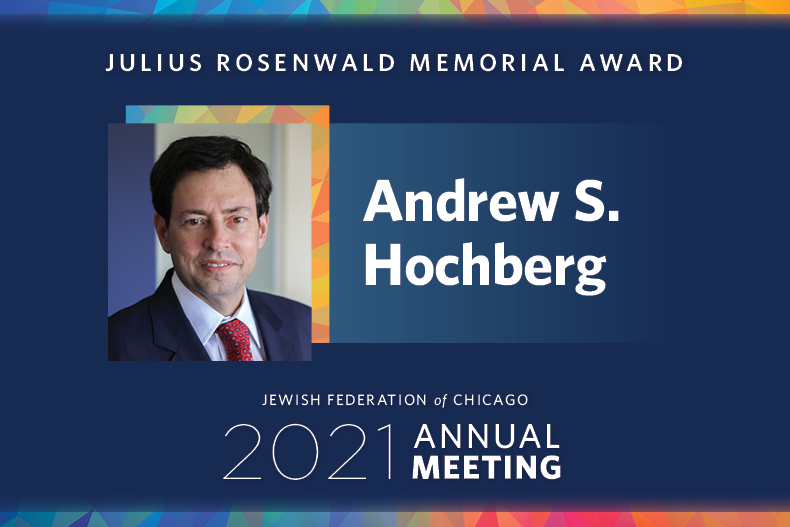
Meet Andrew S. Hochberg, 2021 Julius Rosenwald Memorial Award recipient
Celebrate Andy Hochberg at the virtual Annual Meeting on Sept. 14
Read more -
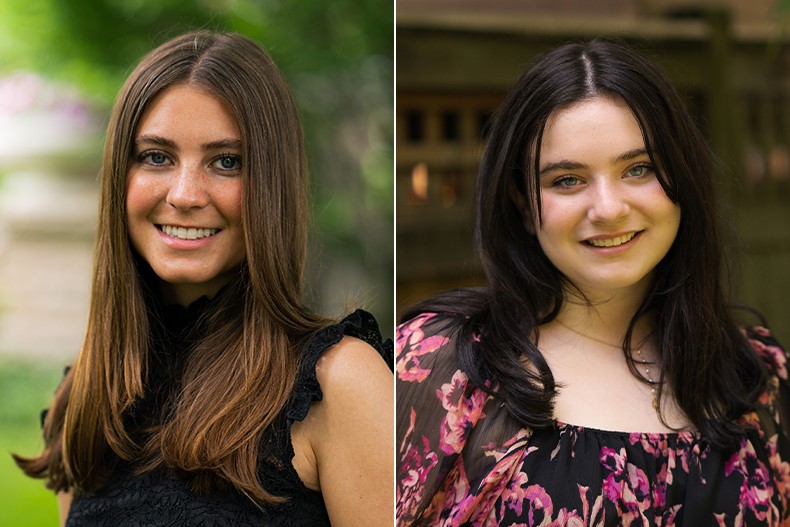
Two local teens win national recognition
Recipients of the annual Diller Teen Tikkun Olam Awards
Read more -

Celebrating six young award winners cultivating the community
Introducing young adult award winners
Read more
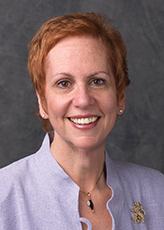
One career-one organization. Susan Rifas has dedicated her entire professional career to serving her community through JUF. She began her working life at JUF after graduation, and she worked here straight through-for 42 years-until her retirement in October.
It’s a record of dedication rarely seen, a legacy of commitment seldom equaled.
Rifas retires with the title of JUF Vice President, Board Operations. Previously, she served as Assistant Director of Budget & Planning and as Vice President of Planning & Allocations and Board Operations.
“For 42 years, I have been personally blessed to have Sue Rifas as my dear friend and valued colleague,” said JUF President Dr. Steven B. Nasatir. “Incredible institutional knowledge, wisdom, commitment, and loyalty are just some of Sue’s attributes. Over the course of her remarkable career as a senior executive at JUF, she has seen it all and has had a huge role in our success. Though she is stepping out of her day-to-day responsibilities, I take comfort in knowing we will be with her often and she will never be far away.”
Earlier in her career at JUF, as director of the then-called Leadership Development programs, Rifas helped cultivate the type of lay leaders she would later work alongside. Couples in the program met monthly in a participant’s home, and each month covered one of a wide variety of topics, from modern Jewish history to the “alphabet soup” of local, national, and international agencies serving and meeting the needs of Jews.
Rifas says that one of the lessons she has learned over the years is to “always keep open to learning. There is always something new to learn-you are never done.” She adds that she has learned something from every lay leader she has worked with, and has high praise for them. “Not only do they demonstrate their commitment by their annual giving to JUF-they volunteer a lot of their time,” she said. “They care passionately. They want what is best for the community.”
Rifas has an MSW from the Jane Addams School of Social Work at the University of Illinois at Chicago. She began working at JUF as Assistant Budget Director during The Yom Kippur War of 1973. While still working full time, she subsequently earned her MBA at Northwestern University.
Rifas said holding both an MSW and an MBA helped her as a professional at JUF/Federation, both in terms of the work she did and in relating to volunteers on a wide variety of issues.
She noted that communal service agencies now more closely resemble businesses. “However, no one- not the volunteers nor the professionals-ever loses sight of the fact that we are in the business of serving people,” she said. “It’s our purpose and mission. It’s one of the reasons I have loved working
at JUF.”
One of the most gratifying moments of her career, she said, was seeing Soviet Jews gain their freedom. “I am fortunate to have witnessed, and participated in, the liberation of Soviet Jews,” she said, and she is still awed by the Soviet Jewry demonstration in Chicago-one of leading communities in rescuing and resettling more than 1 million Jews who had been trapped behind the Iron Curtain of the Soviet Empire.
Along with its increasing professionalism, Rifas has noted cultural changes at JUF and its fellow federations. “Over the years, they have become more intensely Jewish. There are no longer issues about being a Zionist or whether kosher food should be served. In addition, people are more Jewishly knowledgeable,” she said.
Chicago’s Federation is special for many reasons, according to Rifas. “We have a national, and international, perspective,” she said. “Many of our local leaders go on to national and international posts.” Further, “Our professional-lay relationship is one of partnership in a way that is virtually un-replicated elsewhere.”
Rifas has visited Israel some 10 times. “There is a comfort level there-it is also my home,” she said. “It’s living history, and you are embraced by the fact that everyone is mishpacha (family).”
Aside from Israel, Rifas has visited Jewish communities from Vienna to Cuba. She has spent time in Eastern European countries that were still in the Soviet grasp.
JUF boasts the Jewish Women’s Foundation, the largest women’s foundation in the US, in the number of trustees and the amount of its endowments. A founding trustee of the Foundation, Rifas served as its grants chair for four years. “I love being a trustee. I love the process. I admire the intelligence, commitment, and capability of my fellow trustees. It is exciting to see how we have engaged so many Jewish women in the Metropolitan Chicago area.” Rifas is proud of the Foundation’s success: “We have funded $2.6 million in projects in the United States, Israel and around the world.”
Chicago is also noted for the stability of its leadership. “Much of our senior leadership has been here for 30 years or more,” Rifas added. “We need to be mindful of continuity, of history. Our staff provides a linkage to the past.”
But, at the same time, history keeps happening. “Our challenge is to be constantly evolving,” she said, noting that change- especially for an organization so large- cannot happen “radically.” There is a need to continually adapt to the next generation of donors and see what resonates with them.
Her advice to those seeking to enter Jewish communal service-or the workplace in general-is to take the initiative. “You have to create your own opportunities, and hang in there,” she said. “You have to earn your credibility. Demonstrate your interest and abilities-show you want responsibility, that you are capable of having it.”
Next, Rifas hopes to travel, spend time with friends, and become a volunteer herself. She will still be involved with some JUF projects and attend events. “I’m not disappearing,” she promised. “I appreciate and feel privileged to have worked with so many wonderful and committed people-professionals and volunteers, and I’m very proud of what we, together, have been able to accomplish for the Jewish community that we all love so much.”
Other stories
-
Meet Andrew S. Hochberg, 2021 Julius Rosenwald Memorial Award recipient
Celebrate Andy Hochberg at the virtual Annual Meeting on Sept. 14
Read more -
Two local teens win national recognition
Recipients of the annual Diller Teen Tikkun Olam Awards
Read more -
Celebrating six young award winners cultivating the community
Introducing young adult award winners
Read more
For adults who wish to learn about Judaism, explore Jewish history, or crave a dose of Jewish culture, our local Chicago community provides plenty of possibilities. Programs can be found at synagogues and community centers, downtown cultural institutions and suburban libraries, prestigious universities, and the neighborhood cineplex.
Orchestrating these programs are a cadre of dedicated educators, each developing programs geared toward the members and constituents of their individual agencies and organizations. In many cases, this is done with limited financial resources and while juggling multiple roles. There hasn’t been a community-wide framework to foster cohesion and avoid redundancy, and there haven’t been opportunities for those in the field to meet colleagues, cultivate meaningful partnerships, and enhance their professional skills. Until now.
Beginning last January, I was fortunate to participate in a new program designed to forge an organized and adept community of those who plan and present Jewish programs for adults.
The Certificate in Adult Jewish Learning-presented by Spertus Institute in partnership with the JCC-was created to build a Chicago-wide community of best practice. I believe we have laid a foundation for exactly that-a future of cross-institutional collaboration leading to enhanced quality, depth, and range of programs.
Furthermore, what we are doing is unique and should serve as a model for other Jewish communities. There are very few programs-locally or nationally-that bring together program directors and educators who plan programs for adult Jewish audiences. No outlet has existed for us to develop new skills, analyze challenges, and share successes with our professional peers.
We met monthly at the Mayer Kaplan JCC in Skokie for presentations both theoretic and practical.
Several partnerships have already emerged and I am thrilled to report that ongoing monthly professional development sessions will begin this fall. These will be open to all area professionals working in adult Jewish learning. A multi-institutional collaborative program will be designed, implemented, and evaluated by members of this group. If you’d like to be included, contact program organizer Dr. Dean Bell, Spertus Provost and Vice President, at [email protected] or visit
www.spertus.edu.
I encourage my peers to participate. The sessions were extremely beneficial for those with sole responsibility for this area at their organizations. For those like me, working with a team, I encourage you to attend together. Three of us from my congregation participated, giving us a shared knowledge base with which we are already elevating the work of
our institution.
Including myself, graduates of the Certificate in Adult Jewish Learning include: Abby Ashkenazi of JCC Chicago, Kayla Avraham of Davar Skokie, Dr. Dean P. Bell of Spertus Institute, Leann Blue of Congregation Beth Shalom, Rolly Cohen of the Board of Jewish Education, Marci Dickman of Beth Emet, Ali Drumm of North Suburban Synagogue Beth El, Vanessa Ehrlich of Lakeside Congregation, Marcie Eskin of North Suburban Synagogue Beth El, Stacey Flint of Spertus Instiute, Diane Halivni of Bayit Evanston, Shalom Klein of Rogers Park Community Development and Jewish B2B Networking, Tracey Lipsig Kite of Jewish Child and Family Services, Lori Sagarin of Temple Beth Israel, Eve Samson of the Illinois Holocaust Museum & Education Center, Beth Schenker of Spertus Institute, Anita Silvert of Chai Mitzvah Foundation, Paula Spitz of the Board of Jewish Education, Merle Tovian of North Suburban Synagogue Beth El, and Ilene Uhlmann of JCC Chicago.
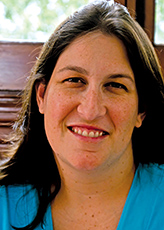
Ali Drumm is Director of Informal Education at North Suburban Synagogue Beth El in Highland Park.
Spertus Institute is a partner with the Jewish United Fund in serving our community. Find out more at spertus.edu.
Other stories
-
Meet Andrew S. Hochberg, 2021 Julius Rosenwald Memorial Award recipient
Celebrate Andy Hochberg at the virtual Annual Meeting on Sept. 14
Read more -
Two local teens win national recognition
Recipients of the annual Diller Teen Tikkun Olam Awards
Read more -
Celebrating six young award winners cultivating the community
Introducing young adult award winners
Read more
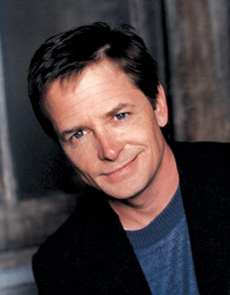
Back in the 1980s, I grew up on a steady diet of my favorite TV show, the sitcom Family Ties.
I’d imagine what it would be like to be the fifth Keaton child. Don’t get me wrong–I loved my own family ties. Still, I dreamed of being the long-lost sister on the show where you could solve a squabble with a sibling or a parent in the Keaton kitchen over hugs, laughs, and orange juice in 22 minutes flat. I envisioned myself knocking on the door to their Ohio home alongside sweet, awkward neighbor Skippy Handelman.
Most of all, I had a ginormous crush on Emmy Award-winning Michael J. Fox, my all-time favorite actor, who, playing the lovable conservative, Wall Street-obsessed genius Alex P. Keaton, somehow made America fall in love with him despite his Gordon Gekko-like tendencies.
Then, Alex and I both grew up–and Fox evolved from teen heartthrob into courageous humanitarian and activist. He will share his inspiring journey with the Chicago Jewish community when he headlines JUF’s Vanguard Dinner on Thursday, Nov. 5.
And quite a journey it’s been for the star. Back in 1991, at just 29 and amidst a red hot acting career, Fox was diagnosed with young-onset Parkinson’s disease–a chronic degenerative neurological movement disorder. In order to come to terms with the illness, Fox waited to go public with his diagnosis for seven years.
The Canadian native became famous and beloved in roles including Alex Keaton, Marty McFly in the Back to the Future trilogy, and Deputy Mayor Mike Flaherty on Spin City. Today, Fox has become equally well-known, respected, and loved for this subsequent chapter in his life as a champion for patients with Parkinson’s disease–and a hero to many of us.
In 2000, he launched The Michael J. Fox Foundation for Parkinson’s Research, the largest nonprofit funder of Parkinson’s drug development in the world–which has raised $450 million to date. Fox, at the helm of the Foundation, has galvanized the search for a cure to the disease that currently affects at least an estimated one million people in the United States and five million people worldwide.
(See details below about how the Center for Jewish Genetics and other JUF-affiliated agencies are meeting the challenges of Parkinson’s disease.)
Fox has transformed his obstacles into something beautiful. He calls his struggle with Parkinson’s “a gift,” approaching life and his illness with the serenity and boundless optimism he writes about in his three books: Lucky Man, his memoir; Always Looking Up: The Adventures of the Incurable Optimist; and A Funny Thing Happened on the Way to the Future, his compendium of wisdom for graduates.
Real life imitated the small screen when Fox fell in love with Tracy Pollan, the Jewish actress who portrayed Alex’s girlfriend, Ellen, on Family Ties. The couple has been married for 27 years and has four children–who have all celebrated their bar and bat mitzvahs–a 26-year-old son, 20-year-old twin daughters, and a daughter who turns 14 in November.
In recent years, Fox has reemerged as a TV star. On The Good Wife, he currently plays a recurring role as Louis Canning, the funny, yet manipulative attorney who suffers from tardive dyskinesia, a neurological condition that causes erratic body movements.
Fox recently sat down with me for a phone interview–a profound conversation–where we talked about acting for him then and now, his real-life family ties, and how we can all face life, including our struggles, with grace, courage, and optimism.
JUF News: How has your journey with Parkinson’s disease been, as you put it, “a gift”?
Michael J. Fox: I always qualify it as saying it’s the gift that keeps on taking. It’s a gift for me because my life was on a path that had gotten ahead of me… After the diagnosis, all of a sudden I couldn’t [continue] on that path anymore and I had to find my own path. It had been an easy path of success and privilege and all the blessings that I had. This new path was much more challenging, but by facing it…I realized I had the strength [to cope] and I had people around me who loved me. I had insight to gain from it…over the course of a few years, it all added up to make me a much better person than I had ever thought I could be.
How can all of us use our hardships as a gift in life?
If you deal with the truth. And in my case my diagnosis was the truth–I had Parkinson’s–but it took me a long time to accept it. Until you accept it, you’re not going to get anywhere. And by acceptance, I don’t mean resignation necessarily, but I accept that I’m there and I look at the truth of being there, and then I can cope with everything else. Then [your struggle] only takes up the size it takes up–not this amorphous blob of dread that’s floating all through every corner of your life. I have Parkinson’s, but I have my family, I have my job, I have my friends, I have my beliefs, I have my ethics–and that doesn’t change. The only way it can change is if I let one fact of my life–Parkinson’s–become the central fact of my life, which it shouldn’t be. But if I make it the central fact of my life, it’s going to affect every other area.
Do you ever have moments of weakness where instead of “looking up”–as your book title says–you look down? And when you’re going through a hard time, what are your coping tools to get you back to looking up?
I get a little bummed when I have trouble walking sometimes. I don’t mind tremoring as much because I can deal with that with medication. But having a hard time walking and losing my balance is tricky for me because I was always very athletic and had great balance–so it was a real loss for me. More than anything else, I worried about how it looked to not be able to walk that well. And it only happened sometimes, but [then] I got a walking stick. And I realized we have to forget vanity because vanity screws us up–how we think we look and how we think we’re perceived is not that important. If you need a stick, use a stick; if you need to walk sideways, walk sideways. It doesn’t matter how it looks–it just matters that you get where you’re going and get done what you want to get done. When I get depressed, it doesn’t take long for the truth and other aspects of my life to lighten up the darkness.
How is acting different for you since you returned to the screen after your Parkinson’s diagnosis?
I was always the kind of actor who brought a lot of expression, a lot of inflection, a lot of movement, a lot of action, and a lot of energy. Now I find I have to be quieter and more still. There is an expression I used to use when I talked about my diagnosis. I would say, ‘I couldn’t be still until I couldn’t be still.’ That’s the same kind of thing with acting–I found a stillness, a quiet strength in the way I have to work now because I can’t depend on a lot of trickery, on a quick shuffle of my feet, or on my energy. I have to depend on a deeper, quieter energy. It’s a lot of fun. I enjoy acting as much now and I love this role [on The Good Wife].
After 25 years of reflection, what are your most lasting memories of Family Ties?
I have great memories of the cast and the show. It was a special [group] of people and I’m still friends with all of them. But Gary David Goldberg, the [late] creator of Family Ties, was my mentor. We used to get together every Friday after the show before we moved on to the cast party or whatever else was going on. We would take an hour after the taping was finished and we’d go have dinner at a local restaurant near the studio. We would sit there and drink wine and talk about how lucky we were and how we jumped lives: He was a poor kid from Brooklyn, I was a poor kid from Canada, and how we ended up on a sound stage in Los Angeles. We would talk about how amazing it was and how grateful we were and I always kept that. When Gary passed away, the one word I kept thinking of was gratitude–gratitude that I knew him and gratitude that we shared with each other.
Who is another hero of yours?
My [older] brother, Steve. His first son, who is now in his 30s, was born with spina bifida and cerebral palsy…He has a lot of challenges, but he is a wonderful kid and my brother and his wife have been so patient raising him. They’re so loving and accepting and brave and tireless and just solid. I learn so much from them about dealing with adversity, and [recognizing] the blessings in life and that there is always something important and special that can be found in any situation.
What are the secrets to a happy marriage after 27 years with Tracy?
It’s really friendship and acceptance. Romance is great…but it’s really about on a day-to-day basis…that we’ll trust each other and accept each other. We’ll agree not to be territorial and not to look at disagreements and problems as any more than just part of the process. It’s about just knowing that that person has your back and I trust Tracy more than I trust anyone else in the world. She’s my best friend and she’s been through all this stuff with me and I’ve been through all her stuff with her. We accept and we love and we carry on.
If you had one piece of advice from your journey through life to give to your younger self or to your children, what would it be?
Believe in your dreams but don’t be limited by your dreams. Your dreams [are within] the extent of your imagining, but things happen beyond the extent of your imagining and you must be open to those too.
The JUF Vanguard Dinner, to be held at the Hyatt Regency Chicago on Thursday, Nov. 5, requires a $100 couvert per person and a minimum gift of $5,000 to the 2016 Annual Campaign. Diane & Steve Miller are 2016 Vanguard Chairs; Erica & Michael Fishman and Devra & Gregg Shutan are 2016 Vanguard Vice Chairs; and Harry J. Seigle is the 2016 General Campaign Chair. For more information, visit www.juf.org/vanguard or contact Patti Frazin at (312) 357-4878 or [email protected].
The Chicago Jewish community rises to meet challenge of Parkinson’s disease
Several JUF affiliated agencies provide programming and services related to Parkinson’s disease (PD). About 10 percent of Parkinson’s disease is genetic, and the Michael J. Fox Foundation (MJFF) for Parkinson’s Research is currently sponsoring a landmark study at 33 clinics worldwide. The Center for Jewish Genetics will collaborate with MJFF to help identify local candidates for this study through a Family Health History month initiative in November, and will also collaborate with MJFF to present “What’s Jewish About Parkinson’s?” next spring to discuss connections between Jewish heritage and PD.
JCC was recently selected by the National Parkinson’s Foundation to launch the Edmond J. Safra National Parkinson’s Wellness Initiative in partnership with Northwestern University School of Medicine and CJE SeniorLife. The program’s first cohort will begin in January 2016 at the Bernard Horwich JCC.
CJE SeniorLife provides support for individuals and families affected by PD in order to promote positive healthier lives; CJE has previously collaborated with MJFF on local educational and screening programs examining Parkinson’s as a Jewish genetic disease.
An article will feature the collaboration in the November issue of JUF News.
For more information on the study, visit www.michaeljfox.org/ppmigenetics.
Other stories
-
Meet Andrew S. Hochberg, 2021 Julius Rosenwald Memorial Award recipient
Celebrate Andy Hochberg at the virtual Annual Meeting on Sept. 14
Read more -
Two local teens win national recognition
Recipients of the annual Diller Teen Tikkun Olam Awards
Read more -
Celebrating six young award winners cultivating the community
Introducing young adult award winners
Read more
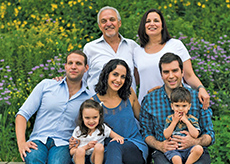
L’dor vador–“from generation to generation”–the Hebrew phrase heard in prayers and song. As a grandchild of Holocaust survivors, I understood from a young age that a thread connects one Jew to another through our history of shared values, traditions, Torah, endless persecution, and continued survival. Today, we know this thread goes as deep as our DNA.
In 2000, my 49-year old aunt, Linda Ben-Ami, originally diagnosed with stage II breast cancer, received a terminal prognosis. She was the matriarch of our family and was raising two teenage boys. We were derailed.
The tailspin deepened when not only Aunt Linda, but my grandmother, mother, and other family members learned they carried one of the main Ashkenazi BRCA1 genetic mutations-one that almost guarantees aggressive triple negative breast cancer. The BRCA1 mutation also brings with it a high risk of ovarian cancer and several other elevated cancer risks for both men and women.
In the months that followed, my grandmother had a first time breast cancer diagnosis, my mother had a risk-reducing mastectomy with reconstruction and an oopherectomy to remove her ovaries and fallopian tubes– and Aunt Linda died.
It was not a good year.
While we mourned, we were also desperate for answers about our futures. At 19, I was considered too young to test. But it was clear that this was a multigenerational health issue.
Five years later, I learned I also had the BRCA mutation.
From my grandmother, to my mother, to me. L’dor vador .
I tried to think about BRCA solely during my biannual checkups, but my concerns would bubble up when I heard of someone’s passing to cancer, or dated someone who didn’t know my BRCA status. I participated in all the recommended studies, but I realized doctors were performing tests that would catch cancer, not prevent it. I needed to make a change before I was swallowed up by my feelings, my stress, or by cancer.
Just shy of my 28th birthday, I underwent a risk-reducing double mastectomy with immediate reconstructive breast surgery. The decision was daunting, but not difficult. I changed my destiny, lowering my lifetime breast cancer risk from nearly 90 percent to less than 5 percent-lower than the average woman.
People might wonder if I lost my identity or my womanhood. My only answer: I found a new normal. I feel healthy and strong, with fabulous aesthetic results. While I sacrificed the ability to breastfeed, I have the opportunity to see my children grow, to be there for their simchas and for their life challenges.
My choice was not the only option. Some women choose lifetime surveillance or chemoprevention over surgical intervention. Every woman approaches decision-making differently, based on factors such as age, community and family support, personal experience, perception of cancer, or unrelated medical conditions. There is no single right decision, only the right balance of risk for an individual.
Knowing my genetics early in life gave me a window into my future, and like a “choose your own adventure” book, I took a different path. However, my family’s journey continues. I monitor my ovaries and will soon enough need to remove them and deal with the effects and management of early surgical menopause. I have cousins beginning their own journeys, and one day, I will tell my children about BRCA. The next steps will be their own.
Although Aunt Linda died far too young, she saved so many in our family. My family’s commitment to educating others and being proactive with our own health mean she did not die in vain. We picked up the pieces of our family as best we could and shifted our focus to healing and health.
When I look at my sweet daughter, whom we named Maya Linda, I am constantly reminded of the beauty and love my Aunt Linda carried, that came from my grandmother before her, and was passed on to us. L’dor vador .
Sivan Schondorf is the Chicago FORCE Volunteer Coordinator(Facing Our Risk of Cancer Empowered, www.facingourrisk.org ).
Other stories
-
Meet Andrew S. Hochberg, 2021 Julius Rosenwald Memorial Award recipient
Celebrate Andy Hochberg at the virtual Annual Meeting on Sept. 14
Read more -
Two local teens win national recognition
Recipients of the annual Diller Teen Tikkun Olam Awards
Read more -
Celebrating six young award winners cultivating the community
Introducing young adult award winners
Read more
The Center for Jewish Genetics, in conjunction with the Basser Center for BRCA, will host one of the nation’s leading authorities on breast cancer and a panel of experts discussing “What’s Jewish about BRCA ?” on Wednesday, Oct. 14, at the Chicago Botanic Garden in Glencoe. A reception begins at 6 p.m.; followed by the program at 7 p.m. Cost is $18 per person.
“BRCA refers to hereditary mutations in the BRCA1 and BRCA2 genes that significantly increase the risk of breast cancer both in women and in men,” said Jason Rothstein, director of the Center for Jewish Genetics.
“While everyone faces a risk of cancer, Jewish men and women with an Ashkenazi background are 10 times more likely to have a BRCA mutation than the general population,” he said. “The connection between the mutation and breast cancer is widely known, but individuals with BRCA mutations also face an increased risk of ovarian cancer, prostate cancer, pancreatic cancer, and melanoma.”
Panelists at the Oct. 14 event-all experts in fields ranging from medical oncology, surgery and gynecological oncology to genetics and advocacy-will discuss a variety of topics, including strategies for identification of high-risk individuals and families, and options for intervention.
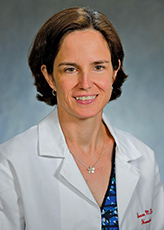
“If you don’t know you’re at risk, you can’t make an informed decision about [how to address] that risk,” said keynote speaker Dr. Susan M. Domchek, MD, during a recent interview. She is a nationally recognized expert in breast and ovarian cancer genetics; hereditary cancer risk and prevention; and breast cancer treatment.
The BRCA1 and BRCA2 genes were identified in 1994 and 1995 respectively-within a year of Domchek’s graduation from medical school. “I have grown up with the discoveries related to these genes. During the past 20 years, so much has been learned,” she said.
“Genetic testing is valuable because you can identify individuals who are at increased risk of developing cancer,” she said. “Family history is important as well. If you have a strong family history of cancer, that’s important to know for screening and prevention. It’s important to talk to your health care provider about the pros and cons and what will work best for you,” she said.
Domchek is executive director of the Basser Center for BRCA in Penn’s Abramson Cancer Center; director of the MacDonald Cancer Risk Evaluation Center; and the Basser Professor of Oncology at the Perelman School of Medicine at the University of Pennsylvania. Her research focuses on understanding breast and ovarian cancer susceptibility in genes such as BRCA1 and BRCA2 , and how to target such genetic mutations for improved cancer treatment. Domchek has been recognized as one of the “Best Doctors in America” by the American Society of Clinical Oncology, and as a “Top Doc” in Philadelphia Magazine .
Bonnie Miller Rubin, Chicago Tribune Health and Family reporter, will moderate the event.
Expert panelists include Taya J. Fallen , CGC, Northwestern University; Melissa K. Rosen , MA, Director of National Outreach, Sharsheret; Catherine E. Pesce , MD, breast oncology specialist at NorthShore University Health System; and S. Diane Yamada , MD, Professor of Obstetrics/Gynecology and Chief, Section of Gynecologic Oncology, at University of Chicago.
For information or to register, visit www.jewishgenetics.org/EventBRCA , or call (312) 357-4994.
The Center for Jewish Genetics, an educational resource for hereditary cancers and Jewish genetic disorders, is a cooperative effort of the Jewish United Fund of Metropolitan Chicago and the Ann and Robert H. Lurie Children’s Hospital of Chicago, and is supported in part by the Michael Reese Health Trust.
Other stories
-
Meet Andrew S. Hochberg, 2021 Julius Rosenwald Memorial Award recipient
Celebrate Andy Hochberg at the virtual Annual Meeting on Sept. 14
Read more -
Two local teens win national recognition
Recipients of the annual Diller Teen Tikkun Olam Awards
Read more -
Celebrating six young award winners cultivating the community
Introducing young adult award winners
Read more
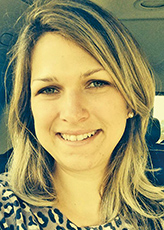
When Anna Hartman imagines the ideal Jewish preschool, images of light-filled spaces, art materials that inspire wonder, and a curriculum that centers on children’s evolving interests all come to mind.
“Whenever I see an example of that-and many Jewish schools do utilize a curriculum like that-I’m always blown away,” said Hartman, the new Director of Early Childhood Excellence at JUF’s Community Foundation for Jewish Education (CFJE). A former Jewish early childcare program director and consultant, Hartman is one of the founders of the Paradigm Project, a national, grassroots change initiative in Jewish early childhood education fostering excellent practitioners across the country. She will share her time between CFJE and the Paradigm Project.
From 2008 to 2012, Hartman served as the director and developer of the early education program at Atlanta Jewish Academy. “We built a deeply Jewish program,” she said, “that thought about Judaism with a lot of its big ideas around partnership, and covenant, and the sacred.”
Hartman said she hopes to find solutions for common issues faced by the community’s early childhood programs, including teacher recruitment and retention, leadership training, and adapting to the needs of Jewish young families. “The work is to look across Chicagoland at what’s happening in the Jewish early childhood schools, where are we meeting our potential and where is there so much more potential,” said Hartman.
“She consults all over the country, so she’s got a great context,” said Rabbi Scott Aaron, CFJE’s executive director. “But she knows that she can’t overlay what she knows on our city. Our city has to be learned from scratch. So she’s really working on that.”
Hartman discovered that early Jewish childhood education is “sort of helmed” by many different systems in Chicagoland- including the Jewish Community Center system, Jewish Council for Youth Services, and the Board of Jewish Education, among others. This situation is different than in other cities, Hartman said.
“The first thing she has to do here is get our early childhood community talking to each other around a common table with common reference points,” said Aaron. “So she’s spending a ton of time right now building relationships, visiting schools, learning about different programs.”
“I’m meeting such great people and I’m getting to see incredible schools, incredible systems,” she said, but since they all run separately from each other, there is almost no place for leaders to get together, or teachers to study together, or for systems to offer joint professional development. “There needs to be a dozen ways that all of those systems are interconnected,” she added.
“I took the job here [because] I believe that Chicago is ripe for this,” Hartman said. “What might happen if we all worked together a little more closely? What could we do together that would make each of us stronger?”
Hartman said that she has been inspired by Italy’s Reggio Emilia approach, which encourages children to wonder and be active learners. Curricula are often based on children’s interests. This approach to early childhood education is a feature of some Jewish early childhood schools in the Washington D.C. area, where she originally started her career as a teacher.
Also inspiring for Hartman are Hebrew immersion programs and schools where children develop a kinship with nature. The ideal school would also be responsive to the needs of parents, she noted.
Hartman lives with her husband, Noah Hartman, the new head of school at Bernard Zell Anshe Emet Day School, and her three children, a baby and two school-age kids who attend that school.
For the Hartmans, Jewish education is the family business.
Joanna Broder is a freelance health and features journalist living in Maryland.
Other stories
-
Meet Andrew S. Hochberg, 2021 Julius Rosenwald Memorial Award recipient
Celebrate Andy Hochberg at the virtual Annual Meeting on Sept. 14
Read more -
Two local teens win national recognition
Recipients of the annual Diller Teen Tikkun Olam Awards
Read more -
Celebrating six young award winners cultivating the community
Introducing young adult award winners
Read more
A diverse panel of experts discussed gun violence in the Chicago community at a meeting of JUF’s Jewish Community Relations Council and Government Affairs Committee on Sept. 21.
Panelists included Chief Robert T. Tracy of the Chicago Police Department; Alderman Joe Moore (49th); Debra Wesley, founder and president of Sinai Community Institute located in North Lawndale; and Colleen Daley, executive director of Illinois Council Against Handgun Violence.
“This is an issue of utmost concern to our community partners and relevant to many of our Federation agencies,” said JCRC Chairman David T. Brown.
Chief Tracy provided context to the overall gun-violence epidemic in the City of Chicago by highlighting that 89 percent of murders in Chicago are by gunshots, compared to the national average of 60-65 percent. Of the many strategies being implemented to curb gun violence, Tracy focused on the importance of keeping illegal guns off the streets.
Moore and Wesley discussed gun violence in their respective communities: Moore, shared a personal story of bearing witness to a shooting in his ward, which comprises the majority of Rogers Park and portions of West Ridge and Edgewater, while Wesley discussed her efforts to bring the NATAL model, which focuses on trauma and the mental health impact of violence, to Chicago. Wesley was inspired by the model while on a trip to Israel.
Concluding the program, Daley highlighted her organization’s work on legislation including concealed carry in places of worship. She also discussed effective advocacy tools for interested individuals and like-minded groups and mentioned two bills expected to surface this session a gun dealer licensing bill and a lethal violence restraining order.
David Golder, chair of JUF’s Government Affairs Committee, impressed a need for action. “The question we now must consider is where do we as a concerned community go from here?” he said.
Other stories
-
Meet Andrew S. Hochberg, 2021 Julius Rosenwald Memorial Award recipient
Celebrate Andy Hochberg at the virtual Annual Meeting on Sept. 14
Read more -
Two local teens win national recognition
Recipients of the annual Diller Teen Tikkun Olam Awards
Read more -
Celebrating six young award winners cultivating the community
Introducing young adult award winners
Read more
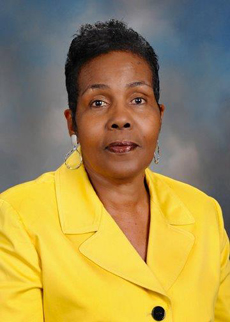
State Rep. Esther Golar who represented a very diverse geography including JUF headquarters at 30 S. Wells, Jewish Child & Family Services/JVS Chicago offices on Jackson, and Holy Cross Hospital in Marquette Park, died in hospice Sept. 21.
A fighter until the very end, Golar checked herself out of the hospital on Sept. 1 against doctor’s orders, travelled to Springfield, and wheeled herself into the House Chambers at the Capital so that she could take part in a critical vote.
Throughout her life, Rep. Golar advocated for safer streets, better services for seniors and disabilities, quality classroom education, equal access to healthcare, and economic development.
Born in Chicago where she grew up in a cold-water flat, Golar attended Malcolm X College, worked as a CAPS coordinator and in the General Assembly beginning in 2005.
Rep. Greg Harris, who worked with her closely when he chaired the House Appropriations Committee on Human Services, described her as a lawmaker who was “quiet in her caring but never lost sight of those who dealt with some of life’s struggles.”
“Representative Golar was a wonderful legislator to partner with,” said Suzanne Strassberger, associate vice president of JUF Government Affairs, who worked with Rep. Golar on human service legislation. “She was smart about people, focused on success, and she never let her ego stand in the way of moving a bill forward. She will be deeply missed.”
Other stories
-
Meet Andrew S. Hochberg, 2021 Julius Rosenwald Memorial Award recipient
Celebrate Andy Hochberg at the virtual Annual Meeting on Sept. 14
Read more -
Two local teens win national recognition
Recipients of the annual Diller Teen Tikkun Olam Awards
Read more -
Celebrating six young award winners cultivating the community
Introducing young adult award winners
Read more
On Sept. 24, the Chicago City Council unanimously passed — 50-0 — Resolution 2015-569 , urging the Municipal Employees’ Annuity and Benefit Fund of Chicago to divest from foreign companies seeking to economically boycott Israel.
Alderman Michele Smith (43rd Ward) and Alderman Debra Silverstein (50th Ward) were the chief co-sponsors of the resolution.
The vote follows a similar action taken by the Cook County Board of Commissioners July 29. Cook County Commissioner Bridget Gainer was the chief sponsor of County Resolution R15-4701 .
Modeled after the State of Illinois’ historic anti-Boycott, Divestment, and Sanction (BDS) legislation, these recently adopted resolutions encourage the respective pension boards to divest from foreign companies that engage in economic boycotts against Israel. In both instances, JUF’s Government Affairs department worked with the resolutions’ co-sponsors and prepared fact sheets and talking points for supporters; in the case of the city ordinance, they also worked with Mayor Rahm Emanuel.
“We are grateful for the great partnership we enjoy with elected officials – and their staff – at every level of government,” said JUF President Dr. Steven B. Nasatir and Chairman Bill Silverstein in a memo to the JUF Board of Directors. “Our 30-plus years of this work is a priority.”
With support from JUF advocacy efforts, Illinois was the first state to adopt binding anti-BDS legislation earlier this year.
Other stories
-
Meet Andrew S. Hochberg, 2021 Julius Rosenwald Memorial Award recipient
Celebrate Andy Hochberg at the virtual Annual Meeting on Sept. 14
Read more -
Two local teens win national recognition
Recipients of the annual Diller Teen Tikkun Olam Awards
Read more -
Celebrating six young award winners cultivating the community
Introducing young adult award winners
Read more