Other stories
-
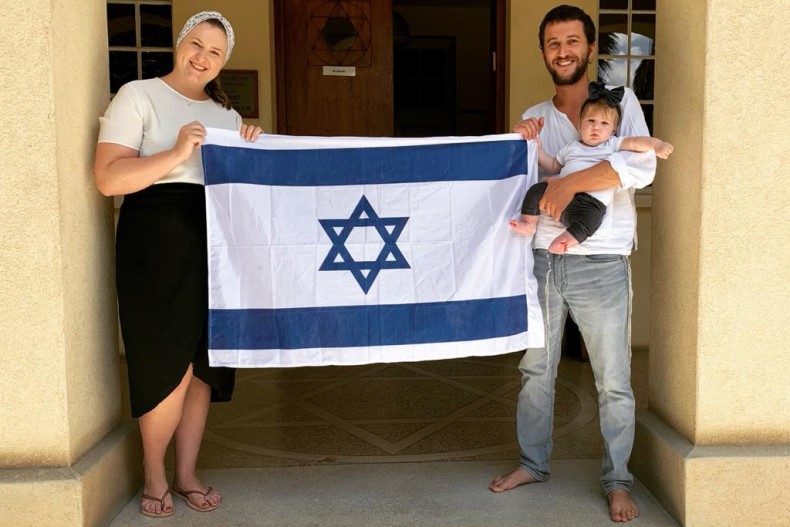
Chicago to Israel to Kenya
A family’s story of living Jewishly on three continents Michelle Cohen World May 28, 2021 Avital, Tzofia, and Netanel Kaszovitz outside their home in Nairobi on Yom HaAtzmaut. When Avital Kaszovitz prepared to be a Modern Orthodox shlicha (emissary) to the Jewish community in Ke
Read more -
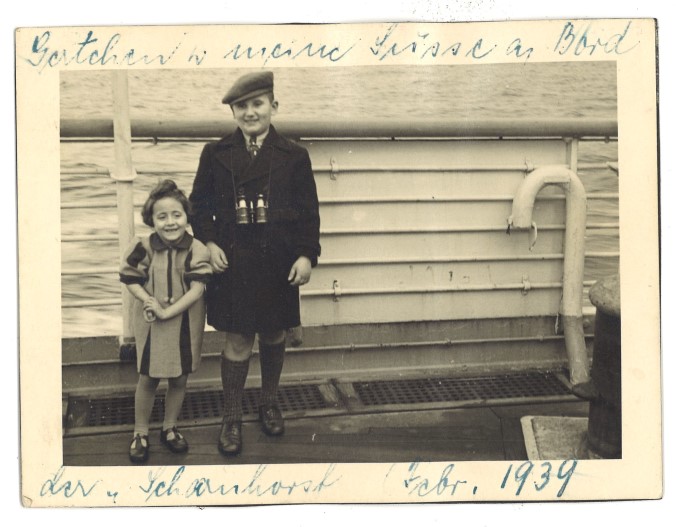
New exhibit spotlights the experience of ‘Shanghai Jews’
Explore a new Illinois Holocaust Museum and Education Center exhibit
Read more -
Europe’s brave new teachers of the Holocaust
Teaching the Holocaust in the modern era has its difficulties and rewards.
Read more

This fall, Chicago’s PJ Library signed up its 7,000th household, meaning that a whole lot of families receive a free Jewish children’s book in their home each month.
“Chicago is the largest PJ Library program in the country, and we are committed to making sure the program is available to all families throughout our community,” said Rachel Rapoport, JUF’s PJ Library Program Director.
Through the PJ Library program, families with children 6 months to 8 years old receive a new Jewish book or music each month. The age-appropriate books share stories about Jewish life, holidays, and values, with each providing a reading guide to help parents engage their children in conversation and strengthen Jewish traditions in the home. “Reading aloud together at bedtime is a special time for a parent and child. PJ (a.k.a. Pajamas) Library helps families to make these moments even more magical by connecting to our Jewish culture, heritage, and beliefs,” Rapoport shares.
A longtime PJ Library parent commented, “Being able to read Jewish stories is so meaningful for all of us. We cherish reading them together and I hope my children will read these books with their children.”
And PJ Library Chicago is committed to going beyond the books. Throughout the year, PJ Library hosts events-such as concerts with nationally known performers, family holiday celebrations, and meaningful volunteer opportunities-bringing the teachings of the books to life and welcoming families to come together as a community to celebrate Jewish life.
New this year is PJ Our Way, which empowers 9-12 year olds to explore their own interests and Jewish identity by inviting them to go online and select a book of their choice to receive each month.
PJ Library and PJ Our Way are committed to developing the future leaders and lifelong learners of the Jewish community-one book at a time. Chicago is proud to now have 7,000 families share this mission.
PJ Library books can be sent to residents of Cook, Lake, Will, McHenry, DuPage and Kane counties. To sign up, call (312) 357-4831 or email [email protected]. For more information, visit juf.org/youngfamilies/pjlibrary .
PJ Library was created by the Harold Grinspoon Foundation, based in Massachusetts; in Chicago, it is part of JUF Young Families and is a gift to Chicagoland families from JUF and local donors including Iris and Steve Podolsky, and Crown Family Philanthropies, as well as local Jewish early childhood educators.
Other stories
-
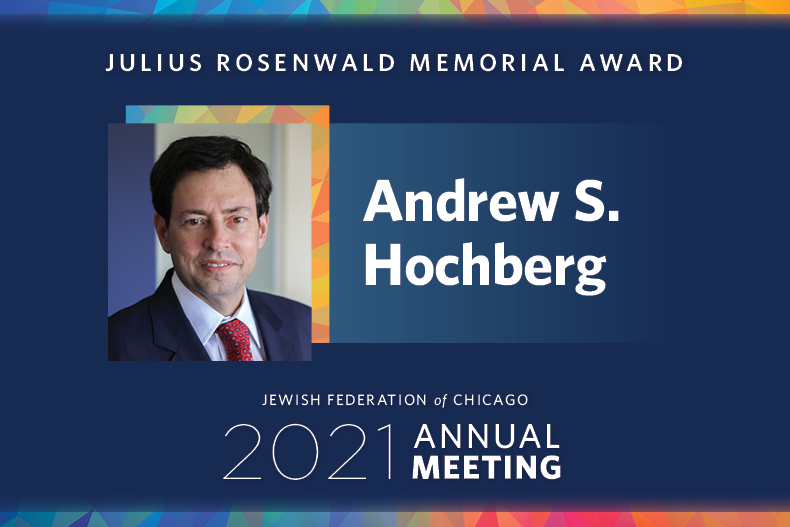
Meet Andrew S. Hochberg, 2021 Julius Rosenwald Memorial Award recipient
Celebrate Andy Hochberg at the virtual Annual Meeting on Sept. 14
Read more -
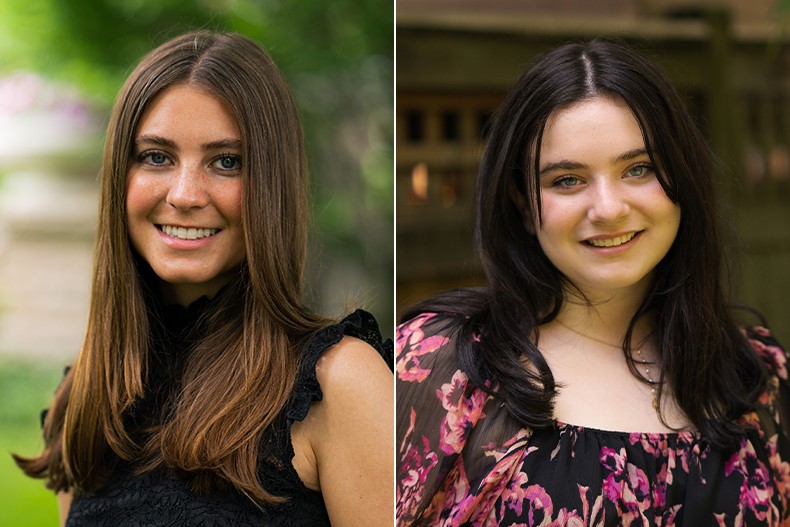
Two local teens win national recognition
Recipients of the annual Diller Teen Tikkun Olam Awards
Read more -
Celebrating six young award winners cultivating the community
Introducing young adult award winners
Read more
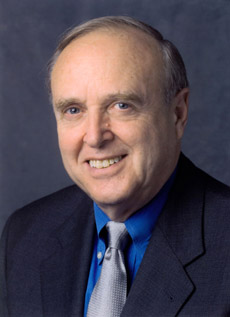
Michael C. Kotzin was one of the Chicago Jewish community’s preeminent leaders and one of Israel’s most recognized advocates locally, nationally and internationally.
Kotzin died Oct. 18 following a long illness. He was 74.
“Our community, the Jewish federation world, indeed the entire Jewish people have benefited in ways almost too numerous to recount from Michael’s deep knowledge, keen insight, steadfast commitment and brilliant mind,” said Steven B. Nasatir, Kotzin’s longtime friend and president of the Jewish United Fund/Jewish Federation of Metropolitan Chicago, in a letter with JUF Chair Bill Silverstein.
( Read the eulogy Nasatir gave at Kotzin’s funeral. )
Kotzin served JUF since 1988, most recently as the Special Consultant to the President, and formerly as Executive Vice President. He was an innovative thinker and widely respected authority on a wide range of issues, including global anti-Semitism, the threat of a nuclear Iran, Israel-Diaspora relations, and intergroup relations.
In close collaboration with lay leadership and his professional colleagues, he helped set the JUF/Federation agenda in many arenas, from public affairs to communications to the academic study of Israel.
He was involved in starting an Israel Studies Project , first at Northwestern University and the University of Illinois at Urbana-Champaign and then at other Illinois universities. “The notion was to see if we could do something to get Israel into the classroom to be taught about as a country on the globe and in the world, among the nations of the world, not just involved with conflict,” Kotzin had said during a recent conversation.
Kotzin traveled frequently to Israel, often advising top officials and, on other trips, accompanying Illinois leaders, including then-Sen. Barack Obama, former Ill. Gov. Pat Quinn, Chicago Mayor Richard M. Daley, and the late Joseph Cardinal Bernadin.
“It was the first time that any Cardinal had, in the world, traveled to Israel in an interfaith setting, with the Catholics and Jews together,” he said, reflecting on the 1995 historic trip to Israel with Bernadin. “We were modeling not only interfaith relations, but intergroup relations.”
“Michael took people as they were. He did not judge them,” said Rabbi Samuel Fraint, who officiated at Kotzin’s funeral. “He was the same with Jews and non-Jews alike.”
Kotzin also served as director of JUF’s Jewish Community Relations Council and, before joining JUF, was Chicago Region Director of the Anti-Defamation League. Prior to coming to the ADL, he was on the faculty of the Department of English at Tel Aviv University for 11 years.
While living in Israel, Kotzin served in the Israel Defense Forces during the 1973 Yom Kippur War.
Last year, JUF Press released On the Front Lines in a ChangingWorld , a compilation of essays, opinion pieces, speeches, and reviews Kotzin wrote during the past 25 years. (See excerpts from On the Front Lines on p. 31 of this month’s book section.)
“Beyond his professional accomplishments, Michael was a trusted friend, a proud Jew with a profound sense of history and identity, and a mensch,” said JUF Chairman Bill Silverstein. “He had a huge heart, a quick wit and a hearty laugh. We will miss him deeply.”
“Michael was a man of peace,” Fraint said. “He touched, influenced, and mentored many people.”
“He was indefatigable, investing unparalleled passion, energy and focus in every facet of his work. His uncompromising fairness and decency were hallmarks of his character,” Nasatir said.
Kotzin is survived by his wife Judy; children Abigail, Daniel and Joshua; and grandchildren.
The family has asked that contributions be made to the Michael C. Kotzin Fund for Israel Studies of the Jewish Federation of Metropolitan Chicago. This fund will perpetually extend his groundbreaking work of bringing visiting Israeli scholars and writers to teach on Illinois campuses. Contributions can be sent to 30 S. Wells St., Rm. 3060, Chicago, IL 60606.
Other colleagues and friends of Kotzin have also remembered him in writing: JUF Communications Vice President Aaron B. Cohen in a blog for The Times of Israel ; Linda Epstein, consultant for private philanthropies and former director of JUF’s Israel office, in The Jerusalem Post ; and Richard Hirschhaut of the American Jewish Joint Distribution Committee in JUF News .
Other stories
-
Meet Andrew S. Hochberg, 2021 Julius Rosenwald Memorial Award recipient
Celebrate Andy Hochberg at the virtual Annual Meeting on Sept. 14
Read more -
Two local teens win national recognition
Recipients of the annual Diller Teen Tikkun Olam Awards
Read more -
Celebrating six young award winners cultivating the community
Introducing young adult award winners
Read more
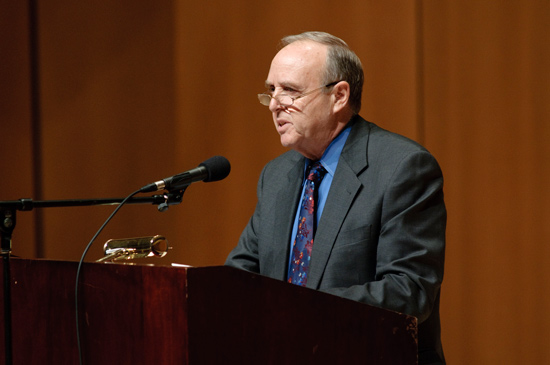
It is with profound sadness that we write to tell you of the passing of our beloved friend and colleague, Michael C. Kotzin. For several years Michael suffered with a serious illness, which he and his family faced with great courage, optimism and dignity.
Our community, the Jewish federation world, indeed the entire Jewish people have benefited in ways almost too numerous to recount from Michael’s deep knowledge, keen insight, steadfast commitment, and brilliant mind. He was indefatigable, investing unparalleled passion, energy and focus in every facet of his work. His uncompromising fairness and decency were hallmarks of his character.
Michael served JUF since 1988, most recently as the Special Consultant to the President, and formerly as Executive Vice President. He was an innovative thinker and widely-respected authority on a wide range of issues, including global anti-Semitism, the threat of a nuclear Iran, Israel-Diaspora relations, and intergroup relations. In close collaboration with lay leadership and his professional colleagues, he helped set the JUF/Federation agenda in many arenas, from public affairs, to communications, to the academic study of Israel.
Michael also served with distinction as Director of JUF’s Jewish Community Relations Council and, before joining the Federation, was Chicago Region Director of the Anti-Defamation League. Prior to coming to the ADL, he was on the faculty of the Department of English at Tel Aviv University.
We were fortunate to have had the opportunity to celebrate with Michael his myriad contributions at the launch in 2014 of his book, On the Front Lines in a Changing Jewish World (a compilation of essays, opinion pieces, speeches and reviews he wrote during the past 25 years).
Beyond his professional accomplishments, Michael was a trusted friend, a proud Jew with a profound sense of history and identity, and a mensch. He had a huge heart, a quick wit and a hearty laugh.
We miss him deeply and offer our deepest condolences to his wife Judy; to their children Abigail, Daniel, Joshua; and to their grandchildren. We know how much he loved you all, and count ourselves fortunate to have been part of his extended family.
Funeral services will be held at 10:30 am on Tuesday, October 20, at Moriah Congregation, 200 Taub Dr., Deerfield, Ill. Interment will be at Westlawn Cemetery. Information regarding shiva will be provided.
The family has asked that contributions be made to The Michael C. Kotzin Fund for Israel Studies of the Jewish Federation of Metropolitan Chicago. This fund will perpetually extend his ground-breaking work of bringing visiting Israeli scholars and writers to teach on Illinois campuses. Contributions to the Fund can be sent to 30 S. Wells St., Rm. 5045, Chicago, Ill. 60606.
May Michael’s memory be for a blessing.
Bill Silverstein Steven Nasatir
Chairman President
Other stories
-
Meet Andrew S. Hochberg, 2021 Julius Rosenwald Memorial Award recipient
Celebrate Andy Hochberg at the virtual Annual Meeting on Sept. 14
Read more -
Two local teens win national recognition
Recipients of the annual Diller Teen Tikkun Olam Awards
Read more -
Celebrating six young award winners cultivating the community
Introducing young adult award winners
Read more
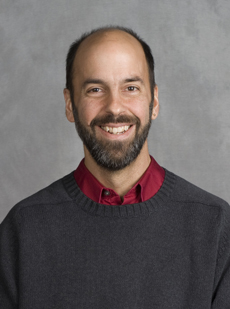
Seth Katz, an associate English professor at Bradley University and long-time volunteer executive director of Bradley University Hillel, received the university’s Mergen Award for Public Service last month.
Since he started with Hillel in 1998, Katz has put in countless hours managing all aspects of the organization. For the first several years, He was the only staff the organization had (following on the pattern established at and maintained since BU Hillel’s founding in 1947). He was program director, outreach intern, building manager, fundraiser, book-keeper, clerk, secretary, custodian and sometimes even the cook. He led Shabbat services when the students didn’t, taught challah baking, and led holiday programs.
In his impromptu remarks after receiving the reward, Katz mentioned specifically that he valued the opportunity to serve in that, as the ancient Stoics held, the good life is achieved through virtue; virtue is achieved through service to others.
“The opportunity to serve is something for which I am deeply grateful: in serving others, we participate in partnership with God in the work of completing the universe,” Katz said. “I have been deeply humbled by this honor, and am deeply grateful for all the opportunities my life, my family and my job have given me to serve others and so to become a richer person.”
Katz developed and maintained relationships with the Bradley offices, as well as with parents of current students, the Peoria Jewish community, area congregations, the Jewish Federations in Peoria, Chicago, Springfield and the Quad Cities and, as they developed, Hillels of Illinois and the Schusterman International Center. He also formed a community board, and with their help, after 10 years of work, negotiated with the university to facilitate the construction of a new, dedicated Hillel building, which they have now been in for over four years.
Over the length of his tenure at Bradley University Hillel, they have tripled their budget and annual fundraising. BU Hillel now employs a part-time rabbi (who handles most of the programming), part-time cook and building manager, and has just hired a part-time director who is gradually taking on some of the administrative and business work of the organization. Katz has routinely met with Jewish prospective students and their parents, and served as the facilitator and spokesperson for Jewish life on campus at BU. Katz also routinely meets with and trains admissions staff, campus tour guides, and campus police to address the specific concerns of Jewish students and parents.
Along with Hillel work, for many years, Katz and his wife taught the confirmation class, and later the 7th-8th grades in the local Reform congregation’s Sunday school. He has volunteered in a range of capacities in the local Jewish community, supervising sukkah building, leading services for adults and children, serving on the Federation board and various committees, and reading at the annual community Yom HaShoah observance.
In his day job as an associate professor in the Department of English, He has served on numerous department, college and university committees. He has served as interim chair of the department several times and is now associate chair. He has also been coordinator of Bradley’s composition program. He has also been deeply involved with the design, preparation, and now the implementation of the school’s new “Core Curriculum”; specifically in teaching colleagues how to teach writing in the new writing intensive (WI) courses, as well as in the processes of helping faculty prepare proposals for WI courses and of vetting and approving those proposals.
Other stories
-
Local campus administrators convene on hate speech, bias
JUF and ADL brought together 17 student safety, diversity and inclusion and student affairs administrators and Hillel representatives from various Illinois campuses to discusses issues of hate speech and bias.
Read more -
Engaging students about Israel on campus
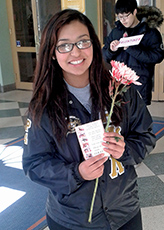
Too often we hear about difficulties facing Jewish college students on Illinois campus, but to focus solely on the politics gives only one piece of the complex narrative that is Jewish life on campus.
Read more -
Hillel International launches fellowship initiative to train young Jewish professionals
The Springboard Fellowship will train cohorts of young Jewish professionals in highly-valued skillsets and place them at local Hillel campuses for two years.
Read more
Early Intervention has been critical for our son; now it's in critical condition
NAOMI SHAPIRO
This piece originally ran on the JCUA Blog .
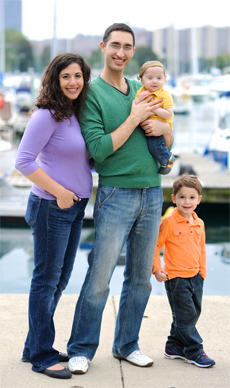
On Jan. 17, my husband and I welcomed a baby boy into our lives. Within minutes of his delivery, he was whisked to the Neonatal Intensive Care Unit for what we were assured was routine treatment to assist his labored breathing. Shortly thereafter, we learned that it was a cleft palate that was causing his breathing troubles and prevented him from breastfeeding or taking a bottle. Not to worry, we were told, “he’ll be home in a week.” Within a few days, though, it became apparent that our stay in the NICU would be longer than anticipated.
During the course of the first two weeks in the NICU, our room was a flurry of activity – doctors, residents, fellows, audiologists, nurses, social workers, physical therapists, and occupational therapists were all in and out. At one point, we were visited by a geneticist. The list of possible ailments he presented seemed unlikely and inconsequential in comparison to some of the more acute and immediate medical issues our son was facing. After he left, we forgot that he had ever been there.
A couple weeks later as we made our morning commute to the Ann and Robert H. Lurie Children’s Hospital of Chicago, the NICU resident called to say that a genetic counselor was looking for us. Although concerned, we did not expect the news that she shared with us: our son’s genetic tests indicated that his cleft palate (and hearing loss that was discovered after we arrived in the NICU) were results of a genetic disorder. We learned that his particular disorder can cause a vast array of disabilities — some that we could test for immediately and others that would not yet be apparent, including developmental delays.
In the course of explaining what we could expect, she explained that once home from the hospital, we could enroll our son in Early Intervention, a program of the Illinois Department of Human Services that offers coordinated therapies at home or daycare. Importantly, many of the treatments that we could receive through Early Intervention would not be covered by our health insurance. During the following weeks, we came to terms with this unexpected news and grappled with how our lives might look different moving forward.
After seven long weeks in the NICU, we brought our baby boy home to meet his brother. After we settled in, I called our local Early Intervention office. A coordinator came to our house to meet with us and learn about our son and his needs. She scheduled an evaluation involving occupational, physical, speech, hearing, and developmental therapists. After an hour with all our new friends, it was determined that he would begin physical therapy, occupational therapy, and hearing therapy and be reevaluated for speech and developmental therapies at a later date.
It is impossible to understate the impact that these therapists have had on our son. We have seen him make tremendous strides under their care; tasks that many children do instinctively such as responding to their name, sitting upright, or reaching for an object have been the result of intensive therapy for our son. Not only do they provide outstanding therapy, they come to our home or daycare. This sounded like a luxury to us at first, but once we settled into a routine that included hours of therapy each week, we realized how essential this was in order for us to maintain a level of normalcy at work and at home.
For children like our son, starting needed therapies early is critical in helping them reach their potential. Studies have shown the tremendous effects of Early Intervention: providing critical therapy at a young age lowers the likelihood of children needing ongoing therapy, special education, and it even lowers incarceration rates.
On July 1, the State of Illinois started a new fiscal year without a budget. As a result, there was no available funding for Early Intervention. The Early Intervention therapists, who are contractors rather than state employees, stopped receiving payments for the work they were doing. Most stopped taking new Early Intervention clients leaving a waiting list for greatly needed services, but many of these amazing professionals continued their work without pay. Our therapists graciously continued to offer our son therapy, but grappled with how much longer they could afford to do so. They see their work as a calling; they love what they do and they love making a difference in the lives of children.
But after some time, some therapists understandably could no longer continue to go without pay and tearfully notified families that services would end without a resolution to the budget impasse. For many families, this meant that they would have no access to these crucial services.
Thankfully, a short term resolution was reached earlier this month when the Illinois Comptroller announced that she would begin paying providers. Unfortunately, it did not come soon enough for many providers who were forced to exhaust lines of credit or, in the most severe situations, end their participation in the program. Although funding has been restored, the work of many Early Intervention therapists and families has been disrupted, for some permanently. It is unclear which therapists will be able to return to their work, leaving services that families rely on up in the air. Early Intervention is yet another victim of Illinois’ current budget crisis, burdening the most vulnerable in our communities.
Other stories
-
Meet Andrew S. Hochberg, 2021 Julius Rosenwald Memorial Award recipient
Celebrate Andy Hochberg at the virtual Annual Meeting on Sept. 14
Read more -
Two local teens win national recognition
Recipients of the annual Diller Teen Tikkun Olam Awards
Read more -
Celebrating six young award winners cultivating the community
Introducing young adult award winners
Read more
The Shabbos Project, an effort to get the world’s Jews to celebrate one Shabbat together which was introduced in South Africa in 2013 went Global in 2014 and begins this year at sundown on Friday, Oct. 23.
The beauty of the Shabbos Project is that it has the potential to unite Jews on an unprecedented scale. It transcends all differences in ideology, outlook and affiliation, and brings all manner of Jews together in a deeply meaningful way. The Great Big Challah Bake element of the project is a great example of this.
In the Chicago area, The Great Big Chicago Challah Bake (a women-only event) will take place on Wednesday, October 21 at 7:30 p.m. (doors open at 6:45 pm) at the Holiday Inn North Shore in Skokie. While last year saw several successful Challah bake events, this year everyone agreed to join together for an evening of unity, inspiration, and fun.
Congregations and organizations throughout Chicagoland have events planned for the entire Shabbat, culminating with Saturday evening Havdalah events. Of course home hospitality can be easily arranged for anyone wishing to spend Shabbat with a family as part of the group or community event.
Other cities are organizing events ranging from cholent cook-offs to havdalah concerts.The Project’s website includes a guide to celebrating Shabbat and a “coaching” system for those wanting to learn and teach about Shabbat.
Well-known participants this year will include Paula Adbul, Sen. Joe Lieberman, and Neshama Carlebach. In 2014, some 1 million Jews in more than 460 cities in 65 countries worldwide participated in The Shabbos Project- across North, Central, and South America, Europe, and Australia and in China, Hong Kong, India, South Africa, Nigeria, Angola and, of course, Israel; one concert in Argentina boasted 13,000 attendees.
Early registration is suggested as space is limited.For more information, to sponsor, to volunteer and to register for The Great Big Chicago Challah Bake and other Chicago Shabbos Project events, visit www.ShabbosprojectCHI.com, email [email protected] or call (224) 735-0015. For Shabbat hosting throughout Chicagoland, contact [email protected].
For general Shabbos Project information, visit the Shabbos project’s general website theshabbosproject.org.
Other stories
-
Meet Andrew S. Hochberg, 2021 Julius Rosenwald Memorial Award recipient
Celebrate Andy Hochberg at the virtual Annual Meeting on Sept. 14
Read more -
Two local teens win national recognition
Recipients of the annual Diller Teen Tikkun Olam Awards
Read more -
Celebrating six young award winners cultivating the community
Introducing young adult award winners
Read more
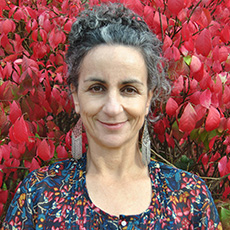
Chicago artist Lilach Schrag traveled to Jerusalem in September to participate in the opening of the Jerusalem Biennial for Contemporary Jewish Art, where her video work was featured.
The Jerusalem Biennial runs in 10 locations throughout Jerusalem now through Nov. 5. Over 100 visual artists from around the globe are presenting various approaches to Jewish content and Jewish experience. Schrag’s work, Elijah Elijah , is on display in a show called “The Fine Line,” curated by Susan Nashman Fraiman.
Elijah Elijah is part of Schrag’s ongoing Shiviti series of works. Inspired by the illustrated meditative text, “Shiviti,” in which Jews profess, “I have God always in front of me,” the works invite introspection by giving visual representation to a thought.
“Several years ago, I participated in an artist residency on an island off the coast of Maine,” Schrag recounted. “I was fascinated by the character of the Biblical prophet Elijah, a magical, complex spiritual leader, the ever-present comforter, and herald of better days in Jewish tradition.”
Schrag beautified three old chairs with paint, mirrors, and copper, and engraved the words Elijah Elijah, echoing the shout that accompanied the prophet’s ascent to heaven. Then, on a foggy afternoon, with two dozen people as her audience, she set the chairs on fire, creating a surreal ritual, sharing awe and praise.
Elijah Elijah contains two clips, each running in a loop, representing two aspects of human existence: One screen shows the glorious burning of three chairs to the sound of dramatic music, while the other reflects mundane moments of unawareness, and of human efforts and interaction.
In her artwork she uses a variety of materials from steel, plaster, canvas, paper and paint, to found objects, photographs, and video work. Focusing on the process, she documents traces of action in materials, attempting to capture fleeting moments of serenity or fragile transformative encounters, understand their impact, and preserve them.
Lilach Schrag was born and raised in Israel. In 2000 she moved to Chicago along with her husband and three sons.
You can see more of Lilach Schrag’s artwork at www.lilachschrag.com . To read about the Jerusalem Biennial go to http://www.jerusalembiennale.org/
Other stories
-
Meet Andrew S. Hochberg, 2021 Julius Rosenwald Memorial Award recipient
Celebrate Andy Hochberg at the virtual Annual Meeting on Sept. 14
Read more -
Two local teens win national recognition
Recipients of the annual Diller Teen Tikkun Olam Awards
Read more -
Celebrating six young award winners cultivating the community
Introducing young adult award winners
Read more
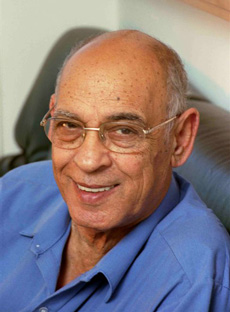
The Crown Family Center for Jewish and Israel Studies at Northwestern University and the Heksherim Institute for Jewish and Israeli Literature and Culture at Ben-Gurion University of the Negev present an International Conference in tribute to Israeli Author Sami Michael, Emet Award-winning novelist of Iraqi-Jewish origin, whose writing has spotlighted the heritage of Sephardic Jewry, broadening the definition of Israeli identity, and encouraged consideration of cultural “others.”
The conference, to be held on the Evanston Campus, will explore Michael’s inner world as moving between two diametrically opposed, yet surprisingly similar cities, Baghdad and Haifa, representing his relentless search for individual and collective identity in the intricate geo-political and emotional landscape of the Middle East.
The public is invited to the opening session of the international conference featuring Sami Michael in conversation with Benny Ziffer, author, journalist and literary editor of the Israeli daily newspaper Haaretz , followed by a recital of Iraqi Jewish traditional music performed by Yair Dallal, internationally renowned oud and violin artist whose compositions draw from Arab and Jewish musical traditions.
For more info, visit www.jewish-studies.northwestern.edu/events/
Other stories
-
Meet Andrew S. Hochberg, 2021 Julius Rosenwald Memorial Award recipient
Celebrate Andy Hochberg at the virtual Annual Meeting on Sept. 14
Read more -
Two local teens win national recognition
Recipients of the annual Diller Teen Tikkun Olam Awards
Read more -
Celebrating six young award winners cultivating the community
Introducing young adult award winners
Read more
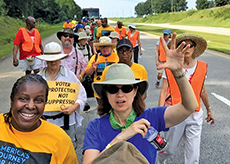
I sat in a bit of a daze in a small, packed church in Cheraw, S.C. on the evening of Aug. 27, 2015. I struggled to keep my eyes open for this NAACP Mass Meeting.
I had woken up that morning in army barracks in Columbia, S.C. where I arrived late the night before to join America’s Journey for Justice with the NAACP. The NAACP has organized this 860-mile, 40-day trek from Selma, Ala. to Washington, D.C. under the banner: “Our Lives, Our Votes, Our Jobs and Our Schools Matter.”
When Rabbi Seth Limmer heard about plans for this journey, he put out a call to see if any rabbis would like to march. To date, over 180 rabbis have walked in this journey coordinated largely by the heroic efforts of Allison Porten and Claire Shimberg, of the Religious Action Center of Reform Judaism.
The march that day commenced with an Elul (12 th month of Hebrew calendar) shofar blast. We marched two-by-two, kept in order by a former marine drill sergeant and kept safe by several plain-clothes policemen. In front, NAACP President and CEO Cornell Brooks led the way with a man holding the American flag. Behind them, people alternated walking with the Torah. Twenty pairs of marchers walked that day-from teenagers to elders-hydrating every mile and taking quick bathroom breaks every three.
After our third three-mile marker, we gathered together to hear some unsettling information: we were approaching an area notorious for its Ku Klux Klan activity. We began this leg of the journey in silence. I held the Torah and watched cautiously as I noticed a Rottweiler off its leash in a nearby open yard. A small crowd of about 10 people gathered across the street at a gas station. One shouted “boo” as others laughed derisively.
Soon, I found myself walking alongside Ivan. This Mississippi-born, 70-year-old man walked with a cane, yet was determined to walk every inch of the 860 mile-journey. We walked the rest of the day’s journey together.
That night at the church, important figures surrounded us and spoke from the pulpit. When Cornell Brooks arrived on the pulpit, he did not look like he had just marched 16 miles-and he certainly didn’t sound like it. He challenged us to see beyond pictures and, in reference to the mass incarceration of people of color, to see beyond prison records. Repeating the numbers listed under the mug shots of Dr. Martin Luther King Jr. and Rosa Parks, he declared:
“You are not defined by your criminal ID record or number, but by your God-given dignity.” He continued: “People counter the notion of ‘black lives matter’ by saying that ‘all lives matter.’ If that be the case, then why is it that a black man is 22 times more likely to lose his life at the hands of a police officer than his white counterpart? We believe that if black lives matter, we have to act like they matter.”
Mr. Brooks’ energy surged as the speech wore on, so that by the end, he nearly shouted the verses that open “Lift Every Voice:”
Lift every voice and sing
Till earth and heaven ring,
Ring with the harmonies of Liberty…
Facing the rising sun of our new day begun,
Let us march on till victory is won.
Fist in the air, he repeated over and over:
“Let us march on! Let us march on!
Let us march on! Let us march on!”
These words continue to echo in my ears as I ready myself to read the words of Parashat Nitzavim (Section of the Hebrew Bible) that begin:
“You stand this day all of you before the Lord your God; your captains of your tribes, your elders, and your officers, with all the men of Israel; Your little ones, your wives, and your stranger who is in your camp, from the hewer of your wood to the drawer of your water; That you should enter into covenant with the Lord your God, and into his oath, which the Lord your God makes with you this day.”
The word for “stand,” nitzavim , is often associated with going into battle. Here, it means “to stand at attention.” Get ready to march.
As I return to Chicago, I stand at attention, ready to continue this march with all of you. There is real work to do in Chicago and we must stand together with others: our school-grade captains, our elders, our elected officials, with all the people in the Chicago community; our teenagers and young ones, our neighbors, and many strangers from the Bronzeville school teacher to the caregiver in Englewood; we have entered into a covenant with the Lord our God who holds us accountable to uphold our part in this brit tzedek -this sacred covenant of justice.
This is how we perform the command in our parasha to choose life: by lifting every voice and giving it the dignity it deserves. We must do this not only in personal interactions, but in the laws we pass and the way we enforce them: ending wage discrimination and racial profiling, restoring and strengthening schools in every neighborhood, and granting everyone the right to vote.
As we begin the new year of 5776, let us march on. Let us choose life!
Rabbi Shoshanah Conover is the Associate Rabbi of Temple Sholom of Chicago.
Other stories
-
Chicago to Israel to Kenya
A family’s story of living Jewishly on three continents Michelle Cohen World May 28, 2021 Avital, Tzofia, and Netanel Kaszovitz outside their home in Nairobi on Yom HaAtzmaut. When Avital Kaszovitz prepared to be a Modern Orthodox shlicha (emissary) to the Jewish community in Ke
Read more -
New exhibit spotlights the experience of ‘Shanghai Jews’
Explore a new Illinois Holocaust Museum and Education Center exhibit
Read more -
Europe’s brave new teachers of the Holocaust
Teaching the Holocaust in the modern era has its difficulties and rewards.
Read more