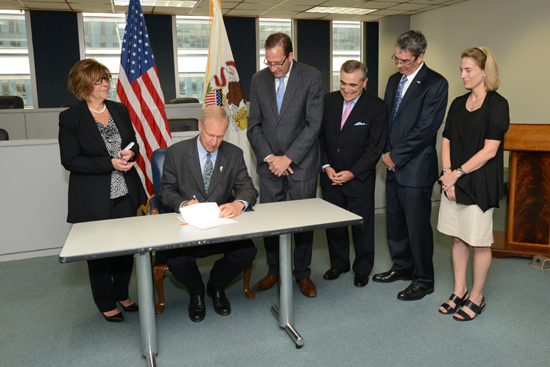
Gov. Bruce Rauner signs the anti-BDS bill into law. Rauner was joined, from left, by State Rep. Sara Feigenholtz, State Sen. Ira Silverstein, JUF President Steven Nasatir, Israel Consul General to the Midwest Roey Gilad and American Jewish Committee Chicago Region Director Amy Stoken.
Illinois’ historic anti-Boycott, Divestment and Sanctions bill, SB 1761, was signed into law by Gov. Bruce Rauner Thursday, enacting legislation that is serving as a model for similar measures in some 20 other states.
The new law prohibits investment of Illinois state pension dollars in foreign companies that boycott Israel, and creates an Illinois Investment Policy Board to monitor compliance with this and similar laws.
“We need to stand up to anti-Semitism whenever and wherever we see it,” Rauner said. “This historic legislation is an important first step in the fight against boycotts of Israel, and I hope other states move quickly to follow our lead. I want to thank Sen. (Ira) Silverstein, Rep. (Sara) Feigenholtz and all the sponsors of this legislation for working with our administration to take a stand against BDS.”
With strong bipartisan support, including the backing of the governor and House Speaker Michael Madigan, chief sponsors Silverstein and Feigenholtz moved the bill through the General Assembly without opposition. After it passed May 18, the bill received much national and international attention.
Throughout the legislative process, the bill received strong backing from the Jewish United Fund and other Jewish groups. Among those witnessing the signing were JUF Board Chair Bill Silverstein and many members of the JUF Board, as well as members of the JUF Government Affairs Committee, Consul General of Israel for the Midwest Roey Gilad, and AJC Chicago Region Director Amy Stoken.
At the signing, JUF President Steven Nasatir said “this is an exciting and important day for us. … The effort to delegitimize the Jewish State is evil. What we have done today in our state is inspirational.”
More information about SB 1761 is online here . Video of the signing ceremony is available here .
Other stories
-
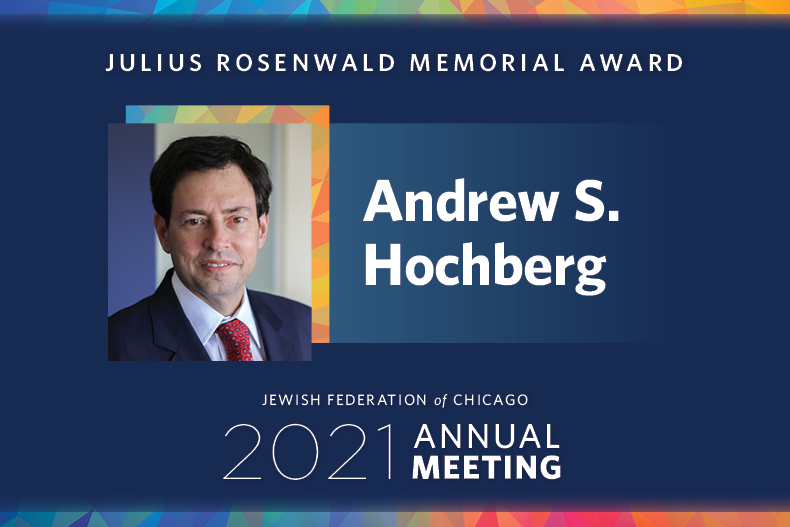
Meet Andrew S. Hochberg, 2021 Julius Rosenwald Memorial Award recipient
Celebrate Andy Hochberg at the virtual Annual Meeting on Sept. 14
Read more -
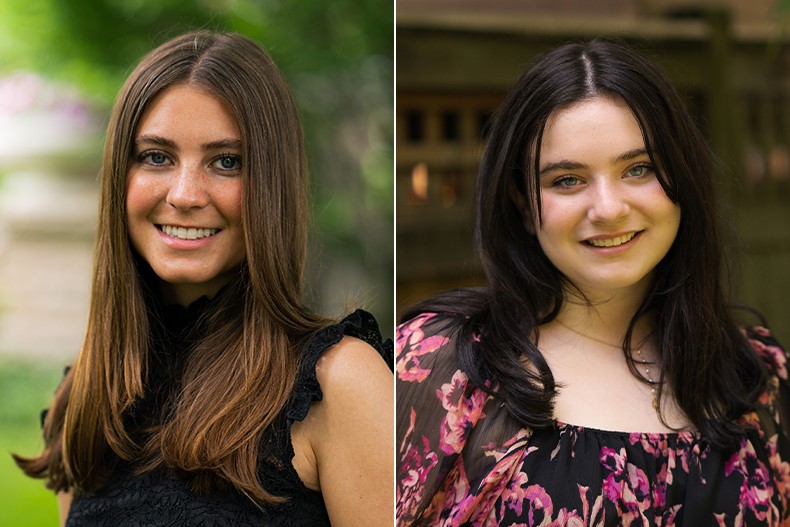
Two local teens win national recognition
Recipients of the annual Diller Teen Tikkun Olam Awards
Read more -

Celebrating six young award winners cultivating the community
Introducing young adult award winners
Read more
What does the recently released nuclear agreement with Iran (Joint Comprehensive Plan of Action) bode for Israel, America and the American Jewish community?
Some 100 delegates of JUF’s Jewish Community Relations Council and other community members gathered at JUF on July 20 to hear three different perspectives. Speakers included Ambassador Dennis Ross, fellow at the Washington Institute for Near East Policy and former special assistant to President Obama; Jon Wolfsthal, senior director for Nonproliferation for the National Security Council; and Roey Gilad, Consul General of Israel to the Midwest.
Wolfsthal, who joined the meeting via video from the White House, presented the Obama administration’s stance. Calling the agreement “extremely good,” he claimed the United States accomplished its primary goal of preventing Iran from acquiring a nuclear weapon.
Wolfsthal also responded to criticism that several of the provisions expire after 15 years. He clarified that many of the provisions never expire and therefore hold Iran accountable indefinitely. Wolfsthal reaffirmed that if Iran violates the terms of the agreement, President Obama has the authority to reinstate American sanctions immediately without a vote from the United Nations.
Ross analyzed positive aspects of the deal while also underscoring critical flaws. He said that one of the most unsettling aspects of the deal is that it leaves in place much of Iran’s enrichment infrastructure. Combine that with allowances for continued R&D on advanced centrifuges, and Iran could become a nuclear threshold state in 10-15 years, he warned. Ross also cautioned that Iran might use a portion of its $150 billion in soon-to-be-unfrozen assets to support Hezbollah and Hamas.
Ross emphasized that the United States must respond firmly to any infraction of the agreement by Iran, and must never allow Iran to develop a nuclear weapon. “We should use all deterrent measures if Iran does not abide by the agreement,” he said.
Gilad closed the meeting by expressing the Israeli government’s core concerns about the nuclear agreement.
“There are some good parts of the agreement, but it cannot and should not be depicted as an ‘extremely good deal,'” Gilad said. He focused on two main “strategic loopholes” that illustrate flaws in the agreement, including lack of oversight for undeclared sites and the ineffectiveness of snapback sanctions.
Gilad expressed understanding for the dilemma facing the American Jewish community in deciding what position to take on the nuclear agreement; however, he urged the community to consider the threat that the deal poses to the Jewish State and to act accordingly.
JCRC will gather again in the coming weeks to deliberate and vote on a resolution reflecting the consensus view of Chicago’s Jewish community of the nuclear agreement with Iran.
Ceren Maeir is a 2015 Lewis Summer Intern.
For Additional Analysis:
- John Kerry and Ernest Moniz: The case for the nuclear deal with Iran
- Iran deal leaves U.S. with tough questions by Dennis Ross
- The four major problems with the Iran deal by Ambassador Ron Dermer
Other stories
-
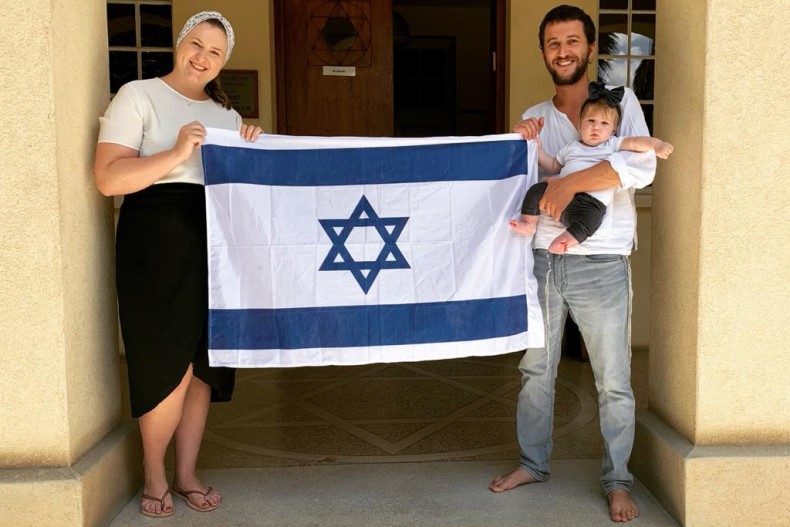
Chicago to Israel to Kenya
A family’s story of living Jewishly on three continents Michelle Cohen World May 28, 2021 Avital, Tzofia, and Netanel Kaszovitz outside their home in Nairobi on Yom HaAtzmaut. When Avital Kaszovitz prepared to be a Modern Orthodox shlicha (emissary) to the Jewish community in Ke
Read more -
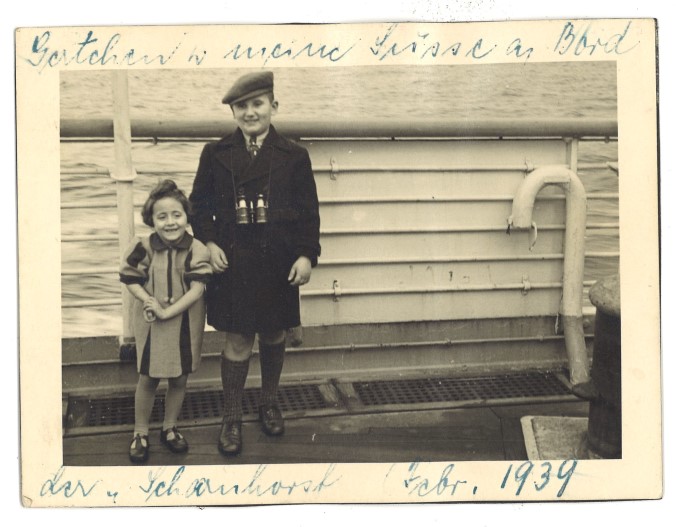
New exhibit spotlights the experience of ‘Shanghai Jews’
Explore a new Illinois Holocaust Museum and Education Center exhibit
Read more -
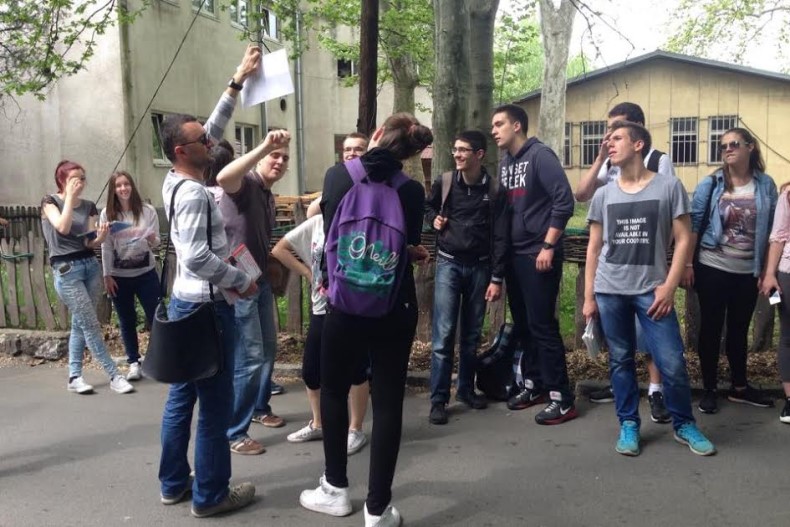
Europe’s brave new teachers of the Holocaust
Teaching the Holocaust in the modern era has its difficulties and rewards.
Read more
The Jewish United Fund of Metropolitan Chicago has announced the fourth annual “Double Chai in the Chi: 36 Under 36” list of young Jewish movers and shakers in Chicago.
(The letters of the Hebrew word “Chai,” which means “life,” also represent the number 18.)
This year’s list is replete with entrepreneurs, activists, fundraisers and more, running the gamut from rabbis to attorneys, camp directors to anthropologists… and, well, the list goes on. A complete roster of the honorees, along with profiles, is available on the Oy!Chicago website at www.oychicago.com/36under36 .
Presented by JUF’s Young Leadership Division (YLD) and Oy!Chicago ( www.oychicago.com ) — an outreach website for Chicago’s 20- and 30-somethings — the list spotlights the faces of Chicago’s Jewish future and recognizes the amazing contributions of this generation. The young professionals featured are noted for making a difference through their work, giving back in their free time, and earning distinction in the Jewish community and beyond.
“The incredible volume and quality of nominations for this honor has increased every year,” said Stefanie Pervos Bregman, founding editor and blogger-in-chief for Oy!Chicago. “If this list is any indication, the future of Chicago’s Jewish community is incredibly bright.”
“The beauty of this list is that it isn’t focusing on just one type of person or area of achievement,” said Michael Oxman, YLD president and a former honoree. “The purpose of this list is really to honor young Jewish adults from all walks of life who are making incredible contributions to our community, in whatever way is most uniquely meaningful to them.”
The 36 honorees will be celebrated at YLD’s “WYLD” party at 7 p.m. Thursday, Aug. 13, at John Barleycorn, 149 W. Kinzie, Chicago. The party is open to the public. Tickets are $20 in advance, $30 at the door. To register, visit http://www.juf.org/yld/wyld.aspx or e-mail [email protected] . Register early — last year’s party completely sold out!
The 36 named to this year’s list are:
Eloise D. Bahrmasel, 32, of North Center, co-founder of PowerPump Salon
Jacob Cytryn, 33, of Lakeview, director of Camp Ramah in Wisconsin
Gail Schnitzer Eisenberg, 28, of Wilmette, litigation associate at Dentons US LLP
Jordan Fishfeld, 31, of Wicker Park, CEO of PeerRealty
Scott Frankel, 28, of Glenview, communications specialist at the iCenter
Rebecca Frazin, 28, of University Village, government affairs manager at Greater Chicago Food Depository
Stella Garber, 28, of Lakeview, VP of Marketing, Trello; co-founder, matchist and Entrepreneurs Unpluggd
Sam Glassenberg, 33, of Evanston, CEO of Funtactix/FTX Games
Jacob Gold, 30, of South Loop, anthropologist
Richard Goldberg, 31, of Lakeview, Illinois Gov. Bruce Rauner’s deputy chief of staff for legislative affairs
Jordan Goodman, 30, of West Town, owner/operator of Casterline|Goodman Gallery
Anna Gorbikoff, 29, of Buffalo Grove, educator and community organizer
Assaf Grumberg, 31, of Evanston, Central Region campus director at StandWithUs
Tamara Habib, 30, of Bucktown, CEO and co-founder of Firelily
Beth Horwitz, 31, of Lakeview, project director of Illinois Collaboration on Youth
Oren Jacobson, 33, of West Loop, COO of Kubo
Amy Kirsch, 35, of Wicker Park, head of investor relations, PeerRealty
Daniel Klaff, 32, of Glencoe, partner at Applegate & Thorne-Thomsen
Lia Lehrer, 28, of Lakeview, membership and communications director at Temple Jeremiah
Justin Lerner, 33, of Deerfield, industrial real estate broker
Avi Levine, 33, of River North, executive director of the Digital Professional Institute
Aleeza Lubin, 36, of Lakeview, director of Jewish enrichment at BBYO
Reva Minkoff, 29, of Avondale, founder and president of Digital4Startups Inc.
Jonathan Ozeran, 31, of Near North Side, vice president of product at Zest Health
David Perkel, 33, of West Rogers Park, attorney and rabbi
Joe Rosen, 30, of Bucktown, assistant elementary school principal
Tal Rosen, 33, of Lakeview, program director, Spertus Institute for Jewish Learning and Leadership
Daniel Rosenberg, 36, of Highland Park, partner and managing director at Cohen Financial
Amy Rubenstein, 36, of Streeterville, real estate broker, and artistic director at Windy City Playhouse
Sivan Schondorf, 34, of Highland Park, volunteer for Chicago FORCE (Facing our Risk of Cancer Empowered)
Michael Schultz, 36, of Lincoln Park, restaurateur
Rob Simon, 35, of Near North Side, executive account manager at CDW
Adam Smoler, 36, of Lakeview, head of industry for retail platforms at Google
Mahrinah von Schlegel, 30, of Gold Coast, consultant, and manager of Rapper Chicks
Michael Waitz, 28, of Bucktown, North American director for Shorashim
Alexandra Weiner, 26, of River North, chief of staff at Groupon
Other stories
-
Meet Andrew S. Hochberg, 2021 Julius Rosenwald Memorial Award recipient
Celebrate Andy Hochberg at the virtual Annual Meeting on Sept. 14
Read more -
Two local teens win national recognition
Recipients of the annual Diller Teen Tikkun Olam Awards
Read more -
Celebrating six young award winners cultivating the community
Introducing young adult award winners
Read more
The Jewish United Fund of Metropolitan Chicago today released the following statement regarding the announcement of an agreement between the P5 + 1 – the United States, the United Kingdom, Germany, France, China, Russia – and Iran on Iran’s nuclear program:
The threat of the Islamic Republic of Iran ever obtaining nuclear weapons is a matter of the gravest concern to our community and the world. The effort to reach an accord between the P5 + 1 countries and Iran reflects that concern and the goal of all peace-loving peoples: preventing Iran from acquiring nuclear weapons.
That objective has informed our advocacy efforts for the past two decades. In 2007, JUF’s Jewish Community Relations Council (JCRC) unanimously passed its Action Plan to Combat the Threats Posed by Iran , aimed at educating and mobilizing both the Jewish and broader community. Such efforts led to the successful passage of Iran divestment actions by the State of Illinois , Cook County and the City of Chicago , as well as other actions.
Diplomacy strengthened by sanctions, rather than war, remains our strong preference and the wisest course.
As diplomacy and congressional review unfold, it also is a good time for our country to further accelerate its strategic cooperation with Jerusalem to maintain Israel’s qualitative military edge against any regional threat. America’s other allies in the region, those also threatened by even a pre-nuclear Iran, also need U.S. assurances.
While the accord addresses well-founded concerns, given Iran’s deceit in previous nuclear deals, other Iranian policies remain relevant: its regional hegemonic aspirations; its regular threats to annihilate the United States and Israel; its role as the world’s leading state-sponsor of terrorism; its destabilizing of neighboring countries, including those allied with America; its theocratic, anti-democratic regime; its abysmal human rights record; and its Holocaust denial and unrelenting anti-Semitism. These Iranian practices also are the target of separate international sanctions that must remain in force.
The United States, the European Union, and the United Nations Security Council adopted a sanctions regime that successfully brought Iran to the negotiating table. The same united determination must ensure that Iran will never possess nuclear weapons. We look forward to a rigorous, healthy and, hopefully, civil debate, publicly and in Congress, on the merits of the agreement and precisely how it permanently blocks Iran’s development of nuclear weapons.
JUF looks forward to participating in special briefings to Jewish leaders by both the Obama Administration and Israeli Prime Minister Benjamin Netanyahu, and will provide our community with periodic updates, information and educational opportunities pertaining to the issue. Our JCRC, the community’s public policy umbrella body, will examine the deal in detail and will explore adopting a broad communal consensus through its democratic processes.
Other stories
-
Chicago to Israel to Kenya
A family’s story of living Jewishly on three continents Michelle Cohen World May 28, 2021 Avital, Tzofia, and Netanel Kaszovitz outside their home in Nairobi on Yom HaAtzmaut. When Avital Kaszovitz prepared to be a Modern Orthodox shlicha (emissary) to the Jewish community in Ke
Read more -
New exhibit spotlights the experience of ‘Shanghai Jews’
Explore a new Illinois Holocaust Museum and Education Center exhibit
Read more -
Europe’s brave new teachers of the Holocaust
Teaching the Holocaust in the modern era has its difficulties and rewards.
Read more
Springfield stand-off creates deep uncertainties for JUF human service agencies
SUZANNE STRASSBERGER
The potential impact of the state budget stand-off on many of those served by JUF partner agencies is greater than most realize.
The state is the largest provider of designated grant funding for most of JUF’s healthcare and human service organizations. Such earmarks, in the form of state contracts, provide almost 45 percent of total operating expenditures for Jewish Child & Family Services and CJE SeniorLife.
“Understanding this reliance, I only see harm coming to those most vulnerable people that our agencies support if the budget impasse continues and the budget reductions proposed by both parties are implemented,” Golder said.
A shrinking state budget is not new to the leadership teams of JCFS and CJE Seniorlife. They responded to the decline in funding for human services – 29 percent between FY2009 and FY 2013 – by asking staff to do more with less and relying upon additional dollars provided by JUF’s J-HELP initiative.
What is different this time is the seriousness of the challenge. In late June, human service providers signed contracts with no guarantee that the grant amounts listed would be honored or that program rules – such as client eligibility – would remain the same. Rate reductions were included on some contracts. The providers were told that they will not be paid until the budget is signed, meaning that the agencies had to ask their banks for extended lines of credit. There is a possibility that state offices will close because state workers will not be paid, so functions like certifying client eligibility for nursing home care will cease. Lower wage workers, such as home health care workers, will lose access to state subsidized child care services.
JCFS is a nationally recognized leader in residential treatment for children who are victims of abuse and neglect , guiding troubled adolescents towards a successful adulthood.
“There is a real possibility that we will have to close our five group homes if the State of Illinois reduces reimbursement by 10 percent as indicated in our new contract or if those in the age group 18-21 are denied DCFS services as was originally proposed,” said Dan Wander, chair of the JCFS Board of Directors. “Through charitable giving, we contributed well over $500,000 last year to subsidize the group homes and we just don’t have the discretionary resources to fill the new gap created by the state cut.”
“What parent would turn out their adolescent who had just turned 18? Yet that is exactly what the State of Illinois is proposing to do to these wards of the state, all of whom have a traumatic history of abuse and neglect,” said JCFS CEO Howard Sitron. “These kids need and deserve additional support – not less — if they are to become productive adults.”
Since 1972, CJE SeniorLife has provided community and residential care to Jewish older adults, regardless of income. Its business model recognizes that some older adults start with CJE economically secure, then deplete their savings and need subsidized services.
“The changes being contemplated by the state creates havoc for CJE’s budget,” said Steve Sandler, chair of CJE SeniorLife. Sandler asked the leadership team to build five budget scenarios in case any one of the proposals is implemented.
“I wake up worrying about those who depend on CJE and will now no longer qualify for help because of new income limits or stricter eligibility requirements,” said CJE SeniorLife CEO Mark Weiner. “About 38 percent of our Community Care program participants will be disqualified as well as 50 percent of those living in one of our senior residences. This will result in premature entrance into nursing homes, which is more costly to the state and deprives people of their independence. ”
Government Affairs Committee Vice Chair Steve Greenbaum said he is certain that both Governor Rauner and the General Assembly leaders believe they are taking appropriately strong positions, but he hopes they “don’t lose sight of the fact that as a result of the impasse, and the current uncertain conditions, many community human service providers may be unable to help those most in need.”
In the meantime, JUF will continue to advocate with Springfield on behalf of its agencies and the people they serve.
Other stories
-
Meet Andrew S. Hochberg, 2021 Julius Rosenwald Memorial Award recipient
Celebrate Andy Hochberg at the virtual Annual Meeting on Sept. 14
Read more -
Two local teens win national recognition
Recipients of the annual Diller Teen Tikkun Olam Awards
Read more -
Celebrating six young award winners cultivating the community
Introducing young adult award winners
Read more
Robert Hirsch’s life story was characterized by quiet achievement and an abiding sense of love. His days were marked by equal parts perseverance, passion for life, family dedication, and humor. Born and raised of little means on the north side of Chicago, Robert was proud to be one of the first in his family to attend the University of Illinois on the GI bill. He earned his college education from his US Army service as a medic at Los Alamos on the Manhattan Project.
In college, he met the love of his life, Margot Tick, and theirs was a romance that never ended. After college, they started selling greeting cards, door to door. With his sunny disposition and as a team, many doors were opened. Greeting card sales led to scrap metal sales and these successes eventually led him to found the Pioneer Screw and Nut Company. His small fastener company grew into a major business in the tool and fastener industry, as he supported the expansion of American business in Chicago. His employees loved him and appreciated his mentorship. His work was, however, never more important than family. Proud of his work, his family was also extremely happy to have such a handy Jew in the household. His daughter, Gail, said, “He had every tool available, and many that no other Jews in the neighborhood had. He could fix anything from the home furnace to the laundry machine to the kitchen sink.”
Robert and his growing family settled in the North Shore. He belonged to North Shore Congregation Israel for 55 years. His marriage to Margot offered him love and family, and they raised two children, Gail and Alan. His wife’s personal history also had a profound effect on Robert’s commitment to Judaism. Margot was a 1939 immigrant from Germany, a 13-year-old witness to Kristallnacht, and her family heritage gave Robert and the Hirsch family first-hand knowledge of how Germany’s history lead to the Holocaust. Robert always believed in the importance of giving to the Jewish community and he did so through the JUF. He contributed to the JUF Annual Campaign, made a Centennial Campaign gift and was an active member of many JUF committees. Robert served as an officer and director of the Federation Board of Metropolitan Chicago and Mt. Sinai Hospital. In addition, he served as Chairman of the Advanced and Major Gifts Committee.
As a renaissance man, Robert played the clarinet, loved music spanning jazz to opera, and later in life, was proud to learn to cook. At the age of 74, he enrolled in Hebrew classes at his Temple. Travel was his passion. With his children, he loved to ski and hike. As his son, Alan, said, “He made sure we experienced unfettered joy of the wilderness, but were always safe-with seriousness-from sharks, jellyfish, rattlesnakes, and grizzlies.”
He enjoyed fishing trips with his wife, children and grandchildren, from Wisconsin to the far reaches of Canada and Alaska. With his wife, he truly traveled the world. Before other Americans even considered travel to China or the Soviet Union, the Hirsch’s went there. When traveling to Eastern Germany, Hungary or Poland, Israel, Africa, Southeast Asia, and Antarctica, he explored the globe as an ambassador of Chicago. After Margot died, he married Jan Matz, to whom he was married 8 years and who made him very happy.
Like Robert, you can create your Jewish legacy by including a bequest to the Jewish Federation in your will or estate plan. For more information, contact Legacies and Endowments at (312) 357-4853 or email: [email protected].
Ron Krit is manager of endowment development, Legacies and Endowments, for the Jewish United Fund of Metropolitan Chicago.
Other stories
-
Meet Andrew S. Hochberg, 2021 Julius Rosenwald Memorial Award recipient
Celebrate Andy Hochberg at the virtual Annual Meeting on Sept. 14
Read more -
Two local teens win national recognition
Recipients of the annual Diller Teen Tikkun Olam Awards
Read more -
Celebrating six young award winners cultivating the community
Introducing young adult award winners
Read more
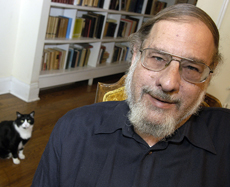
Rabbi Byron Lee Sherwin, a Jewish scholar and ethicist who served on the faculty of Chicago’s Spertus Institute for Jewish Learning and Leadership for more than 40 years, died in May, following a long illness. He was 69.
Sherwin served as Distinguished Service Professor and Director of Doctoral Programs at the Spertus Institute, and had been on its faculty since 1970. From 1984-2001, he was dean and vice president of the Institute.
At Spertus, Sherwin studied and taught Jewish philosophy, mysticism, and Jewish ethics. He was the author or editor of more than 28 books and 150 articles and monographs. His writings have been translated into Polish, Spanish, Italian, German, Czech, and Chinese. He and his works were often featured in national and international print media and on radio and television.
A native of New York, Sherwin graduated from Columbia University. He then earned his Ph.D. from the University of Chicago’s prestigious Committee on the History of Culture. He was ordained at the Jewish Theological Seminary of America (JTSA), where he studied under Rabbi Abraham Joshua Heschel. In 1996, Sherwin also received an honorary Doctor of Hebrew Letters from JTSA, and an honorary Doctor of Humane Letters from Spertus Institute.
Long involved in inter-religious dialogue, Sherwin was awarded a presidential medal- the Officer’s Order of Merit- in 1995 by the Republic of Poland and its president Lech Walesa, for his work in improving Polish-Jewish and Catholic-Jewish relations in Poland and the US.
“It is difficult to imagine Spertus Institute without Byron Sherwin. Long before he became my colleague at Spertus, Byron was my teacher,” Spertus President and CEO Hal Lewis said. “He challenged his students to traverse the bridge between theory and practice, demanding that they bring scholarly sensibilities to their communal work, and realpolitik to their scholarship. But even more important than the particulars of any given lecture, Byron taught me how to think about solving Jewish problems. His impact on the lives and work of his students will be long remembered.”
Sherwin is survived by his wife, Judith Sherwin, esq. (nee Schwartz), his son Jason Sherwin, Ph.D., his mother, Jean (the late Sidney) Sherwin, esq. He also is survived by his brother Elliott (Sharon) Sherwin, nieces Beth (Michael B., Ph.D.) and Hope Sherwin, and nephew David Sherwin.
Funeral services were held in New York, at the Park Avenue Synagogue. They were officiated by Sherwin’s student, Rabbi Elliot Cosgrove, Ph.D., formerly with Chicago’s Anshe Emet Synagogue. Another memorial was held at Spertus in June. Internment was in Glendale, N.Y. In lieu of flowers, memorial contributions may be made to the Jewish War Veterans of the United States of America. Arrangements by Chicago Jewish Funerals- Skokie Chapel.
~JTA/Spertus.edu
Other stories
-
Meet Andrew S. Hochberg, 2021 Julius Rosenwald Memorial Award recipient
Celebrate Andy Hochberg at the virtual Annual Meeting on Sept. 14
Read more -
Two local teens win national recognition
Recipients of the annual Diller Teen Tikkun Olam Awards
Read more -
Celebrating six young award winners cultivating the community
Introducing young adult award winners
Read more
They call it “Joyful Jewish Living.”
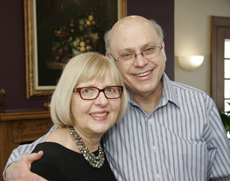
That’s what the synagogue’s founders-Dr Marc Slutsky, Stephen Silberman and Rabbi Irwin Kula-had in mind 23 years ago when they created Aitz Hayim Center for Jewish Living, an innovative kind of Jewish community. Together with Cantor David Landau, they believed in engaging tradition to create experiences that speak to modern Jewish life. Aitz Hayim has represented a safe space to exchange sometimes controversial dialogue, a place that encourages the community to “own their own Judaism.”
“We realized that there were so many opportunities for interesting, engaging fresh Jewish life that we wanted to start our own synagogue to live that out,” said Slutsky, Aitz Hayim President. “We found others who shared our interest in struggling with different perspectives in the community.”
In June, Aitz Hayim, which is housed at North Shore Congregation Israel in Glencoe, celebrated its congregation-past, present, and future-and honored Slutsky and his wife, Barbara, for their decades of leadership, service, and devotion to the synagogue and the greater Jewish community.
There are innovative practices at Aitz Hayim that you can’t find at just any synagogue. The congregation looks at lifecycle events in terms of what human needs they meet. Bar and Bat Mitzvahs are really now the midpoint of growing to adulthood when a person begins to take charge of directing their course. Each person and family has a chance to bring their own talents and ideas to the community service. When someone in the community dies, shiva is more than a memorial service; it is an opportunity to tell stories and share experiences to comfort the mourners and internalize the lost loved one.
The synagogue also developed educational “pods,” where instead of going to organized religious classes, groups of families worked with professional educators to design curricula the parents and educators could teach together. Susan Olken’s children, Josh and Ilana, grew up going to the “pod,” and have gained a strong connection to Jewish culture and knowledge through the program. Since the parents were excited about Judaism, their children became excited too.
While Aitz Hayim was founded as a lay driven community, it regularly studies with renowned scholars such as Rabbi Donniel Hartman of the Shalom Hartman Institute in Jerusalem, Rabbi Ed Feinstein of Valley Beth Shalom in Encino, California, and Professor Steven Katz of Boston University. It has been an incubator for young rabbis who have gone on to different activities in the community. The weekend of celebration, June 12-13, kicked off with a Kabbalat Shabbat led by Kula, who discussed the role of Aitz Hayim in the transformation of Jewish life in the past two decades. The Shabbat ended with a Havdalah service featuring a concert by Howard Levy, a harmonica and keyboard virtuoso who paralleled the improvisation in jazz to the adaptive shifts in Jewish life. The Slutskys’ grown children, Shana and Max, reflected on their Jewish journeys as well.
Marc Slutsky, a psychiatrist by day, dreamed of a Jewish community that would draw on the meaning and psychology of tradition to meet human needs and facilitate creative Jewish living. Barbara Slutsky, who was formerly a Vice President at the Chicago Board Options Exchange, leads the chesed and simcha programs. At JUF, she served as JUF Women’s Division Campaign Chair and President and is currently a Vice Chair of the JUF Board.
“Aitz Hayim is a warm, inviting community that challenges us with profound ideas and challenging questions,” Barbara said. “The congregation helps people find meaning at both joyous and challenging times in their lives. It stimulates thoughtful Jewish perspectives in every aspect of life.”
The Slutskys are excited for the congregation to keep evolving with the changing times. “Since we started Aitz Hayim, so many changes have occurred in the Jewish community that to be responsive to Jewish needs and to be integrated means we have to change ourselves,” Marc said. “That’s really what the Jewish tradition is all about.”
Neesa Sweet is a longtime member of Aitz Hayim Center for Jewish Living and also a writer.
Other stories
-
Meet Andrew S. Hochberg, 2021 Julius Rosenwald Memorial Award recipient
Celebrate Andy Hochberg at the virtual Annual Meeting on Sept. 14
Read more -
Two local teens win national recognition
Recipients of the annual Diller Teen Tikkun Olam Awards
Read more -
Celebrating six young award winners cultivating the community
Introducing young adult award winners
Read more
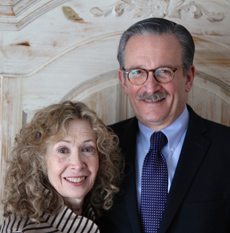
On Aug. 4, 1980, Rabbi Carl Wolkin pulled up in front of Congregation Beth Shalom in Northbrook. He was 33 years old and had just been hired as their new rabbi.
Little did he know that he would spend the next 35 years guiding one of the North Shore’s largest Conservative congregations through incredible growth and transformation. “It has been a remarkable journey,” said Wolkin, who is retiring at the end of June.
During Wolkin’s tenure, Beth Shalom’s membership more than doubled from 500 to over 1,250 families, the congregation became completely egalitarian and interfaith friendly, and kabbalat Shabbat services periodically includes live music. Wolkin has also taught the same Jewish current events class and Bible class every Tuesday, rain or shine, for the past 35 years.
Raised in Syracuse, N.Y., he is the only child of a salesman father and a homemaker mother. “My father was a furniture salesman and a very good one. That had an impact on me. I went into sales of a different kind. My father also was a hero who once saved a mother and child from drowning, which led me to career in which I could try to save souls.”
The Wolkins attended Adath Yeshurun, a Conservative synagogue whose first rabbi was Joseph Hertz, known among other things for editing the “Hertz Chumash.”
The rabbinate was an early calling. “If my mother were alive, she would tell you that I decided to become a rabbi when I was 12 and told my rabbi that someday I would have his job. I have no recollection of that, but I was one of those peculiar kids that liked Hebrew school,” he said.
Active in USY, he was told by his Hebrew school principal to go to Camp Ramah. “I was in a bunk that later become known as the bunk of machers since half of our bunk became successful Jewish professionals,” he said. “Those two years at Ramah [Nyack] when I was 14 and 15 really changed my life. That’s really where I decided to become a rabbi.”
It was while working at Ramah Berkshires in 1966 as a counselor that he met his future wife, Judy, who grew up in a more traditional Jewish home than Wolkin. “Judy likes to say she was speaking Hebrew before I knew what it was!” he quipped.
After Columbia University, Wolkin attended the Jewish Theological Seminary for rabbinical school. While there, he began teaching at the Hebrew High School of Temple Israel of Great Neck. “That turned out to be another one of those life defining moments,” said Wolkin, who ended up being hired as their assistant rabbi under Mordechai Waxman, one of the leading rabbis of the Conservative movement.
After eight years, Wolkin decided the time had come to move on and by coincidence (or serendipity), Beth Shalom in Northbrook had recently ended their relationship with their previous rabbi. Having been at the helm of Beth Shalom for so long, Wolkin has served three to four generations of the same family. “I have officiated at the B’nai Mitzvah of children of parents at whose b’nai mitzvah I have also officiated. There are kids I named, whose parents I married, and who are now members themselves. Nothing is better than that. They have made me part of their families and their lives,” he said.
Wolkin has also been deeply active in the Jewish United Fund of Metropolitan Chicago, having sat on numerous committees and boards. Beyond the missions to Israel he led for his own congregation, he has been to Israel through JUF many times, beginning with the first JUF Emergency Mission in 2000 and continuing through more than a dozen JUF Rabbinic missions. As a graduate of the first cohort of the Hartman Institute’s Center for Rabbinic Enrichment program, the expectation was that Wolkin would “give back.” “I never thought about that as an obligation. It became a labor of love. JUF has been one of the most rewarding things that I’ve done and my involvement with them continues. JUF is unique place where everything you do serves the higher purpose of helping your fellow Jews all over the world. That has been a core value and satisfaction of my rabbinate,” he said.
Wolkin’s community involvement includes serving as President of the Chicago Region of the Rabbinical Assembly, President of the Chicago Board of Rabbis, and President of the Community Mikvah of the Conservative Movement.
But perhaps Wolkin is most proud of his family: two grown sons, Josh and David, and daughter-in-law, Keeli. “My partnership with Judy and our love for each other and the Jewish community have yielded two kids and a daughter-in-law who all work for nonprofits. We couldn’t be prouder; even the apple by marriage hasn’t fallen far from the tree,” he said.
Looking back, Wolkin is happy with his life’s work. “Being a rabbi is a challenge. It is very hard work, but I loved it. I can’t imagine anything else that would have given me the opportunity to connect with people and help them grow and celebrate and grieve and heal,” he said.
But the best part of retirement, besides being able to “do whatever I want whenever I want,” he said, is that he and Judy will be able to sit next to each other at synagogue.
Abigail Pickus is a writer and editor living in Evanston.
Other stories
-
Meet Andrew S. Hochberg, 2021 Julius Rosenwald Memorial Award recipient
Celebrate Andy Hochberg at the virtual Annual Meeting on Sept. 14
Read more -
Two local teens win national recognition
Recipients of the annual Diller Teen Tikkun Olam Awards
Read more -
Celebrating six young award winners cultivating the community
Introducing young adult award winners
Read more
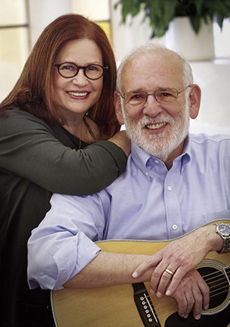
Senior Rabbi Steven Mason could have had any number of international Jewish leaders speak at the celebration of his June retirement from North Shore Congregation Israel (NSCI) in Glencoe. But the guitar-playing grandfather chose three former students who are rabbis themselves-Allison Tick, Amanda Greene, and daughter Sara Mason-Barkin.
This should come as no surprise. The smallest circles have always mattered to Rabbi Mason as much as the largest ones.
A large circle of 500 of his congregants and friends celebrated Mason’s retirement at a Shabbat dinner on June 5. Many more turned out for a dinner and Peter Yarrow concert on June 7.
During the weekend’s festivities, there were many handshakes, hugs, and tributes recognizing Mason’s 18 years of contributions. Mason’s successor, Rabbi Wendi Geffen, recalled a memorable moment during Sunday’s dinner, “They asked everyone, ‘If you’ve traveled with Steve and Patty to Israel, please stand up.’ Almost the entire room stood up,” she said.
Ron Sonenthal, NSCI President who has known Mason since 1997, noted that Mason managed to have a personal relationship with every member despite the congregation’s size of about 1,300 households. “That’s a mystical thing,” he said.
Sonenthal tells of Mason’s ability to make people feel welcome-even when they are homesick. In 2013, his daughter Haley was having a tough day while studying abroad at Hebrew University in Jerusalem. Lucky for her, Rabbi Mason was there leading a congregation trip and insisted Haley join them for dinner.
“It was such a comfort for her to see Steve. Haley will never forget that,” recalled Sonenthal.
Mason’s own experiences as a first-year rabbinic student in Jerusalem circa 1973 made a powerful, lasting impression. “The Yom Kippur War broke out, and I was one of the few young men in their 20s left on the street,” he said. “The closest I had come to any kind of shelter was an air raid drill. But this was the real thing-going down to a bomb shelter.”
In 1978, Mason had a Reform ordination at the New York campus of Hebrew Union College-Jewish Institute of Religion. His first stop after completing rabbinic school was Washington, D.C. From 1978 to 1983, he was a young rabbi at Washington Hebrew Congregation of 2,000 households.
Being in the nation’s capital, a city of power corridors, afforded him unique opportunities. Among them was attending the first National Holocaust Commemoration on April 24, 1979 with then President Carter delivering an address in the Capitol Rotunda .
“It was an exciting moment during the Free Soviet Jewry years, and there were weekly demonstrations. In this case, they were across from the Soviet Embassy in Washington,” Mason recalled. “I participated there with everyone else, to bring attention to the plight of people who seemed to have no hope and were oppressed because they were Jews.”
From the nation’s capital to the suburbs of Buffalo, N.Y., Mason’s rabbinic work has taken him to congregations large and small. However, the needs of the congregants and the teaching of Torah remained the same. “It was about getting engaged with people, one at a time,” he said.
He acknowledged that rabbis need other rabbis. In fact, the great gift of NSCI’s rabbinate was the opportunity to work alongside multiple rabbis. “You can test your ideas, listen to others, and even change your point of view,” he said.
During his tenure at NSCI, he served in many leadership roles including President of the Chicago Board of Rabbis and Co-Chair of JUF’s Rabbinic Action Committee.
Now young rabbis seek his counsel, including his daughter Mason-Barkin who is a rabbi at Peninsula Temple Beth El in San Mateo, Calif. During the June tribute, she described her father as an invaluable mentor.
“He is there when I have a Jewish question that I don’t just think, but I know is silly. He is there when I’m afraid, like the time I called in panic before a difficult hospital visit and I didn’t know what to do.”
By far, the most important lesson she has learned from Mason is about being real-in work and in life.
“When you listen to him preach or teach or play guitar, when he sits with you at your hospital bedside, when he celebrates with you at a family simcha , you are seeing him panim el-panim , face-to-face. This is a man who doesn’t ever fake it,” she said.
Mason and his wife Patty are not leaving the community. But this is the right time to fulfill items on their retirement bucket list like longer visits with their five grandchildren in Northern California and traveling to new places. Mason said he also plans to make time for writing and music.
A guitar sits on the floor of his office, and he explains that he’s been playing since he was 10 years old. Mason’s guitar playing infused congregation services and programming with many good vibrations over the years.
Chances are good, the rabbi will be back soon with his guitar in tow.
Jennifer Brody is a freelance writer living in Chicago.
Other stories
-
Meet Andrew S. Hochberg, 2021 Julius Rosenwald Memorial Award recipient
Celebrate Andy Hochberg at the virtual Annual Meeting on Sept. 14
Read more -
Two local teens win national recognition
Recipients of the annual Diller Teen Tikkun Olam Awards
Read more -
Celebrating six young award winners cultivating the community
Introducing young adult award winners
Read more