City, State take steps against hate
ROBERT NAGLER MILLER
This story was written before Hamas attacked Israel, but punctuates the needs to combat antisemitism here at home as well as abroad.
The news is sobering, but it will not come as a surprise to many: Antisemitism and other forms of hate are on the rise across the country and, in particular, throughout the State of Illinois.
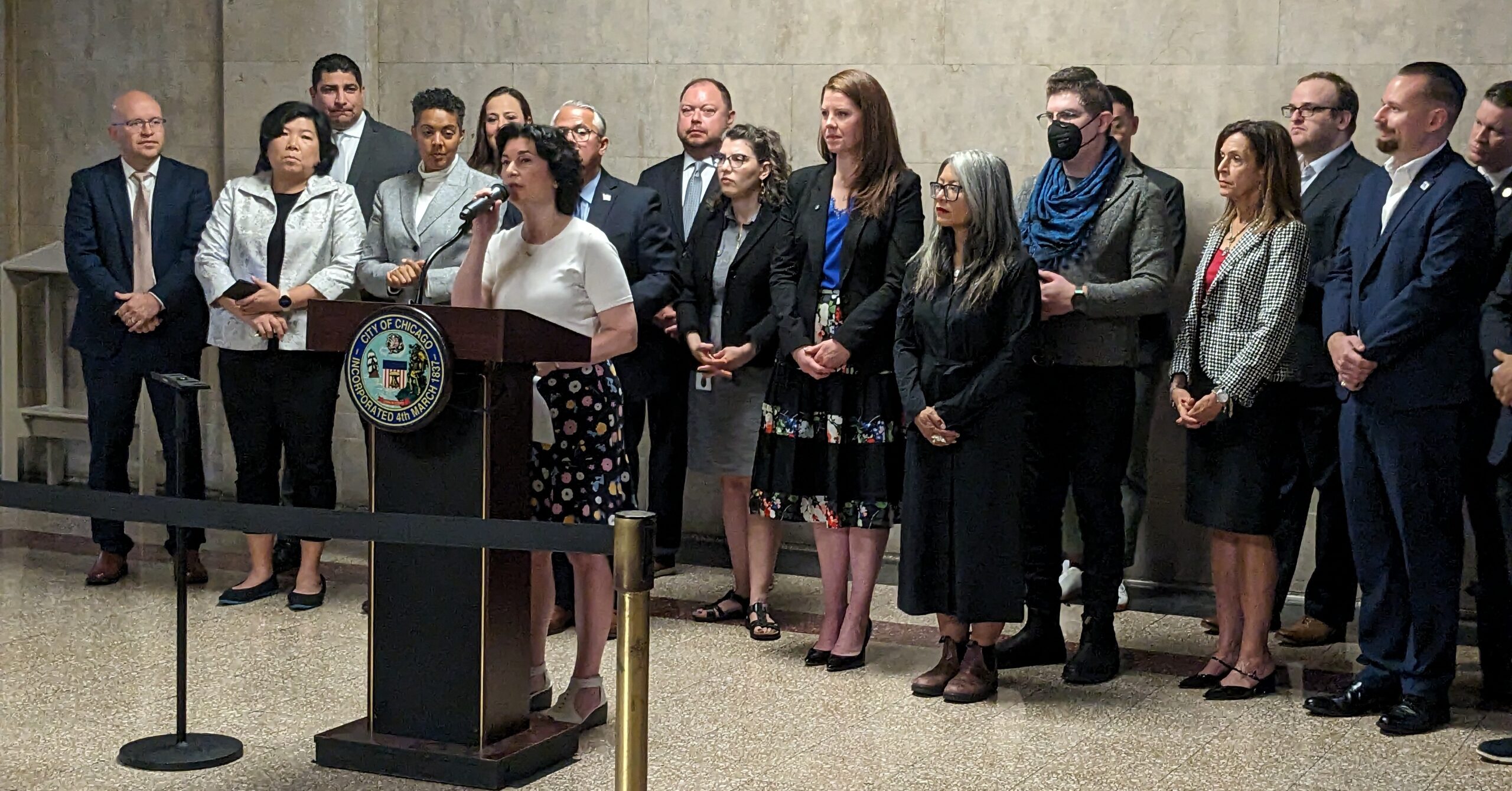
That is one of the main conclusions of a new report by the Anti-Defamation League, which held a press conference on Oct. 3, headlined by State Attorney General Kwame Raoul, to share its latest findings. In the report, “Hate in the Prairie State: Extremism & Antisemitism in Illinois,” ADL found that antisemitic incidents in Illinois increased 128 percent between 2021 and 2022: from 53 to 121.The numbers may be depressing, said David Goldenberg, ADL’s Midwest Regional Director, but “good, reliable data” can help policymakers and others formulate measures to stem hate in all of its manifestations and reverse a frightening trend.
Even before the report was released, public officials throughout Illinois have been working to address antisemitism and other forms of hate, employing strategies ADL outlined in its report’s policy recommendations.
Chicago Alderman Debra Silverstein, whose 50th Ward includes West Rogers Park, home to a large Jewish population and significant immigrant communities from the Middle East and South Asia, is endeavoring to push through the City Council her “Chi vs. Hate” bill, which will allow Chicagoans to report, via 311 messaging, instances of hate, such as racist graffiti or the smashing of Jewish shop windows.
If her legislation is enacted, Silverstein wrote in a recent op-ed in the Chicago Sun-Times , “Chicago will join Los Angeles and London as one of only a few cities in the world with the tools to crowd-source the fight against hate.”
In a follow-up interview, Silverstein, the City Council’s sole Jewish member, called the ordinance her “passion,” adding that her constituents, “the most diverse” in the city, have all been targeted by hateful individuals and groups. She said that the 311 messages will trigger automatic responses by law enforcement agencies, which will be obliged to report annually on the state of hate crimes in Chicago. She added that the bill has garnered the support of every Council member-an unusual phenomenon.
Chicago’s Commission on Human Relations will also be stepping up efforts to reduce hate crimes. Nancy Andrade, its chair, said, “The Commission will be launching a new Hate Crime Reporting Pilot Program in partnership with the Chicago Police Department and community-based organizations to encourage the reporting of hate crimes,” adding that this “initiative will also be strengthened with an upcoming Hate Crime Awareness campaign on CTA trains [and] buses and [in] transit stations.”
David Williams, Supervisor of the Special Prosecutions Bureau with the Cook County State’s Attorney’s Office, is working with JUF and other organizations and agencies to craft a bill that would require multilevel law enforcement agencies to share information with each other about hate crimes in real time. This is now done on an informal level, but it is not mandatory. It should be, Williams observed, because seemingly “small things [that] come out [from under a ] rock,” such as an anti-government screed posted on Facebook, often escalate. Yet patterns of hate-filled language and actions often go undetected because they’re overlooked due to lack of formalized information-sharing.
Dan Goldwin, JUF’s Executive Director of Public Affairs, said that JUF, Williams, partner organizations, and various law enforcement agencies will work with Illinois state legislators to enact rules mandating real-time sharing of hate crime information across law enforcement jurisdictions.
In suburban Cook County, Commissioner Scott Britton launched Cook County Citizens United Against Hate after he and his neighbors in Glenview found antisemitic literature dropped at their homes. Britton, who is not Jewish, said he felt compelled to do so “because of my family’s past.” With roots in small-town central Illinois, Britton said that he had a great-great-grandfather who had been a member of a lynch mob. “My father taught me,” said Britton, “‘This is who you come from, not who you are.'” Because of this lesson, Britton said, “I feel it’s important to call it [hate] out.”
Robert Nagler Miller is a journalist and editor who writes frequently about arts- and Jewish-related topics from his home in New York.