Home away from home
OFER BAVLY
When Hamas launched its monstrous attack on October 7, murdering 1,200 Israelis and taking 240 hostages, they also began a barrage of 10,000 rockets (so far). Sixty-five thousand Israelis were displaced from Israel’s south and a similar number evacuated from the north under threat by Hezbollah.
The evacuees filled just about every hotel room in the country. Those living in closest proximity to the borders are supported by the government, while thousands of others fleeing the rockets must fund their own stays away from home. Hotel conditions are cramped with whole families staying in rooms designed for two.
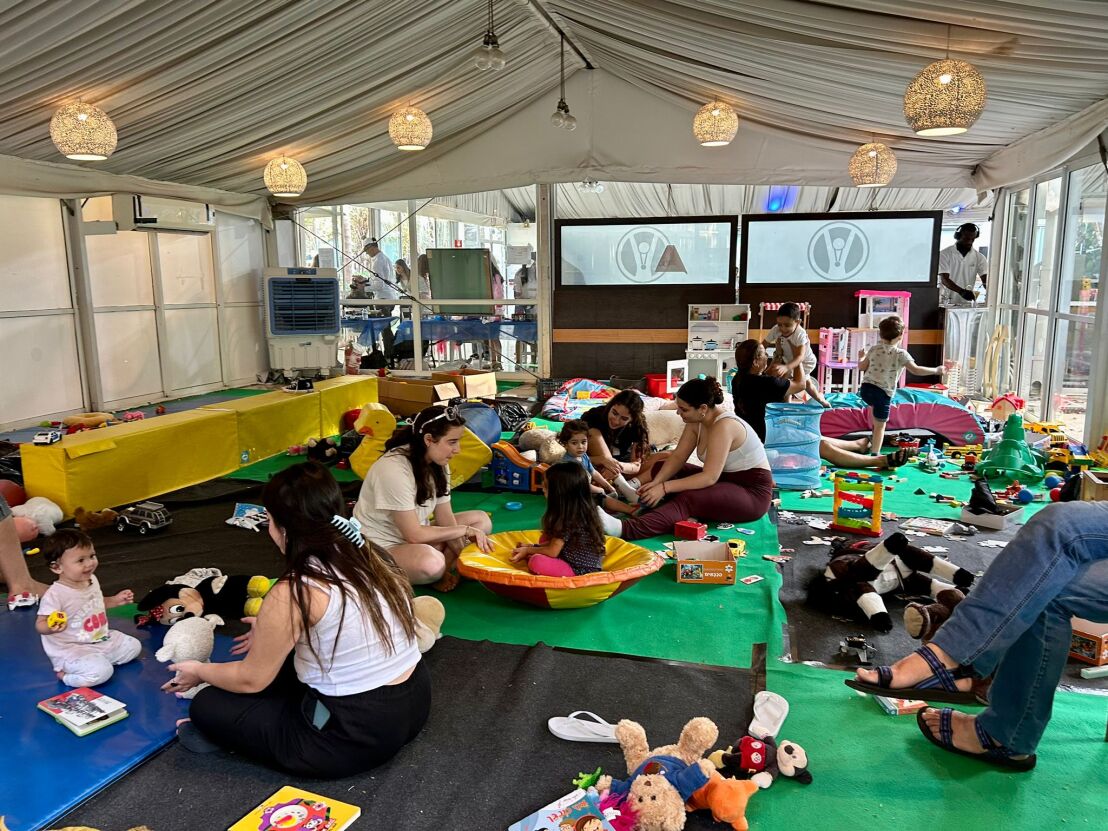
Maccabi World Union stepped up and opened its Ramat Gan-based hotel and sports facility– dubbed “Maccabiah Village”– for nearly 1,000 displaced Israelis. Maccabi– which is providing accommodations at no cost– offers its guests three meals a day, schooling for children, emotional support, free clothing (donated by individuals and corporations), evening entertainment, and stimulating activities for children and teens throughout the day.
The village is a home away from home for hundreds of families who enjoy the facilities, the activities, and the sense that they’re not alone. For those who had been accustomed to running for shelter in 15 seconds when the sirens go off back home, the 90 seconds they have in Ramat Gan seems luxurious. On my visit to the village, a resident jokingly told me: “With a minute and a half from the time the sirens go off, I have time to brew a nice cup of coffee before heading to the shelter.”
Partnering with mental health organizations– and funded by JUF– Maccabi not only hosts displaced citizens, but also provides them with critical emotional support.
Maccabi has converted a makeshift “glamping” camp site in the village to host an emotional treatment retreat for the traumatized young survivors of the murderous rampage at the music festival.
Coordinating the hundreds of volunteers the village is a small, dedicated team of five incredible women working 24/7 to ensure that the needs of every guest is met:
Kathy Hasson– who coordinates donations– had worked in marketing and event planning at the Maccabiah village’s Jewish Sports Museum for a quarter-century. And yet nothing prepared her for the responsibility of organizing funerals and shivas for so many. “These people didn’t come here on vacation; they are traumatized,” she said. “They escaped, most of them with nothing but the clothes on their backs and maybe a cell phone in hand. The first thing we wanted to give them is a sense of belonging and safety.”
Adi Ratzon grew up in the Maccabi Youth Movement, later served as a combat soldier, then as a Maccabi emissary in Baltimore, and now runs international projects for Maccabi. Currently, Ratzon coordinates volunteering at the village and manages its donations store– where guests can pick up clothes, school bags, books, toys, diapers, and more. She said she’s moved by the outpouring of love from Jewish communities worldwide.
Shirit Sachs-Haim– a former Maccabi emissary in Miami who now serves on the Maccabi board– is a veteran organizational consultant and management coach. In the makeshift evacuee camp, she coordinates rehabilitation for residents and helps secure public benefits for the residents. “This is more than just a hotel,” she said. “We have a spirit of action, values, and education.” Thanks to Sachs-Haim, the children in the village are cared for, which frees kids and their parents up to focus on their rehab and emotional well-being.
Orli Fruman-former Knesset Member and Director General of the Ministry of Culture, and Sports– and a former high school principal– helms the village’s interim school for 150 children of all ages. Fruman has created a school from scratch, using professional teachers and volunteers to provide comprehensive school and after-school curriculum.
Before October 7, Osnat Tzury managed Maccabi’s Jewish Sports Museum and served as an emissary in New York. These days, she leads leisure and cultural activities at the village, ensuring residents stay active and entertained.
Thanks to these five women-and with JUF’s support- the residents of Maccabiah village are starting to heal and rebuild, and preparing to return home once the war is over.
Ofer Bavly is a JUF Vice President and the Director General of the JUF Israel Office.