Judaism for atheists
Jenna Cohen
Contemporary Humanistic Judaism, edited by Adam Chalom and Jodi Kornfeld, provides a compelling answer to the question: How can you be Jewish and celebrate Judaism if you don’t believe in G-d?
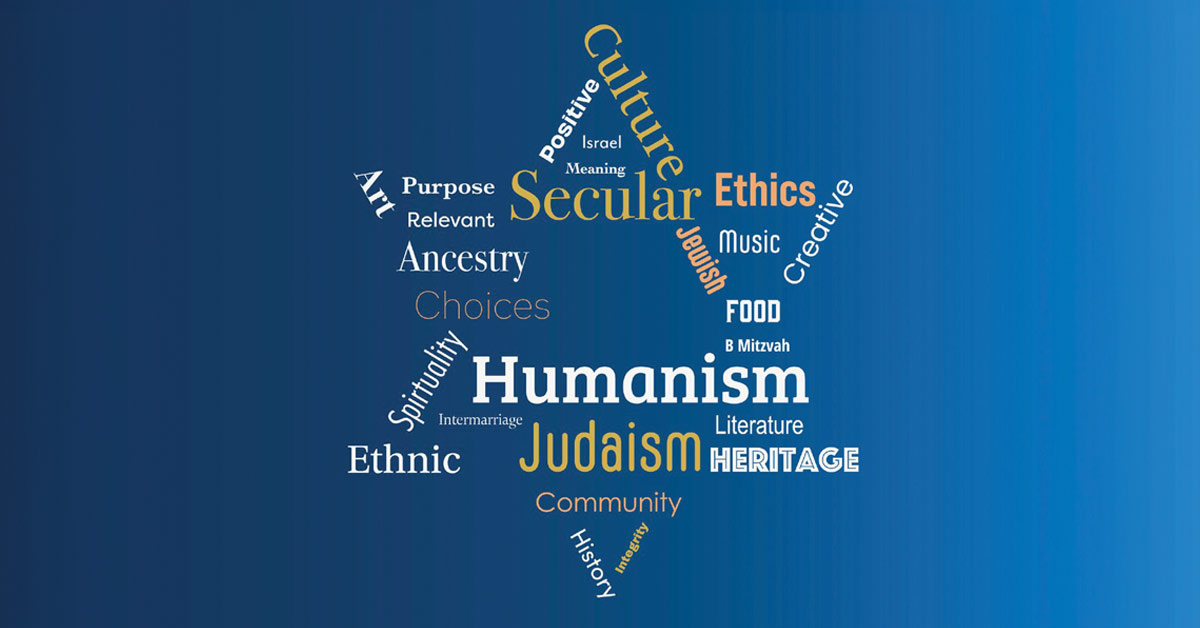
This carefully curated collection of essays, sermons, poetry, and other works illuminates the philosophy and values of Humanistic Judaism, an alternative for those who identify with Jewish culture, religion, ethnicity, and heritage, but not necessarily with the concept of G-d.
For Humanistic Jews, explain the co-editors, “a sense of purpose in life comes from positive affirmations of human dignity,” reinforced by the movement’s emphasis on ethics, knowledge, agency, and responsibility. Central to this movement is the empowering idea that individuals hold the ability to shape their Jewish identities and practices, according to their values.
The book is organized into four parts: Each section delves into essential aspects of Humanistic Judaism, blending philosophy with lived experience, making it more accessible for the average reader.
On “Belief and Ethics” introduces the foundational beliefs of the movement, addressing philosophical questions about G-d, secular spirituality, and how to define ethics without heavenly authority. These chapters invite readers to reimagine G-d as a literary character created by human authors. Through this lens, texts in
Jewish liturgy can reflect what it is to be human.
The second section, “Identity,” will resonate strongly with those who identify as culturally rather than religiously Jewish-or, in popular parlance, being “Jew- ish. ” Underscoring the inclusivity of Humanistic Judaism, the contributors advocate for a flexible understanding of Jewish identity that honors personal choice and cultural connection, with self-identifying as a Jewish person as the sole criterion for being a Humanistic Jew. They also argue that being Jewish does not cancel out other identities; one can be Jewish and a member of other communities-for example, Jewish and Italian, Jewish and LGBTQ+, Jewish and secular. Nor does being in an interfaith relationship or having a complicated personal relationship with the State of Israel strip away one’s Jewishness.
“Culture,” the third section, examines Jewish practice and heritage through the lens of art, music, language, food, and other cultural expressions. It notes that Jewish culture does not invariably reflect Jewish religious law or traditional belief; . outside cultural influences have played a role in developing modern Jewish identity. Kosher-style delis, American movies, Israeli music, and Yiddish literature are all expressions of Judaism as an ever-evolving, international culture.
The last section, “Jewish Life” demonstrates how Humanistic Judaism is lived through education, life cycle events, and holidays. From reimagined bar/bat (“b”) mitzvah ceremonies to inclusive liturgies and innovative holiday celebrations, this section demonstrates how humanistic expressions of Judaism still hold space for Jewish rituals. To paraphrase Rabbi Eva Goldfinger, continuing to tell the Jewish story, celebrating the rhythms of Jewish life, and drawing upon Jewish ethics will have a positive impact on ourselves and the world around us.
Contemporary Humanistic Judaism offers a vision of Judaism that is deeply rooted in human experience and creativity, and provides an alternative approach to what it means to be Jewish in the modern world.
Jenna Cohen is a marketing and communications professional living in Chicago. She recently earned her master’s degree in Environment, Culture, and Communication from the University of Glasgow –Dumfries.