
Leadership lessons fit for a Queen
By RABBI LILY GOLDSTEIN
When I was a little girl, Purim was my favorite holiday because, for once, there was a female heroine, placed front and center, to celebrate! Year after year, regardless of what contemporary cultural antics my childhood synagogue parodied in our Purim spiel, Queen Esther always saved the day.
As I’ve gotten older, and have expanded my “Jewish fandom” to include ancestors and heroes of all genders who have sustained our people, Esther still holds a special place in my heart. And, though we are not in ancient Shushan anymore, it does feel that we are living in a time of the ” v’nahafoch hu ” (upside-down-ness) that’s referenced in Megillat Esther.
Being a Jew in a post-October 7th world can feel scary, dangerous, and confusing, and so many of us feel helpless. While she was living through a very different time, I believe that Esther’s leadership still holds wisdom for today’s challenges:
Esther was connected to her community
While Esther may have been isolated inside the King’s palace, her cousin Mordechai was a deep source of support and motivation. Mordechai reminded her that she was part of something bigger-the Jewish people. With him, she could talk through her problems and fears, and share her burdens with someone who cared.
In times of crisis, we too might prefer to withdraw, but the love, connection, and inspiration from our community is what can give us the strength to endure and progress. As the Torah says in Beresheet, it is not good for a person to be alone; turning to our loved ones is an essential first step in facing our challenges.
Esther turned to ritual
Before approaching King Ahaverosh, Esther was terrified, and so she fasted and prayed, asking her community to join her. Esther had her plan, but first needed to access her own inner strength through prayer.
Engaging in ritual, whether it’s a Jewish or more modern one-exercise, meditation, crafting, or even our morning coffee- helps us both ground and energize ourselves. Through ritual, we cultivate the intentionality needed to take on the world.
Esther used her voice, power, and privilege for good
As both a Jew and a woman, Esther was one of the most marginalized people in Persian society. Yet, she managed to become Queen. She could have remained quiet, cowering while her people were murdered by the genocidal Haman. Instead, she used the privilege of her position to protect the most vulnerable. She was smart and strategic-flattering the King, capitalizing on her attractiveness, and operating within a flawed system for the sake of her cause.
All of us can use our voices and our skills to make our world a better place, by discovering how to leverage them for good.
Whatever our gender, if we follow her lead-embracing community, engaging in self-care through ritual, and empowering ourselves to help others-we can all be like Esther today.
As Mordechai tells her in Chapter 4 of her own book: “Perhaps it was for this very moment that you find yourself here.”
Rabbi Lily Goldstein is the Assistant Rabbi of Congregation B’nai Jehoshua Beth Elohim in Deerfield.
In this issue
-
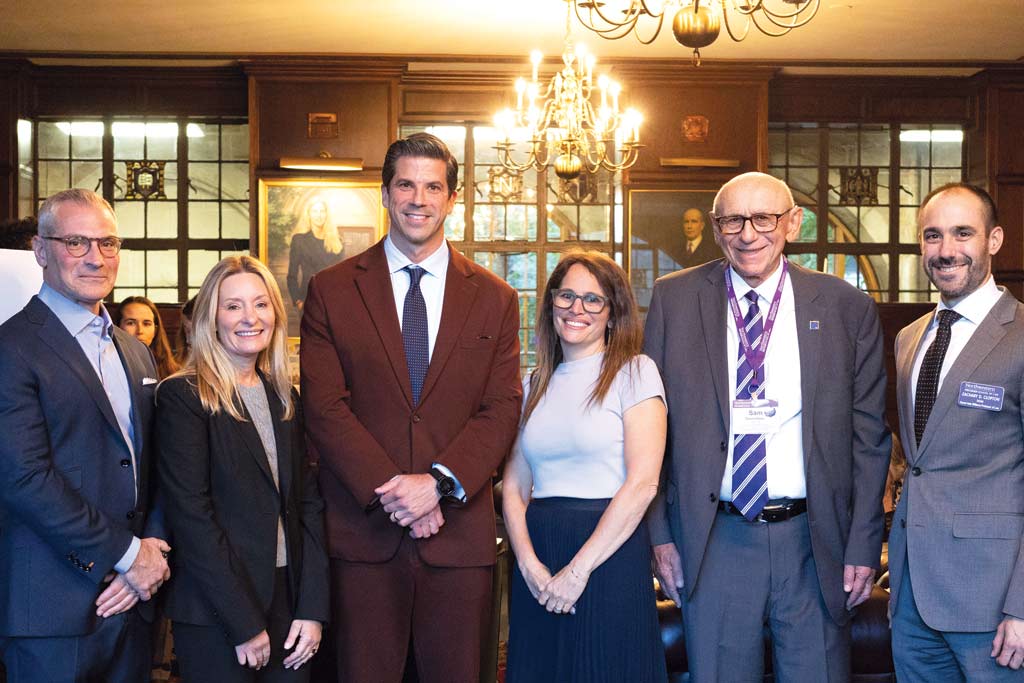
An open door at Northwestern Pritzker Law
The Antisemitism Legal Advocacy Project has launched
Read more -
-