Saving their childhoods
DAVID GOLDER
For months now, we have seen a flood of devastating images of displaced families, women, and children who are fleeing Ukraine for their lives. Most of us cannot conceive how wrenching it would be, especially for children, to be torn from our homes, not knowing whether we would ever return.
I recently had the privilege of being part of a leadership group representing our Chicago community on a four-day mission to Poland hosted by the Jewish Federations of North America, along with 2023 JUF Campaign Chair Carey Cooper, JUF Women’s Board President Linda Schottenstein Fisher, and JUF Chief Development Officer David Prystowsky. We felt immense pride witnessing how our JUF-funded agencies overseas are providing such comprehensive care to so many refugees, on both a short- and long-term basis.
Our trip took us first to Krakow and then to Warsaw. We met a number of local Jewish leaders and the agencies who are housing, clothing, and feeding the refugees–and enabling those who wish to move to Israel and other countries to do so and begin rebuilding their lives.
The lion’s share of the humanitarian aid is focused on women and children, who represent 90% of the refugees, since many husbands and fathers stayed behind trying to repel the Russian invasion.
Despite all they have gone through already, their arduous journey to a new life is only just beginning. After they cross the border, these women must secure safe housing, find jobs, and simultaneously care for their children, now as single parents. Our agencies are providing ongoing, acute psychological care to help adults and children alike to cope. Israeli specialists are on the ground sharing their expertise in treating people of all ages who are suffering from trauma due to war and terror.
In Warsaw, a major highlight was our visit to a JUF-funded center that houses pregnant women and women with small children. This safe haven is crucial, given how many Ukrainian women have found themselves in overcrowded shelters where they have faced harassment and other kinds of sexual violence. They are provided necessities, from diapers and toiletries to bathtubs and strollers. In addition, volunteers from all over the world have come to spend time with the children, playing games, getting ice cream, and painting their nails.
Also near Warsaw, we toured a summer camp for Ukrainian children–about a third of whom were Jewish–who will be entering school in Poland in the fall. Seeing these children running around, laughing, and making new friends filled us with hope that they will transcend the horrors of their childhood.
In Krakow, the Jewish Community Center has established a safe space that offers day care for more than two dozen children, as well as both Polish and English classes for their mothers, in addition to much-needed psychological counseling and job training. They have also rented a large private home where we watched Ukrainian children expressing themselves through painting.
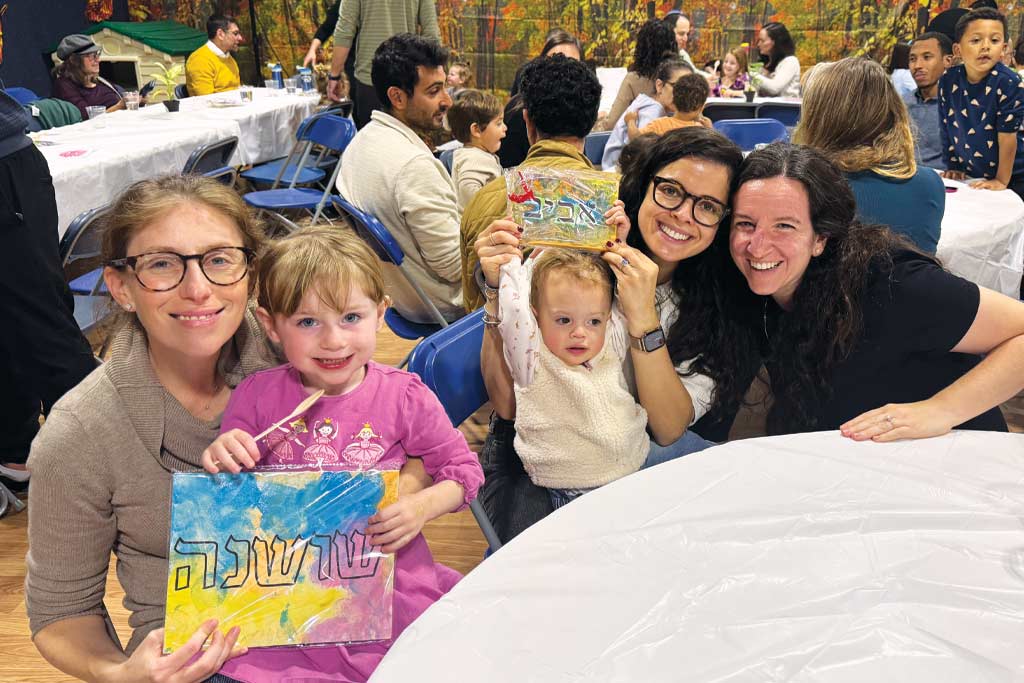
The children’s paintings struck me as metaphorical. We can provide these children with brushes, paint, and canvas; we can furnish them with art lessons; we can even hold their hand for a moment and help them to make a few brushstrokes. But in the end, the paintings are theirs.
Someday, we will hear from a whole generation what it was like to grow up in the shadow of war. It is incumbent upon us to provide for both their physical and psychological health.
A seventh-century midrash teaches us that when God asked for guarantors for the Torah, we first offered our ancestors, and then our prophets, both of whom were summarily rejected. It was only when we suggested our children that the Torah was given to us.
Our work for the future, and for these children, can never be considered done.
David Golder is the Chair of the JUF Board of Directors.